Key Takeaways
EV Pre-Conditioning
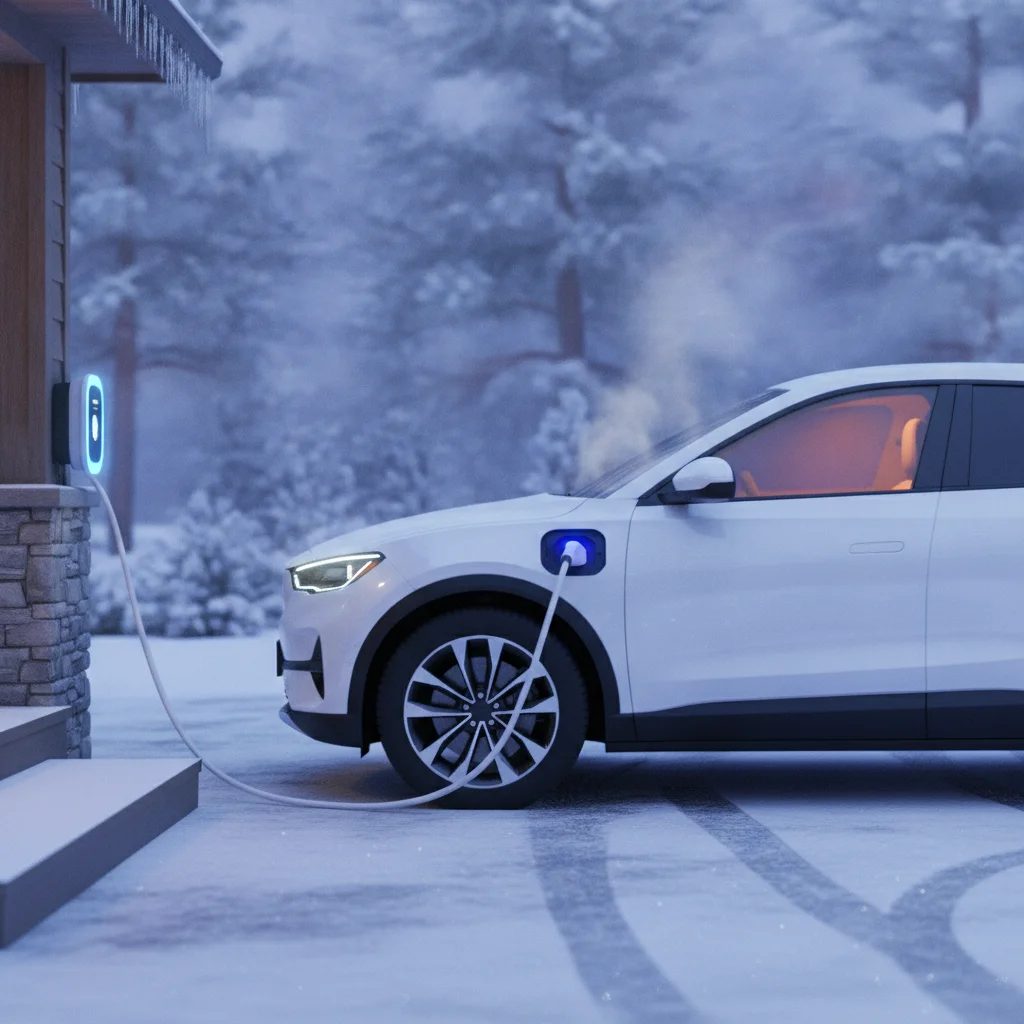
Pre-conditioning is the process of heating or cooling your electric vehicle's cabin — and sometimes its battery pack — while the car is still connected to a charger. Because the energy comes from the grid rather than the battery, the car reaches a comfortable temperature without drawing down the range you've already stored. Most modern EVs allow you to schedule pre-conditioning through a smartphone app or the vehicle's built-in timer.
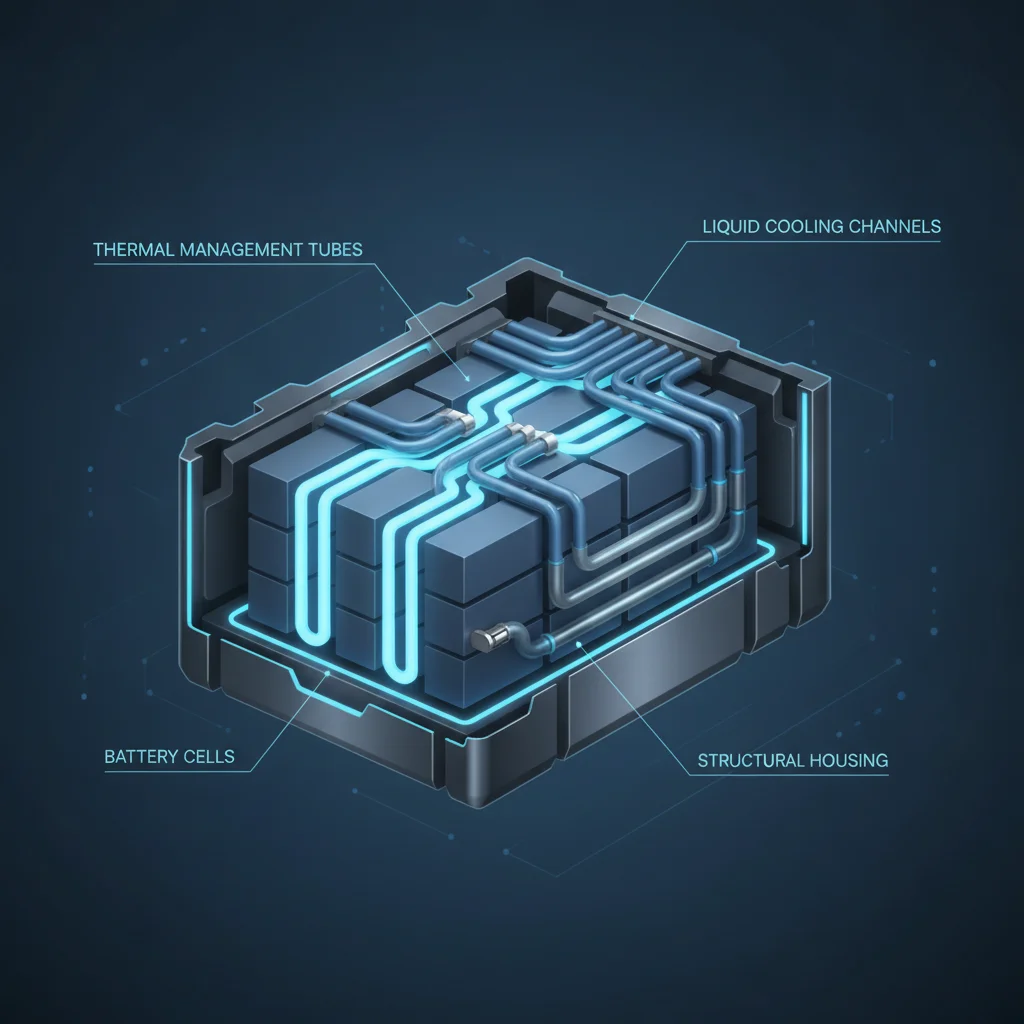
Some systems also condition the battery pack itself to an optimal electrochemical temperature (typically 60–95°F / 15–35°C), which can meaningfully improve charge acceptance rates and discharge efficiency, particularly in sub-freezing conditions.
What Pre-Conditioning Actually Does
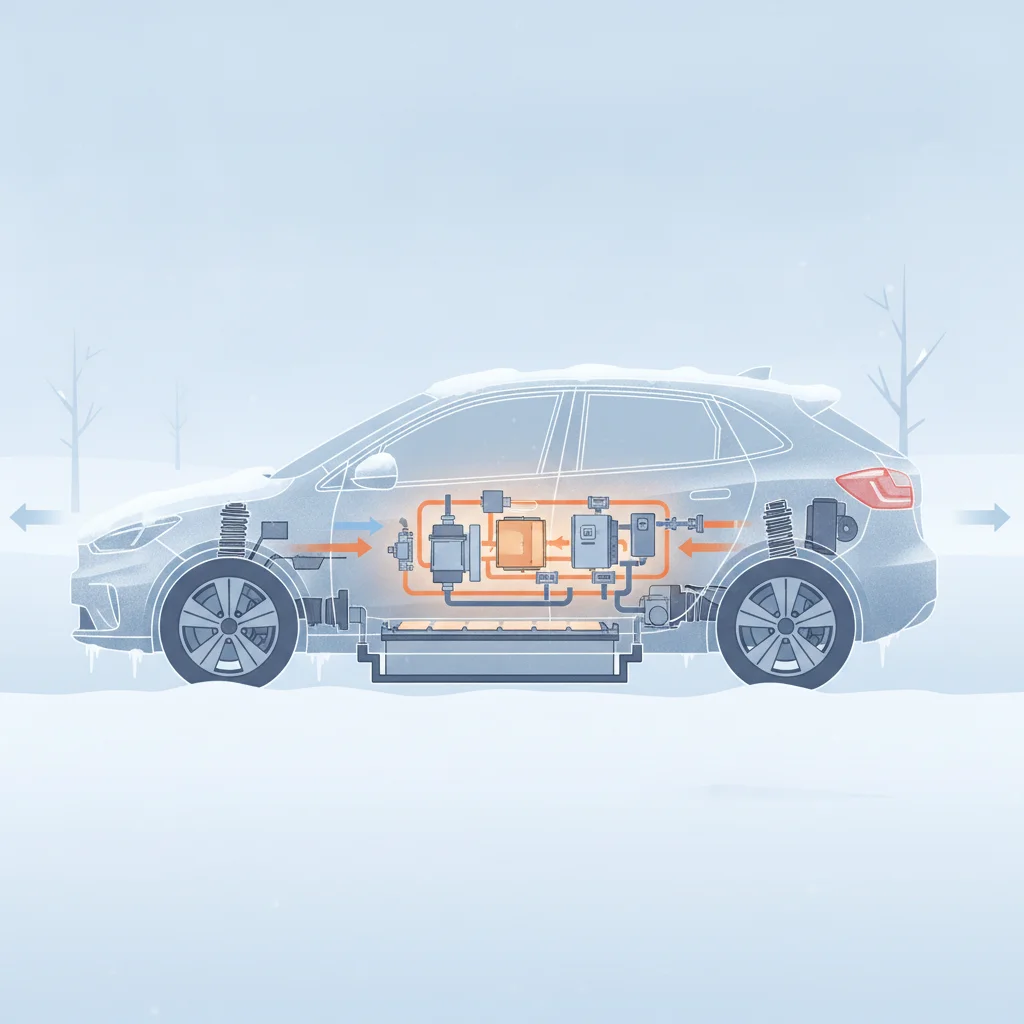
Strip away the marketing language and pre-conditioning is a straightforward idea: use cheap, readily available grid electricity to get your car to a livable temperature before you disconnect from the charger. The cabin reaches your target temperature, the windows defrost, and — on vehicles with active thermal management — the battery pack warms or cools to its most efficient operating range, all before a single mile is driven.
That distinction matters enormously. An EV's HVAC system doesn't run for free. Depending on ambient temperature and the type of heating used, climate control can draw anywhere from 1.5 kW (a heat pump in mild cold) to more than 5 kW (resistive heating in deep winter). Running that load for an hour on a 75-kWh battery pack consumes 5–7% of your usable range before you've left the driveway — and it keeps drawing throughout your commute. Pre-conditioning shifts that energy cost to the grid.
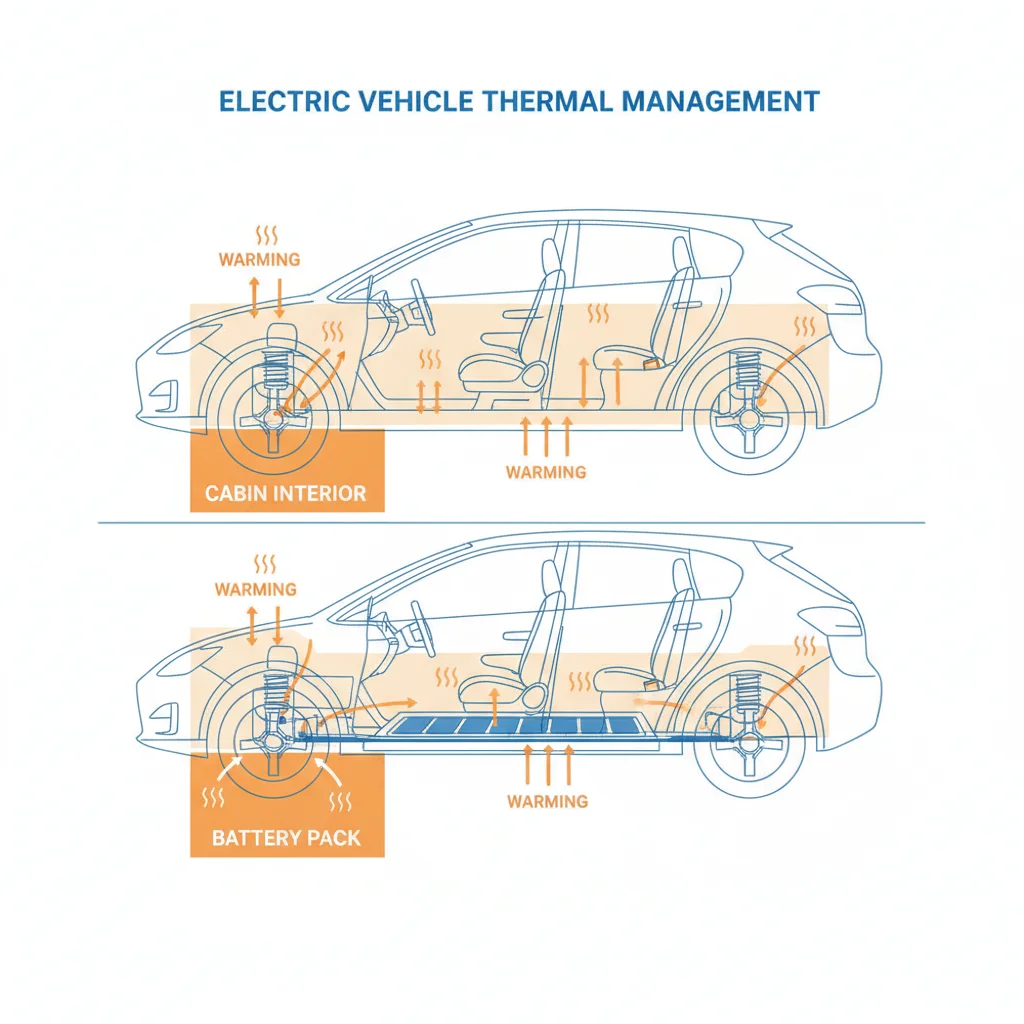
There are actually two distinct processes often grouped under the pre-conditioning label:
- Cabin pre-conditioning — heating or cooling the interior air and surfaces to a set temperature before departure.
- Battery pre-conditioning — warming or cooling the cells themselves to an optimal electrochemical temperature, typically activated automatically when the vehicle knows a DC fast charge session is imminent or when temperatures are extreme.
Not every EV separates these functions in the user interface, but understanding that they're different processes helps clarify when each one matters. For a deeper look at why cells care so much about temperature, see our article on the thermal management systems keeping your EV battery alive.
Battery Pre-Conditioning vs. Cabin Pre-Conditioning
These two functions are often conflated but serve different purposes. Cabin pre-conditioning is about comfort and reclaiming range lost to in-drive heating or cooling. Battery pre-conditioning is about cell performance and charge speed — it brings cells to their optimal electrochemical operating temperature before driving or before a DC fast charge session. Some vehicles, like certain Tesla models, manage battery pre-conditioning automatically based on navigation destination. Others require the driver to enable it manually in settings.
Level 1 Charging and Pre-Conditioning Limits
If your only charging option at home is a standard 120V outlet (Level 1), be aware that in deep cold, the heating demand during pre-conditioning can approach or exceed what the charger delivers — roughly 1–1.4 kW. In practice this means the car may not gain charge during the pre-conditioning window, and state of charge might dip slightly. Upgrading to a Level 2 charger resolves this entirely, as even a modest 7.2 kW charger provides far more power than the HVAC system requires.
The Range Math: Why It Matters Most in Winter
Cold weather is the scenario where pre-conditioning pays its biggest dividend. A 2023 study by Recurrent Auto analyzing data from more than 10,000 U.S. EVs found that range in temperatures near 20°F (-7°C) dropped an average of 25% compared to EPA-rated range under ideal conditions. A significant portion of that loss comes not from reduced battery chemistry performance alone, but from the energy demanded by resistive cabin heating.
41%
Average range loss in 20°F cold with cabin heater on
AAA cold-weather EV testing found that using the cabin heater at 20°F (-7°C) cut average range by 41% compared to EPA ratings.
3–5 kW
Power draw from resistive cabin heating
Resistive electric heaters — used in EVs without heat pumps or as backup systems — can draw 3–5 kW continuously, directly reducing available driving range.
25%
Average range reduction near 20°F
A 2023 Recurrent Auto analysis of over 10,000 U.S. EVs found average range dropped approximately 25% at temperatures near 20°F compared to ideal conditions.
2–3x
Heat pump efficiency advantage over resistive heating
Heat pumps move ambient heat rather than generating it, making them roughly 2–3 times more efficient than resistive coils in moderate cold temperatures.
15–30 min
Typical pre-conditioning time to comfortable cabin temperature
Most EVs reach a comfortable interior temperature within 15–30 minutes when pre-conditioning from a home charger, depending on ambient temperature and vehicle size.
Heat pumps reduce the drain — they move heat rather than generate it, making them 2–3 times more efficient than resistive coils at moderate cold temperatures. But even heat pumps lose efficiency below about 14°F (-10°C) and often revert to resistive heating as a backup. Heat pumps in EVs explained covers why that efficiency gap is so meaningful and which vehicles come equipped with one.
Pre-conditioning sidesteps the problem for the first leg of your journey. A cabin that starts at 68°F needs far less energy to stay warm at highway speeds than one starting at 10°F. The heating system switches to a maintenance mode drawing perhaps 0.5–1.5 kW rather than the 3–5 kW needed to bring the cabin up from ambient. On a typical 30-minute commute, that difference can amount to 1–2 kWh of savings — enough to add 4–7 miles of range depending on the vehicle.
“The single most effective thing an EV driver can do to recover winter range is to pre-condition the cabin while still plugged in. It doesn't require any new technology — just using the feature that's already there.”
— Genevieve Cullen, President, Electric Drive Transportation Association
The effect compounds over longer trips. If you're starting a road trip in sub-freezing weather, a pre-conditioned cabin and battery pack can meaningfully improve your first highway leg before reaching the first DC fast charger. And because battery pre-conditioning raises cell temperatures closer to the optimal 68–77°F range, charge acceptance during that first stop will also be faster — a less obvious but equally real benefit.
Summer Use: Comfort Without the Range Penalty
Winter gets most of the attention, but pre-conditioning in summer heat deserves equal consideration in hot-climate states like Arizona, Texas, and Florida. A car parked in direct sunlight on a 95°F day can reach interior temperatures above 150°F within an hour. Cooling that cabin from 150°F to 72°F demands considerably more energy than maintaining 72°F once reached.
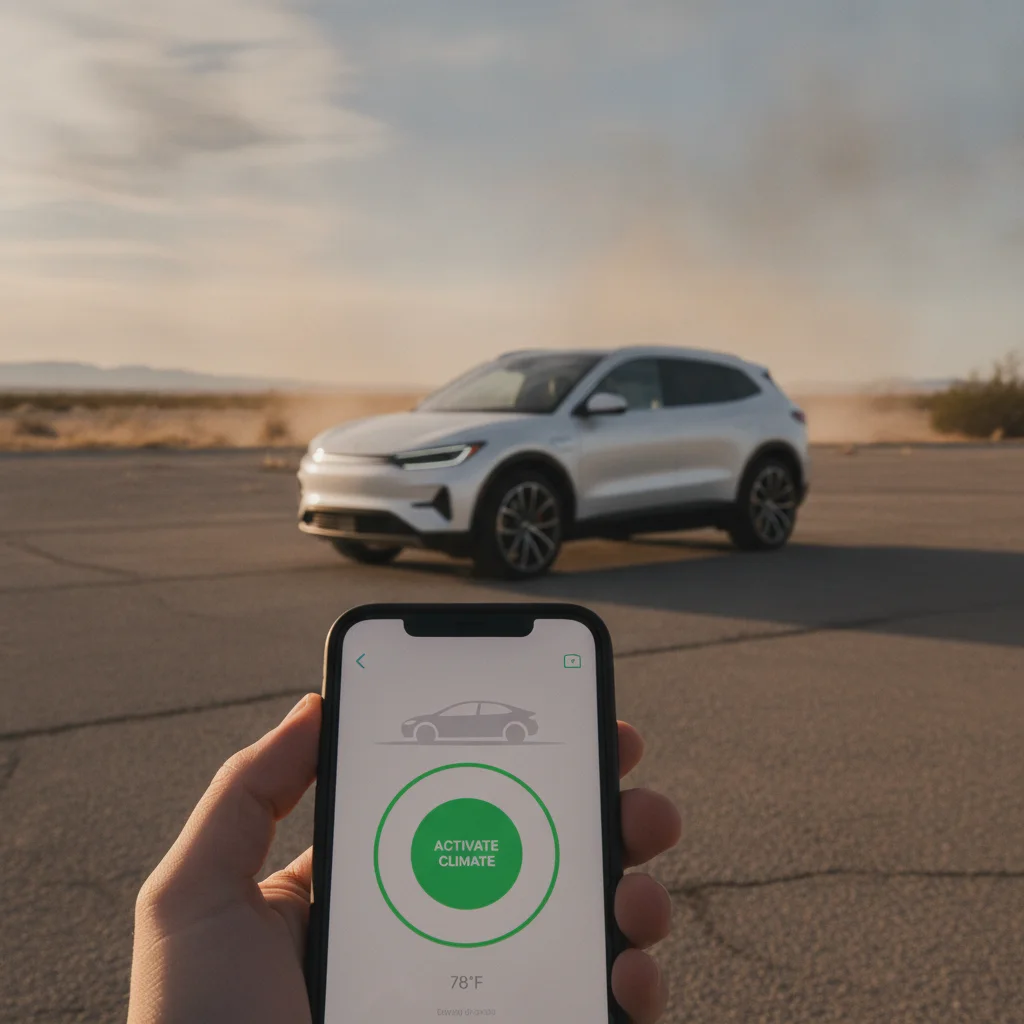
Air conditioning in EVs is compressor-based and draws real power — typically 1–3 kW continuously in hot weather. Starting a summer drive with a pre-cooled cabin reduces how hard the AC has to work during the trip, which translates to a modest but measurable improvement in range. It also protects occupants from the immediate discomfort of entering a dangerously hot vehicle.
There is a secondary benefit often overlooked: battery cooling. Lithium-ion cells degrade faster when repeatedly charged and discharged at high temperatures. If a car sits in the sun and the battery reaches elevated temperatures, some thermal management systems will run cooling even while parked to protect cell health — draining the battery. Pre-conditioning, by cooling the cabin and drawing cooled air across or near the pack, can reduce how aggressively the thermal system has to work after departure. See our broader discussion of how temperature affects EV performance by type for context on how this varies across BEV, PHEV, and HEV architectures.
Use a Moderate Target Temperature
Setting a cabin target of 68–70°F rather than 75°F+ reduces the energy needed for pre-conditioning and gets the cabin to temperature faster. Once you're driving and generating body heat, you can easily bump the temperature up with minimal range impact. Starting lower means the HVAC system reaches its target quickly and switches to a lower-draw maintenance mode before you even leave the driveway.
Schedule for Arrival, Not Departure
Most departure timer systems work backward from your target departure time, not forward from when you plug in. Set the timer for the exact moment you plan to leave — the car handles when to start heating or cooling. If you set it too early and the car finishes conditioning 20 minutes before you leave, you may lose some of that temperature benefit by the time you actually pull out.
How to Use Pre-Conditioning: Apps, Timers, and Settings
The exact interface differs by manufacturer, but the underlying workflow is consistent across most modern EVs:
- Plug in first. Pre-conditioning while unplugged uses stored battery energy. Always ensure the car is connected to a Level 1 or Level 2 charger before activating the feature.
- Set a departure time. Most vehicles and companion apps accept a scheduled departure time and work backward to have the cabin at your target temperature when you leave. Tesla calls this "scheduled departure," while Hyundai and Kia label it "departure time" in the climate settings.
- Adjust target temperature. The default is usually the last cabin temperature setting you used. Setting a moderate target (68–70°F) rather than a very warm or very cold one reduces the energy draw and gets there faster.
- Enable battery pre-conditioning separately if available. Some vehicles — notably Tesla's "Navigate on Autopilot" and Hyundai IONIQ 6 — automatically pre-condition the battery when a DC fast charger is the next destination. Others require a manual toggle in the settings menu.
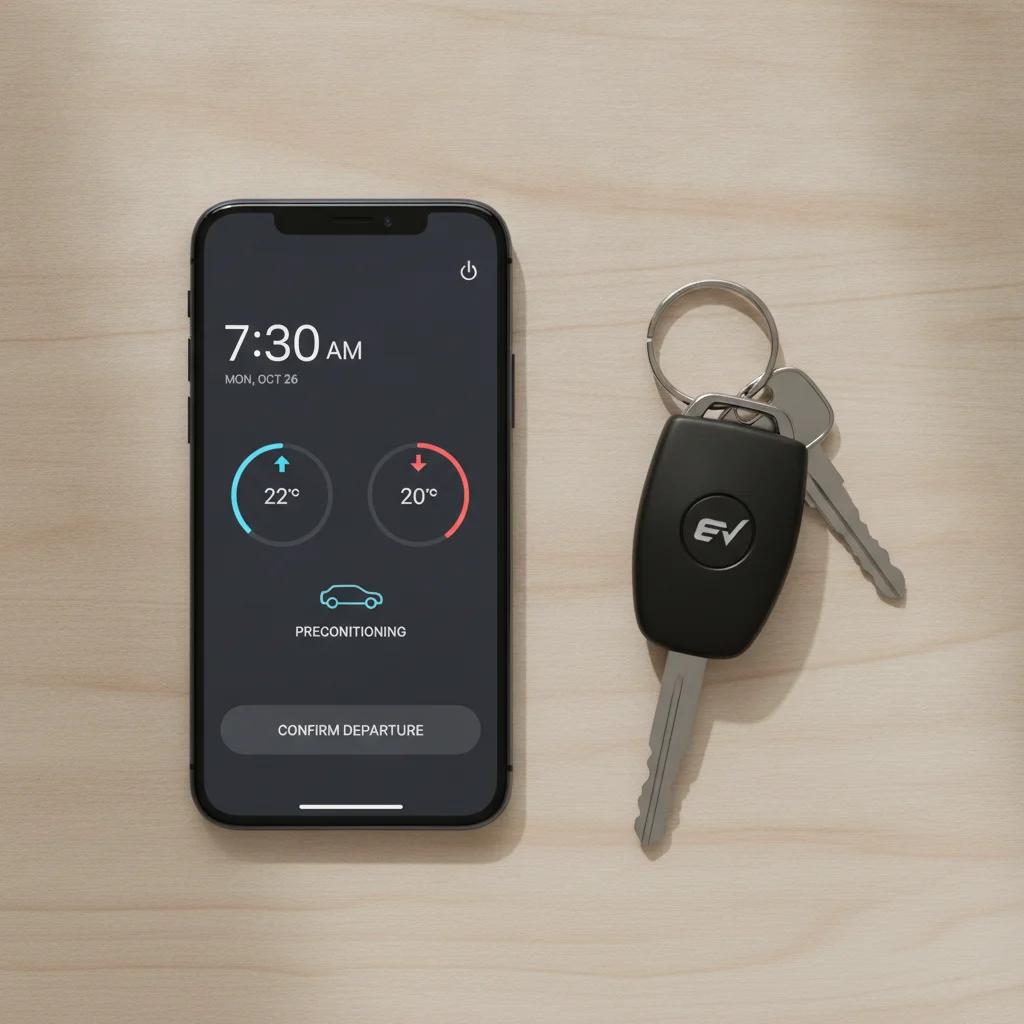
Remote activation via a smartphone app provides more flexibility. You can trigger pre-conditioning from inside a building without setting a recurring timer — useful when your schedule is irregular. Most manufacturer apps (Tesla, MyHyundai, MyKia, FordPass, MyChevy) support this. Third-party apps with OBD-II adapters can enable similar functionality on older vehicles with compatible hardware, though with less reliability.
Battery Pre-Conditioning vs. Cabin Pre-Conditioning
These two functions are often conflated but serve different purposes. Cabin pre-conditioning is about comfort and reclaiming range lost to in-drive heating or cooling. Battery pre-conditioning is about cell performance and charge speed — it brings cells to their optimal electrochemical operating temperature before driving or before a DC fast charge session. Some vehicles, like certain Tesla models, manage battery pre-conditioning automatically based on navigation destination. Others require the driver to enable it manually in settings.
Level 1 Charging and Pre-Conditioning Limits
If your only charging option at home is a standard 120V outlet (Level 1), be aware that in deep cold, the heating demand during pre-conditioning can approach or exceed what the charger delivers — roughly 1–1.4 kW. In practice this means the car may not gain charge during the pre-conditioning window, and state of charge might dip slightly. Upgrading to a Level 2 charger resolves this entirely, as even a modest 7.2 kW charger provides far more power than the HVAC system requires.
One practical consideration: Level 1 charging (a standard 120V household outlet) delivers only 1–1.4 kW. A high-demand resistive heater pre-conditioning in deep cold may actually draw more power than the charger supplies, causing the state of charge to drop slightly during the process. On Level 2 (240V, typically 7–11 kW), the charger easily outpaces the HVAC demand. If you're regularly pre-conditioning in winter, a Level 2 home charger is strongly worth considering.
When Pre-Conditioning Is Worth the Effort — and When It Isn't
Pre-conditioning is unambiguously beneficial in two conditions: temperatures below 32°F (0°C) and above 90°F (32°C). The range and comfort gains are well-documented and easily felt. But the feature involves a small but real investment of time — scheduling it, remembering to plug in, adjusting for irregular departure times — and that overhead isn't always justified.
In mild weather (50–75°F), cabin HVAC demand is minimal. A car at 65°F ambient temperature needs almost no energy to reach a comfortable cabin temperature, meaning pre-conditioning delivers little measurable range benefit. The comfort improvement is marginal as well. In these conditions, pre-conditioning is optional at best.
For drivers who frequently vary their departure times or rarely commute on a set schedule, the timer-based approach can feel unreliable. If you trigger remote pre-conditioning from the app but then delay your departure by 30 minutes, the cabin may have already returned to ambient temperature by the time you leave. Some vehicles handle this by maintaining temperature in a low-power hold mode for a defined window after the scheduled time, but not all do.
Use a Moderate Target Temperature
Setting a cabin target of 68–70°F rather than 75°F+ reduces the energy needed for pre-conditioning and gets the cabin to temperature faster. Once you're driving and generating body heat, you can easily bump the temperature up with minimal range impact. Starting lower means the HVAC system reaches its target quickly and switches to a lower-draw maintenance mode before you even leave the driveway.
Schedule for Arrival, Not Departure
Most departure timer systems work backward from your target departure time, not forward from when you plug in. Set the timer for the exact moment you plan to leave — the car handles when to start heating or cooling. If you set it too early and the car finishes conditioning 20 minutes before you leave, you may lose some of that temperature benefit by the time you actually pull out.
Battery pre-conditioning before DC fast charging is almost always worth enabling when available, regardless of season. It has no cabin comfort component but can reduce charging time and protect long-term battery health — a worthwhile trade-off with essentially no downside when the car is already plugged in. This ties directly into how HVAC usage and thermal loads interact with overall efficiency, which we examine in depth in how HVAC use affects EV range.
Owners storing their EVs for extended periods should note that pre-conditioning is not a substitute for proper storage preparation. Extended periods of non-use require different battery management strategies. Our guide on keeping an EV in storage covers what to do when the car won't be driven for weeks or months.
Real-World Range Impact: What the Data Shows
Quantifying the exact range savings from pre-conditioning is difficult because results depend on vehicle model, heater type, outside temperature, cabin volume, and drive duration. But several independent analyses provide useful reference points.
AAA's repeated cold-weather EV testing found that at 20°F (-7°C), EVs lost an average of 41% of rated range when the cabin heater was used. At the same temperature without the heater running — simulating a pre-warmed cabin that requires only minimal maintenance heating — range loss dropped to approximately 12%. That gap represents the fraction attributable to cabin heating load rather than reduced battery chemistry performance alone.
A useful way to frame it: if your EV is EPA-rated at 250 miles and you drive a 40-mile round-trip commute in winter, a 41% range reduction means your effective available range drops to about 147 miles. With pre-conditioning shifting the initial heating load to the grid and reducing ongoing HVAC demand, you might recover 50–80 miles of that theoretical capacity — more than enough to eliminate range anxiety on a typical winter commute.
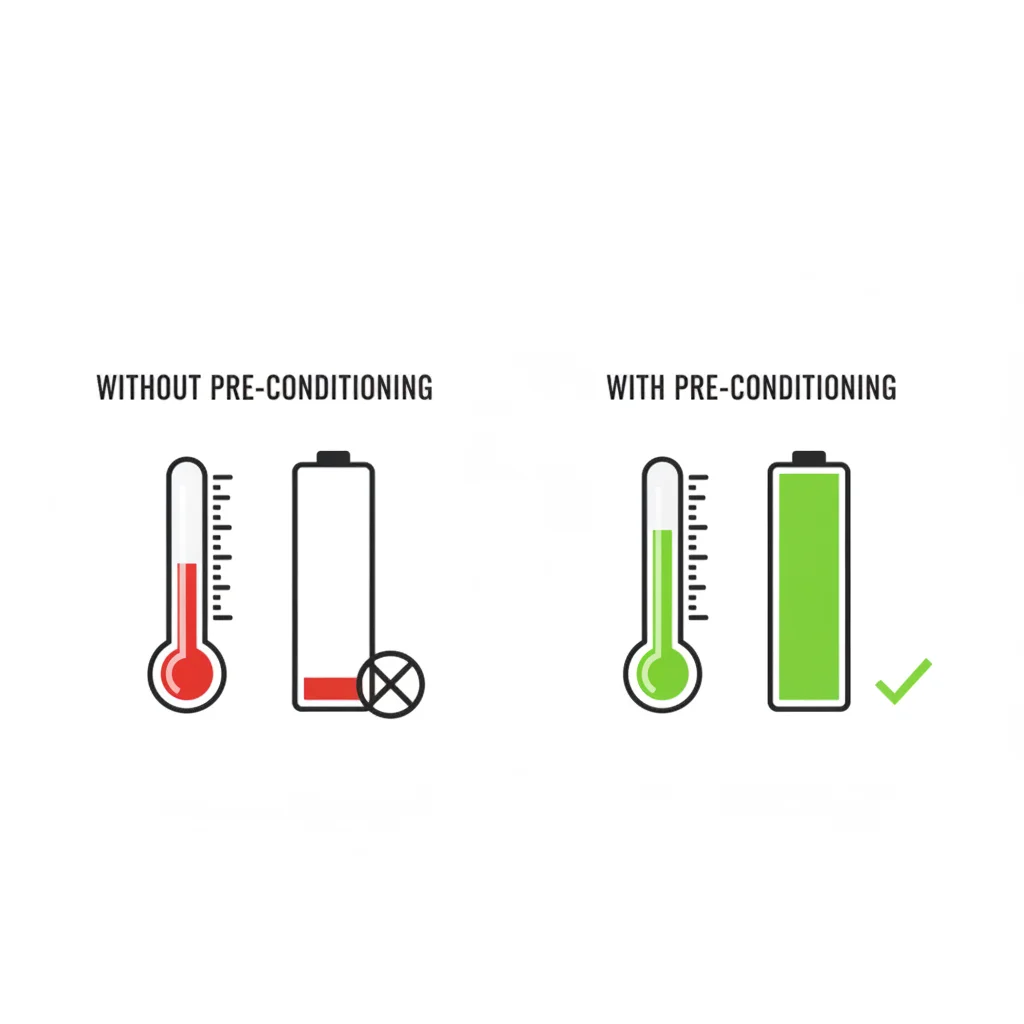
The savings are less dramatic on short trips. If you drive five miles to a grocery store, the difference between a pre-conditioned and non-pre-conditioned cabin is measured in fractions of a mile. The feature earns its keep on commutes of 20 miles or more, on road trips, and on any day when temperatures are extreme enough that the HVAC system runs near full power for an extended period.
For ongoing ownership decisions around EV maintenance, efficiency, and cost management, the EV maintenance basics hub is a useful reference for understanding what separates thoughtful EV ownership from expensive guesswork.
All claims are backed by peer-reviewed research. Sources on request.