Key Takeaways
Why EV Storage Prep Is Different From Parking a Gas Car
Parking a conventional gas vehicle for a few months is relatively straightforward — disconnect the battery, add fuel stabilizer, and you're mostly done. Electric vehicles require a more deliberate approach. The high-voltage lithium-ion battery pack at the heart of every EV is the single most expensive component in the car, and it degrades based on chemistry, not just use. Sitting at the wrong state of charge, in the wrong temperature, for the wrong length of time will cost you real range — permanently.
There are also software systems, thermal management loops, 12V auxiliary batteries, tire compounds, and brake components that all behave differently when a vehicle sits idle for weeks or months. Understanding what each system needs during storage is the difference between pulling your EV out of the garage in the same condition you parked it versus discovering reduced range, a dead 12V battery, or warped brake rotors.
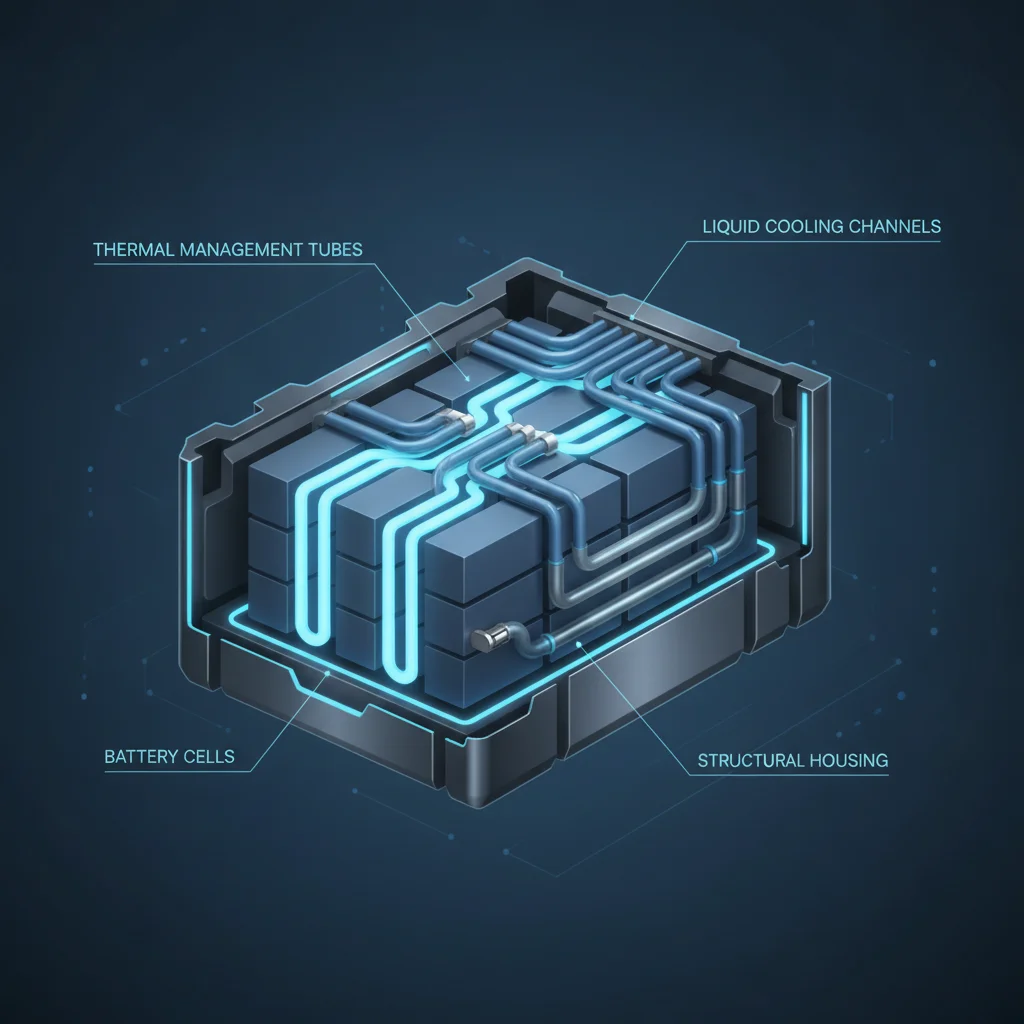
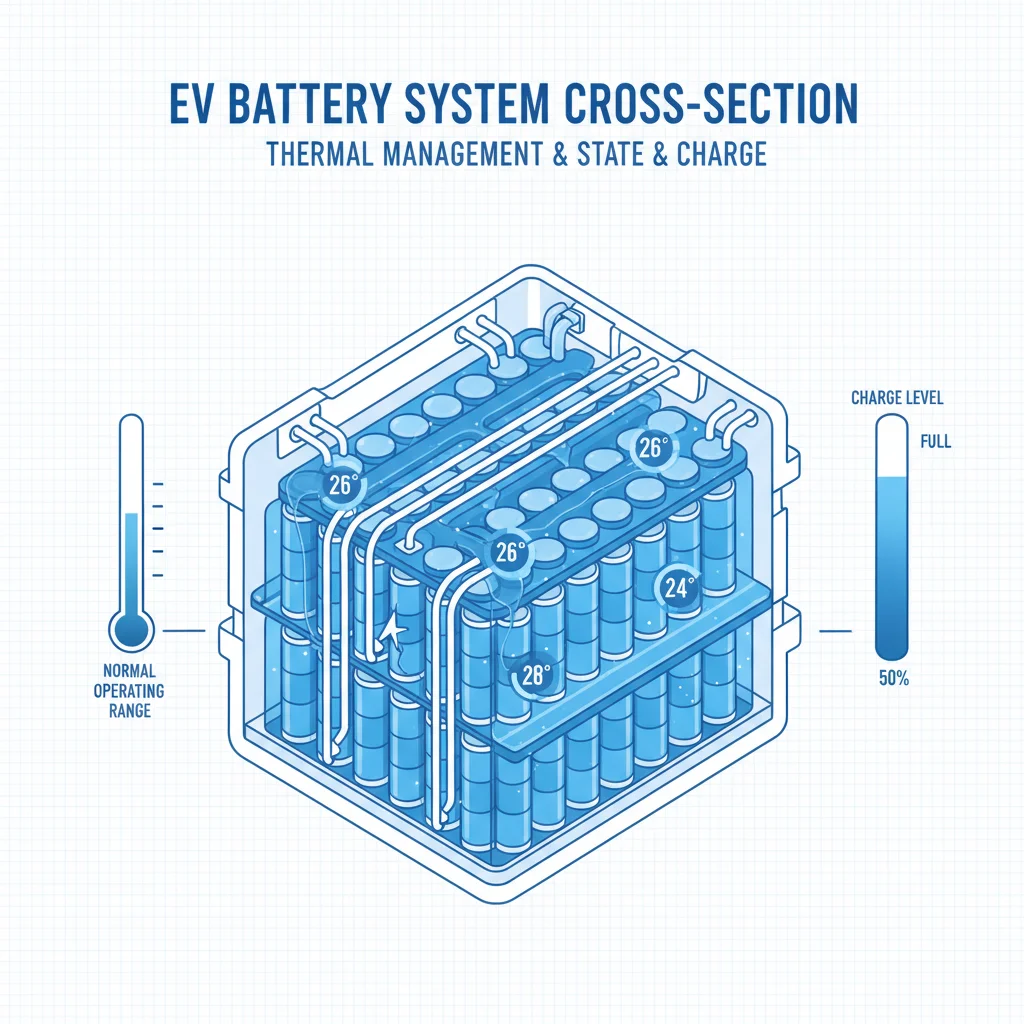
To understand why the battery is so central to this prep process, it helps to understand how your EV manages heat and cell health during normal operation. Our article on EV thermal management systems explains the liquid cooling and cell-level controls that keep packs healthy — systems you'll want to account for during storage. And if you want a broader picture of EV upkeep from purchase to resale, see everything that goes into maintaining an EV over its lifetime.
What You'll Need Before You Start
Before beginning your storage prep, gather the tools and information you'll need. Some steps are quick app-based actions; others require physical access to the vehicle and a bit of equipment.
What you will need
Digital tire pressure gauge
Accurately measure and set tire pressure before storage and upon return to service.
Level 1 trickle charger (standard 120V outlet)
Maintain battery state of charge during extended storage without overshooting target charge level.
Breathable car cover
Protect the exterior from dust and moisture while allowing airflow to prevent condensation buildup.
Smart plug or timer outlet
Control when trickle charging occurs to prevent the pack from reaching full charge during storage.
Manufacturer smartphone app
Monitor battery state of charge remotely and receive alerts if the level drops below a safe threshold.
Foam tire cradles or flat-spot prevention pads
Distribute vehicle weight evenly across the tire contact patch to minimize flat-spotting during long idle periods.
Step-by-Step: Preparing Your EV for Extended Storage
Follow these steps in order. Some are one-time actions; others establish conditions you'll want to check on periodically if the storage period extends beyond 30 days.
Set the Battery to the Right State of Charge
Target a state of charge (SoC) between 50% and 80% when you park the vehicle for storage. This range sits in the middle of the battery's electrochemical comfort zone — far enough from full charge to avoid lithium plating stress, and far enough from empty to prevent deep discharge damage during self-discharge over weeks or months.
Do not store at 100%. Many drivers assume a full battery is the safest starting point, but high SoC accelerates cathode degradation, especially in heat. Equally, do not store at or near 0% — a deeply discharged lithium pack can suffer irreversible cell damage. If your vehicle uses a charge limit setting (most do), set it to 80% and charge to that level the day before storage begins.
For context on why this matters at the chemistry level, see EV battery health habits.
Disable Scheduled Charging and Climate Automations
Before leaving the vehicle, go into your EV's settings — either via the touchscreen or the companion app — and disable any scheduled charging routines or departure pre-conditioning schedules. These features are useful in daily operation, but during storage they can cycle the charger on and off unnecessarily, draw from the 12V auxiliary battery, and create false charge events that push the pack above your target SoC.
On most platforms, this is found under Charging → Schedule or Climate → Scheduled Departure. Disable both. If your vehicle has a "Sentry Mode" or always-on security system that draws significant background power (as on some Teslas), consider disabling that as well for the duration of storage to reduce vampire drain.
Learn more about how pre-conditioning interacts with battery health in pre-conditioning your EV.
Set Up a Trickle Charge Connection If Available
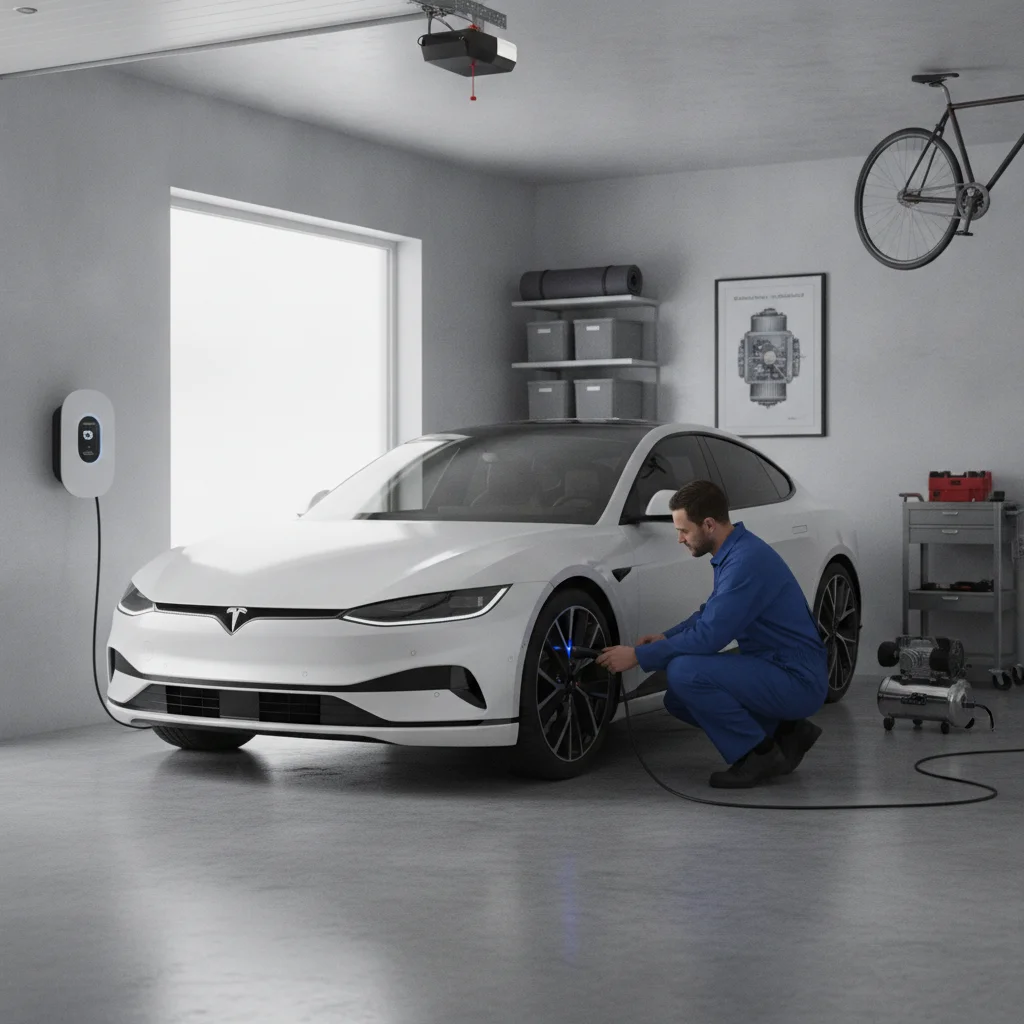
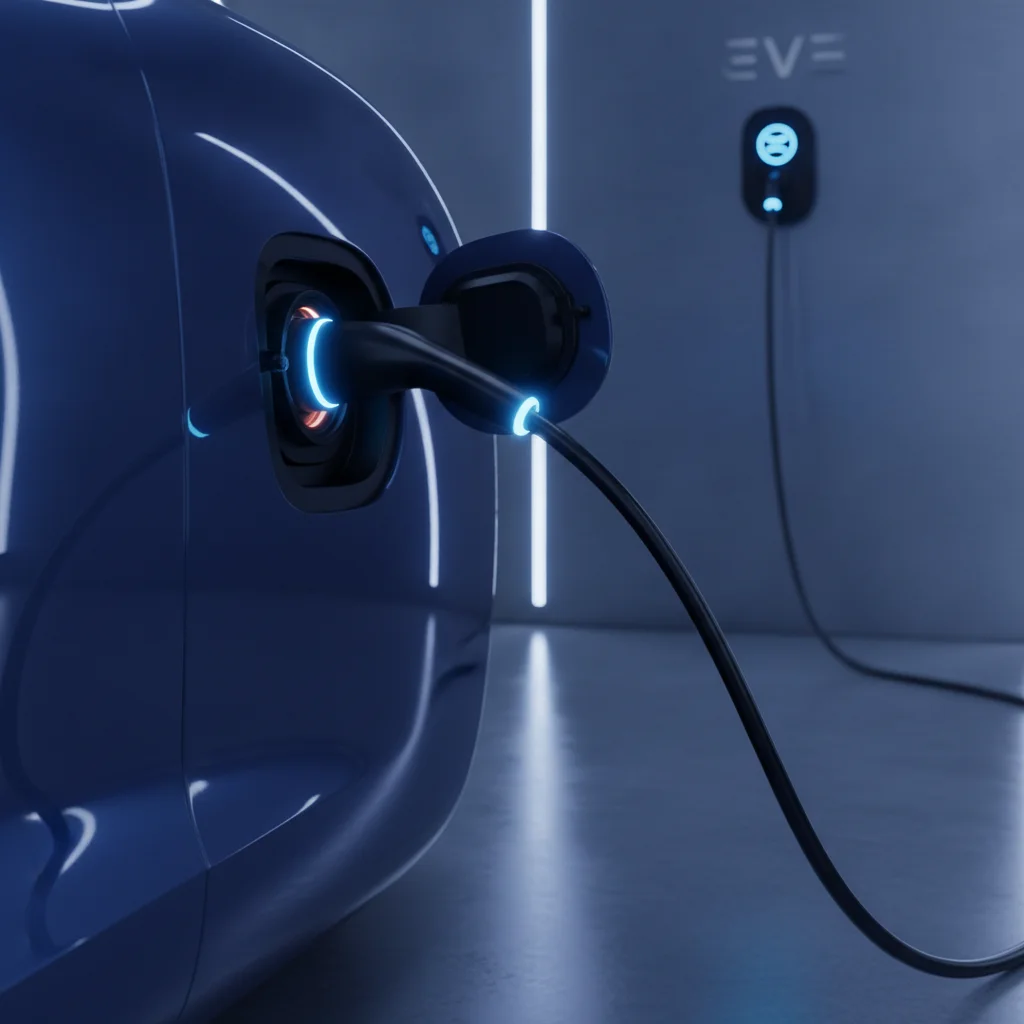
If you have access to a Level 1 (120V household outlet) or Level 2 charger at the storage location, leave the vehicle plugged in. Most EVs have a storage or maintenance mode that uses the connection to hold the pack at your preset charge limit without continuing to cycle power into a full battery. This is the single most effective way to prevent self-discharge from pushing the battery below a safe level during long storage periods.
If you're using a standard outlet and are concerned about the pack creeping above your 80% target, use a smart plug or outlet timer to limit charging windows. For example, program the plug to allow charging only between midnight and 4 a.m. — enough to top off gradual self-discharge without overshooting.
If no outlet is available at the storage location, you'll need to visit the vehicle periodically — at least once a month for storage beyond 30 days — to check SoC and charge as needed. For guidance on home charging infrastructure, see home charging setup options.
Inflate Tires Slightly Above Recommended Pressure
Tires lose approximately 1–2 PSI per month naturally, and a vehicle sitting stationary develops flat spots — a deformation of the tire contact patch caused by sustained load in one position. To compensate, inflate all four tires to the upper end of the recommended pressure range, typically 3–5 PSI above the standard recommended PSI found on the door jamb sticker. Do not exceed the maximum PSI printed on the tire sidewall.
For storage beyond two months, consider placing the vehicle on jack stands to take load off the tires entirely, or use foam tire cradles (flat-spot prevention pads) designed to distribute weight more evenly. Flat-spotting is more pronounced in colder temperatures, where rubber hardens and is less able to recover from deformation.
Address the 12V Auxiliary Battery
Every EV — regardless of brand — carries a conventional 12V lead-acid or lithium auxiliary battery that powers low-voltage systems: door locks, lights, the display, and the contactors that connect the main pack to the drivetrain. This battery drains over time, especially if any background systems remain active. A dead 12V battery will prevent you from opening or starting the vehicle even if the main pack has plenty of charge.
If the vehicle will be unplugged during storage, consider disconnecting the 12V battery negative terminal entirely for storage periods exceeding 30 days. Consult your owner's manual first — some EVs require specific procedures to preserve settings or avoid fault codes when the 12V is disconnected. If you leave it connected, plan to check voltage periodically; a healthy 12V battery should read 12.4–12.7V at rest.
Clean the Vehicle and Protect Exposed Surfaces
Wash and dry the vehicle before storage. Dirt, bird droppings, tree sap, and road salt left on paint for months cause corrosion and etching that are difficult to reverse. Apply a coat of wax or paint sealant if you haven't recently. For the undercarriage, a quick rinse to remove accumulated grime is especially valuable if you've been driving in areas with road salt.
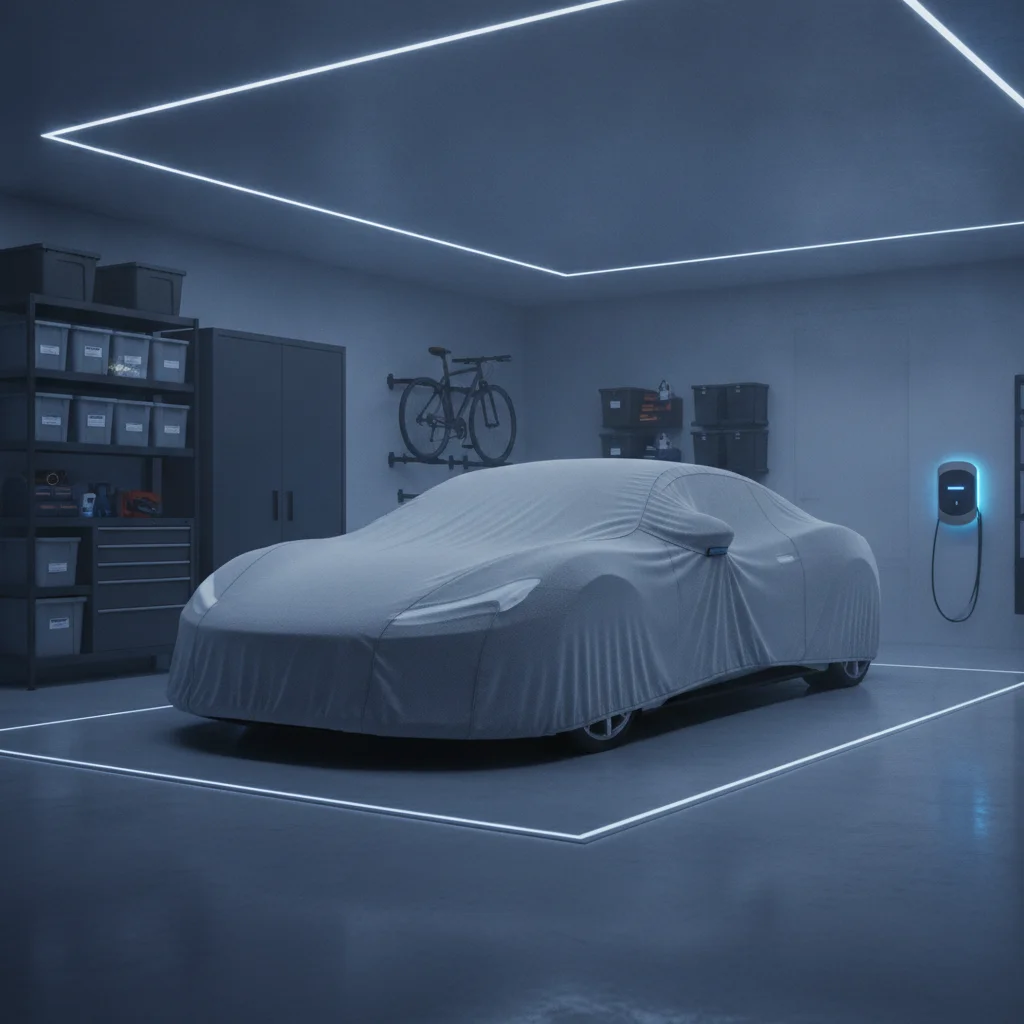
Lightly lubricate door seals and trunk gaskets with a silicone-based lubricant to prevent them from drying out and cracking during storage. Leave the windows closed but crack the sunroof shade (not the glass) or leave a small gap in ventilation to prevent musty odors from building up inside. Use a breathable fabric car cover rather than a plastic tarp — plastic traps moisture and can cause paint damage.
Apply a thin coat of brake cleaner or silicone-free lubricant to the brake rotors is not recommended — surface rust on rotors is normal and clears off in the first few stops. No action is needed on rotors prior to storage.
Document the Vehicle's State and Set a Check-In Schedule
Before walking away, take a quick inventory: photograph the odometer reading, note the current SoC percentage, record tire pressure readings on all four corners, and note any existing cosmetic issues. This baseline is useful both for your own reference and for insurance purposes if anything happens during storage.
Set a recurring calendar reminder to check in on the vehicle. For storage under 30 days, a single check before retrieval is usually sufficient. For storage beyond 30 days, plan a monthly visit to verify SoC (charge if it's dropped below 30%), check tire pressure, and briefly run the vehicle's systems if possible. Most manufacturers also recommend moving the vehicle a few feet periodically during very long storage to prevent sustained flat-spotting.
Never Store a Fully Charged or Nearly Empty Battery
A 100% state of charge during storage accelerates cathode stress and long-term capacity loss, particularly in heat. A battery left below 10–15% risks falling into deep discharge, which can cause cell-level damage that reduces usable capacity permanently. The 50–80% window is not a suggestion — it's the range where lithium-ion chemistry is most stable at rest.
Heat Is the Biggest Storage Threat
Sustained ambient temperatures above 85°F (29°C) combined with a high state of charge are the worst conditions for a stored lithium-ion pack. If you cannot access climate-controlled storage in a hot climate, keep the charge level at the lower end of the safe range (around 50%) and inspect the vehicle more frequently. Even modest shade can meaningfully reduce internal battery temperature during peak summer months.
Use Your Manufacturer App as a Remote Watchdog
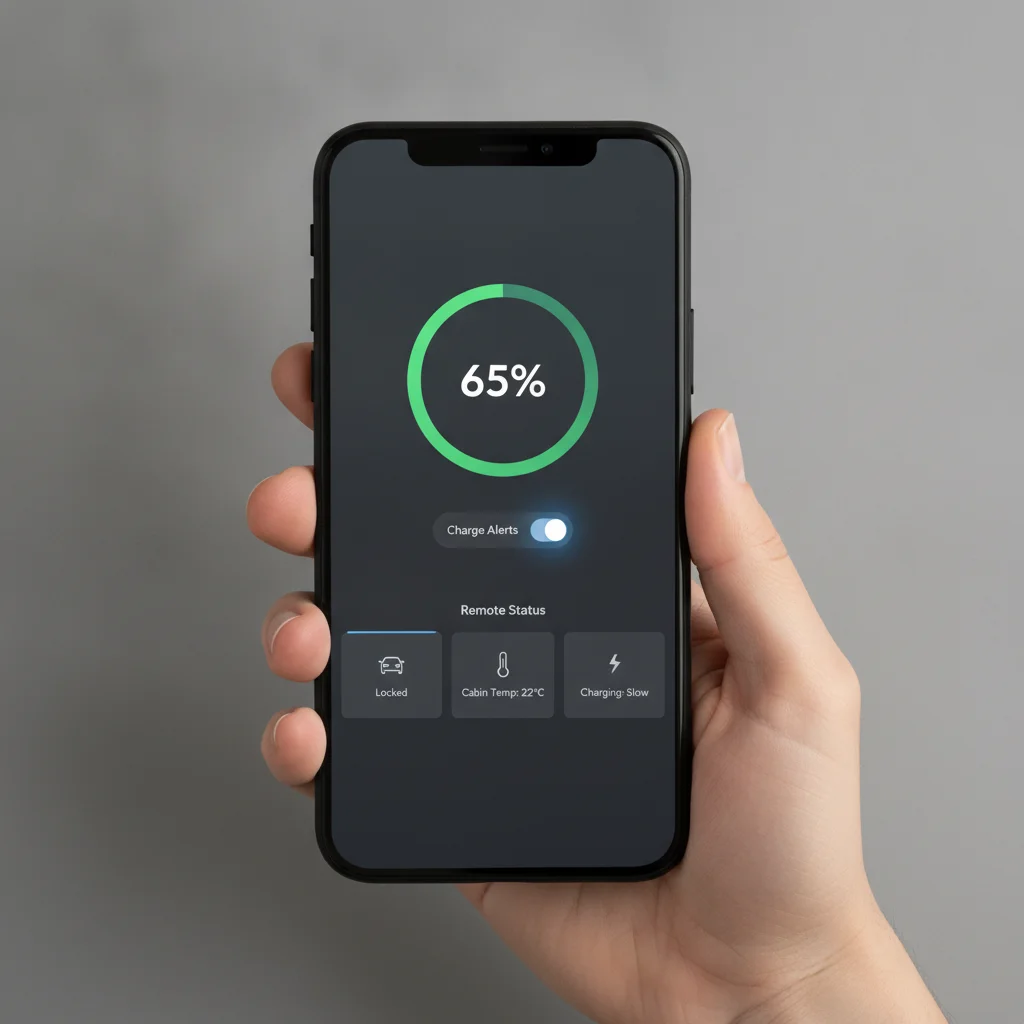
Most EV companion apps let you set charge level alerts and view battery status without physically visiting the vehicle. Configure a low-charge notification at 20% state of charge before you leave. This gives you a wide margin to intervene — either by visiting to charge or by asking someone nearby to plug in the vehicle — before the battery reaches a dangerous level.
Storage Insurance: A Quick Win Worth a Phone Call
If your EV will be off the road for 60 days or more, call your insurer before parking it. Many carriers will switch you to a comprehensive-only policy while the vehicle is stored, removing liability and collision coverage you don't need and reducing your monthly premium. When you're ready to return to driving, simply call back to restore full coverage — usually with no penalty.
Seasonal Transition: Storage to Winter Driving
If your storage period ends heading into cold-weather months, you'll need additional prep beyond the return-to-service checklist. Cold weather affects EV range, battery warm-up behavior, and tire performance in ways that warrant a separate review. See our guide on <a href="/electric-vehicles/ev-ownership-costs/ev-maintenance-basics/owning-an-ev-in-winter-battery-tires-and-cold-weather-upkeep">owning an EV in winter</a> for the full seasonal prep checklist.
Special Considerations: Temperature, Duration, and Monitoring
Not all storage situations are the same. A vehicle stored for three weeks in a mild-climate garage needs far less active management than one sitting for four months in a Minnesota winter or a Nevada summer. Here's how to calibrate your approach.
Temperature Extremes
Lithium-ion batteries degrade faster at both high and low temperature extremes — but heat is the greater long-term enemy. Sustained temperatures above 85°F (29°C) accelerate capacity fade, particularly when combined with a high state of charge. If you're storing in a hot climate and cannot access climate-controlled space, prioritize keeping the charge level at the lower end of the 50–80% range. Cold temperatures temporarily reduce range but don't permanently degrade cells the way heat does — though a deeply discharged battery left in freezing conditions can suffer permanent damage.
For deeper background on how EV thermal systems protect cells during temperature stress, see our explainer on EV battery thermal management.
Duration: Short vs. Long Storage
| Storage Duration | Key Risks | Minimum Actions |
|---|---|---|
| 2–4 weeks | Tire flat-spotting, minor charge loss | Set charge to 50–80%, check tire pressure |
| 1–3 months | 12V battery drain, brake corrosion, larger charge loss | All above + disable scheduled charging, consider trickle charge |
| 3+ months | Significant battery self-discharge, potential deep discharge | Full prep checklist, monthly check-ins, trickle charger required |
Remote Monitoring
Most modern EVs — Teslas, Chevy Equinox EVs, Hyundai Ioniq models, Ford Mustang Mach-Es, and others — have companion apps that display current state of charge, estimated range, and system alerts. Set up notifications before you leave so you're alerted if the battery level drops below a threshold you set, typically 20%. Some vehicles also allow you to trigger a climate event or check on the 12V battery remotely. Use these features — they're exactly what they're designed for.
A Dead 12V Battery Locks You Out Entirely
Unlike a gas car, where a dead 12V battery is mostly an inconvenience, in most EVs the 12V battery controls the contactors that allow the main pack to connect to the drivetrain. If it dies while you're in storage, you may not be able to open the vehicle, charge it, or drive it away without a service call. Check your 12V health before storage and monitor it periodically — especially if the vehicle will be unplugged.
Returning Your EV to Service After Storage
The steps you take when pulling your EV out of storage matter almost as much as the prep itself. Don't just charge to full and drive away — take a few minutes to inspect and restore systems.
- Check tire pressure first. Even with pre-storage inflation, tires will have lost some pressure. Bring them to the manufacturer's recommended PSI before driving. If you notice flat-spotting (a thumping sensation at low speeds), it will usually resolve after a few miles of driving at normal temperatures.
- Inspect brake rotors visually. A thin layer of surface rust on rotors is normal after extended storage. It will clear off within the first few brake applications. If you notice squealing that persists beyond a few miles, have the brakes inspected.
- Reconnect the 12V battery if disconnected. Allow the vehicle's systems to initialize fully before attempting to charge or drive.
- Charge gradually back toward your normal daily level. Don't rush straight to 100%. Bring the pack up to your usual operating range — typically 80% for daily use — and check that charging behavior is normal with no error codes.
- Check for software updates. If your vehicle received over-the-air updates during storage (many EVs pull updates when connected to Wi-Fi even when parked), review the update notes and accept any pending installations before your first drive.
- Test all climate and driver-assist systems in a safe, low-speed environment before resuming normal driving patterns.
For ongoing habits that protect battery health in daily use after you're back on the road, see our guide on EV battery health habits that preserve long-term capacity. And if you're heading into cold weather after storage ends, owning an EV in winter covers the additional steps needed for seasonal transition.

All claims are backed by peer-reviewed research. Sources on request.