Key Takeaways
Our Verdict
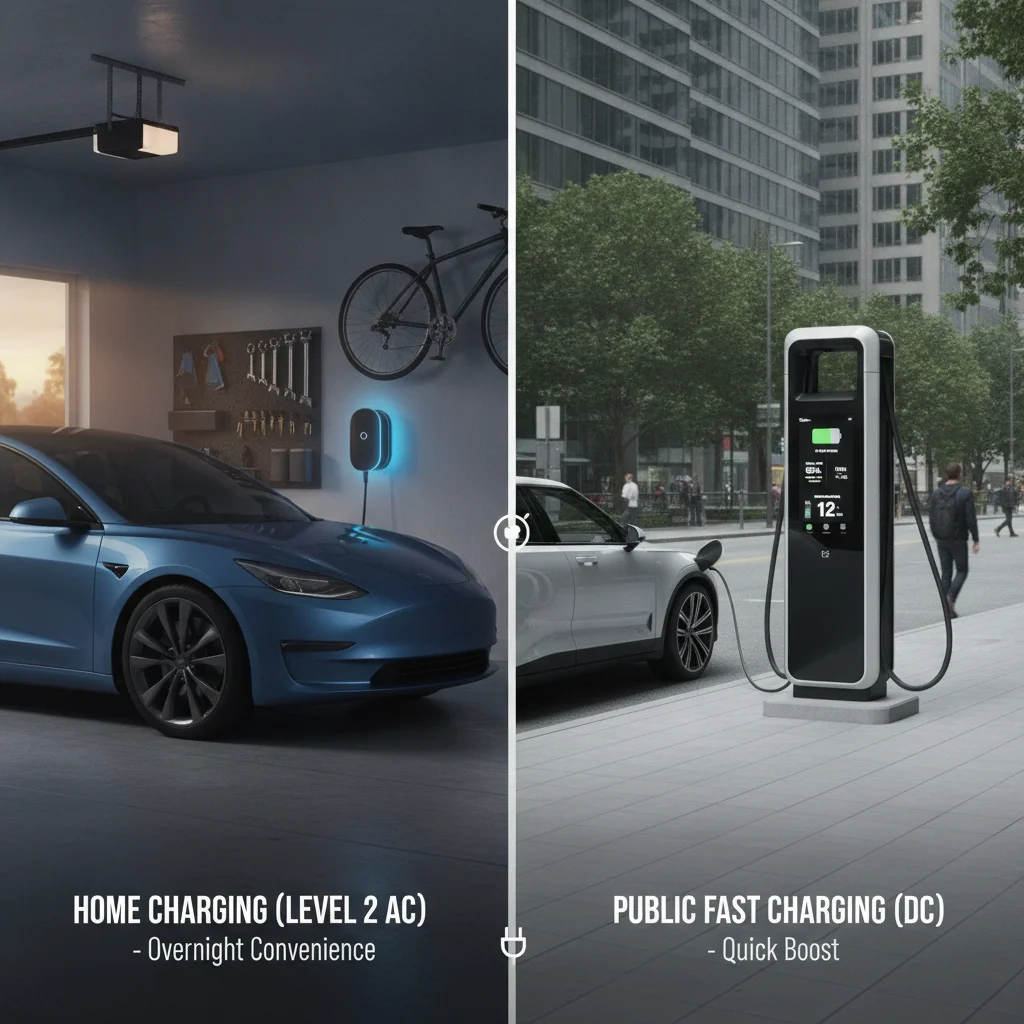
For the vast majority of EV owners, Level 2 home charging is the financial and practical sweet spot — low per-kWh cost, sufficient overnight speed, and manageable installation expense. Level 1 works for short-range plug-in hybrids and light daily drivers who can tolerate slow replenishment. DC fast charging is best treated as a road-trip tool, not a daily habit, because its premium pricing compounds quickly over thousands of miles.
| Best for | Recommended |
|---|---|
| Daily home charging for most battery electric vehicle owners | Level 2 |
| PHEV owners or those driving fewer than 30 miles per day | Level 1 |
| Long-distance travel and road trips | DC Fast Charging |
| Apartment dwellers or those without home charging access | Level 2 (public) supplemented by DC Fast Charging |
Why Charging Level Matters More Than Most Buyers Realize
When most people shop for an EV, they fixate on range. But range anxiety is really a charging anxiety — specifically, anxiety about how quickly and how cheaply you can put electrons back into the battery. The answer depends almost entirely on which level of charging you use, and the three available levels differ by an order of magnitude in both speed and cost.
Understanding the difference between AC and DC charging is the starting point. Level 1 and Level 2 both deliver alternating current that an onboard charger converts to DC inside the car. DC fast charging bypasses that onboard charger and pushes direct current straight into the battery pack, which is why it's so much faster — and why the hardware on both ends is far more expensive.
What rarely gets discussed in dealership showrooms is how dramatically charging level affects the total cost of ownership over three to five years. A driver who relies primarily on public DC fast charging for daily top-ups can spend two to three times more on fuel than someone who charges overnight at home on Level 2. That gap, compounded over 50,000 miles, can easily exceed $3,000 — enough to offset a significant portion of the fuel savings that made the EV appealing in the first place.
This guide breaks down each charging level honestly: what it costs to install, what it costs per mile, how fast it works in real-world conditions, and when each approach makes genuine financial sense.
Level 1 Charging: The Humble 120-Volt Option
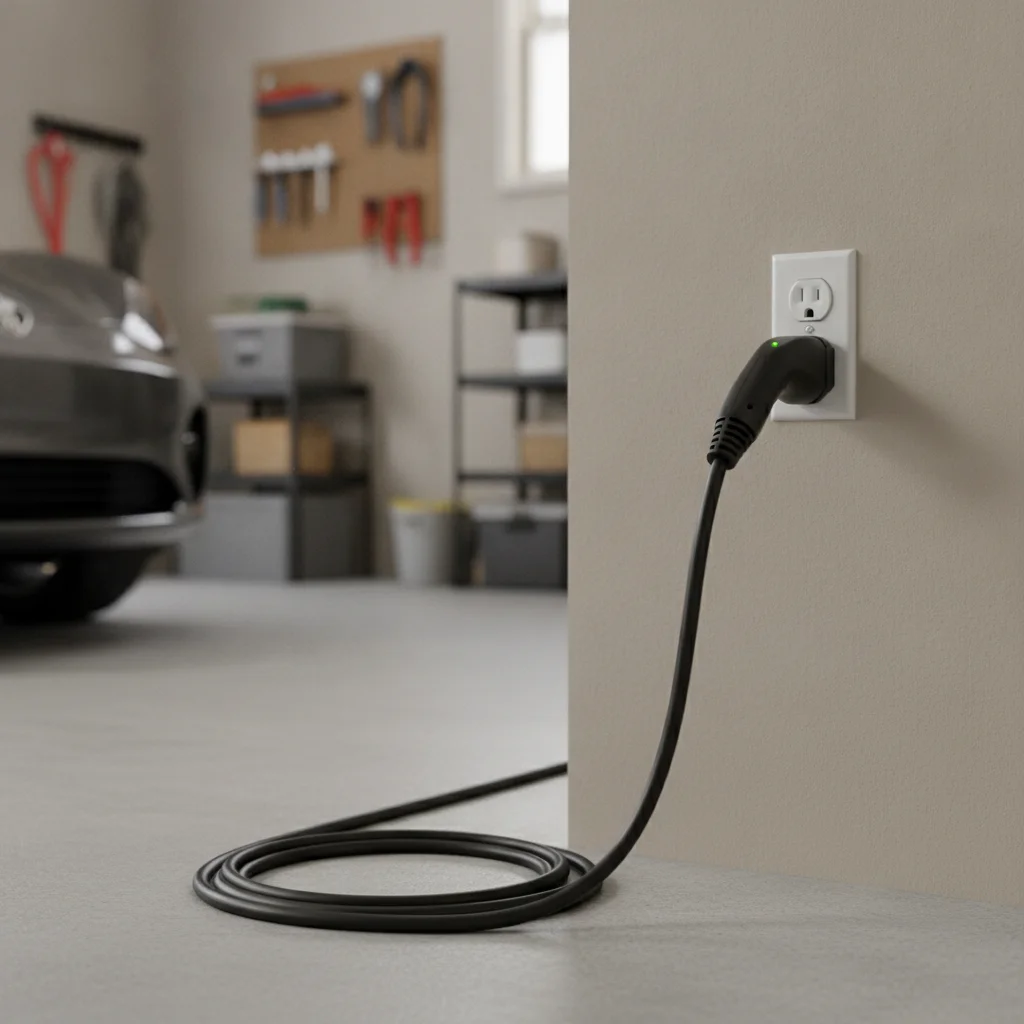
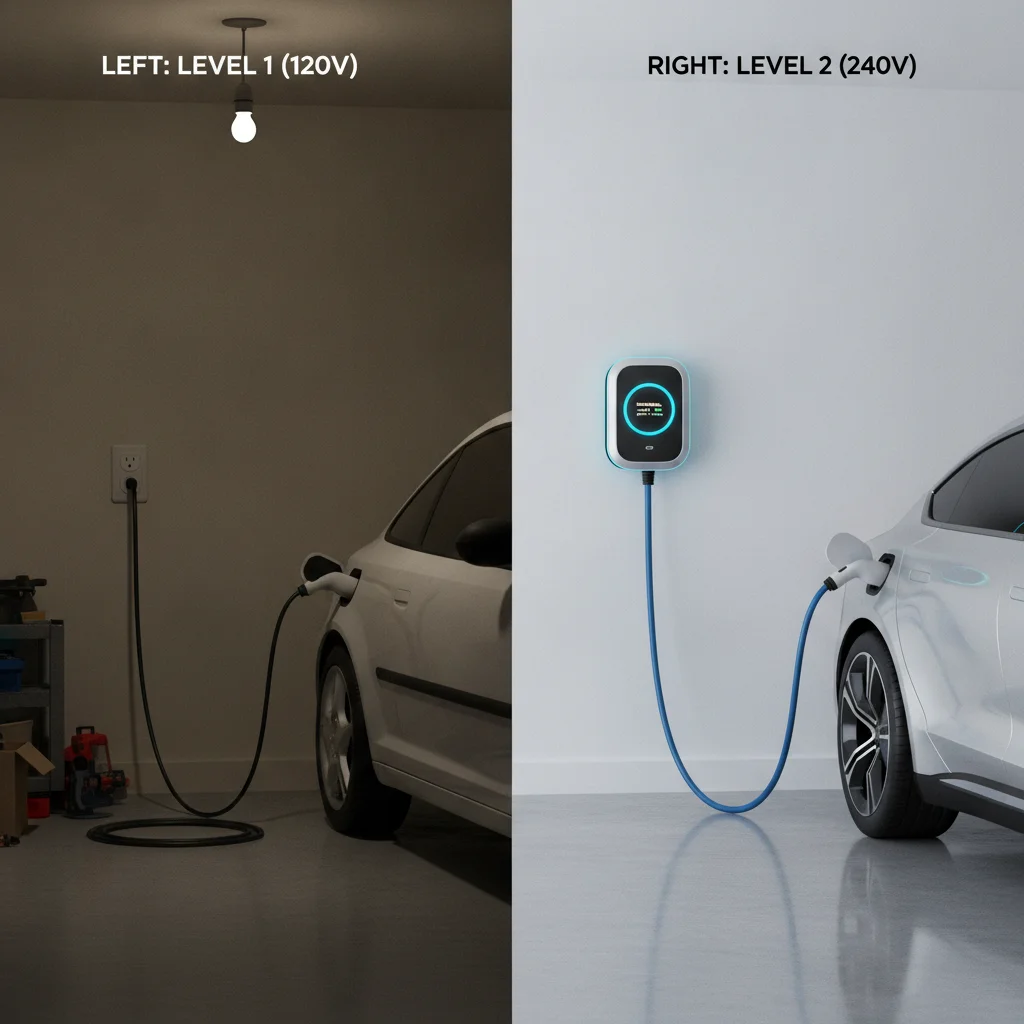
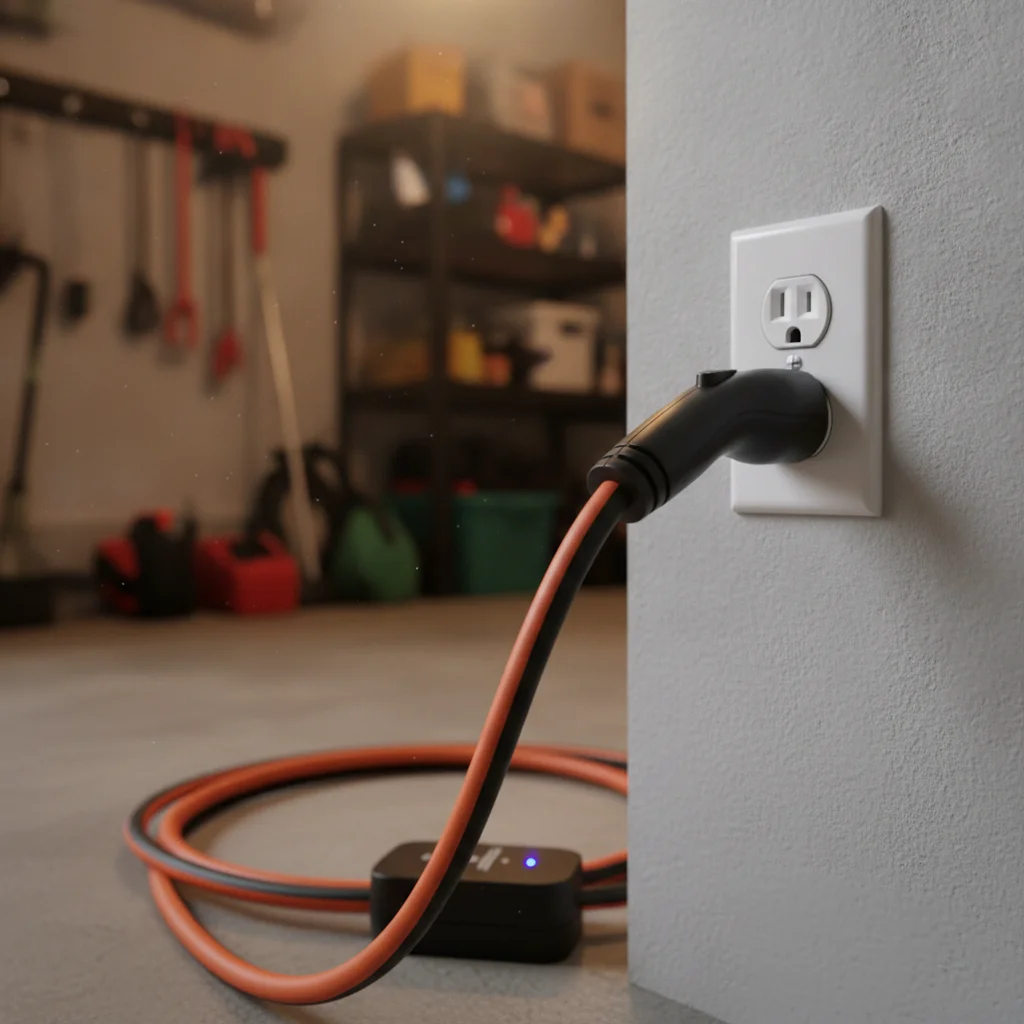
Level 1 charging uses a standard 120-volt household outlet — the same socket that powers a lamp or a toaster. Every EV and plug-in hybrid sold in the US ships with a mobile charging cable that can plug into one. No installation, no electrician, no additional expense beyond what came in the box.
Speed
The trade-off is speed. A 120V circuit typically draws 12 amps of usable current (on a 15-amp circuit with a 20% safety buffer), delivering roughly 1.4 kilowatts of power. At that rate, most battery electric vehicles add somewhere between 3 and 5 miles of range per hour of charging. A 60-kWh battery starting from empty would take 40 to 50 hours to reach full — not a realistic scenario for most drivers, but a clarifying data point.
Cost per mile
Where Level 1 shines is cost. The national average residential electricity rate is approximately $0.16 per kWh as of 2024. An EV averaging 3.5 miles per kWh of battery capacity will add one mile of range for roughly $0.046 — about 4.6 cents per mile. For context, a 30-mpg gasoline car at $3.50 per gallon costs about 11.7 cents per mile in fuel alone.
Maximize Level 1 Value With a Smart Outlet Timer
If you're sticking with Level 1 charging, a simple smart outlet or a vehicle's built-in charge scheduling feature lets you shift charging to off-peak hours automatically. Even at Level 1 speeds, charging from 11 p.m. to 6 a.m. on a time-of-use rate can cut your per-kWh cost by 30–40%. Most modern EVs include this scheduling function in their mobile app — no additional hardware required.
Plan Fast Charging Stops Between 20% and 80%
For road trips relying on DC fast charging, plan stops that target charging from roughly 20% to 80% state of charge. This range captures the fastest portion of the charge curve and avoids the steep taper that begins above 80%. Two 25-minute stops is nearly always faster and cheaper than one extended stop attempting to reach 100%. Use a trip planning app like PlugShare or ABRP to identify optimal stop intervals before departing.
Check Utility Rebates Before Buying Level 2 Hardware
Many utilities — including Pacific Gas & Electric, Southern California Edison, Duke Energy, and Xcel Energy — offer rebates of $100–$500 on qualifying Level 2 EV charger purchases, sometimes in addition to the federal 30C tax credit. These programs vary by region and are updated annually, so check your utility's website or call their EV program line before purchasing equipment. Stacking state and utility incentives can cut the effective equipment cost by half.
Who actually benefits from Level 1?
The case for staying with Level 1 longer than expected is stronger than the industry acknowledges. Plug-in hybrid owners with 20 to 40 miles of electric range can fully recover overnight on a standard outlet. Similarly, drivers who commute 20 miles or fewer and can leave the car plugged in for 10 to 12 hours — a normal workday or overnight — will rarely find Level 1 insufficient. The key variable is time availability, not charger power.
The financial math is straightforward: if Level 1 meets your daily mileage needs, spending $800–$1,500 on Level 2 equipment and installation delivers no real-world benefit. That money earns a better return sitting in a savings account.
$0.48/kWh
Average non-member DC fast charging rate (US)
Based on aggregated public pricing data from Electrify America, EVgo, and ChargePoint as of 2024.
3×
Cost premium of DC fast charging vs. home Level 2
Comparing the average DC fast charging rate to the national average residential electricity rate of $0.16/kWh.
$4,500+
Extra fuel cost over 50,000 miles (DCFC vs. home L2)
Calculated for a vehicle achieving 3.5 miles per kWh, comparing standard home rate to average non-member DCFC pricing.
30%
Federal tax credit on Level 2 installation costs
The IRS 30C credit applies to residential EV charging equipment and installation through 2032, up to a $1,000 credit.
18 min
10–80% charge time on a 239 kW-capable EV
Measured for the 2024 Hyundai Ioniq 6 Long Range on a compatible 350 kW DC fast charger under ideal temperature conditions.
Level 2 Charging: The Practical Standard for Home EV Ownership
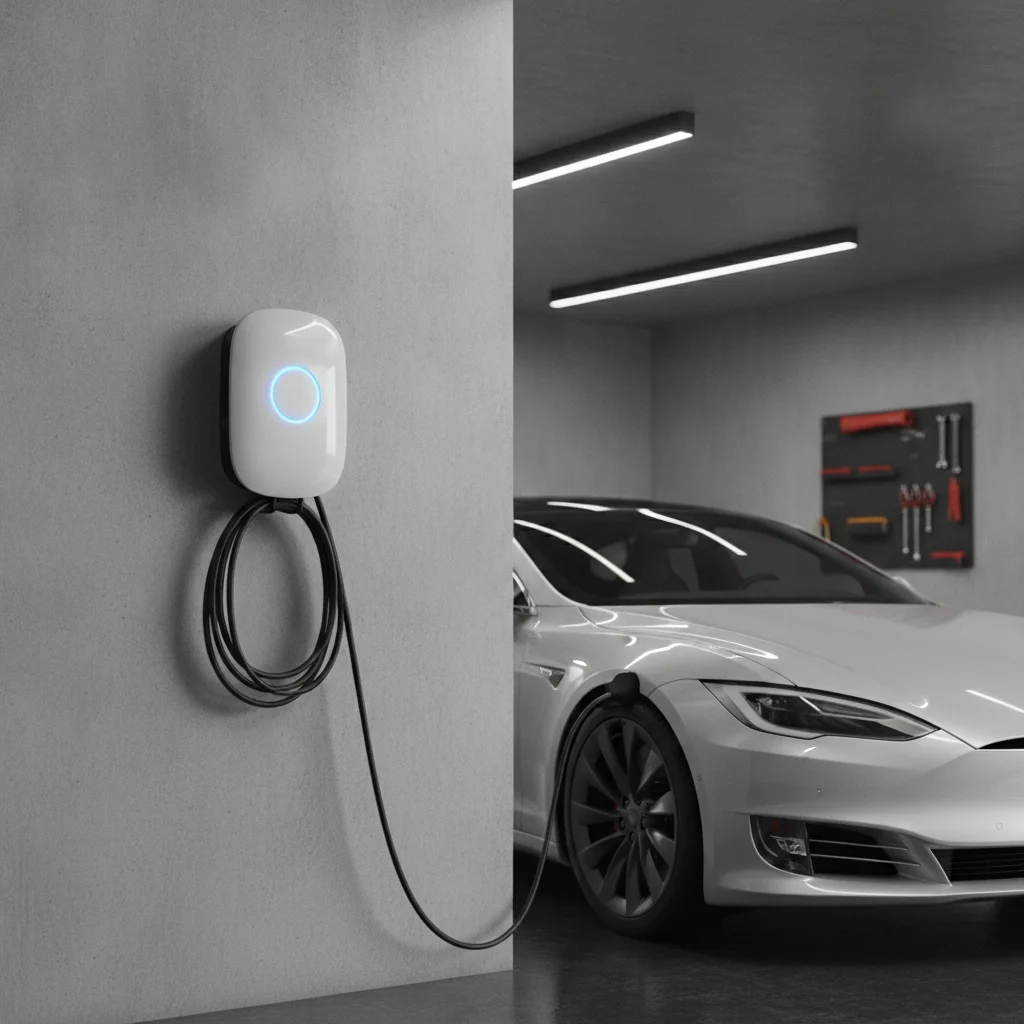
Level 2 charging operates on a 240-volt circuit — the same voltage that runs electric dryers and ovens — and is the standard recommendation for anyone purchasing a battery electric vehicle with a range above 150 miles. The hardware consists of an Electric Vehicle Service Equipment (EVSE) unit, commonly called a home charger, and a dedicated 240V circuit breaker installed by a licensed electrician.
Speed
Power output varies by the EVSE unit and the vehicle's onboard charger capacity. Consumer-grade Level 2 units deliver between 7.2 kW and 11.5 kW, with some premium units reaching 19.2 kW — though most EVs cap acceptance at 7.2 kW or 11.5 kW regardless of how powerful the EVSE is. In practical terms, 7.2 kW adds roughly 25 miles of range per hour; 11.5 kW adds around 35 miles per hour. A depleted 75-kWh battery returns to full in approximately 7 to 10 hours — an easy overnight recharge for most households.
Installation and equipment cost
This is where Level 2's advantage gets complicated. Hardware costs range from $250 for a basic 32-amp unit to $700+ for a smart charger with scheduling, load management, and app connectivity. Electrician installation adds $400–$900 depending on panel capacity, distance from panel to garage, and local permit fees. All-in, expect to budget $800–$1,500. Federal tax credits under the Inflation Reduction Act can cover 30% of installation costs (up to $1,000) through 2032 for qualifying households, meaningfully reducing the net outlay.
Cost per mile
At the national average residential rate of $0.16 per kWh, Level 2 charging costs nearly identical to Level 1 on a per-kWh basis — because both draw from the same home electricity account. Some utilities offer time-of-use (TOU) rates that drop to $0.08–$0.10 per kWh during off-peak hours (typically 9 p.m. to 6 a.m.), which is precisely when most EV owners schedule overnight charging. At $0.09 per kWh and 3.5 miles per kWh efficiency, the per-mile cost drops to 2.6 cents — a compelling number.
For a deeper comparison between these two home options, the Level 1 vs. Level 2 home charging breakdown explores how daily mileage patterns determine which makes sense. The home charging setup hub also covers EVSE selection and installation considerations in detail.
Panel Upgrades Can Dramatically Change Level 2 Economics
Older homes with 100-amp electrical panels may require a panel upgrade to safely add a Level 2 charger circuit alongside existing high-draw appliances. Panel upgrades can cost $1,500–$3,500, which fundamentally changes the payback timeline for Level 2 installation. Get an electrician's panel assessment before purchasing Level 2 hardware — some utilities offer this evaluation free of charge as part of EV readiness programs.
Idle Fees at DC Fast Chargers Add Up Quickly
Most major DC fast charging networks charge idle fees — typically $0.40–$1.00 per minute — once a vehicle reaches its charge limit and remains plugged in. A 30-minute idle period can add $12–$30 to your session cost, rivaling the cost of the charge itself. Set a mobile app notification for when your vehicle reaches your target charge level, and return promptly to avoid these fees, particularly at busy stations.
DC Fast Charging: Power at a Premium
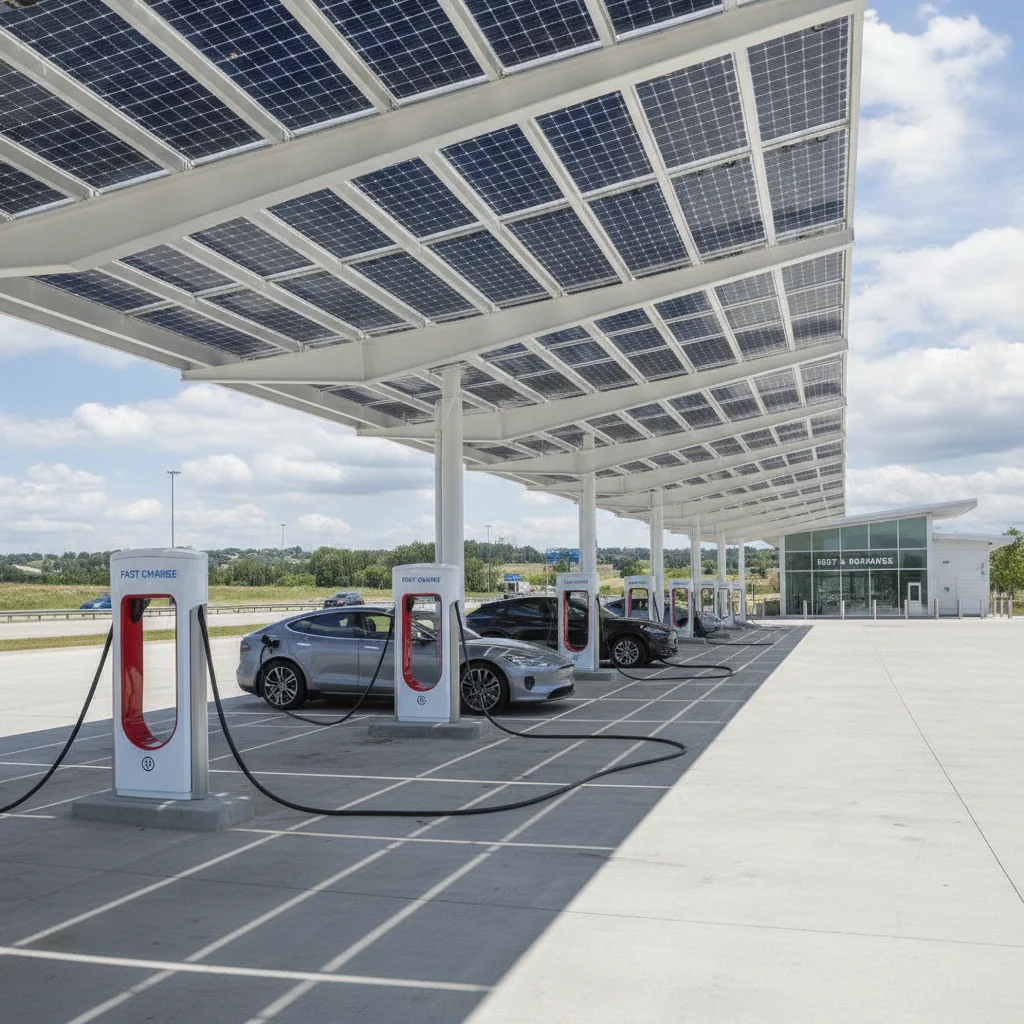
DC fast charging — also called Level 3, CCS fast charging, or simply DCFC — is the technology behind the charging stations at highway corridors, shopping centers, and dedicated EV charging plazas. Unlike Level 1 and Level 2, which convert AC power inside the vehicle, DC fast chargers convert power externally and deliver direct current straight to the battery. The result is dramatically faster charging, but at a significantly higher price per kilowatt-hour.
Speed
Current DC fast chargers range from 50 kW (older units) to 350 kW (newer stations like some Electrify America and Tesla Supercharger V3/V4 units). Real-world charging speed is capped by whichever is lower: the charger's output or the vehicle's maximum DC fast charging acceptance rate. A 2024 Hyundai Ioniq 6, for example, accepts up to 239 kW, enabling a 10–80% charge in roughly 18 minutes under ideal conditions. A 2023 Chevrolet Bolt EV accepts only 55 kW maximum, meaning a 350 kW charger provides no additional benefit over a 60 kW unit.
It's also critical to understand that EV batteries don't charge at peak speed throughout the session. Battery state of charge directly limits fast charging speed — most vehicles charge fastest between 20% and 80%, then throttle significantly to protect cells. Plugging in at 80% and expecting a fast top-up to 100% is a common and costly misconception.
Cost
This is where DC fast charging's value proposition weakens for everyday use. Public DC fast charger pricing varies widely by network and billing model. The full cost breakdown of DC fast charging reveals that per-kWh rates on networks like Electrify America, EVgo, and ChargePoint typically run $0.43–$0.58 per kWh for non-members. Even with membership plans ($4–$8 per month), rates drop to roughly $0.31–$0.40 per kWh — still two to three times the average home electricity rate.
Some networks price by the minute rather than the kilowatt-hour, which penalizes vehicles with lower maximum acceptance rates. A car that charges at 50 kW billed per minute at a 150 kW station is paying the same time cost as a car charging at three times the rate. Navigating these pricing models requires attention. See the public charging networks hub for a full comparison of US network pricing structures.
For the technical details on what actually happens inside the charger and why hardware limits matter, DC fast charging explained in depth covers the onboard and off-board hardware in plain language.
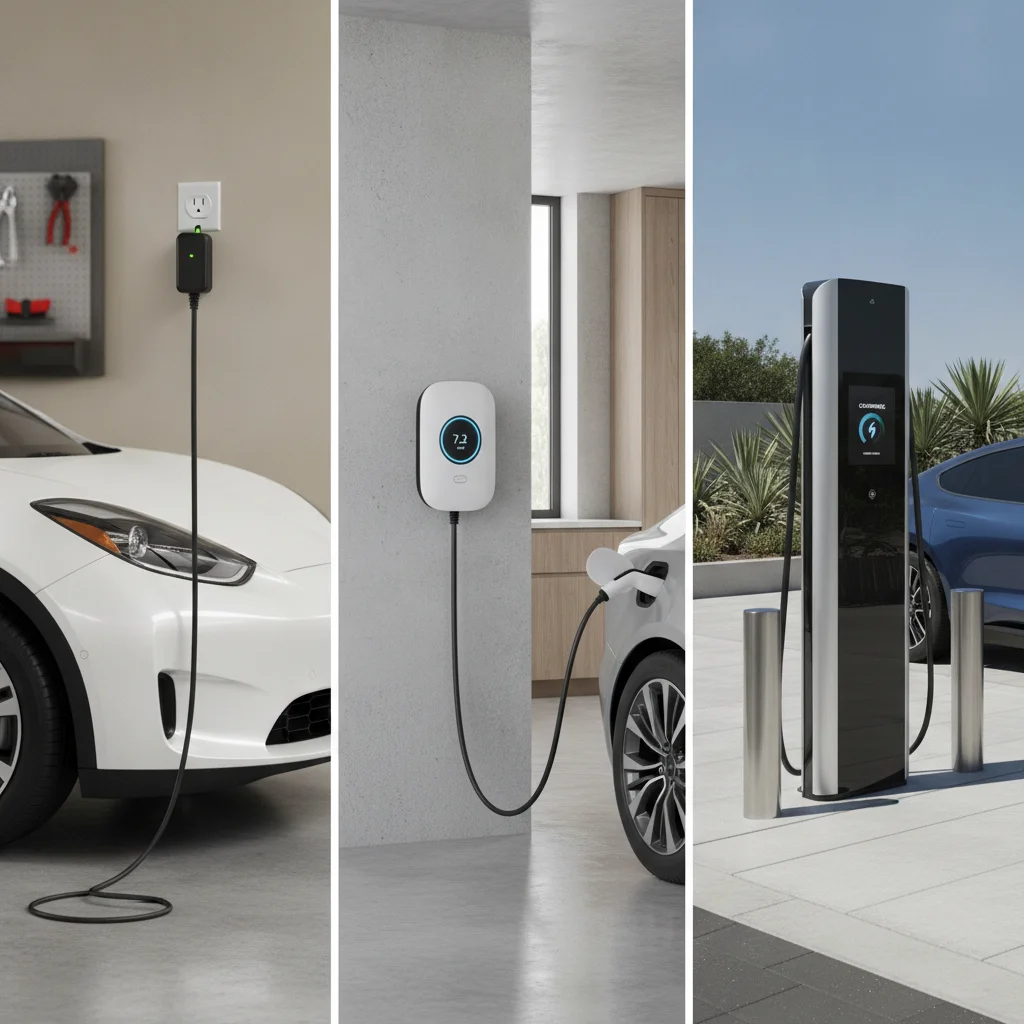
| Level 1 (120V) | Level 2 (240V) | DC Fast Charging | |
|---|---|---|---|
| Typical power output | 1.2–1.4 kW | 7.2–11.5 kW | 50–350 kW |
| Miles added per hour | 3–5 miles/hr | 20–35 miles/hr | 150–600+ miles/hr (equiv.) |
| Time to charge 60 kWh battery | 40–50 hours | 6–9 hours | 20–45 minutes (10–80%) |
| Average cost per kWh | $0.13–$0.17 (home) | $0.09–$0.17 (home) | $0.30–$0.58 (public) |
| Typical per-mile fuel cost | ~$0.04–$0.05 | ~$0.03–$0.05 | ~$0.09–$0.17 |
| Hardware/installation cost | $0 (cable included) | $800–$1,500 installed | $0 (public network) |
| Best use case | PHEVs, low-mileage drivers | Daily home BEV charging | Road trips, top-ups away from home |
| Battery degradation risk | Minimal | Minimal | Slightly elevated with frequent use |
True Cost of Charging: Running the Numbers Over 50,000 Miles
Abstract per-kWh figures are less useful than cumulative cost over a realistic ownership period. Assuming a vehicle that achieves 3.5 miles per kWh and is driven 50,000 miles over five years, the total energy required is approximately 14,286 kWh.
- Level 1 / Level 2 at home (standard rate, $0.16/kWh): ~$2,286 in fuel cost over five years, plus $0 (L1) or $800–$1,500 (L2) in upfront equipment and installation.
- Level 2 at home with off-peak TOU rate ($0.09/kWh): ~$1,286 in fuel cost — the lowest total cost scenario for most EV owners.
- DC fast charging only, non-member pricing ($0.48/kWh average): ~$6,857 in fuel cost — more than double the standard home rate, eroding much of the EV's fuel-savings advantage over a gasoline car.
- DC fast charging only, membership pricing ($0.35/kWh average): ~$5,000 in fuel cost, plus membership fees (~$200–$400 over five years).
The gap between home charging and exclusive DC fast charging use is striking: upward of $4,500 to $5,500 over 50,000 miles. For many buyers, particularly those purchasing EVs specifically to reduce fuel costs, that differential undermines the core value proposition.
This cost structure should also shape your decision about which EV type to buy. How your charging access should influence whether you buy a BEV or PHEV is a practical guide for buyers still in the decision phase.
$0.48/kWh
Average non-member DC fast charging rate (US)
Based on aggregated public pricing data from Electrify America, EVgo, and ChargePoint as of 2024.
3×
Cost premium of DC fast charging vs. home Level 2
Comparing the average DC fast charging rate to the national average residential electricity rate of $0.16/kWh.
$4,500+
Extra fuel cost over 50,000 miles (DCFC vs. home L2)
Calculated for a vehicle achieving 3.5 miles per kWh, comparing standard home rate to average non-member DCFC pricing.
30%
Federal tax credit on Level 2 installation costs
The IRS 30C credit applies to residential EV charging equipment and installation through 2032, up to a $1,000 credit.
18 min
10–80% charge time on a 239 kW-capable EV
Measured for the 2024 Hyundai Ioniq 6 Long Range on a compatible 350 kW DC fast charger under ideal temperature conditions.
Matching Charging Level to Your Real-World Situation
No single charging level is universally optimal. The right answer depends on four variables: how far you drive daily, whether you have home charging access, how frequently you take long trips, and what your local electricity rates look like.
If you drive fewer than 30 miles per day
Level 1 charging is a legitimate option, particularly if you drive a plug-in hybrid. Even a battery electric vehicle with a modest 150-mile range can be maintained indefinitely on a standard outlet if average daily consumption stays under 35–40 miles. The financial case for upgrading to Level 2 weakens considerably when Level 1 covers your actual usage.
If you drive 30–80 miles per day
Level 2 home charging is the standard recommendation. A 7.2 kW unit on a 240V circuit will recover 30–80 miles of range in 1–3 hours of charging — meaning a partial evening plug-in, not necessarily an overnight session, can cover most daily needs. The equipment and installation investment typically pays back in 2–3 years through lower per-kWh costs compared to public alternatives.
If you drive over 80 miles per day or take frequent long trips
You'll likely need a combination: Level 2 at home to handle baseline daily charging, with DC fast charging reserved for longer trips. In this scenario, the goal is to minimize DC fast charging reliance. Using DC fast charging for the first 80% of a long trip and finishing on Level 2 at a destination (hotel, workplace) is consistently more economical than fast charging to 100%.
Maximize Level 1 Value With a Smart Outlet Timer
If you're sticking with Level 1 charging, a simple smart outlet or a vehicle's built-in charge scheduling feature lets you shift charging to off-peak hours automatically. Even at Level 1 speeds, charging from 11 p.m. to 6 a.m. on a time-of-use rate can cut your per-kWh cost by 30–40%. Most modern EVs include this scheduling function in their mobile app — no additional hardware required.
Plan Fast Charging Stops Between 20% and 80%
For road trips relying on DC fast charging, plan stops that target charging from roughly 20% to 80% state of charge. This range captures the fastest portion of the charge curve and avoids the steep taper that begins above 80%. Two 25-minute stops is nearly always faster and cheaper than one extended stop attempting to reach 100%. Use a trip planning app like PlugShare or ABRP to identify optimal stop intervals before departing.
Check Utility Rebates Before Buying Level 2 Hardware
Many utilities — including Pacific Gas & Electric, Southern California Edison, Duke Energy, and Xcel Energy — offer rebates of $100–$500 on qualifying Level 2 EV charger purchases, sometimes in addition to the federal 30C tax credit. These programs vary by region and are updated annually, so check your utility's website or call their EV program line before purchasing equipment. Stacking state and utility incentives can cut the effective equipment cost by half.
If you don't have home charging access
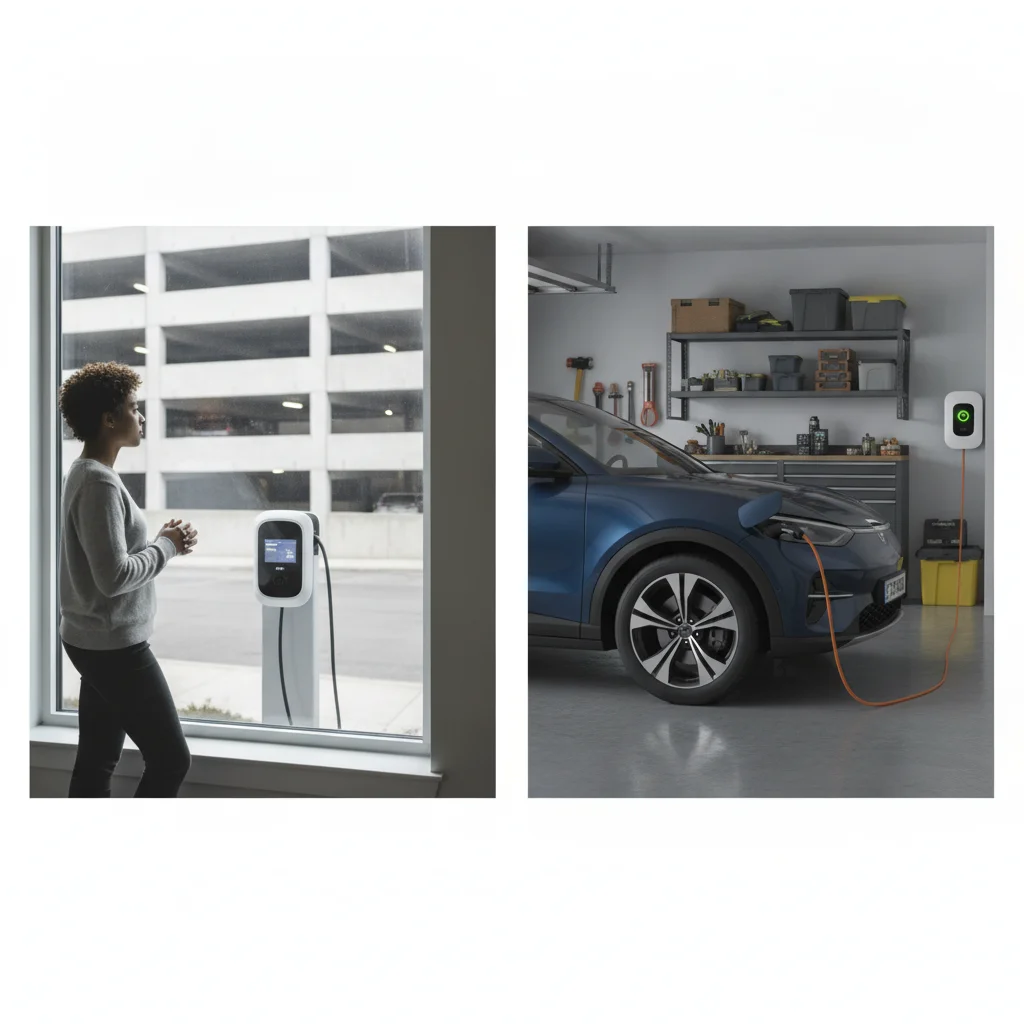
The math is harder. Apartment dwellers and renters without dedicated parking face the highest structural charging costs because they're dependent on public infrastructure. Level 2 public charging (available at workplaces, parking garages, and retail locations through networks like ChargePoint and Blink) offers better per-kWh pricing than DC fast charging, typically $0.20–$0.35 per kWh. Building a routine around workplace or destination Level 2 charging, supplemented by strategic fast charging for longer trips, keeps costs lower than relying primarily on DCFC.
Installation Costs, Hidden Fees, and What to Watch For
The upfront and ongoing costs beyond the per-kWh rate deserve explicit attention, because they significantly affect the true economics of each charging level.
Level 1
Zero installation cost in most cases. The mobile charging cable included with the vehicle is sufficient. One caveat: if your existing outlet is on a shared or undersized circuit, an electrician may need to add a dedicated 15- or 20-amp outlet, costing $150–$300. Some manufacturers sell upgraded 20-amp Level 1 cables separately (~$150–$250) that add a modest speed improvement on a 20-amp circuit.
Level 2
Expect $250–$700 for the EVSE hardware and $400–$900 for installation. Costs rise if the electrical panel requires an upgrade (an older 100-amp panel in a home adding an EV plus other high-draw appliances may need to go to 200 amps, adding $1,500–$3,000). The federal 30C tax credit through 2032 softens the blow by 30% (up to $1,000 credit on the combined equipment and installation cost). Some utilities also offer rebates of $100–$500 on qualifying Level 2 charger purchases — worth checking before buying hardware.
DC fast charging
No installation cost for the consumer, but network fees and billing complexity are real. Several networks charge idle fees — typically $0.40–$1.00 per minute — if a vehicle remains plugged in after reaching a full charge. Membership plans require monthly fees but can reduce per-session costs enough to break even after 3–5 sessions per month. Roaming agreements between networks are improving but remain inconsistent, meaning a non-member session on an unfamiliar network can carry a significant surcharge.
Panel Upgrades Can Dramatically Change Level 2 Economics
Older homes with 100-amp electrical panels may require a panel upgrade to safely add a Level 2 charger circuit alongside existing high-draw appliances. Panel upgrades can cost $1,500–$3,500, which fundamentally changes the payback timeline for Level 2 installation. Get an electrician's panel assessment before purchasing Level 2 hardware — some utilities offer this evaluation free of charge as part of EV readiness programs.
Idle Fees at DC Fast Chargers Add Up Quickly
Most major DC fast charging networks charge idle fees — typically $0.40–$1.00 per minute — once a vehicle reaches its charge limit and remains plugged in. A 30-minute idle period can add $12–$30 to your session cost, rivaling the cost of the charge itself. Set a mobile app notification for when your vehicle reaches your target charge level, and return promptly to avoid these fees, particularly at busy stations.
One often-overlooked factor is battery degradation. Multiple studies, including research from Idaho National Laboratory and data published by Recurrent Auto, have found that frequent DC fast charging accelerates long-term battery capacity loss compared to predominantly home AC charging. The effect is measurable but not catastrophic — typically 1–2% additional degradation per year for heavy fast-charging users — but it's a real cost that doesn't appear on any charging receipt.
All claims are backed by peer-reviewed research. Sources on request.