| Level 1 (120V) permit required? | Rarely — only if new wiring or circuit is added |
| Level 2 (240V) permit required? | Almost always — dedicated 240V circuit triggers permit in most jurisdictions |
| Typical permit fee | $50–$150 (residential electrical) (Varies significantly by municipality) |
| Governing electrical code | National Electrical Code (NEC), Article 625 (NFPA 70, adopted with local amendments) |
| Typical circuit size for Level 2 | 40A–60A dedicated breaker |
| Federal installation tax credit | 30% of costs, up to $1,000 (residential) (IRS 30C credit, Inflation Reduction Act 2022) |
| States with expedited EV permit process | CA, HI, and select municipalities in NY, CO, WA (Varies by local AHJ) |
| Unpermitted work risk | Insurance denial, failed home sale inspection, remediation cost |
Why Permits Exist — and Why Skipping One Costs You More Than the Fee
If you're setting up home EV charging, the permit requirement probably feels like a bureaucratic speed bump. It's not. Electrical permits protect you in three concrete ways: they ensure the work meets code so your home doesn't become a fire hazard, they preserve your homeowner's insurance coverage if something goes wrong, and they protect your home's resale value — unpermitted electrical work is a red flag that buyers, lenders, and home inspectors will flag every time.
The short version: a Level 2 EVSE installation on a 240V dedicated circuit almost always requires an electrical permit. A standard Level 1 setup using an existing 120V outlet usually doesn't. The dividing line is whether new wiring, a new circuit, or panel modifications are involved.
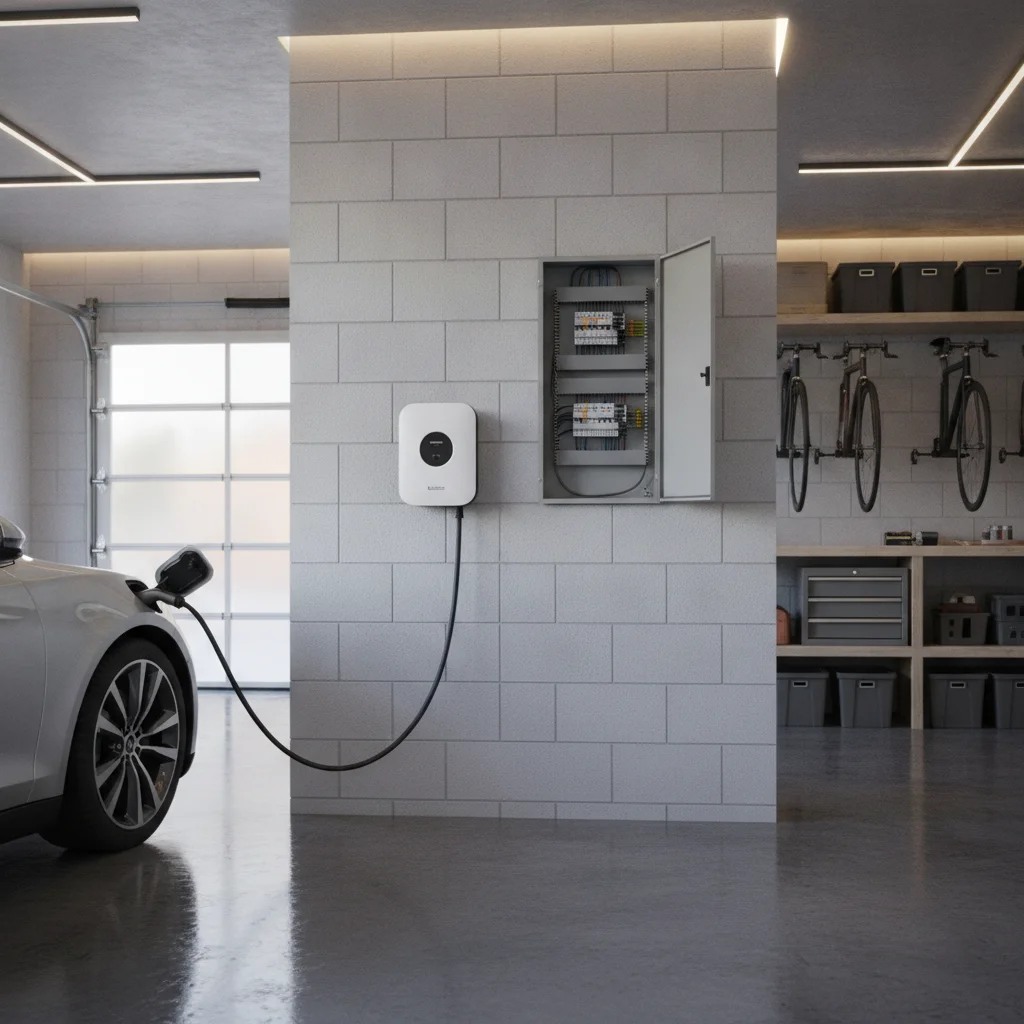
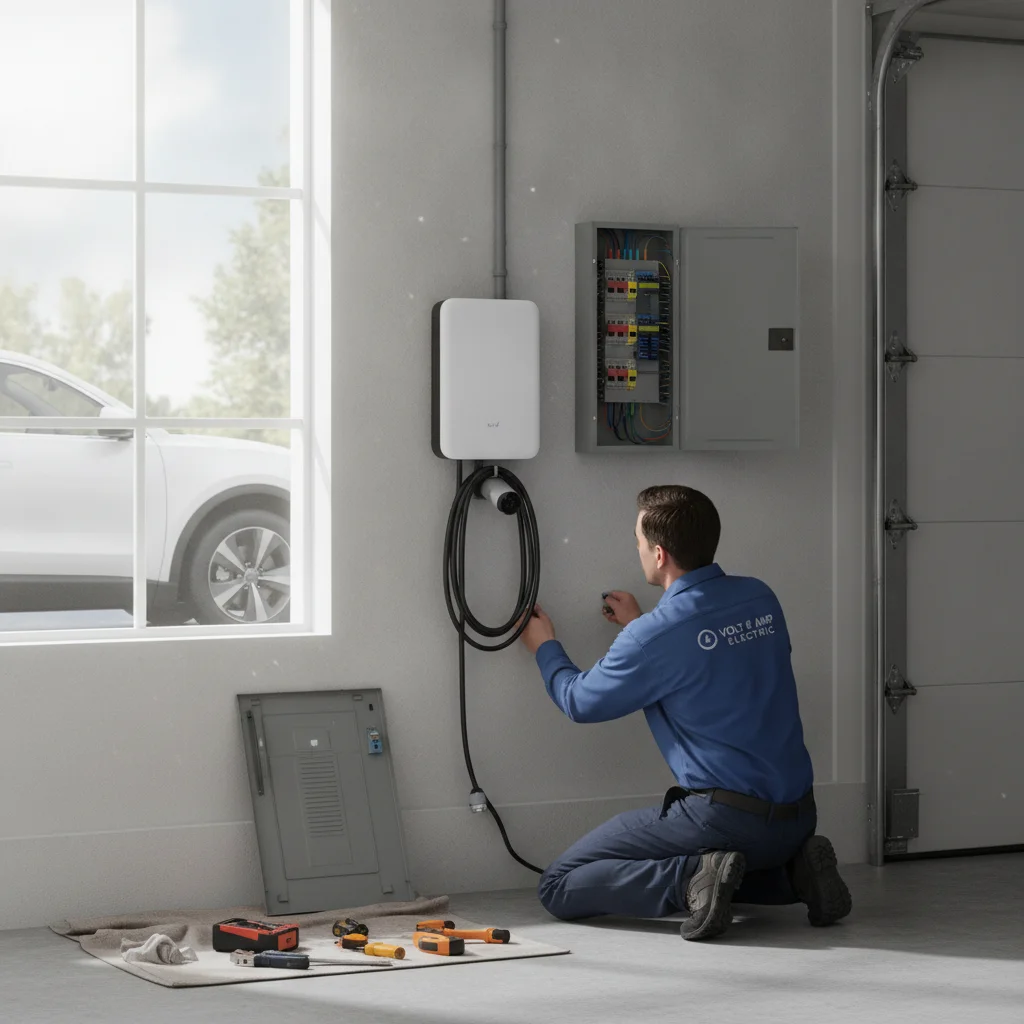
See what a home charging installation actually involves for a breakdown of what electricians physically do during these jobs, which directly determines whether a permit is triggered.
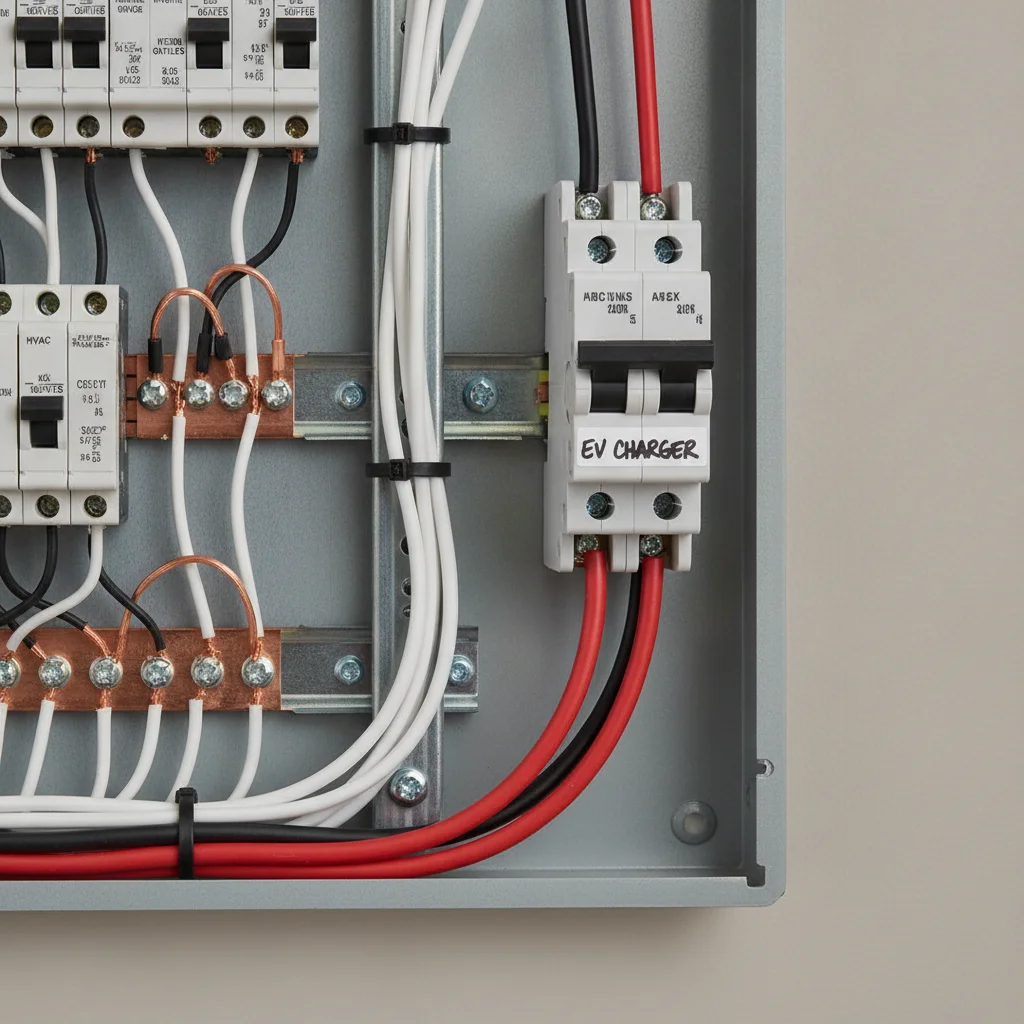
Permit fees are typically modest — often $50 to $150 depending on jurisdiction — and the inspection process, when it happens, is usually straightforward for a licensed electrician doing standard work. What's not modest is an unpermitted installation that your insurer refuses to cover after an electrical fire, or a $3,000–$5,000 remediation bill when you sell your home and the buyer's inspector finds the work.
Level 1 vs. Level 2: Which Installations Trigger a Permit
Permit requirements are tied to the electrical work involved, not the charger brand or your vehicle. Here's how the two charging levels typically land:
| Level 1 (120V) permit required? | Rarely — only if new wiring or circuit is added |
| Level 2 (240V) permit required? | Almost always — dedicated 240V circuit triggers permit in most jurisdictions |
| Typical permit fee | $50–$150 (residential electrical) (Varies significantly by municipality) |
| Governing electrical code | National Electrical Code (NEC), Article 625 (NFPA 70, adopted with local amendments) |
| Typical circuit size for Level 2 | 40A–60A dedicated breaker |
| Federal installation tax credit | 30% of costs, up to $1,000 (residential) (IRS 30C credit, Inflation Reduction Act 2022) |
| States with expedited EV permit process | CA, HI, and select municipalities in NY, CO, WA (Varies by local AHJ) |
| Unpermitted work risk | Insurance denial, failed home sale inspection, remediation cost |
Level 1 (120V) Charging
Plugging a factory-supplied EVSE cord set into an existing, properly rated 120V outlet is almost never a permit-triggering event. No new circuit is being created, no panel work is involved. The caveat: if your garage outlet is on a shared circuit that can't sustain overnight EV load, an electrician may recommend adding a dedicated 20A circuit — and that work does require a permit in most jurisdictions.
Level 2 (240V) Charging
This is where permits become nearly universal. A Level 2 EVSE requires a dedicated 240V circuit, typically 40A to 60A, fed from your main electrical panel. That means running new wire, adding a breaker, possibly upgrading your panel if capacity is tight, and mounting either a hardwired unit or a NEMA 14-50 receptacle. Every one of those steps is covered by the National Electrical Code (NEC) and enforced at the local level through permits and inspections.
Before an electrician arrives to assess the job, use the home EV charging pre-installation checklist to verify your panel capacity and understand what work scope to expect.
Authority Having Jurisdiction (AHJ)
The organization, office, or individual responsible for enforcing code requirements in a given location — typically a city or county building or electrical inspection department. The AHJ issues permits and conducts inspections.
Level 2 EVSE
Electric Vehicle Supply Equipment operating on a 240V circuit, typically delivering 16 to 80 amps of charging current. Level 2 is the standard for home charging installations and almost always requires a dedicated circuit and permit.
National Electrical Code (NEC)
A set of standards published by the National Fire Protection Association (NFPA) that governs safe electrical installation in the US. Most states and municipalities adopt the NEC, often with local amendments. Article 625 covers EV charging equipment.
Dedicated Circuit
An electrical circuit that serves only one outlet or appliance, with no other loads sharing the breaker. Required for Level 2 EV charger installations to prevent overloading shared circuits.
GFCI Protection
Ground-Fault Circuit Interrupter protection automatically shuts off power when it detects a ground fault (current flowing outside the intended path), preventing electric shock. Often required on garage and outdoor circuits.
Owner-Builder Permit
A building permit pulled by a homeowner acting as their own contractor, available in some states for work on a primary residence. The permit is still required and the work must be inspected — only the licensed contractor requirement is waived.
30C Tax Credit
The federal Alternative Fuel Vehicle Refueling Property Credit, which allows residential property owners to claim 30% of EV charger equipment and installation costs, up to $1,000, through 2032 under the Inflation Reduction Act.
NEMA 14-50 Receptacle
A 240V, 50-amp electrical outlet commonly used for plug-in Level 2 EVSE installations. Allows the charger to be unplugged and moved, versus a hardwired unit that is permanently connected.
What Inspectors Actually Check During an EV Charger Inspection
An electrical inspection for a home EV charger installation is not a full home electrical audit. Inspectors focus on the new work only. Here's what's on their checklist:
- Breaker sizing and labeling: The dedicated circuit breaker must be sized correctly for the EVSE amperage draw (typically 125% of continuous load per NEC Article 625).
- Wire gauge: The conductors running from the panel to the EVSE must be appropriately sized — undersized wire on a high-amperage circuit is a fire risk.
- Grounding and bonding: The circuit must be properly grounded. This is non-negotiable for 240V installations.
- GFCI and AFCI protection: Some jurisdictions require ground-fault circuit interrupter protection on outdoor or garage circuits, particularly for garage-mounted units.
- Receptacle or hardwire compliance: If you're using a plug-in EVSE and a NEMA 14-50 receptacle, the outlet must be rated and installed correctly. Hardwired units get different scrutiny.
- Weatherproofing: Outdoor installations require weatherproof enclosures and covers rated for the environment. See how placement affects code compliance in our guide on indoor vs. outdoor charger placement.
- EVSE listing: The charger unit itself must be UL-listed or certified by an OSHA-recognized testing lab. Inspectors can reject unlisted equipment.
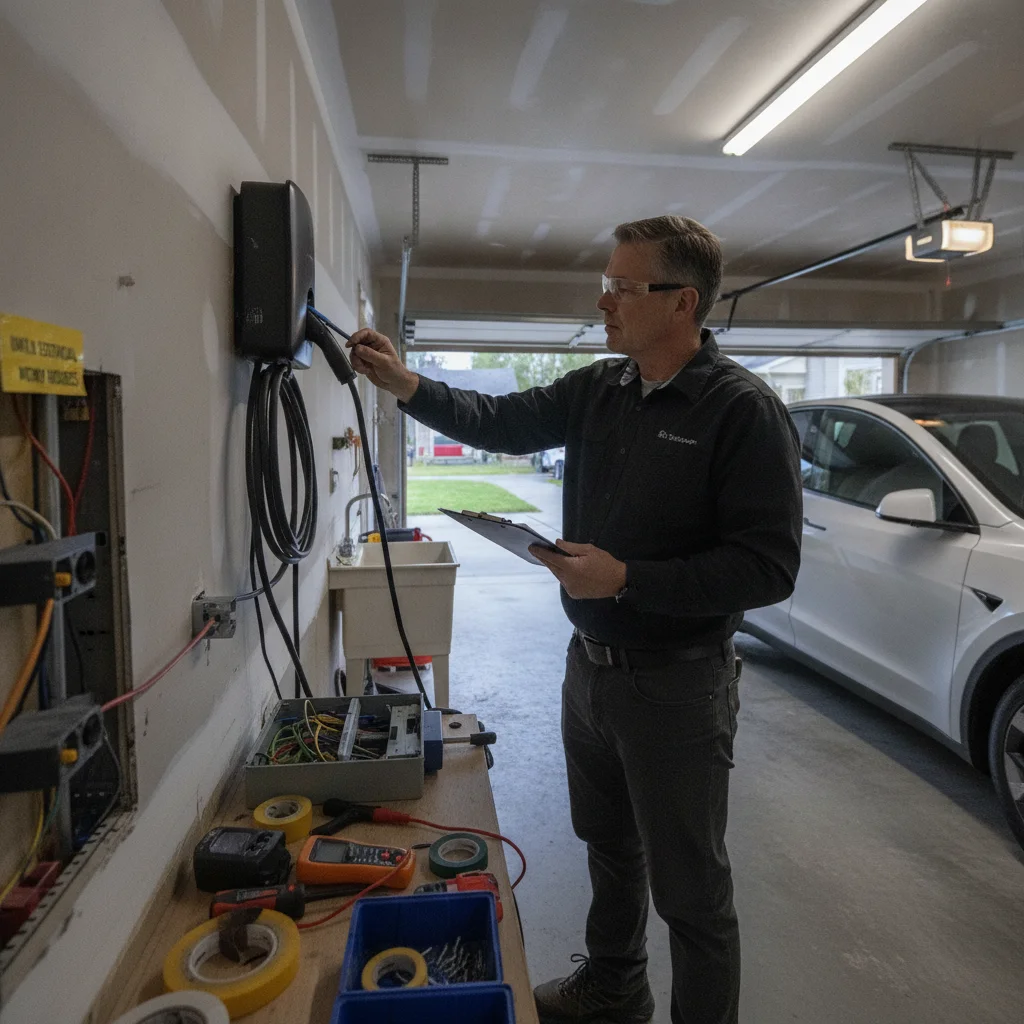
The inspection is typically scheduled after rough-in work (wiring run, breaker installed) and again after the EVSE is mounted and connected, though many jurisdictions only require a single final inspection for straightforward residential installs. Your licensed electrician should know the local protocol.
Inspections Are Typically Quick for Standard Installs
A residential EV charger inspection typically takes 15–30 minutes when the work is clean and code-compliant. Inspectors are reviewing specific new work — not auditing your entire electrical system. A licensed electrician experienced with EV installs will rarely have corrections required. If your contractor is nervous about an inspection, that's worth investigating before work begins.
Permit Records Are Public — Including Missing Ones
When you sell your home, the buyer's agent or home inspector can pull permit records from the AHJ and identify electrical work that was done without a permit. Unpermitted 240V circuits are a common and costly discovery. Some lenders will also require remediation before closing. Pulling the permit now is far cheaper than retroactive compliance later — which can include opening walls and re-inspecting completed work.
State-by-State Permit Landscape: What Varies and Why
Electrical permits are issued at the city or county level, not the state level — so there's no single national answer. However, most jurisdictions adopt a version of the National Electrical Code (NEC), and EV-specific requirements are increasingly standardized. What does vary by state and locality:
~49
States that have adopted the NEC as baseline electrical code
As of 2024, nearly all U.S. states use the NEC as their foundational electrical standard, though amendment timing and local additions vary widely by jurisdiction.
30%
Federal tax credit on EV charger installation costs
The IRS 30C credit under the Inflation Reduction Act covers 30% of residential EVSE equipment and labor costs, capped at $1,000 through 2032.
125%
NEC continuous load rule for EV charging circuits
NEC Article 625 requires EV charging circuits to be sized at 125% of the EVSE's continuous current rating — meaning a 32A charger requires a 40A circuit minimum.
~2–3 weeks
Typical permit review time in standard jurisdictions
Non-streamlined jurisdictions often take 2–3 weeks to issue an electrical permit, making early application critical to avoid installation delays.
Same day
Permit issuance in California streamlined EV programs
California's EV-ready building standards and several utility programs support over-the-counter or online same-day permit issuance for qualifying residential Level 2 installs.
Permit Exemptions for Low-Voltage or Low-Amperage Work
A handful of states allow homeowners or electricians to skip permits for residential electrical work under a certain amperage threshold. These exemptions rarely apply to 240V EV charger circuits. Check your local building department's website or call directly — this is a 5-minute call that will give you a definitive answer for your jurisdiction.
Owner-Builder Permits
In some states — including California, Texas, and Florida — homeowners can pull their own electrical permit for work on their primary residence without hiring a licensed electrician. This does not mean you can skip the permit; it means you can act as your own contractor. Unless you're genuinely experienced with residential electrical work, this is not recommended for a 240V EV circuit. The permit is still required and the work still gets inspected.
States With EV-Specific Permit Streamlining
California (specifically the state's EV Ready building code), Hawaii, and several other states have adopted expedited or over-the-counter permit processes for residential EV charger installations to reduce friction for EV adoption. In these jurisdictions, a standard Level 2 install often qualifies for same-day or next-day permit issuance rather than a multi-week review cycle.
HOA and Local Overlay Rules
Some jurisdictions add requirements on top of state code — specific conduit types, minimum panel amperage for new EV circuits, or documentation of load calculations. HOA rules are a separate layer entirely and don't replace building permits. Renters face an additional layer; the guide on renting and EV charging explains how permit authority intersects with landlord consent.
The practical takeaway: assume a permit is required and then verify whether your jurisdiction has a streamlined process that makes it faster or cheaper. Don't assume an exemption applies to your install without confirming it in writing.
How to Pull a Permit and What the Process Looks Like
For most homeowners hiring a licensed electrician, the permit process is largely handled by the contractor — but knowing the steps prevents surprises and helps you hold your electrician accountable.
- Confirm permit requirement: Your electrician should confirm with the local building or electrical inspection department whether a permit is required. If they tell you upfront that no permit is needed for a 240V Level 2 install, ask them to show you the exemption in writing. That's a red flag worth pressing on.
- Application submitted: The electrician (or homeowner under owner-builder rules) submits a permit application to the local authority having jurisdiction (AHJ). This typically includes a scope of work description, load calculations, and sometimes a simple electrical diagram.
- Permit issued: In streamlined jurisdictions, this can happen over the counter or online same day. In others, review takes 1–3 weeks. Factor this into your installation timeline.
- Work performed: The electrician completes the installation with the permit number posted at the job site (often required).
- Inspection scheduled: The electrician or homeowner contacts the AHJ to schedule an inspection. In most municipalities, inspectors arrive within a few business days of request.
- Inspection passed (or corrections required): If the work passes, the inspector signs off and the permit is closed. If corrections are needed, the electrician fixes the deficiencies and a re-inspection is scheduled.
Before you hire anyone, make sure they have relevant experience. The questions to ask any electrician before hiring them include whether they've pulled EV charger permits in your municipality specifically — a contractor who knows your local AHJ will move faster and make fewer errors.
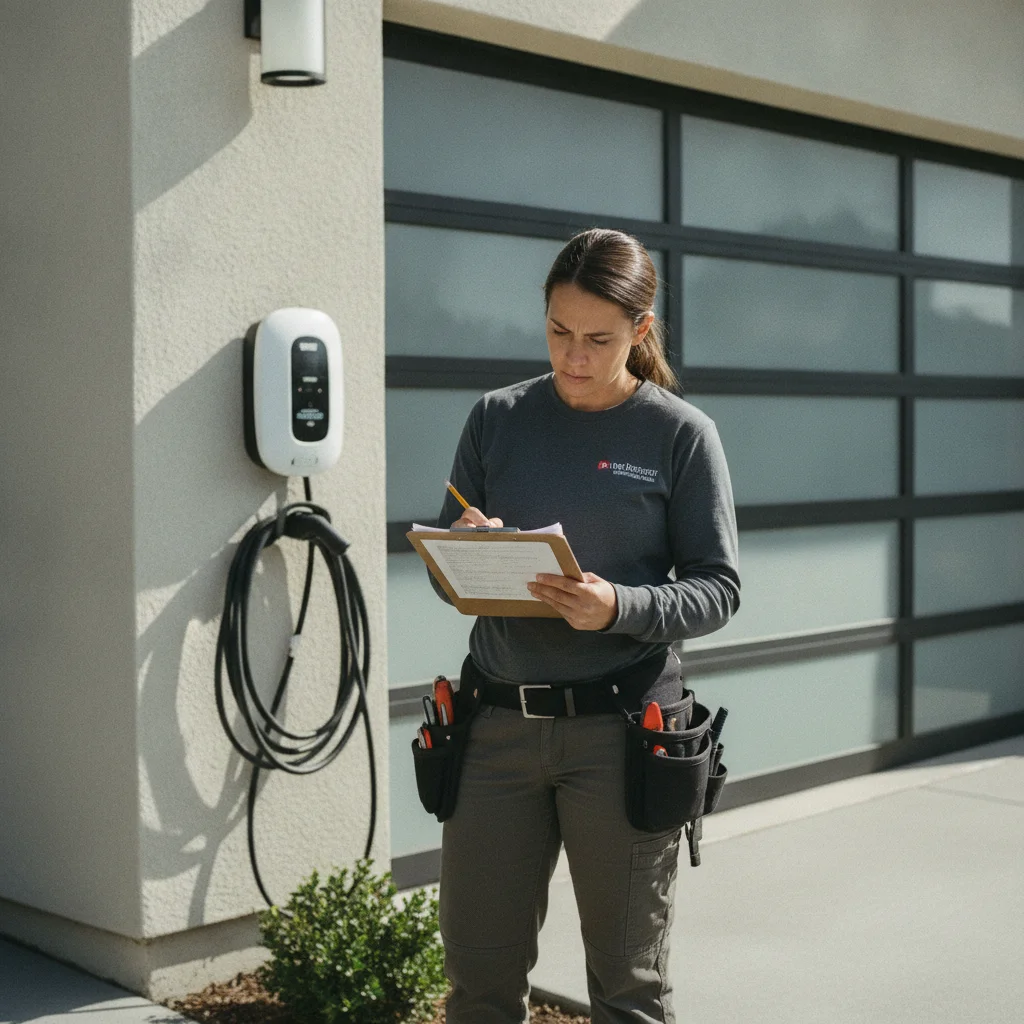
One more thing worth knowing: some EVSE manufacturers — notably Tesla and ChargePoint — offer installation programs through vetted electrician networks. Electricians in these programs often have established permit-pulling workflows in major metro areas, which can compress the timeline significantly.
For a full picture of everything that goes into setting up home charging from scratch, see Home EV Charging Setup: Everything You Need to Know Before You Begin.
Tax Credits, Rebates, and Whether Permits Affect Eligibility
The federal 30C Alternative Fuel Vehicle Refueling Property Credit — currently available through 2032 under the Inflation Reduction Act — covers up to 30% of EV charger installation costs (equipment plus labor), with a cap of $1,000 for residential installations. States like California, New York, Colorado, and others layer additional rebates on top.
Here's the connection to permits: unpermitted installations can jeopardize rebate claims. Utility rebate programs in particular often require proof of a completed permit and passed inspection as part of the application. Some state programs explicitly state that work must comply with local code — an unpermitted install is, by definition, non-compliant until inspected.
The IRS doesn't currently require permit documentation to claim the 30C credit on your federal return, but if the installation is ever audited, evidence of code-compliant work strengthens your position. And if you're claiming a state rebate, check the program requirements directly — many utility and state programs do require permit documentation.
See the EV tax credits hub for current federal and state incentive details and how to determine your eligibility before filing.
NFPA 70 / National Electrical Code (NEC) — Article 625
The authoritative source for EV charging equipment installation requirements. Article 625 specifically covers electric vehicle supply equipment. Free access to the current edition is available through the NFPA website.
Local AHJ Permit Portal Lookup
Most city and county building departments now offer online permit applications and status tracking. Search '[your city/county] electrical permit portal' to find your local AHJ's online system and confirm EV charger permit requirements.
DOE Alternative Fuels Station Locator
The U.S. Department of Energy's tool for locating EV charging infrastructure — useful for understanding public charging options if your home installation is delayed. Also includes data on home charging incentive programs by state.
DSIRE: Database of State Incentives for Renewables & Efficiency
A comprehensive database of state and utility EV charger rebate programs, updated regularly. Cross-reference with your permit documentation requirements before applying for rebates.
IRS Form 8911 — Alternative Fuel Vehicle Refueling Property Credit
The IRS form used to claim the 30C federal tax credit for EV charger installation costs. Review the instructions to understand what installation costs qualify and how to document the claim.
Bottom line: the permit isn't just about safety and insurance. It's also the documentation trail that lets you capture real money back on the installation. Skipping it costs you on both ends.

All claims are backed by peer-reviewed research. Sources on request.