Key Takeaways
DC Fast Charging Cost
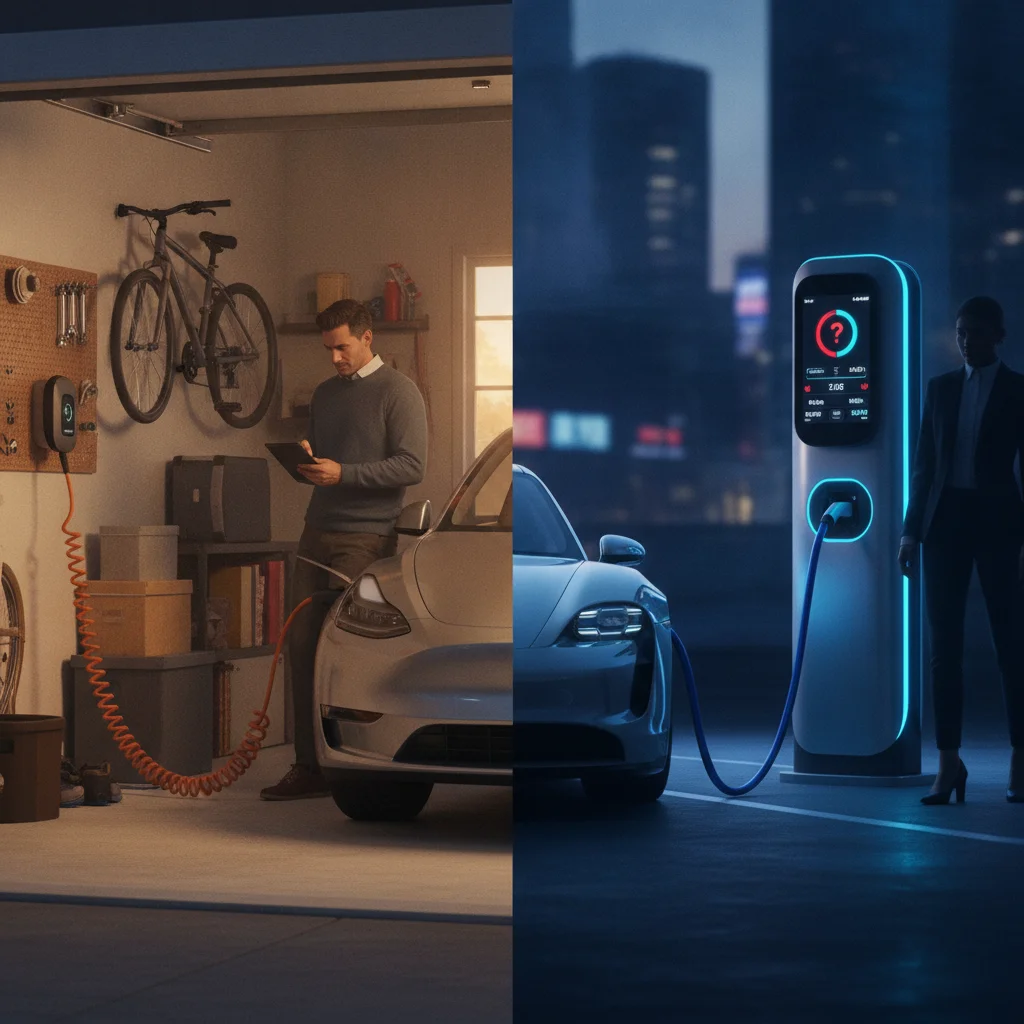
DC fast charging cost refers to what you actually pay — per session, per minute, or per kilowatt-hour — when using a public rapid charger. Unlike home charging, where you pay a straightforward utility rate, public fast charging networks each set their own pricing structures that can vary by location, time of day, and membership status. The true cost often runs two to four times higher than home charging on a per-mile basis.
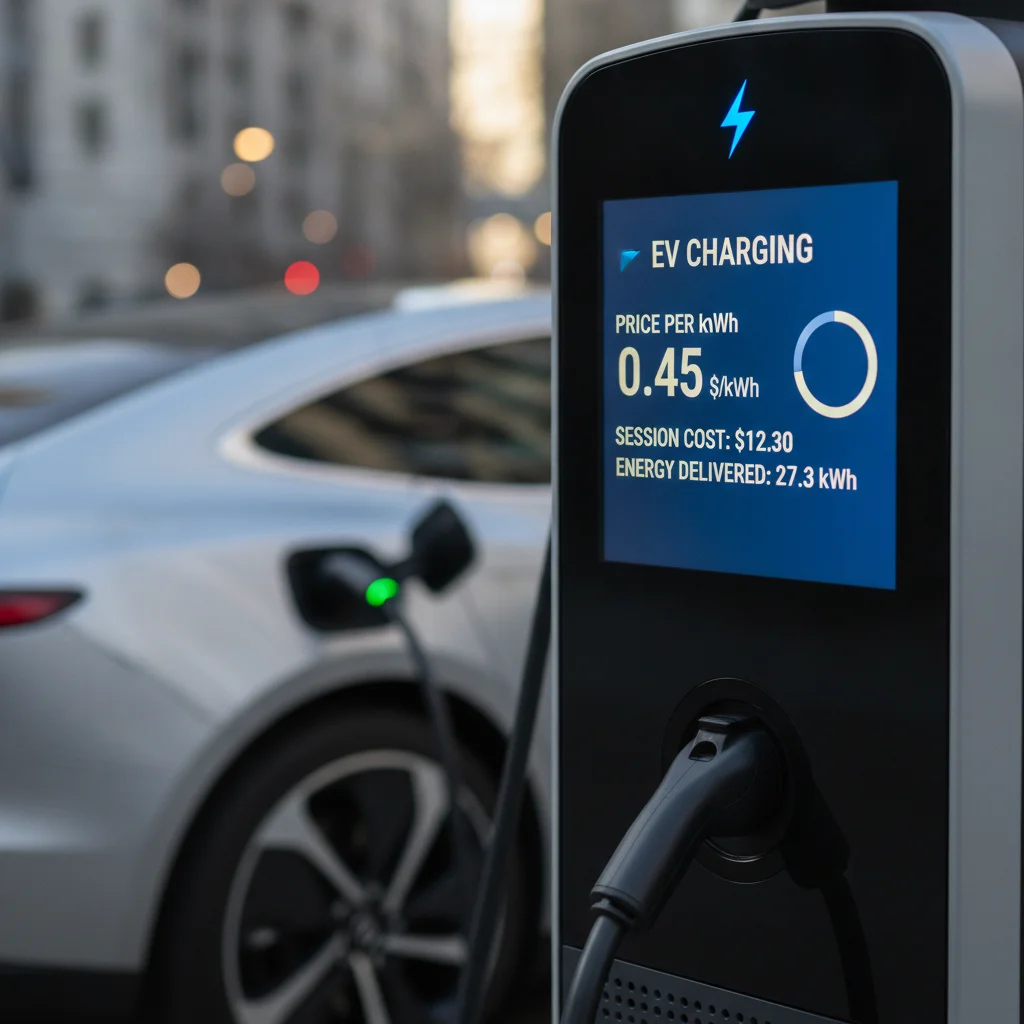
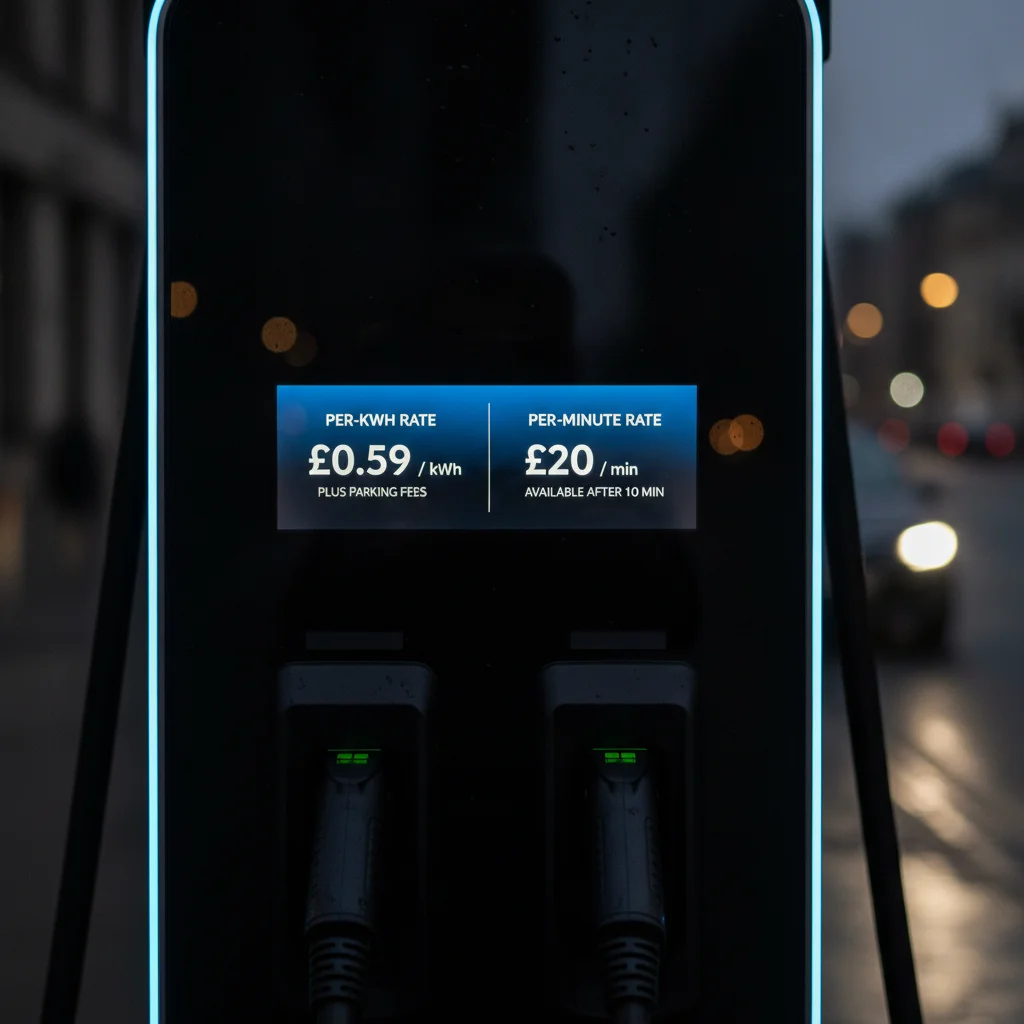
Pricing models matter because per-minute billing disproportionately penalizes vehicles with lower charge-acceptance rates (slower kW intake), while per-kWh billing aligns cost directly with energy delivered and is considered fairer by most EV advocates.
The Convenience Premium You're Paying
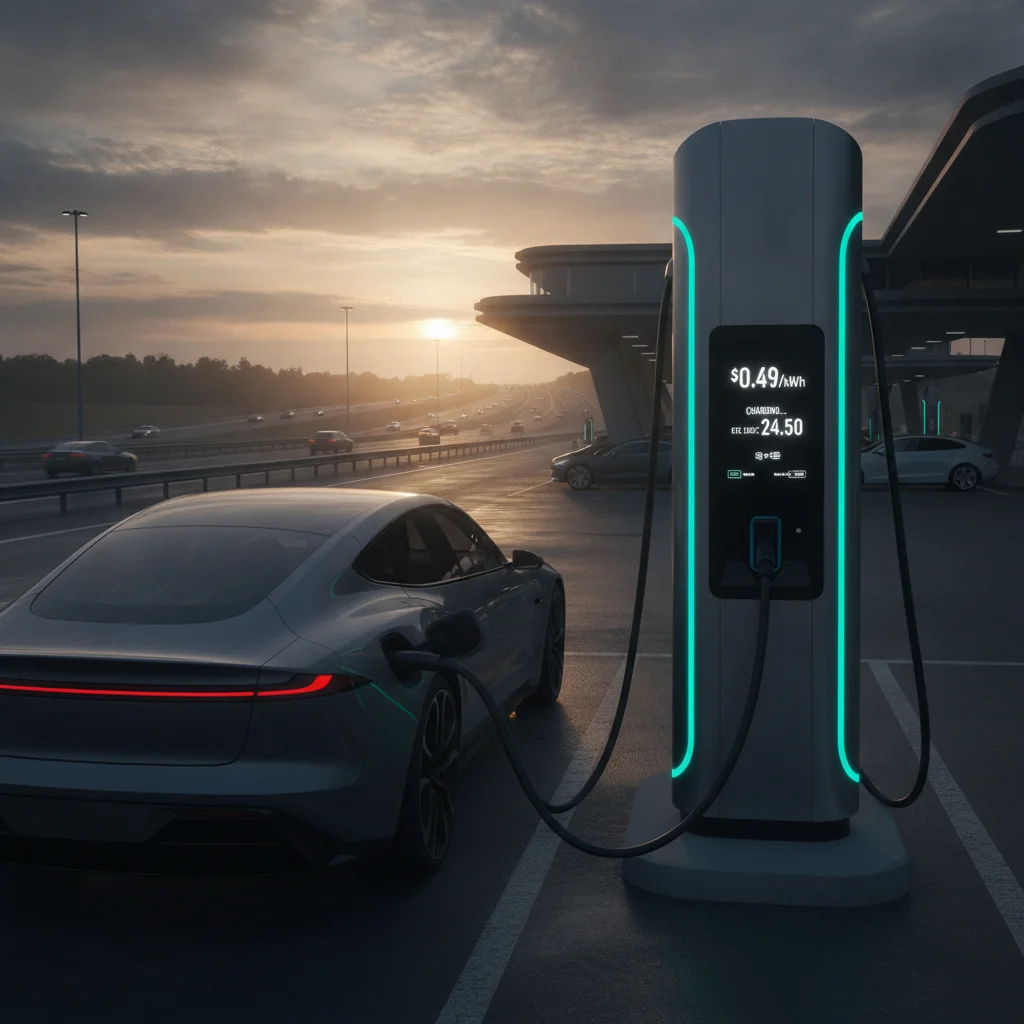
Pull up to a DC fast charger, plug in, and in 20–30 minutes you can recover enough range to continue your road trip. That speed is genuinely useful — but it comes attached to a pricing structure most EV drivers never fully interrogate until they see the receipt.
Unlike a gas pump, which shows you a per-gallon price before you start, fast-charging networks bury their true cost inside billing models that vary by network, location, time of day, and whether you're a paying member. The result: two drivers can pull up to the same charger within an hour of each other, plug in vehicles of the same make and model, and walk away having paid materially different amounts.
Understanding DC fast charging costs isn't just about penny-pinching. For drivers who rely on public infrastructure regularly — those in apartments, those without workplace charging, or those doing frequent highway runs — fast-charging costs can add hundreds of dollars annually to the total cost of EV ownership. See our full comparison of where your charging money actually goes to see how the math plays out over a year.
The fast-charging landscape involves five major network operators in the US — Tesla Supercharger (now open to all EVs), EVgo, Electrify America, ChargePoint, and Blink — plus a growing number of regional providers. Each sets its own pricing. None of them are required to display costs in a standardized, easy-to-compare format.
How DC Fast Charging Networks Bill You
There are three primary billing models in use today, and each one produces a very different cost outcome depending on your vehicle and how you use the charger.
3–4×
Public fast charging cost vs. home charging
Analysis by the Rocky Mountain Institute and DOE data consistently show DC fast charging costs 3–4× more per kWh than average US residential electricity rates.
$0.34
Average US residential electricity cost per kWh (2024)
The US Energy Information Administration reported the average residential electricity price at approximately $0.16/kWh in 2024, while commercial rates — which most charging networks pay — average around $0.10–$0.12/kWh, with the margin captured as operator revenue.
$5B
Federal NEVI fast-charging infrastructure investment
The Biden administration's National Electric Vehicle Infrastructure program allocated $5 billion across all 50 states to build out a national fast-charging corridor network by 2030.
20%
Average member discount vs. guest rate on major networks
Network operator pricing disclosures and third-party audits by Recurrent Auto in 2023 showed that paid membership plans reduce per-kWh costs by roughly 20–30% across the major US fast-charging operators.
80%
Optimal charge stop ceiling on per-minute networks
EV charging experts and network operator guidance consistently recommend stopping at 80% state of charge on per-minute networks, where battery chemistry-driven throttling begins significantly reducing charge speed.
Per-kWh Billing
This is the most straightforward model and the fairest to consumers. You pay for the actual energy delivered to your battery, measured in kilowatt-hours — the same unit on your home electric bill. If a network charges $0.36/kWh and you add 25 kWh, you pay $9. Full stop.
The challenge: state regulations in some US markets prohibit non-utility companies from selling electricity by the kWh, which is why some networks cannot legally use this model everywhere. California, Florida, and Texas permit per-kWh sales; states like Missouri have historically restricted it, forcing networks to fall back on time-based billing regardless of fairness.
Per-Minute Billing
You pay for time connected, regardless of how fast energy is flowing. Networks typically tier this — charging a lower per-minute rate below 60 kW and a higher rate above 60 kW — but the fundamental problem remains: vehicles that charge slowly (or that arrive with a high state of charge, when charging naturally slows) pay the same clock rate as vehicles screaming in at peak acceptance.
A compact EV with a 50 kW maximum charge rate plugged into a 150 kW charger will never use more than 50 kW, but on a per-minute network, it's paying the same rate as a vehicle that can actually absorb 150 kW. That's a structural disadvantage baked into the billing model. For a deep dive on how these models compare across major operators, see how charging pricing models work across major networks.
Session or Flat Fees
Less common but worth mentioning: some networks charge a flat fee per session, regardless of time or energy. These are typically found at destination chargers or lower-power public stations, and they can be a genuinely good deal if you're adding a large amount of energy — or a terrible deal if you're just topping off 10 miles of range.
“Time-based charging is really a tax on slow cars. If you're driving a vehicle with a 50 kW charge acceptance rate and you're at a network that bills by the minute, you are structurally disadvantaged compared to someone in a vehicle that can absorb 250 kW. It has nothing to do with how much energy you actually consumed.”
— Tom Moloughney, EV charging analyst and contributing editor, InsideEVs
Membership Tiers
Most major networks layer a membership system on top of their base billing model. Non-members pay a "guest" rate that can be 20–50% higher than the member rate. Annual memberships typically run $6–$10/month. If you fast-charge regularly, the math on membership almost always favors joining.
Always Check the Rate Before You Plug In
Most major networks display current pricing in their apps before you initiate a session. Make checking the rate a habit, especially when traveling in unfamiliar regions — pricing can vary significantly between stations on the same network in different states. Some networks also let you see whether you're paying guest or member rates before the session starts.
Charge to 80%, Then Move On
On per-minute networks especially, stopping at 80% state of charge and moving on is the most cost-efficient approach. Above 80%, battery management systems throttle charging speed significantly — meaning you pay the same per-minute rate for substantially less energy delivery. Charging from 20% to 80% delivers far better value than the final 20% on virtually any fast charger.
The Real Numbers: What a Typical Session Costs
Let's ground this in actual data. The following figures reflect 2024 pricing from major US networks for non-member guest rates, which represent what most occasional users pay.
| Network | Billing Model | Typical Rate | Est. Cost: 50 kWh Added |
|---|---|---|---|
| Tesla Supercharger | Per-kWh | $0.25–$0.50/kWh* | $12.50–$25.00 |
| Electrify America | Per-kWh or per-min | $0.48/kWh (guest) | ~$24.00 |
| EVgo | Per-kWh | $0.27–$0.38/kWh (member) | $13.50–$19.00 |
| ChargePoint | Per-kWh (set by host) | $0.30–$0.50/kWh | $15.00–$25.00 |
| Blink | Per-kWh or per-min | $0.39–$0.79/kWh (guest) | $19.50–$39.50 |
For reference, a home charging rate of $0.16/kWh — close to the US residential average — would put that same 50 kWh at $8.00. Even the most competitive public DC fast charger costs roughly 1.5–3× more than home charging for the same energy.
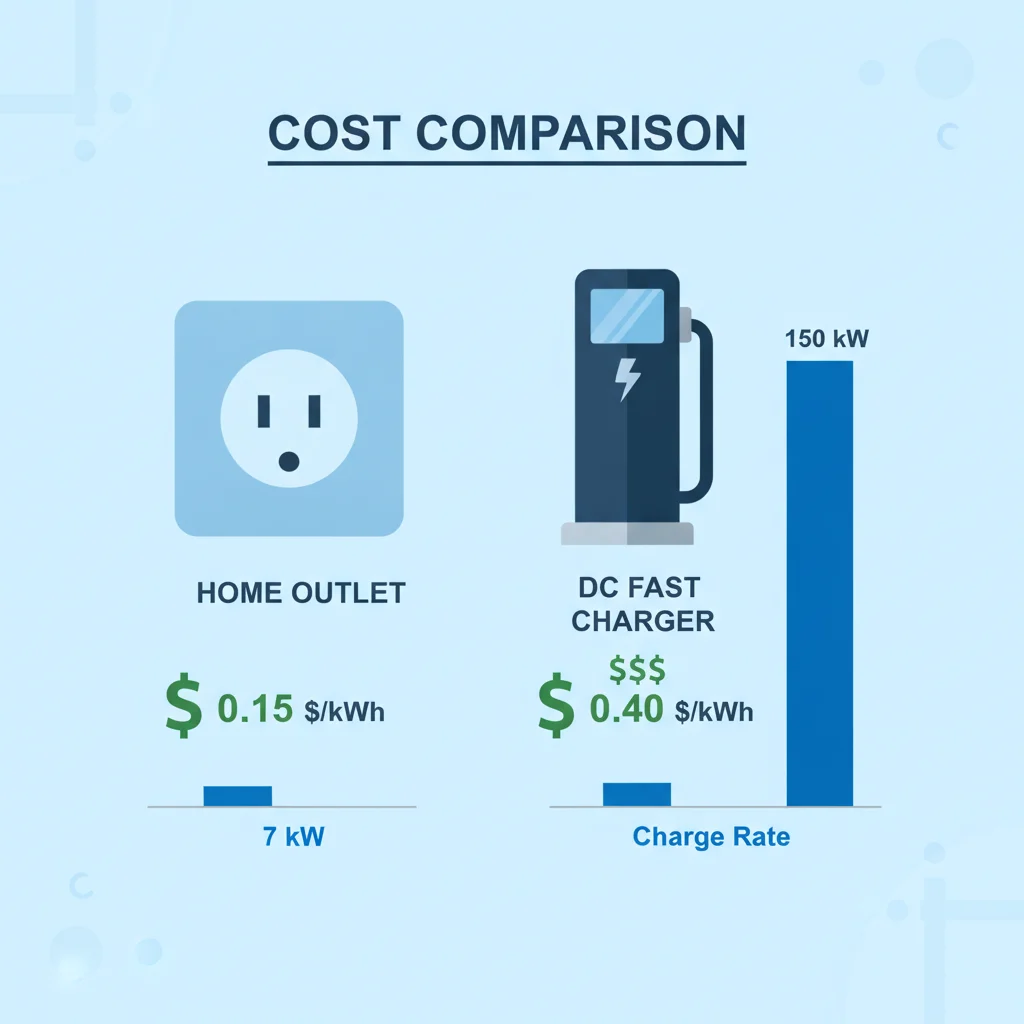
On a per-mile basis, a vehicle averaging 3.5 miles per kWh costs about $0.046/mile at home. At $0.48/kWh on a public charger, that rises to $0.137/mile — nearly triple. Compared to a gas vehicle averaging 35 mpg at $3.50/gallon ($0.10/mile), premium-tier DC fast charging starts to look less like a bargain and more like parity, or worse. That per-mile context is unpacked further in our breakdown of public vs. home charging costs per mile.
What Your Car's Hardware Means for Your Bill
Your vehicle's maximum DC charge-acceptance rate — measured in kilowatts — is one of the most underappreciated factors in how much you pay at a fast charger, particularly on per-minute networks.
A Chevy Equinox EV accepts up to 150 kW. A Nissan Leaf (older 40 kWh version) maxes out at 50 kW. Plugging both into the same 150 kW charger produces radically different outcomes on a per-minute billing network: the Equinox adds energy quickly and efficiently; the Leaf adds energy slowly while the meter runs at the same rate.
Your Car's Max Charge Rate Is a Hard Ceiling
A 350 kW ultra-fast charger can only charge your vehicle as fast as your car's onboard charger and battery management system will allow. If your car accepts a maximum of 100 kW DC input, you will never exceed 100 kW at that station regardless of how powerful the charger is. Knowing your vehicle's maximum DC charge rate is essential for evaluating per-minute pricing fairness.
NEVI Pricing Requirements May Reshape the Market
NEVI-funded stations are required to display pricing clearly and comply with pricing caps tied to the average state electricity rate. As these stations come online across the US highway system, they may create a pricing benchmark that pressures private operators. However, NEVI rollout has been slower than originally projected in many states, so meaningful market impact is likely a few years away.
The charging curve adds another layer of complexity. EV batteries charge fastest from roughly 10% to 80% state of charge. Above 80%, onboard battery management systems deliberately throttle charging speed to protect cell longevity. This means the final 20% of capacity often takes as long or longer than the first 70%. On a per-minute network, arriving at 75% and trying to reach 100% is an expensive proposition — you're paying full rate for trickle-speed energy delivery.
The practical takeaway: on per-minute networks, arrive with a low battery, charge to 80%, and leave. On per-kWh networks, the state-of-charge math matters less, though charging to 100% still takes longer due to the taper.
To understand exactly why this charging curve exists and what limits your vehicle's peak charge rate, see DC fast charging explained: what happens inside the charger.
Strategies to Reduce Your Fast-Charging Costs
For drivers who rely on public DC fast charging regularly, cost discipline matters. These approaches can meaningfully reduce what you pay over the course of a year.
Prioritize Home Charging
The most effective cost-reduction strategy is using public fast charging only when necessary — road trips, emergencies, or when home charging isn't available. Even installing a basic Level 2 home charger can save $500–$1,500 annually for high-mileage drivers compared to exclusive reliance on public infrastructure. Our home charging setup guide walks through the installation process and costs.
Join the Right Network Plans
If you regularly use a specific network's chargers along your commute or travel corridor, paying for membership almost always pencils out. Electrify America's Pass+ plan, EVgo's membership, and Tesla's charging credits (for new vehicle purchases) all offer meaningful discounts over guest rates. Calculate your monthly kWh usage and compare the member rate savings against the monthly fee.
Use Apps to Compare Prices Before You Pull In
PlugShare, ChargePoint's app, and network-specific apps all show current pricing before you commit. In many metro areas, multiple fast-charging options exist within a short radius, and a 5-minute drive can mean a 30% price difference per kWh.
Always Check the Rate Before You Plug In
Most major networks display current pricing in their apps before you initiate a session. Make checking the rate a habit, especially when traveling in unfamiliar regions — pricing can vary significantly between stations on the same network in different states. Some networks also let you see whether you're paying guest or member rates before the session starts.
Charge to 80%, Then Move On
On per-minute networks especially, stopping at 80% state of charge and moving on is the most cost-efficient approach. Above 80%, battery management systems throttle charging speed significantly — meaning you pay the same per-minute rate for substantially less energy delivery. Charging from 20% to 80% delivers far better value than the final 20% on virtually any fast charger.
Time Your Sessions
Some networks — particularly Electrify America — implement time-of-use pricing that mirrors utility peak hours. Charging during off-peak windows (typically mid-morning or late evening) can reduce per-kWh costs by $0.05–$0.10 at participating locations. Check the network's app for time-variable pricing at your specific station.
Understand the Cost Difference Between Charging Levels
For a comprehensive view of how DC fast charging stacks up financially against Level 1 and Level 2 options — including the scenarios where each makes the most sense — see our cost and speed comparison across all three charging levels.
The Broader Picture: Public Charging Infrastructure and Its Future
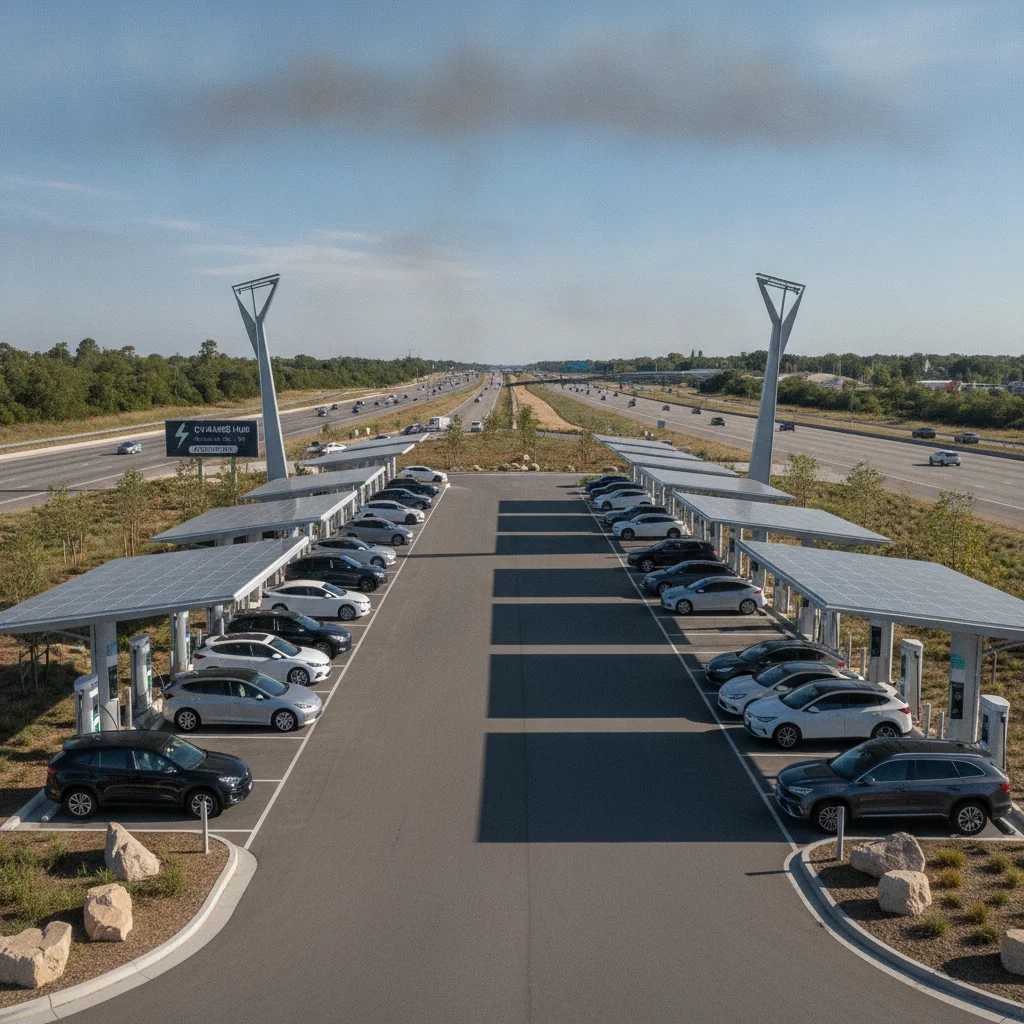
DC fast charging prices are not static. The US DOE's National Electric Vehicle Infrastructure (NEVI) program is pumping $5 billion into a national fast-charging network along federal highway corridors, with pricing caps built into the grant requirements. NEVI-funded stations must charge no more than the network's average rate, and operators must provide a baseline of reliability and uptime — requirements notably absent from today's commercial market.
Meanwhile, competition is intensifying. Tesla's Supercharger network opened to non-Tesla vehicles beginning in 2023, injecting significant competition into the market and forcing other networks to address the reliability and pricing gaps that frustrated drivers for years. Industry analysts expect per-kWh prices to compress modestly over the next three to five years as hardware costs fall and network utilization improves.
Your Car's Max Charge Rate Is a Hard Ceiling
A 350 kW ultra-fast charger can only charge your vehicle as fast as your car's onboard charger and battery management system will allow. If your car accepts a maximum of 100 kW DC input, you will never exceed 100 kW at that station regardless of how powerful the charger is. Knowing your vehicle's maximum DC charge rate is essential for evaluating per-minute pricing fairness.
NEVI Pricing Requirements May Reshape the Market
NEVI-funded stations are required to display pricing clearly and comply with pricing caps tied to the average state electricity rate. As these stations come online across the US highway system, they may create a pricing benchmark that pressures private operators. However, NEVI rollout has been slower than originally projected in many states, so meaningful market impact is likely a few years away.
The public charging landscape is also consolidating. Smaller networks are being acquired, partnerships between automakers and charging companies are multiplying, and some legacy gas station brands are investing heavily in fast-charging infrastructure. For a current rundown of the major players and how to navigate charging across the US, the public charging networks hub tracks what's available and how each network compares.
In the near term, the most financially rational approach for most EV owners remains unchanged: treat DC fast charging as a road-trip tool, not a daily routine. Use it when you need speed and distance; rely on cheaper overnight energy the rest of the time. That balance keeps the EV cost advantage intact — and keeps a surprisingly complex pricing system from quietly eroding it.
All claims are backed by peer-reviewed research. Sources on request.