Key Takeaways
Option A
Comprehensive Coverage
The coverage for threats outside your control.
Best for: Drivers who face elevated risk from weather, theft, wildlife, or other non-collision hazards.
Option B
Collision Coverage
The coverage for impact damage, regardless of fault.
Best for: Drivers who want repair protection after striking another vehicle, object, or rolling their car.
If you live in an area with severe weather, high deer density, or elevated theft rates
Comprehensive Coverage
Comprehensive handles exactly those threats — hail, flood, animal strikes, and vehicle theft. Collision coverage wouldn't pay a cent for any of them.
If you have a long commute or frequently drive in heavy traffic
Collision Coverage
More time on the road means more exposure to at-fault and not-at-fault accidents. Collision coverage ensures your vehicle gets repaired no matter who caused the crash.
If you're financing or leasing your vehicle
Both Comprehensive and Collision Coverage
Lenders require both to protect their financial interest in the vehicle. Dropping either coverage typically violates your loan or lease agreement.
If you drive an older, low-value vehicle with no loan
Neither — or Comprehensive only
If your car is worth less than $4,000–$5,000, the premium plus deductible may exceed what you'd collect on a collision claim. Comprehensive alone may still be worth it for theft and weather protection.
If you want the broadest possible repair protection on a newer vehicle
Both Comprehensive and Collision Coverage
Together, they form what's commonly called 'full coverage' for physical damage — protecting your vehicle against nearly every scenario short of mechanical failure.
The Core Distinction: What Triggers Each Coverage
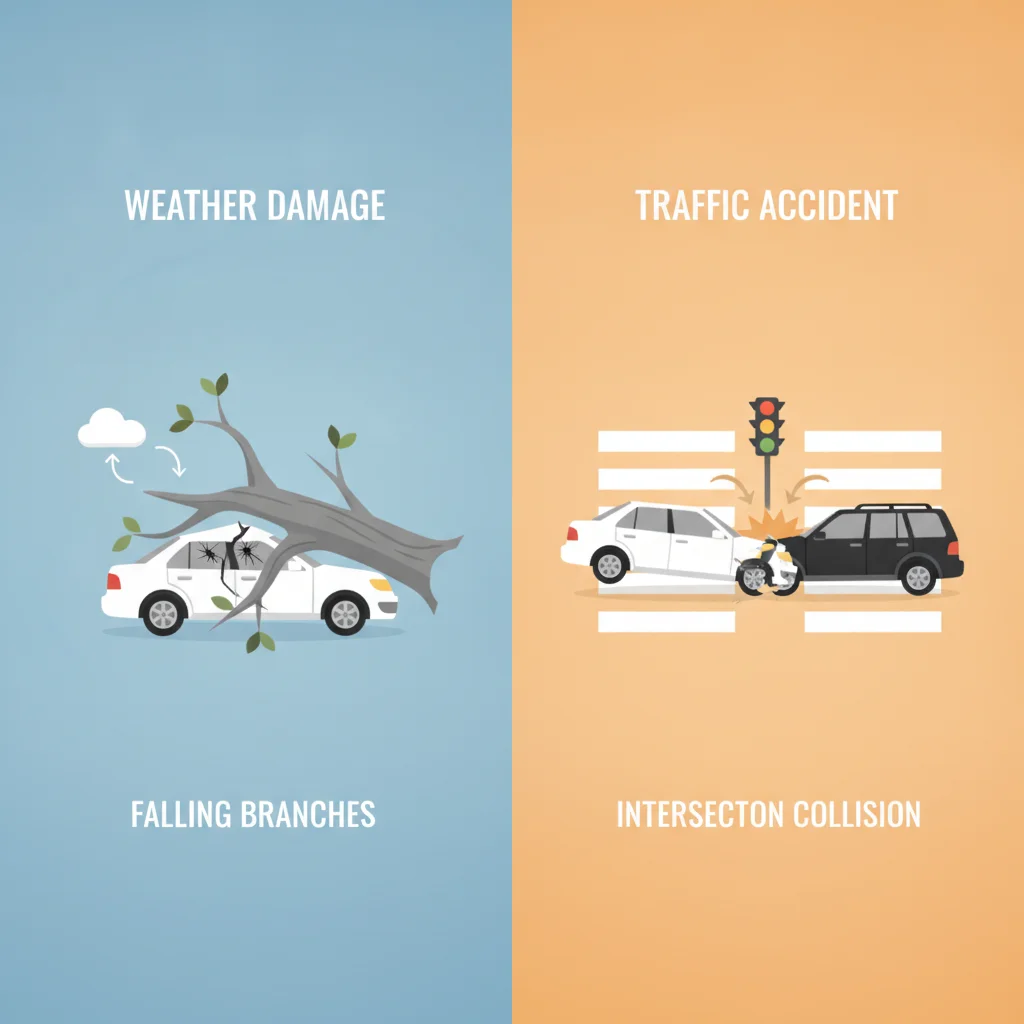
Here's the simplest way to remember the difference: comprehensive covers what happens to your car, while collision covers what your car runs into. One is about external forces beyond your control; the other is about physical impact.
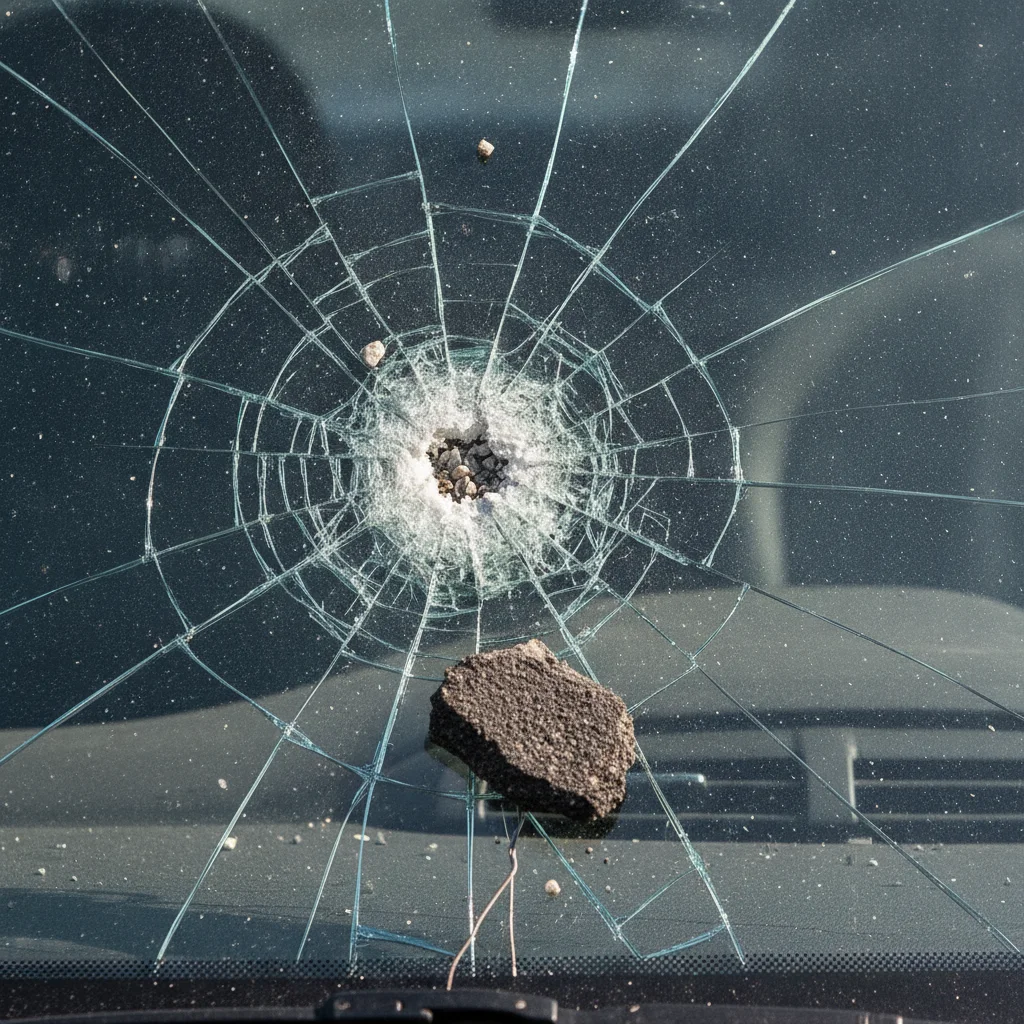
Comprehensive coverage — sometimes called "other than collision" — activates when your vehicle is damaged by something that isn't a crash. That includes theft, fire, flooding, hailstorms, fallen trees, windshield cracks from road debris, vandalism, civil disturbance damage, and animal strikes. If a deer walks into your lane and your car is destroyed, that's a comprehensive claim. If you swerve to avoid the deer and hit a guardrail, that's collision. The triggering event is everything.
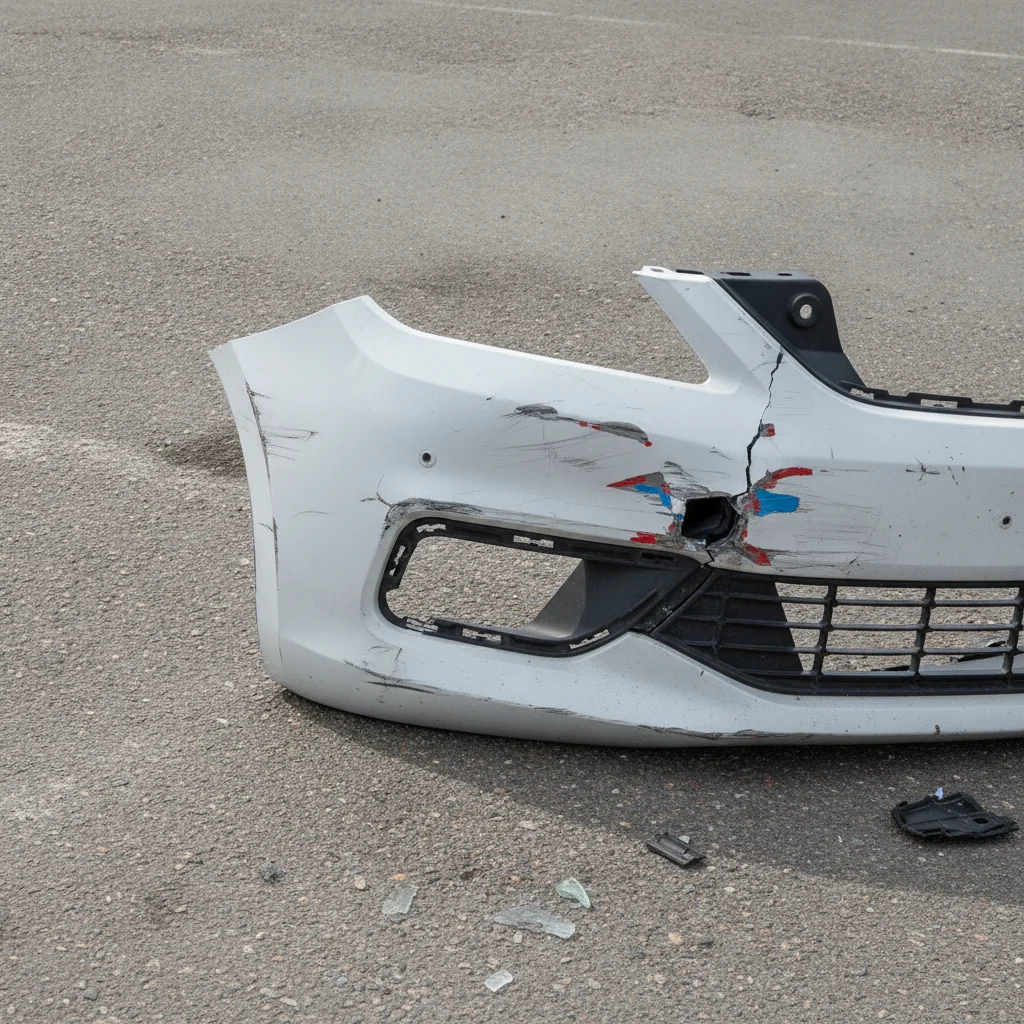
Collision coverage kicks in when your vehicle physically strikes something — another car, a telephone pole, a curb, a guardrail, or even your own garage door. It also applies when your car rolls over. Fault doesn't determine whether coverage applies; if the contact happened, collision is the relevant policy. That said, if another driver caused the accident, you have the option to file against their liability coverage instead — which would spare you from paying your own deductible.
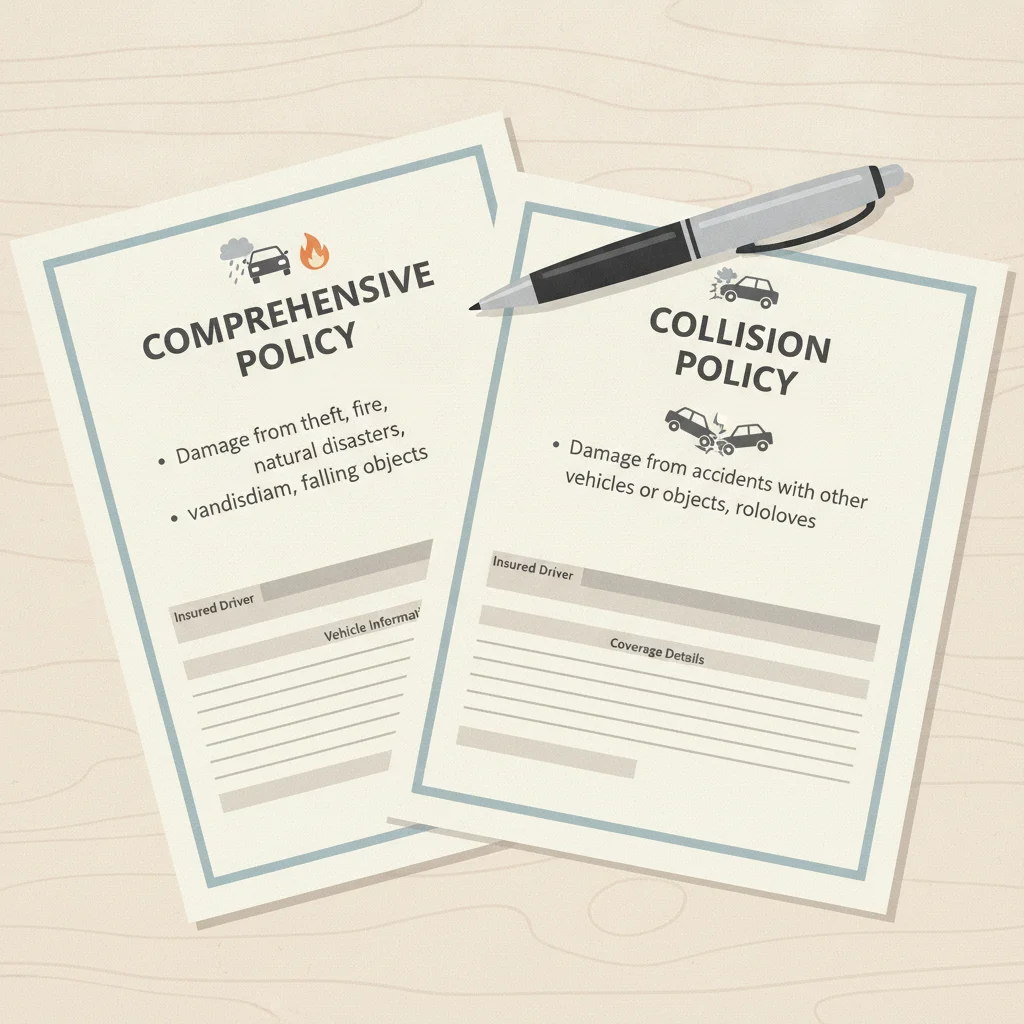
This distinction matters because many drivers mistakenly assume that if something bad happens to their car, one policy or the other will cover it automatically. In reality, the wrong coverage type filed for an incident will result in a denial. Knowing which claim type fits your situation before you call your insurer saves time and prevents frustration.
What Each Coverage Actually Pays For
Both comprehensive and collision pay for physical damage to your own vehicle — not the other driver's property, not medical bills, and not liability to others. That's what liability coverage handles. These two coverages are entirely about your car.
Comprehensive Coverage — Covered Scenarios
- Theft of the entire vehicle
- Vandalism (keying, broken windows, graffiti)
- Fire damage
- Flood, hurricane, or water damage
- Hail and storm damage
- Falling objects (tree limbs, ice, debris)
- Animal strikes (hitting a deer, bird impact, rodent damage to wiring)
- Windshield cracks from road debris (in most states, often with no deductible)
- Civil unrest or riot damage
What comprehensive does not cover: mechanical failure, normal wear and tear, and any damage caused by a collision. It also won't cover personal belongings stolen from inside the vehicle — that falls under your homeowner's or renter's insurance. For a deeper look at some of the less obvious scenarios, see situations where comprehensive coverage surprisingly applies.
Collision Coverage — Covered Scenarios
- Colliding with another vehicle, regardless of fault
- Striking a fixed object (pole, wall, fence, median barrier)
- Single-car rollover accidents
- Hitting a pothole (may vary by insurer)
- Being hit by a hit-and-run driver (when the other party can't be identified)
What collision does not cover: theft, weather damage, animal strikes, or any event that doesn't involve physical impact. Understanding the specific triggers for collision claims helps you avoid surprises when you actually need to file.
| Criterion | Comprehensive Coverage | Collision Coverage |
|---|---|---|
| Primary trigger | Non-collision events (weather, theft, animals) | Physical impact with object or vehicle |
| Covers theft | Yes | No |
| Covers weather damage | Yes — hail, flood, wind | No |
| Covers animal strikes | Yes | No (unless you swerve and hit an object) |
| Covers at-fault accidents | No | Yes |
| Covers hit-and-run damage | No | Yes (with deductible) |
| Fault required for payout | No — event-based | No — impact-based |
| Legally required | No (lenders may require) | No (lenders may require) |
| Average annual cost (U.S.) | ~$170–$300 | ~$400–$700 |
| Separate deductible | Yes | Yes |
Deductibles, Payouts, and How Claims Actually Work
Both coverages use a deductible — the amount you pay out of pocket before your insurer covers the rest. Deductibles for comprehensive and collision are set independently, so you might carry a $500 comprehensive deductible and a $1,000 collision deductible. Your choices here directly affect both your premium and your exposure after a claim.
$170–$300
Average annual comprehensive premium
According to the National Association of Insurance Commissioners (NAIC), comprehensive coverage averages significantly less per year than collision coverage across U.S. drivers.
$400–$700
Average annual collision premium
Collision is the more expensive of the two physical damage coverages due to its higher claims frequency, per NAIC data on private passenger auto insurance.
~78%
Drivers with comprehensive coverage
The Insurance Research Council reports that roughly 78% of insured U.S. drivers carry comprehensive coverage, compared to about 72% who carry collision.
$500–$1,000
Most common deductible range
Across both coverage types, the $500 and $1,000 deductible tiers are the most frequently selected by drivers, per insurer data aggregated by the III.
When you file a claim under either coverage, your insurer pays up to the actual cash value (ACV) of your vehicle minus your deductible. ACV is market value — what your car was worth immediately before the damage, accounting for depreciation. It is not what you paid for it or what it would cost to replace it new. For a refresher on these payout mechanics, the key terms around coverage limits are worth understanding before you need them.
If repair costs exceed a certain percentage of the vehicle's ACV — typically 70–80% depending on the insurer and state — the car may be declared a total loss. At that point, you receive the ACV of the vehicle minus your deductible, and the insurer takes ownership of the salvage title.
Gap Insurance: The Coverage Both Miss
If you owe more on your loan than your car's actual cash value at the time of a total loss, neither comprehensive nor collision will cover the difference. That gap is exactly what gap insurance addresses. It's particularly relevant in the first two years of a loan when depreciation outpaces payoff. Ask your lender or insurer if gap coverage is included or available as an add-on.
Filing Small Claims: Think Before You Call
If your damage estimate is close to your deductible, strongly consider paying out of pocket rather than filing a claim. Even a single comprehensive claim can raise your premium at renewal with some insurers. The break-even point — where premium increases cost more than you collected on the claim — often arrives faster than drivers expect. Get a repair estimate first, then decide.
One important detail: after a comprehensive or collision claim, your insurer may raise your premium at renewal, even if you weren't at fault. This varies by insurer and state law. Comprehensive claims tied to weather or theft tend to have less premium impact than at-fault collision claims, but it's worth asking your agent before filing a claim for minor damage that falls near your deductible amount.
Do You Actually Need Both? How to Decide
The decision to carry comprehensive, collision, both, or neither comes down to three factors: your vehicle's value, your financial cushion, and your specific risk environment. Here's how to think through it honestly.
When both coverages make sense
If you're financing or leasing, the decision is already made for you — lenders require both. Beyond that, if your vehicle is worth more than $10,000 and you'd struggle to replace it out of pocket, carrying both is usually the sound financial call. The annual premium cost for both coverages on a mid-value vehicle typically runs between $700 and $1,200 combined, depending on your location and driving record. For a broader look at how these choices fit into your overall policy structure, see comparing liability-only versus full coverage.
When you might drop collision
If your vehicle's market value is under $5,000 and you have savings to absorb a repair or replacement, collision may not pencil out. Run this quick math: if your annual collision premium plus your deductible is close to or exceeds what you'd collect on a claim (vehicle ACV), you're essentially self-insuring at a loss. Dropping collision while keeping comprehensive is a common move for older paid-off vehicles, because theft and weather protection still delivers real value at a relatively low cost.
When you might drop comprehensive
Rarely advisable unless the vehicle is very low value and kept in a low-risk environment — enclosed storage, low-theft area, mild climate. Comprehensive premiums are generally lower than collision, so the cost-benefit calculus almost always favors keeping it.
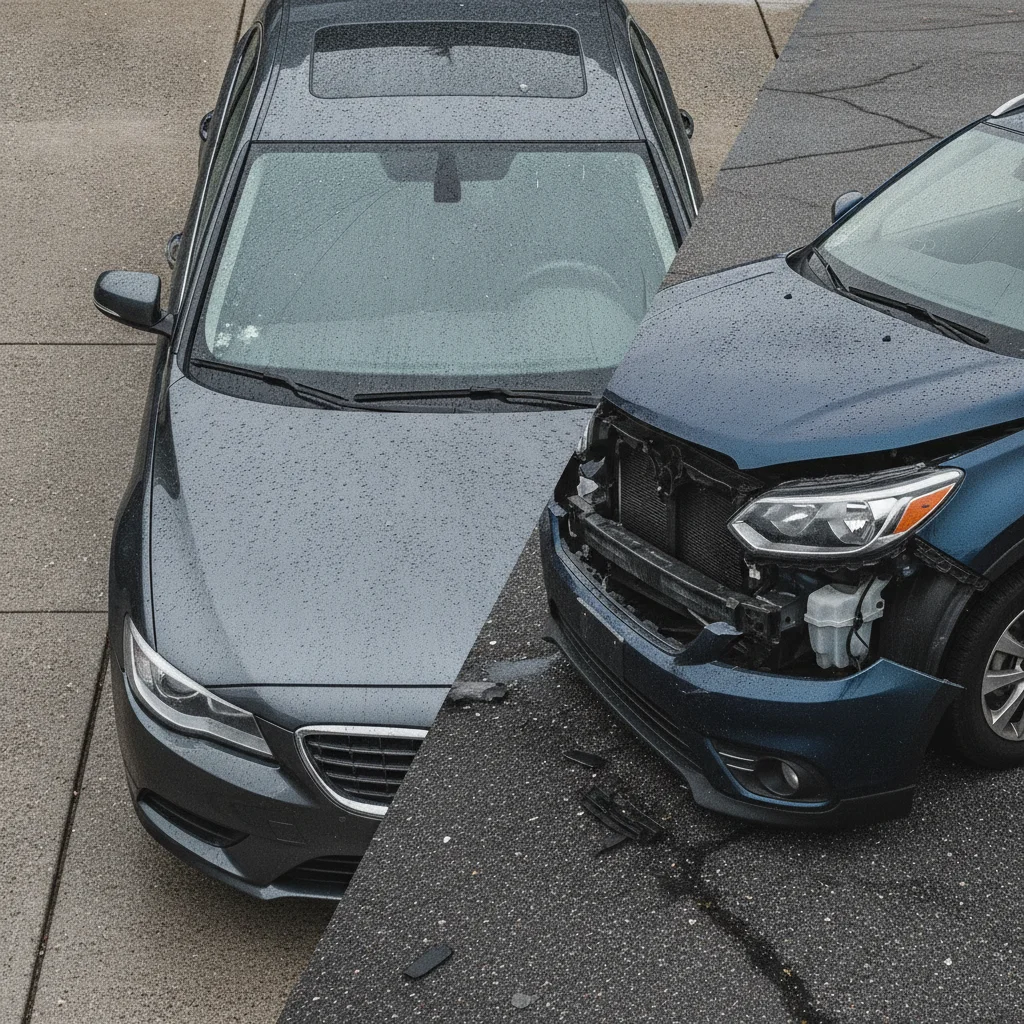
If you're driving an EV or plug-in hybrid, the calculus changes further — expensive battery components and specialized repair costs mean both coverages carry more weight. How these coverages apply to electric vehicles is worth reading before making a decision on your EV policy.
Common Misconceptions That Cost Drivers Money
A few persistent myths cause drivers to either over-pay, under-insure, or file the wrong type of claim. Let's clear them up directly.
"Full coverage" includes everything
No such thing exists in policy language. When dealers or lenders say "full coverage," they typically mean liability plus comprehensive plus collision — but that still leaves out medical payments, uninsured motorist coverage, gap insurance, and rental reimbursement. Don't assume "full coverage" means total protection. Common comprehensive coverage misconceptions break down where this confusion most often hurts drivers financially.
Comprehensive covers any non-mechanical damage
Not quite. Comprehensive covers specific perils — theft, weather, animals, fire, vandalism. It does not cover damage caused by your own neglect, wear and tear, or defective parts. If your brake lines fail and cause an accident, neither comprehensive nor collision covers the mechanical failure itself; they might cover the resulting accident damage under collision, but the failed part is not their concern. That's the territory of mechanical breakdown insurance or extended warranties.
If someone hits me, my collision coverage pays
Your collision coverage can pay — but you'd have to use your deductible. The better move is pursuing the at-fault driver's liability insurance, which would cover your repairs without touching your deductible or potentially affecting your premium. Collision is there as a backstop when the other party is uninsured, underinsured, or a hit-and-run. A full breakdown of how both coverages work walks through the claims process in more detail.
Gap Insurance: The Coverage Both Miss
If you owe more on your loan than your car's actual cash value at the time of a total loss, neither comprehensive nor collision will cover the difference. That gap is exactly what gap insurance addresses. It's particularly relevant in the first two years of a loan when depreciation outpaces payoff. Ask your lender or insurer if gap coverage is included or available as an add-on.
Filing Small Claims: Think Before You Call
If your damage estimate is close to your deductible, strongly consider paying out of pocket rather than filing a claim. Even a single comprehensive claim can raise your premium at renewal with some insurers. The break-even point — where premium increases cost more than you collected on the claim — often arrives faster than drivers expect. Get a repair estimate first, then decide.
Side-by-Side: Comprehensive vs. Collision at a Glance
If you need a quick reference for how these two coverages stack up across the criteria that matter most, here's the head-to-head view. Then use the verdict cards below to match your specific situation to a coverage recommendation.
One final point worth making: the goal isn't to carry the cheapest policy — it's to carry the right policy for your vehicle, your finances, and your risk exposure. A $200-a-year savings on collision isn't a win if it leaves you absorbing a $6,000 repair bill. Comparing coverage quality, not just sticker price, is how you make this decision confidently. For anyone still building their foundational understanding of how these coverages work together, a first-time buyer's guide to collision and comprehensive is a solid starting point.

All claims are backed by peer-reviewed research. Sources on request.