Key Takeaways
Collision Coverage
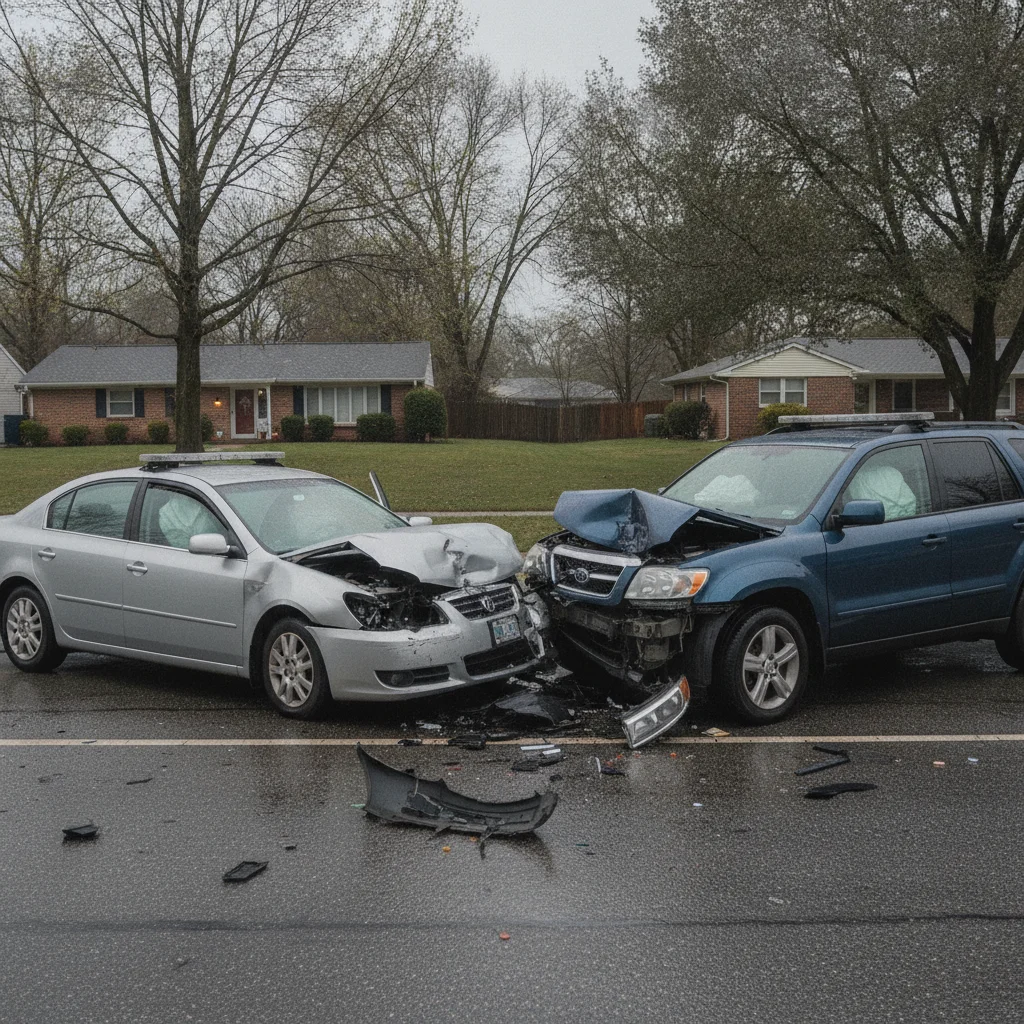
Collision coverage is a type of auto insurance that pays to repair or replace your vehicle when it's damaged by a physical impact — whether that's hitting another car, driving into a guardrail, or rolling over. It applies regardless of who was at fault. You pay your deductible first, and the insurer covers the remaining eligible repair costs up to the car's actual cash value.
Collision is a named-peril coverage, meaning it only triggers for the specific events listed in your policy — most commonly contact with another vehicle or object. Events not listed (like theft or flood) fall outside its scope entirely.
What Collision Coverage Is Actually Designed to Do
When most drivers think about car insurance, they lump everything together — fire, theft, crashes, floods — assuming it all works the same way. It doesn't. Auto insurance is a collection of distinct coverages, each with precise triggers. Collision is one of the most commonly purchased add-ons, yet it's also one of the most frequently misunderstood when a claim is filed.
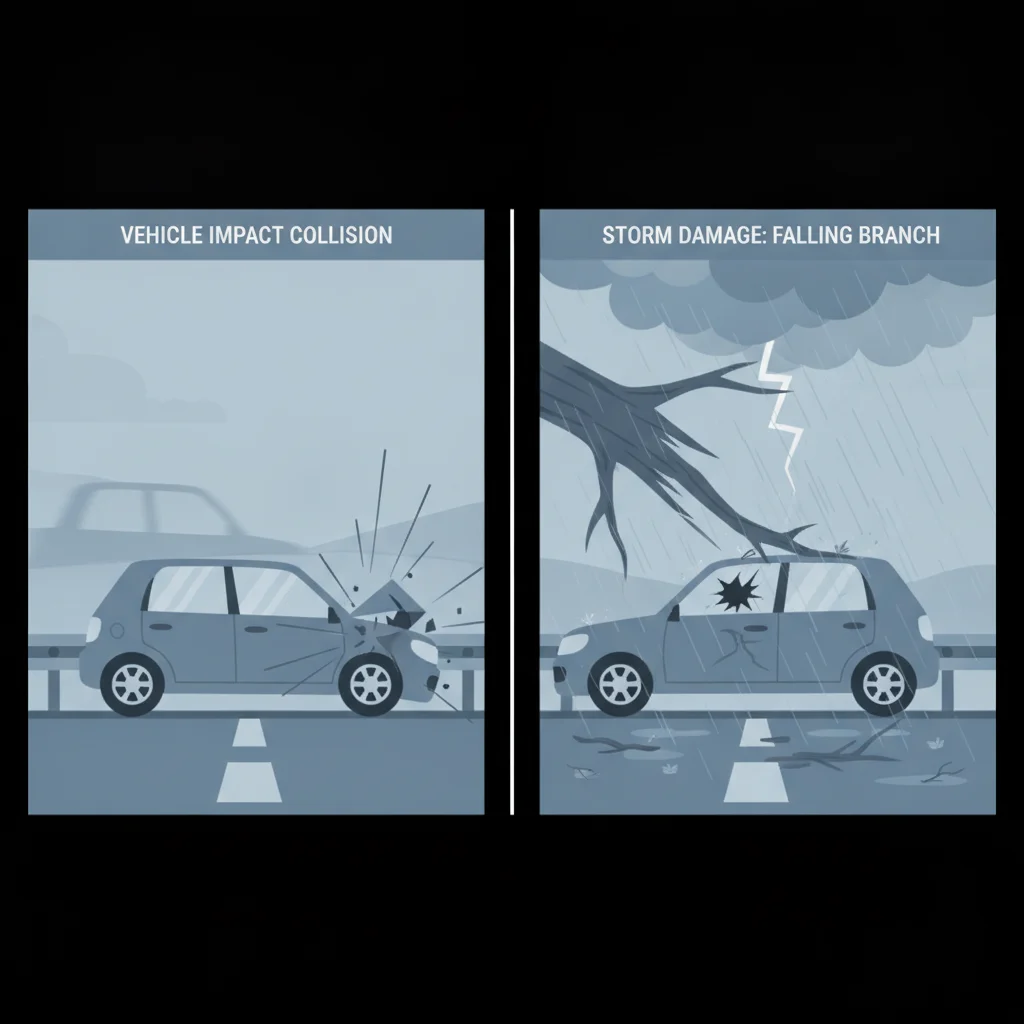
At its core, collision coverage is designed to repair or replace your vehicle when it's damaged by physical impact. That impact could involve another vehicle, a stationary object like a fence or telephone pole, or the road surface itself during a rollover. What unites all of these scenarios is the concept of motion-driven contact — your car (or a car that hit yours) was moving and made contact with something it shouldn't have.
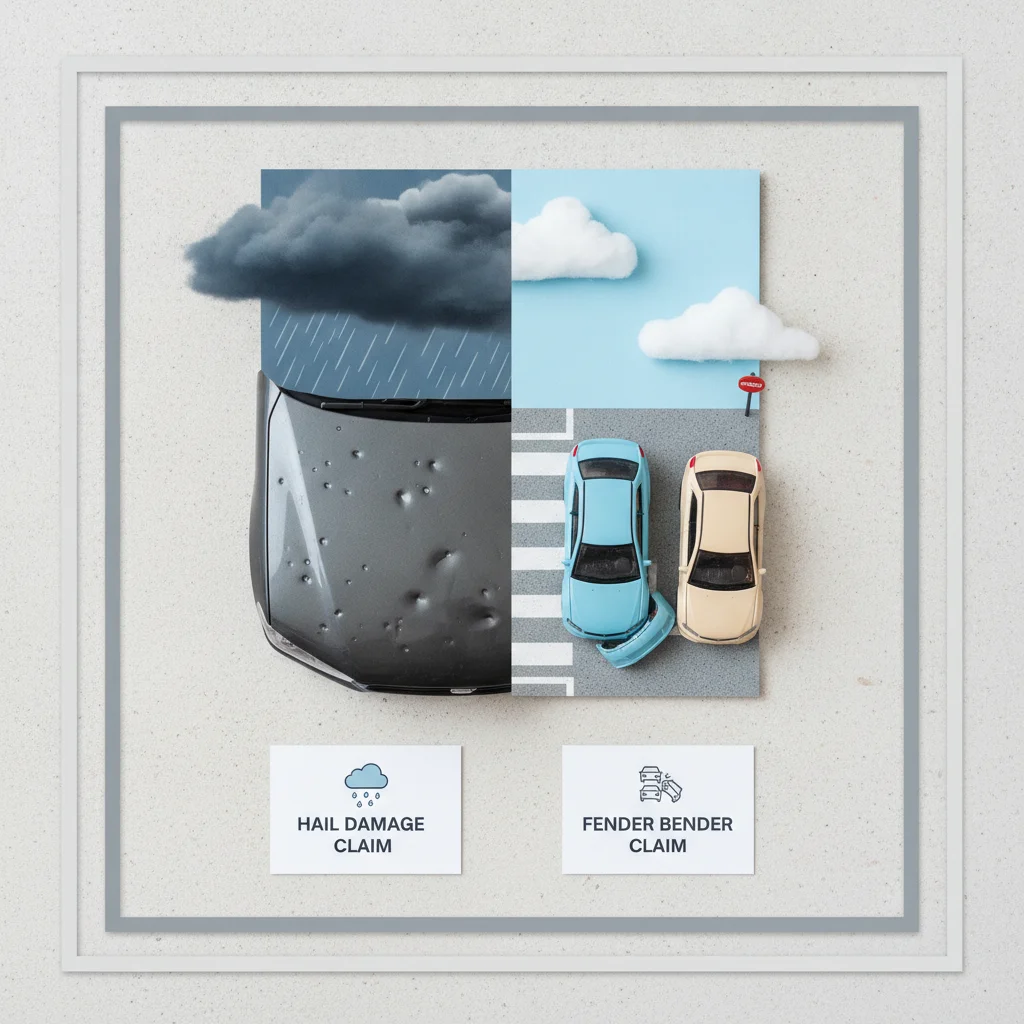
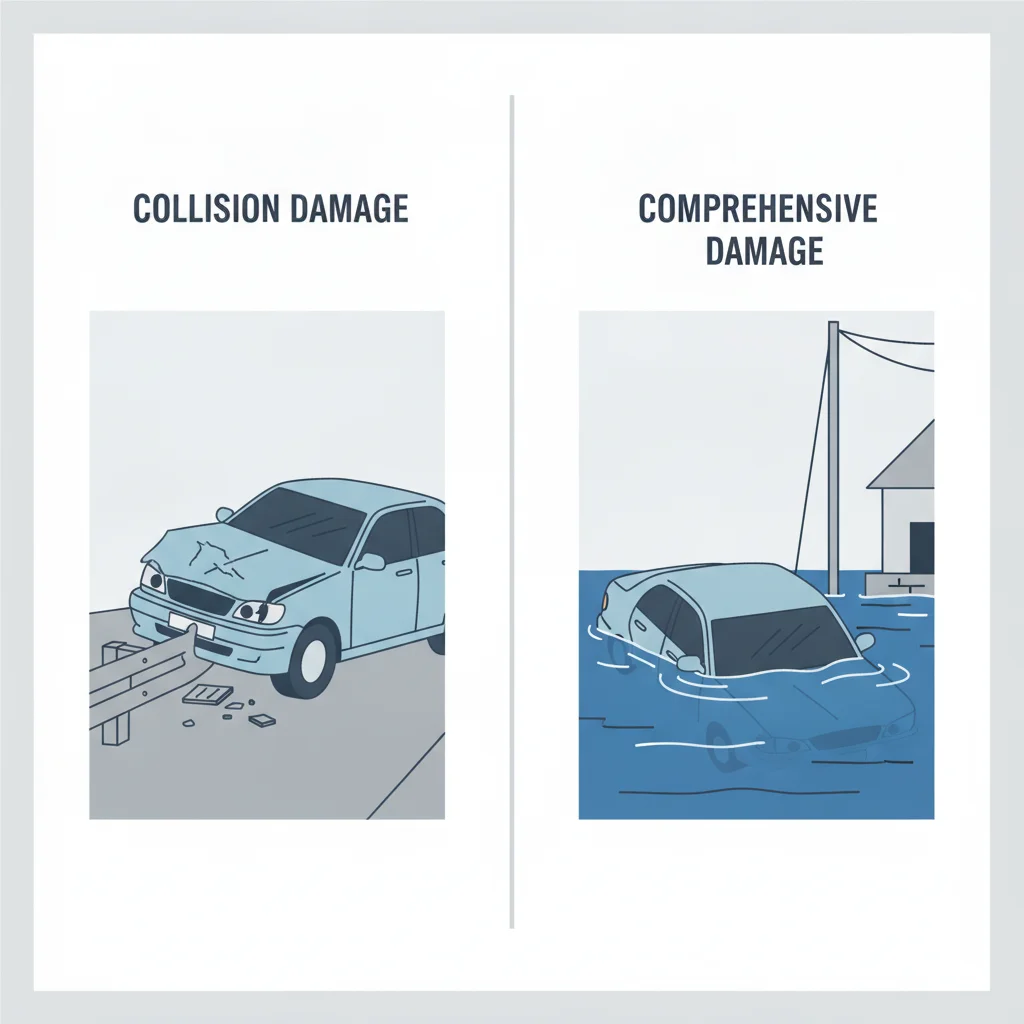
What collision isn't designed to do is catch every possible source of vehicle damage. It won't cover a hailstorm that dents your hood, a flood that destroys your interior, or a thief who drives away with your car. Those scenarios have their own coverage type: comprehensive. The two work together to form what's called "physical damage coverage," but they cover fundamentally different kinds of risks.
Understanding where collision starts and stops is essential before you ever need to file a claim. Assuming coverage that doesn't exist leads to denied claims — and surprise repair bills that can run into thousands of dollars.
Exactly Which Incidents Trigger a Collision Claim
Collision coverage activates when your vehicle sustains damage from a qualifying impact event. Most standard auto policies define these triggers in consistent language, though the exact wording varies by insurer. Here are the core scenarios that almost universally qualify:
- Vehicle-to-vehicle accidents: Rear-end collisions, T-bone impacts, sideswipes, and multi-car pileups all fall under collision — whether you caused the accident or another driver did.
- Single-vehicle crashes: Running into a guardrail, hitting a curb at speed, or striking a utility pole are classic single-vehicle collision claims. No other driver needs to be involved.
- Rollovers: If your car flips — whether caused by overcorrection, hitting a median, or road conditions — collision coverage handles the resulting damage.
- Pothole damage: Hitting a pothole hard enough to damage suspension components, wheels, or bodywork counts as contact with a road surface and typically qualifies as a collision claim.
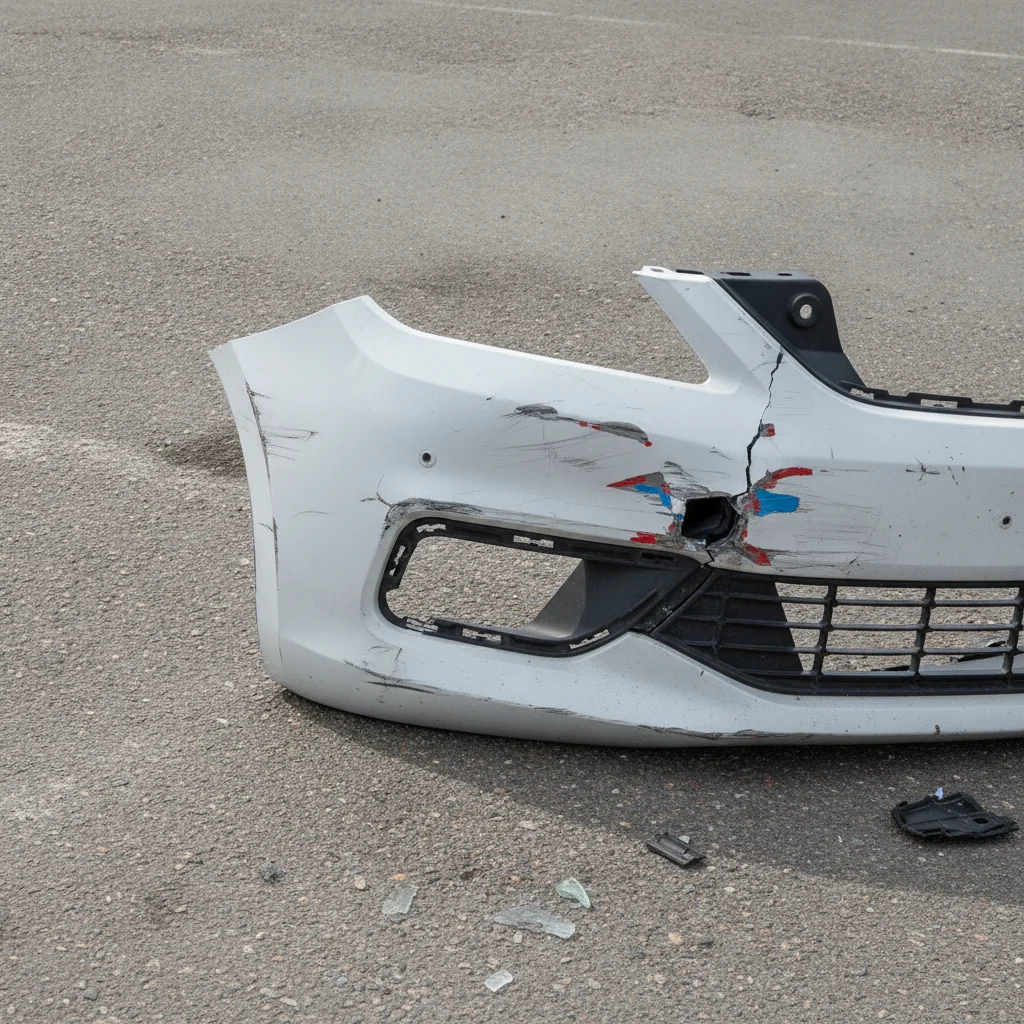
- Parking lot impacts: Even low-speed parking lot fender benders — whether someone backs into your car or you clip another vehicle — are collision events.
~$290
Average annual collision premium (U.S.)
According to Bankrate's 2024 analysis, the national average cost of collision coverage is approximately $290 per year, though rates vary significantly by state, vehicle, and driving history.
72%
Drivers who carry collision coverage
The Insurance Research Council estimates roughly 72% of U.S. drivers carry collision coverage, despite it being legally optional in every state.
$500
Most common collision deductible chosen
Industry data from the Insurance Information Institute shows $500 is the most frequently selected deductible level among collision policyholders.
1 in 6
Odds of filing a collision claim in a year
The National Safety Council estimates roughly one in six drivers will be involved in an accident in a given year, making collision coverage a statistically relevant risk mitigation tool.
One nuance worth understanding: fault doesn't determine whether collision pays. It determines who ultimately foots the bill. If another driver hits you and they're clearly at fault, their liability coverage is the primary source of payment for your repairs. But if that process is slow, disputed, or the other driver is uninsured, you can file under your own collision coverage immediately and let your insurer handle the subrogation process — recovering costs from the at-fault party on your behalf.
Subrogation: Your Insurer Recovers Costs for You
When you file a collision claim for an accident that was another driver's fault, your insurer pays you first — then pursues the at-fault driver's insurance for reimbursement. This process, called subrogation, means you get your car repaired quickly while your insurer handles the back-and-forth. If subrogation is successful, you may receive your deductible back.
Coverage May Differ for Business Use
If you use your personal vehicle for work purposes — such as delivering goods or driving for a rideshare platform — standard collision coverage may not apply during those work periods. Many personal policies explicitly exclude commercial use. Rideshare companies like Uber and Lyft provide some collision coverage while a trip is active, but gaps can exist between periods. Check your policy or ask your agent if you use your car for any compensated driving.
What Collision Coverage Won't Pay For
The exclusions in collision coverage are just as important as the inclusions. Drivers who misread these boundaries often discover the gap at the worst possible moment — after something happens to their car.
Here's what falls firmly outside collision coverage:
- Theft: If your car is stolen and never recovered, that's a comprehensive claim. Collision only covers damage, not disappearance.
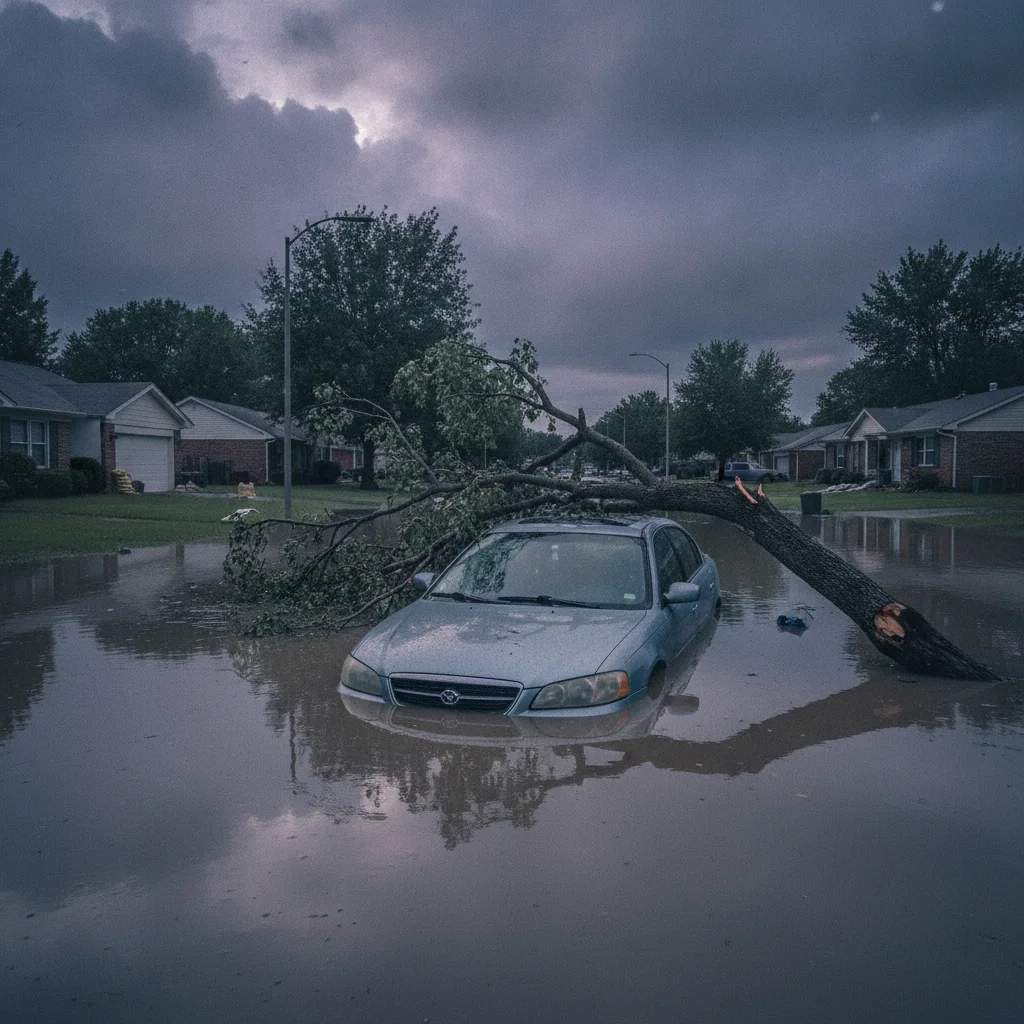
- Weather events: Hail, floods, hurricanes, tornadoes, and ice storms are all covered by comprehensive, not collision. Even if your car is completely destroyed by a flood, collision coverage won't respond.
- Animal strikes: Hitting a deer is a collision with a living creature — but most insurers classify deer strikes and other animal impacts under comprehensive. This surprises many drivers.
- Vandalism or civil disturbance: Keying, broken windows, or fire-setting by another person is a comprehensive event.
- Mechanical breakdown: Collision won't pay for an engine that seizes, a transmission that fails, or any repair tied to wear and tear rather than impact damage.
- Personal belongings inside the car: If someone breaks in and takes your laptop or golf clubs, that's typically covered by your homeowners or renters insurance — not your auto policy at all.
See what comprehensive insurance covers that collision never will for a full breakdown of the other category.
Use the 10% Rule to Evaluate Coverage Value
A simple way to decide whether to keep collision on an older car: add your annual premium plus your deductible. If that total exceeds 10% of your car's current market value, dropping collision may make financial sense. Look up your car's value using Kelley Blue Book or Edmunds before making the call.
File Selectively to Protect Your Premium
Not every minor collision warrants a formal claim. For small dents or dings where repair costs barely exceed your deductible, paying out of pocket may be smarter. Insurers track claim frequency, and multiple claims within a policy period can trigger a premium increase at renewal — sometimes outweighing what you received from the claim.
How Fault, Deductibles, and Actual Cash Value Shape Your Payout
Filing a collision claim involves three financial variables that determine what you actually receive: fault, your deductible, and your car's actual cash value (ACV). Each one can significantly affect the outcome.
Fault and Subrogation
If you caused the accident, your collision coverage is the starting point. Your deductible applies, and your insurer pays the rest — up to ACV. If another driver was at fault, their liability insurance should cover your repairs without touching your deductible. When fault is disputed, your insurer may advance the collision payout and pursue recovery from the other party.
The Deductible
Your deductible is the amount you agree to pay out of pocket before insurance kicks in. Common deductible levels are $250, $500, and $1,000. If your repair estimate is $1,800 and your deductible is $500, the insurer pays $1,300. One important consideration: if the repair estimate is close to or below your deductible, filing a claim may not be financially worthwhile — and could raise your premium at renewal.
Actual Cash Value vs. Replacement Cost
Unlike home insurance, which sometimes pays replacement cost (what it costs to buy a new equivalent item), collision coverage pays actual cash value — what your vehicle was worth on the open market the moment before the accident. Depreciation is factored in, which means a three-year-old car worth $18,000 today will be paid out at $18,000, even if a comparable new model costs $26,000.
If your car is financed and you owe more than its ACV, you could face a gap — paying off a loan on a car you no longer have. That's where gap insurance comes in as a separate optional coverage.
“Collision coverage is often the first policy a driver thinks they have and the last one they fully understand. The deductible math, the ACV calculation, the subrogation process — these are the details that make or break a claim experience.”
— Janet Ruiz, Director of Strategic Communications, Insurance Information Institute
When It Makes Financial Sense to Carry Collision
Collision coverage is optional unless a lender requires it, and for some vehicles, skipping it is a reasonable financial decision. The question is how to evaluate whether the cost of the coverage is justified by the risk it protects against.
A widely cited rule of thumb: if your annual collision premium plus deductible exceeds 10% of your car's value, the coverage may not pencil out financially. On a vehicle worth $4,000, paying $600 per year in premiums plus a $1,000 deductible means you'd need a payout of $1,600 just to break even on a single claim — and you'd likely only collect $3,000 even in a total loss scenario.
Factors that push toward keeping collision coverage:
- Your car is newer, financed, or leased — in which case the lender typically mandates it
- Your car holds significant value (generally above $10,000–$15,000 market value)
- You drive frequently or in high-traffic areas where the risk of an accident is elevated
- You couldn't easily absorb a large out-of-pocket repair expense
Factors that push toward dropping collision:
- Your car is older with low market value and no loan attached
- You have a solid emergency fund that could cover a total loss
- You drive rarely or in low-risk environments
For a deeper look at how these two coverages compare side by side, collision vs. comprehensive coverage walks through the full picture of what each policy is designed to handle.
Common Gray Areas and Frequently Misread Situations
Even with a clear understanding of the basic triggers, certain scenarios create genuine confusion about which coverage applies — or whether any coverage applies at all.
Flooding From a Car Wash
If a car wash malfunction causes water damage to your vehicle, the car wash operator's liability insurance may be responsible — not your auto policy at all. If their coverage is inadequate, comprehensive (not collision) would be the fallback.
Hitting a Road Debris Object
A mattress falling from a truck and causing damage when you strike it is generally treated as a collision claim, not comprehensive, because your vehicle made physical contact with a moving or stationary object on the road.
Backing Into Your Own Property
Reverse into your own fence or garage door? That's still a collision claim — it doesn't matter that the property belongs to you. The physical impact triggers the coverage.
A Hit-and-Run
If an unidentified driver hits your parked car and flees, you'd file under your collision coverage (subject to your deductible). Uninsured motorist property damage (UMPD) coverage, where available, is an alternative that may preserve your deductible.
Sorting out which coverage applies in a specific situation can be genuinely tricky. The collision vs. comprehensive claims guide is a useful reference when you're not sure which type of claim to file after a specific incident.
Subrogation: Your Insurer Recovers Costs for You
When you file a collision claim for an accident that was another driver's fault, your insurer pays you first — then pursues the at-fault driver's insurance for reimbursement. This process, called subrogation, means you get your car repaired quickly while your insurer handles the back-and-forth. If subrogation is successful, you may receive your deductible back.
Coverage May Differ for Business Use
If you use your personal vehicle for work purposes — such as delivering goods or driving for a rideshare platform — standard collision coverage may not apply during those work periods. Many personal policies explicitly exclude commercial use. Rideshare companies like Uber and Lyft provide some collision coverage while a trip is active, but gaps can exist between periods. Check your policy or ask your agent if you use your car for any compensated driving.
If you're uncertain about commonly held beliefs regarding collision coverage, it's worth reviewing collision coverage myths that cost drivers real money — misunderstandings in this area have real financial consequences at claim time.

All claims are backed by peer-reviewed research. Sources on request.