Key Takeaways
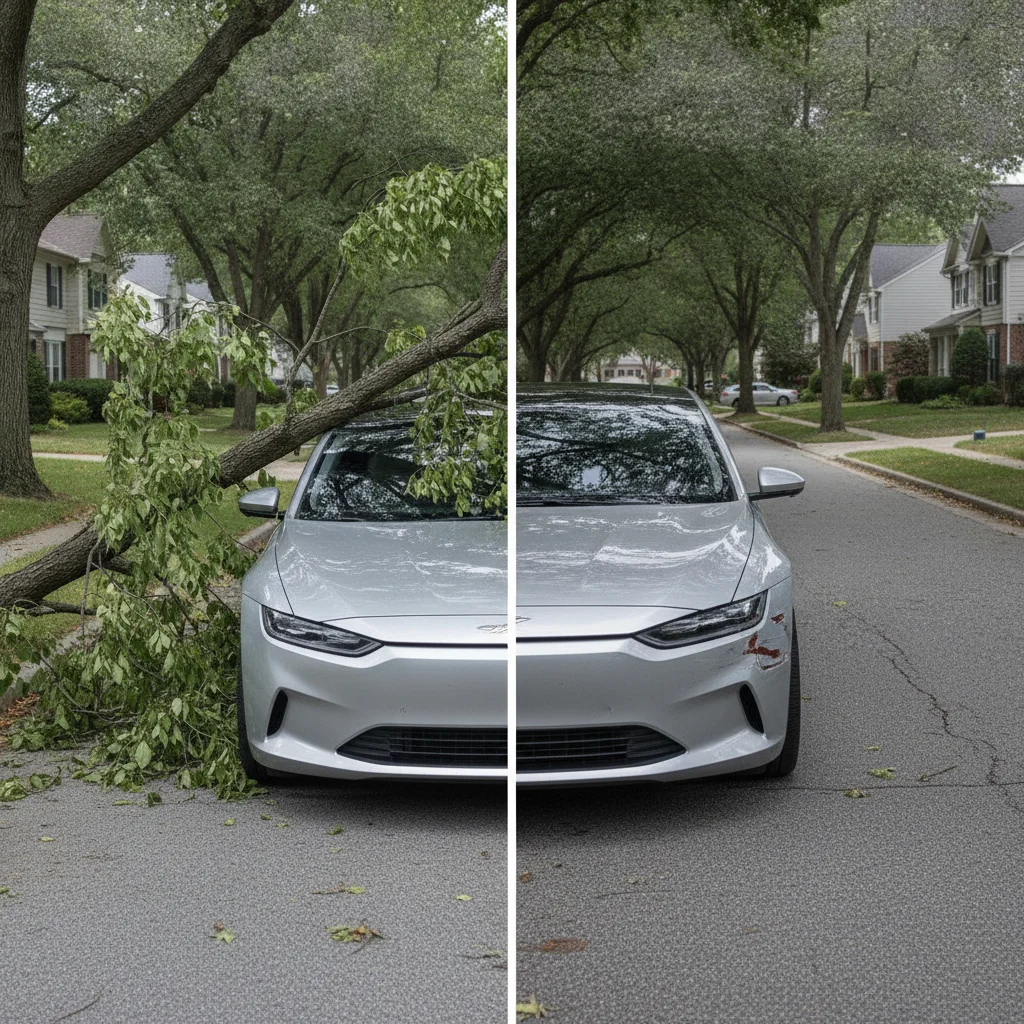
Always photograph your vehicle from all angles before an accident happens — store these images in a cloud folder dated clearly. At claim time, pre-loss documentation is invaluable for disputing adjuster assessments of prior damage.
Insurers can reduce settlement offers if they identify pre-existing damage that overlaps with the claimed incident. Having timestamped baseline photos eliminates that ambiguity in your favor.
When you're comparing collision deductibles, run the math on how many accident-free years it would take for the premium savings to offset the higher out-of-pocket exposure. If the break-even point is more than three years, a lower deductible may serve you better.
Premium savings from a higher deductible are real, but so is the risk of a claim in year one. Quantifying the break-even period turns an abstract decision into a concrete financial calculation.
If your vehicle is financed, request a copy of your lender's insurance requirements in writing and keep it alongside your policy declarations page. Lenders can force-place expensive coverage on your loan if they believe you are out of compliance.
Force-placed insurance — also called lender-placed insurance — is typically far more expensive than coverage you would buy yourself and protects only the lender, not you.
Before filing a small comprehensive claim, call your insurer's claims line and ask how a claim of that size would affect your renewal premium. Many insurers will give you a general answer without formally opening a claim.
Even claims that do not directly trigger a surcharge can affect your eligibility for preferred-tier pricing at renewal. A quick call costs nothing and can inform whether filing is worth it.
If you are buying a used vehicle and the previous owner had gap insurance, do not assume that policy transfers to you. Gap coverage is tied to the original buyer's loan — you would need to purchase your own policy if your new loan exceeds the car's ACV.
Gap insurance is frequently misunderstood in private-party and dealer transactions. Failing to secure your own gap coverage when needed can leave you with a large loan balance and no vehicle after a total loss.
What Is Physical Damage Insurance?
When insurers talk about protecting the physical vehicle itself — as opposed to protecting other drivers or covering your medical bills — they use the term physical damage coverage. It is the umbrella that holds two distinct products: collision insurance and comprehensive insurance. Together, they pay for the cost to repair or replace your car when something goes wrong, up to the vehicle's actual cash value (ACV) minus your deductible.
Physical damage coverage is often misunderstood because drivers assume their standard liability policy — which is legally required in nearly every U.S. state — covers their own car. It does not. Liability coverage pays for harm you cause to others. If you want your insurer to pay for damage to your own vehicle, you need collision, comprehensive, or both.
Lenders and lease companies understand this distinction well. When you finance or lease a car, the lienholder has a financial interest in that asset. As a result, most loan and lease agreements contractually require you to carry both collision and comprehensive until the loan is paid off. For owners who hold their title free and clear, these coverages are optional — but optional does not mean unnecessary.
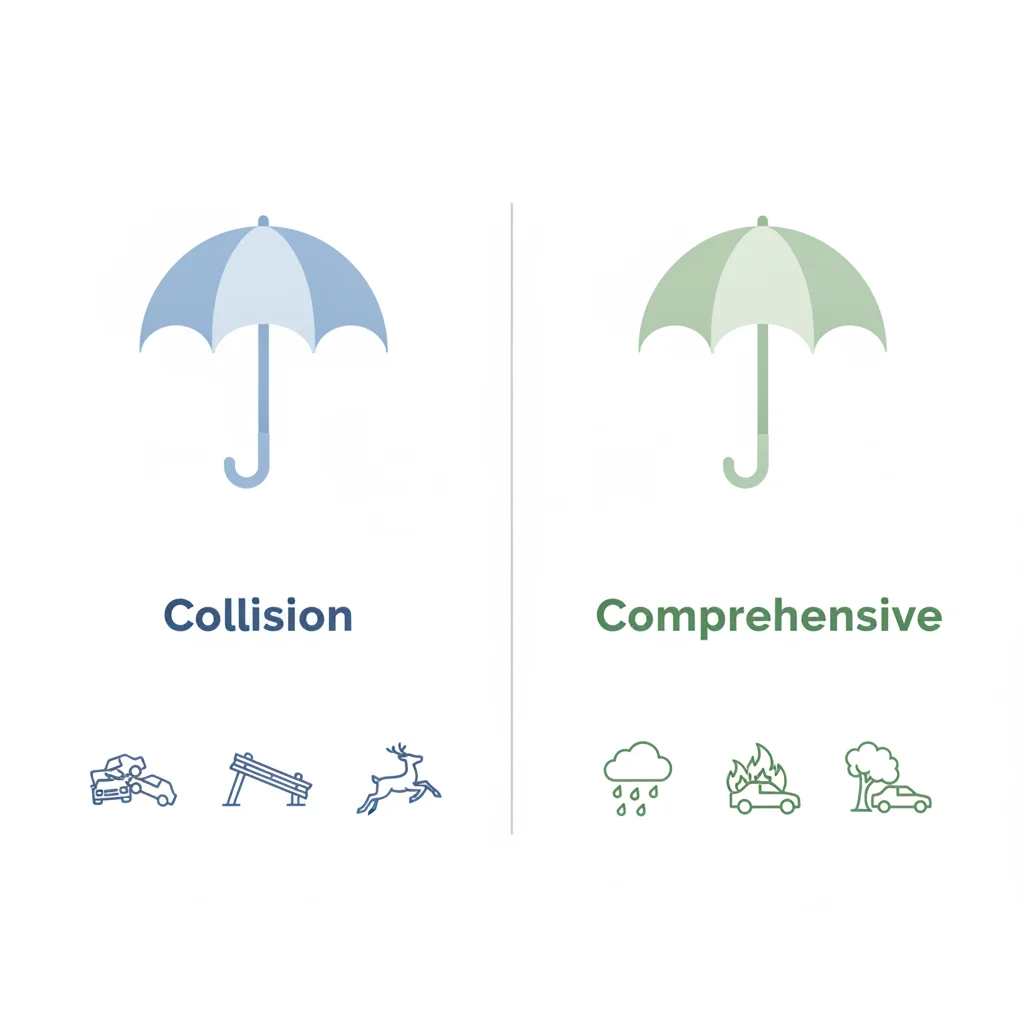
Understanding how each coverage works individually is the first step toward making a smart decision about how much protection your specific situation requires.
Collision Coverage: What It Is and What It Covers
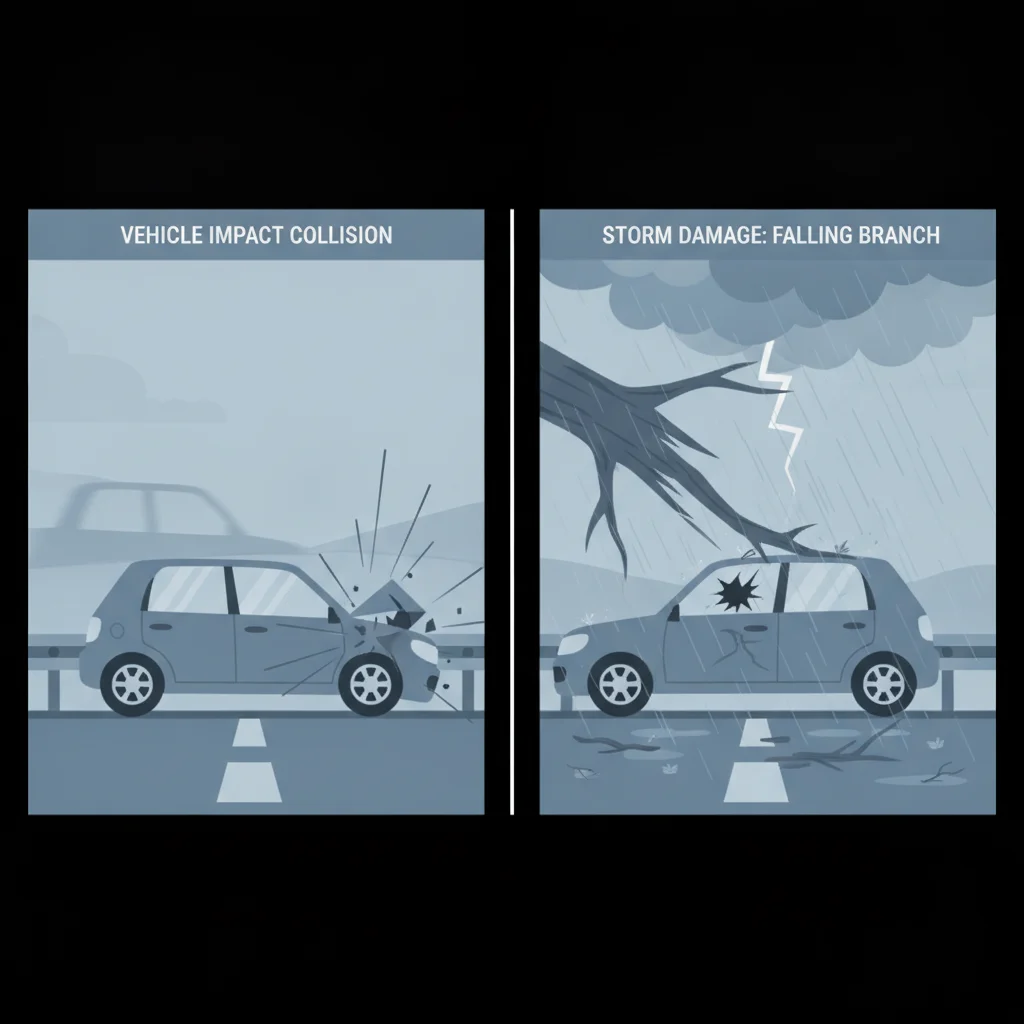
Collision insurance pays to repair or replace your vehicle after it makes contact with another car, a guardrail, a telephone pole, a fence, or any other object — regardless of who was at fault in the accident. The defining characteristic of collision is physical impact: your car hits something, or something hits your car while it is moving.
Common scenarios covered by collision
- Rear-ending another vehicle at a stoplight
- Being sideswiped by a driver who changes lanes without looking
- Hitting a curb or pothole hard enough to damage the undercarriage
- Rolling your vehicle on a curve
- Crashing into a mailbox or parking structure pillar
One point that trips up many drivers: fault does not determine whether collision applies. If another driver causes the accident and they are uninsured or underinsured, your collision coverage can step in to pay for your repairs. You would pay your deductible first, but your insurer may later attempt to recover that cost from the at-fault driver through a process called subrogation — and if successful, you could get your deductible back.
Always photograph your vehicle from all angles before an accident happens — store these images in a cloud folder dated clearly. At claim time, pre-loss documentation is invaluable for disputing adjuster assessments of prior damage.
Insurers can reduce settlement offers if they identify pre-existing damage that overlaps with the claimed incident. Having timestamped baseline photos eliminates that ambiguity in your favor.
When you're comparing collision deductibles, run the math on how many accident-free years it would take for the premium savings to offset the higher out-of-pocket exposure. If the break-even point is more than three years, a lower deductible may serve you better.
Premium savings from a higher deductible are real, but so is the risk of a claim in year one. Quantifying the break-even period turns an abstract decision into a concrete financial calculation.
If your vehicle is financed, request a copy of your lender's insurance requirements in writing and keep it alongside your policy declarations page. Lenders can force-place expensive coverage on your loan if they believe you are out of compliance.
Force-placed insurance — also called lender-placed insurance — is typically far more expensive than coverage you would buy yourself and protects only the lender, not you.
Before filing a small comprehensive claim, call your insurer's claims line and ask how a claim of that size would affect your renewal premium. Many insurers will give you a general answer without formally opening a claim.
Even claims that do not directly trigger a surcharge can affect your eligibility for preferred-tier pricing at renewal. A quick call costs nothing and can inform whether filing is worth it.
If you are buying a used vehicle and the previous owner had gap insurance, do not assume that policy transfers to you. Gap coverage is tied to the original buyer's loan — you would need to purchase your own policy if your new loan exceeds the car's ACV.
Gap insurance is frequently misunderstood in private-party and dealer transactions. Failing to secure your own gap coverage when needed can leave you with a large loan balance and no vehicle after a total loss.
For a deeper side-by-side look at exactly when each coverage triggers, see our guide to what collision and comprehensive actually protect.
~6%
U.S. vehicles stolen annually per 1,000
According to the National Insurance Crime Bureau, vehicle theft has risen sharply since 2019, making comprehensive coverage increasingly valuable in urban and suburban markets.
$4,711
Average collision claim payout
The Insurance Information Institute reported average collision claim costs have climbed steadily as vehicle repair complexity and parts costs increase.
76%
Insured drivers carrying collision coverage
According to the Insurance Information Institute, roughly three-quarters of U.S. drivers with auto insurance carry collision coverage, reflecting widespread lender requirements.
$2,900
Average comprehensive claim payout
The Insurance Information Institute notes that comprehensive claims, while individually less costly than collision on average, have surged due to increased hail events and rising theft rates.
10%
Rule-of-thumb premium-to-value ratio for dropping coverage
Financial planners and insurance advisors commonly recommend evaluating whether to drop physical damage coverage when annual premiums exceed 10% of the vehicle's actual cash value.
Comprehensive Coverage: What It Is and What It Covers
Comprehensive insurance is something of a misnomer — it does not cover everything. What it covers is damage to your vehicle from causes that are not a collision with another car or object. The industry sometimes calls it "other than collision" coverage, which is actually a more accurate description. Think of comprehensive as protection against the world acting on your car without you being behind the wheel — or at least without you hitting anything.
Common scenarios covered by comprehensive
- Theft of the entire vehicle or parts (catalytic converters, wheels)
- Vandalism or intentional damage by a third party
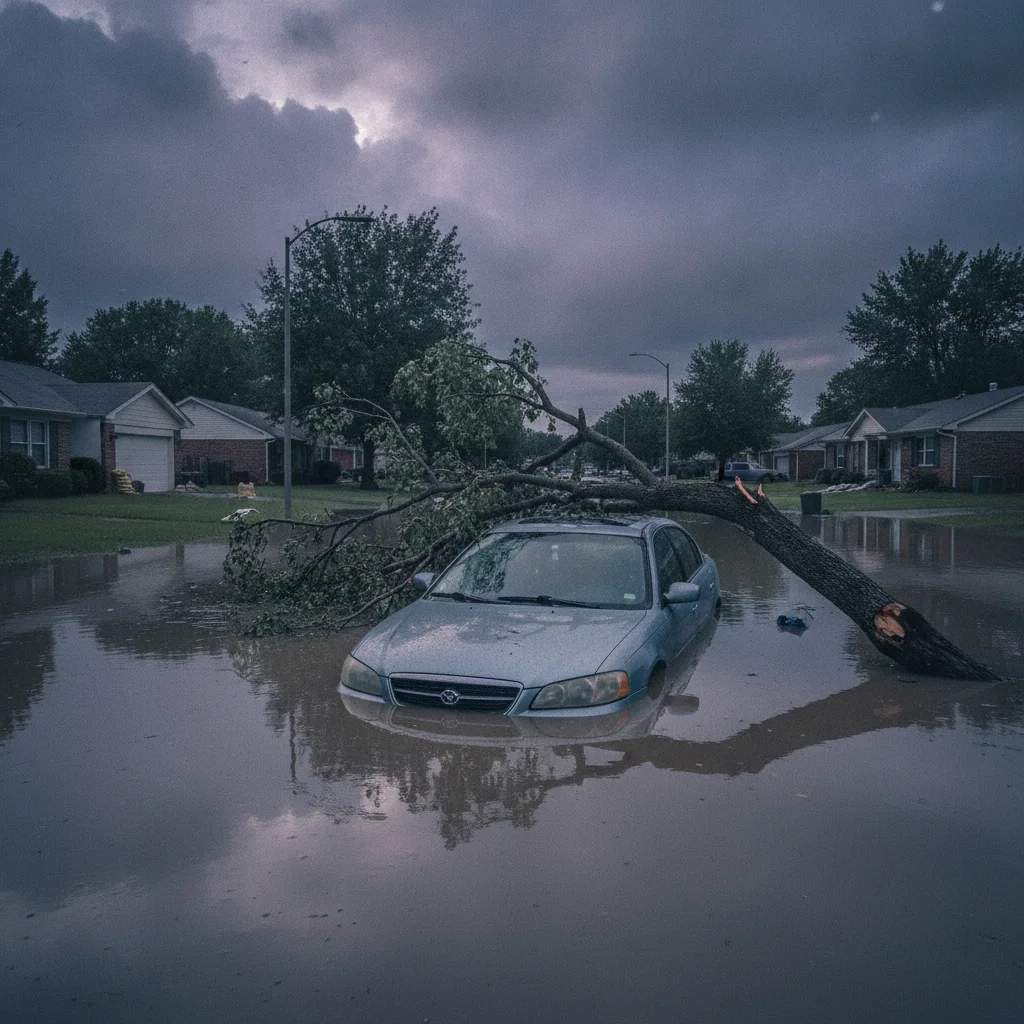
- Hail, flooding, or other severe weather events
- A deer or other animal colliding with your car
- A tree limb or falling object striking the roof or windshield
- Fire — whether caused by an engine fault or an outside source
- Civil disturbance or riot damage
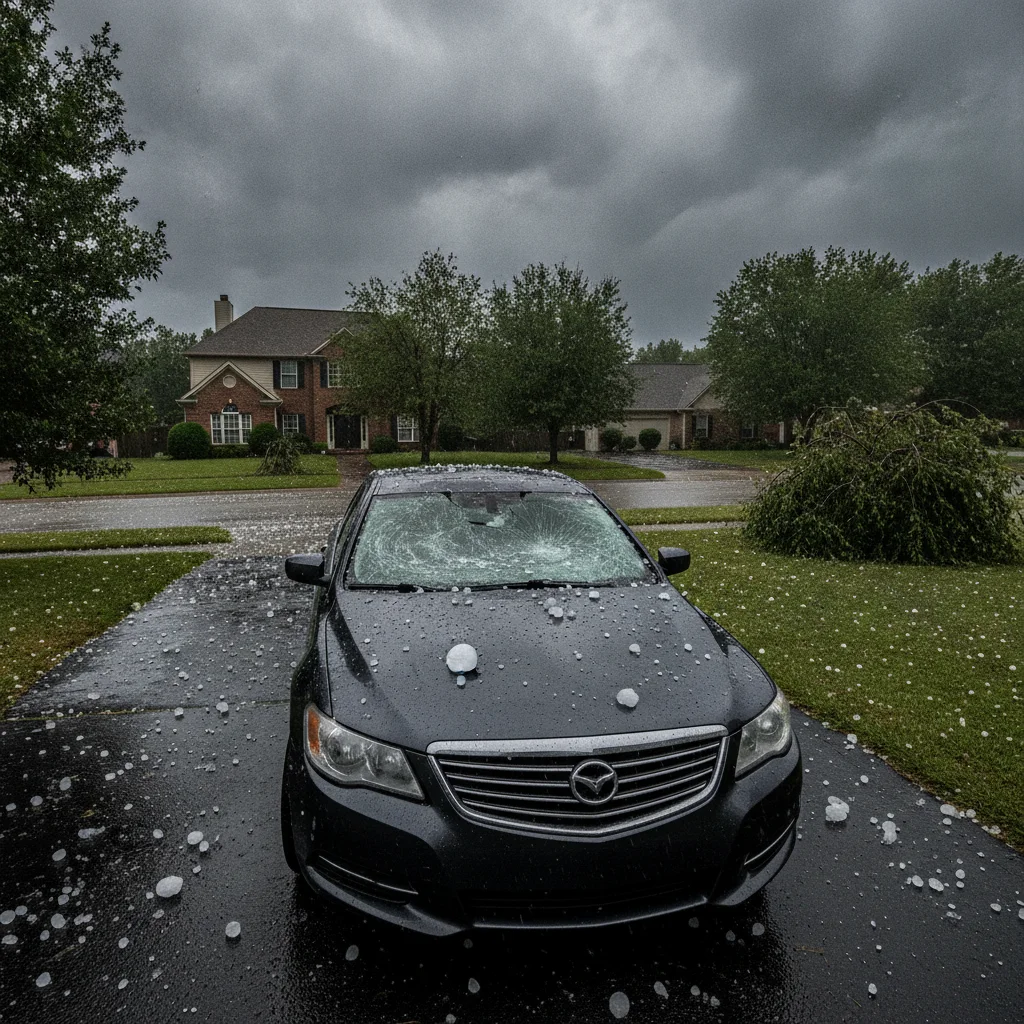
A key nuance: if you swerve to avoid hitting a deer and strike a guardrail, that is typically classified as a collision claim, not a comprehensive claim. The animal did not make contact with your vehicle. On the other hand, if the deer runs directly into your door, that is a comprehensive claim. The difference matters because your deductibles for each coverage may not be the same.
Comprehensive coverage handles threats that collision was never designed for — a distinction that becomes especially important if you live in an area prone to severe weather, high vehicle theft, or dense wildlife populations.
Windshield Repairs Are a Special Case
Many states — including Florida, Kentucky, and South Carolina — require insurers to cover windshield repair and replacement under comprehensive coverage with no deductible applied. Even in states without this requirement, some insurers waive the deductible for glass claims specifically. Check your policy or ask your agent before paying out of pocket for a cracked windshield.
Actual Cash Value vs. Replacement Cost
Unlike homeowners insurance, which sometimes offers replacement cost coverage, standard auto policies pay actual cash value — meaning depreciation is factored in. Some insurers offer a 'new car replacement' endorsement for vehicles in their first year or two of ownership, which can bridge the gap between ACV and what it actually costs to buy a comparable new vehicle.
Key Differences Between Collision and Comprehensive
While both coverages protect your physical vehicle and both are subject to your vehicle's actual cash value cap, they are triggered by very different events. The table below summarizes the most important distinctions.
| Feature | Collision | Comprehensive |
|---|---|---|
| Trigger event | Impact with another car or object | Non-collision damage (weather, theft, animals) |
| Fault relevance | Pays regardless of fault | Fault is not applicable |
| Typical deductible range | $250 – $2,000 | $0 – $1,500 |
| Average annual cost (U.S.) | ~$290 – $400 | ~$140 – $190 |
| Required by lender? | Yes, if financed or leased | Yes, if financed or leased |
| Claims impact on rates | Higher — at-fault claims especially | Lower — generally not surcharge-heavy |
The rate impact difference is worth emphasizing. A comprehensive claim for hail damage or a stolen catalytic converter is generally viewed by insurers as outside your control. An at-fault collision claim signals driving risk, which insurers price accordingly. That asymmetry matters when you are deciding whether to file a smaller claim or absorb the cost out of pocket.
“Most drivers are surprised to learn that comprehensive claims have a much smaller rate impact than collision claims — especially those that are not their fault. The perception that 'any claim hurts you' leads people to pay out of pocket unnecessarily for events that were entirely beyond their control.”
— J. Robert Hunter, Former Director of Insurance, Consumer Federation of America
For drivers navigating their first policy, our beginner's breakdown of collision and comprehensive explains these concepts from the ground up.
How Deductibles Work for Each Coverage
Your deductible is the amount you agree to pay out of pocket before your insurer covers the rest of a claim. Collision and comprehensive each carry their own separate deductible, and you choose both when you purchase your policy. Common choices range from $250 to $1,500 for collision and $0 to $1,000 for comprehensive.
The relationship between deductible and premium is inverse: the higher the deductible you choose, the lower your monthly premium — and vice versa. This is a genuine financial trade-off, not a trick. You are essentially choosing how much risk to retain yourself.
How to think about your deductible level
- Choose a higher deductible if you have liquid savings to cover it, drive carefully, and want to lower monthly costs.
- Choose a lower deductible if cash flow is tight, you live in a high-risk area for comprehensive events (severe storms, dense urban parking), or you drive a high-value vehicle.
- Match your deductible to a realistic out-of-pocket threshold. If a $1,000 collision deductible would strain your finances, it is not the right choice regardless of the premium savings.
Align Your Deductible to Your Emergency Fund
A straightforward way to choose your deductible: set it at the maximum amount you could comfortably pay within 30 days without disrupting your financial obligations. If your emergency fund holds $750, do not set a $1,500 deductible just to shave $10 off your monthly premium. The premium savings rarely justify the cash flow strain at claim time.
One often-overlooked strategy: many drivers carry a lower deductible on comprehensive than on collision. Since comprehensive claims are less likely to raise your premiums significantly, and since events like hail are unpredictable and entirely out of your control, keeping that deductible lower can make financial sense even if it costs a bit more per month.
Also remember: if a repair estimate comes in at or below your deductible amount, filing a claim provides no financial benefit and may still trigger a surcharge. In those cases, paying out of pocket is almost always the smarter move.
Filing Small Claims Can Cost More Than They Save
Filing a collision claim for damage that only slightly exceeds your deductible — say, a $700 repair with a $500 deductible — can result in a premium surcharge that costs you far more over the following two to three policy years. Insurers track claim frequency, not just claim size. Before filing, compare the payout against the likely rate impact.
Gaps in Coverage Can Surprise You at the Worst Moment
Aftermarket modifications, custom paint, upgraded wheels, and electronics added after purchase are typically not covered under standard collision or comprehensive policies unless you specifically add an endorsement. If your vehicle has aftermarket equipment worth more than a few hundred dollars, verify with your insurer that it is listed on your policy.
How to File a Collision or Comprehensive Claim
The claims process for both coverages follows a similar path, though the immediate steps after an incident may differ. Here is a practical walkthrough of what to expect.
Step 1: Secure the scene and document everything
After a collision, follow safe accident procedures first — move to safety if possible, check for injuries, and call emergency services if needed. Once you are safe, document the damage thoroughly with photos and video from multiple angles. Capture the surrounding context (road conditions, other vehicles involved, street signs). Our accident procedures guide covers the immediate post-crash checklist in detail.
Step 2: Report the claim to your insurer
Contact your insurer as soon as reasonably possible. Most major carriers now offer 24/7 claims reporting via app, website, or phone. For theft, you will first need to file a police report — your insurer will require the report number before processing the claim. For weather-related comprehensive events like hail, reporting promptly helps avoid disputes about when the damage occurred.
Step 3: Work with the adjuster
Your insurer will assign a claims adjuster who will assess the damage, either in person or through a digital photo submission process. The adjuster calculates the repair cost and determines whether your vehicle is a total loss. A vehicle is considered totaled when the estimated repair cost approaches or exceeds its actual cash value.
Step 4: Repair or settlement
If the vehicle is repairable, your insurer will either pay the repair shop directly or reimburse you after repairs, depending on your policy's terms. If it is totaled, you receive the ACV of the vehicle minus your deductible. Note that ACV is not what you paid for the car — it reflects current market value accounting for depreciation.
For a more detailed walkthrough of the full claims process, including how to navigate disputes with adjusters, see our step-by-step claims filing guide.
A Totaled Car Does Not Mean Full Replacement Cost
If your vehicle is declared a total loss, your insurer pays its actual cash value — not its original purchase price, not your current loan balance, and not the cost of an equivalent new vehicle. If your loan payoff exceeds the ACV, you are responsible for the difference unless you have gap coverage. Review your policy terms and current loan balance now, before a claim occurs.
Personal Belongings Stolen From Your Car Are Not Covered
Comprehensive coverage protects the vehicle itself — not the contents inside it. A laptop, camera, or bag of tools stolen from your back seat falls under your homeowners or renters insurance policy, subject to that policy's deductible and limits. If you regularly store valuable items in your vehicle, verify that your homeowners or renters policy has adequate personal property coverage.
When Does It Make Sense to Drop These Coverages?
If your vehicle is paid off and you own it outright, dropping collision, comprehensive, or both is a legal option — and sometimes a financially sound one. The classic rule of thumb says to drop physical damage coverage when your annual premium for both coverages exceeds 10% of your car's actual cash value. But this heuristic has limitations and should not be followed blindly.
Factors that favor dropping coverage
- Your car's ACV is below $4,000 and your combined annual premium for both coverages is $400 or more
- You have sufficient savings to absorb the full loss of the vehicle without financial strain
- You have access to alternative transportation and would not need to immediately replace the car
Factors that favor keeping coverage
- You live in a region with high vehicle theft rates, frequent severe weather, or heavy wildlife activity
- Your car holds more value than its depreciated ACV suggests (classic cars, low-mileage vehicles)
- You could not afford to replace the vehicle out of pocket if it were totaled

A practical middle ground: keep comprehensive and drop collision. Comprehensive is typically far cheaper and protects against events entirely outside your control. If you are a careful driver with a modest vehicle, this hybrid approach can reduce costs while retaining meaningful protection against catastrophic events like theft or flood.
See how comprehensive and collision serve different purposes to help frame your coverage-level decision.
What These Coverages Do Not Pay For
Knowing what collision and comprehensive exclude is just as important as knowing what they cover. Gaps in coverage can lead to costly surprises at claim time.
What collision does not cover
- Damage to the other driver's vehicle — that falls under your liability coverage
- Medical bills for you or your passengers — covered by MedPay, PIP, or health insurance
- Mechanical breakdowns or wear-and-tear unrelated to an accident
- Custom aftermarket parts or equipment, unless specifically added to your policy via an endorsement
What comprehensive does not cover
- Personal belongings stolen from inside the car — those fall under homeowners or renters insurance
- Mechanical failure or engine problems
- Normal depreciation
- Damage from potholes — this is typically classified as a collision event, not a comprehensive one
Shared exclusions
- Using your personal vehicle for commercial rideshare purposes without a rideshare endorsement
- Intentional damage caused by you, the policyholder
- Damage that occurred before the coverage was in force
A Totaled Car Does Not Mean Full Replacement Cost
If your vehicle is declared a total loss, your insurer pays its actual cash value — not its original purchase price, not your current loan balance, and not the cost of an equivalent new vehicle. If your loan payoff exceeds the ACV, you are responsible for the difference unless you have gap coverage. Review your policy terms and current loan balance now, before a claim occurs.
Personal Belongings Stolen From Your Car Are Not Covered
Comprehensive coverage protects the vehicle itself — not the contents inside it. A laptop, camera, or bag of tools stolen from your back seat falls under your homeowners or renters insurance policy, subject to that policy's deductible and limits. If you regularly store valuable items in your vehicle, verify that your homeowners or renters policy has adequate personal property coverage.
Gap insurance is a separate product worth mentioning here. If your car is totaled and you owe more on the loan than the vehicle's ACV, neither collision nor comprehensive covers that difference. Gap coverage — often offered by dealers or through your insurer — bridges that shortfall. It is especially relevant in the first few years of a loan when depreciation outpaces your payoff schedule.
Frequently Asked Questions
Is comprehensive coverage required by law?
No. State minimum insurance laws require liability coverage, not physical damage coverage. However, your lender or lease agreement almost certainly requires it contractually.
Does a comprehensive claim raise my rates?
Comprehensive claims generally have a smaller impact on your rates than at-fault collision claims because they reflect events outside your control. That said, filing multiple comprehensive claims in a short period can still flag you as a higher-risk policyholder.
What happens if I only have collision but not comprehensive and my car is stolen?
You would have no coverage for the theft. Collision does not cover theft — that is exclusively a comprehensive event. If you carry only collision, a stolen car is an out-of-pocket loss.
Can I have different deductibles for collision and comprehensive?
Yes, and many drivers do. Your insurer sets these independently. It is common to carry a $500 collision deductible and a $100 or $0 comprehensive deductible, for example.
Does collision cover a hit-and-run?
Generally yes. If an unidentified driver damages your parked or moving vehicle and flees the scene, collision coverage typically applies. Some states allow you to use uninsured motorist property damage coverage for hit-and-runs instead, depending on the policy language.
If my car is totaled, do I get what I paid for it?
No. You receive the actual cash value at the time of the loss, which accounts for depreciation. A car purchased for $30,000 three years ago may only have an ACV of $18,000 today. That is the figure your insurer will use for the settlement.
Collision vs. Comprehensive: What Each One Protects
A focused side-by-side breakdown of exactly when collision and comprehensive coverage each apply — useful for resolving specific coverage questions quickly.
Filing a Claim: Step-by-Step Guide
Covers the full claims process from first report to settlement, including how to handle disputes with adjusters and what documentation to prepare.
Accident Procedures Checklist
A practical, immediate-action guide for what to do in the minutes and hours after a car accident — from securing the scene to notifying your insurer.
Insurance Information Institute (III) — Auto Insurance Basics
The III maintains authoritative, up-to-date statistics on average claim costs, coverage rates, and industry trends that help contextualize your own coverage decisions.
National Insurance Crime Bureau Vehicle Theft Data
Look up theft rates by vehicle make, model, and region to assess how much comprehensive risk your specific vehicle actually carries in your area.
New to Car Insurance? Collision and Comprehensive Explained
A from-scratch explainer for first-time policyholders on what collision and comprehensive mean, what they cost, and how to choose the right coverage levels.

All claims are backed by peer-reviewed research. Sources on request.