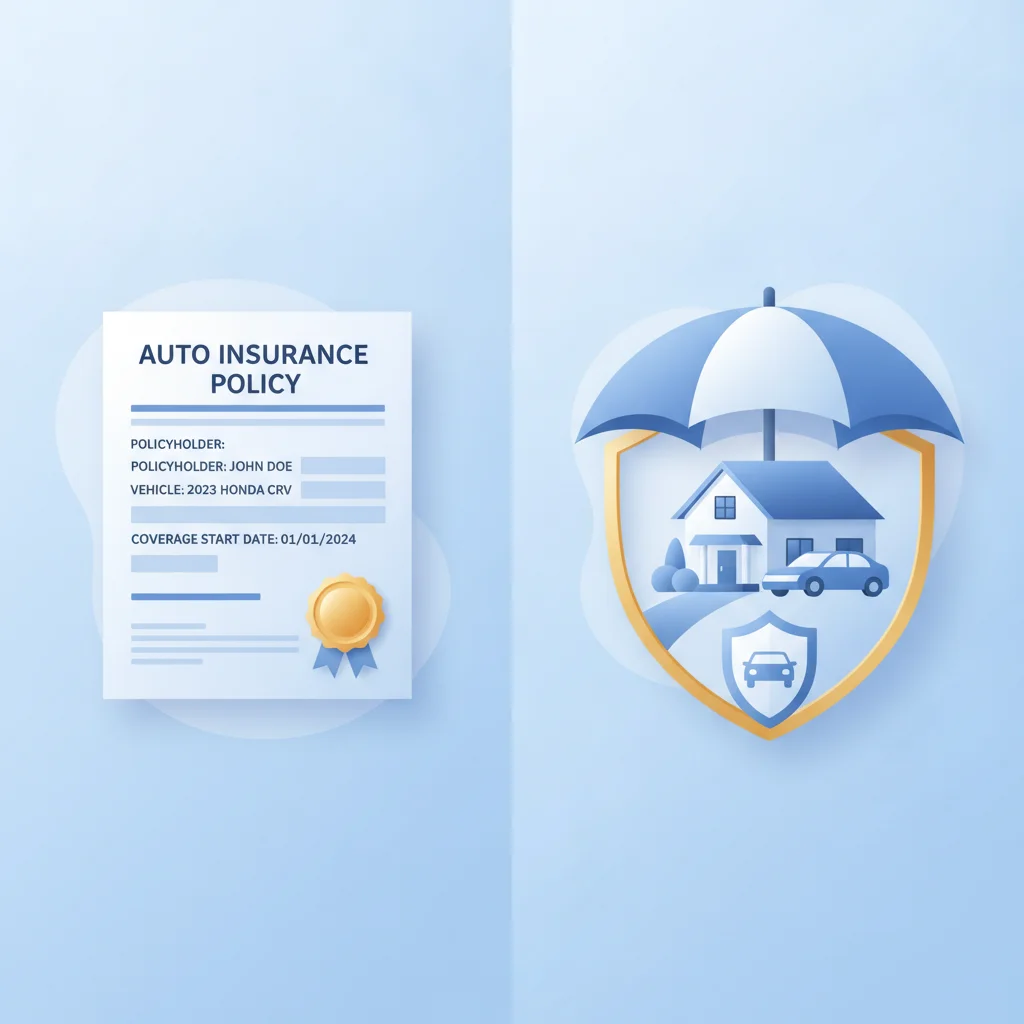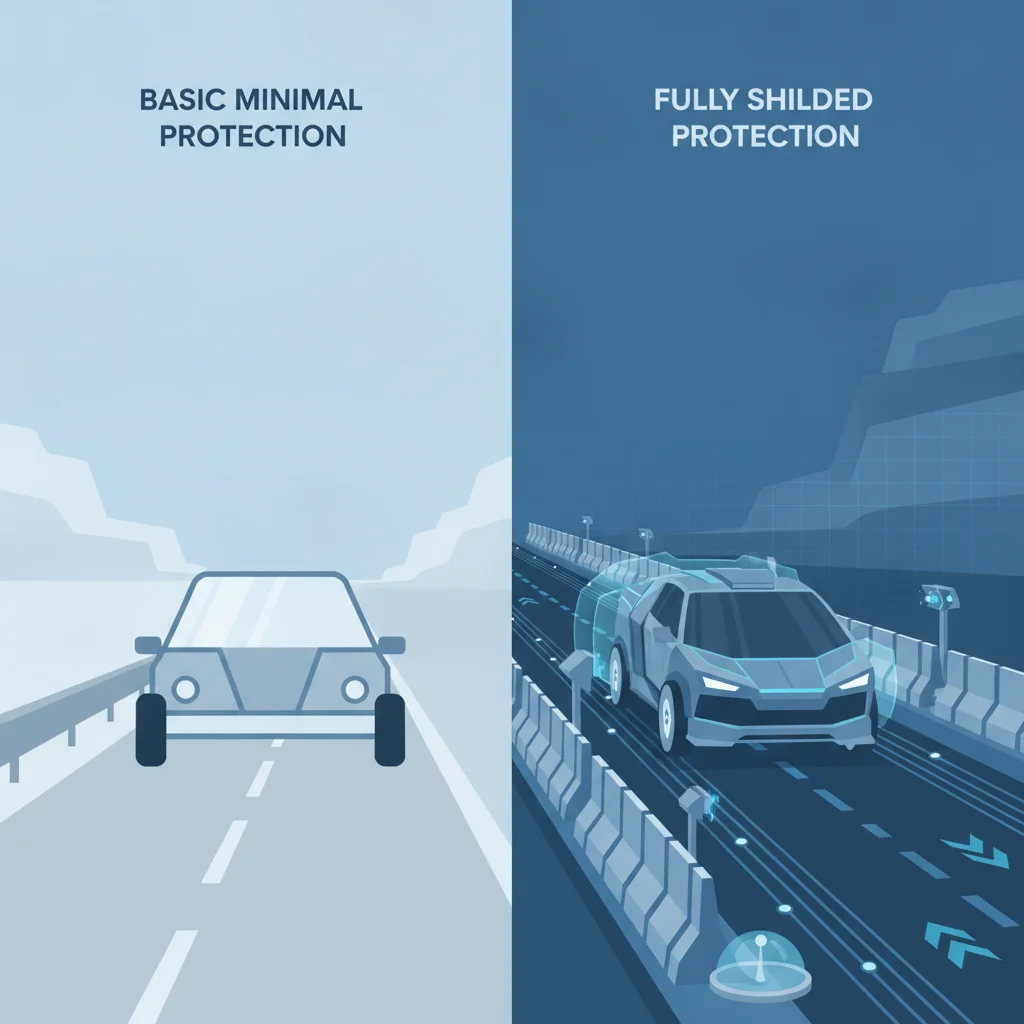
Key Takeaways
Option A
Liability-Only Coverage
The legally required minimum that protects others from your mistakes.
Best for: Drivers with older, lower-value vehicles who can self-insure against their own repair or replacement costs.
Option B
Full Coverage
Comprehensive financial protection for your vehicle and third parties.
Best for: Drivers with newer, financed, or high-value vehicles who need protection against damage to their own car.
If you own an older car outright and can cover repair or replacement costs yourself
Liability-Only Coverage
When your car's market value is low, full coverage premiums and deductibles may cost more than the payout you'd receive. Liability protects you legally at a fraction of the cost.
If you're financing or leasing your vehicle
Full Coverage
Your lender requires it, and for good reason — they have a financial stake in the vehicle. Full coverage ensures the loan can be satisfied even if the car is totaled.
If you drive a newer or high-value vehicle you couldn't easily replace out-of-pocket
Full Coverage
The financial gap between a totaled car and what you'd owe on it — or what it would cost to replace — makes full coverage essential for most newer car owners.
If you're on a tight budget and your car is worth less than $4,000
Liability-Only Coverage
Full coverage premiums on a low-value vehicle can eat up savings that outpace the benefit. Liability keeps you legal while freeing budget for other financial priorities.
If you have significant assets to protect in the event of a serious at-fault accident
Full Coverage
Full coverage with high liability limits gives you a broader financial safety net. Pairing it with an umbrella policy offers even deeper protection for high-asset drivers.
What Each Type of Coverage Actually Does
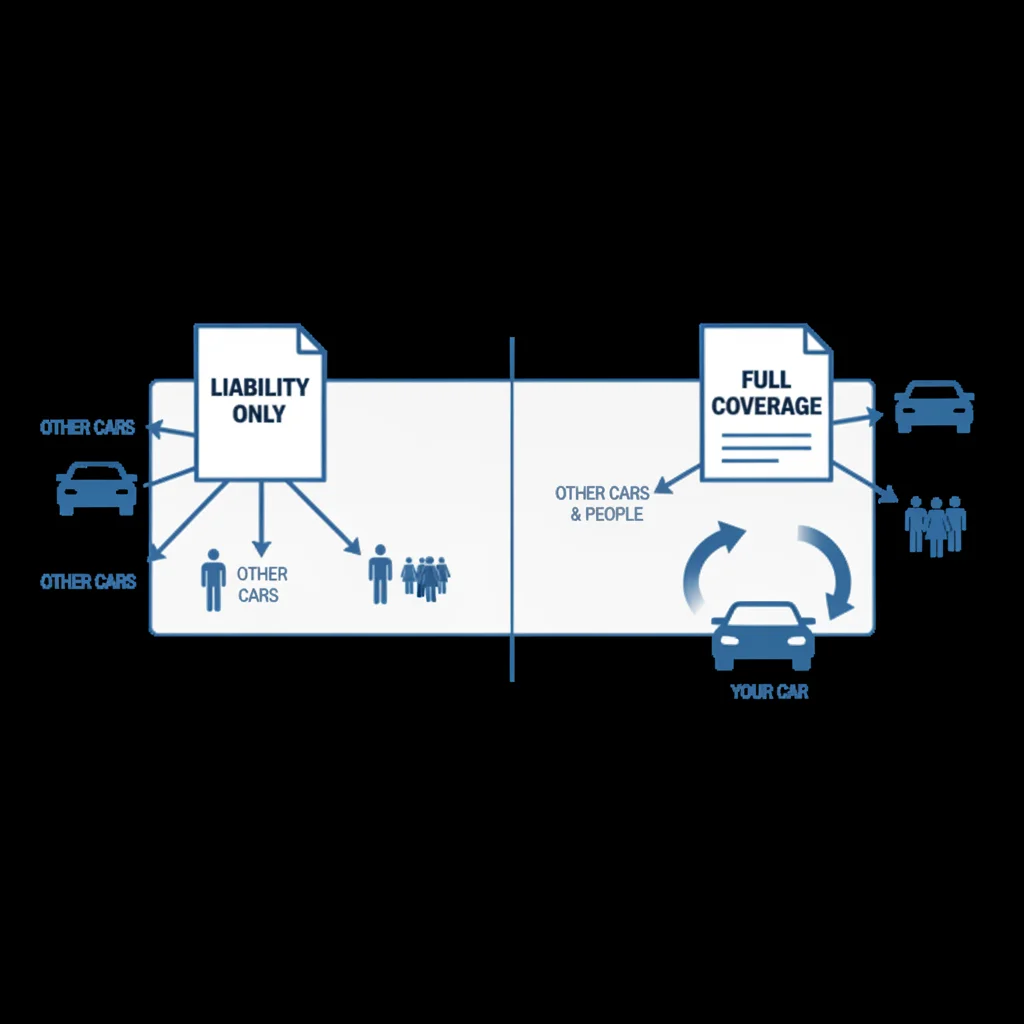
Before comparing the two, it helps to be precise about what each policy actually includes — because the terminology can mislead. "Full coverage" isn't an insurance industry term; it's a shorthand that most people use to mean a policy that includes liability, collision, and comprehensive coverage. "Liability-only" is more literal: it covers financial harm you cause to other people and their property.
Here's the key distinction that matters most: liability coverage protects other people from you. Full coverage also protects you from yourself — and from things that aren't your fault at all.
If you rear-end another driver and cause injuries or property damage, liability pays for their medical bills and vehicle repairs. It does not touch the damage to your own car. Add collision coverage — part of what makes a policy "full coverage" — and now your car's repairs are covered too, regardless of who was at fault.
Comprehensive coverage, the other major component of full coverage, handles losses unrelated to collisions: theft, vandalism, hail, flooding, falling tree limbs, animal strikes. If you park on the street overnight and someone steals your catalytic converter, liability won't help you at all. Comprehensive will.
If you want a detailed breakdown of how collision and comprehensive differ from one another, see our guide on collision and comprehensive coverage. For now, the most useful frame is simple: liability = protection for others, full coverage = protection for others and for your own vehicle.
Side-by-Side: How the Two Policies Compare
The table below breaks down the core differences so you can quickly see where each policy starts and stops. Keep in mind that actual premiums vary widely based on your location, driving record, vehicle, and insurer — these are structural comparisons, not price quotes.
| Criterion | Liability-Only | Full Coverage |
|---|---|---|
| Covers damage to others' vehicles | Yes | Yes |
| Covers others' medical bills | Yes | Yes |
| Covers your own vehicle in a collision | No | Yes (collision coverage) |
| Covers theft, weather, vandalism | No | Yes (comprehensive coverage) |
| Required by lenders/lessors | No | Yes, typically required |
| Legally mandated minimum | Yes, in most states | No (beyond liability component) |
| Includes legal defense costs | Yes (up to policy limits) | Yes (up to policy limits) |
| Typical monthly premium | Lower ($40–$90 avg.) | Higher ($120–$200+ avg.) |
| Subject to a deductible | No | Yes (collision/comprehensive) |
| Best suited for | Older, low-value owned vehicles | Newer, financed, or high-value vehicles |
Don't Confuse Minimum Coverage With Safe Coverage
State-mandated liability minimums are legal thresholds, not financial safety nets. A typical state minimum might be $25,000 per person for bodily injury — an amount that can be exhausted by a single emergency room visit. Meeting the minimum keeps you legal; it doesn't necessarily protect your assets or fully compensate a seriously injured party. Always evaluate your limits against your real-world financial exposure, not just the statutory floor.
Gap Insurance Bridges a Critical Shortfall
If you financed your vehicle with a small down payment, you may owe more on the loan than the car is currently worth — especially in the first few years of ownership. If that car is totaled, full coverage pays actual cash value, not your loan balance. Gap insurance covers the difference. It's typically inexpensive and can be added through your insurer or purchased separately. Consider it essential for any financed vehicle where you're underwater on the loan.
Rental Car Coverage May Follow Your Policy
Your existing auto insurance liability coverage often extends to rental vehicles, meaning you may not need to purchase the rental company's liability waiver. However, collision and comprehensive coverage on rentals depends on whether your own policy includes those components — and your deductible still applies. Always confirm with your insurer before declining rental coverage at the counter. See <a href="/car-insurance/coverage-types/liability-coverage/liability-coverage-for-rental-cars-what-transfers-and-what-doesnt">what liability coverage transfers to rental cars</a> for a clear breakdown.
Even if you carry only liability coverage, you can still add uninsured/underinsured motorist coverage as a standalone endorsement. This protects you when an at-fault driver has no insurance or insufficient limits to cover your damages. It's often overlooked but can be one of the most valuable optional additions to a liability-only policy.
When Liability-Only Coverage Makes Financial Sense
Liability-only coverage isn't a corner-cutting decision by default — for the right driver in the right situation, it's genuinely the smarter financial call. The question is whether your circumstances fit.
The most straightforward case: your car's actual cash value (ACV) is low. If your vehicle is worth $3,500 and your full coverage deductible is $1,000, the maximum insurance payout after a total loss is $2,500. Once you factor in annual premiums for collision and comprehensive — which can easily run $600–$1,200 or more depending on your area — the math starts to look unfavorable within just a couple of years.
A commonly used rule of thumb is the 10% threshold: if your annual collision and comprehensive premiums exceed 10% of your car's current market value, full coverage may not be financially justified. That said, this is a guideline, not a formula — your personal risk tolerance and savings cushion matter just as much.
~29%
U.S. drivers carrying minimum liability only
According to the Insurance Research Council, roughly 29% of insured U.S. drivers carry only state-minimum liability coverage.
$1,771
Average annual full coverage premium (U.S.)
Bankrate's 2024 analysis found the national average full coverage premium was approximately $1,771 per year, compared to $635 for minimum liability.
13%
Uninsured drivers on U.S. roads
The Insurance Research Council estimates about 1 in 8 U.S. drivers is uninsured, underscoring why uninsured motorist coverage matters even on liability-only policies.
Liability-only also makes practical sense if you have reliable savings to cover a vehicle loss or major repair. Self-insuring your own car risk is a legitimate strategy if you have the financial stability to absorb it. The key is honesty with yourself about whether that buffer actually exists — or whether losing your car tomorrow would create a genuine financial crisis.
One more consideration: your driving exposure. If you drive infrequently, store your car seasonally, or have very low annual mileage, the statistical likelihood of a collision is lower, and the case for paying collision premiums weakens accordingly.
For a practical framework on setting the right liability limits regardless of which coverage tier you choose, this guide on how much liability coverage you actually need walks through the asset-protection math in detail.
When Full Coverage Is Worth the Higher Premium
Full coverage becomes less of a choice and more of a requirement in several common situations. The clearest one: you're financing or leasing your vehicle. Lenders require it because they technically own the car until the loan is satisfied. If the vehicle is totaled and you only carry liability, the lender has no protection — and neither do you against a remaining loan balance. Most loan agreements specify minimum deductible thresholds too, so check the fine print.
Beyond financing, full coverage makes strong sense when your car is worth enough that losing it would create a real financial strain. For most people, that means any vehicle in the $15,000–$20,000+ range. The replacement cost isn't just the car's value — it's the disruption, the time, and potentially the debt of an emergency purchase. Full coverage converts that unpredictable risk into a manageable, predictable premium.
There's also a liability exposure argument for full coverage that's easy to overlook. Drivers who carry only minimum liability limits may be dangerously underinsured if they cause a serious accident. Medical bills and legal judgments in multi-vehicle accidents or severe injuries can reach hundreds of thousands of dollars. Your liability limits cap what the insurer pays — anything beyond that comes from your personal assets.
Full coverage policies typically come with higher liability limit options and can be paired with additional protections. Umbrella insurance versus higher liability limits is worth exploring if you have significant assets to shield — it's often more affordable than drivers expect.
It's also worth noting that full coverage includes optional add-ons that can round out your protection: rental reimbursement, roadside assistance, and gap insurance. Gap coverage in particular is critical if you financed a new vehicle with a small down payment and owe more than the car's current ACV. See optional coverage add-ons for a full breakdown of what's available.
The Role of Legal Protection in Liability Coverage
One aspect of liability coverage that doesn't get nearly enough attention: it includes legal defense costs when you're sued after an at-fault accident. If an injured party takes you to court — which happens more often than people realize in serious accidents — your insurer typically provides and pays for your legal representation.
This matters more than most drivers realize. Legal defense in civil cases involving auto accidents can cost tens of thousands of dollars before a verdict is even reached. Having that covered within your liability policy is a meaningful, if invisible, benefit.
The important nuance: your insurer controls the defense strategy, not you. They have a financial interest in the outcome and will make decisions accordingly. Understanding what your insurer will and won't fight for is a topic worth reading before you assume your interests and your insurer's interests are perfectly aligned.
This is also why liability limits matter so much. If a judgment against you exceeds your policy limits, the insurer pays up to the cap and stops. You're personally responsible for the rest. Carrying adequate liability limits — not just the state-mandated minimums — is one of the most important financial decisions wrapped inside an auto insurance policy. New drivers especially benefit from understanding this from the start: liability coverage from the ground up covers the foundational concepts clearly.
Revisiting Your Coverage as Your Car Ages
Coverage decisions aren't permanent. What makes sense the day you drive off the lot is often quite different from what makes sense four or five years later. As your car depreciates, the financial logic of full coverage gradually weakens — and at some point, the crossover happens where dropping to liability-only becomes the smarter financial move.
The challenge is knowing when that moment arrives. Depreciation isn't linear, and cars lose value at different rates depending on brand, mileage, condition, and market demand. A five-year-old luxury sedan may still carry significant ACV, while a five-year-old economy car might have already dipped below the threshold where full coverage is cost-effective.
A practical annual habit: look up your car's current market value using a source like Kelley Blue Book or NADA Guides, then compare it against your annual collision and comprehensive premiums plus your deductible. If the math has shifted, it may be time to revisit your policy. Adjusting coverage as your car ages walks through this process systematically and can help you avoid overpaying for protection that no longer matches your vehicle's value.
The broader point: your auto insurance policy should be a living document, not a set-it-and-forget-it decision. Life changes — a paid-off loan, a job loss, a new high-value vehicle — are all triggers to reassess. Staying intentional about your coverage level is one of the easiest ways to avoid both overpaying and being dangerously underprotected.

All claims are backed by peer-reviewed research. Sources on request.