Key Takeaways
Why Mileage Changes Everything About Optional Coverage
Most insurance conversations treat optional add-ons as binary: either you want the coverage or you don't. That framing ignores the single most important variable — how much you actually drive. A driver logging 8,000 miles a year and a driver logging 28,000 miles a year are not buying the same risk profile, even if they're quoted nearly the same base premium.
Exposure is the core concept here. Every mile you drive is another opportunity for something to go wrong — a collision, a breakdown, a road hazard, a weather event. Insurance is a probability game, and when you double your mileage, you roughly double your statistical exposure to a claim. That shifts the math on every optional add-on you're considering.
To understand how annual mileage affects your base rate, it helps to first recognize what insurers already know: high-mileage drivers cost more to cover. But the premium increase for base coverage rarely scales proportionally — which means some add-ons quietly become better deals the more you drive, while others stay poor value regardless.

This article is specifically for drivers who exceed 20,000 miles annually — whether that's a long daily commute, a job requiring frequent travel, or simply a lifestyle that puts you on the road constantly. If that's you, the standard advice about optional coverage doesn't apply cleanly to your situation.
The Coverages That Shift From 'Nice to Have' to 'Worth the Math'
Not every optional add-on becomes more valuable with higher mileage. Some are driven by vehicle value, some by loan structure, and some by pure exposure. Let's break down each major category with the mileage lens applied directly.
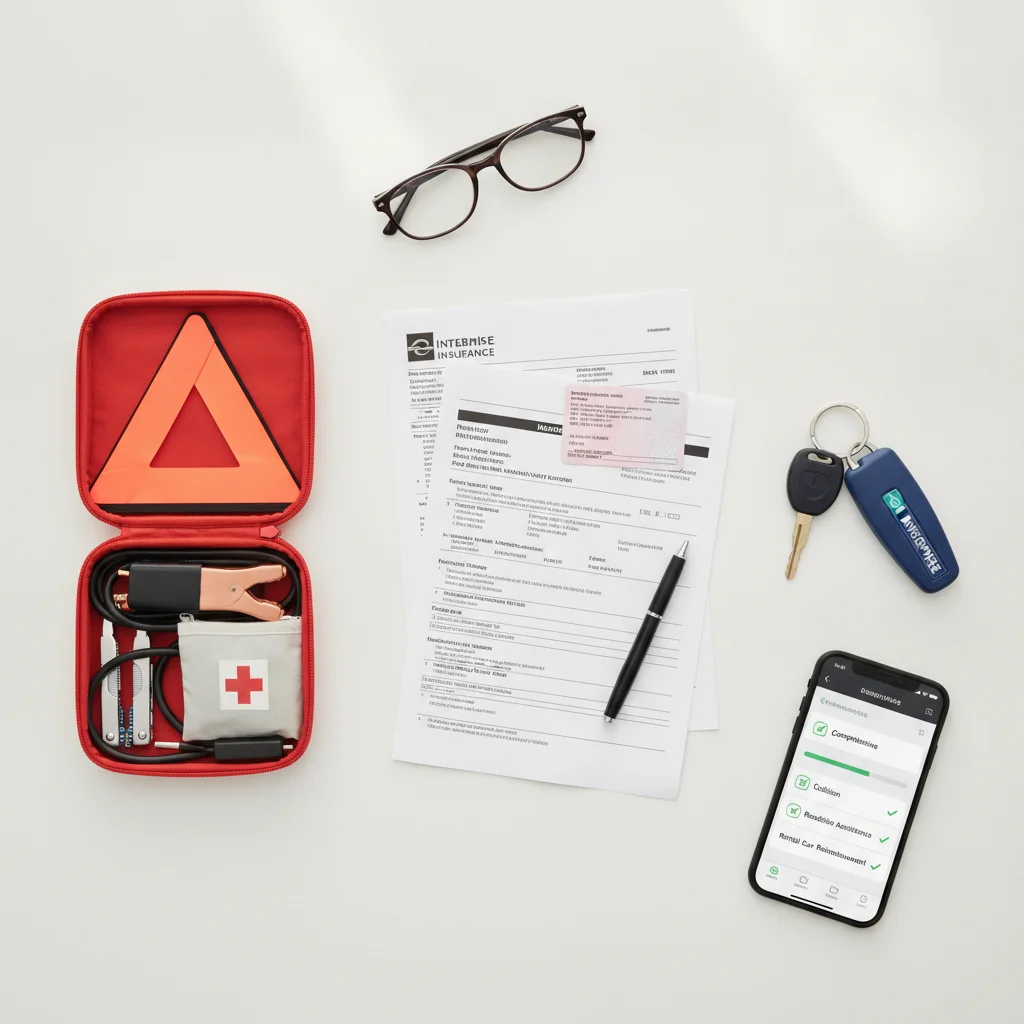
Prioritize roadside assistance coverage if you drive over 20,000 miles annually.
Breakdowns scale with mileage. A driver covering twice the average annual distance faces roughly twice the probability of a roadside event — dead battery, flat tire, lockout, or mechanical failure. At $15–$30 per year added to your policy, roadside assistance is one of the few add-ons where high-mileage drivers almost universally recover the cost within two or three years of use.
Carry rental reimbursement coverage if your vehicle is your primary work or commuting tool.
When high-mileage drivers have accidents, they also have more at stake during repairs — because they actually depend on their vehicle daily. Rental reimbursement coverage typically costs $5–$15 per month and pays $30–$50 per day for a rental while your car is in the shop. For drivers who would otherwise lose income or miss work during a repair period, this is a direct economic protection.
Carry uninsured/underinsured motorist coverage at your full liability limit — never at minimums.
More time on the road means more exposure to the roughly 13% of U.S. drivers who are uninsured. High-mileage drivers are statistically more likely to encounter one of these drivers simply because they're driving more frequently. UM/UIM coverage is also typically inexpensive relative to the protection it provides, making it one of the best risk-adjusted values in optional coverage for any driver.
Evaluate comprehensive coverage based on your vehicle's actual current value — not its original purchase price.
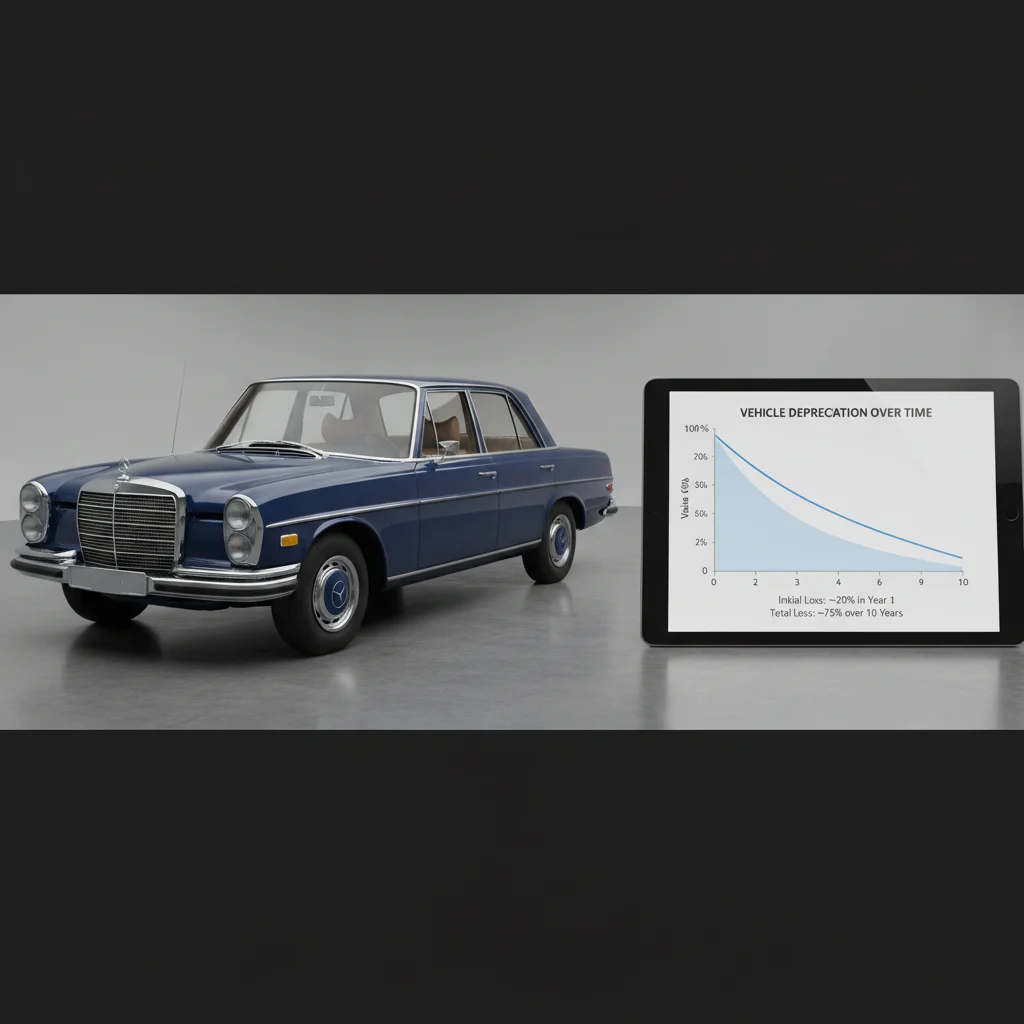
High mileage accelerates depreciation, meaning your vehicle loses value faster than the average car. Comprehensive coverage that made financial sense at 30,000 miles may be economically inefficient at 110,000 miles when your vehicle's market value barely exceeds two years of premiums combined. Run the calculation annually: if your deductible is $1,000 and your vehicle is worth $6,000, your insurer's maximum payout is $5,000 — weigh that against what you're paying for the coverage each year.
Do not rely on accident forgiveness programs if your mileage makes a claim statistically likely.
Accident forgiveness is marketed as peace of mind, but it typically applies only to your first at-fault accident and often comes with premium cost built in. For high-mileage drivers with elevated claim probability, the expected value of accident forgiveness is better than for low-mileage drivers — but it still rarely pencils out once you factor in what you're paying for the add-on versus the rate increase it would prevent.
Review your collision coverage deductible aggressively — a higher deductible often makes sense for high-mileage drivers.
Counter-intuitive but real: high-mileage drivers who can absorb a $1,500 or $2,000 deductible often save enough in annual premiums to effectively self-insure minor collision events. The premium reduction from raising your deductible from $500 to $1,500 can easily run $200–$400 per year — money that accumulates in your own account rather than the insurer's. This works best when your vehicle's value still justifies carrying collision at all.
The pattern you'll notice across these practices: high mileage increases the frequency of smaller claims (breakdowns, roadside events, rental needs) far more than it increases the severity of any single claim. That frequency shift is exactly what makes certain add-ons change character entirely for drivers like you.
For a full catalog of what each optional coverage actually includes, see the complete breakdown of optional car insurance coverages.
The Coverages That Don't Improve With Mileage — and Some That Get Worse
Just as important as knowing which add-ons gain value for high-mileage drivers is knowing which ones remain poor investments regardless of how far you drive.

New Car Replacement Coverage
This coverage pays to replace your totaled vehicle with a brand-new model rather than its depreciated value. It sounds compelling, but it only works during the first year or two of ownership — and high mileage destroys that window faster than almost anything else. If you put 25,000 miles on a new car in its first year, you've already pushed it well past the coverage's effective range. Most policies cap new car replacement at vehicles under 15,000 miles or under one year old. Check your policy's specific terms, but for high-mileage new car buyers, this coverage often expires before you've made six loan payments.
Loan/Lease Gap Coverage — Situation Dependent
Gap coverage pays the difference between what your insurer pays on a totaled vehicle and what you still owe on your loan. For high-mileage drivers, the math cuts both ways. Depreciation accelerates with heavy use, meaning your vehicle's market value drops faster than your loan balance — widening the gap early. But this same effect means you'll reach the crossover point (where market value exceeds loan balance) sooner than a low-mileage driver would. Gap coverage is valuable in the first 12–24 months of a high-mileage vehicle's life, then it becomes progressively less useful. Don't carry it past the point where you owe less than your car is worth.
Original Equipment Manufacturer (OEM) Parts Coverage
OEM parts coverage guarantees your insurer uses factory parts rather than aftermarket alternatives in repairs. For high-mileage commuters driving older vehicles, this coverage often costs more than the actual premium difference between OEM and aftermarket parts. It's a coverage worth considering only if you're driving a newer vehicle where OEM part specifications matter significantly to safety or resale. On a 2017 sedan with 180,000 miles, the financial case evaporates quickly.
Gap Coverage Has a Time Limit — Not Just a Mileage Limit
Most gap coverage policies are designed to expire when your loan balance falls below your vehicle's market value — but this crossover happens faster for high-mileage drivers due to accelerated depreciation. Some insurers also cap gap coverage at a fixed percentage above the vehicle's ACV (typically 25%). If you've been carrying gap coverage for more than 24 months on a high-mileage vehicle, verify with your insurer that it's still paying for something — you may be past the point where a gap actually exists.
If you're evaluating which add-ons deliver real value versus those that mostly benefit the insurer, the analysis in this breakdown of add-ons that rarely pay off is worth reading alongside the mileage-specific lens here.
Usage-Based Insurance: A Warning for High-Mileage Drivers
Usage-based insurance (UBI) programs — sometimes called telematics programs — monitor your driving behavior and mileage via an app or plug-in device. Insurers market these programs heavily as discount opportunities. For low-mileage drivers with clean habits, they often are. For high-mileage drivers, they deserve serious scrutiny.
13%
U.S. drivers estimated to be uninsured
According to the Insurance Research Council's most recent estimates, roughly 1 in 8 drivers on U.S. roads carries no auto insurance — a risk that compounds with every additional mile driven.
20,000+
Miles per year that define 'high-mileage' driver risk tier
Most major insurers use 15,000–20,000 miles as the threshold above which premium surcharges begin applying — drivers above this range should treat their coverage differently.
19¢
Average depreciation per mile on a new vehicle
Edmunds data suggests new vehicles lose approximately 15–19 cents per mile driven in their first three years, meaning 25,000 annual miles can strip $4,750 in value yearly.
2x
Approximate claim frequency increase at double average mileage
Actuarial studies consistently show a near-linear relationship between miles driven and claim frequency — doubling your mileage roughly doubles your statistical probability of filing a claim in a given year.
$484
Average cost of a 10-day rental car in the U.S.
According to recent rental industry data, average daily car rental rates sit between $45–$60, making a repair-related rental a meaningful out-of-pocket expense without reimbursement coverage.
The discount structures at most UBI programs reward low mileage most aggressively. If you're already driving 25,000 miles a year, you're unlikely to qualify for the top discount tier that makes these programs attractive. Some programs also allow your rate to increase if your driving data reveals problematic patterns — hard braking, late-night driving, or high highway speeds that correlate with high-mileage commutes.
Before enrolling in any telematics program, answer two questions: Does the program cap your potential rate increase? And does the mileage discount structure actually reward your driving pattern, or is it designed for a 10,000-mile-a-year driver? If you can't get clear answers from your insurer, treat UBI enrollment as a risk, not a discount.
The contrast with low-mileage driver strategies is significant — see how pay-per-mile insurance compares for low-mileage drivers to understand why the same product serves very different purposes depending on how much you drive.
Ask Your Insurer for a Mileage-Specific Quote
Many drivers don't realize that reporting accurate annual mileage can actually change their optional coverage pricing — not just their base rate. When you're shopping or renewing, give your insurer your precise annual mileage and ask how it affects each line item. Some carriers offer dedicated high-mileage pricing tiers or bundle discounts on add-ons like roadside and rental that you won't see in the standard quote. Don't assume the online quote reflects your actual situation — a direct conversation often surfaces pricing the algorithm missed.
Building the Right Coverage Stack: A Framework for High-Mileage Drivers
Rather than evaluating each add-on in isolation, high-mileage drivers benefit from thinking in terms of a coverage stack — a deliberate combination of add-ons calibrated to their actual risk profile.
Start With Your Vehicle's Position
Your vehicle's age, value, and remaining loan balance are the foundation of any coverage decision. A high-mileage driver in a 3-year-old vehicle with $18,000 still owed needs a very different stack than one driving a paid-off 2015 model. High mileage accelerates depreciation, which means your vehicle crosses the "not worth comprehensive/collision" threshold faster than it would with average annual use. Understanding how high-mileage vehicles age mechanically also informs this — a vehicle that's been well-maintained at 120,000 miles has different risk characteristics than a neglected one.
Prioritize Frequency Over Severity
High-mileage drivers experience more frequent small events — breakdowns, tire issues, minor accidents — rather than necessarily more catastrophic ones. Your coverage stack should reflect this. Roadside assistance and rental reimbursement address the frequent-event risk at low cost. Reserve your coverage budget for the high-severity risks (liability limits, uninsured motorist) rather than overpaying for add-ons that address rare events.
Recalculate Annually
Your vehicle's value drops every year, but it drops faster for high-mileage drivers. Set a calendar reminder to reassess your full coverage package once a year — particularly whether comprehensive and collision still make financial sense given your current vehicle value versus your deductible. A useful rule of thumb: if your annual premium for comp and collision exceeds 10% of your vehicle's current market value, reconsider carrying it.
For context on how rate factors compound for high-mileage drivers, the rate factors hub outlines how mileage interacts with other variables like vehicle type, location, and driving history.
And don't overlook the discounts you may already qualify for — the discounts and deals hub covers programs that can offset the higher premiums high-mileage drivers typically face.
The Bottom Line: High Mileage Demands an Active Coverage Strategy
Passive insurance decisions — renewing the same policy year after year without reviewing your add-ons — cost high-mileage drivers real money. You're paying more for base coverage already. That makes it even more important to be precise about what you add on top.
“The biggest mistake drivers make is assuming their insurance needs stay static. Your vehicle ages, your mileage accumulates, and your risk profile changes every year. The coverage that protected you well at purchase may be costing you money — or leaving you exposed — three years later.”
— Robert Hartwig, Clinical Associate Professor of Finance, Darla Moore School of Business, and former President of the Insurance Information Institute
The drivers who get the most out of their insurance are the ones who treat it like a financial tool rather than a grudge purchase. For high-mileage drivers, that means being honest about what your vehicle is worth, what events you're actually at risk for, and which coverages pass a simple break-even test.
If you drive 20,000+ miles a year, your risk profile is materially different from most insurance advice assumes. Use that knowledge. Push back on blanket recommendations from agents, ask for mileage-specific pricing where it's available, and reassess your stack every time your vehicle crosses a major mileage or age milestone. The coverage that made sense at 40,000 miles may be dead weight at 90,000.
Whether your high mileage is tied to your vehicle type choice is also worth examining — the math on EVs shifts significantly at high annual mileage, which in turn affects what your vehicle is worth and how fast it depreciates.
The right answer isn't more coverage or less coverage. It's the right coverage — priced against your actual risk, recalibrated every year, and never purchased on autopilot.

All claims are backed by peer-reviewed research. Sources on request.