Key Takeaways
Annual Mileage (Insurance)
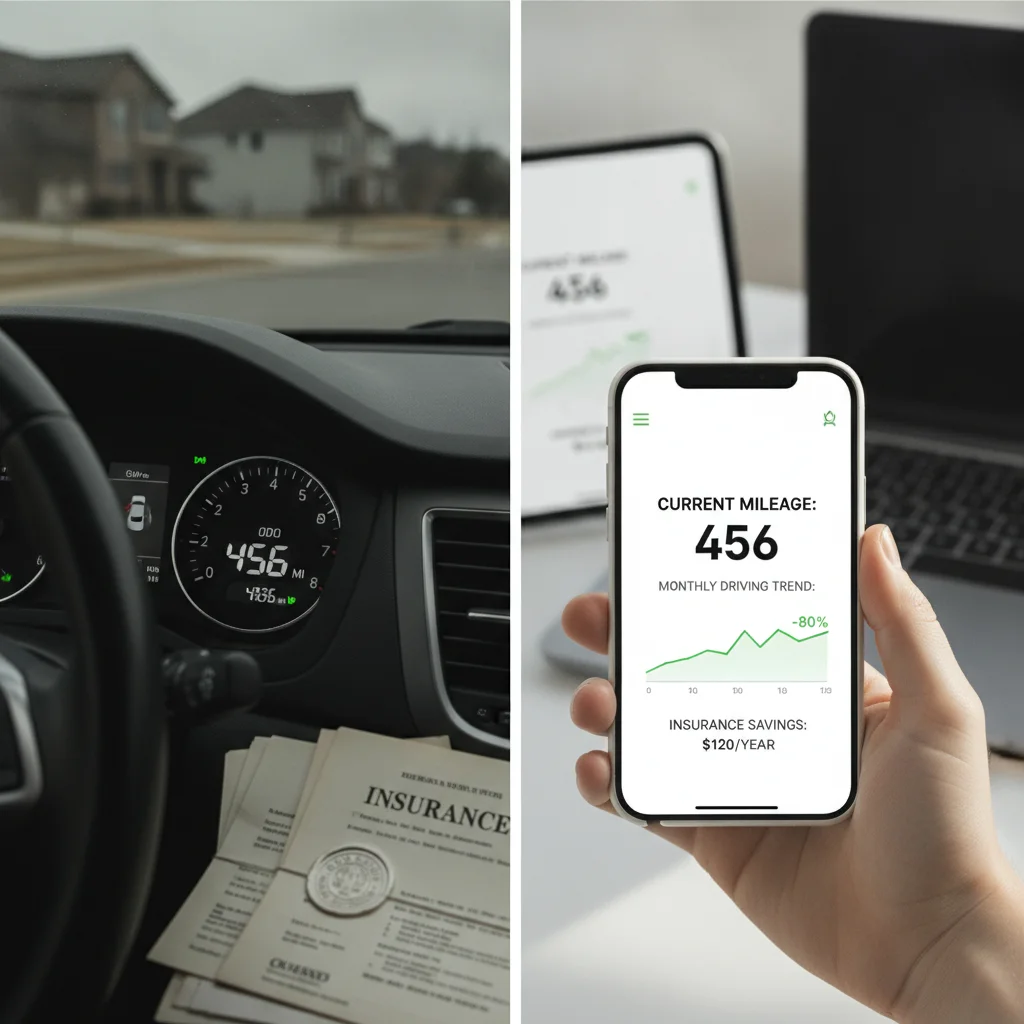
Annual mileage, in the context of car insurance, refers to the estimated or verified number of miles you drive your vehicle over the course of a year. Insurers use this figure as a direct measure of your exposure to accident risk — the more miles you drive, the more opportunities there are for a collision to occur. This number typically appears on your policy application and is one of several variables used to calculate your premium.
Some insurers apply mileage in discrete rating bands (e.g., 0–5,000, 5,001–10,000, 10,001–15,000 miles), while usage-based programs may calculate risk dynamically using telematics data captured per trip.
Why Mileage Matters to Your Insurer
Insurance pricing is fundamentally an exercise in risk quantification. Every variable an insurer collects about you — your driving record, your ZIP code, your vehicle — is a data point that helps them estimate the probability and cost of a future claim. Annual mileage fits squarely into that framework.
The logic is straightforward: a car sitting in a garage cannot be involved in an accident. Every mile driven is a unit of exposure — to other drivers, weather conditions, road hazards, and human error. Statistically, a driver who logs 20,000 miles per year faces roughly twice the exposure of one who drives 10,000. That relationship between miles driven and accident probability is well-documented in actuarial data, which is why virtually every standard auto insurance application asks how much you drive.
According to the Federal Highway Administration, the average American driver travels approximately 14,263 miles per year. That average serves as the rough midpoint around which insurers calibrate their mileage brackets. If you fall well below that figure, you likely pose less risk than a typical policyholder in your demographic — and many insurers will price your policy accordingly.
It's also worth understanding that mileage interacts with other rating variables. A high-mileage driver with a clean record may pay less than a low-mileage driver with multiple at-fault accidents. Mileage is one factor in a multi-variable equation, as detailed in how insurers calculate your liability premium.
Mileage Is One Factor Among Many
While annual mileage is a meaningful rating variable, it doesn't operate in isolation. Insurers weigh it alongside your driving record, vehicle type, coverage limits, credit-based insurance score (where permitted), and location. A very low mileage figure won't offset a recent DUI or a vehicle with a high theft rate — it simply reduces one element of your overall risk profile.
Material Misrepresentation Has Real Consequences
Reporting significantly lower mileage than you actually drive isn't just a paperwork issue — it can void your coverage when you need it most. If an insurer finds that your actual mileage substantially exceeded what you stated at application, they have grounds to treat the policy as voidable. The savings from underreporting rarely justify the risk of an uncovered claim.
How Insurers Collect and Verify Mileage Data
For most of auto insurance history, mileage reporting was entirely self-reported and largely unverified. A driver would estimate their annual miles on a paper application, and that figure would be taken at face value until something flagged it — like a claim occurring far from the policyholder's stated home address, or an odometer reading at renewal that told a different story.
That era of largely unchecked self-reporting is giving way to more rigorous methods, driven by telematics technology and the competitive pressure to price risk more accurately.
Self-Reported Estimates
The traditional method remains common. At application or renewal, your insurer or agent will ask how many miles you drive per year, often broken down by commute versus pleasure use. Many drivers genuinely don't know their annual mileage and guess — sometimes low, sometimes high. This creates pricing imprecision that insurers increasingly want to close.
Odometer Verification
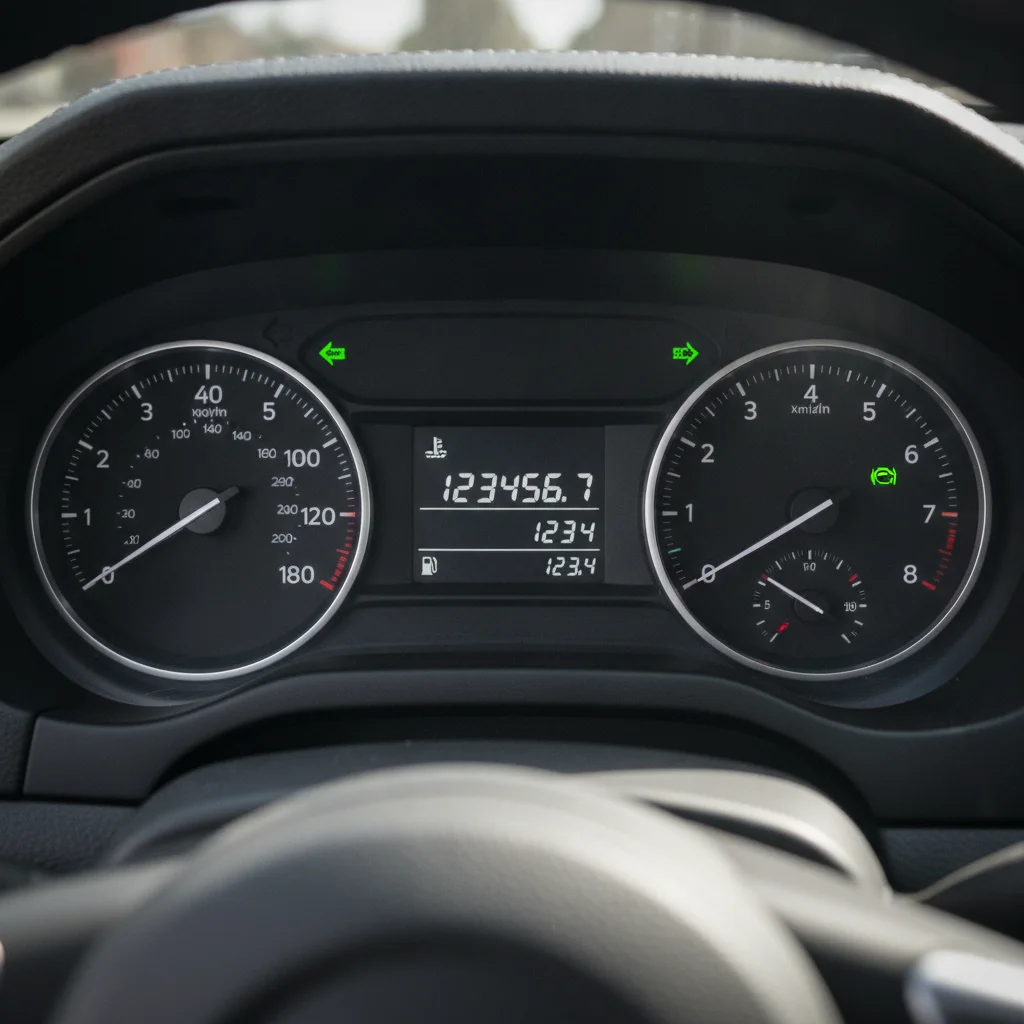
Some insurers request odometer photos — typically through their mobile app — at policy inception, renewal, or both. Comparing two readings over a 12-month period gives a verifiable annual mileage figure. A handful of states require odometer disclosures as part of vehicle registration, which gives insurers an additional data source.
Telematics and Usage-Based Insurance (UBI)
Telematics programs — whether through a plug-in OBD-II device or a smartphone app — can capture precise mileage data continuously. Originally designed to reward safe driving behaviors (smooth braking, avoiding late-night driving), these programs also generate accurate mileage records as a byproduct. Participation is typically optional and often incentivized with an upfront discount, with the final rate adjustment applied at renewal.
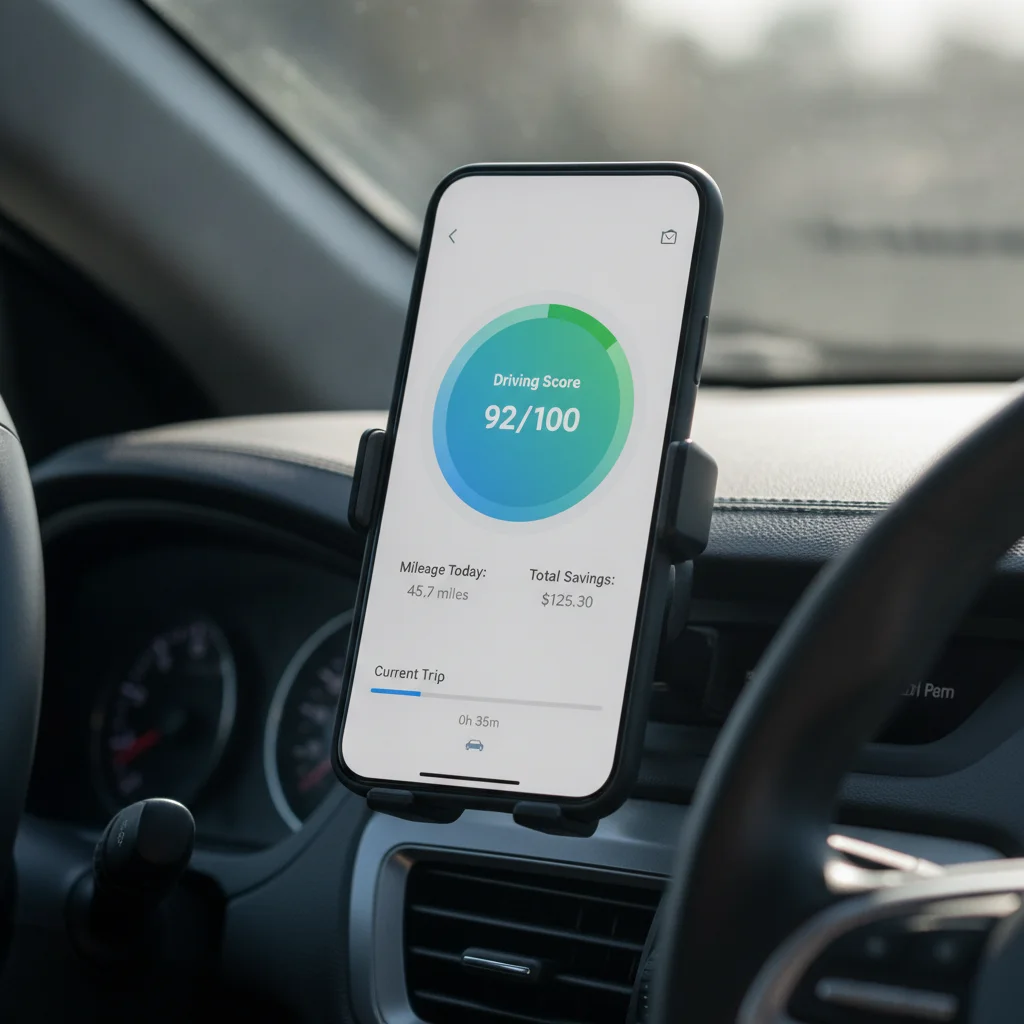
For drivers comfortable sharing their data, telematics can actually work in their favor if their real-world driving habits are better than their demographic profile would suggest. Insurers like Progressive (Snapshot), Allstate (Drivewise), and State Farm (Drive Safe & Save) have run these programs for years and continue to expand them.
Enroll in Telematics to Prove Your Mileage
If you believe your actual driving habits are safer and lower-mileage than your demographic profile suggests, a telematics program is one of the best tools available. By sharing real driving data, you give your insurer concrete evidence to price your policy on your actual behavior rather than statistical averages. Most programs offer an initial enrollment discount, with further savings possible at renewal if the data supports it.
Review Your Mileage Estimate Every Year
Life changes faster than most people update their insurance files. At every renewal, take two minutes to review your stated annual mileage and compare it to your actual odometer readings. If your reported mileage is off by 3,000 miles or more, update it — either direction. Accurate reporting protects your coverage and ensures you're paying the right rate, not someone else's.
Mileage Brackets and How They Translate to Rates
Insurers don't typically price mileage as a continuous linear variable. Instead, they use rating bands — discrete mileage ranges that each carry a specific rating factor. While exact brackets and multipliers vary by carrier and state, a representative structure might look like this:
| Annual Mileage Range | Insurer Classification | Typical Rate Impact |
|---|---|---|
| 0 – 5,000 miles | Very Low / Pleasure Only | Significant discount vs. average |
| 5,001 – 10,000 miles | Low Mileage | Moderate discount vs. average |
| 10,001 – 15,000 miles | Average / Standard | Base rate (no adjustment) |
| 15,001 – 20,000 miles | Above Average | Modest surcharge vs. average |
| 20,001+ miles | High Mileage | Meaningful surcharge vs. average |
The premium difference between the lowest and highest brackets can be substantial — some analyses suggest a 10–20% spread between very-low and high-mileage tiers for otherwise identical profiles, though this varies significantly by insurer and state regulations.
14,263
Average annual miles driven per U.S. driver
According to the Federal Highway Administration's most recent data, this is the per-driver average used as a baseline by most auto insurers.
~10–20%
Premium spread between lowest and highest mileage tiers
Industry analyses suggest that otherwise identical driver profiles can see a 10–20% rate difference between very-low and high-mileage brackets, depending on the carrier.
Over 30%
U.S. drivers who log under 10,000 miles per year
Federal transportation surveys consistently show that a substantial minority of American drivers fall below the 10,000-mile threshold that most insurers classify as low mileage.
20–40%
Potential savings for low-mileage drivers on pay-per-mile plans
Pay-per-mile insurers and independent comparisons report that drivers logging under 7,500 miles annually can cut their premiums by 20–40% compared to standard policies.
One nuance worth understanding: the mileage band you report affects your base rate, but it doesn't change your coverage. A low-mileage driver still has the same liability limits and comprehensive/collision coverage as a high-mileage driver on the same policy type. You're paying for a lower probability of using that coverage — not for less coverage itself.
The Real-World Impact: Scenarios That Change Your Mileage Profile
Annual mileage isn't static. Life changes — job transitions, relocations, retirement, adding a second driver — can shift your mileage significantly in either direction. Each of these events is worth a conversation with your insurer.
The key takeaway is that insurers expect you to report material changes in your driving habits. If your mileage drops by 40% because you switched to remote work, updating your policy could trim your premium meaningfully at renewal — or even mid-term with some carriers. Similarly, if you take on a long commute, you'll want your coverage to reflect actual use. Driving significantly more than your stated mileage and filing a claim can create complications.
It's also worth noting that mileage affects more than just your insurance premium. High annual mileage accelerates depreciation, as explained in how mileage affects your car's resale value. The decisions you make about driving frequency have cascading financial consequences beyond the insurance bill.
“Mileage is among the most intuitive variables in insurance pricing — it's simply a measure of time at risk. Everything else being equal, the driver who logs twice the miles in a year has roughly twice the exposure to an accident.”
— Robert Hartwig, Clinical Associate Professor of Finance, University of South Carolina; former President of the Insurance Information Institute
Low-Mileage Drivers: Your Options and Opportunities
If you consistently drive well below the national average — say, under 8,000 miles per year — standard auto insurance may be pricing in risk you simply don't carry. There are two main paths worth exploring.
Low-Mileage Discounts on Traditional Policies
Most major insurers offer some form of low-mileage discount, though the threshold and savings vary. The discount is typically applied automatically if you report mileage below a certain level, or you may need to ask for it specifically. Providing odometer documentation — or enrolling in a telematics program — can help you verify your eligibility and potentially earn a larger adjustment than the self-reported discount alone.
Pay-Per-Mile Insurance
A growing number of insurers offer usage-based policies where your premium scales directly with your mileage. You pay a fixed base rate (covering your parked car for theft, vandalism, and weather events) plus a per-mile rate for every mile driven. For drivers under approximately 7,500 miles per year, the math often favors pay-per-mile programs significantly over traditional flat-rate policies.
Major providers in this space include Metromile (now part of Lemonade), Allstate's Milewise, and Nationwide's SmartMiles program. For a full comparison of how these programs stack up against traditional coverage, see pay-per-mile vs. traditional auto insurance for low-mileage drivers.
Enroll in Telematics to Prove Your Mileage
If you believe your actual driving habits are safer and lower-mileage than your demographic profile suggests, a telematics program is one of the best tools available. By sharing real driving data, you give your insurer concrete evidence to price your policy on your actual behavior rather than statistical averages. Most programs offer an initial enrollment discount, with further savings possible at renewal if the data supports it.
Review Your Mileage Estimate Every Year
Life changes faster than most people update their insurance files. At every renewal, take two minutes to review your stated annual mileage and compare it to your actual odometer readings. If your reported mileage is off by 3,000 miles or more, update it — either direction. Accurate reporting protects your coverage and ensures you're paying the right rate, not someone else's.
The Honest-Reporting Imperative
It might be tempting to understate your annual mileage on your application — the logic being that a lower number produces a lower quote. But this is a shortsighted calculation that carries real financial and legal risk.
Auto insurance policies are contracts, and they're built on accurate representations. When you sign an application, you're attesting that the information is truthful. If a claim arises and the insurer investigates — reviewing odometer records, GPS data, or other documentation — a significant mileage discrepancy can be classified as material misrepresentation. The consequences range from a reduced claim payout to a full denial to outright policy cancellation.
Beyond the contractual risk, consider that insurers share claims and underwriting data through industry databases. A policy cancellation for misrepresentation can follow you to your next application and drive your future premiums higher than whatever you thought you were saving.
Mileage Is One Factor Among Many
While annual mileage is a meaningful rating variable, it doesn't operate in isolation. Insurers weigh it alongside your driving record, vehicle type, coverage limits, credit-based insurance score (where permitted), and location. A very low mileage figure won't offset a recent DUI or a vehicle with a high theft rate — it simply reduces one element of your overall risk profile.
Material Misrepresentation Has Real Consequences
Reporting significantly lower mileage than you actually drive isn't just a paperwork issue — it can void your coverage when you need it most. If an insurer finds that your actual mileage substantially exceeded what you stated at application, they have grounds to treat the policy as voidable. The savings from underreporting rarely justify the risk of an uncovered claim.
The straightforward approach is to report your best honest estimate, update it when your habits change materially, and leverage legitimate discounts — telematics enrollment, bundling, safe-driver programs — to earn rate reductions that don't require bending the truth. Your vehicle's profile also plays a significant role in shaping your quote, independent of mileage — something covered in depth in how the car you drive shapes the price you pay to insure it.

All claims are backed by peer-reviewed research. Sources on request.