Key Takeaways
Option A
Traditional Auto Insurance
The familiar flat-rate coverage most American drivers carry.
Best for: Drivers with unpredictable mileage, long commutes, or those who prefer pricing certainty regardless of how much they drive.
Option B
Pay-Per-Mile Insurance
The mileage-linked alternative built for drivers who rarely use their car.
Best for: Low-mileage drivers — typically under 7,500–10,000 miles per year — who want their premium to reflect how little they actually drive.
If you drive fewer than 7,500 miles per year
Pay-Per-Mile Insurance
Your premium will closely track your actual road exposure. Drivers in this bracket routinely save hundreds of dollars annually compared to flat-rate policies.
If your annual mileage is unpredictable or seasonally variable
Traditional Auto Insurance
A fixed premium protects you from bill spikes during high-usage months like summer road trips or job changes that add a commute.
If you work from home and drive mainly for errands or occasional outings
Pay-Per-Mile Insurance
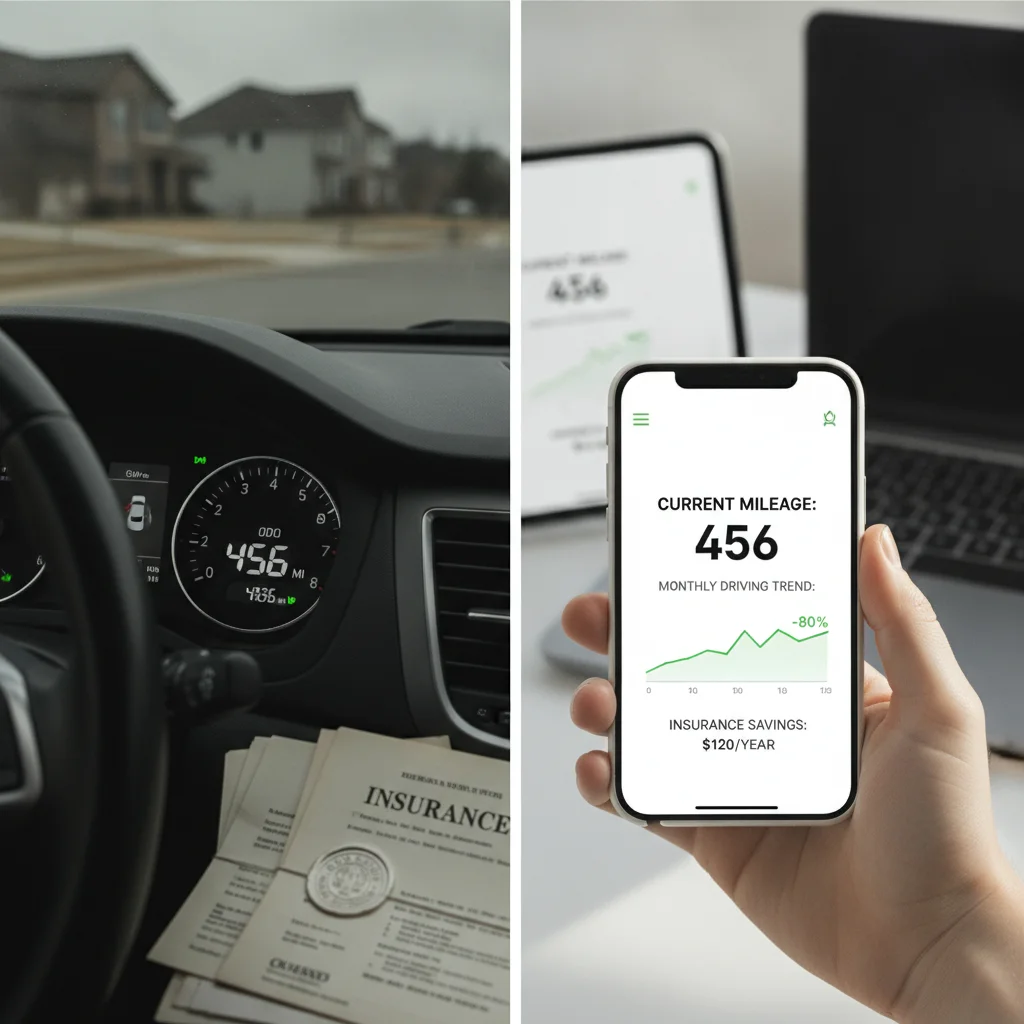
Remote workers who have eliminated a daily commute are among the clearest winners — their mileage drop is real and sustained, making variable pricing consistently advantageous.
If you have privacy concerns about mileage tracking
Traditional Auto Insurance
Pay-per-mile requires ongoing data collection via a device or app. Traditional policies have no such requirement, keeping your driving data off insurer servers.
If you drive 10,000–15,000 miles per year and want predictable bills
Traditional Auto Insurance
At average or above-average mileage, per-mile fees stack up quickly and a flat rate will almost always be more cost-effective.
Why Mileage Is One of the Most Underused Rate Levers
Every major insurer factors mileage into its rating model — but traditional policies price this in bluntly. They ask how many miles you drive annually at application, then essentially ignore the answer for the policy term. If you told your insurer you drive 12,000 miles and you actually drove 4,200, you overpaid. A lot.
That disconnect is the business problem pay-per-mile insurance exists to solve. Low-mileage drivers have always been a favorable risk segment: fewer miles on the road means fewer opportunities to be involved in a collision. Traditional pricing doesn't capture that on a rolling basis — it prices you on a population average and adjusts only when you renew and self-report again.
For context, the Federal Highway Administration reports that the average American drives roughly 14,000–15,000 miles annually. But millions of drivers fall well below that — retirees, remote workers, urban households with a car they mainly use on weekends, and households where a vehicle sits as a backup. These drivers have historically had limited options: self-report low mileage and hope it's priced accordingly, or find an insurer with an explicit low-mileage discount.
Pay-per-mile flips the model. Instead of an estimate, actual miles driven become the direct input. That's a meaningful structural difference, and it's why understanding how each model works — not just how they're marketed — matters before you make a switch.
See the full breakdown of how rate factors work to understand the other variables that sit alongside mileage in your insurer's pricing formula.

How Each Pricing Model Actually Works
Getting concrete about the mechanics helps you run real numbers for your situation rather than rely on insurer marketing estimates.
Traditional Auto Insurance Pricing
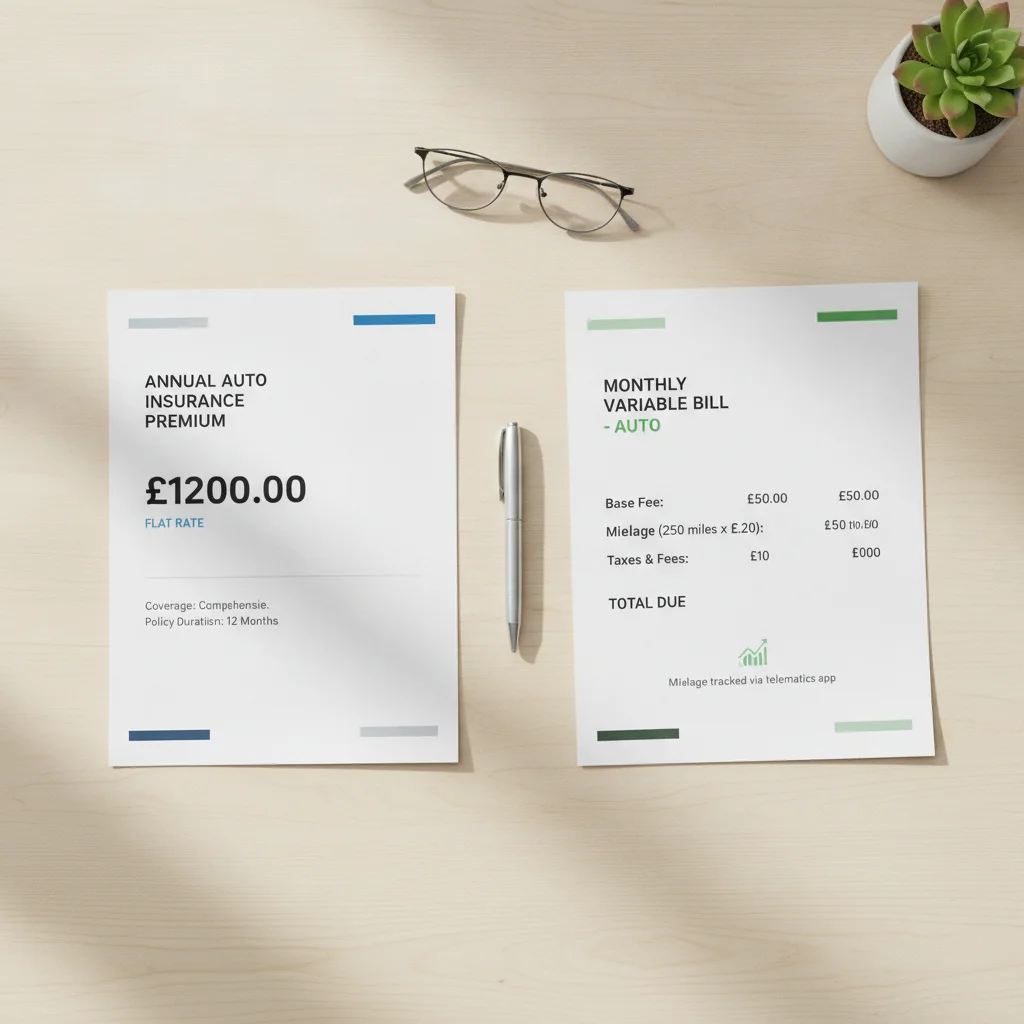
A standard policy charges a fixed six- or twelve-month premium. Mileage is one input among many — alongside your ZIP code, vehicle, driving history, credit score (in most states), age, and coverage selections. The insurer runs your inputs through its actuarial model, sets a price, and that price holds for the term regardless of whether you drive 500 miles or 8,000 miles during that period.
Some traditional insurers offer a low-mileage discount — typically applied if you self-report under a threshold like 7,500 or 10,000 miles annually. But verification is limited. You're on the honor system, and the discount is usually modest (often 5–15%) rather than structurally proportional to your actual usage.
Pay-Per-Mile Insurance Pricing
Pay-per-mile policies split your premium into two components:
- A base rate — a fixed daily or monthly charge that covers your vehicle while it's parked, handles your liability coverage baseline, and reflects your standard risk profile (driving history, vehicle type, location, etc.)
- A per-mile rate — a flat charge per mile driven, typically ranging from $0.02 to $0.10 per mile depending on the insurer, your state, and your risk profile
Your monthly bill equals: (Base rate × days in month) + (Miles driven × per-mile rate).
Mileage is verified through a plug-in OBD-II device (which reads your car's diagnostic port) or a smartphone app. Major providers including Metromile (now part of Lemonade), Milewise by Allstate, and ByMile track only distance — not speed, braking, or driving behavior. This distinguishes pay-per-mile from usage-based insurance (UBI), which scores both mileage and behavior. See the comparison of usage-based vs. traditional coverage for a deeper look at the behavior-tracking side of this market.
| Criterion | Traditional Auto Insurance | Pay-Per-Mile Insurance |
|---|---|---|
| Pricing structure | Fixed premium per term | Base rate + per-mile fee |
| Mileage impact on bill | Estimated at application only | Tracked and billed monthly |
| Bill predictability | Fully predictable; fixed | Variable; rises with usage |
| Best annual mileage | 10,000+ miles per year | Under 7,500–10,000 miles per year |
| Data collection required | None after policy issuance | OBD-II device or smartphone app |
| Behavior tracking | Not applicable | No — mileage only, not behavior |
| Provider availability | All 50 states, all major insurers | Limited states; 3–4 major providers |
| Typical savings potential | Baseline | $400–$800/yr for low-mileage drivers |
| Road trip cost impact | None — premium unchanged | Higher bill; daily caps may apply |
| Multi-vehicle bundling | Standard multi-car discounts apply | Can mix with traditional policy |
~4,000
Miles/year some remote workers now drive
Work-from-home adoption has pushed a significant share of American workers well below average mileage thresholds, according to transportation researchers tracking post-2020 commuting shifts.
$947
Metromile's published avg. annual savings claim
Metromile (now Lemonade) cited this figure for customers who switched; it reflects their actual enrolled, low-mileage customer base rather than the average driver.
14,263
Average miles driven per U.S. driver annually
The Federal Highway Administration's most recent estimates place average annual vehicle miles traveled per licensed driver at roughly 14,000–14,500 miles.
$0.02–$0.10
Typical per-mile rate range across providers
Per-mile rates vary by state, insurer, and driver risk profile; the lower end applies to low-risk drivers in favorable states, per provider rate filings.
~8,000
Miles/year — typical pay-per-mile break-even
Industry analysts and consumer finance researchers estimate the crossover point where pay-per-mile stops saving money sits between 7,500 and 10,000 miles for most driver profiles.
The Break-Even Math: What Mileage Makes Pay-Per-Mile Worth It
The most important calculation any prospective switcher should run is their personal break-even point. Here's a simplified version of how to do it.
Step 1 — Get your current premium and convert it to a per-mile cost
Divide your annual premium by your actual annual miles. If you pay $1,400 per year and drove 5,000 miles, your effective cost is $0.28 per mile under your current policy.
Step 2 — Price out a pay-per-mile policy
Request a quote from at least two pay-per-mile providers. You'll get a base rate (let's say $40/month = $480/year) and a per-mile rate (let's say $0.06/mile). At 5,000 miles annually, your projected pay-per-mile cost would be: $480 + (5,000 × $0.06) = $480 + $300 = $780/year.
In this scenario, you'd save $620 annually — a substantial number. But the math shifts quickly as mileage rises. At 10,000 miles: $480 + $600 = $1,080. At 12,000 miles: $480 + $720 = $1,200. Depending on what your traditional policy costs, the advantage narrows or disappears entirely around 8,000–11,000 miles for most drivers.
What the industry data suggests
Metromile's own published estimates suggested average savings of $947 per year for customers who switched, though that figure skews toward their actual low-mileage customer base and shouldn't be applied universally. A more conservative and defensible estimate — particularly for drivers in the 5,000–8,000 mile range — is $400–$700 in annual savings.

One nuance worth noting: base rates can vary significantly by state due to regulatory differences. Pay-per-mile is not available in all states, and per-mile rates are not uniform across providers. Always compare apples-to-apples coverage levels — same liability limits, same deductibles — before drawing conclusions from a quote.
If you're also evaluating whether your EV ownership patterns affect this calculation, the mileage analysis for EV buyers shows how annual miles affect the economics of vehicle type selection, which often runs in parallel with insurance decisions.
Pay-Per-Mile Is Not Available Everywhere
As of 2024, pay-per-mile programs are approved in most but not all U.S. states. Allstate's Milewise, Lemonade's pay-per-mile product, and Nationwide's SmartMiles each have different state availability maps. Before doing in-depth comparisons, confirm availability in your state by visiting the insurer's site directly. Regulatory approval timelines vary, so even if pay-per-mile isn't available in your state today, it may be within the next policy term.
Low-Mileage Discounts vs. Pay-Per-Mile: Different Things
Many traditional insurers offer a low-mileage discount — a fixed percentage reduction applied if you self-report driving under a specified annual threshold. This is structurally different from pay-per-mile pricing: the discount is flat, not proportional, and isn't verified through a device. If pay-per-mile isn't available in your state, asking your current insurer specifically about a low-mileage discount rate is still worth doing — it's a legitimate, underutilized pricing lever.
Practical Trade-Offs Beyond Price
Cost is the headline, but a few practical factors can shift the decision even when the numbers favor pay-per-mile.
Billing predictability
Traditional insurance gives you a known, fixed premium. Pay-per-mile introduces variability — if you take a long road trip in July, your August bill will spike. For budget-conscious households that track expenses tightly, this unpredictability can be a real friction point. Some pay-per-mile providers cap the maximum daily mileage that counts toward your bill (e.g., Metromile capped at 250 miles per day), which puts a ceiling on how bad a heavy-usage month can get — but caps vary by provider, so verify this before signing.
Device installation and data collection
Pay-per-mile requires either plugging a device into your OBD-II port (located under the dashboard, usually near the steering column) or running a smartphone app continuously. The OBD-II plug is simple — most people install it in under a minute — but it does collect data. Location data policies vary by insurer; review the privacy policy before enrolling. Some drivers find this unremarkable; others have genuine reservations. Traditional insurance requires no ongoing data collection after policy issuance.
Multi-car households
If your household has two vehicles and one is a low-mileage car while the other logs significant miles, you might consider pay-per-mile for the low-mileage vehicle while keeping a traditional policy on the primary driver's car. Most pay-per-mile insurers can accommodate this, and the insurer providing your traditional coverage may not object to holding only one vehicle. That said, bundling discounts on traditional policies are worth factoring in — sometimes a multi-car traditional discount offsets the savings you'd capture by splitting.
Coverage availability and provider selection
The pay-per-mile market remains smaller than the traditional market. As of 2024, the major consumer-facing providers include Allstate's Milewise, Lemonade (which absorbed Metromile in 2022), and Nationwide's SmartMiles. Not every insurer offers pay-per-mile, and not every state has approved these programs. If you're in a rural state or want a specific insurer, your options may be limited. Traditional insurance has no such geographic restriction — every insurer operates in nearly every state.
For a structured process to compare whatever quotes you gather, the policy comparison guide walks through evaluating coverage levels, limits, and exclusions side by side.
Pay-Per-Mile vs. Usage-Based Insurance: Don't Confuse Them
A common source of confusion: pay-per-mile and usage-based insurance (UBI) are often lumped together, but they operate differently and suit different driver profiles.
Pay-per-mile tracks only one variable: how many miles you drive. Your driving behavior — speed, hard braking, time of day, cornering — is not scored and does not affect your rate. You are rewarded purely for driving less.
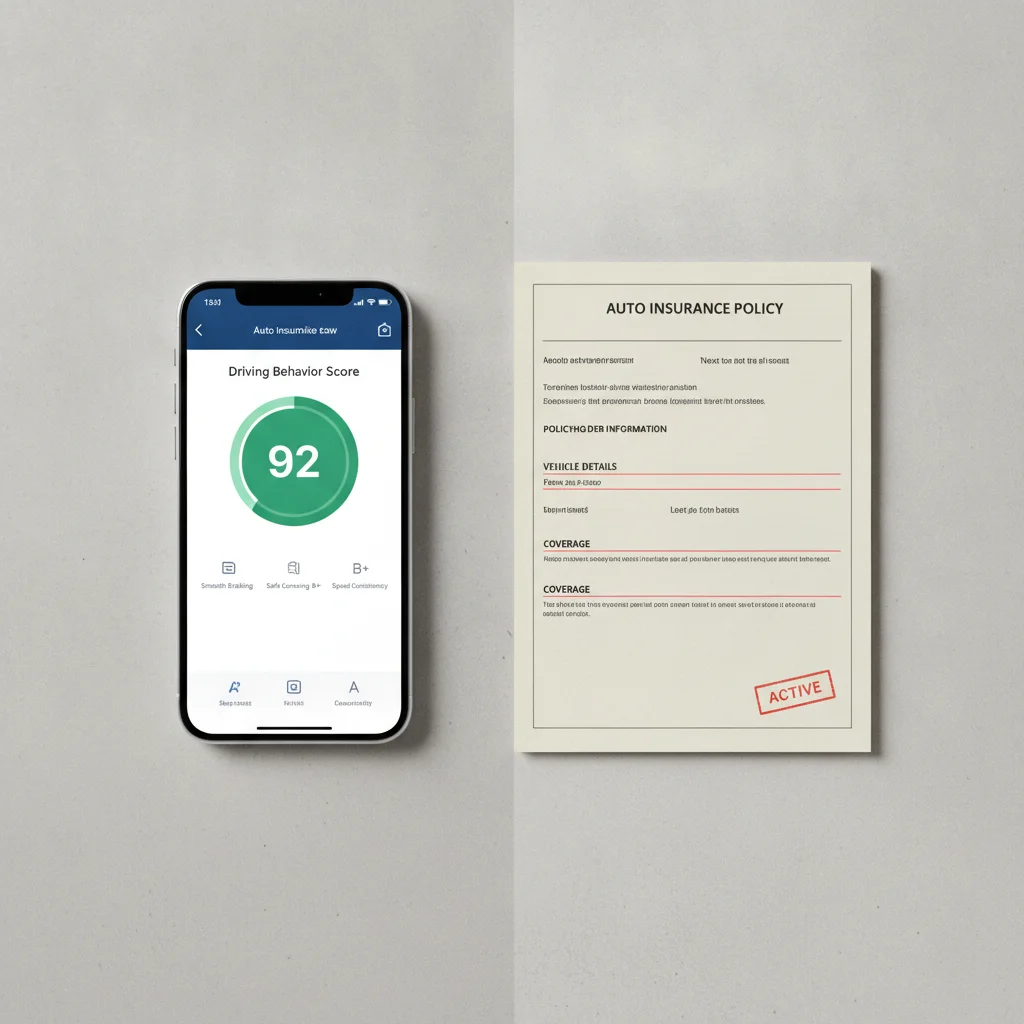
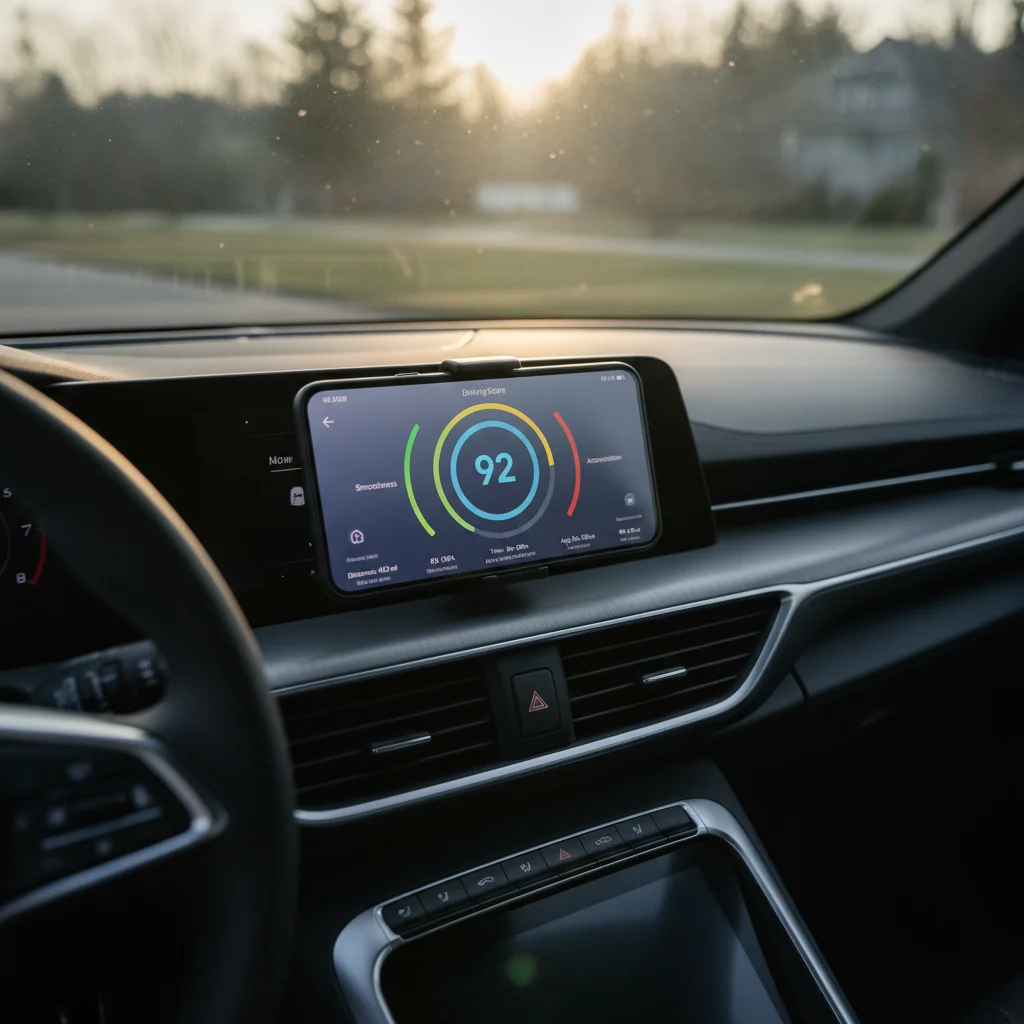
Usage-based insurance (also called telematics insurance) tracks both mileage and driving behavior. Insurers score how smoothly and safely you drive, and your rate can go up or down based on that behavioral score. Some programs offer discounts just for enrolling; others impose surcharges for poor scores.
This distinction matters in practical terms:
- If you're a low-mileage driver who also drives aggressively or frequently at night, pay-per-mile may benefit you more than UBI — you get credit for low miles without penalty for your behavior profile.
- If you drive a moderate number of miles but drive very smoothly and safely, UBI may save you more than pay-per-mile, because your behavior score earns a discount that pure mileage pricing wouldn't give you.
- If you're both a low-mileage and safe driver, some UBI programs effectively function like a better version of pay-per-mile — rewarding you on two dimensions rather than one.
The telematics and UBI explainer covers how to evaluate behavioral tracking programs on their own merits before you opt in.
Also worth noting: high-mileage drivers — those pushing 20,000+ miles per year — operate under a fundamentally different risk calculus. The optional coverage analysis for high-mileage drivers addresses where the risk-reward on additional protection shifts when miles climb.
How to Decide: A Practical Checklist
Before spending time getting pay-per-mile quotes, run through this quick self-assessment:
- Pull your actual mileage from the last 12 months. Check your odometer, service records, or vehicle history. Self-estimates are almost always wrong — usually high. Real data matters here.
- If you drove under 8,000 miles, get at least two pay-per-mile quotes. Request quotes from Milewise, Lemonade, and SmartMiles with the same liability limits and deductibles as your current policy.
- Calculate your projected annual cost under each quote using your actual last-12-months mileage as the input. Don't use the insurer's estimate — use your number.
- Check whether the provider caps daily mileage billing. If you occasionally take long drives, a cap protects you from outsized bills in high-usage months.
- Review the data collection policy. Understand what the OBD-II device or app captures, how long data is retained, and whether it can be used in claims investigations.
- Factor in any multi-policy discounts you'd lose by moving one vehicle to a different insurer. Sometimes the bundling discount on a traditional policy is worth more than the pay-per-mile savings.
- Consider your mileage trajectory. If you're returning to an office or expect a life change that adds significant driving, model your costs at 12,000–15,000 miles too — not just your current usage.
Pay-per-mile insurance is not a niche product anymore — it's a legitimate pricing model that a meaningful segment of drivers should seriously evaluate. But like any insurance decision, the right answer depends on your specific numbers, not on industry marketing claims about average savings.
The core principle applies broadly: every discount or structural pricing advantage you legitimately qualify for is money you're leaving on the table by not claiming it. For low-mileage drivers, pay-per-mile is one of the most structurally direct ways to align what you pay with the risk you actually represent.


All claims are backed by peer-reviewed research. Sources on request.