Key Takeaways
Physical Damage Coverage
Physical damage coverage is an umbrella term used in the insurance industry to describe the two policy types that pay to repair or replace your own vehicle: collision coverage and comprehensive coverage. Collision handles damage from crashes with other cars or objects. Comprehensive covers losses from events outside of driving — theft, weather, animals, and more. Together, they form a complete shield for your car's physical condition.
Insurers and lenders often refer to collision and comprehensive collectively as 'physical damage' on policy declarations pages and loan agreements, particularly when requiring coverage as a condition of financing.
The Umbrella Term You've Probably Never Heard
Open a car insurance policy and you'll find a lot of terminology that insurers use internally — language that rarely makes it into TV commercials or quick-quote screens. Physical damage coverage is one of those terms. It doesn't describe a single policy type; it's the industry-standard umbrella that encompasses two distinct coverages: collision and comprehensive.
Understanding the distinction matters more than most drivers realize. When you finance a car, your lender's requirements are often written as a demand for "physical damage coverage" — meaning both coverages, not just one. When you're comparing policy quotes or reading a declarations page, knowing what this umbrella includes helps you spot gaps and avoid surprises at claim time.
This explainer walks through exactly what physical damage coverage means, how its two components work independently and together, and how to think about whether you need both.
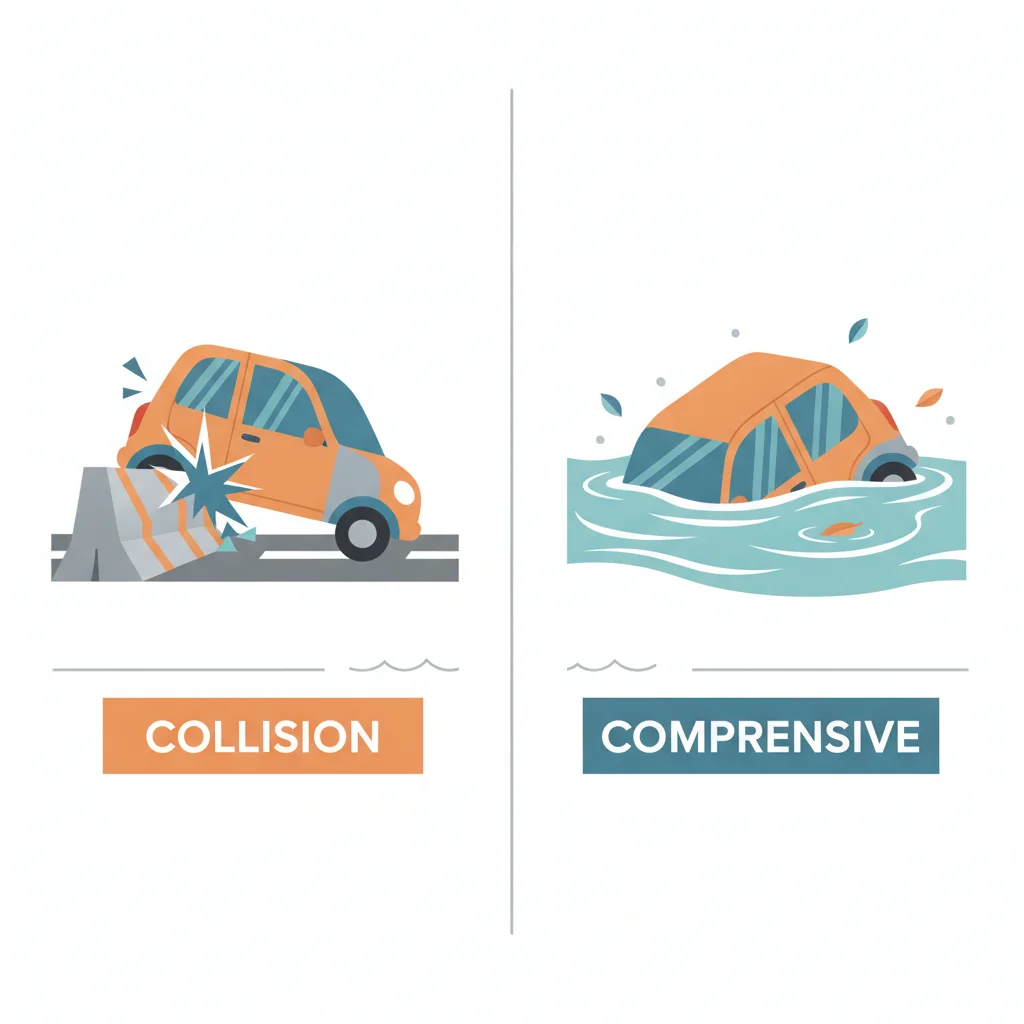
Two Coverages, One Umbrella: How Collision and Comprehensive Divide the Risk
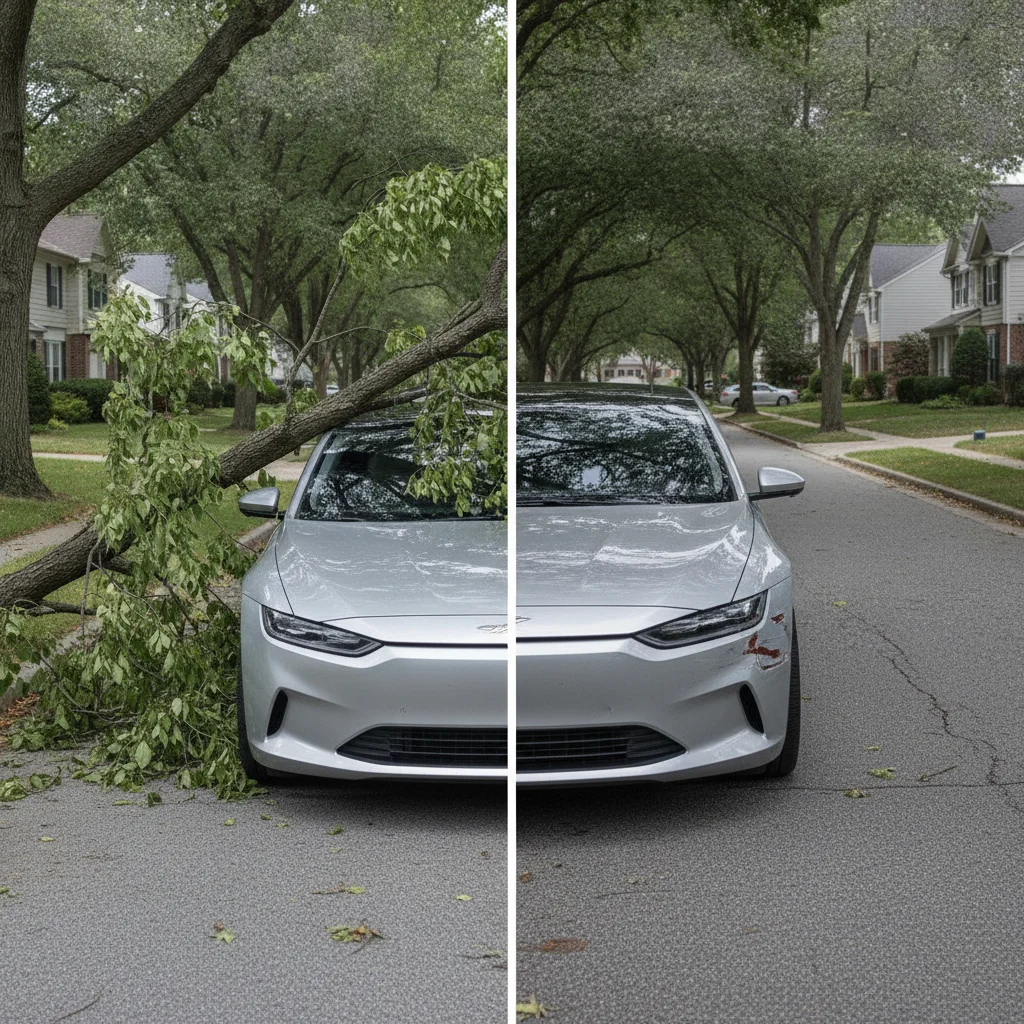
The cleanest way to understand physical damage coverage is to think about what caused the damage — not what the damage looks like. That's the dividing line between collision and comprehensive.
Collision Coverage
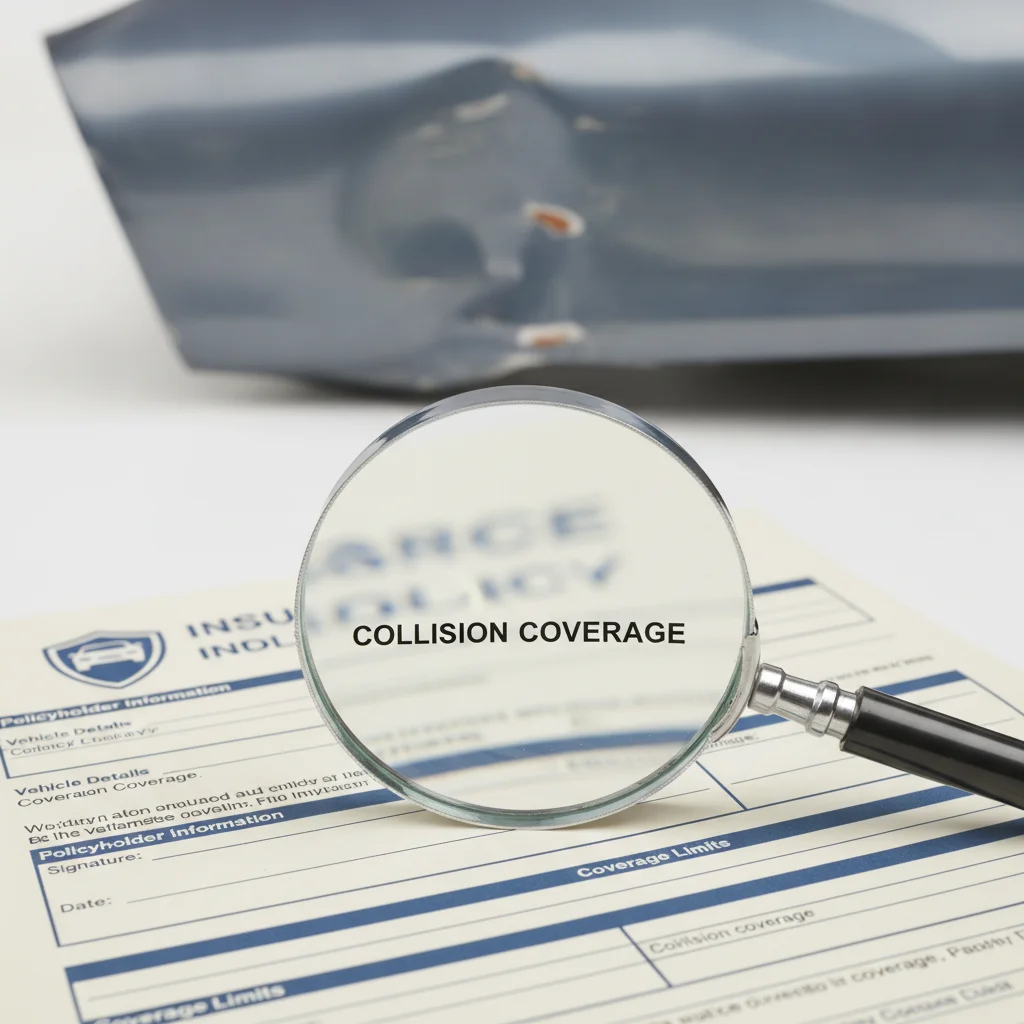
Collision coverage pays to repair or replace your vehicle when it's damaged in a crash. That includes:
- Hitting another vehicle, regardless of who was at fault
- Striking a stationary object — a guardrail, a parking barrier, a tree you drove into
- A single-car rollover accident
Fault matters for other parts of your claim — for example, whether the other driver's liability insurance pays instead — but collision coverage responds to the physical damage regardless of who caused the accident.
Comprehensive Coverage
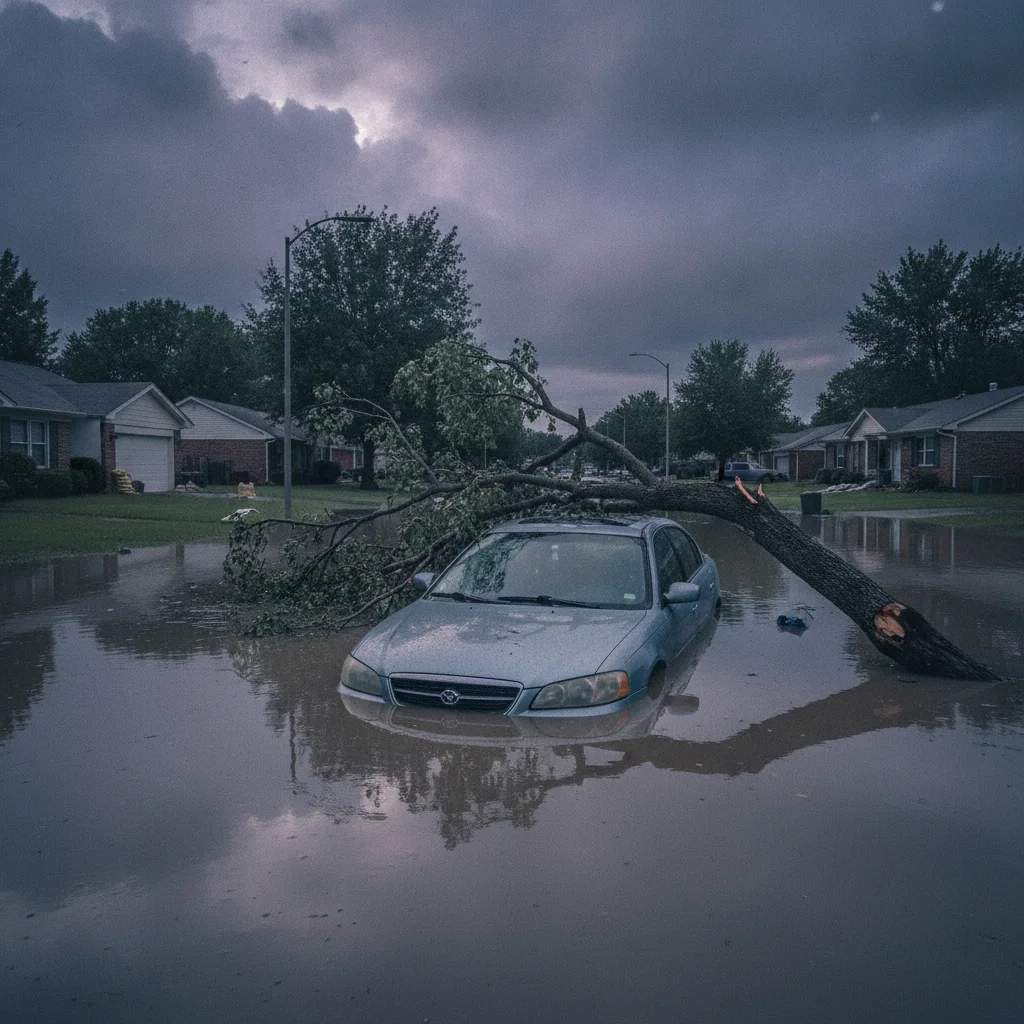
Comprehensive coverage (sometimes called "other than collision" in policy language) handles vehicle damage that isn't the result of a crash. That includes a broad range of scenarios:
- Theft or attempted theft
- Weather events: hail, flooding, tornadoes, hurricanes
- Fire
- Animal strikes — hitting a deer, for instance
- Falling objects: tree branches, ice, debris
- Vandalism
See our full guide to what comprehensive covers that collision never will for a detailed breakdown of these scenarios.
"Comprehensive" Doesn't Mean All-Inclusive
Despite its name, comprehensive coverage has exclusions. It generally won't cover mechanical breakdowns, normal wear and tear, or damage to personal items inside the vehicle. If you leave a laptop in your car and it's stolen, your auto comprehensive policy typically won't cover it — but your homeowners or renters insurance might. Always read your policy exclusions carefully.
Policy Language Varies by Insurer
Some insurers use the phrase "other than collision" instead of "comprehensive" on their policy documents — they mean the same thing. If you see either term on your declarations page, it refers to the non-crash component of physical damage coverage. When in doubt, call your insurer and ask directly which events are covered under each listed coverage.
The names can be misleading. "Comprehensive" sounds like the bigger, more complete coverage — and it does cover more event types — but collision is typically the more expensive of the two because crash claims are far more frequent and often more costly to settle.
“Most drivers think of collision and comprehensive as two separate products, but they're really two sides of the same coin. Together they answer a single question: if something bad happens to my car, can I afford to fix or replace it?”
— Janet Ruiz, Director of Strategic Communications, Insurance Information Institute
Why the Umbrella Term Matters in Practice
The phrase "physical damage coverage" shows up in three contexts where drivers genuinely need to recognize it:
Lender and Lease Requirements
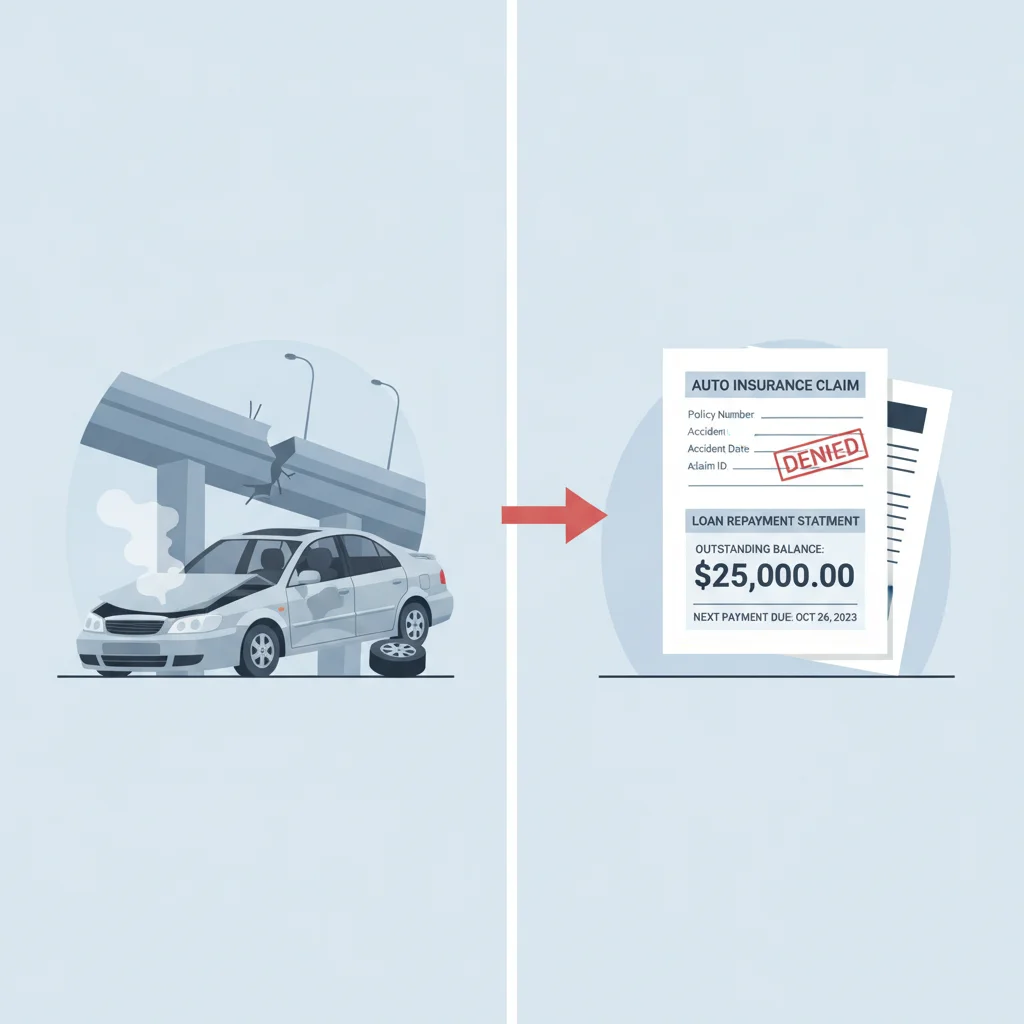
If you financed or leased your vehicle, your loan agreement almost certainly includes a clause requiring you to maintain physical damage coverage — both collision and comprehensive — for the life of the loan. This protects the lender's financial interest in the vehicle. If you drop either coverage and the lender finds out (through a lapse notification from your insurer), they can force-place insurance on your behalf, often at significantly higher rates, and charge you for it.
Policy Declarations Pages
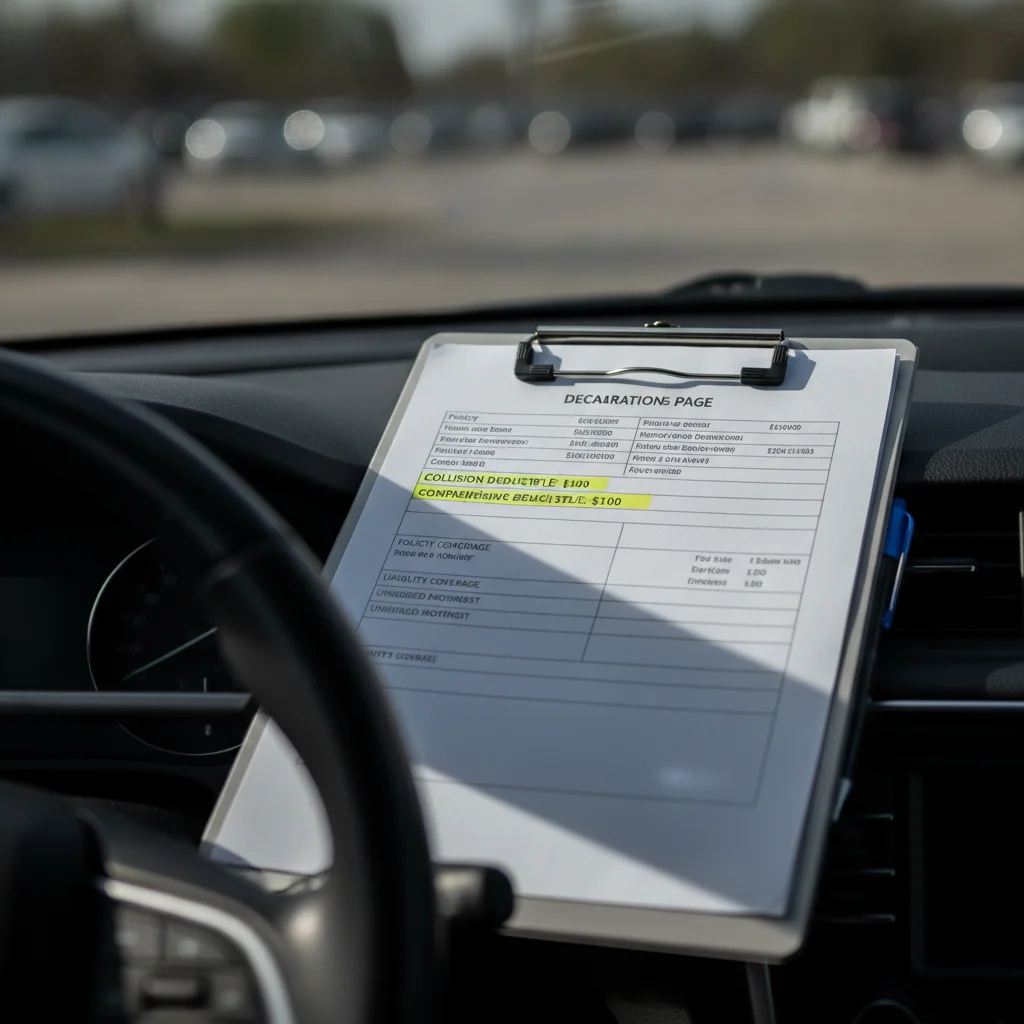
On your auto insurance declarations page, you may see a section labeled "Physical Damage" with collision and comprehensive listed as line items beneath it, each showing its own coverage limit and deductible. Recognizing this structure helps you quickly audit your coverage and verify both are active.
Gap Insurance Interaction
Gap insurance — which covers the difference between what you owe on a loan and what your car is worth — only triggers when a physical damage claim is paid first. No collision or comprehensive claim, no gap payout. See how these coverages interact in our article on gap insurance and physical damage coverage working together.
~$522
Average annual collision coverage premium
According to the Insurance Information Institute, the average annual cost of collision coverage in the U.S. was approximately $522, making it the more expensive component of physical damage coverage.
~$182
Average annual comprehensive coverage premium
The Insurance Information Institute reports the average annual comprehensive premium is roughly $182 — significantly lower than collision because non-crash events are typically less frequent per vehicle.
40–50%
Typical vehicle depreciation by year three or four
Industry valuation data from sources like Kelley Blue Book consistently show that most new vehicles lose between 40% and 50% of their original value within the first three to four years of ownership.
70–80%
Typical total loss threshold as % of ACV
Most U.S. states and insurers declare a vehicle a total loss when estimated repair costs reach 70–80% of the vehicle's actual cash value, though exact thresholds vary by state law and insurer policy.
1 in 8
U.S. drivers estimated to be uninsured
The Insurance Research Council estimates that approximately 1 in 8 drivers on U.S. roads is uninsured, reinforcing the value of carrying your own physical damage coverage rather than relying on at-fault drivers.
How Physical Damage Claims Actually Pay Out
Both collision and comprehensive coverage pay based on your vehicle's actual cash value (ACV) at the time of the loss — not the amount you paid for it, not the replacement cost of a new equivalent model. ACV is essentially market value: what a reasonable buyer would pay for your specific car given its age, mileage, condition, and trim level.
Depreciation is the key factor here. A car loses value from the moment it leaves the lot. By year three or four, most vehicles have depreciated 40–50% from their original MSRP. That depreciated value is the ceiling on what physical damage coverage can pay — minus your deductible.
The Total Loss Threshold
If repair costs exceed a certain percentage of the vehicle's ACV — typically 70–80%, though it varies by state and insurer — the car is declared a total loss. At that point, your insurer pays you the ACV rather than arranging repairs. You keep (or surrender, depending on the situation) the vehicle, and the claim closes.
For a deeper look at the key terms that shape physical damage payouts — ACV, deductibles, total loss thresholds — see our glossary of collision and comprehensive coverage terms.
Match Your Deductible to Your Savings
Choosing a higher deductible lowers your annual premium but raises your out-of-pocket exposure at claim time. A practical rule: set your deductible at the highest amount you could comfortably pay out of pocket within 30 days. If $1,000 would strain your budget, don't chase the premium savings by choosing that threshold.
Review Your Coverage When Your Car's Value Drops
Most drivers set their physical damage coverage at purchase and forget it. But as your car depreciates, the cost-to-value ratio of maintaining collision and comprehensive shifts. Check your car's current ACV annually using a free tool like Kelley Blue Book or Edmunds, and compare it against what you're paying for coverage.
Physical Damage vs. Liability: Understanding the Fundamental Divide
Physical damage coverage and liability coverage operate on opposite sides of an accident. Liability insurance — which every state requires drivers to carry — pays for damage and injuries you cause to other people. It doesn't pay a dollar toward your own vehicle.
Physical damage coverage does the opposite: it pays only for damage to your own car. It has no bearing on the other driver's vehicle or any injuries sustained in an accident.
This distinction also matters when fault is assigned. If another driver causes an accident and they're insured, their liability coverage should pay for your vehicle damage — meaning your physical damage coverage might not even enter the picture. But if the at-fault driver is uninsured or underinsured, or if you're in a single-car accident, your own collision or comprehensive coverage becomes the primary resource.
For a full comparison of how liability splits into its own sub-types, see our breakdown of bodily injury vs. property damage liability.
Do You Need Both — or Just One?
For financed and leased vehicles, the question is largely academic: your lender decides for you. But for paid-off vehicles, the decision is yours — and it's worth making deliberately rather than by default.
Arguments for Keeping Both
- Your vehicle is worth enough that a total loss would be a significant financial blow.
- You live in an area with high theft rates, frequent hail, heavy deer populations, or flood risk — all of which favor keeping comprehensive.
- You drive in heavy traffic or have a long commute, which statistically increases collision exposure.
- You couldn't comfortably self-fund repairs or a replacement vehicle out of pocket.
Arguments for Dropping One or Both
- Your vehicle's ACV is low enough that the annual premium (for one or both coverages) approaches 10% or more of that value.
- You have robust emergency savings that could absorb the cost of a repair or replacement.
- Your vehicle is rarely driven, reducing overall risk exposure.
A practical rule of thumb: if your car is worth $5,000 and you're paying $700 per year for physical damage coverage with a $500 deductible, the maximum net benefit of a claim is $4,500 — and statistically you may never collect it. Weigh that against keeping the premium dollars in your own pocket.
For a more detailed comparison of how to decide between keeping or dropping each coverage type, see our guide on collision vs. comprehensive coverage and what each actually protects.
Match Your Deductible to Your Savings
Choosing a higher deductible lowers your annual premium but raises your out-of-pocket exposure at claim time. A practical rule: set your deductible at the highest amount you could comfortably pay out of pocket within 30 days. If $1,000 would strain your budget, don't chase the premium savings by choosing that threshold.
Review Your Coverage When Your Car's Value Drops
Most drivers set their physical damage coverage at purchase and forget it. But as your car depreciates, the cost-to-value ratio of maintaining collision and comprehensive shifts. Check your car's current ACV annually using a free tool like Kelley Blue Book or Edmunds, and compare it against what you're paying for coverage.
Putting It All Together: The Big Picture of Physical Damage Coverage
Physical damage coverage isn't a single product — it's a category, and understanding that distinction is foundational to building an auto insurance policy that actually fits your situation. Collision handles the crashes; comprehensive handles everything else. Together, they ensure your investment in your vehicle is protected against the full range of risks a car faces.
The coverages share an underlying payout logic (ACV minus deductible), interact with gap insurance and lender requirements, and contrast directly with the liability-focused coverages that protect you from claims by others. Knowing how all these pieces connect puts you in a far stronger position when you're comparing quotes, adjusting coverage levels, or facing a claim.
For a comprehensive end-to-end guide on how both coverages work — from policy selection through the claims process — see everything you need to know about collision and comprehensive insurance.


All claims are backed by peer-reviewed research. Sources on request.