Key Takeaways
Comprehensive Coverage
Comprehensive insurance is a type of auto coverage that pays to repair or replace your vehicle when it's damaged by something other than a collision with another car or object. This includes events like theft, flooding, hail, fire, vandalism, and animal strikes. It's sometimes called 'other than collision' coverage because that phrase captures exactly what it does — handling the risks that fall outside a crash scenario.
Comprehensive coverage pays up to the actual cash value (ACV) of your vehicle minus your deductible. It is typically sold alongside collision coverage but is a separate policy component with its own deductible and premium.
The Core Distinction: What Each Coverage Is Actually Designed For
Insurance terminology can be misleading. 'Collision' sounds like it should cover all car damage. 'Comprehensive' sounds like it covers everything. Neither assumption is quite right.
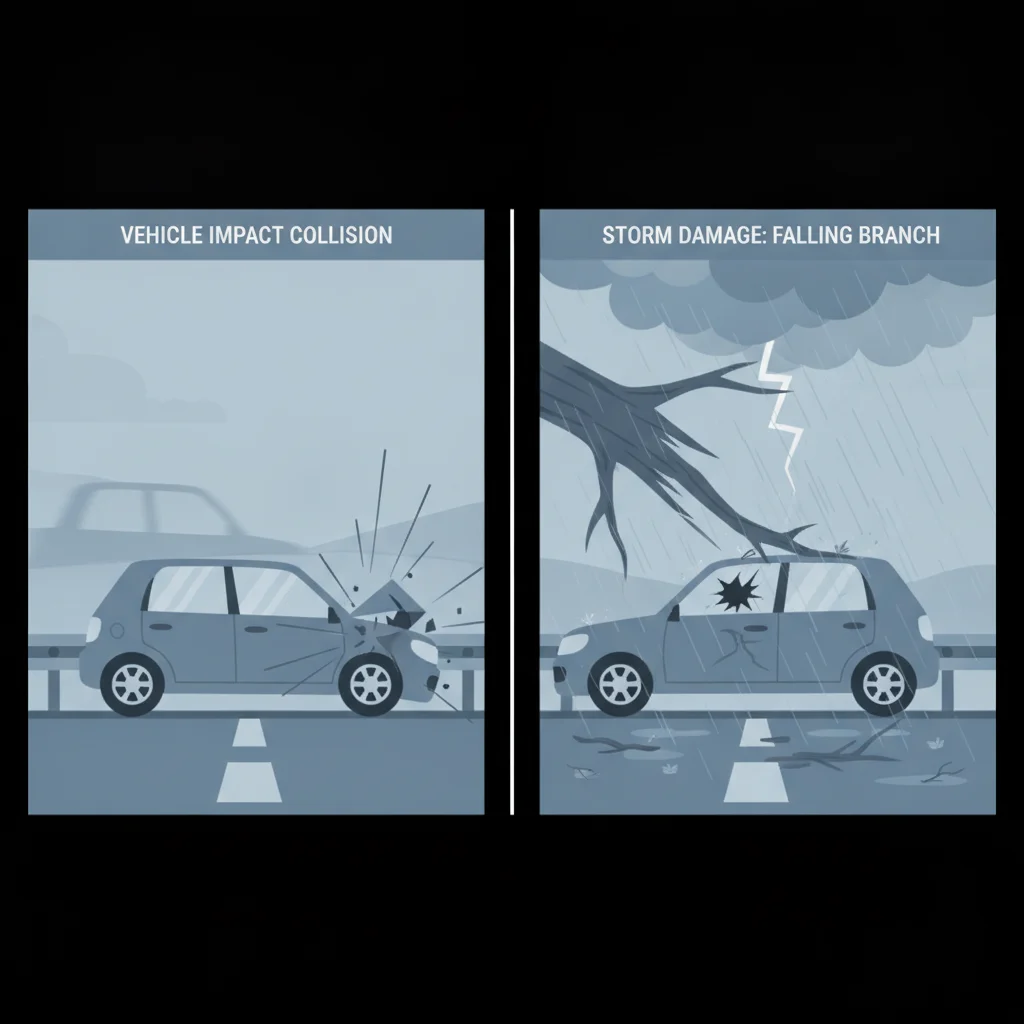
Collision coverage is purpose-built for one scenario: your vehicle physically impacts something — another car, a guardrail, a telephone pole, or even a pothole. The physical contact is the trigger. If you slide off an icy road and hit a ditch, that's a collision claim. If you back into a pole in a parking lot, that's a collision claim.
Comprehensive coverage, by contrast, was designed for the full universe of threats that don't involve your car hitting something you could have driven around or avoided. Insurers sometimes call it 'other than collision' coverage, and that label is the clearest description of what it does. It responds to events outside your direct control as a driver — the weather, criminals, wildlife, and the natural environment.
Understanding this boundary matters practically. Filing a claim under the wrong coverage type isn't possible — your insurer will assign the claim to the appropriate policy. But knowing the distinction before a loss helps you shop smarter, choose the right deductibles, and understand exactly what protection you're paying for.
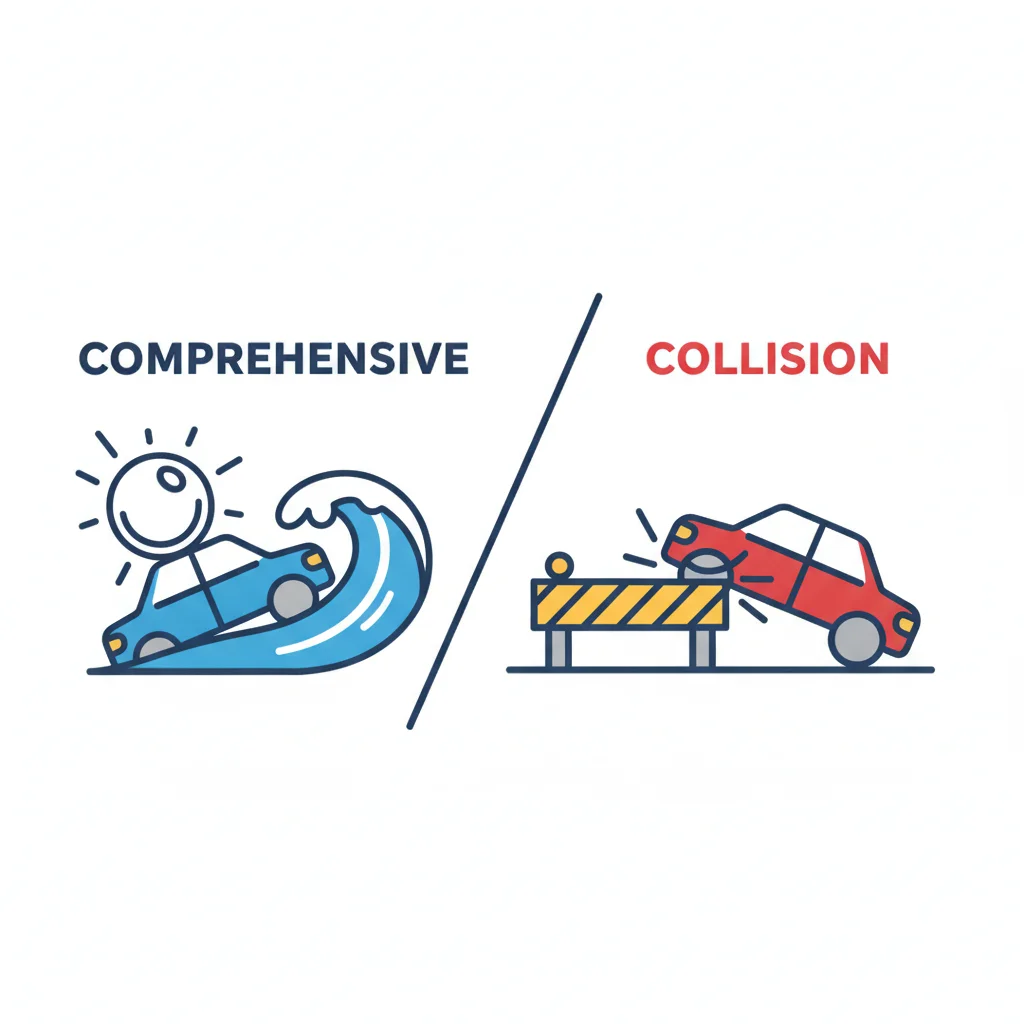
For a deeper side-by-side breakdown, see how collision and comprehensive differ in practice.
What Comprehensive Covers: The Full List
Comprehensive insurance is broader than most drivers expect. Here's a breakdown of the main categories it covers:
Theft and Attempted Theft
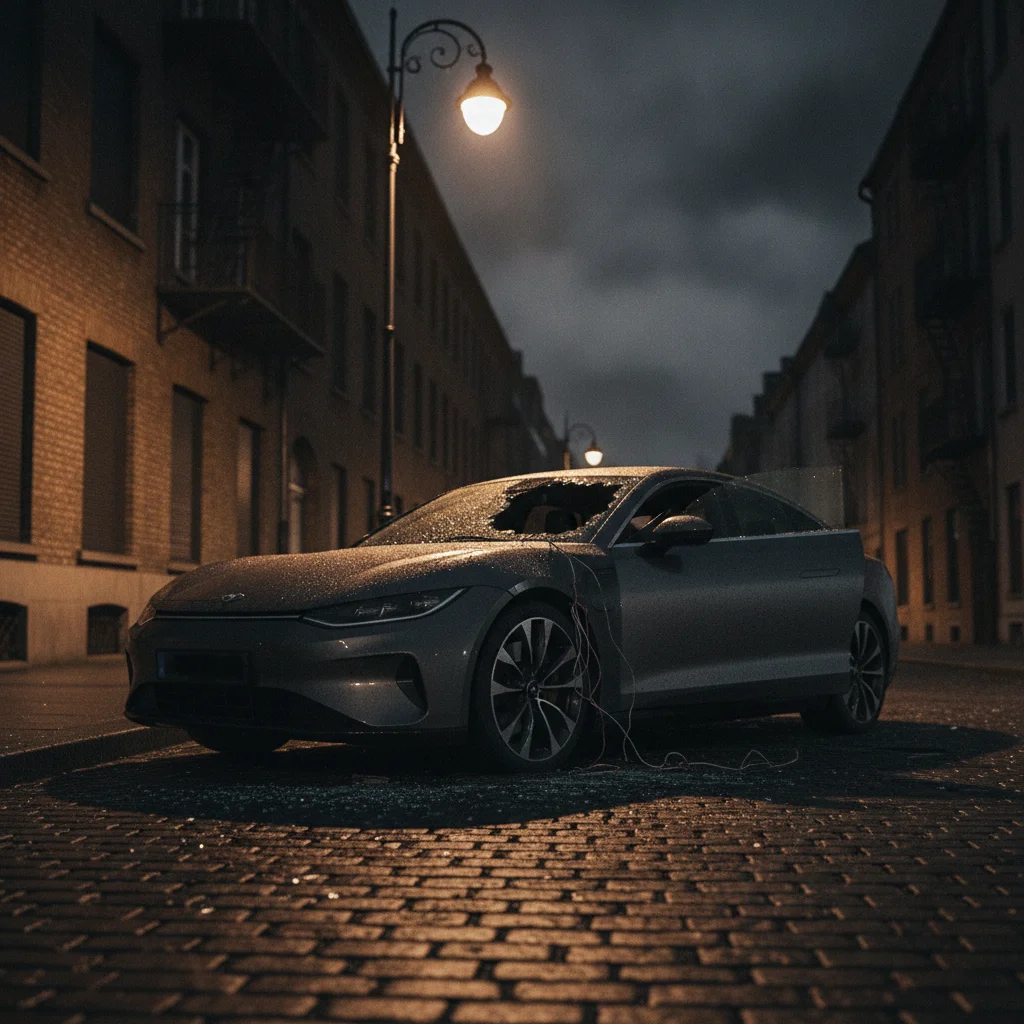
If your vehicle is stolen, collision coverage pays nothing. Zero. Theft is entirely a comprehensive claim. This includes not just the vehicle itself, but damage caused during a theft attempt — a broken door lock, a smashed window, a damaged ignition — even if the car isn't taken. Why comprehensive is the only coverage that helps with theft is a point many drivers only discover after filing a claim.
Weather-Related Damage
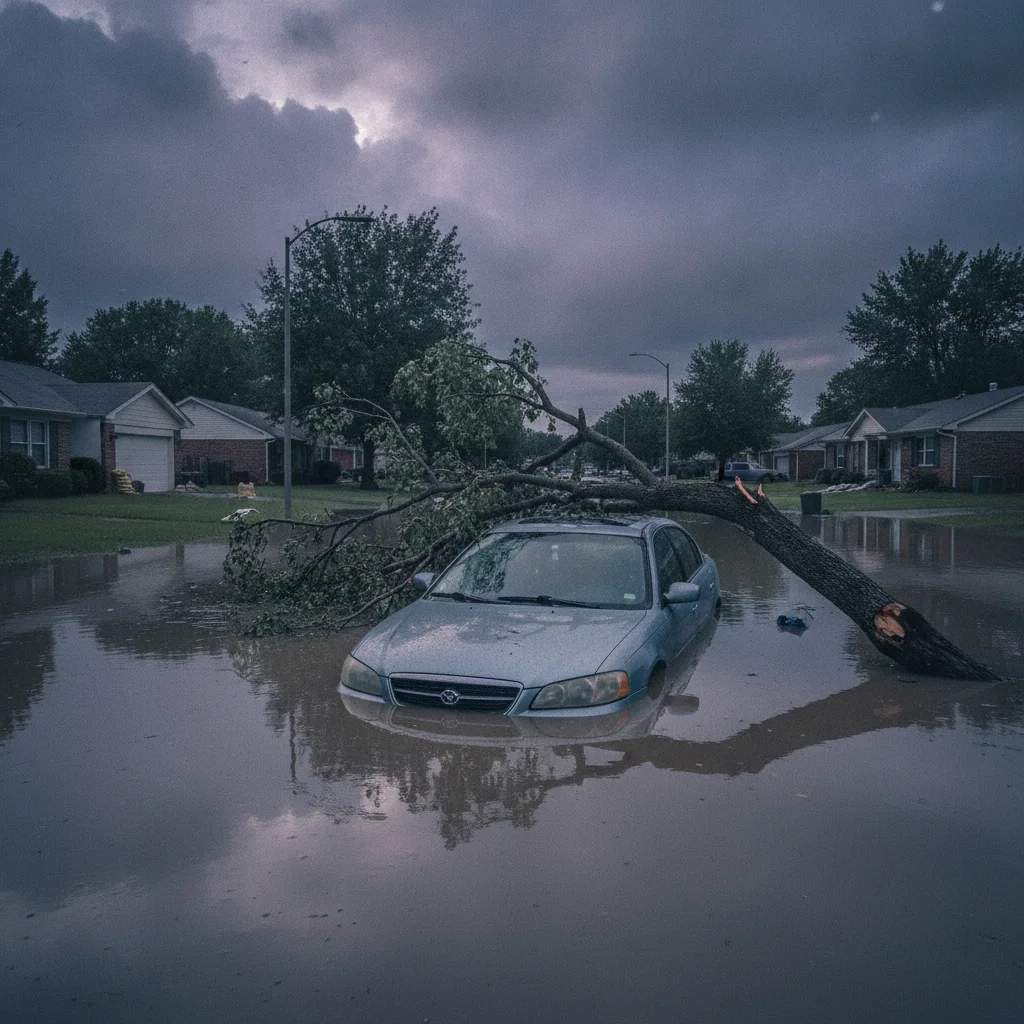
Hail, flooding, hurricane winds, tornadoes, and ice storms are among the most financially damaging non-collision events. A single severe hailstorm can dent every body panel, shatter a sunroof, and crack a windshield — potentially totaling the vehicle. Flooding can destroy electrical systems, corrode structural components, and create long-term reliability problems that depreciate a car far below its pre-flood value. All of it falls under comprehensive.
Fire
Whether caused by an electrical fault, arson, or a wildfire, fire damage to your vehicle is a comprehensive claim. This applies even if the fire started inside the car due to a wiring issue.
Falling Objects
A tree branch that crushes your roof during a windstorm is a comprehensive claim. So is a garage door that collapses onto your hood, or debris that falls from an overpass. The object came to your car — you didn't drive into it.
Vandalism and Civil Unrest
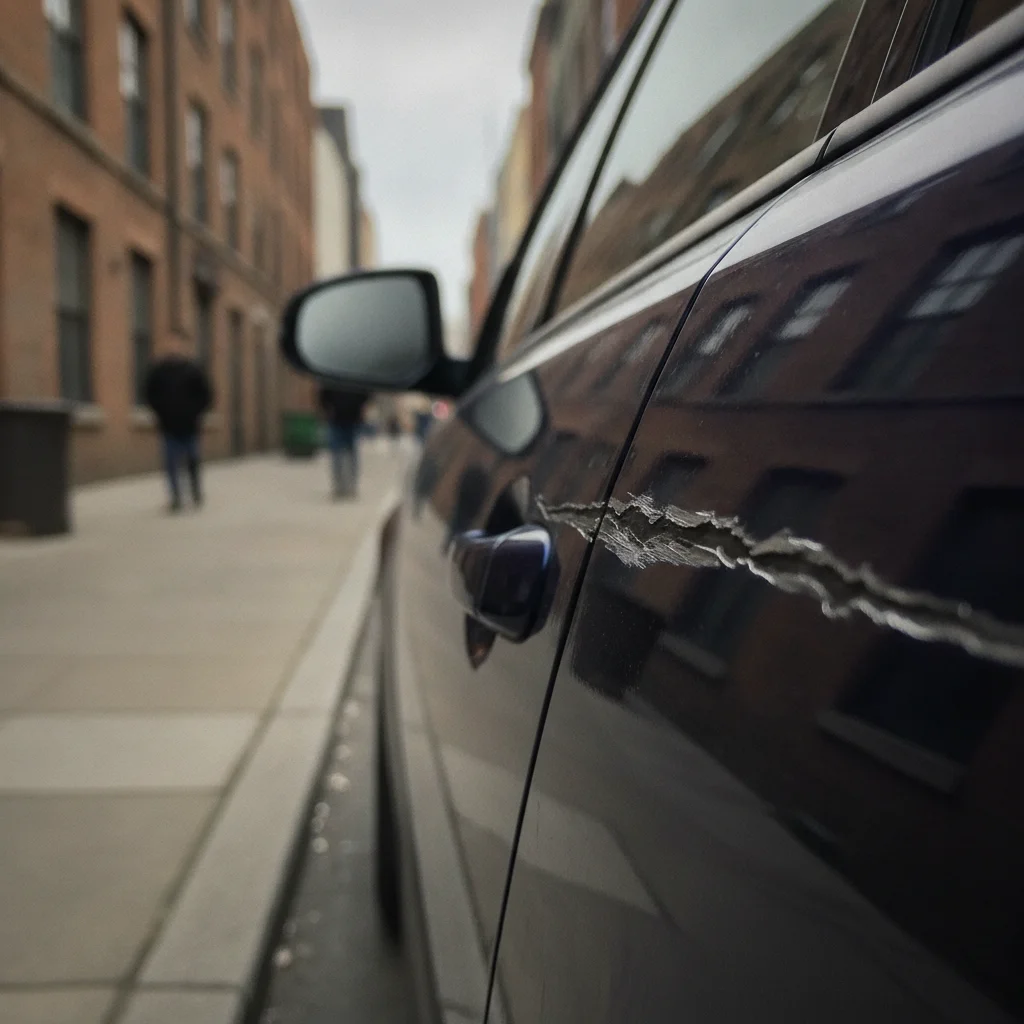
Keyed paint, smashed windows, and graffiti are all covered under comprehensive. Damage during a riot or civil disturbance — including fire damage to vehicles caught in unrest — also falls under this coverage. See situations where comprehensive coverage surprisingly applies for the full scope.
Animal Strikes
This is one of the most frequently misunderstood rules in auto insurance. Hitting a deer, elk, dog, or any other animal is not a collision claim — it's comprehensive. The logic is that an animal encounter is an uncontrollable environmental event, not a driving incident you navigated poorly. Animal collisions are the coverage question most drivers get wrong.
Glass Damage
A rock kicked up by a truck that cracks your windshield is a comprehensive claim. Many insurers offer a separate glass endorsement that waives your deductible specifically for windshield repairs — worth asking about if you spend significant time on highways.
$170–$190
Average annual comprehensive premium
According to the National Association of Insurance Commissioners, comprehensive coverage costs significantly less per year than collision on most vehicles.
1 in 88
Odds of a vehicle theft claim
The Insurance Information Institute estimates approximately 1 in 88 insured vehicles will be subject to a theft claim in any given year.
$1.3B+
Annual hail damage to vehicles
The Insurance Institute for Business & Home Safety estimates hail causes over $1 billion in vehicle damage in the United States each year.
2.1 million
Deer-vehicle collisions annually
State Farm estimates approximately 2.1 million deer-vehicle collisions occur each year in the U.S., nearly all of which are comprehensive — not collision — claims.
~$1,100
Average combined comp & collision premium
NAIC data shows the combined average annual cost of both physical damage coverages is typically under $1,200 nationally, though rates vary by state and vehicle.
When 'Comprehensive' Doesn't Mean Everything
Despite its name, comprehensive coverage is not all-inclusive. The term refers to the breadth of non-collision events it covers — not an unlimited protection guarantee. Mechanical failures, personal property inside the vehicle, and standard wear-and-tear are all excluded regardless of how the damage occurs. Reading your policy's declaration page carefully will show your exact coverage limits and exclusions.
Force-Placed Insurance Is Expensive
If you drop comprehensive on a financed vehicle and your lender discovers the lapse, they're entitled to purchase insurance on your behalf — called force-placed or lender-placed insurance. These policies typically cost significantly more than a standard comprehensive policy and protect the lender's interest, not yours. Maintaining continuous comprehensive coverage as required by your loan agreement avoids this outcome.
State-by-State Risk Varies Significantly
The value of comprehensive coverage isn't uniform across the country. States in the Gulf Coast hurricane corridor, the Midwest hail belt, and high-theft metro areas see disproportionately higher comprehensive claim rates. Drivers in lower-risk regions may find the coverage less critical, though theft and weather events can occur nearly anywhere.
What Collision Covers — and Why the Boundary Exists
Collision coverage activates when your car makes physical contact with a vehicle, object, or surface in a way that causes damage. The key principle is motion and impact — your vehicle was moving and struck something, or something moving struck your parked car.
Common collision scenarios include:
- Rear-ending another driver
- Being rear-ended while parked or stopped
- Swiping a guardrail or median barrier
- Rolling over
- Hitting a pothole hard enough to damage the undercarriage
- Backing into a pole, another vehicle, or a fence
The boundary between the two coverages exists because the risks are fundamentally different in nature and statistical profile. Collision is tied to driving behavior and traffic conditions. Comprehensive is tied to geography, local crime rates, climate, and environmental hazards. Keeping them separate allows insurers to price each risk independently — which is why your comprehensive premium may be lower in a rural low-crime area and higher in a coastal hurricane zone, while collision pricing is influenced more by your driving record.
For a complete explanation of when collision does and doesn't apply, see when collision coverage pays and when it doesn't.
The Financial Case for Carrying Comprehensive
Comprehensive coverage tends to be the cheaper of the two physical damage coverages. That makes dropping it feel tempting on older vehicles — but the math deserves a closer look.
“Comprehensive is the coverage most people never think about until they desperately need it. A hailstorm, a flood, a theft — none of those events care about your driving record. They happen to careful drivers and careless ones alike.”
— J. Robert Hunter, Former Director of Insurance, Consumer Federation of America
The standard rule is straightforward: if your annual comprehensive premium plus your deductible exceeds 10% of your vehicle's actual cash value, you're paying more for coverage than you'd likely collect on a claim. For a car worth $15,000, that threshold sits at $1,500 — a level most policies won't approach.
Where drivers often underestimate comprehensive's value is in low-probability, high-severity events. You might go fifteen years without a weather-related total loss. But if it happens, and the car is worth $22,000, the out-of-pocket cost without coverage is almost the full value of the vehicle.
High-risk regions add urgency to this calculation. If you live in Tornado Alley, a Gulf Coast flood zone, or a metro area with elevated auto theft rates, the full picture of comprehensive and collision insurance becomes more relevant, not less.
Check Your Car's ACV Before Dropping Comprehensive
Use Kelley Blue Book or NADA Guides to find your vehicle's current actual cash value before deciding whether to drop comprehensive. If your ACV is under $5,000, run the 10% rule: if your deductible plus annual premium exceeds 10% of that number, the coverage may cost more than it's worth. Reassess annually as the car continues to depreciate.
Consider a Lower Deductible in Hail-Prone Areas
If you live in a region where hailstorms are a seasonal reality — Oklahoma, Kansas, Colorado, or Texas, for example — a lower comprehensive deductible may pay for itself quickly. Hail damage is frequent enough in some zip codes that insurers price it into their regional rates, and a $250 deductible can be more economical than a $1,000 deductible over time.
What Comprehensive Specifically Does NOT Cover
Understanding the exclusions is just as important as knowing the coverage triggers. Comprehensive does not pay for:
- Collision damage — Any impact-based damage routes to your collision coverage, not comprehensive.
- Mechanical breakdowns — Engine failure, transmission problems, and wear-related repairs are excluded from both comprehensive and collision. A separate mechanical breakdown policy or extended warranty addresses these.
- Personal belongings stolen from your car — If someone smashes your window and steals a laptop, comprehensive covers the window repair. Your homeowners or renters insurance covers the stolen laptop.
- Rental car expenses — Comprehensive won't pay for a rental while your car is being repaired unless you've added rental reimbursement coverage. See optional add-ons like rental reimbursement for how to fill this gap.
- Medical expenses — Injuries to you or your passengers are handled by personal injury protection, medical payments coverage, or your health insurance, not comprehensive.
- Liability for damage to others — If you damage someone else's property, liability coverage handles that — not comprehensive.
Knowing these exclusions upfront helps you avoid surprises at claim time and identify gaps that other policy types can fill.
When Lenders Require Comprehensive — and What Happens Without It
No U.S. state mandates comprehensive coverage by law. That said, if you're financing or leasing a vehicle, your lender or leasing company almost certainly requires it contractually. The reason is straightforward: until you own the car outright, the lender has a financial stake in it. A vehicle totaled by a flood or destroyed by fire is collateral that's gone — and without comprehensive, they have no insurance recovery.
If you drop comprehensive on a financed vehicle without telling your lender, most loan agreements allow the lender to purchase force-placed insurance on your behalf — then bill you for it. Force-placed policies are typically more expensive and protect the lender's interest, not yours. Avoiding this scenario is a strong reason to maintain comprehensive for the life of your loan.
Once you own the vehicle outright, the decision is yours. That's the moment to run the actual cash value calculation and weigh whether the premium still makes financial sense given your car's depreciated value and your local risk environment.

Choosing the Right Deductible for Comprehensive
Like collision, comprehensive carries a deductible — the amount you pay out of pocket before insurance kicks in. Common deductible options are $250, $500, and $1,000, though some carriers offer $0 or higher tiers.
The relationship between your deductible and your premium is inverse: a higher deductible lowers your annual premium. But the right choice depends on how you intend to use the coverage.
Comprehensive claims tend to be smaller on average than collision claims — a cracked windshield or a door dented by hail often costs $800–$1,500 to repair. If your deductible is $1,000, you'd absorb most of that cost yourself. A lower deductible makes more sense if you're in an area prone to frequent smaller comprehensive losses like hail or rock chips.
Conversely, if you're primarily worried about a catastrophic event — a total loss from flooding or fire — a higher deductible on comprehensive can meaningfully reduce your annual cost while still protecting you from the worst-case scenario.
Check Your Car's ACV Before Dropping Comprehensive
Use Kelley Blue Book or NADA Guides to find your vehicle's current actual cash value before deciding whether to drop comprehensive. If your ACV is under $5,000, run the 10% rule: if your deductible plus annual premium exceeds 10% of that number, the coverage may cost more than it's worth. Reassess annually as the car continues to depreciate.
Consider a Lower Deductible in Hail-Prone Areas
If you live in a region where hailstorms are a seasonal reality — Oklahoma, Kansas, Colorado, or Texas, for example — a lower comprehensive deductible may pay for itself quickly. Hail damage is frequent enough in some zip codes that insurers price it into their regional rates, and a $250 deductible can be more economical than a $1,000 deductible over time.
Whatever deductible you choose, make sure it's an amount you can realistically access quickly. Insurance claims move faster than most people expect, and having the deductible ready avoids delays in getting your vehicle repaired or replaced.
Comprehensive and Collision Together: When You Need Both
Most drivers who carry one physical damage coverage should carry both. The reason is coverage gaps: comprehensive handles everything collision ignores, and vice versa. A policy with only comprehensive would leave you exposed every time you drive. A policy with only collision would leave you unprotected from theft, storms, and environmental hazards.
Lenders typically require both. And for any vehicle worth more than a few thousand dollars, carrying both tends to be the sound financial decision. The combined annual cost of comprehensive and collision averaged around $1,100–$1,200 nationally as of recent NAIC data — less than most Americans spend on a single month of car payments.
The cases where dropping one or both makes sense are fairly specific: older vehicles approaching end of life, cars you're planning to sell imminently, or secondary vehicles with very low actual cash value. In those situations, the math may favor carrying only liability.
For a complete guide to how both coverages work together, the end-to-end overview of collision and comprehensive insurance walks through every major scenario. And if you're comparing policy options side by side, this comparison of comprehensive vs. collision lays out what each one actually protects.
When 'Comprehensive' Doesn't Mean Everything
Despite its name, comprehensive coverage is not all-inclusive. The term refers to the breadth of non-collision events it covers — not an unlimited protection guarantee. Mechanical failures, personal property inside the vehicle, and standard wear-and-tear are all excluded regardless of how the damage occurs. Reading your policy's declaration page carefully will show your exact coverage limits and exclusions.
Force-Placed Insurance Is Expensive
If you drop comprehensive on a financed vehicle and your lender discovers the lapse, they're entitled to purchase insurance on your behalf — called force-placed or lender-placed insurance. These policies typically cost significantly more than a standard comprehensive policy and protect the lender's interest, not yours. Maintaining continuous comprehensive coverage as required by your loan agreement avoids this outcome.
State-by-State Risk Varies Significantly
The value of comprehensive coverage isn't uniform across the country. States in the Gulf Coast hurricane corridor, the Midwest hail belt, and high-theft metro areas see disproportionately higher comprehensive claim rates. Drivers in lower-risk regions may find the coverage less critical, though theft and weather events can occur nearly anywhere.

All claims are backed by peer-reviewed research. Sources on request.