Key Takeaways
Option A
Collision Coverage
The coverage that responds when your car makes contact.
Best for: Drivers who want protection after accidents involving another vehicle, a guardrail, or any road impact.
Option B
Comprehensive Coverage
The coverage that handles everything the road doesn't cause.
Best for: Drivers who want protection from theft, weather events, animal strikes, and other non-collision perils.
If you're financing or leasing your vehicle
Both Collision and Comprehensive Coverage
Lenders require both coverages to protect their financial interest in the vehicle. Dropping either will violate your loan or lease agreement.
If you live in an area with high hail, flood, or wildfire risk
Comprehensive Coverage
Weather-related losses are among the most common comprehensive claims. Without it, a single severe storm can total your vehicle at your own expense.
If you drive frequently in heavy urban or highway traffic
Collision Coverage
More time on the road increases accident exposure. Collision coverage ensures a fender bender or multi-car crash doesn't leave you paying for all repairs out of pocket.
If your vehicle is older and low in market value
Neither — consider dropping both
When the combined annual premiums and deductible exceed what your car is worth, carrying physical damage coverage may not be financially rational.
If you park on city streets or in high-theft areas
Comprehensive Coverage
Comprehensive covers theft, break-in damage, and vandalism — risks that are elevated when a vehicle is parked in urban environments for extended periods.
The Core Distinction: What Triggers Each Coverage
Auto insurance terminology can feel deliberately opaque, but the collision versus comprehensive distinction is actually built around a straightforward question: what caused the damage? The answer to that single question determines which coverage applies — and which claim you'll file.
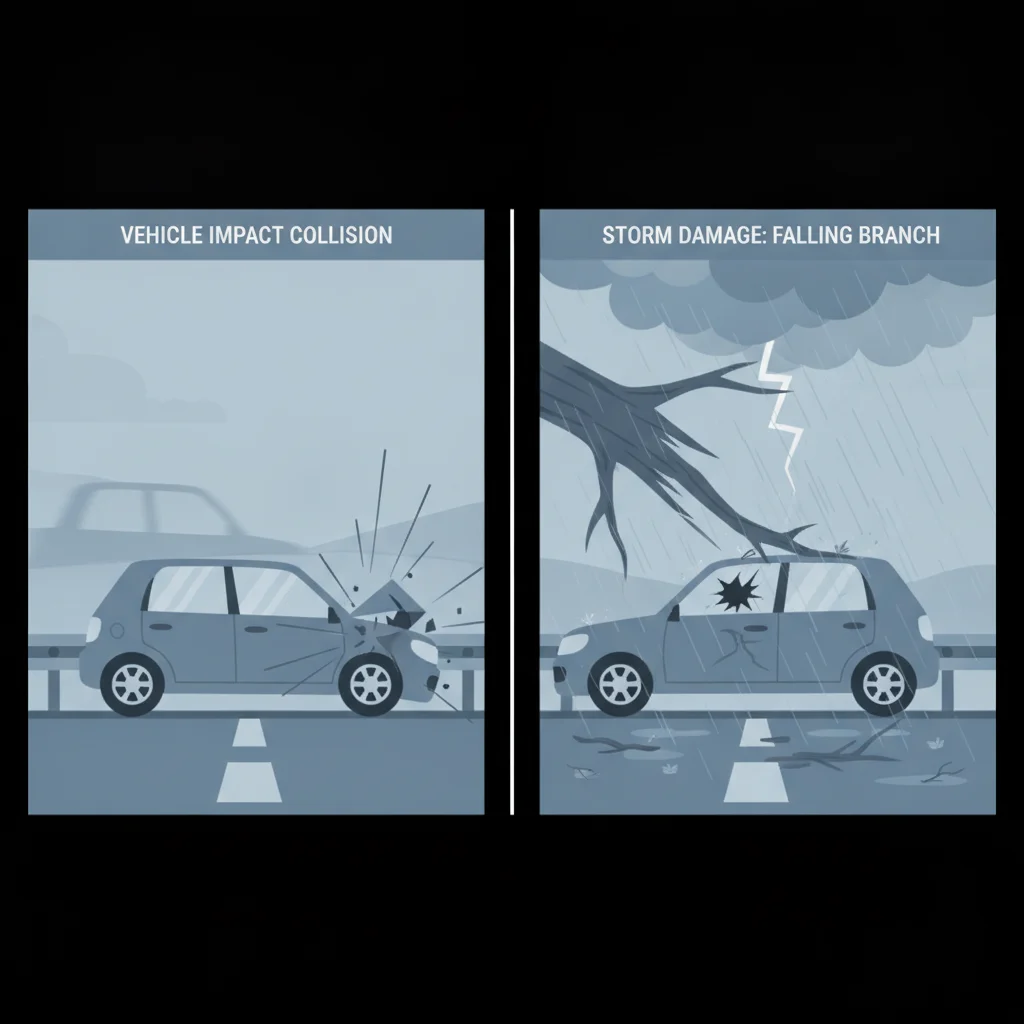
Collision coverage is triggered by physical impact. If your car strikes something — another vehicle, a pothole, a concrete barrier, a parked car — or rolls over, collision is the coverage that responds. The defining feature is contact between your vehicle and another object, regardless of speed or fault.
Comprehensive coverage, by contrast, is defined by what it isn't: it covers physical damage that is not caused by a collision. Insurers often describe it as covering damage from events outside a driver's control. That includes theft, fire, flood, hail, falling objects, animal strikes, and vandalism. If your windshield cracks because a rock bounced off the highway, comprehensive pays — not collision.
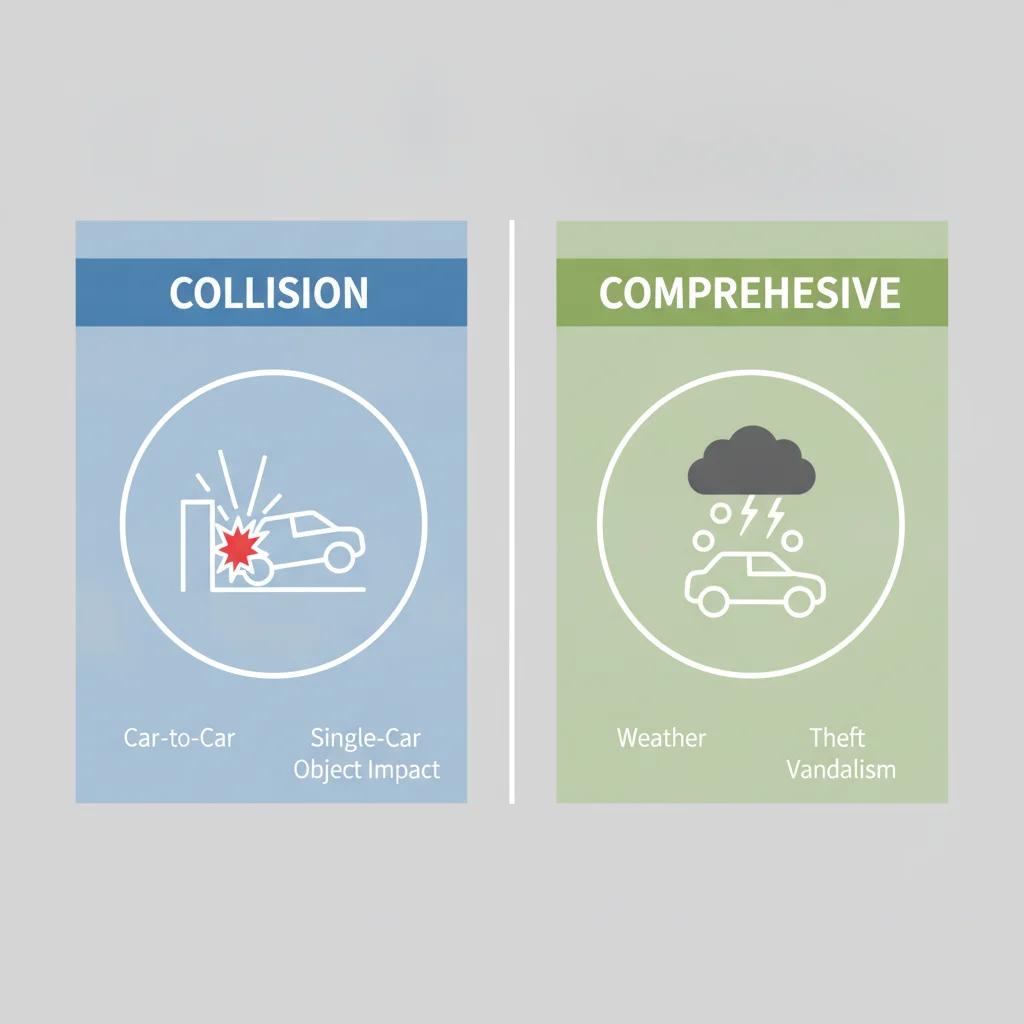
This distinction matters because you'll choose a separate deductible for each coverage, and the premium for each is priced independently based on different risk factors. Understanding the boundary between them isn't just academic — it directly affects what you pay and what you collect when something goes wrong.
For a broader look at how these coverages fit into a full auto policy, see our end-to-end guide to physical damage insurance.
What Collision Coverage Actually Pays For
Collision coverage is designed to repair or replace your vehicle after an impact event. Here are the specific scenarios it covers:
- Accidents with other vehicles: Whether you rear-end another car or get sideswiped on the freeway, collision pays for damage to your vehicle. The other driver's liability insurance may also be involved, but collision ensures your car is covered even if the other driver is uninsured or disputes fault.
- Single-vehicle accidents: Running off the road, hitting a guardrail, or striking a utility pole all qualify. These are more common than many drivers expect — the NHTSA estimates that roughly 30% of fatal crashes involve only one vehicle.
- Rollovers: A vehicle that flips, regardless of what caused it, is considered a collision event.
- Pothole damage: Significant structural damage from a severe pothole — bent rims, suspension damage — can qualify as a collision claim, though insurers may scrutinize these carefully.
- Parking lot impacts: If a hit-and-run driver damages your parked car and leaves the scene, collision coverage steps in since there's no at-fault party to pursue.
| Criterion | Collision Coverage | Comprehensive Coverage |
|---|---|---|
| Core trigger | Physical impact with object or vehicle | Non-collision event (weather, theft, fire) |
| Fault requirement | Pays regardless of fault | Fault not applicable — no driving involved |
| Typical deductible range | $250–$2,000 | $100–$1,500 |
| Average annual premium | Higher (~$400–$700 nationally) | Lower (~$150–$400 nationally) |
| Required by law | No | No |
| Required by lenders | Yes, on financed/leased vehicles | Yes, on financed/leased vehicles |
| Covers theft | No | Yes |
| Covers weather damage | No | Yes (hail, flood, wind) |
| Covers animal strikes | No | Yes |
| Covers rollover | Yes | No |
One thing collision does not cover: injuries to you or your passengers. Medical costs are handled by separate coverages like Personal Injury Protection or MedPay. For a comparison of those options, see PIP versus MedPay.
Collision also doesn't cover damage to the other driver's vehicle — that falls under your liability insurance. See liability coverage for how that side of a claim works.
To understand the specific triggers and exclusions in more detail, when collision coverage pays — and when it doesn't walks through the edge cases worth knowing.
What Comprehensive Coverage Actually Pays For
Comprehensive coverage is broader in category but narrower in the types of events most people think of day-to-day. It responds to damage from causes that have nothing to do with operating the vehicle on a road. Key covered scenarios include:
- Theft: If your vehicle is stolen and not recovered, comprehensive pays the actual cash value of the car minus your deductible. If it's recovered with damage, it covers repairs.
- Weather events: Hail, flooding, wind damage, ice, and tornado damage are all covered under comprehensive. In high-risk weather states, this coverage can be especially critical — a single hailstorm can cause thousands in panel and glass damage.
- Fire: Damage from fire, whether caused by an electrical fault, an external source, or arson, falls under comprehensive.
- Falling objects: A tree limb, a garage roof, or even debris from a highway overpass — if it falls on your car, comprehensive responds.
- Animal strikes: Hitting a deer is one of the most common comprehensive claims, particularly in rural and suburban states. Striking a large animal can cause severe front-end damage that runs well into thousands of dollars.
- Vandalism: Keyed paint, smashed windows, and slashed tires are typically covered under comprehensive.
- Civil disturbance: Damage from riots or civil unrest is generally a comprehensive event.
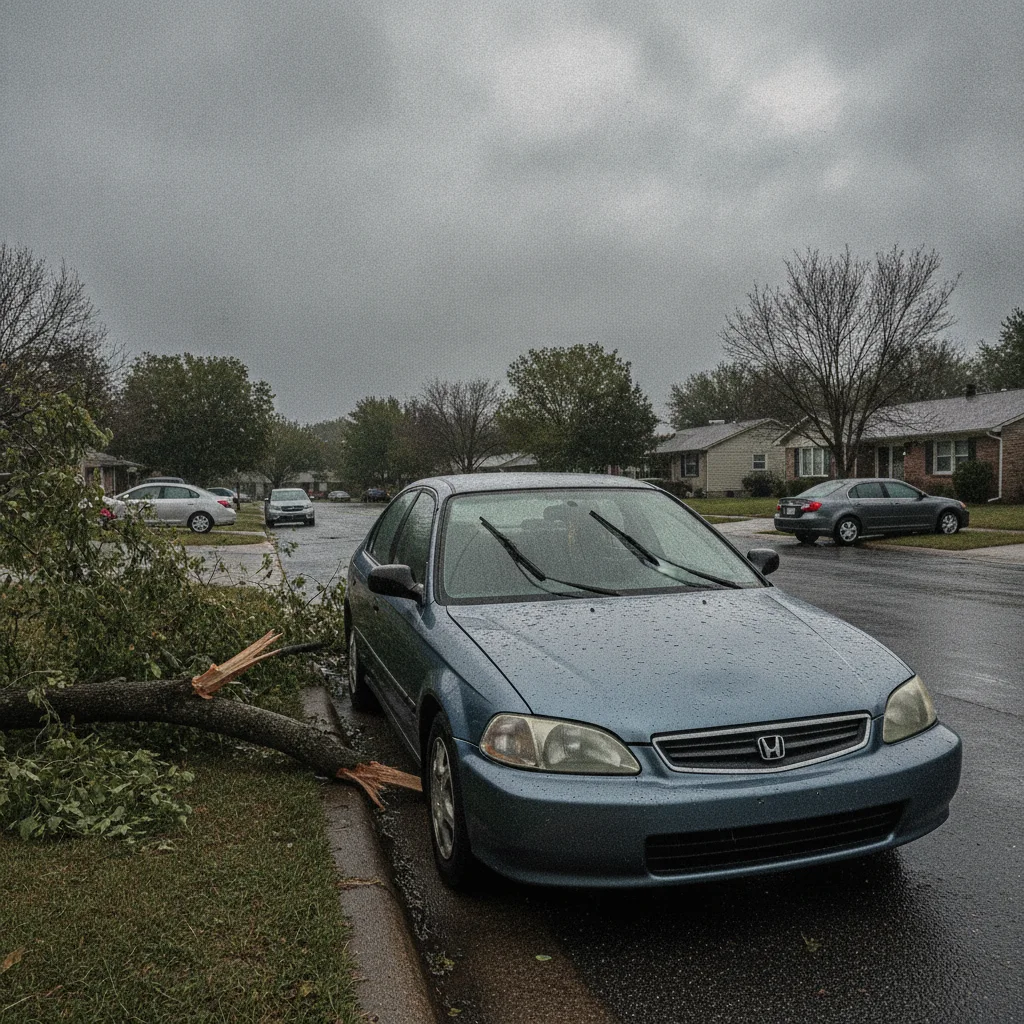
Some scenarios surprise drivers who haven't read their policies carefully. For a fuller accounting of unexpected covered events, situations where comprehensive surprisingly applies is worth reviewing.
Comprehensive does not cover mechanical failure, wear and tear, or any damage caused by colliding with another vehicle or object. Those distinctions matter when you're deciding which claim to file. What comprehensive covers that collision never will details the full list of perils unique to this coverage.
1 in 8
Drivers on U.S. roads are uninsured
According to the Insurance Research Council, approximately 12.6% of motorists carried no insurance as of the most recent national estimate — making collision coverage especially valuable for protecting your own vehicle.
$4,900+
Average deer strike collision repair cost
State Farm's annual deer collision report estimates average vehicle repair costs from deer strikes exceed $4,900, reinforcing why comprehensive coverage is financially significant for rural and suburban drivers.
~$700
Average annual collision coverage premium
The National Association of Insurance Commissioners reports that collision coverage represents the single largest component of most physical damage premiums paid by U.S. drivers.
77%
Insured drivers who carry comprehensive
According to the Insurance Information Institute, the majority of insured drivers maintain comprehensive coverage, reflecting both lender requirements and the broad range of risks it addresses.
Deductibles, Premiums, and What You'll Actually Pay
Both collision and comprehensive are subject to a deductible — the amount you agree to pay out of pocket before your insurer contributes. Deductibles are typically set independently for each coverage, commonly ranging from $250 to $2,000. Choosing a higher deductible reduces your premium but increases your exposure in the event of a claim.
In terms of relative cost, collision coverage tends to cost more than comprehensive for most drivers. That's because collision claims are more frequent — accidents happen more often than fires or hailstorms in most parts of the country. According to the Insurance Information Institute, the average annual collision premium in the U.S. runs roughly $50–$80 higher than the average comprehensive premium, though this varies significantly by location, vehicle, and driver profile.
Glass Claims and Comprehensive Deductibles
Many insurers offer a zero-deductible option specifically for glass claims under comprehensive coverage. If you live in a region with high road debris or frequently park under trees, this add-on can pay for itself quickly. Check your policy declarations page or contact your insurer to see if separate glass coverage is available or already included.
"Full Coverage" Isn't a Real Policy Term
When lenders or dealers say they require "full coverage," they mean collision and comprehensive in addition to your state-mandated liability limits. There is no single policy called full coverage — it's an informal shorthand. Assuming you have it without confirming both coverages are active on your declarations page is a common and costly mistake. For more on this misconception, see <a href="/car-insurance/coverage-types/collision-and-comprehensive/comprehensive-coverage-misconceptions-drivers-believe-too-often">common comprehensive coverage myths</a>.
Aftermarket Parts and Coverage Gaps
Standard collision and comprehensive policies typically reimburse based on factory-original part values. If your vehicle has aftermarket upgrades — custom wheels, audio systems, performance parts — standard physical damage coverage may not fully replace them. A separate endorsement for custom parts and equipment may be worth considering. <a href="/car-insurance/coverage-types/optional-add-ons/custom-parts-and-equipment-coverage-protecting-aftermarket-upgrades">Custom parts and equipment coverage</a> explains what this add-on protects.
Comprehensive premiums are more geographically sensitive. Drivers in states prone to severe weather, high deer populations, or urban theft tend to pay more for comprehensive than those in low-risk areas. Collision premiums, by contrast, are more strongly tied to your personal driving record and the traffic density of your area.
For drivers with older vehicles, the math of carrying both coverages deserves regular review. If your car's actual cash value (ACV) is $4,000 and you carry a $1,000 deductible on each coverage, the maximum you could collect from either is $3,000 — before considering that your premium payments are ongoing. Many financial advisors suggest revisiting this calculation when a car's value drops below $5,000–$6,000.
For key vocabulary around coverage limits and how payouts are calculated, this glossary of physical damage coverage terms explains ACV, total loss thresholds, and more.
When You're Required to Carry Both
For drivers who own their vehicle outright, collision and comprehensive are optional — no state requires them by law. But the moment a lender or lessor enters the picture, that changes.
Auto lenders and leasing companies routinely require both collision and comprehensive coverage as a condition of the loan or lease agreement. Their reasoning is straightforward: until you've paid off the vehicle, they have a financial interest in it. If the car is totaled or stolen and you have no physical damage coverage, the lender still expects to be repaid.
Failing to carry required coverages can trigger force-placed insurance — a policy the lender purchases on your behalf, typically at a significantly higher premium than you'd pay on your own, and offering protection for the lender rather than for you as the driver.
Even if you own your car free and clear, there are strong practical reasons to maintain both coverages if the vehicle has meaningful value. Our guide for new policyholders covers the basics of how these coverages work within a full auto policy structure.
Drivers of electric vehicles face an additional wrinkle: EV components — particularly battery packs — can be extraordinarily expensive to repair or replace. Both collision and comprehensive take on added financial significance in this context. See how these coverages apply to EVs for a breakdown of what's at stake.
Filing a Claim: Which Coverage Applies to Your Situation
Knowing which coverage to invoke when something happens to your car can save time and avoid a claim being processed incorrectly. The practical test is simple: ask what caused the damage.
- A deer ran into your hood → Comprehensive
- You backed into a pole in a parking garage → Collision
- Hail dented your roof and hood → Comprehensive
- You were rear-ended at a stoplight → Collision (or the at-fault driver's liability, if they're insured)
- A tree fell on your car during a storm → Comprehensive
- Your car was stolen → Comprehensive
- You skidded on ice and hit a snowbank → Collision
There are genuine edge cases that can cause confusion. A flood that sweeps a car off a road and into a barrier involves both weather and impact — generally, flood damage is a comprehensive event, but individual policy language may specify how compound scenarios are handled.
For a comprehensive scenario-by-scenario breakdown of which coverage applies in specific real-world situations, collision vs. comprehensive claims provides exactly that.
It's also worth noting that each claim will trigger its respective deductible — so if you have both types of damage from a single event, your insurer may apply both deductibles depending on how the damage is categorized.
If your policy includes optional add-ons like rental reimbursement or gap insurance, those can affect what you receive during and after a claim. Optional coverage add-ons explains how these extras interact with your core physical damage coverages.

All claims are backed by peer-reviewed research. Sources on request.