Key Takeaways
Comprehensive Coverage for Theft
Comprehensive auto insurance is the only standard coverage that pays out when your car is stolen. It covers non-collision losses — including theft, vandalism, fire, and weather damage — up to your vehicle's actual cash value, minus your deductible. Collision coverage, by contrast, only applies when your vehicle physically impacts another object.
In insurance terminology, theft is classified as a 'non-collision peril,' which places it squarely within the comprehensive coverage bucket. This distinction is defined in ISO standard auto policy language used by most U.S. carriers.
The Coverage Gap Most Drivers Don't Know About
Most drivers assume that having 'full coverage' means they're protected against just about anything. But that phrase is informal shorthand — there's no single policy product called full coverage. What people typically mean is a combination of liability, collision, and comprehensive insurance. And if one of those pieces is missing, real gaps exist.
Car theft exposes one of the most consequential of those gaps. Millions of Americans carry collision coverage — which pays to repair or replace your vehicle after an accident — but skip comprehensive. According to the Insurance Information Institute, approximately 20% of insured drivers carry liability-only coverage, and even among those who add collision, some opt out of comprehensive to lower their premium.
If your car is stolen and you don't have comprehensive, you walk away with nothing from your insurer. No repair payment. No replacement vehicle coverage. No reimbursement for the vehicle's value. Just a police report and a missing car.

Understanding exactly why theft falls under comprehensive — and not collision — is the first step to making sure you're not caught without the right protection.
Why Theft Is a Comprehensive Claim, Not a Collision Claim
The distinction between collision and comprehensive isn't arbitrary. It reflects a fundamental difference in how the loss occurs.
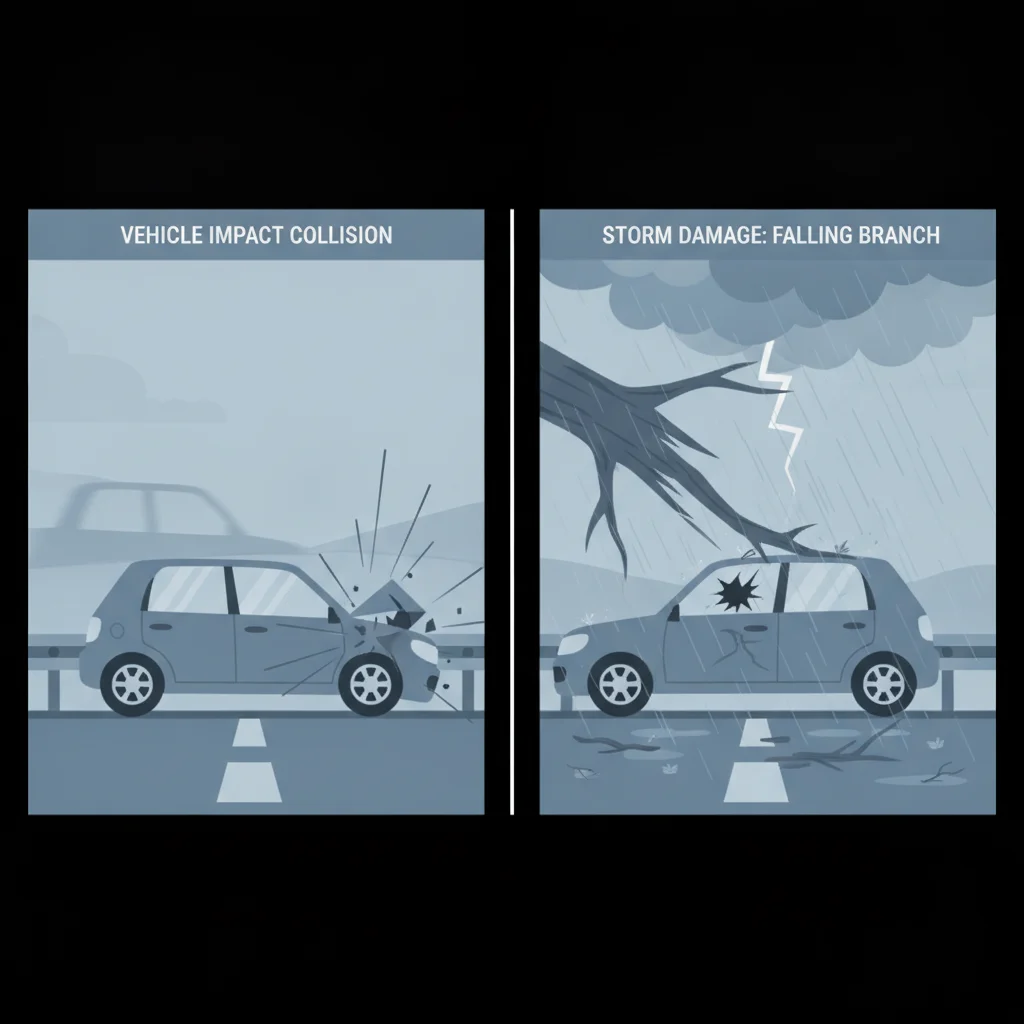
Collision coverage applies when your vehicle physically collides with something — another car, a guardrail, a tree, a pothole that causes damage. The defining characteristic is physical contact between your vehicle and an object.
Comprehensive coverage, by contrast, was designed for everything else. Insurers often call it 'other than collision' (OTC) coverage on policy documents. It applies to losses that happen to your vehicle through events outside your control that don't involve a collision. That includes:
- Theft of the entire vehicle
- Theft of parts (catalytic converters, wheels, mirrors)
- Vandalism
- Fire
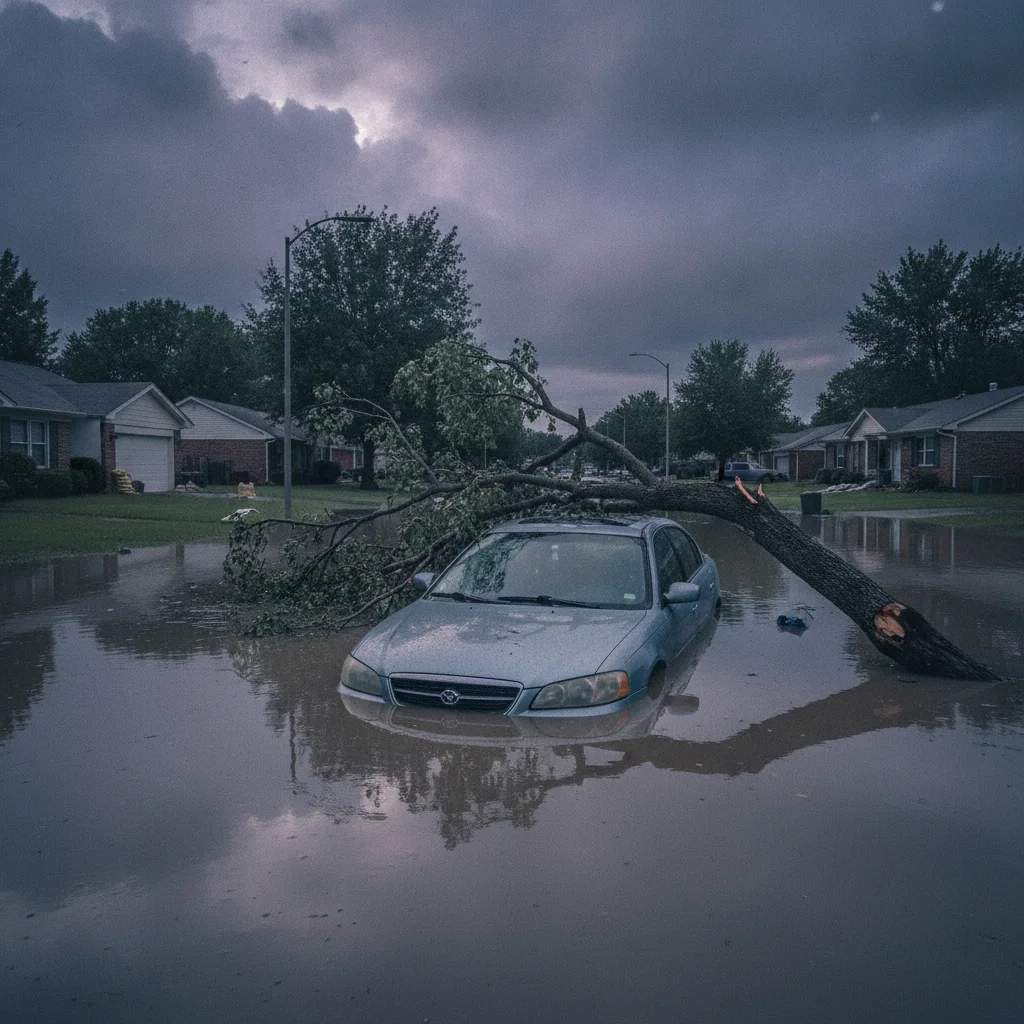
- Flooding and water damage
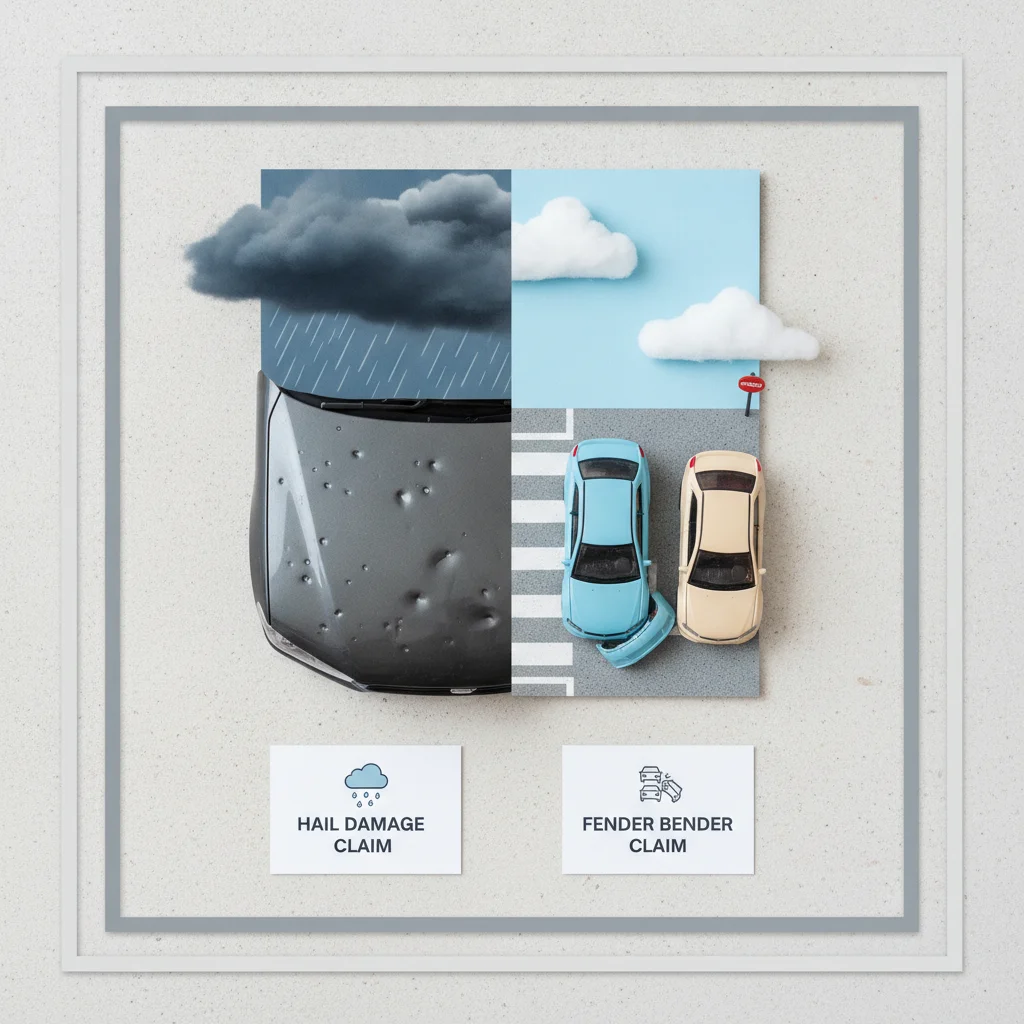
- Hail and other weather events
- Falling objects (trees, debris)
- Animal collisions (hitting a deer, for example)
When someone steals your car, there's no collision involved. Your vehicle simply disappears. That's exactly the type of unpredictable, non-impact loss that comprehensive was built to cover.
“Theft is the quintessential 'other than collision' event. You didn't do anything wrong, no impact occurred, but the loss is real and total. That's exactly why comprehensive exists — and why drivers who skip it often regret it the moment something like this happens.”
— Robert Hunter, Former Director of Insurance, Consumer Federation of America
See how collision and comprehensive compare across all loss types for a broader breakdown of what each policy is designed to handle.
When a Recovered Vehicle Is Damaged
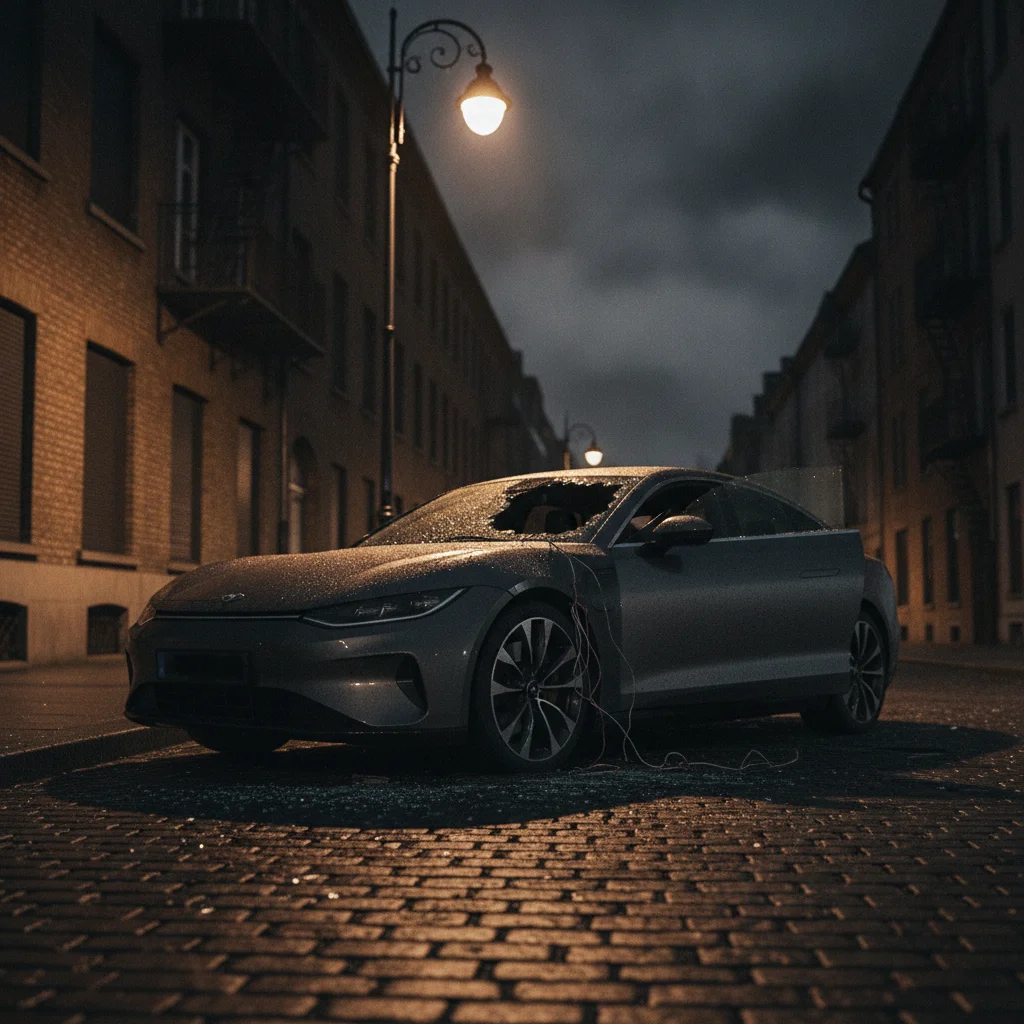
If your stolen car is recovered but sustained damage during the theft — broken windows, stripped interiors, damaged ignition — comprehensive still applies to those repair costs. If the vehicle was recovered after your insurer already paid out an ACV settlement, ownership of the vehicle typically transfers to the insurance company unless you buy it back.
Aftermarket Parts and Accessories
Standard comprehensive coverage generally pays for factory-equivalent replacement parts, not aftermarket upgrades you installed yourself. If you've added custom rims, a premium audio system, or other modifications, you may need a separate endorsement or scheduled personal property coverage to protect those additions. Always confirm this with your insurer before assuming upgraded parts are covered.
What Comprehensive Actually Pays After a Theft
Knowing that comprehensive covers theft is the first part. Understanding exactly what it pays — and what it doesn't — is equally important before a claim happens.
Actual Cash Value (ACV)
Comprehensive pays up to your vehicle's actual cash value at the time of the theft — not what you paid for it, and not what it would cost to buy a comparable new vehicle today. ACV accounts for depreciation, mileage, condition, and local market values. If you bought a vehicle for $28,000 three years ago and it has depreciated to $19,000, that $19,000 (minus your deductible) is the ceiling of what you'd receive.
1 every 32 sec
Rate of vehicle theft in the U.S.
According to FBI Uniform Crime Report data, a motor vehicle is stolen in the United States approximately every 32 seconds.
56%
Stolen vehicles eventually recovered
The National Insurance Crime Bureau (NICB) reports that roughly 56% of stolen vehicles are eventually located, though many are damaged upon recovery.
$9,166
Average theft loss per vehicle
The FBI's Crime in the United States report estimated the average dollar loss per stolen vehicle at approximately $9,166 in recent reporting years.
~$168/year
Average comprehensive premium cost
According to the National Association of Insurance Commissioners (NAIC), the average annual cost of comprehensive coverage in the U.S. is approximately $168, though this varies widely by location and vehicle.
$1,000–$3,000
Typical catalytic converter replacement cost
Catalytic converter theft — a fast-growing crime — typically costs owners between $1,000 and $3,000 to remedy, an expense covered under comprehensive.
Your Deductible Comes Out First
Whatever ACV your insurer calculates, your deductible is subtracted before the payout. If you chose a $500 deductible at policy purchase and your car's ACV is $19,000, you'd receive $18,500. Deductibles for comprehensive typically range from $100 to $1,000 — lower deductibles mean higher premiums, and vice versa.
What Comprehensive Doesn't Cover in a Theft
- Personal belongings inside the car — a stolen laptop or camera falls under renters or homeowners insurance, not auto.
- Gap between ACV and your loan balance — if you owe $22,000 on a car worth $19,000, you're responsible for the $3,000 difference unless you carry gap insurance.
- Rental car costs during the claim — unless you've added rental reimbursement coverage to your policy.
If your loan payoff exceeds your vehicle's ACV, gap insurance becomes critically important. You can learn more about that and other optional add-ons that fill coverage holes in your policy.
Consider Gap Insurance If You're Financing
If you financed your vehicle and still owe more than it's currently worth, comprehensive alone may not make you financially whole after a theft. Gap insurance covers the difference between your loan payoff and your vehicle's ACV payout — a critical layer of protection in the early years of a loan when depreciation is steepest.
Store Your Key Fob in an RFID-Blocking Case
Modern relay-attack theft uses signal amplifiers to clone your keyless fob signal, allowing thieves to unlock and start your car without physical access to the key. Storing your fob in a signal-blocking pouch or metal container when at home costs under $20 and eliminates this vulnerability entirely.
How the Theft Claims Process Works
A stolen car triggers a specific claims sequence that's somewhat different from a collision claim. Here's what typically happens:
- File a police report immediately. This is non-negotiable. Your insurer will require a copy of the report — including the report number and the officer's name — before processing the claim. Report the theft to the jurisdiction where the vehicle was stolen.
- Notify your insurer. Call your insurance company or file through the app or website as soon as possible. The sooner you open a claim, the sooner the process begins. Have your VIN, policy number, and police report information ready.
- Wait for the recovery window. Most insurers will wait 30 days before treating the vehicle as a total loss, giving law enforcement time to locate and recover it. About 56% of stolen vehicles are eventually recovered, according to National Insurance Crime Bureau data — though recovered vehicles are often damaged.
- Work with the adjuster. An adjuster will assess your vehicle's ACV using market data. You have the right to negotiate if you believe the valuation is too low — provide documentation like recent listings of comparable vehicles.
- Accept settlement or dispute it. Once you agree on value, your insurer issues payment minus your deductible. If you disagree with the ACV, most policies include an appraisal process or you can consult a public adjuster.

For guidance on how to determine which coverage applies to your specific situation, it helps to understand the claim type before you call your insurer.
The Liability-Only Trap: When You Have No Protection at All
State minimum auto insurance requirements cover liability — meaning they protect other people if you cause an accident. They do not protect your own vehicle under any circumstances.
A driver carrying only liability insurance who has their car stolen is left with absolutely no insurance coverage for the vehicle loss. There is no secondary payer, no state fund, and no exception. The financial hit is entirely personal.
This matters because car theft disproportionately affects lower-value vehicles, which are often the same vehicles whose owners have chosen liability-only coverage to keep premiums down. According to the NICB, older model vehicles — particularly from the early 2000s — consistently rank among the most frequently stolen, partly because they lack modern immobilizer technology.
The calculus on whether to add comprehensive should account for your vehicle's current ACV. If your car is worth $4,000, a comprehensive premium might run $150–$300 per year with a $500 deductible — that's meaningful protection for a relatively small additional cost. If your car is worth $800, the math shifts considerably.
See the full scope of what comprehensive covers beyond theft to understand whether adding it makes sense for your situation.
Partial Theft: When Parts Are Stolen Instead of the Whole Vehicle
Vehicle theft isn't always the headline-grabbing scenario of an entire car disappearing overnight. Increasingly, thieves target specific parts — and comprehensive typically covers those losses too, subject to your deductible.
Catalytic Converter Theft
Catalytic converter theft surged dramatically starting around 2020, driven by high precious metal prices (rhodium, palladium, and platinum are contained in converters). Replacement costs typically run between $1,000 and $3,000 depending on the vehicle. Comprehensive covers this damage, though you'll need to weigh the claim against your deductible.
Wheel and Tire Theft
Alloy wheels are a frequent target. When tires and wheels are stolen while the vehicle is parked, that loss falls under comprehensive, not collision. If the vehicle is damaged during the theft — a dropped jack damaging the rocker panel, for instance — comprehensive covers that accompanying damage as well.
Airbag Theft
A less obvious but growing problem, airbag theft has increased as components become more valuable in secondary markets. Comprehensive applies here as well, since the vehicle itself is being damaged by theft rather than a collision.
When a Recovered Vehicle Is Damaged
If your stolen car is recovered but sustained damage during the theft — broken windows, stripped interiors, damaged ignition — comprehensive still applies to those repair costs. If the vehicle was recovered after your insurer already paid out an ACV settlement, ownership of the vehicle typically transfers to the insurance company unless you buy it back.
Aftermarket Parts and Accessories
Standard comprehensive coverage generally pays for factory-equivalent replacement parts, not aftermarket upgrades you installed yourself. If you've added custom rims, a premium audio system, or other modifications, you may need a separate endorsement or scheduled personal property coverage to protect those additions. Always confirm this with your insurer before assuming upgraded parts are covered.
Understanding the full range of what comprehensive protects — from falling objects to stolen parts — clarifies why this coverage is worth carrying beyond just the complete-theft scenario.
How to Reduce Your Theft Risk and Your Comprehensive Premium
Comprehensive insurance responds after a theft happens. But reducing the likelihood of theft in the first place is both a safety and a financial strategy — because anti-theft features can also lower what you pay for comprehensive coverage.
Anti-Theft Discounts
Many insurers offer discounts of 5% to 25% on comprehensive premiums for vehicles equipped with qualifying anti-theft devices. These include:
- Factory-installed immobilizers and alarm systems
- GPS tracking devices (like LoJack)
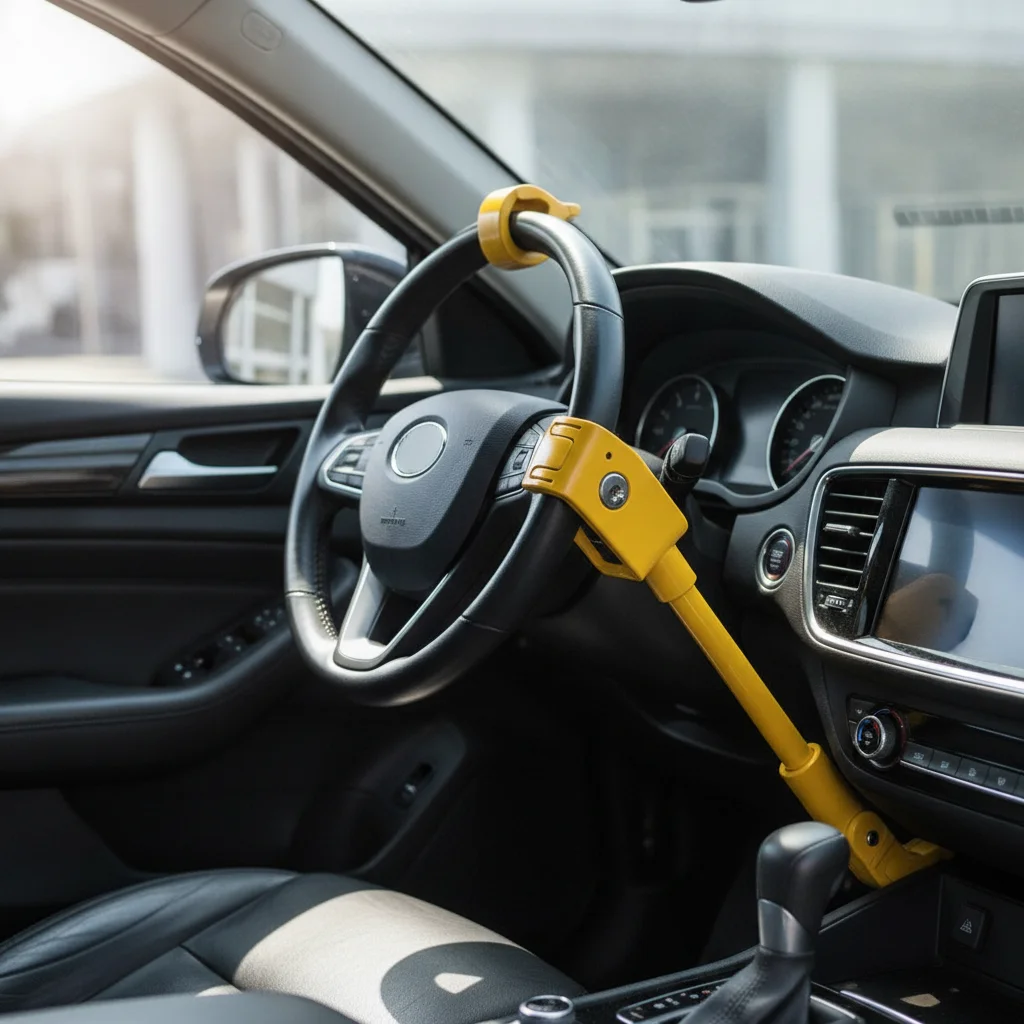
- Steering wheel locks and brake pedal locks
- VIN etching on windows and parts
How anti-theft devices affect your insurance premium varies by carrier and device type — it's worth asking your insurer specifically which technologies qualify for a discount.
Parking and Behavior
Beyond hardware, parking in well-lit, monitored areas and never leaving your vehicle running unattended ('puffing') dramatically reduces theft exposure. Many modern thieves use signal amplifiers to exploit keyless entry systems — keeping your key fob in an RFID-blocking pouch when at home eliminates that vulnerability entirely.
Consider Gap Insurance If You're Financing
If you financed your vehicle and still owe more than it's currently worth, comprehensive alone may not make you financially whole after a theft. Gap insurance covers the difference between your loan payoff and your vehicle's ACV payout — a critical layer of protection in the early years of a loan when depreciation is steepest.
Store Your Key Fob in an RFID-Blocking Case
Modern relay-attack theft uses signal amplifiers to clone your keyless fob signal, allowing thieves to unlock and start your car without physical access to the key. Storing your fob in a signal-blocking pouch or metal container when at home costs under $20 and eliminates this vulnerability entirely.
Know Your Vehicle's Risk Profile
Some vehicles are significantly more theft-prone than others based on NICB and NHTSA data. If your current or prospective vehicle appears on high-theft lists, your comprehensive premium will reflect that elevated risk. See how theft statistics feed directly into your comprehensive rate before purchasing a vehicle that could cost you more to insure than you'd expect.
Making the Right Coverage Decision
The central lesson here is straightforward but has real financial stakes: if your car is stolen and you don't have comprehensive coverage, your insurer owes you nothing. No amount of collision coverage, liability limits, or optional add-ons fills that gap.
For most drivers — especially those financing or leasing a vehicle — carrying comprehensive alongside collision is the standard expectation, often mandated by the lender. But even for drivers who own their vehicles outright, dropping comprehensive to save on premiums is a trade-off that deserves clear-eyed analysis.
Ask yourself: If my vehicle were stolen tonight and never recovered, could I absorb that financial loss out of pocket? If the answer is no, comprehensive coverage is the only protection that exists.
Understanding what both comprehensive and collision cover — and what each one is not designed for — gives you the foundation to build a policy that actually matches your real-world risk.

All claims are backed by peer-reviewed research. Sources on request.