Key Takeaways
Why Insurance Myths Are Especially Dangerous at Claim Time
Most drivers don't think too hard about their auto insurance until they actually need to use it. That's completely understandable — coverage can be dense, jargon-heavy, and frankly easy to put off. The problem is that the moment you're standing at the scene of an accident, or waiting for an adjuster's call, is the worst possible time to discover your assumptions were wrong.
Some myths are harmless. Thinking a red car costs more to insure won't affect you much day-to-day. But other misconceptions — like believing you must give a recorded statement immediately, or that your insurer will automatically cover a rental car — can directly affect how much money you walk away with after a claim.
The goal here isn't to make you an insurance expert. It's to clear up the specific myths that cause real financial harm during the claims process, so you're not caught off guard when it matters most. If you want to also look at how myths affect your premiums more broadly, our guide to rate factor myths covers that territory well.

Let's go through the most common — and most costly — misconceptions one by one.
The Myths That Shape (and Damage) Claims Outcomes
These aren't obscure edge cases. These are the beliefs that come up again and again in real claims situations — and that lead drivers to make choices that cost them money or delay their settlements.
Myth
Red cars cost more to insure because insurers charge more for certain colors.
Fact
Insurers do not track or rate vehicles by color — it has no effect on your premium whatsoever.
This is one of the most persistent myths in auto insurance, and it's completely false. When you apply for coverage, insurers collect your vehicle's VIN, make, model, year, and trim level. Color is never part of the equation. What does affect your rate is the vehicle's safety record, repair cost history, theft rates for that model, and your own driving history.
The myth likely persists because red cars are associated with performance vehicles — and performance vehicles do sometimes cost more to insure, due to their higher repair costs and the driving profiles of their typical owners. But a red Honda Civic costs exactly the same to insure as a silver one. For a deeper look at what actually moves the needle on premiums, see our guide on rate factor myths.
Myth
You must use the repair shop your insurance company recommends, or your claim could be denied.
Fact
In most states, you have the legal right to choose your own repair shop — your insurer cannot force you to use a specific one.
Insurers often have networks of "preferred" or "direct repair" shops, and they'll steer you toward them — sometimes forcefully. These shops have pre-negotiated rates with the insurer, which benefits the company. But your right to choose your own repairer is protected in the vast majority of states.
That said, there are trade-offs. If you use a shop outside the insurer's network, they may not guarantee the repairs, and disputes over labor rates or parts can add time to the process. Using a preferred shop can speed things up. But if you have a trusted mechanic or body shop, you are not obligated to abandon that relationship just because your insurer prefers otherwise. If they suggest otherwise, ask for that in writing — you'll rarely get it, because it's generally not true.
Myth
Filing any claim will automatically raise your insurance rates.
Fact
Rate increases after a claim depend on fault, claim type, your insurer's policies, and your claims history — not just the act of filing.
Many drivers avoid filing legitimate claims out of fear that any claim will trigger a premium spike. The reality is more nuanced. At-fault accidents are more likely to raise your rates than not-at-fault ones. Comprehensive claims — like a broken windshield or hail damage — often have little to no rate impact at many insurers. And some companies offer accident forgiveness, which means a first at-fault incident won't affect your premium at all.
That said, frequency matters. Multiple claims in a short period — regardless of fault — can signal risk to your insurer and may result in a rate increase or even non-renewal. Before you file a minor claim, it's worth weighing the repair cost against the potential long-term premium impact. Our article on the hidden costs of small claims walks through exactly that math.
Myth
Your liability coverage will pay to repair your own car if you cause an accident.
Fact
Liability coverage pays for damage and injuries you cause to others — it does not cover your own vehicle or your own medical bills.
This is a dangerous misunderstanding that leaves drivers financially exposed. Liability insurance is legally required in nearly every state, and for good reason — it protects other people when you're at fault. But it does nothing for your car.
To have your own vehicle covered in an at-fault accident, you need collision coverage. To cover your own medical expenses, you need either personal injury protection (PIP), medical payments coverage, or health insurance that applies to car accidents. Drivers who carry only the state minimum liability coverage and then cause an accident often discover they have no path to vehicle repair or medical reimbursement through their auto policy.
If you're not sure what your policy actually covers, your declarations page — the summary document your insurer sends with each renewal — is the fastest way to check.
Myth
If the accident wasn't your fault, the other driver's insurance will quickly pay for everything.
Fact
Third-party claims can be slow, disputed, and limited — your own insurer may be a faster and more reliable path to resolution.
In a not-at-fault accident, it seems logical to go straight to the at-fault driver's insurance. And sometimes that works smoothly. But you're dealing with an insurer whose financial interest is to minimize what they pay out — and you're not their customer. They have less urgency to resolve your claim quickly.
A faster path is often to file with your own insurer under your collision coverage, pay your deductible, and let your insurer pursue the at-fault party through a process called subrogation. If they recover the money, you typically get your deductible refunded. This approach puts your own insurer — who does have a duty to you — in charge of the process.
There's also the uninsured motorist angle: if the at-fault driver has no insurance or insufficient coverage, your own uninsured/underinsured motorist coverage becomes essential. About 1 in 8 drivers on U.S. roads is uninsured, which makes this coverage more than a theoretical concern.
Myth
Your insurer will provide a rental car while your vehicle is being repaired after a claim.
Fact
Rental reimbursement is an optional add-on — without it, you're paying for your rental car out of pocket.
Many drivers assume rental coverage is standard. It isn't. Rental reimbursement is typically a separate endorsement you opt into — often for just a few dollars per month — that covers a daily rental rate up to a specified limit while your car is in the shop. Without it, you're on your own.
One important caveat: if another driver was at fault and their insurer accepts liability, that insurer may provide rental coverage as part of your claim against them. But if you're filing under your own collision coverage, or if liability is disputed, you'll need your own rental reimbursement coverage to avoid paying out of pocket for days or weeks of rental fees.
Before your next renewal, review the optional add-ons available on your policy — rental reimbursement is one of the highest-value, lowest-cost options most drivers overlook.
Myth
You must give the other driver's insurer a recorded statement right away, or they can deny your claim.
Fact
You are not legally required to give a recorded statement to the opposing insurer — and doing so without preparation can hurt your claim.
After an accident, you may receive a call from the at-fault driver's insurance company asking for a recorded statement. They'll often imply it's required to process the claim. It isn't — at least not immediately, and not to their insurer. You have no contractual obligation to the other party's insurance company.
Recorded statements taken shortly after an accident — when you're still processing what happened — can be used to minimize or deny your claim if your account differs in any way from later statements or evidence. It's entirely reasonable to tell the opposing insurer you'd like to consult with your own insurer or an attorney before providing a recorded statement.
Your own insurer is a different matter: your policy likely does require cooperation with their investigation, which may include a recorded statement. But even then, you don't have to do it immediately, and you can ask for guidance first. See our companion article on accident myths drivers still believe for more on protecting yourself in the aftermath of a crash.
Myth
If your car is totaled, the insurance company will pay off whatever you still owe on your loan.
Fact
Your insurer pays the car's actual cash value — which may be significantly less than your loan balance.
When a vehicle is declared a total loss, your insurer pays its actual cash value (ACV) — the market value of the car at the time of the accident, accounting for depreciation. If you bought the car new two years ago and still owe $22,000, but the ACV is $17,000, your insurer writes you a check for $17,000. The remaining $5,000 is still your debt.
This is exactly what gap insurance is designed to address. Gap coverage pays the difference between the ACV payout and your outstanding loan or lease balance. It's typically inexpensive — especially when bundled through your lender or insurer at the time of purchase — and it can prevent a genuinely devastating financial situation after a total loss.
If you're not sure whether you're carrying gap coverage, check your policy declarations page or call your insurer. If you're currently underwater on your vehicle loan — meaning you owe more than the car is worth — gap insurance should be considered essential, not optional.
1 in 8
U.S. drivers without auto insurance
According to the Insurance Research Council's 2023 report, approximately 14% of drivers on American roads are uninsured, making uninsured motorist coverage a practical necessity.
57%
Drivers who don't read their full policy
A 2022 J.D. Power study found the majority of auto insurance customers have never fully read their policy documents, leaving them unaware of key exclusions and optional coverages.
$3,200
Average gap between ACV and loan balance at total loss
Industry data from Experian and LexisNexis suggests new car buyers can face thousands in uncovered loan balance when a vehicle is totaled in the first two years of ownership.
40%
Policyholders without rental reimbursement coverage
According to the National Association of Insurance Commissioners (NAIC), a significant share of auto policyholders forgo rental reimbursement despite its low cost and high utility during claims.
Each of these myths thrives because there's usually a grain of truth somewhere — or because the insurance system is genuinely confusing in that area. The good news is that once you understand what's actually true, you're in a much stronger position.
Before You File: What You Should Know About Your Coverage
Many claim problems start not at the claims desk, but months earlier — when a driver picked their policy without fully understanding what they were buying. Two areas trip people up most often: physical damage coverage and add-ons.
Physical Damage Coverage Is Not One-Size-Fits-All
Collision and comprehensive aren't interchangeable. Collision pays when your car hits something or is hit while parked. Comprehensive covers theft, weather, falling objects, and fire. If you only have one and not the other, you could be paying out of pocket for a loss you thought was covered. Our in-depth piece on underinsuring your vehicle walks through the most common physical damage mistakes in detail.
Optional Add-Ons Matter More Than Drivers Realize
Rental reimbursement, gap insurance, and roadside assistance are often treated as nice-to-haves. But if your car is totaled and you owe more than its actual cash value, gap insurance is the only thing standing between you and a four-figure shortfall. Similarly, rental reimbursement coverage — often just a few dollars a month — becomes essential when your car is in the shop for two weeks. See what's available under optional add-ons before your next renewal.

Switching Insurers After a Claim Can Backfire
If you're frustrated with your insurer's claims handling and considering switching, timing matters. Canceling a policy mid-claim or right after a loss can create complications with your claim's resolution and may show up as a gap in your coverage history. Before making a move, make sure your current claim is fully settled. Our guide on <a href="/car-insurance/claims-and-policies/policy-management/myths-about-canceling-car-insurance-that-could-cost-you">myths about canceling auto insurance</a> covers what to watch for.
Don't Delay Reporting a Claim — Even If You're Unsure
Many policies require you to report a loss within a reasonable time — and some specify exact windows. Waiting too long to file, even if you're still assessing damage or deciding whether to claim, can give your insurer grounds to complicate or deny the claim. When in doubt, report promptly and decide later whether to proceed. You can always withdraw a claim before it's processed, but you can't undo a reporting delay.
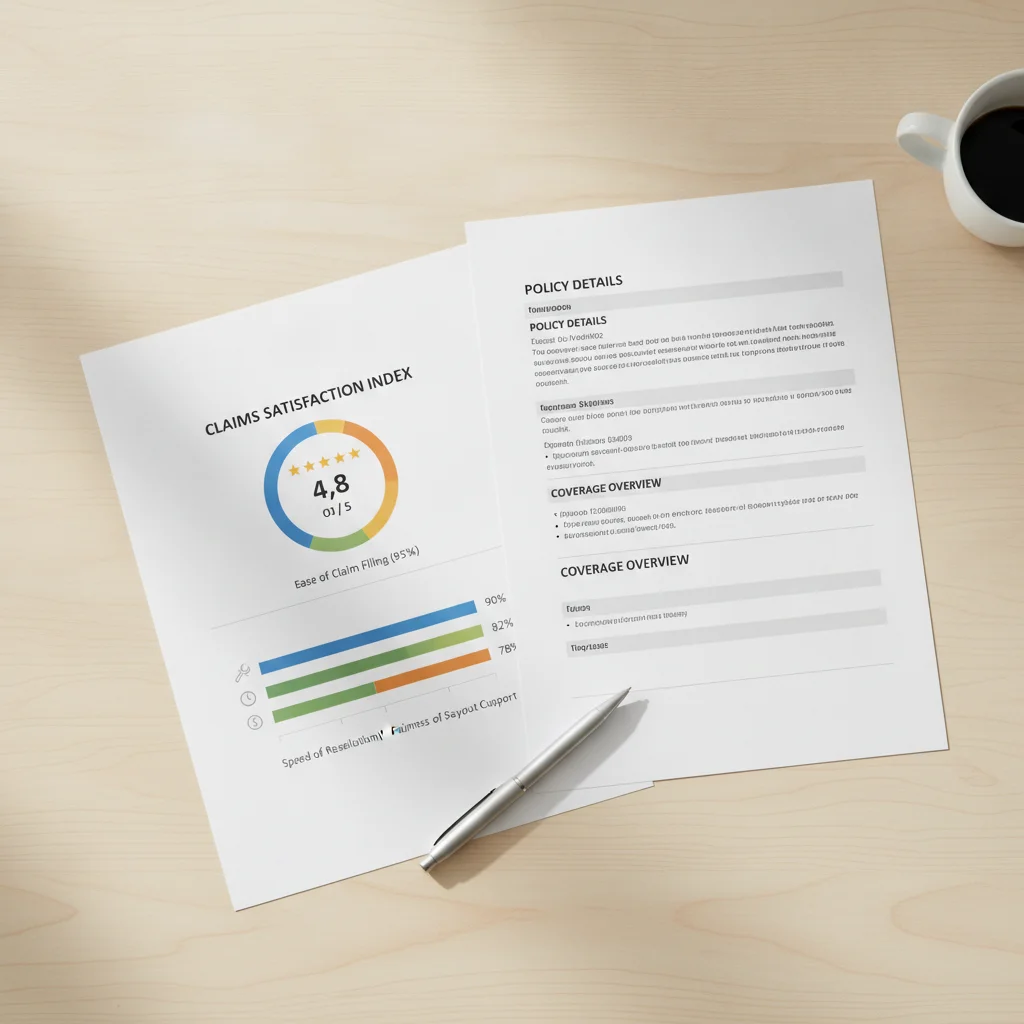
Finally, don't overlook the insurer itself. Price matters, but how a company handles claims matters more. Before you renew or switch, check claims satisfaction ratings — they're a better predictor of your real-world experience than the premium quote.
What to Do If Your Claim Is Denied or Your Rate Jumps
Even well-prepared drivers sometimes face denials or unexpected rate increases after a claim. Neither outcome is necessarily final.
A Denial Is Not Always the Last Word
Insurers deny claims for specific reasons — and those reasons are listed in your denial letter. Common causes include coverage exclusions, late reporting, or a determination that the loss falls outside your policy's scope. But denials can also result from errors or incomplete information. You have the right to appeal, and in many states, you can escalate to your state's insurance commissioner if the denial seems unjust. Our guide on what to do after a claim denial walks through your options step by step.
Small Claims Have Hidden Costs Too
On the flip side, not every claim is worth filing. A minor fender bender might cost $800 to repair — but if filing causes your premium to increase by $200 per year for three years, you've effectively paid $600 extra for a repair you could have handled out of pocket. The hidden costs of small claims are worth understanding before you pick up the phone to report a minor incident.

Gap Insurance Must Be in Place Before a Total Loss
Gap insurance cannot be added retroactively after an accident. If your vehicle is totaled and you don't already have gap coverage, you are responsible for any difference between the insurer's payout and your outstanding loan balance. This can amount to thousands of dollars. Review your policy now — especially if your car is less than three years old or you made a small down payment.
And if you're thinking about switching insurers after a bad claims experience, make sure you understand your options — and the risks. Certain myths about canceling auto insurance can create coverage gaps or penalties you didn't anticipate.
Building a Clearer Picture of Your Policy
The best time to understand your coverage is before you need it. That doesn't mean reading your entire policy from cover to cover — most people won't, and that's okay. But there are a few specific things worth knowing ahead of time.
- Your deductible amount — and whether you can afford it out of pocket right now
- Whether you have rental reimbursement — especially if you have only one car
- Your liability limits — and whether they're high enough to protect your assets in a serious accident
- Whether you have uninsured motorist coverage — since roughly 1 in 8 drivers on the road is uninsured
Discounts are another area where most drivers leave money on the table. Many people assume they're getting all the discounts they qualify for, but insurers rarely proactively apply every available discount. It's worth reviewing the discounts and deals you might be missing before your next renewal.
If you're also shopping for a used car and worried about insurance costs on older vehicles, our piece on used car myths addresses some related misconceptions that affect both the buying decision and the insurance picture.
Finally, if you drive an electric vehicle, the insurance landscape has its own set of misconceptions — from coverage assumptions to premium expectations. Our article on EV insurance myths is worth a read if that applies to you.
The Takeaway: Knowledge Is Your Best Claims Preparation
Auto insurance is one of those things that feels like a background detail — until it isn't. The myths covered here aren't just interesting trivia. They represent real decision points that drivers face during some of the most stressful moments of car ownership: right after an accident, on the phone with an adjuster, or waiting to find out if the insurer will total their car.
The reassuring truth is that most of these situations are more manageable than people fear — as long as you know what you're actually entitled to and what you're actually covered for. You don't need to memorize your policy. You just need to know where the gaps are, what questions to ask, and when to push back.
If you want to take that one step further, consider reviewing how misconceptions affect your premiums as well. Our guide on myths about cheap auto insurance covers the pricing side of the same problem. And for a broader look at how discount myths can quietly cost you, see auto insurance discount myths.
You've already taken the most important step: understanding what's actually true about your coverage before you need to use it.

All claims are backed by peer-reviewed research. Sources on request.