Key Takeaways
Why Claim Denials Are More Common Than You Think
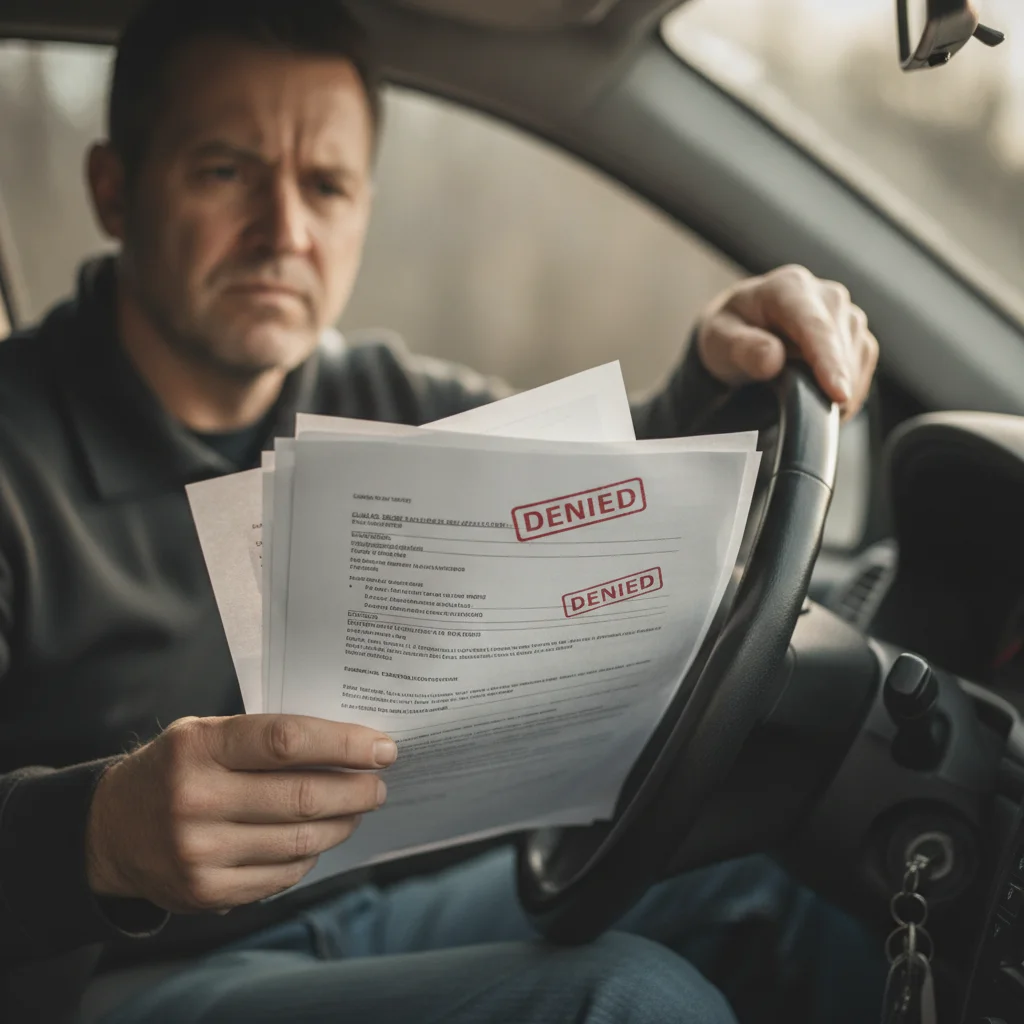
Getting a denial letter after filing an auto insurance claim can feel like a punch to the gut, especially if you've been paying premiums faithfully for years. The first reaction for most people is either resignation — assuming the insurer must be right — or frustration with no clear sense of what to do next. Both responses leave money on the table.
The reality is that claim denials happen for a wide range of reasons, and not all of them are airtight. Some denials are legitimate and reflect genuine gaps in your coverage. Others are based on missing documentation that you can actually provide. And some are incorrect — the result of a misapplied exclusion, an adjuster's error, or a judgment call that doesn't hold up when examined closely.
Understanding what actually happens after you file a claim is useful context here — knowing the process helps you identify where things went wrong. What matters right now is this: a denial is not automatically the final word, and the process for challenging one is more accessible than most drivers realize.

This guide walks you through that process step by step — from reading the denial letter correctly to knowing when it's time to bring in professional help. Whether your claim involves collision damage, liability, or another coverage type, the framework for responding is largely the same.
What you will need
Denial Letter
Identifies the specific reason(s) your claim was rejected — every step of the appeal process starts here.
Full Insurance Policy Document
Allows you to verify whether the denial reason actually aligns with your policy language.
Police or Incident Report
Provides third-party documentation of what happened, which supports your version of events.
Photographs and Video Evidence
Visual documentation of vehicle damage, road conditions, or the accident scene strengthens your appeal.
Independent Repair Estimate
A second estimate from a licensed shop can counter an insurer's low or disputed valuation.
Public Adjuster
A licensed professional who assesses damage independently and advocates on your behalf during disputes.
State Insurance Department Contact Information
Your state regulator can investigate complaints and intervene when insurers act improperly.
Licensed Attorney (Insurance or Bad Faith)
Legal counsel is valuable when an insurer refuses to honor a valid claim or acts in bad faith.
How to Challenge a Denied Claim
The process below works for most types of auto insurance claim denials. Move through each step in order — earlier steps build the foundation for later ones, and skipping ahead can weaken your position.
Read the Denial Letter Carefully — Word by Word
Before you react, slow down and read the denial letter in full. Insurers are legally required to state the specific reason for a denial, and that language matters more than you might expect. Look for the exact policy provision, exclusion, or condition they are citing.
Common reasons you'll see include:
- Policy exclusion: The type of damage or incident falls outside your covered perils
- Lapsed coverage: Your policy was not active at the time of the incident
- Failure to report timely: The claim was filed outside the required window
- Insufficient documentation: The insurer says there isn't enough evidence to support the claim
- Disputed fault: The insurer does not accept the liability picture as presented
- Vehicle use exclusion: The vehicle was being used for rideshare, delivery, or commercial purposes not covered under your personal policy
Write down every reason listed. If any language is unclear, note it — you'll be referencing this against your policy in the next step.
Pull Out Your Policy and Cross-Reference the Denial Reason
Your insurer's denial is only as valid as the policy language backing it up. Open your full policy document — not just the declarations page — and find the section they referenced. Read it carefully and ask yourself honestly: does their stated reason actually match what the policy says?
Insurers sometimes misapply exclusions or cite the wrong section. Coverage disputes often come down to interpretation, and policyholders who understand their own documents are far better equipped to push back.
Pay particular attention to:
- Definitions section: Words like "accident," "collision," "covered vehicle," and "insured" often have specific legal meanings in your policy that differ from everyday usage
- Exclusions section: These list what's not covered — verify that your situation actually meets the exclusion's criteria
- Conditions section: These describe what you were required to do — report promptly, cooperate with investigation, etc.
If you believe the denial reason doesn't hold up against your actual policy language, you have a strong foundation to appeal. See also: why collision claims get denied for a deeper look at how specific coverage gaps play out in practice.
Gather and Organize All Supporting Documentation
A successful appeal is built on evidence. Before you file anything, compile everything you have related to the incident and your claim. Organize it chronologically and keep originals safe while you work from copies.
Your documentation package should include:
- Police report or accident report number
- Timestamped photos and video of vehicle damage, road conditions, and the scene
- Repair estimates from one or more licensed shops
- Medical records or bills if injury is involved
- Witness statements or contact information
- Your own written statement of events
- Any communications with the insurer: emails, claim numbers, adjuster names, call logs
If the denial was based on insufficient documentation, this is your chance to fill those gaps specifically. Match each piece of evidence directly to the denial reason — don't just send a pile of papers and hope for the best.
[in_content_images:0]File a Formal Internal Appeal with Your Insurer
Every insurer is required to have an internal appeals process. This is your first formal step, and it's important to use it correctly because it also creates a paper trail that will matter if you escalate later.
Contact your insurer's claims department and ask specifically how to file a formal written appeal. Do not rely on a phone call alone — put your dispute in writing. Your appeal letter should:
- Reference your claim number and policy number clearly
- State the specific denial reason you are contesting
- Cite the relevant policy language you believe supports coverage
- List all attached supporting documents
- Request a written decision within a specified timeframe (typically 30 days)
Send your appeal by certified mail or email with read receipt — anything that creates a timestamp and delivery confirmation. Keep copies of everything you send.
Most insurers will assign a different claims representative or supervisor to review internal appeals, which means you're getting a fresh set of eyes on your situation.
Consider Hiring a Public Adjuster or Independent Appraiser
If the denial involves a valuation dispute — meaning the insurer says the damage doesn't meet your deductible, or they're undervaluing the loss — a licensed public adjuster or independent appraiser can be a meaningful asset.
A public adjuster works for you, not your insurer. They assess the damage independently, document losses thoroughly, and negotiate with the insurance company on your behalf. They typically charge a percentage of the final settlement, so weigh that cost against the potential recovery.
An independent appraisal is a formal process that many policies allow: you hire an appraiser, the insurer hires one, and both appraisers jointly select an umpire. If the two appraisers disagree, the umpire decides. This process can resolve valuation disputes without litigation.
Check your policy's appraisal clause — it often appears in the loss payment or settlement section — to see if this option is available to you.
File a Complaint with Your State Insurance Department
If your internal appeal goes nowhere, your state's insurance regulatory department is a powerful next step that many policyholders overlook. Every state has one, and their mandate includes investigating consumer complaints against insurers.
Filing a complaint is free and relatively straightforward — most states have online portals. Include your denial letter, your appeal correspondence, and a clear explanation of why you believe the denial is improper.
Regulators can't force an insurer to pay a disputed claim in every case, but they can:
- Require the insurer to formally respond and justify their decision
- Investigate whether the denial violates state insurance regulations
- Take enforcement action if the insurer is found to be acting in bad faith
Even the act of filing a complaint sometimes prompts insurers to revisit a denial. They know regulators are watching.
For context on how insurers can legally deny certain liability claims, see when liability insurance refuses to pay — understanding those boundaries helps you recognize when a denial crosses the line.
Consult an Attorney If Bad Faith Is Suspected
If your insurer is refusing to pay a claim that appears clearly valid under your policy, conducting an unreasonably long investigation, misrepresenting your policy language, or failing to respond to communications — these are potential signs of insurance bad faith.
Bad faith is a legal concept, and in many states, policyholders have the right to sue insurers who engage in it. Damages can extend beyond the original claim amount to include legal fees and, in some states, punitive damages.
An attorney who specializes in insurance disputes or bad faith claims can evaluate your situation and tell you whether you have a viable case. Many offer free consultations. If the amount at stake is significant and your insurer appears to be stonewalling without legitimate grounds, legal counsel is worth a conversation.
You can also look into your state's laws on prompt payment — many states require insurers to acknowledge, investigate, and resolve claims within specific timeframes. Violations of those timelines can support a bad faith claim.
Understanding Your Rights as a Policyholder
Most drivers don't know how much protection the law actually provides them in a claims dispute. Insurance is a regulated industry, and state laws impose real obligations on insurers — not just on policyholders. Here are the protections worth knowing about:
Right to a Written Explanation
Insurers are required by law in every state to provide a written explanation of any claim denial. That explanation must reference specific policy provisions or exclusions. A vague or generic denial is itself a potential compliance issue.
Right to an Internal Appeal
You have the right to request a formal reconsideration of any denied claim. The insurer must have a process for this, and their appeal reviewers are supposed to conduct an independent evaluation — not simply rubber-stamp the original decision.
Right to Regulatory Complaint
Your state insurance department exists partly to handle exactly this kind of situation. Filing a complaint costs nothing and puts your dispute on record with a body that has enforcement authority over your insurer.
Prompt Payment Laws
Most states have laws requiring insurers to acknowledge claims, complete investigations, and issue payment decisions within specific timeframes — often 15 to 45 days depending on the state and action required. If those deadlines are being missed, that's a regulatory issue.
Bad Faith Claims Are Legally Serious
If your insurer is delaying your claim without reason, misrepresenting your policy language, or refusing to pay a clearly covered loss, these behaviors may constitute insurance bad faith under your state's laws. Document every interaction carefully. In states with strong bad faith statutes, successful claimants can recover damages well beyond the original claim amount, including attorney's fees.
It's also worth understanding that some denials are preventable going forward. Common misunderstandings about how coverage works can put you in a weaker position when you need it most. Auto insurance myths that can cost you during a claim is a good read once you've resolved the current situation — it addresses misconceptions that trip up even experienced drivers.
Don't Accept a Partial Payment Without Understanding It
If your insurer offers you a partial settlement during an active dispute, accepting it may legally release them from further obligation on that claim. Before signing anything or accepting any payment, confirm in writing whether it is a partial payment or a full and final settlement. When in doubt, consult an attorney before you sign.
When the Denial Might Actually Be Correct
Part of navigating a denial well is being honest with yourself about what your policy actually covers. Some denials are correct, and accepting that early can save you significant time and frustration.
Here are situations where a denial is likely to stand even after an appeal:
- You had a lapse in coverage: If your policy wasn't active at the time of the incident — even for a single day — the denial is almost certainly valid. This is one of the most common and hard-to-reverse denial scenarios.
- The damage type is clearly excluded: Flood damage under a collision-only policy, or mechanical breakdown under any standard auto policy, are genuinely excluded and unlikely to be successfully appealed.
- You violated a policy condition: Failing to report an incident promptly, failing to cooperate with the insurer's investigation, or misrepresenting information on your application can all result in valid denials.
- The vehicle was used in an excluded activity: Driving for rideshare or delivery without the proper endorsement is a real gap that personal auto policies typically don't cover.
If your denial falls into one of these categories, the better use of your energy is understanding what went wrong and how to prevent it — whether that means adding an endorsement, setting up autopay to prevent lapses, or reviewing your policy more carefully. What causes claims delays is related reading that addresses how procedural missteps can compound a difficult situation.
On the other hand, if none of those situations apply and you genuinely believe the denial is wrong, work through the steps in this guide with confidence. The appeals process exists for exactly this reason.
Review Your Coverage Before the Next Incident
A denied claim is actually one of the best times to sit down with your policy and make sure it reflects your real-world situation. If you've added delivery driving, started a new commute, or bought a second vehicle, your coverage may need updating. A quick call with your agent now is far less painful than a denial later.

All claims are backed by peer-reviewed research. Sources on request.