Key Takeaways
Why Insurance Discount Myths Are So Expensive
Auto insurance is one of the largest recurring costs of car ownership, typically running $1,500 to $2,500 per year for full coverage depending on your state, vehicle, and profile. Discounts can legitimately knock 5% to 40% off that bill — but only if you know which ones exist, which ones you qualify for, and how to claim them.
The problem is that misconceptions about how insurance pricing and discounts work are everywhere. Some myths lead drivers to skip discounts they'd easily qualify for. Others cause drivers to assume they're already getting the best rate when they're not. A few myths are actively harmful — like the belief that loyalty to one insurer automatically earns you better pricing.
The myths below are the ones I see cause the most real financial harm. For each one, I'll tell you what drivers believe, what's actually true, and what you can do about it. If you want the full map of legitimate discounts available, this comprehensive discount guide is a good companion read.
The Myths, Debunked
Let's work through the most damaging misconceptions — starting with the one that's been floating around since the 1960s.
Myth
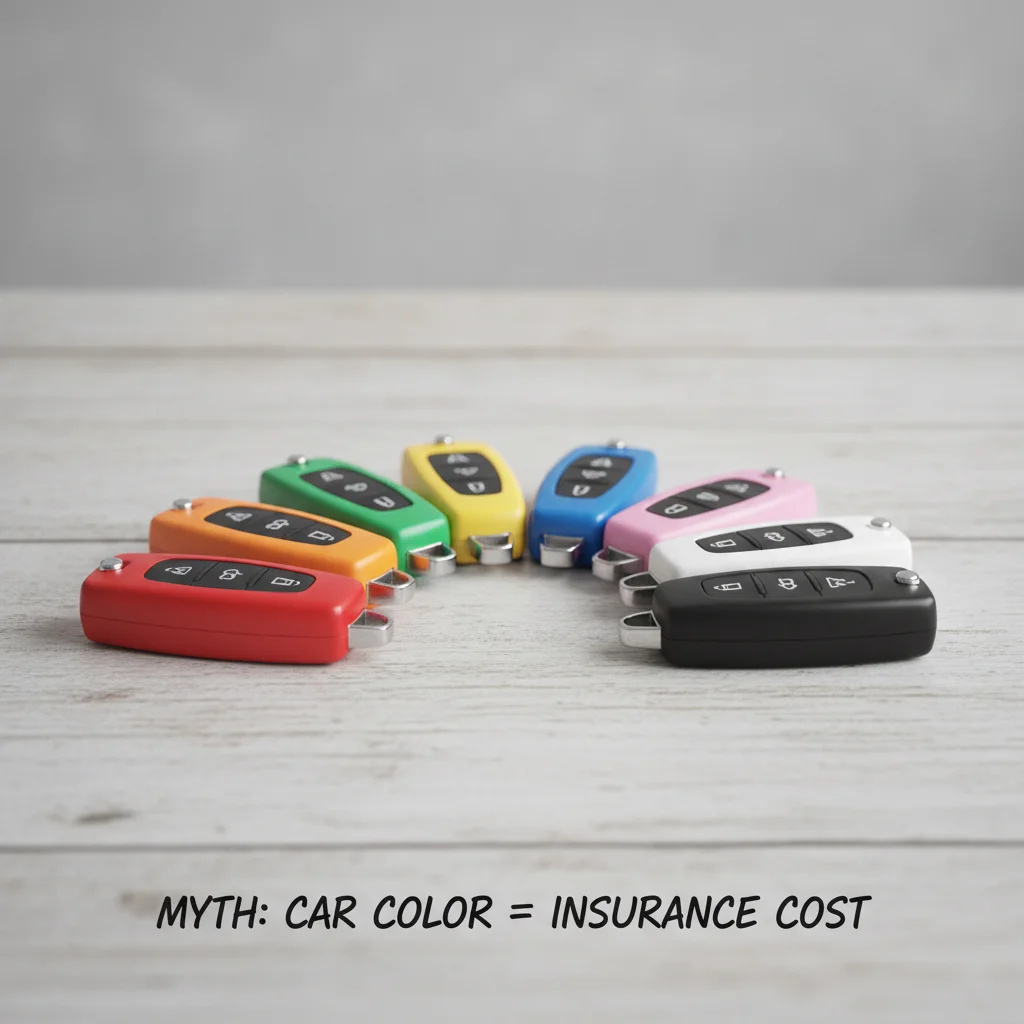
Red cars cost more to insure than other colors, so choosing a neutral color saves money on your premium.
Fact
Vehicle color has no effect whatsoever on auto insurance rates or discount eligibility. Insurers do not track or rate by color.
This myth has been circulating for decades and shows no signs of dying. The reality: when you get an insurance quote, you're asked for your vehicle's year, make, model, trim level, VIN, and sometimes engine size. You are never asked for its color — because color is irrelevant to how insurers price risk.
What actually matters for your base rate includes the vehicle's safety ratings, theft frequency data for that model, repair cost benchmarks, and the horsepower profile. A red Toyota Camry and a silver Toyota Camry cost exactly the same to insure. If you've been avoiding red, silver, or any other color on insurance grounds, that calculus was never correct.
For more on what actually does and doesn't move the pricing needle, auto insurance myths that cost you during a claim covers several related misconceptions.
Myth
All insurance companies offer the same discounts, so it doesn't matter which carrier you choose — the savings are equivalent.
Fact
Every insurer sets its own discount programs independently. The same driver profile can yield dramatically different savings at different companies.
This is one of the most expensive myths in auto insurance. Carriers are not required to offer any particular discount — or any discount at all. Some insurers offer robust alumni, professional association, and affinity group discounts; others don't have those programs. Some have generous telematics credits; others have minimal or no usage-based programs. The size of the discount also varies: a good driver discount might be 5% at one carrier and 22% at another.
The practical implication is that your discount eligibility is insurer-specific. A discount you don't qualify for at your current carrier might be a significant savings opportunity at a competitor — and vice versa. Shopping at renewal isn't just about comparing base rates; it's about finding the insurer whose discount structure aligns best with your actual profile.
Why discount rates vary so much between insurers explains the underlying pricing logic in detail.
Myth
Staying loyal to your insurer for years earns you better discounts and lower rates over time.
Fact
Loyalty discounts exist but are often smaller than the savings available by switching. Long-term customers frequently pay more than new customers at the same insurer.
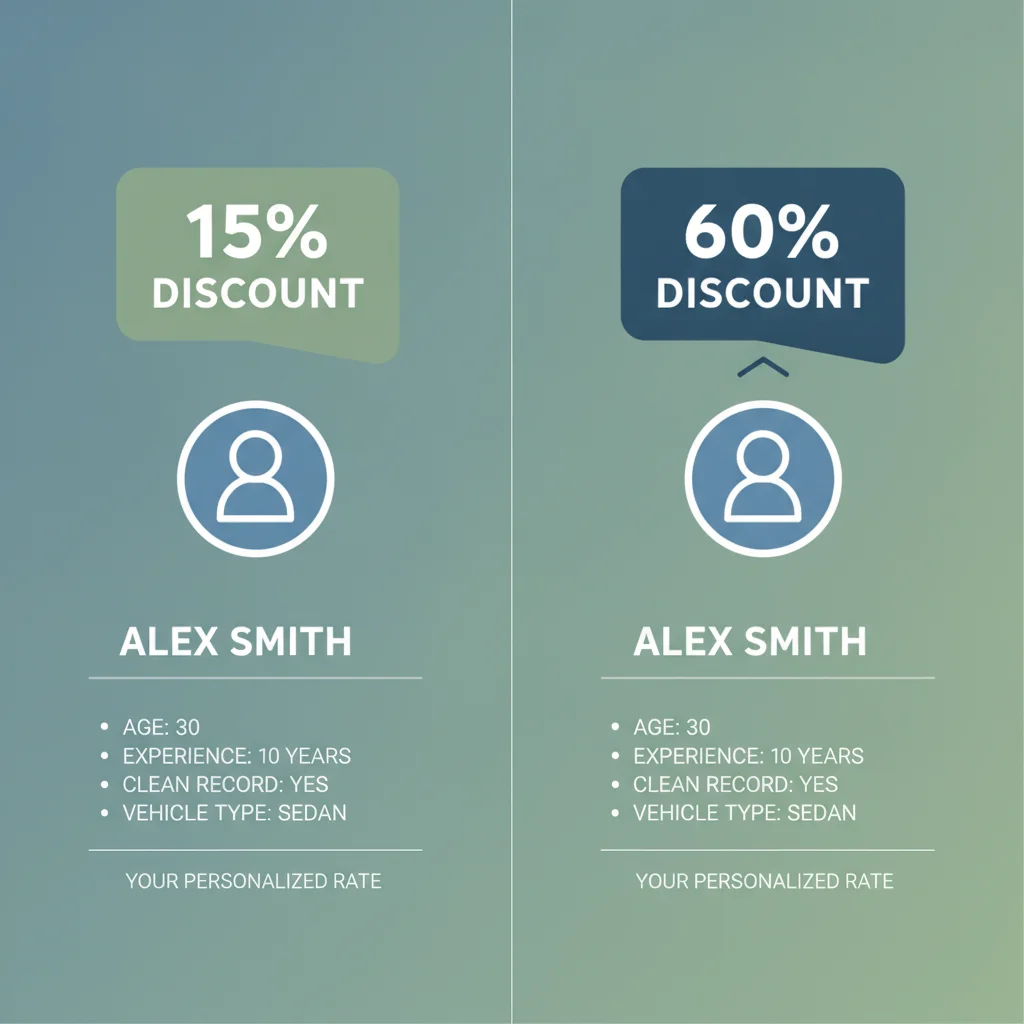
Insurers bank on inertia. Many offer a small loyalty or renewal discount — typically 2–5% — to reduce churn. But research consistently shows that customers who stay with the same insurer for several years often end up paying more than new customers, because insurers use introductory pricing to win new business and then gradually increase rates on captive policyholders.
This practice, sometimes called price optimization, is legal in most states. It means your loyalty discount may be more than offset by rate creep that a new customer at the same company wouldn't face. The most effective counter-strategy is to shop competing quotes every 12–24 months and be willing to switch or use a competing quote as leverage to negotiate your renewal rate.
[in_content_images:2]One genuine exception: some insurers offer accident forgiveness that accrues with years of continuous coverage. If you've built up forgiveness credits, factor that into the decision before switching — losing accident forgiveness could cost more than the premium savings from a new carrier if you file a claim in the near future.
Myth
Bundling home and auto insurance always results in significant savings, so it's always the smart financial move.
Fact
Bundling often saves money, but the discount ranges from negligible to substantial depending on the insurer, and the bundled rates may still be uncompetitive overall.
The bundling discount is real — typically 5–25% on auto, and sometimes a similar credit on homeowners or renters coverage. But 'discount applied' and 'best available price' are not the same thing. A 15% bundling discount on an overpriced auto policy can still leave you paying more than a standalone policy from a specialized carrier with a lower base rate.
The right approach is to price both scenarios: get bundled quotes from two or three multi-line carriers, and separately price auto and home/renters from specialists. Only then can you see whether bundling actually wins on total dollar cost. For drivers with complex coverage needs — like classic cars, high-value homes, or unusual driving patterns — the bundling math sometimes doesn't pencil out, and separate carriers optimized for each risk type deliver better value.
Myth
If you qualify for a discount, the insurer will automatically apply it to your policy.
Fact
Many discounts require you to proactively request them, provide documentation, or enroll in a program. Passive eligibility does not equal automatic application.
This is a costly assumption. Some discounts — like a safe driver discount based on your claims history — are typically applied automatically. But many others require action on your part. Examples include:
- Good student discounts: Usually require you to submit a transcript or grade report each year.
- Defensive driving course discounts: Require course completion and submission of a certificate.
- Anti-theft device discounts: May require documentation of the device installation.
- Professional association or alumni discounts: Often require membership verification and may not be surfaced unless you ask.
- Telematics/usage-based discounts: Require enrollment in a program and installation of an app or device.
- Low-mileage discounts: May require updated mileage reporting if your driving habits have changed.
The practical takeaway: don't assume your insurer has automatically applied every discount you qualify for. Call and ask. A single conversation can uncover savings that have been sitting unclaimed for years. See commonly missed discounts on your current policy for a more detailed look at what often gets overlooked.
Myth
Telematics programs are just surveillance tools that end up raising your rates, so they're not worth enrolling in.
Fact
Telematics programs genuinely save careful drivers 10–40% in many cases, and most insurers cap the downside risk for new enrollees.
The suspicion around telematics is understandable — you're letting your insurer monitor your driving behavior in real time. But the math often favors enrollment for drivers with calm, consistent driving habits. Programs from major carriers offer savings in the range of 10–40% for drivers who score well on metrics like hard braking frequency, late-night driving, and speed consistency.
Most modern telematics programs also offer a sign-up discount just for enrolling, regardless of your driving score — typically 5–10%. And many carriers structure the program so that new enrollees cannot be penalized above their current rate during the monitoring period, meaning the downside is capped while the upside is real.
Telematics is a poor fit for drivers who frequently brake hard in city traffic, drive late at night, or log high-speed highway miles. If that's your profile, the score may not benefit you. But for suburban commuters, low-mileage retirees, or anyone who drives conservatively, telematics enrollment is often the single largest discount available.
Myth
Your credit score doesn't affect your auto insurance rate, so there's no point improving it for insurance purposes.
Fact
In 46 states, insurers use credit-based insurance scores as a pricing factor, and the premium difference between poor and excellent credit can exceed 40%.
This myth causes some of the largest avoidable premium overpayments of any misconception in auto insurance. Credit-based insurance scores — which are different from lending credit scores but derived from similar data — are used by the vast majority of personal auto insurers in the United States. Only California, Hawaii, Massachusetts, and Michigan prohibit or restrict the practice.
The pricing impact is substantial. Drivers with poor credit can pay 40–80% more than drivers with excellent credit for the same coverage from the same insurer — a difference that dwarfs most discount programs. Conversely, improving your credit from fair to good can lower your premium by 20–40% at renewal, which is more than most bundling or loyalty discounts deliver.
If you're in a state where credit scoring applies to insurance, improving your credit score is one of the highest-ROI financial moves available. Paying down revolving balances, disputing errors on your credit report, and avoiding new credit applications all contribute. The improvement won't be immediate — insurers typically pull a fresh credit profile at renewal — but the results compound over time.
Myth
Minimum coverage is always the cheapest option when you're trying to save money on insurance.
Fact
Minimum coverage reduces your premium but exposes you to large out-of-pocket costs that often far exceed what you saved on discounts.
This isn't technically a discount myth, but it's deeply intertwined with how drivers think about saving money on insurance. The logic seems straightforward: lower coverage equals lower premium. And that's true as far as it goes. But minimum liability limits in most states are low enough that a single moderate accident can exhaust them and leave you personally liable for the remainder.
More relevantly for discount-seekers: the money saved by stripping coverage is often less than the money left on the table by failing to shop properly for a full-coverage policy with all applicable discounts applied. A driver who drops from full coverage to state minimum saves, say, $600 per year — but a driver who keeps full coverage, enrolls in telematics, bundles with renters insurance, and claims every applicable discount at the most competitive carrier available might save $700–$900 per year compared to their previous policy without reducing protection at all.
Savings from discounts and savings from coverage reduction are not the same thing. The former keeps you protected; the latter creates financial exposure. For a deeper look at what optional coverage elements are worth keeping versus skipping, optional coverage add-ons is a useful reference.
40%+
Premium gap between poor and excellent credit
According to NerdWallet's 2024 rate analysis, drivers with poor credit pay more than 40% above the national average premium compared to drivers with excellent credit, in states where credit scoring is permitted.
5–25%
Typical multi-policy bundling discount range
The Insurance Information Institute reports that bundling home and auto policies with the same carrier saves most consumers between 5% and 25% on auto premiums, though the actual amount varies significantly by insurer.
Up to 40%
Telematics savings for top-scoring drivers
Major carriers including Progressive, State Farm, and Allstate report that their best-scoring telematics program participants can achieve discounts of up to 30–40% on their auto premiums.
$461
Average annual savings from shopping at renewal
A 2023 J.D. Power study found that drivers who actively shopped and switched carriers at renewal saved an average of $461 annually compared to those who renewed without shopping.
46
U.S. states allowing credit-based insurance scoring
Only California, Hawaii, Massachusetts, and Michigan restrict or prohibit the use of credit-based insurance scores in auto premium calculations, according to the National Conference of State Legislatures.
How to Actually Maximize Your Discounts
Knowing what the myths are is step one. Here's how to turn that knowledge into lower premiums.
Audit your current policy right now
Pull up your declarations page and look at the discounts column. Call your insurer and ask them to walk through every discount in their system and tell you which ones you currently have — and which ones you might qualify for but haven't applied. Most customer service reps will do this willingly if you ask directly. This single conversation has saved some drivers hundreds of dollars annually.
For a list of discounts that are easy to miss on an existing policy, see discounts hiding in plain sight on your policy.
Don't Wait Until Renewal to Ask About Discounts
Most discounts can be applied mid-term, not just at renewal. If you recently completed a defensive driving course, installed a new anti-theft device, or changed your annual mileage significantly, call your insurer now — don't wait six months for renewal to claim the savings. Some mid-term adjustments are prorated and take effect immediately.
Verify Discounts Actually Appear on Your Declarations Page
It's not uncommon for a discount to be verbally confirmed by a customer service rep but fail to appear on the actual policy due to a data entry error or eligibility verification that wasn't completed. Always review your declarations page after any discount conversation and confirm the numbers changed. If they didn't, follow up in writing.
Telematics Data Stays on Record
Before enrolling in a telematics program, understand how long the insurer retains your driving data and whether it can be used in future underwriting cycles — not just the initial discount period. Most major carriers limit data use to the active program period, but it's worth confirming the terms before you opt in.
Shop competing quotes at every renewal
The discount landscape changes constantly. An insurer that was uncompetitive for your profile two years ago may now offer new telematics credits, alumni discounts, or affinity group rates that undercut your current carrier significantly. Shopping takes 30–45 minutes online and can reveal gaps of $300–$600 per year. This is especially important if your driving profile has changed — fewer miles, a birthday out of a high-risk age bracket, a credit score improvement, or a teen driver aging off your policy all shift your competitive position.
Understanding why discount rates differ so dramatically from one insurer to the next is worth a few minutes of reading — here's the pricing logic behind the gap.
Time your shopping strategically
If you're buying a new car, the vehicle choice itself affects what discounts you'll qualify for. Safety features, anti-theft systems, and trim levels all factor in. The same logic applies to bundling — if you're buying a home or renewing a renter's policy, coordinate timing so you can bundle and quote both at once. For broader guidance on timing big auto decisions, this timing guide covers when to act to maximize savings.

Track your mileage honestly
Low-mileage discounts are real, but they require accurate mileage reporting. If you switched to remote work or retired and haven't updated your insurer on annual mileage, you're likely overpaying. Most insurers now verify mileage through telematics or odometer photos at renewal, so accuracy cuts both ways — but if you genuinely drive less than 7,500 to 10,000 miles per year, make sure that's on record.
Improve your credit score deliberately
In the 46 states where insurers use credit-based insurance scores, moving from a fair credit tier to a good or excellent tier can lower your premium by 20–40%. That's more than most bundling or loyalty discounts deliver. Paying down revolving debt, avoiding new credit inquiries, and correcting errors on your credit report all move the needle. It's not a fast fix, but it's one of the highest-return moves available for drivers who qualify for better rates on paper but not yet in practice.
A Note on Young Drivers and Discount Stacking
Young drivers — typically those under 25 — face the steepest base premiums and are often the most confused about which discounts will actually help. Good student discounts, distant student discounts (for college kids without a car on campus), and driver training credits are all legitimate and stackable. But the math matters: a 10% good student discount on a $3,800 base premium still leaves a very high bill.
If you have a young driver on your policy or are a young driver yourself, this article breaks down which discounts actually move the needle for that demographic specifically, rather than listing every available credit without context.
Insurers Are Not Obligated to Tell You About Every Discount
There is no legal requirement for an insurer to proactively inform you of every discount you might qualify for. The burden is on you as the policyholder to ask. This is not a consumer-friendly system — it's a business model. Treat your insurance policy the same way you'd treat any subscription you've had for years: audit it regularly, ask what you're missing, and compare alternatives. Passive policyholders consistently overpay.
Young Drivers: Stacking Discounts Is Critical
Young drivers under 25 face base premiums that can be two to three times the adult average, which means discount stacking — combining good student, driver training, distant student, and telematics credits — is not optional, it's essential. Even so, make sure the vehicle being insured is appropriate for the coverage level. An expensive or high-performance vehicle will undercut every discount available. <a href="/car-insurance/rates-and-savings/discounts-and-deals/young-drivers-and-insurance-savings-which-discounts-actually-move-the-needle">See which discounts actually make a measurable difference for young drivers</a>.
One more myth worth naming in this context: many parents believe adding a teen driver to their policy is always cheaper than a separate policy. That's usually true — but not universally. In some states and with some insurers, a separate policy for a teen with their own older vehicle can be competitive, particularly if the parents drive high-value cars where adding a young driver triggers large surcharges. Run both quotes before assuming the bundled option wins.
The Bottom Line
Auto insurance discounts are not a lottery — they're a structured system, and understanding the rules of that system is worth real money. The myths above persist because insurance pricing is opaque by design: most drivers never see how their rate is constructed, and insurers have little incentive to proactively surface every discount available.
Your job is to ask, compare, and verify. Ask your insurer what discounts are in their system. Compare quotes from at least three carriers at each renewal. Verify that discounts you've been promised are actually showing up on your declarations page.
For related misconceptions that affect your costs beyond just discounts, rate factors myths covers the pricing variables most drivers misunderstand. And if you're evaluating whether your overall coverage structure is right — not just the discounts — optional add-ons coverage types is a useful reference for what you're actually paying for.
The drivers who pay the least for solid coverage are not the luckiest — they're the ones who treat their insurance like any other financial product worth optimizing.

All claims are backed by peer-reviewed research. Sources on request.