Key Takeaways
The CPO Promise — and Where It Falls Short
Certified pre-owned programs were designed to give used-car buyers a middle path: the peace of mind of a new-car warranty with the cost savings of a pre-owned purchase. In theory, every CPO vehicle has been inspected, reconditioned, and backed by a manufacturer warranty. In practice, the gap between a strong CPO program and a weak one can mean thousands of dollars in out-of-pocket costs over just a few years of ownership.
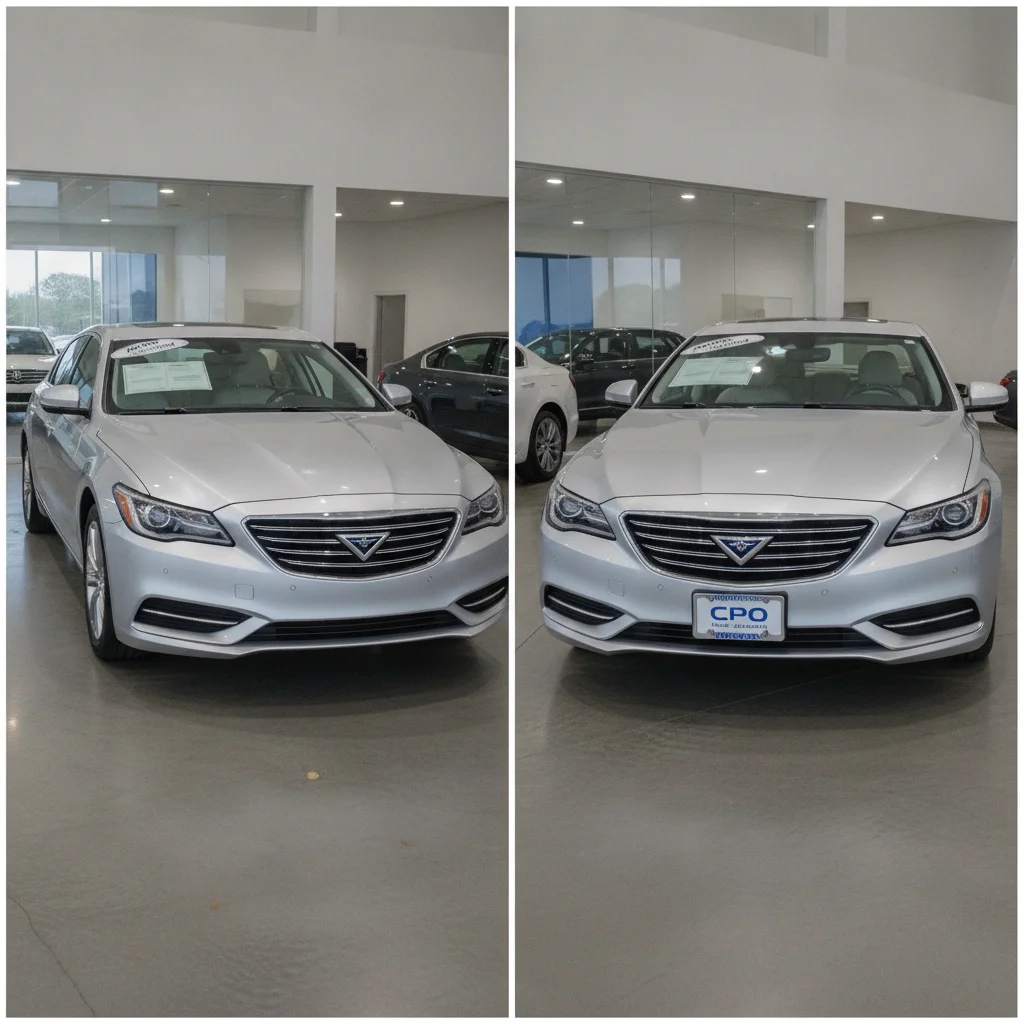
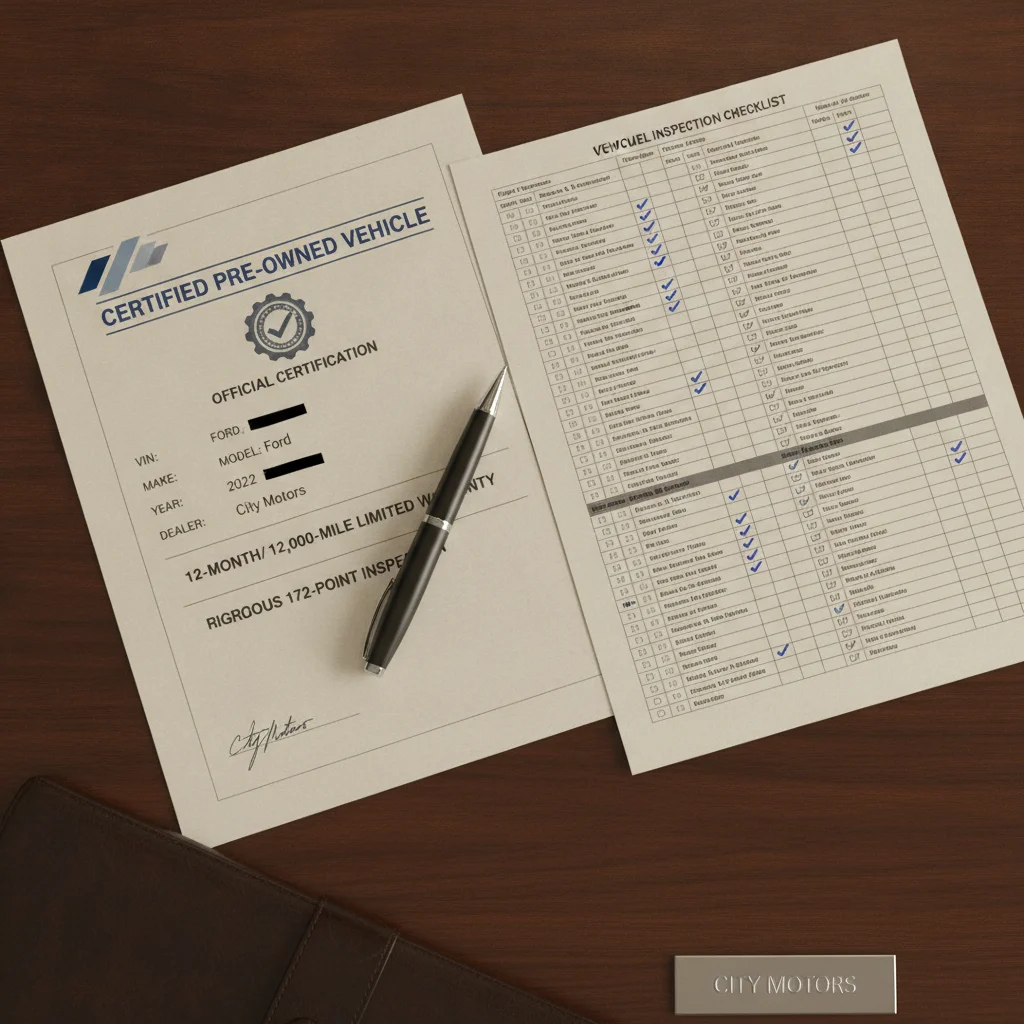
The problem is that "certified" doesn't mean the same thing across brands. One manufacturer's CPO inspection might cover 172 checkpoints and include a six-year powertrain warranty. Another's might cover 100 points and offer 12 months of bumper-to-bumper coverage with a long list of exclusions. The certification label is consistent; the substance behind it is not.
So when you're weighing a CPO purchase as an investment — not just a transaction — you need to look past the sticker and ask harder questions: How reliable is this brand over time? How well does this model hold its resale value? What does the warranty actually cover, and for how long? How easy will it be to find parts and qualified service five years from now?
This article walks through the practices that separate strong CPO investments from weak ones — and gives you a concrete framework for making that call before you sign anything.
Why Brand Reliability Is the Foundation of CPO Value
Every other advantage a CPO vehicle offers — reduced depreciation, warranty coverage, financing perks — rests on one underlying assumption: that the car won't need constant repairs. Brand reliability determines whether that assumption holds.
Consider two CPO sedans priced identically at $22,000. One is a three-year-old Japanese compact with a well-documented reliability record. The other is a European luxury brand with attractive features but above-average repair frequency and higher parts costs. Even if both come with comparable warranty terms, the ownership experience five years out is going to look very different once the warranty expires.
20–35%
Average first-year new car depreciation
According to Edmunds data, most new vehicles lose between 20% and 35% of their value in the first year — the bulk of which CPO buyers avoid entirely.
3x
Repair cost difference between top and bottom reliability brands
Consumer Reports' owner satisfaction data consistently shows that bottom-quartile reliability brands generate repair costs roughly three times higher than top-quartile brands over a five-year ownership window.
$1,500+
Resale premium for transferable CPO warranty
Industry resale analysis suggests CPO vehicles with transferable manufacturer warranties command an average $500–$2,000 premium over comparable non-covered used vehicles at private-party sale.
172 vs. 100
CPO inspection point range across manufacturers
The number of inspection points required for CPO certification varies widely by brand — from roughly 100 at the low end to over 170 at the most rigorous programs — reflecting real differences in reconditioning thoroughness.
Third-party reliability data from organizations like J.D. Power and Consumer Reports tracks problems per 100 vehicles over multiple years. Brands that consistently score well on these surveys tend to produce CPO vehicles that remain reliable well past warranty expiration — which is precisely the window that matters most for long-term investment value. Brands near the bottom of those rankings often see repair costs accelerate sharply once coverage ends.
The practical implication: before evaluating any specific CPO program's terms, look up the brand's and model's reliability history for the model year you're considering. If the model has a documented weak point — a transmission known to fail around 80,000 miles, for instance — understand whether that's covered under the CPO warranty and what your exposure is afterward.
For a deeper look at which models consistently outperform on long-term value retention, see vehicles that hold their value better than almost any other.
Prioritize brands with documented reliability histories over brands with attractive warranty terms but high repair frequency.
Warranty coverage eventually expires, but reliability problems don't. A brand that ranks consistently in the top tier of reliability surveys will cost less to own in years four through ten than a brand with a generous-sounding warranty that masks known mechanical weaknesses. The warranty is a hedge; reliability is the foundation.
Verify that the CPO warranty resets from the purchase date, not the original in-service date.
Some manufacturer CPO programs start the warranty clock at the vehicle's original sale date, which can leave you with far less coverage than you expect on a three- or four-year-old vehicle. A program that resets coverage from the CPO purchase date gives you a genuinely fresh protection window regardless of the car's age.
Check whether the CPO warranty is transferable before factoring it into your resale value estimate.
Transferable warranties function as a resale asset — they give future buyers something tangible to value, which translates into stronger negotiating position and faster sales. Non-transferable warranties only benefit you during your ownership and disappear from the equation the moment you sell.
Research post-warranty parts costs for the specific model before committing to the purchase.
The years immediately following warranty expiration are when ownership costs tend to spike — and the gap between affordable and expensive repairs is enormous depending on brand and model. Factoring these costs in before you buy prevents sticker shock later and lets you make a genuinely informed long-term comparison.
Use historical auction and private-party resale data to project your exit value, not just the current book value.
Book values represent today's market, but your exit strategy is two, three, or five years away. Models with stable or rising demand curves — such as popular hybrid SUVs with growing buyer interest — may be worth more at resale than current prices suggest. Models with oversupplied used inventory are likely to depreciate further.
Compare the manufacturer CPO financing rate against at least two external lenders before accepting dealer financing.
Manufacturer CPO financing promotions are sometimes genuinely below market — but not always. Dealers earn finance income from the spread between the wholesale rate and what you pay, so the promotional rate may have other costs baked in. An independent comparison takes less than 30 minutes and can save you hundreds to thousands of dollars over the loan term.
Resale Value: How the Depreciation Curve Affects Your CPO Investment
One of the most cited reasons to buy CPO is that the first owner already absorbed the steepest part of the depreciation curve. A new car can lose 15–20% of its value the moment it's driven off the lot, and another 10–15% in the first year. A CPO vehicle with 25,000 miles on it has already shed most of that initial loss — so you're buying into a shallower depreciation slope.
But not all depreciation curves flatten equally. Some models depreciate sharply through years one to three, then stabilize and hold value reasonably well from years four through seven. Others continue shedding value at a high rate even after the initial drop. If you buy a CPO car that falls into the second category, you're not getting the depreciation shelter you think you are.

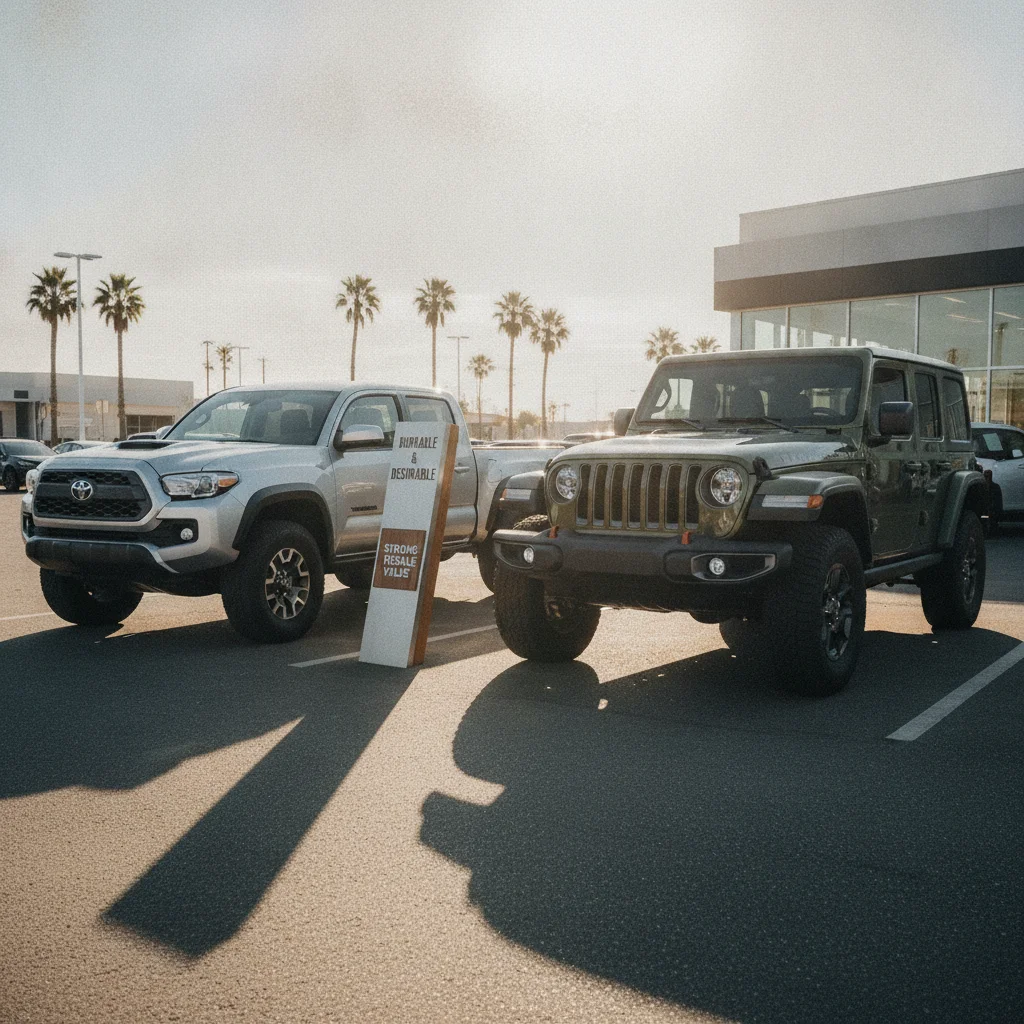
The best CPO investments from a resale standpoint are models where strong demand keeps used prices elevated — trucks and SUVs from brands with loyal customer bases, hybrid powertrains with limited competition in the used market, or models with cult-like enthusiasm communities that prop up secondhand prices. The worst are models that flooded lease return inventories, creating excess supply that depresses used prices for years.
When comparing CPO vehicles, pull the current private-party and dealer resale values for that specific model and mileage range, then look at historical resale data going back three to five years. Sites that track auction prices can show you whether a model's used value has been stable, rising, or declining — and that trend tells you a lot about what your car will be worth when you're ready to move on.
For the full depreciation calculation — including how to determine whether the CPO savings outweigh the trade-offs versus buying new — see CPO vs. new car depreciation math.
Use Model-Specific Forums Before You Buy
Owner communities for specific models — on Reddit, brand-specific forums, and enthusiast sites — are among the best free resources for identifying known failure points and common repair costs. Search the model name plus "common problems" or "high mileage issues" before you commit. These communities often surface real-world cost data years before it shows up in formal reliability surveys.
Warranty Depth and Transferability: The Terms That Define Real Value
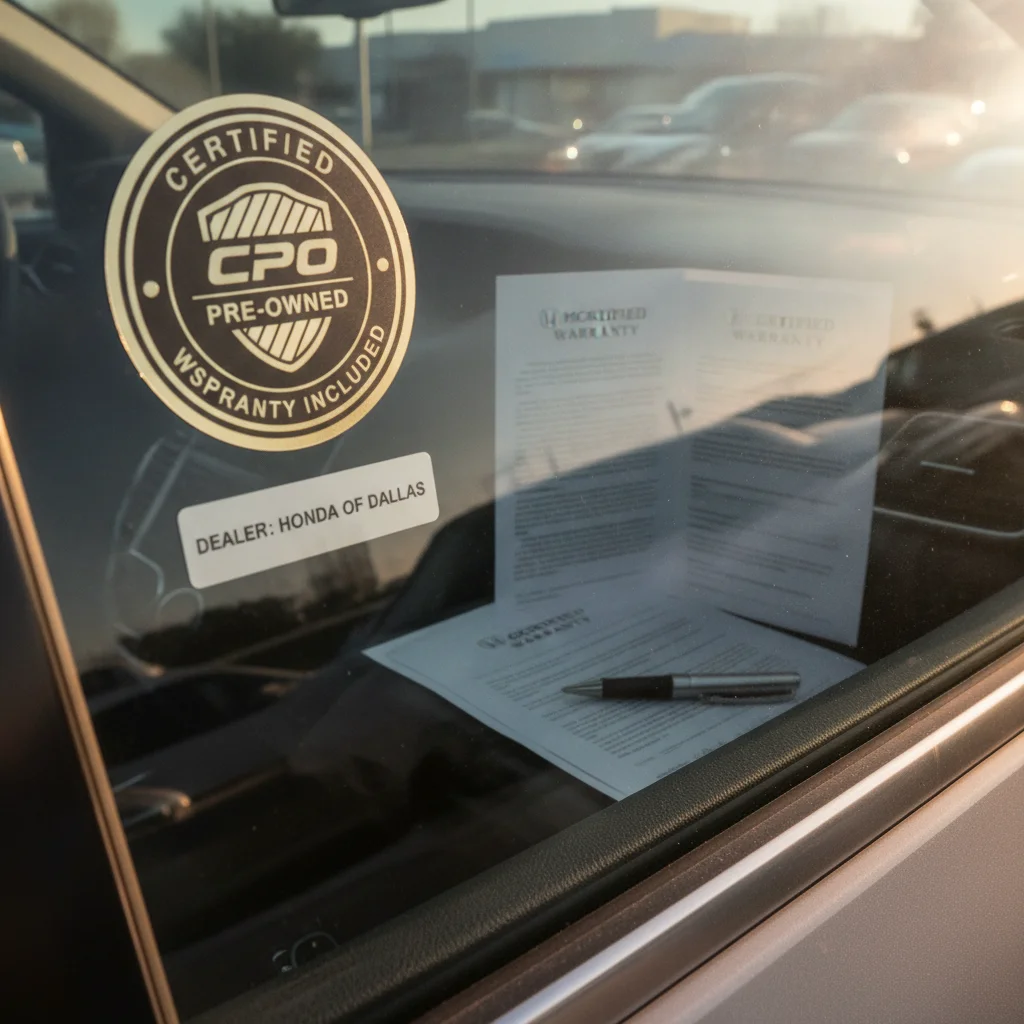
The warranty is the centerpiece of any CPO program — but buyers often treat it as binary: either there's a warranty or there isn't. The reality is more granular, and the details can swing the value calculation significantly.
Three dimensions of warranty coverage matter most:
- Coverage scope: Is it bumper-to-bumper, or just powertrain? A powertrain-only warranty covers the engine and transmission but leaves you exposed on electronics, suspension, HVAC, and other expensive systems that wear down with age.
- Duration: Some CPO warranties run from the vehicle's original in-service date — meaning a three-year-old car might only have one or two years of coverage left. Others reset from the date of CPO purchase, giving you a fresh clock regardless of the car's age.
- Transferability: If the warranty transfers to a subsequent buyer, it functions as a resale asset. A car with two years of manufacturer-backed coverage remaining is meaningfully more attractive on the used market than a car with no coverage — often by $500 to $2,000 in negotiating power.
Deductibles, exclusion lists, and claim processes also vary. Some programs have zero-deductible coverage; others charge $100–$200 per visit. Some require you to use a dealership for all service; others allow independent shops for maintenance while reserving warranty work for the dealer network.
For a complete breakdown of what CPO warranties typically include — and what the fine print can quietly exclude — see how CPO warranty coverage actually works. And once you've bought, understanding what happens to your CPO warranty when you sell can help you maximize that resale advantage.
Luxury CPO Programs: Higher Stakes, Higher Scrutiny
Luxury brand CPO programs often feature longer warranty terms and more thorough inspections — but the vehicles they cover carry significantly higher repair costs once coverage lapses. A BMW or Mercedes CPO with two years of bumper-to-bumper coverage remaining can be an excellent value; the same vehicle with six months left can become a financial liability almost immediately after the warranty expires. Evaluate luxury CPO deals against your actual ownership timeline. For a detailed look at whether the math works in your favor, see <a href="/buying-a-car/new-vs-used-cars/certified-pre-owned/luxury-cpo-programs-are-they-a-better-deal-than-new">luxury CPO programs vs. buying new</a>.
CPO Doesn't Guarantee a Pre-Purchase Inspection Is Unnecessary
Even a manufacturer-certified vehicle can have issues the standard inspection checklist doesn't catch — particularly cosmetic or structural concerns from a prior accident, or intermittent electrical problems that don't trigger during a static inspection. Having an independent mechanic perform a pre-purchase inspection on any CPO vehicle you're seriously considering typically costs $100–$200 and can reveal issues worth negotiating over or walking away from entirely.
Parts Availability and Service Network: The Hidden Long-Term Cost Drivers
Even with the best warranty in the industry, a CPO car eventually ages out of coverage. What happens after that point is where parts availability and service network density become critical investment factors — and where buyers often fail to think ahead.
High-volume domestic and Japanese brands typically have enormous aftermarket parts ecosystems. Independent mechanics can source OEM and quality aftermarket parts quickly and cheaply. Repair costs stay competitive because there's no shortage of qualified technicians. For a ten-year ownership scenario, this translates into thousands of dollars in savings compared to a European luxury vehicle where specialized parts may only be available through the dealer, lead times can stretch weeks, and labor rates reflect the scarcity of certified technicians.
Dealer network density also matters if the CPO warranty requires dealer service for covered repairs. A brand with 1,200 U.S. dealers gives you convenient service access almost anywhere. A brand with 200 dealers may leave you driving 90 minutes for a warranty claim — and if you relocate, that access gap becomes a real problem.
When evaluating a CPO vehicle, look up the brand's U.S. dealer count and the distance to the nearest dealer from both your home and workplace. Then search parts pricing for common wear items on that model at three to five years older than the car you're buying — that's roughly what you'll be paying post-warranty. If brake rotors, suspension components, and cooling system parts come at a significant premium compared to comparable vehicles, factor that into your total cost of ownership estimate.
Financing Rates and Insurance: Two More Variables That Affect the Full Cost Picture
The sticker price and warranty terms are visible — but financing rates and insurance costs are two factors that quietly shape whether a CPO purchase is actually cost-effective over the loan term.
Many manufacturers offer special financing rates on CPO vehicles, sometimes approaching new-car promotional rates. These programs are worth comparing carefully against standard used auto loan rates from banks and credit unions. A difference of even 1.5 percentage points on a $25,000 loan over 60 months represents roughly $1,000 in additional interest. In some cases, manufacturer CPO financing is genuinely competitive; in others, it's priced to look attractive without actually beating market rates.
See how CPO financing rates compare to standard used car loans for a detailed look at when manufacturer programs win and when they don't.
On the insurance side, CPO status can affect several coverage decisions. Lenders may require gap insurance if you're financing a vehicle that still has meaningful depreciation exposure. Comprehensive coverage decisions may also shift depending on the vehicle's remaining value and warranty overlap. Insuring a CPO car involves different considerations than insuring either a new car or a plain used vehicle — it's worth a conversation with your insurer before you finalize the purchase.
“The cheapest car is rarely the least expensive car. When you factor in depreciation trajectory, repair exposure, and the cost of financing, a slightly more expensive vehicle from a reliable brand almost always delivers lower total cost of ownership over five years.”
— Philip Reed, Senior consumer advice editor and automotive pricing analyst
Putting It All Together: How to Score a CPO Vehicle as an Investment
With all these variables in play, the most useful thing you can do before committing to a CPO purchase is build a simple scoring framework — not a spreadsheet with 40 inputs, but a quick five-factor evaluation that tells you whether this specific car, from this specific brand, with these specific program terms, makes sense for your timeline.
Here's how to approach it:
- Reliability score: Look up the model-year's reliability ranking from at least two third-party sources. If it's in the top third of its segment, it passes. Bottom third is a red flag regardless of price.
- Resale trajectory: Compare the current asking price to both the original MSRP and the projected value at your expected sell date. If the remaining depreciation is steep, the CPO discount may not compensate adequately.
- Warranty value: Calculate the remaining coverage period, what's actually covered, and whether it transfers. Price in the deductible and any service location restrictions.
- Parts and service cost estimate: Spend 20 minutes pricing common repairs for a vehicle three to five years older than your target. Add the nearest dealer distance to your commute.
- Total cost comparison: Add the purchase price, estimated financing cost, projected insurance premium, estimated post-warranty repair costs, and subtract the expected resale value. Compare that number across at least two or three competing CPO vehicles.
This framework won't give you a perfect answer, but it will surface the vehicles where the math is clearly unfavorable — and help you focus your negotiating energy on the deals with genuine long-term merit.
If you want to dig into whether the CPO premium is justified in dollar terms for your specific situation, our analysis of when the CPO premium is worth paying walks through the calculation in detail. And once you've made your purchase, getting the most out of a CPO purchase over the long run covers how to protect and maximize that investment from day one.


All claims are backed by peer-reviewed research. Sources on request.