

Key Takeaways
Covers repairs after factory warranty expires
Bumper-to-bumper coverage typically ends at 3 years or 36,000 miles. An extended plan can push protection out to 7–10 years, covering the period when complex systems are statistically more likely to fail.
Limits financial exposure on expensive repairs
Modern transmissions, turbochargers, and advanced driver-assistance sensors can cost $2,000–$6,000 to repair. For buyers without a substantial emergency fund, a warranty converts unpredictable large expenses into a known fixed cost.
Transferable plans add measurable resale value
A warranty with remaining coverage that transfers to the next owner is a documented selling point. Some buyers will pay $500–$1,000 more for a used car with active extended coverage versus an identical vehicle without it.
Manufacturer-backed plans offer strong claim reliability
Extended warranties sold by the automaker's own finance arm — Ford Protect, Toyota Extra Care, GM Protection Plan — are backed by companies with deep pockets and a brand reputation to protect, reducing claim denial risk.
High-mileage drivers may see real ROI
Buyers who drive 18,000–25,000 miles per year will exhaust factory powertrain coverage in 3 years or less. Extended coverage may pay for itself on a single repair event for this type of driver.
Dealers mark up prices 50–100% or more
The dealer often pays an administrator $800–$1,200 for a plan sold to you at $2,000–$3,500. That spread is pure dealer profit — and unlike the car's price, most buyers have no reference point to spot the markup.
Financing the warranty adds significant interest cost
Rolling a $2,400 warranty into a 72-month loan at 7% APR costs approximately $500 extra in interest over the life of the loan — on top of an already inflated price for coverage you may never use.
Exclusions often cover the highest-failure components
Infotainment systems, software modules, ADAS sensors, and electronic control units — some of the most expensive and failure-prone components on modern vehicles — are frequently excluded or subject to dispute during claims.
Third-party providers can and do go bankrupt
Several extended warranty companies have collapsed, leaving paid-up contract holders with no coverage and no meaningful recourse. Verifying that a plan is backed by a licensed insurance carrier as obligor is essential but rarely explained at the dealer.
Factory warranty already covers the early high-risk period
New cars rarely experience major failures in the first 3–5 years. You're essentially paying for coverage during the statistically lowest-failure phase of the car's life, which shifts the odds firmly in the plan provider's favor.
Pressure to decide immediately favors the dealer
The F&I pitch happens when you're tired, emotionally committed to the car, and least likely to scrutinize terms carefully. In reality, you can buy a comparable plan months later — there is no genuine urgency.
Claim processes can be slow and adversarial
Some plans require pre-authorization before repairs begin, leaving your car at a shop while an adjuster reviews the claim. Disputed denials can require appeals, arbitration, or legal action to resolve — none of which is mentioned at signing.
Our Verdict
Extended warranties on new cars are not inherently bad deals, but they are rarely the straightforward protection they're sold as. The factory warranty already covers you for years, the markup on dealer-sold plans is steep, and the fine print often carves out more than buyers realize. Bought at the right price, from the right source, for a car you plan to keep well past the factory coverage window — they can pay off. Bought impulsively at the F&I table on a financed purchase, they almost always cost you more than they return.
Buyers who plan to keep their new car for 8+ years, have limited savings to absorb a surprise repair bill, and are willing to shop warranty providers independently rather than accepting the dealer's first offer.
What You're Actually Being Sold in the Finance Office
You've agreed on a price, shaken hands, and now you're sitting across from the finance and insurance (F&I) manager. This is when the extended warranty pitch arrives — usually framed as a small monthly addition to your payment. That framing is intentional. A $2,400 warranty sounds alarming as a lump sum. Tacked onto a 72-month payment as "just $33 more per month," it goes down a lot easier.
Before evaluating whether an extended warranty is worth it, you need to understand what it actually is. An extended warranty — more precisely called a vehicle service contract — is not technically a warranty at all. It's a contract promising to pay for certain repairs under certain conditions. The manufacturer's actual warranty is a guarantee backed by the automaker. A service contract is a promise from either the dealer, a third-party administrator, or occasionally the manufacturer's own finance arm.
That distinction matters because it affects who's on the hook if the contract provider goes under — and some do. It also determines how claims are processed, which shops you can use, and what kind of disputes you'll face when a repair is denied.

The dealer almost always marks up the price of a service contract significantly — sometimes 50% or more above what they paid the administrator. You can negotiate that price, you can walk away and buy coverage elsewhere later, and you can absolutely say no without affecting your car purchase. Most buyers don't know any of those things when they're sitting in that chair.
See our guide to new car warranty coverage to understand exactly what the factory warranty already provides before you consider adding anything on top of it.
The Case For: When Extended Warranties Make Genuine Sense
I'll be straight with you: I've spent years in dealership finance, and I've seen too many colleagues use extended warranties purely as a profit tool. But I've also seen customers genuinely benefit from them. The question is whether your specific situation is one where the odds work in your favor.
Covers repairs after factory warranty expires
Bumper-to-bumper coverage typically ends at 3 years or 36,000 miles. An extended plan can push protection out to 7–10 years, covering the period when complex systems are statistically more likely to fail.
Limits financial exposure on expensive repairs
Modern transmissions, turbochargers, and advanced driver-assistance sensors can cost $2,000–$6,000 to repair. For buyers without a substantial emergency fund, a warranty converts unpredictable large expenses into a known fixed cost.
Transferable plans add measurable resale value
A warranty with remaining coverage that transfers to the next owner is a documented selling point. Some buyers will pay $500–$1,000 more for a used car with active extended coverage versus an identical vehicle without it.
Manufacturer-backed plans offer strong claim reliability
Extended warranties sold by the automaker's own finance arm — Ford Protect, Toyota Extra Care, GM Protection Plan — are backed by companies with deep pockets and a brand reputation to protect, reducing claim denial risk.
High-mileage drivers may see real ROI
Buyers who drive 18,000–25,000 miles per year will exhaust factory powertrain coverage in 3 years or less. Extended coverage may pay for itself on a single repair event for this type of driver.
The clearest argument for buying an extended warranty is longevity. If you're buying a new car today and plan to drive it for ten years, the factory's bumper-to-bumper coverage (typically 3 years/36,000 miles) and powertrain coverage (5 years/60,000 miles) will expire well before you're done with the car. An extended plan that runs to 100,000 miles or 8 years can cover the period when electronics, sensors, and drivetrain components are most likely to fail.
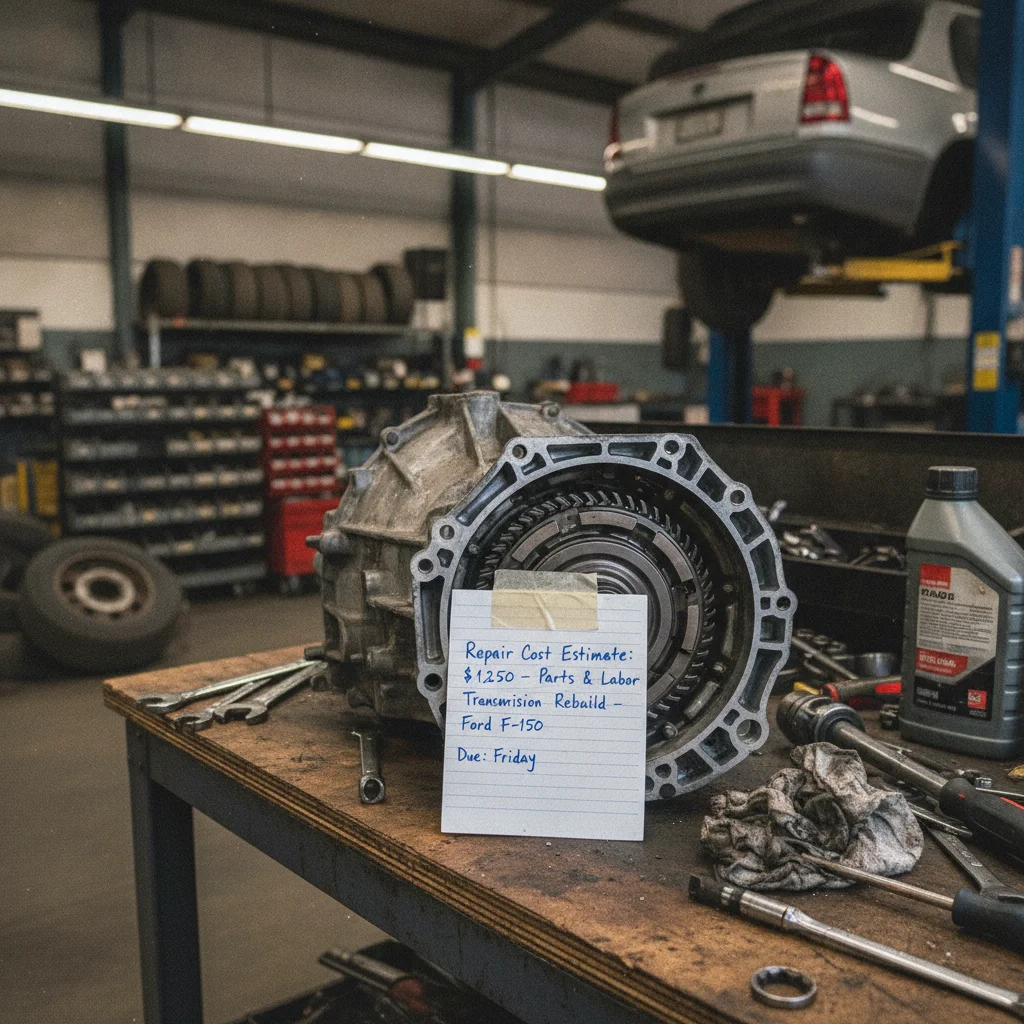
The math also shifts for buyers with thin emergency funds. A transmission replacement on a modern dual-clutch or continuously variable transmission can run $3,500–$6,000. A turbocharger replacement on a small-displacement engine: $2,000–$4,000. If absorbing a repair like that would put you in a difficult financial position, a plan priced at $1,200–$1,800 purchased directly from a reputable third-party administrator may represent legitimate risk transfer.
$1,000–$4,000
Typical extended warranty price range at dealerships
Consumer Reports data and industry surveys consistently show dealer-sold service contracts ranging from $1,000 on basic plans to over $4,000 for luxury vehicles with comprehensive coverage.
55%
Extended warranty buyers who never file a claim
According to a Consumer Reports survey, the majority of buyers who purchase extended warranties never use them — a key reason these products are so profitable for dealers and administrators.
$3,500–$6,000
Average cost to replace a modern automatic transmission
RepairPal and multiple shop estimates place modern CVT and dual-clutch transmission replacements in this range, representing the kind of single-event repair that can justify a well-priced extended plan.
3 yrs / 36k mi
Typical new car bumper-to-bumper warranty length
Most mainstream manufacturers provide 3-year/36,000-mile bumper-to-bumper coverage, after which any non-powertrain component repair falls entirely to the owner.
Certain vehicles also have documented reliability patterns that make extended coverage more valuable. Luxury brands with complex air suspension systems, European turbocharged engines, or American trucks known for problematic infotainment modules have real histories of expensive out-of-warranty repairs. If you're buying a car with a known weakness, extended coverage over that specific system deserves serious consideration.
Finally, consider coverage shopping outside the dealer. Manufacturers like Ford, GM, and Toyota all sell their own extended warranties — called Ford Protect, GM Protection Plan, and Toyota Extra Care — which can sometimes be purchased through an out-of-state dealer at a discount and are backed directly by the automaker rather than a third-party.
The Case Against: Why Most Buyers Are Better Off Declining
The warranty industry isn't built on buyers coming out ahead — it's built on the law of large numbers. Statistically, more people pay in than receive back. That's how any insurance-style product sustains itself. The question is whether the premium is priced fairly for the risk, and with dealer-sold service contracts, it usually isn't.
Dealers mark up prices 50–100% or more
The dealer often pays an administrator $800–$1,200 for a plan sold to you at $2,000–$3,500. That spread is pure dealer profit — and unlike the car's price, most buyers have no reference point to spot the markup.
Financing the warranty adds significant interest cost
Rolling a $2,400 warranty into a 72-month loan at 7% APR costs approximately $500 extra in interest over the life of the loan — on top of an already inflated price for coverage you may never use.
Exclusions often cover the highest-failure components
Infotainment systems, software modules, ADAS sensors, and electronic control units — some of the most expensive and failure-prone components on modern vehicles — are frequently excluded or subject to dispute during claims.
Third-party providers can and do go bankrupt
Several extended warranty companies have collapsed, leaving paid-up contract holders with no coverage and no meaningful recourse. Verifying that a plan is backed by a licensed insurance carrier as obligor is essential but rarely explained at the dealer.
Factory warranty already covers the early high-risk period
New cars rarely experience major failures in the first 3–5 years. You're essentially paying for coverage during the statistically lowest-failure phase of the car's life, which shifts the odds firmly in the plan provider's favor.
Pressure to decide immediately favors the dealer
The F&I pitch happens when you're tired, emotionally committed to the car, and least likely to scrutinize terms carefully. In reality, you can buy a comparable plan months later — there is no genuine urgency.
Claim processes can be slow and adversarial
Some plans require pre-authorization before repairs begin, leaving your car at a shop while an adjuster reviews the claim. Disputed denials can require appeals, arbitration, or legal action to resolve — none of which is mentioned at signing.
The most immediate problem is price and markup. Dealers commonly pay a third-party administrator $800–$1,200 for a contract they sell you for $2,000–$3,500. That spread is dealership profit. Unlike the car price, which buyers research extensively, warranty pricing is nearly invisible to consumers — which is exactly why the markup is so aggressive.
Financing makes it worse. If you roll the warranty into your loan, you're paying 6–8% (or more) interest on it for the life of the loan. A $2,400 warranty financed at 7% over 72 months doesn't cost you $2,400 — it costs you closer to $2,900. That's before you've gotten a single repair covered.
Then there's the exclusion problem. Most service contracts are exclusionary, meaning they list what's covered. The things that break most frequently — infotainment screens, sensors, ADAS components, electrical connections — are often either excluded explicitly or require a fight to get covered. Read the actual contract language before you sign. The fine print in service contracts is where the real story lives.
There's also a timing issue. The dealer wants you to decide right now, at the end of a long and stressful purchase process. That pressure benefits them, not you. You can almost always buy a reputable extended warranty within the first year or two of ownership — sometimes right up until the factory warranty expires. There's no deadline that requires you to decide at the signing table.
For more context on how extended warranties stack up against other protection products that dealers push, see our breakdown of dealer add-ons that inflate your final bill.
The Fine Print That Changes Everything
Two extended warranties can have identical marketing language and wildly different real-world value. The difference lives in the contract terms — specifically these four areas:
1. Covered vs. Excluded Components
Most plans advertise "comprehensive" coverage but operate on an exclusion model: everything is covered except what's listed. The exclusion list is often long and specific. Seals and gaskets, wear items, maintenance parts, and increasingly, software and electronic control modules may all be carved out. A plan covering the powertrain but not the turbocharger that feeds it is worth far less than it appears.
2. Deductibles and Claim Procedures
Plans with a $200 per-visit deductible are much less useful for smaller but frequent repairs. Some plans require the administrator to authorize repairs before work begins, which can mean your car sits at a shop while you wait for a claims adjuster to weigh in. Understand whether the shop is paid directly or you pay and seek reimbursement — the latter creates real cash-flow issues for expensive repairs.
3. Transferability
A transferable warranty adds resale value. If you sell the car at year six with two years remaining on a service contract, that coverage can be a genuine selling point and may support a higher private-party price. Non-transferable plans evaporate the moment you sell.
4. Provider Solvency and Reputation
Third-party administrators have gone bankrupt — leaving contract holders with paid-up warranties and no coverage. Before buying from any third-party, check their Better Business Bureau rating, confirm they operate in your state, and verify they're backed by an insurance carrier (look for an "obligor" listed in the contract — that's the entity legally responsible for paying claims).
You Don't Have to Decide Today
One of the most effective tactics dealers use is implying that the extended warranty offer expires when you leave. In most cases, you can purchase an extended warranty from the manufacturer or a reputable third-party administrator anytime within the first year or two of ownership — and sometimes right up until the factory coverage lapses. Removing the artificial deadline from the equation often results in a better decision and a lower price.
What 'Obligor' Means and Why It Matters
Every vehicle service contract should name an 'obligor' — the entity legally responsible for paying claims. If the obligor is a small, obscure warranty administrator rather than a licensed insurance carrier, your contract may not be protected if the company closes. Always ask who the obligor is and verify they hold an insurance license in your state before signing. This single check filters out the least reliable plans in the market.
If you're comparing an extended warranty on a new car to what's available on certified pre-owned vehicles, the coverage dynamics are meaningfully different. Our article on CPO warranties vs. extended warranties breaks down when layering both types of coverage makes sense and when it's redundant.
How to Negotiate If You Decide to Buy
If after weighing everything you decide an extended warranty makes sense for your situation, don't pay the sticker price. Here's how to approach it:
- Separate the decision from the signing day. Tell the F&I manager you want to review the full contract terms before deciding. Take the contract home. Read it. If they won't let you take it, that tells you something.
- Get the dealer's cost. Dealers in many states are required to disclose the administrator's cost if you ask directly. Even where it's not required, asking the question changes the negotiation dynamic and often results in an immediate price drop.
- Negotiate the price like you would the car. The first number they quote is not the floor. Counter. Walk away if needed. A plan priced at $2,800 may be available for $1,400 if you're willing to push.
- Shop third-party and manufacturer options. Get quotes from the automaker's own extended warranty program and from reputable third-party administrators before accepting the dealer's offer. Having a competing quote gives you real leverage.
- Do not finance it. Pay for an extended warranty in cash if you buy one. Adding it to your loan means paying interest on a product that may never pay out. If you can't afford to pay cash for the warranty, that's a signal you're likely buying too much coverage at too high a price.
You Don't Have to Decide Today
One of the most effective tactics dealers use is implying that the extended warranty offer expires when you leave. In most cases, you can purchase an extended warranty from the manufacturer or a reputable third-party administrator anytime within the first year or two of ownership — and sometimes right up until the factory coverage lapses. Removing the artificial deadline from the equation often results in a better decision and a lower price.
What 'Obligor' Means and Why It Matters
Every vehicle service contract should name an 'obligor' — the entity legally responsible for paying claims. If the obligor is a small, obscure warranty administrator rather than a licensed insurance carrier, your contract may not be protected if the company closes. Always ask who the obligor is and verify they hold an insurance license in your state before signing. This single check filters out the least reliable plans in the market.
One underused tactic: if you're buying near month-end when dealerships are working toward sales targets, the F&I manager often has more flexibility on warranty pricing. Timing your purchase around these windows can improve your leverage across the entire deal, not just on add-ons.
Used Cars vs. New Cars: A Different Calculation
Everything covered here applies specifically to new car purchases. The math changes substantially when you're buying used — factory coverage may already be expired or nearly gone, the vehicle's reliability history is more knowable, and the risk of a major repair is more immediate.
If you're weighing coverage options on a used car, our article on extended warranties on used cars walks through how to evaluate those contracts — which vary even more widely than new car plans in scope and reliability.
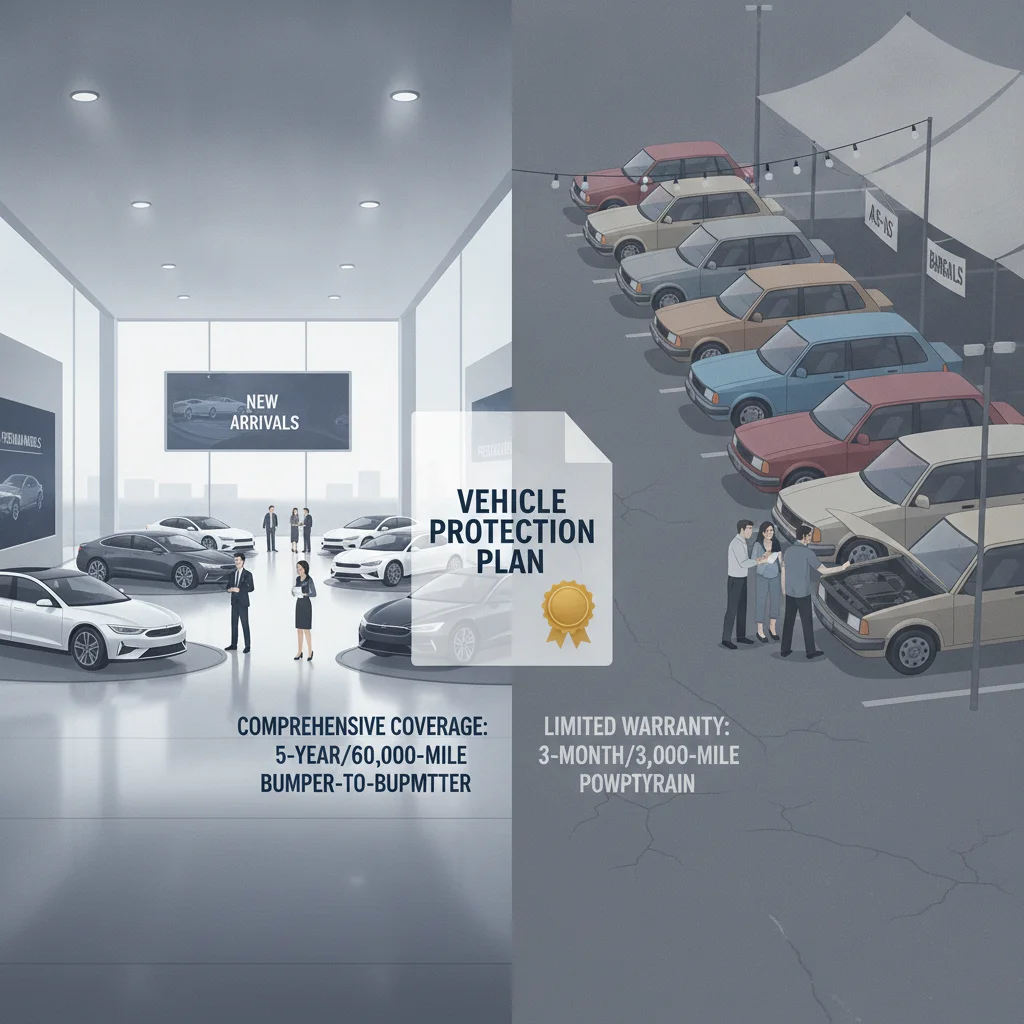
The core principle, however, stays consistent regardless of whether the car is new or used: understand what you're buying before you buy it. Read the contract. Know who the obligor is. Know the exclusions. Know how claims work. An extended warranty you understand and negotiated to a fair price is a completely different product from one you signed in haste at 7 p.m. after a five-hour car buying session.
The finance office is designed to capture profit at the end of a deal when you're tired and your guard is down. Extended warranties are its highest-margin product. That doesn't make them inherently wrong — it makes them something you need to approach on your own terms, with information, and without the artificial pressure of the moment.
All claims are backed by peer-reviewed research. Sources on request.