Key Takeaways
Our Verdict
CPO financing offers a genuine rate advantage in many cases, but it only wins on total cost when the lower APR offsets the higher sticker price. For buyers with strong credit who value peace of mind and can negotiate the CPO premium down, manufacturer financing is hard to beat. For budget-focused shoppers or those with access to competitive credit union rates, a well-inspected standard used car financed independently will often cost less overall.
| Best for | Recommended |
|---|---|
| Buyers who want the lowest possible APR and a factory-backed warranty | CPO Financing |
| Shoppers prioritizing the lowest total purchase cost | Standard Used Car Financing |
| Buyers with excellent credit who can qualify for top-tier lender rates | Standard Used Car Financing via Credit Union or Bank |
| First-time used car buyers who want reduced mechanical risk and predictable ownership costs | CPO Financing |
Why CPO Financing Is Its Own Category
When automakers set up certified pre-owned programs, they don't just slap a badge on the car and call it a day. They also arrange financing through their captive finance arms — think Ford Motor Credit, Toyota Financial Services, or BMW Financial Services — and those lenders can offer rates that standard used car loans simply don't match.
The reason is structural. Captive lenders treat CPO vehicles more like new cars in their risk models. The inspection process, extended warranty, and documented vehicle history reduce the lender's exposure to default caused by unexpected repair costs. That reduced risk gets passed along to the borrower as a lower annual percentage rate (APR).
Standard used car loans, by contrast, are priced to reflect higher uncertainty. The car hasn't been inspected to any defined standard, its history may be incomplete, and the lender has no manufacturer standing behind the vehicle's condition. Those unknowns push rates up.
Understanding this distinction matters before you walk into a dealership. The mechanics of interest and APR affect every dollar you pay over the life of the loan, so even a one-point rate difference compounds meaningfully over a 48- or 60-month term.

How CPO and Standard Used Car Rates Actually Stack Up
Let's put some numbers on it. As of recent market data, the average APR on a used car loan across all credit tiers runs between 7% and 14%, depending on your credit score, the lender, and the age and mileage of the vehicle. Older vehicles — typically over five years or over 75,000 miles — attract the higher end of that range.
Manufacturer CPO programs, by contrast, routinely run promotions at 3.9% to 6.9% APR for well-qualified buyers. Some brands run limited-time CPO rate specials that push as low as 1.9% or 2.9%, comparable to new-car financing incentives. Toyota, Honda, and Chevrolet have all offered CPO rates below 4% APR during promotional windows.
1–3%
Typical CPO rate advantage over standard used loans
Experian's State of the Automotive Finance Market reports consistently show captive lenders pricing CPO loans below the broader used car market average.
$2,800
Interest saved on a $28K loan over 60 months
Calculated by comparing a 4.9% CPO APR against an 8.5% standard used rate on identical loan principal and term.
~$1,500
Average CPO price premium in recent market data
iSeeCars analysis found CPO vehicles priced roughly $1,000–$3,500 above non-certified equivalents, varying significantly by brand and age.
720+
FICO score typically needed for top CPO financing tier
Most manufacturer captive lenders reserve their lowest advertised CPO rates for buyers in their top one or two credit tiers.
Here's what that spread looks like in dollar terms. Suppose you're financing $28,000 over 60 months:
- At 4.9% APR (CPO rate): Monthly payment ≈ $527 | Total paid ≈ $31,637 | Interest paid ≈ $3,637
- At 8.5% APR (standard used rate): Monthly payment ≈ $574 | Total paid ≈ $34,459 | Interest paid ≈ $6,459
That's nearly $2,800 in interest savings over the loan term — a meaningful number. But it doesn't tell the whole story, because the CPO vehicle that earns you that 4.9% rate likely cost more to buy in the first place.
| CPO Financing | Standard Used Car Financing | |
|---|---|---|
| Typical APR range | 2.9%–6.9% (promotional tiers) | 6.5%–14%+ (credit-dependent) |
| Who sets the rate | Manufacturer captive lender | Banks, credit unions, online lenders |
| Vehicle age eligibility | Usually ≤5 years old, ≤80K miles | Any age/mileage (rate increases with age) |
| Minimum credit score (best rate) | Typically 720–740 FICO | Varies; 680+ for competitive rates |
| Warranty included | Yes — manufacturer extended warranty | No — purchase separately or go without |
| Inspection standard | Manufacturer-defined (100–175 point checks) | None required; buyer beware |
| Negotiability of rate | Limited; tied to promo periods | Fully negotiable; bring competing offers |
| Typical loan term offered | 36–60 months | 24–84 months |
| Average CPO price premium | $1,000–$3,500 over non-CPO | No premium; price reflects condition only |
| Best total cost scenario | When premium <$1,500 and rate gap >2.5% | When premium >$2,000 or rate gap <1.5% |
The Hidden Math: CPO Premium vs. Rate Savings
Here's the calculation most buyers skip. CPO vehicles typically carry a premium of $1,000 to $3,500 over equivalent non-certified used cars with similar mileage and condition. That premium pays for the inspection, any reconditioning work, the extended warranty, and the manufacturer's overhead in running the program. You can read more about what that premium actually includes in our breakdown of whether the CPO premium is worth paying.
So the honest comparison isn't just CPO rate vs. used rate. It's:
- CPO vehicle price financed at the lower CPO APR
- Non-CPO vehicle price (typically lower) financed at the standard used APR
Continuing with our $28,000 example — but now assuming the CPO car costs $28,000 while the equivalent non-CPO car costs $25,500:
- CPO at 4.9% / $28,000: Total paid ≈ $31,637
- Non-CPO at 8.5% / $25,500: Total paid ≈ $31,468
In this scenario, the lower-priced standard used car financed at a higher rate comes out nearly even — and if the rate difference narrows (say, to 7.5% for a buyer with good credit), the non-CPO option wins clearly.
The math flips when the CPO premium is small (under $1,000) and the rate gap is large (3+ percentage points). In those cases, CPO financing wins on total cost and delivers a factory warranty on top. That's the sweet spot where CPO programs are genuinely compelling.
Run the Total Cost Comparison Before Deciding
Before committing to either path, calculate total amount paid (monthly payment × number of payments) for both scenarios — not just the monthly number. Plug in the actual purchase prices of specific vehicles you're considering, not hypothetical averages. A spreadsheet or online loan calculator takes five minutes and can save you thousands.
Time Your CPO Purchase Around Manufacturer Promotions
Manufacturer CPO rate specials are most aggressive at model year changeover (August–October) and at the end of each calendar quarter when brands push volume. Sign up for email alerts from manufacturer financial services sites or watch for announcements on brand loyalty programs. A 1.9% CPO promotion on a well-maintained three-year-old vehicle is genuinely hard to beat from any lender.
Negotiate the Vehicle Price Separately from Financing
Always agree on the out-the-door purchase price before discussing financing. Dealers sometimes increase the vehicle price to offset the cost of offering a subsidized CPO rate. Get the price in writing, then let the finance office present their CPO financing offer — at which point you can compare it directly against your pre-approved rate from a credit union or bank.
Credit Score Requirements: Who Qualifies for CPO Rates
Manufacturer CPO financing rates are tiered, just like new-car rates. The advertised 2.9% or 3.9% APR you see in a dealer's window is reserved for buyers in the top credit tier — typically a FICO score of 720 or above, sometimes 740+ depending on the brand and the captive lender's current standards.
If your score is in the 660–700 range, you'll still qualify for CPO financing through the manufacturer, but your rate will be 1–3 points higher than the headline offer. At a 680 FICO, for example, a Toyota CPO promotion advertised at 3.9% might come back at 6.9% for you — still potentially competitive with standard used rates, but the gap narrows considerably.
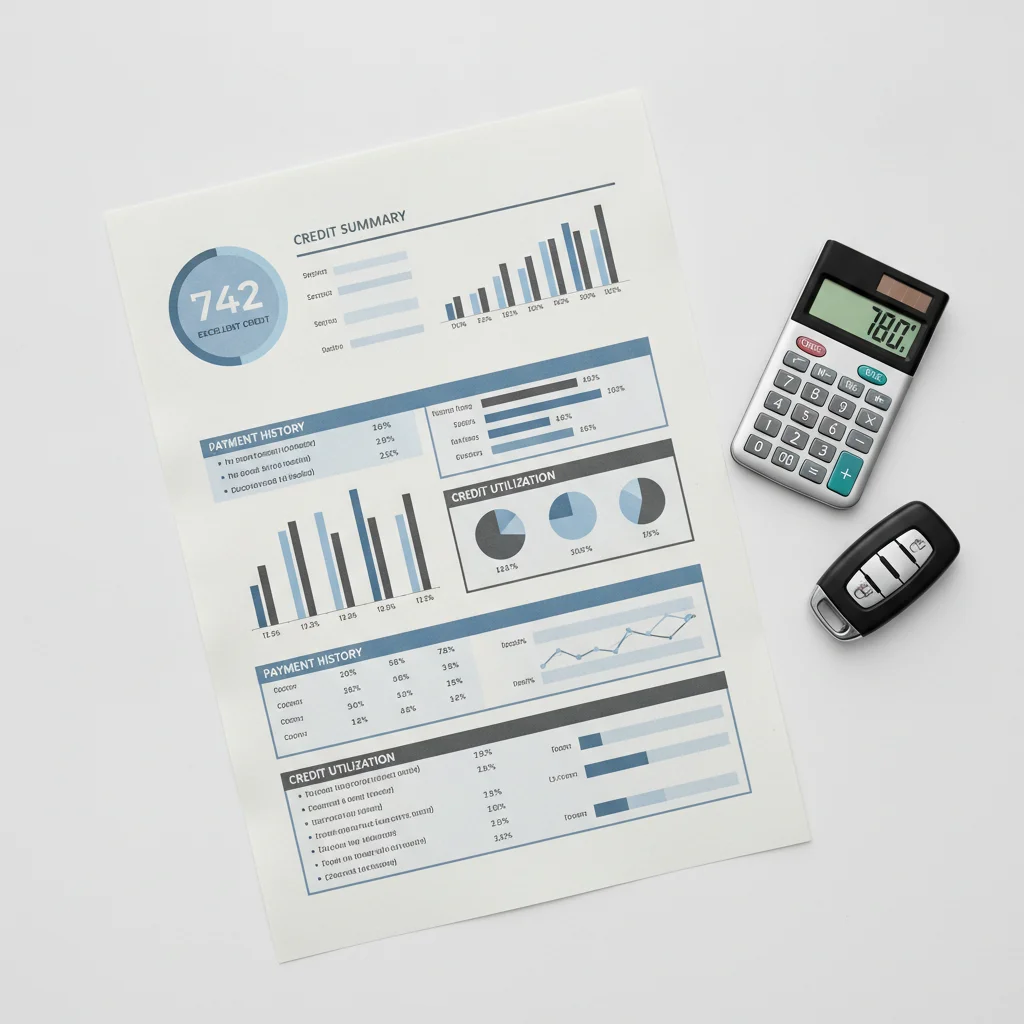
Below 640, manufacturer CPO programs may decline your application outright or refer you to a third-party lender, at which point the rate advantage disappears entirely. In that scenario, you're better off shopping credit unions or online lenders for the best standard used rate you can find, then choosing the vehicle — CPO or not — that fits your budget.
One underutilized move: get pre-approved by your credit union or an online lender before visiting the dealership. Bring that rate with you as a benchmark. If the manufacturer's CPO financing beats it, take the CPO deal. If your pre-approval wins, use it — and potentially buy a non-CPO car for less. This approach removes emotion from the decision and keeps it where it belongs: on the numbers.
Don't Let a Low Rate Justify an Overpriced Car
A 3.9% CPO rate is only a win if the purchase price is fair. Some dealers mark CPO vehicles above market and rely on the attractive rate to distract buyers from the inflated sticker. Always check the vehicle's value against third-party pricing tools like Edmunds or KBB before evaluating any financing offer. The rate is one variable; the price is another — both determine total cost.
Manufacturer Financing Can Limit Your Negotiating Power
When you accept the dealer's CPO financing, you're consolidating your vehicle purchase and your loan with the same party. That can reduce your leverage to negotiate either one independently. Dealers who know you're committed to their financing have less incentive to discount the vehicle. Use a competing pre-approval as a negotiating chip, even if you ultimately intend to take the manufacturer's rate.
Loan Terms, Vehicle Age, and How They Shift the Equation
Loan term is a lever that cuts both ways. Extending from 48 to 72 months lowers your monthly payment but dramatically increases total interest paid — regardless of whether you're financing a CPO or standard used car.
CPO programs typically limit financing terms to 48 or 60 months for vehicles that are three to five years old. Standard used car lenders may offer 72- or even 84-month terms on the same vehicles, which makes the monthly payment look more attractive but buries the cost.
Vehicle age also matters to lenders. Most manufacturer CPO programs only certify cars that are five years old or newer with fewer than 80,000 miles. Standard used car loans can be applied to older, higher-mileage vehicles, but rates climb as the car ages. A 2018 model (six or seven years old depending on when you're reading this) may not qualify for any CPO program, leaving standard financing as your only path — and that lender will price in the age risk accordingly.
For CPO shoppers eyeing luxury marques, the calculus is different again. Off-lease luxury vehicles that enter CPO programs often carry lower interest rates and higher residual values, which affects both financing and long-term cost. Our article on luxury CPO programs vs. buying new walks through the depreciation math in detail.
Manufacturer CPO Financing vs. Third-Party Lenders: Practical Comparison
Not all CPO buyers have to use the manufacturer's captive lender. You can purchase a CPO vehicle and finance it through a bank, credit union, or online lender — you just won't get the manufacturer's promotional rate. In return, you may get more flexibility on term length, fewer restrictions on vehicle age, and a lender relationship that isn't contingent on the dealership's cooperation.
Credit unions are consistently competitive on used car loans, often pricing 0.5–1.5 percentage points below big banks for members with good credit. If your credit union's rate on a used vehicle comes in at 5.9% and the CPO program is offering 4.9%, the decision is close enough that the CPO warranty and inspection become meaningful tiebreakers.
The used car buying process benefits from rate shopping at every step — don't assume the financing offered at signing is your best option. Dealers earn a reserve (a markup) on loans originated through their finance office, which means there's always room to negotiate the rate or bring your own.
One more variable: gap insurance. CPO vehicles financed through manufacturer programs sometimes include or heavily discount gap coverage — protection that pays the difference between what you owe and what the car is worth if it's totaled early in the loan. This is worth factoring in, particularly if you're making a small down payment. You can also learn how CPO status affects your broader insurance picture in our guide to insuring a CPO car.
Don't Let a Low Rate Justify an Overpriced Car
A 3.9% CPO rate is only a win if the purchase price is fair. Some dealers mark CPO vehicles above market and rely on the attractive rate to distract buyers from the inflated sticker. Always check the vehicle's value against third-party pricing tools like Edmunds or KBB before evaluating any financing offer. The rate is one variable; the price is another — both determine total cost.
Manufacturer Financing Can Limit Your Negotiating Power
When you accept the dealer's CPO financing, you're consolidating your vehicle purchase and your loan with the same party. That can reduce your leverage to negotiate either one independently. Dealers who know you're committed to their financing have less incentive to discount the vehicle. Use a competing pre-approval as a negotiating chip, even if you ultimately intend to take the manufacturer's rate.
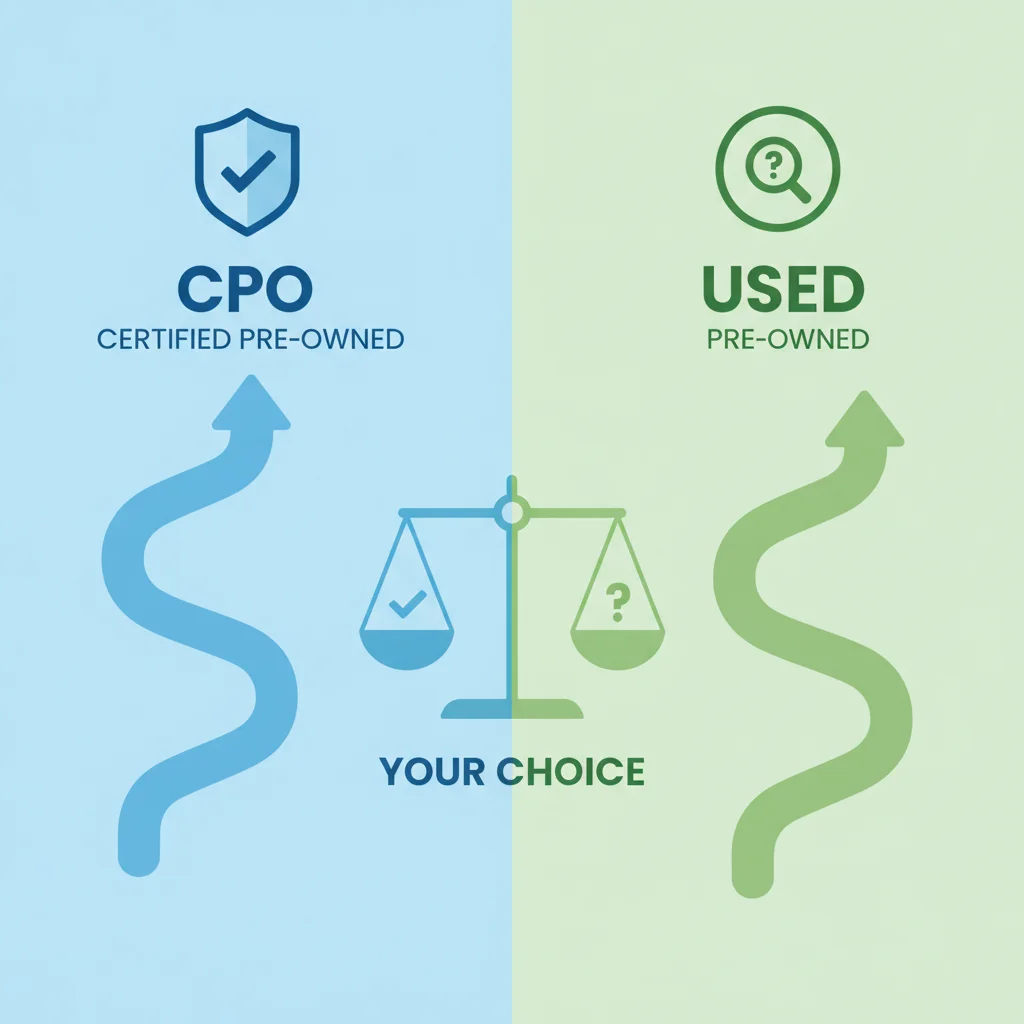
When CPO Financing Clearly Wins — and When It Doesn't
The decision tree is simpler than it looks once you strip away the marketing:
CPO financing wins when:
- The manufacturer is running a promotional rate below 4% APR and you qualify at the top tier
- The CPO premium over a comparable non-certified car is under $1,500
- The vehicle is two to four years old and still covered partially by the original factory warranty anyway
- You can't find a third-party lender within 1.5 points of the CPO rate
Standard used financing wins when:
- Your credit score locks you out of tier-one CPO rates
- You find a well-inspected non-CPO vehicle priced $2,000+ below its CPO equivalent
- A credit union offers you sub-6% APR on a solid non-certified vehicle
- The vehicle you want is over five years old and doesn't qualify for any CPO program
It's also worth noting that CPO status doesn't guarantee a superior long-term investment. As our piece on which CPO cars hold value best explains, brand reliability and resale trajectory matter more than the CPO badge itself.
Similarly, understanding how CPO pricing differs from standard valuations will sharpen your negotiating position — because paying below the CPO asking price is possible, and doing so shrinks the premium that makes the financing math challenging.
Finally, don't overlook the car's history. Many CPO vehicles are former lease returns, which often means lower mileage and consistent maintenance. But the source of a CPO vehicle — whether it's an off-lease return, a trade-in, or a fleet car — affects condition, negotiability, and sometimes the rate you're offered. Factor in where the car came from before deciding the CPO badge justifies the premium.
Run the Total Cost Comparison Before Deciding
Before committing to either path, calculate total amount paid (monthly payment × number of payments) for both scenarios — not just the monthly number. Plug in the actual purchase prices of specific vehicles you're considering, not hypothetical averages. A spreadsheet or online loan calculator takes five minutes and can save you thousands.
Time Your CPO Purchase Around Manufacturer Promotions
Manufacturer CPO rate specials are most aggressive at model year changeover (August–October) and at the end of each calendar quarter when brands push volume. Sign up for email alerts from manufacturer financial services sites or watch for announcements on brand loyalty programs. A 1.9% CPO promotion on a well-maintained three-year-old vehicle is genuinely hard to beat from any lender.
Negotiate the Vehicle Price Separately from Financing
Always agree on the out-the-door purchase price before discussing financing. Dealers sometimes increase the vehicle price to offset the cost of offering a subsidized CPO rate. Get the price in writing, then let the finance office present their CPO financing offer — at which point you can compare it directly against your pre-approved rate from a credit union or bank.

All claims are backed by peer-reviewed research. Sources on request.