Key Takeaways
CPO Warranty Transferability
CPO warranty transferability means that when you sell a certified pre-owned vehicle, the remaining warranty coverage can be passed on to the new owner. Instead of the warranty expiring the moment you hand over the keys, the next buyer inherits whatever time or mileage is left on the original CPO protection. This can make your car more attractive to buyers and justify a higher asking price.
Transferability terms are set by the manufacturer's CPO program — not the dealership — and may involve a one-time administrative fee, typically $50–$300, paid either by the seller or buyer at the time of transfer.
The Short Answer: It Depends on Who Issued the Warranty
When a car owner asks what happens to a CPO warranty at resale, the honest answer is: it depends entirely on which automaker's program certified the vehicle in the first place. There's no single industry-wide rule.
The vast majority of manufacturer-backed CPO programs — programs run by Toyota, Honda, Ford, BMW, Mercedes-Benz, and others directly through their brand — do allow warranty transfer to a new private buyer. The remaining coverage travels with the vehicle, not with the person who bought it originally.
On the other hand, dealer-certified programs — where an independent dealership applies its own "certified" label to a used car — almost never transfer. Those warranties are typically tied to the purchasing customer and terminate the moment that person sells.
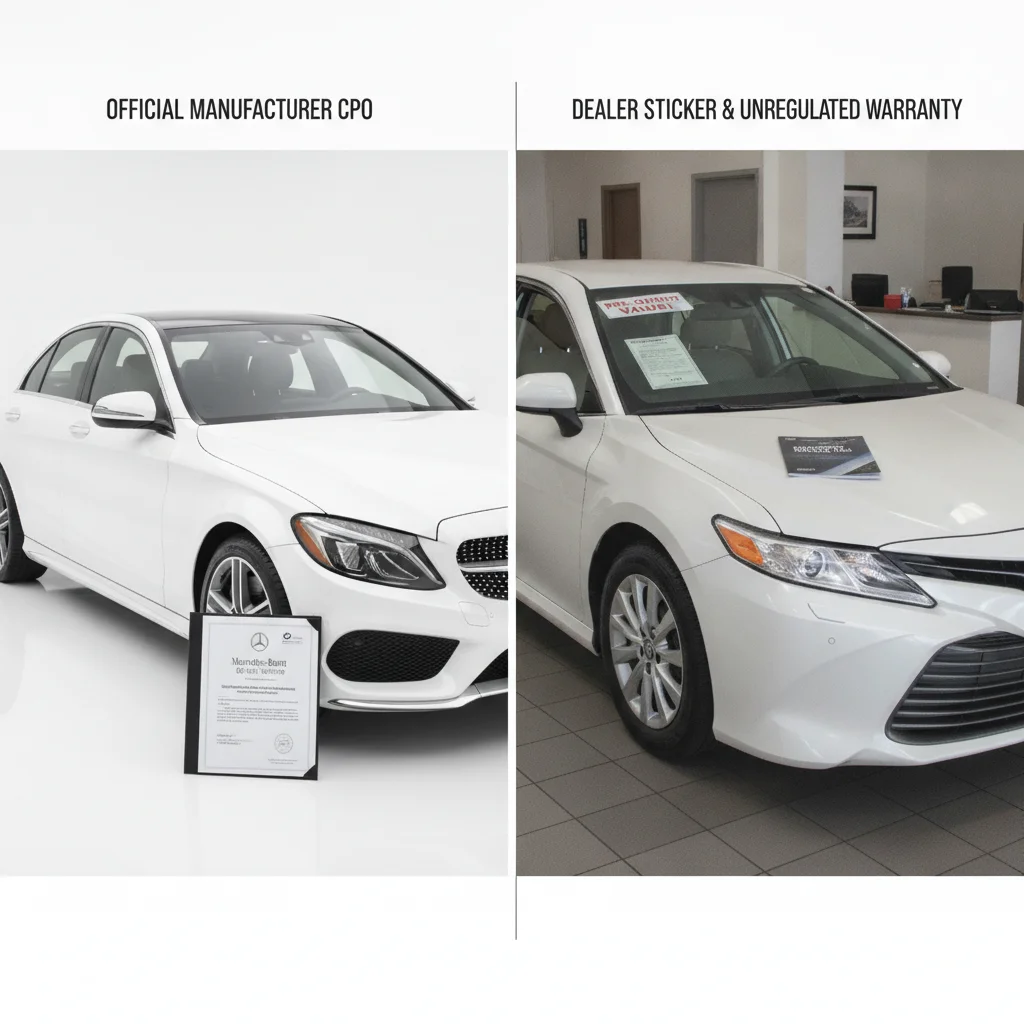
This distinction matters enormously when you're evaluating a used car purchase. A vehicle marketed as "certified pre-owned" doesn't automatically mean manufacturer-backed transferable coverage. Always ask which program certified the vehicle and request documentation before assuming any warranty survives the sale.
How the Transfer Process Actually Works
For manufacturer-backed programs that do allow transfers, the mechanics are fairly straightforward — though each brand handles the paperwork differently.
Step 1: Confirm Transferability Before You List the Car
Pull out the original CPO documentation you received when you purchased the vehicle. Look for a section labeled "Transfer of Coverage" or "Change of Ownership." If you can't find it, call the manufacturer's customer service line with your VIN and they can confirm the remaining coverage and transfer eligibility in minutes.
Step 2: Identify Any Transfer Fees
Some brands charge nothing to transfer. Others charge an administrative fee. Here's a snapshot of how a few major brands handle it:
| Brand | Transfer Allowed? | Typical Fee |
|---|---|---|
| Toyota | Yes | $0 |
| Honda | Yes | $0 |
| BMW | Yes | Varies by program tier |
| Mercedes-Benz | Yes | $0–$100 |
| Ford | Yes | $0 |
| Dealer-Certified | Rarely | N/A |
Negotiate who pays the fee before closing the private sale. In most cases buyers expect sellers to absorb it, but there's no rule preventing you from splitting it or passing it along.
Step 3: Complete the Transfer Documentation
The new owner typically needs to contact the manufacturer's warranty administrator — either by phone, online portal, or through a franchised dealership — and provide the VIN, sale date, and new owner information. Some brands require this within 30 days of the sale; others are more lenient. Missing the window can void the transfer.
Transfer Windows Vary by Brand — Don't Miss Them
Each manufacturer sets its own deadline for completing a CPO warranty transfer after a vehicle is sold. Toyota and Honda are flexible, but some European brands require notification within 30 days of sale. Missing this window can void the transfer entirely, leaving the new buyer with no coverage even though the warranty technically had time remaining. Complete the transfer paperwork on the day of sale whenever possible.
CPO Status Doesn't Transfer Through Auction Sales
If a CPO vehicle passes through a wholesale auto auction — which can happen when a dealer trades vehicles between lots — the manufacturer's CPO status may be voided. Vehicles with clean retail histories are far less likely to encounter this issue, which is another reason a detailed vehicle history report matters even when buying a CPO car from a dealership.
Step 4: Confirm Coverage Restart or Continuation
After transfer, the warranty doesn't reset. The new owner inherits whatever time and mileage remains on the original CPO terms. If the original buyer purchased a 5-year/100,000-mile powertrain warranty and the car now has 80,000 miles on it with three years elapsed, the new buyer gets 20,000 miles or two years — whichever comes first.
What the Transfer Is Actually Worth at Resale
Here's where things get financially interesting. A transferable CPO warranty isn't just a paperwork formality — it has real dollar value in the used car market.
$1,500
Average CPO resale premium over non-certified equivalents
Industry estimates from iSeeCars and Edmunds suggest CPO vehicles command $1,000–$2,000 more than identical non-certified used cars when meaningful warranty time remains.
70%+
Major manufacturer CPO programs that allow transfer
A review of the top 15 manufacturer CPO programs shows that the large majority explicitly permit warranty transfer to subsequent private buyers, though terms vary.
$0–$300
Range of typical transfer fees charged by manufacturers
Many brands — including Toyota and Honda — charge nothing to transfer CPO coverage; others assess a one-time administrative fee at the time of ownership change.
30 days
Common window to complete CPO transfer after sale
Several manufacturer programs require the new owner to register the transfer within 30 days of the vehicle sale date to preserve coverage eligibility.
Think about it from a buyer's perspective. Two otherwise identical 3-year-old sedans are listed side by side: one has 18 months of manufacturer CPO coverage remaining, the other is being sold "as-is." The buyer knows that any mechanical failure during those 18 months on the CPO car is the manufacturer's problem, not theirs. That peace of mind is worth something real.
The value of remaining CPO coverage is roughly tied to three factors:
- How much time and mileage remains: A CPO car with 3 years left is worth considerably more than one with 3 months.
- What the warranty actually covers: A bumper-to-bumper comprehensive warranty is worth more than a powertrain-only plan.
- The reliability reputation of the brand: A 2-year Toyota CPO warranty on a historically reliable model carries less incremental value than the same coverage on a brand known for expensive repairs.
In practical terms, sellers with substantial CPO time remaining can often price their vehicle $500–$2,000 above comparable non-CPO listings and still close the sale. For luxury brands where repair bills run high, that premium can stretch even further. See why some CPO cars hold value better than others for a deeper look at how brand and reliability intersect with resale outcomes.
Time Your Sale to Maximize Warranty Value
If you're planning to sell a CPO vehicle, try to list it while at least 12 months of coverage remains. Buyers are significantly more motivated by warranty protection they can actually use over a meaningful period. A CPO car with 3 months left on coverage provides little practical benefit to a buyer and won't support a meaningful price premium.
Always Get Transfer Confirmation in Writing
Don't rely on verbal assurances from a dealership or the seller that a CPO warranty is transferable. Before finalizing any purchase, request written confirmation from the manufacturer — either through their website warranty lookup tool or a dealer-printed coverage summary tied to the VIN. This protects you if a coverage dispute arises later.
Common Restrictions That Can Limit or Void the Transfer
Not every CPO warranty transfers cleanly. Several conditions can complicate or block the transfer entirely.
Private Sale vs. Dealer Trade-In
Most CPO warranties transfer without issue in a private party sale. However, if you trade the car in to a dealership, the warranty situation changes. The dealership becomes the new owner and may resell the car again — some programs allow a second transfer in that chain, others don't. If you want the warranty to benefit whoever eventually buys the car from that dealer, clarify the chain-of-title rules before you trade in.
Salvage or Rebuilt Titles
If the car has been in a significant accident that resulted in a salvage or rebuilt title at any point in its history, the CPO status — and any transfer rights — are typically voided. This is one reason a pre-purchase vehicle history report matters even on a CPO vehicle.
Modifications and Aftermarket Parts
Significant modifications — lifted suspension, aftermarket engine tuning, non-OEM electrical components — can give manufacturers grounds to deny warranty claims, even on a transferred CPO policy. Buyers should inspect for modifications and sellers should disclose them honestly.
Missed Maintenance Records
Some programs technically allow the manufacturer to decline coverage if the vehicle's maintenance history shows consistent neglect — missed oil changes, skipped timing belt service, and so on. While this is less commonly enforced during a transfer than at the time of original CPO certification, it's a risk worth knowing about.

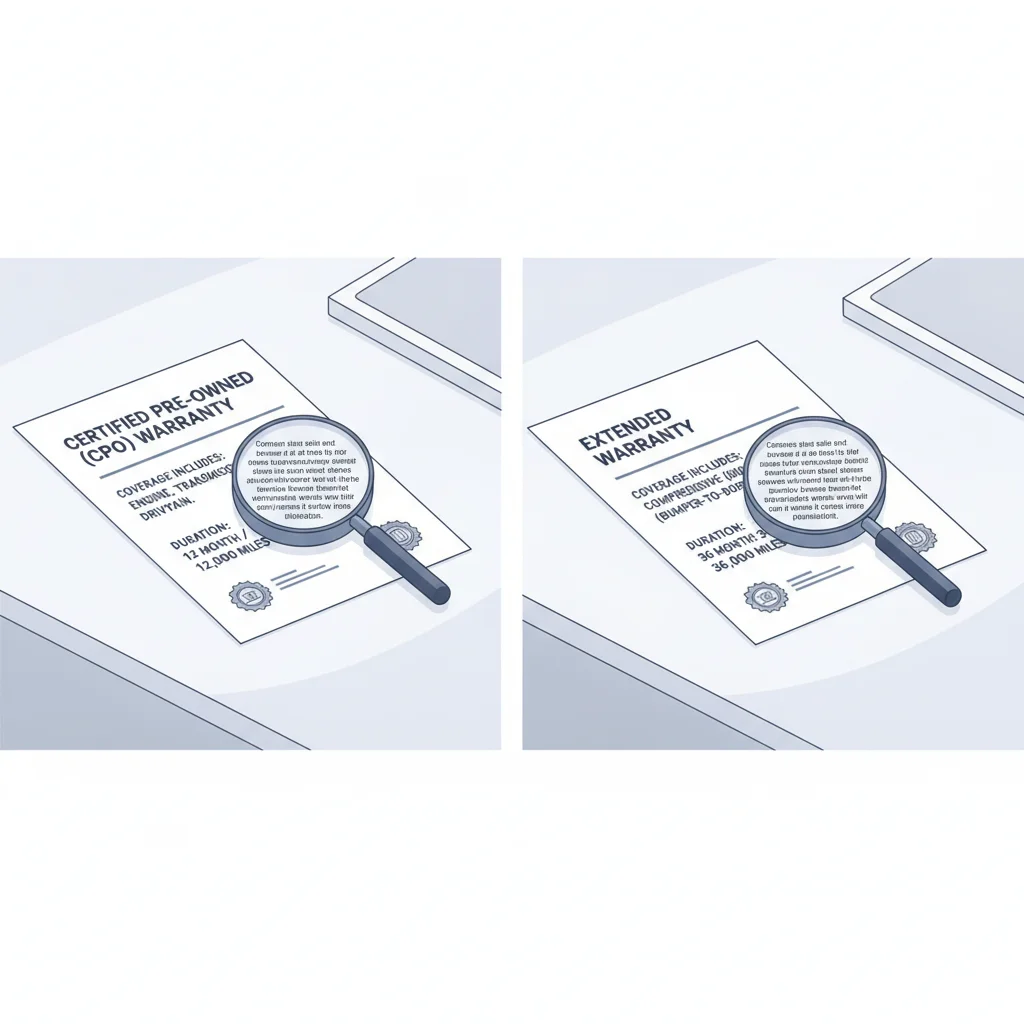
For buyers wondering how CPO coverage interacts with other protection options, CPO warranties vs. extended warranties walks through when layering additional coverage makes financial sense — an especially relevant question after a transfer leaves limited time remaining on the original plan.
What This Means If You're Buying a CPO Car You Plan to Resell
If you're purchasing a CPO vehicle with the intent to eventually sell it — whether that's in two years or five — the warranty's transferability should factor into your buying decision from day one.
Here's the strategic math: when you buy a CPO car, you're paying a premium over non-certified used vehicles for the peace of mind the warranty provides. If that warranty is transferable, you can recapture some of that premium at resale by pricing accordingly. The longer the remaining coverage at the time you sell, the better your position.
This means timing matters. Selling a CPO car with 18+ months remaining on coverage is meaningfully different from selling it with 2 months left. If you're approaching the tail end of CPO coverage, you lose the resale pricing power — and you might consider whether any pre-sale warranty extension options exist through the manufacturer before listing.
Maximizing your CPO purchase over the long run covers this kind of strategic thinking in more depth, including how to use warranty coverage proactively before it expires.
“The transferable warranty is often the most underutilized negotiating tool in a private used car sale. Sellers who know its value — and can document it — consistently close faster and closer to asking price.”
— Ivan Drury, Director of Insights, Edmunds
Finally, don't overlook how CPO status affects your insurance decisions while you own the car. Comprehensive coverage choices and gap insurance needs can shift based on CPO coverage — insuring a CPO car explains what's worth discussing with your insurer before you buy or sell.
Time Your Sale to Maximize Warranty Value
If you're planning to sell a CPO vehicle, try to list it while at least 12 months of coverage remains. Buyers are significantly more motivated by warranty protection they can actually use over a meaningful period. A CPO car with 3 months left on coverage provides little practical benefit to a buyer and won't support a meaningful price premium.
Always Get Transfer Confirmation in Writing
Don't rely on verbal assurances from a dealership or the seller that a CPO warranty is transferable. Before finalizing any purchase, request written confirmation from the manufacturer — either through their website warranty lookup tool or a dealer-printed coverage summary tied to the VIN. This protects you if a coverage dispute arises later.
How to Document the Transfer for a Clean Transaction
Whether you're the seller or the buyer, clean documentation protects both parties. Here's what a well-documented CPO transfer should include:
- Original CPO certification paperwork showing the inspection checklist, certification date, and original warranty terms
- Proof of the transfer submission — a confirmation number from the manufacturer's portal or a receipt from the dealership that processed it
- Vehicle history report (Carfax or AutoCheck) confirming clean title and no undisclosed incidents since certification
- Service records showing maintenance was performed on schedule through the ownership period
- Written confirmation of remaining coverage from the manufacturer, including expiration date and mileage limit
Sellers who present this documentation package signal transparency and professionalism — qualities that help close private sales faster and at better prices. Buyers who receive it have recourse if a coverage dispute arises later.
If you're uncertain about what's covered or how much time remains, the manufacturer's CPO administrator can generate a written coverage summary tied to the VIN. Request this before listing the car. It costs nothing and removes ambiguity from the negotiation.


All claims are backed by peer-reviewed research. Sources on request.