Key Takeaways
Why Depreciation Isn't the Same for Every Car
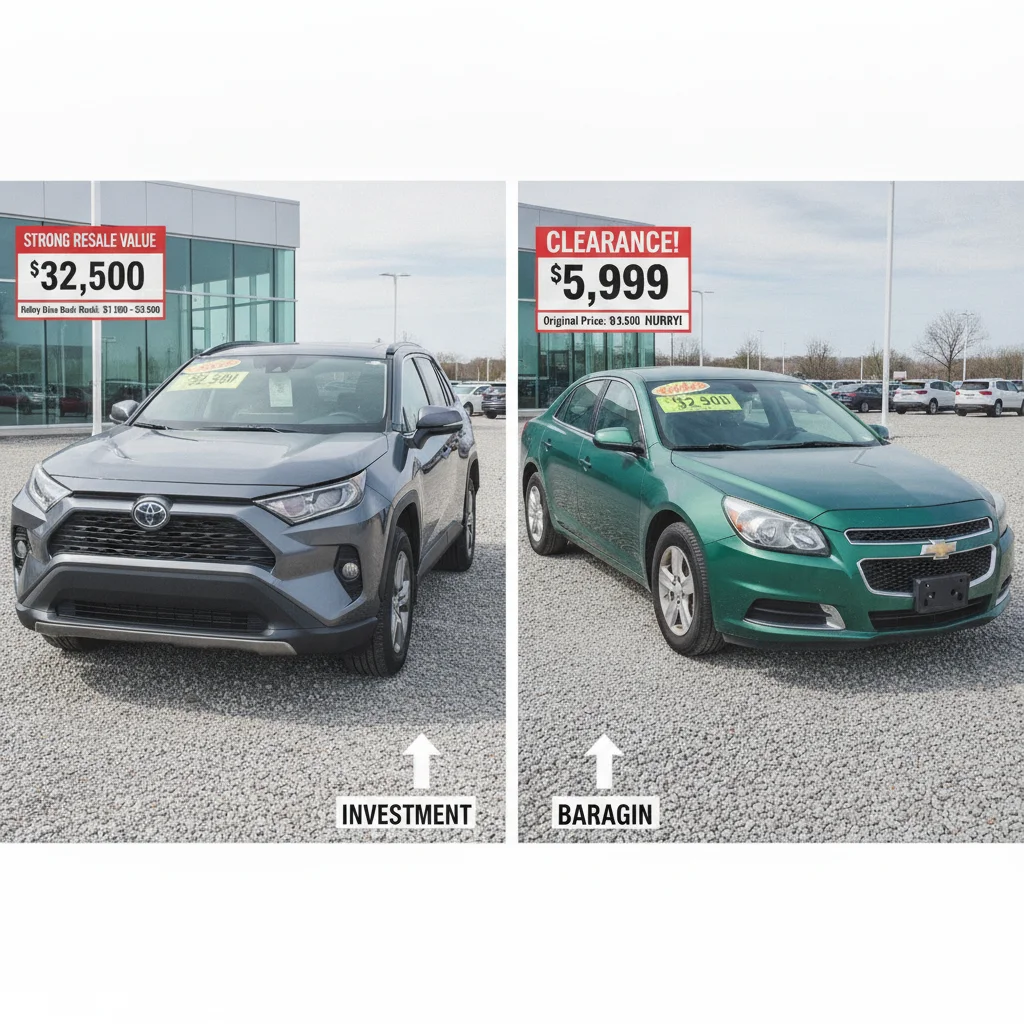
The average new car loses roughly 20% of its value in the first year and close to 50% within five years. That's the average. Some vehicles are far worse — think luxury sedans and base-trim economy cars nobody wants used. But a select group of models consistently beat the curve, holding 55%, 60%, sometimes even 65% of their original value after five years.
Understanding why those vehicles hold value so well isn't just trivia for car enthusiasts. It's practical information that changes how you shop, what you pay, and how much money you walk away with when it's time to sell or trade in. If you'd like to understand the mechanics behind this, our article on how reliability shapes depreciation rates lays out the connection clearly.
Below are the vehicles that consistently outperform almost everything else on resale value — and the specific reasons each one holds up so well over time.
The Best Value-Holding Vehicles — and What Makes Each One Tick
Toyota Tacoma
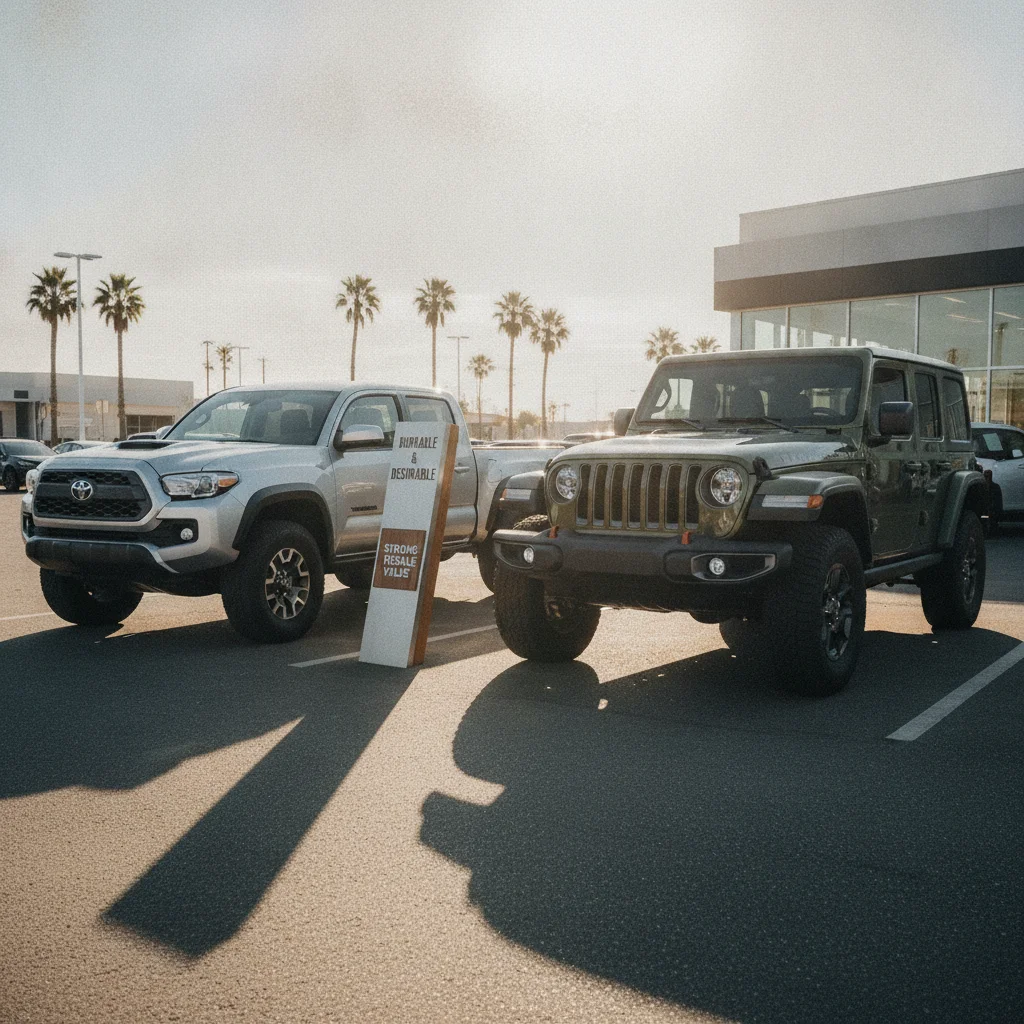
The Tacoma has been the gold standard for resale value in the truck segment for over a decade. Five-year resale regularly lands in the 60–65% range depending on trim and configuration — numbers that would make luxury car buyers weep. The reason isn't complicated: the Tacoma has an obsessive owner base, a reputation for going 200,000+ miles with normal maintenance, and genuine off-road capability that keeps demand high from a wide range of buyers.
TRD Off-Road and TRD Pro trims hold up especially well because they're sought after by enthusiasts willing to pay a premium on the used market. Base SR trims hold up nearly as well simply because inventory is always thin — Tacoma supply has historically lagged behind demand, which is one of the most reliable value-preservation mechanisms in the used-car market.
If you own a Tacoma, you're in good shape. Maintain the service records, keep it in a neutral color, and don't over-modify it. The market will reward you when you're ready to sell.
Tacoma's five-year resale often exceeds 60% — numbers that make luxury car buyers weep.
Jeep Wrangler
The Wrangler occupies a genuinely unique position in the market: there is nothing else quite like it. That lack of alternatives is a massive resale advantage. Used Wrangler buyers aren't cross-shopping against Highlanders or Explorers — they want a Wrangler specifically, and they'll pay close to new-car prices to get one if supply is tight.
Wranglers routinely retain 60–68% of their value over five years. Unlimited four-door models (JLU and JKU generations) tend to outperform two-door versions simply because they're more practical for daily driving. Rubicon trim holds especially well given its factory off-road hardware and collector-grade desirability.
One caveat worth knowing: heavy aftermarket modification on a Wrangler can actually help or hurt depending on what was done and how well. A well-documented lift kit and skid plates from reputable brands can add value with the right buyer. A slapped-together build with cut wiring and mystery parts is a liability. Buy or build accordingly.
There's nothing else quite like a Wrangler — and that lack of alternatives is a massive resale advantage.
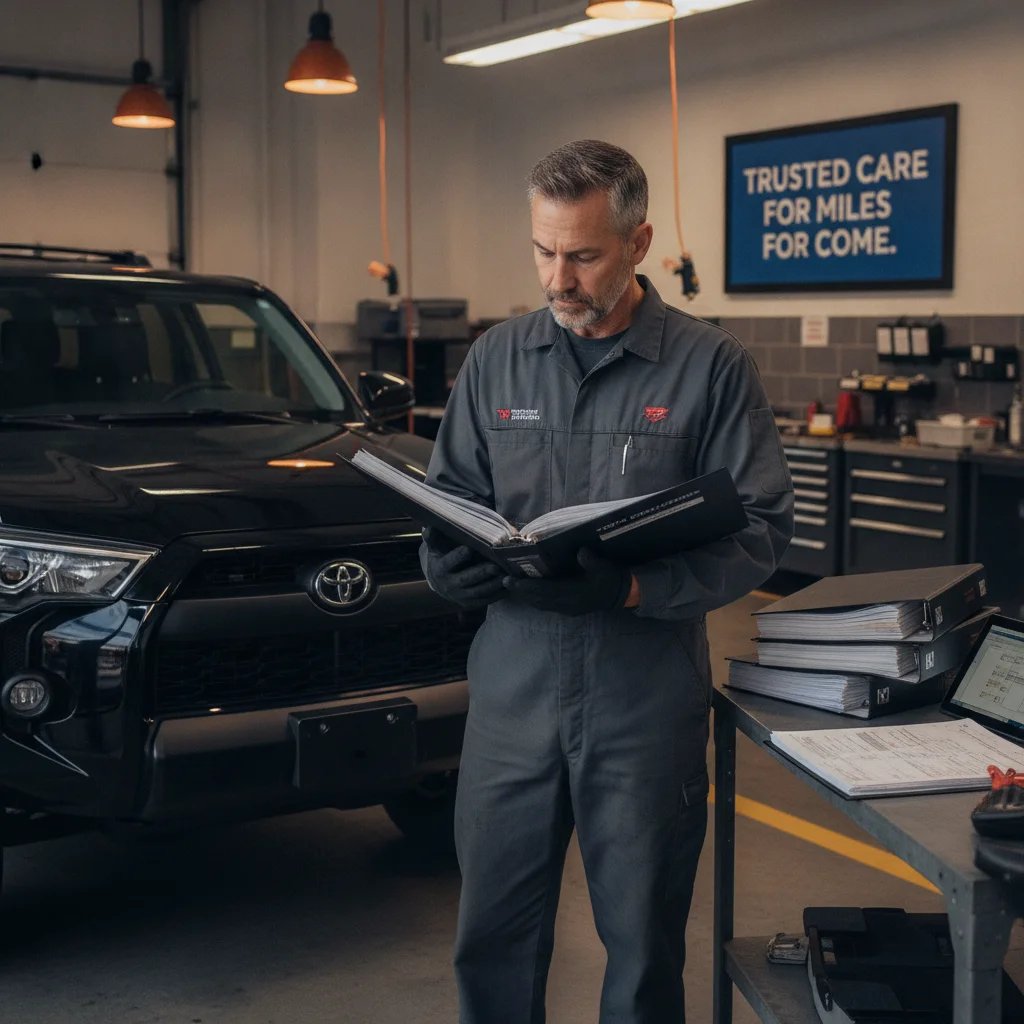
Toyota 4Runner
The 4Runner is an increasingly rare thing: a body-on-frame SUV that hasn't been softened into a crossover. That stubbornness — Toyota has resisted major redesigns for years — has made it a cult favorite and a resale powerhouse. Five-year retention consistently lands above 60%, and low-mileage examples in clean condition often sell at or near original MSRP on the private market.
Reliability is the core driver here. The 4Runner uses a proven V6 drivetrain that has been in production long enough that mechanics know it inside and out, parts are cheap and widely available, and major mechanical failures before 150,000 miles are genuinely uncommon with normal maintenance. That track record filters directly into buyer confidence and, therefore, into used pricing.
TRD Pro and Limited trims command the biggest premiums. If you're buying a 4Runner new with resale in mind, both trims are worth the upfront cost. Trail Edition and SR5 versions still hold well — just slightly below the top trims in absolute dollar terms.
Low-mileage 4Runners in clean condition often sell near original MSRP on the private market.
Ford F-150 (Specific Configurations)
The F-150 is the best-selling vehicle in America, which creates a complicated resale picture. Volume alone doesn't guarantee value — it can actually suppress it by flooding the used market. But certain F-150 configurations hold their value exceptionally well: Lariat and Platinum trims, crew cab configurations, and trucks equipped with the PowerBoost hybrid or high-output engines consistently retain more than base models.
The reason: used truck buyers are largely commercial or serious recreational users who know what they want and will pay for it. A well-spec'd F-150 with a proven powertrain and a clean service history competes strongly against new inventory. Base XL and XLT trims face more competition from similarly priced alternatives, which softens their resale floor.
Raptor trim deserves a separate mention. The Raptor commands stratospheric resale — sometimes selling used for above original sticker price during high-demand periods. It's a performance truck with no real competition in its segment, which mirrors the Wrangler's insulation from the normal depreciation forces.
The F-150 Raptor occasionally sells used for above original sticker — that's how isolated it is from normal depreciation.
Honda CR-V
Among mainstream crossovers, the CR-V is the consistent overachiever on resale. It routinely holds 50–55% of its value over five years — significantly better than segment averages — and competes favorably even against vehicles with stronger brand premiums. The reason is straightforward: Honda built a reputation for reliability that buyers trust, and the CR-V has been a volume leader long enough that mechanics, parts suppliers, and buyers are all deeply familiar with it.
EX and EX-L trims tend to retain better than base LX trims because buyers in the used market tend to want creature comforts. A used LX competes against a lot of similarly stripped alternatives. A used EX-L in good condition appeals to a buyer who wants near-new features without a new-car price — and that buyer will pay a premium.
If you're considering a used CR-V, the Honda certified pre-owned program is one of the more comprehensive in the industry and worth evaluating seriously, particularly on late-model examples.
The CR-V holds 50–55% of its value after five years — well above what most crossovers manage.
Subaru Outback and Forester
Subaru's two workhorses — the Outback wagon and Forester SUV — consistently punch above their weight on resale, typically retaining 48–54% of value at five years. That's stronger than most mainstream crossovers and well above average for their price brackets. The loyalty among Subaru owners is unusually high, which means a large pool of brand-familiar used buyers who know the product and trust it.
The symmetrical AWD system is a major draw in northern and mountain states, and that geographic demand concentration keeps pricing strong in those markets specifically. If you live in Colorado, Vermont, or anywhere with real winters, a used Outback or Forester commands a premium that buyers in southern states simply don't see.
One thing to watch: the EJ-series engines in older models had head gasket issues that are well-documented. The FA/FB series engines in 2013 and newer models are significantly more robust. Buyers know this, which means verified service history on post-2012 examples is especially valuable at resale time.
Subaru's AWD reputation drives a regional demand premium that keeps resale values meaningfully above average.
Chevrolet Silverado and GMC Sierra (Heavy-Duty Variants)
Light-duty Silverados and Sierras hold decent resale value, but the real story is in the heavy-duty 2500 and 3500 variants. Work trucks with legitimate towing and payload capability hold value in a different class from their half-ton counterparts, because the buyers — contractors, farmers, fleet operators — are buying on function, not feeling. When the function is well-documented (maintenance records, clean Carfax, no accident history), pricing stays strong regardless of age.
Diesel-equipped 2500HD and 3500HD trucks with the Duramax engine hold value particularly well. The Duramax has an excellent long-term reputation, and diesel trucks used for serious work tend to attract buyers willing to pay for proven capability. High-mileage examples in good condition sell better than you'd expect, because buyers in this segment understand that a well-maintained diesel at 150,000 miles has a lot of life left.
If you're in the market for one of these used, use multiple pricing tools and compare carefully — the range on heavy-duty trucks is wide depending on equipment, bed configuration, and history. The valuation tools on our pricing hub can help you triangulate a realistic number.
A well-maintained diesel 2500HD holds its value in a category most buyers don't expect.
Toyota Tundra
The Tundra doesn't outsell the F-150, Ram, or Silverado. It doesn't need to. Its resale numbers are consistently stronger than all three, and the reason is the same as it is for every Toyota on this list: the reliability reputation is deeply established and buyers trust it with their money. Five-year resale on Tundras regularly hits 55–60%, which is exceptional for a full-size truck.
The 2022 redesign introduced a twin-turbocharged V6 replacing the long-running 5.7L V8, which created some uncertainty among used buyers initially. That uncertainty has largely settled as the new powertrain proves itself, but if you're buying used, a 2018–2021 Tundra with the 5.7L iForce engine is a known quantity with a deep service history and strong owner reviews. Those years command a premium precisely because of how well-understood they are.
SR5 and Limited trims hit the best balance of features versus price for resale purposes. TRD Pro holds its own for enthusiast buyers but appeals to a narrower audience.
The Tundra's five-year resale regularly hits 55–60% — stronger than every American-brand full-size truck.
Time Your Sale Before the Next Drop
Depreciation curves aren't linear — they tend to have steeper drops at certain mileage and age thresholds. For most vehicles, years 3–5 and the 60,000–80,000 mile range represent transition points where buyers start pricing in anticipated maintenance. If you're planning to sell, doing so slightly before those thresholds often nets you meaningfully more money. Check current market pricing on your specific vehicle every six months so you know where you stand.
Trim Level Matters More Than You Think
When buying with resale in mind, avoid the base trim and skip the top-of-the-line if it carries a large price premium. Mid-to-upper trims consistently offer the best resale return because they appeal to the widest pool of used buyers. A Tacoma TRD Off-Road or 4Runner TRD Pro will outperform a base SR trim at resale time both in absolute dollars and as a percentage of purchase price.
Resale Rankings Shift With Market Conditions
The vehicles on this list have shown consistent long-term resale strength, but rankings shift in response to fuel prices, supply chain disruptions, and changing buyer preferences. During the 2021–2022 inventory shortage, nearly all used vehicles appreciated temporarily — including models that don't normally hold value well. Always check current market data using tools like Kelley Blue Book or Edmunds rather than relying solely on historical averages.
Regional Demand Affects Your Actual Number
National resale averages don't always reflect what a vehicle will fetch in your specific market. A lifted 4Runner commands more in mountain states than in Florida. A diesel F-250 is worth more in agricultural regions than in dense urban markets. When you're ready to price your vehicle, look at local listings in addition to national valuation tools to understand what buyers in your area are actually paying.
What All These Vehicles Have in Common
Look across this list and a few patterns jump out fast. Nearly every vehicle here has a long-standing reliability record, a loyal owner community, broad parts availability, and genuine utility that doesn't go out of style. None of them are trying to win design awards or pack in tech features that'll feel dated in three years.
That last point matters more than most buyers realize. Cutting-edge infotainment systems, quirky styling, and trend-chasing features all age quickly — and the used-car market punishes that aging ruthlessly. Buyers shopping for a three-year-old vehicle want something that still feels relevant, still runs well, and won't cost a fortune to maintain. That's exactly what this list delivers.
One thing worth noting: the vehicle itself is only part of the equation. How you maintain it determines how close to peak resale you'll actually get. Missing oil changes, skipping fluid services, letting small problems become big ones — all of it shows up in an inspection and in the offer you receive. Our guide on habits that quietly accelerate depreciation covers the most common mistakes owners make without realizing it.
Color plays a quiet but real role too. Neutral shades — white, silver, gray, black — consistently fetch more on the used market than unusual or polarizing colors. If you're choosing between options at the dealer, it's worth factoring in. We have a full breakdown of how color affects resale price if you want the specifics.
When you're ready to sell or trade in one of these vehicles, use multiple valuation tools to set your expectations. Valuation tools like KBB and Edmunds can differ by a few hundred to a few thousand dollars depending on the model, so checking both gives you a realistic range. And if you're rolling the value into a new purchase, read up on trade-in strategies before you walk into the dealership — equity from a strong-resale vehicle is a real negotiating asset.
Buying Smart Means Thinking About the Exit Before You Drive Off the Lot
Most buyers think about monthly payment, features, and maybe fuel economy. Very few think about what they'll get back when it's time to move on. That gap in thinking is expensive. Over a five-year ownership period, the difference between a vehicle that holds 60% of its value and one that holds 40% can easily amount to $8,000–$12,000 depending on original price. That's real money.
If you're considering a used version of any vehicle on this list, it's worth knowing that certified pre-owned programs on high-resale models tend to hold their value particularly well post-purchase too. Our article on why some CPO cars are a better long-term investment explains how to evaluate whether a CPO deal on one of these models actually pencils out.
And if you own one of these vehicles and are thinking about modifications, tread carefully. Most aftermarket work hurts resale value, even when it feels like an upgrade. A small number of additions can genuinely help. Our breakdown of which mods actually add value gives you a clear read on what's worth doing and what to avoid.
Buy the right vehicle, take care of it, skip the mods that buyers won't pay for, and time your sale before the big depreciation drops hit. That's the whole playbook — and vehicles on this list make it a lot easier to execute.

All claims are backed by peer-reviewed research. Sources on request.