Key Takeaways
CPO Warranty Coverage
A CPO (Certified Pre-Owned) warranty is a protection plan that comes with a used vehicle that has been inspected and certified by the manufacturer or dealer. It covers the cost of repairing certain mechanical or electrical failures for a defined period of time or mileage, whichever comes first. Unlike a standard used-car purchase, a CPO warranty gives buyers some of the repair-cost security normally associated with buying new.
CPO warranties are typically structured as either a continuation of the original factory warranty or a new limited warranty layered on top of any remaining factory coverage. The precise scope, deductible, and claim process are governed by the manufacturer's CPO program contract — not dealer promises.
The Two-Tier Structure Behind Almost Every CPO Warranty
Walk into any franchise dealership and the salesperson will tell you the CPO car comes with a "great warranty." What they rarely explain is that nearly every manufacturer-backed CPO program uses a two-tier structure — and the two tiers behave very differently.
Tier 1: Bumper-to-Bumper (Comprehensive) Coverage. This is the broader layer. It covers most mechanical and electrical components — think audio systems, climate control, sensors, steering, and suspension parts — with relatively few exclusions. The catch: it's shorter. On most programs, bumper-to-bumper coverage lasts one to two years or roughly 12,000 to 24,000 miles from the CPO purchase date, whichever comes first.
Tier 2: Powertrain Coverage. This layer is narrower in what it covers but much longer in duration. It typically protects the engine, transmission, and drivetrain (axles, driveshafts, differential). Most programs run powertrain coverage for 5 to 7 years and up to 100,000 miles — measured from the original new-car sale date, not the CPO purchase date. That distinction matters enormously.
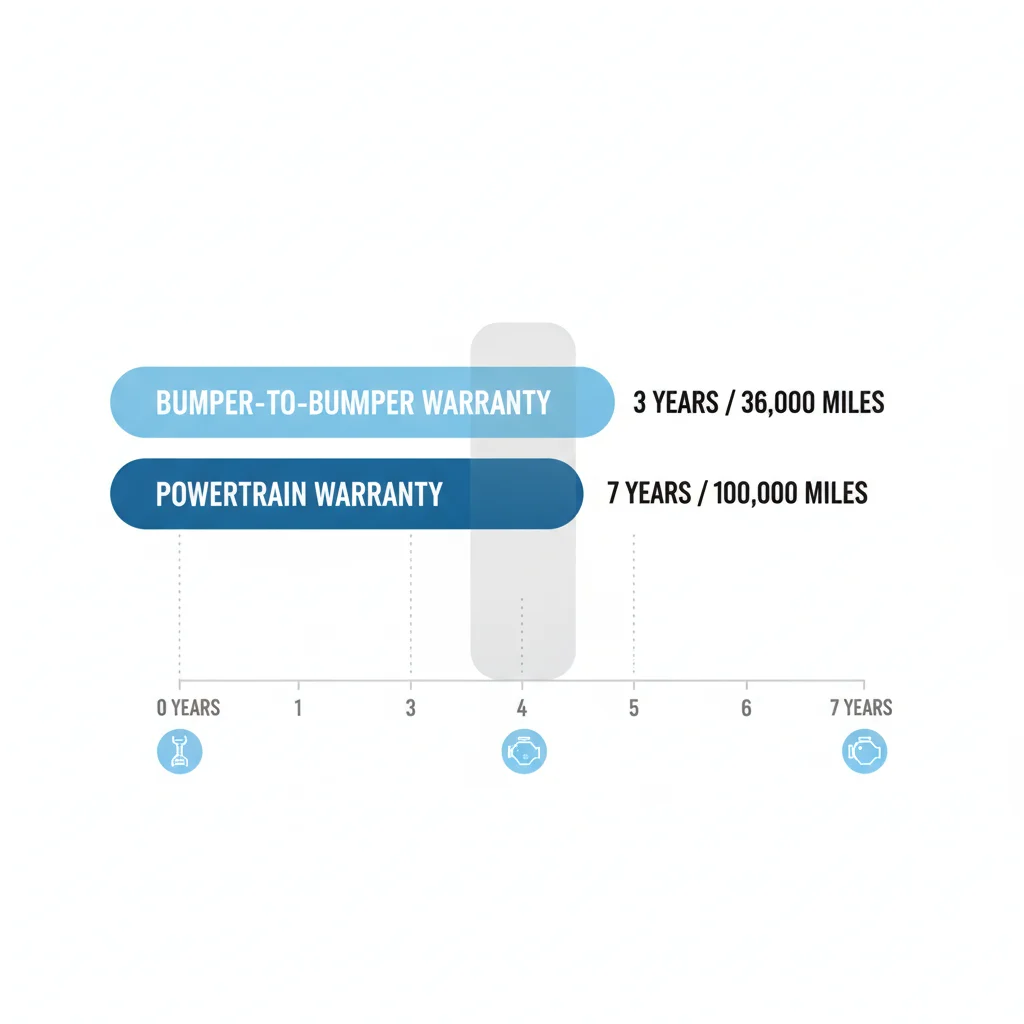
Here's a concrete example: You buy a 3-year-old Toyota with 35,000 miles as a CPO vehicle. Toyota's CPO powertrain warranty runs to 7 years/100,000 miles from original sale. You have 4 years or 65,000 miles of powertrain coverage remaining — but you also get a fresh 12-month/12,000-mile bumper-to-bumper layer on top. Those two protections overlap at first, then the comprehensive layer expires and you're left with powertrain-only coverage.
Understanding this split is crucial before you negotiate price or decide whether to add supplemental protection. For a deeper look at how this compares to buying new, see our piece on new car warranties and what they actually cover.
Original Sale Date vs. CPO Purchase Date
Many CPO powertrain warranties are measured from the vehicle's original new-car sale date — not the date you buy it as CPO. This means a 4-year-old car on a '7 year/100,000 mile' program may only have 3 years of powertrain coverage left when you drive it off the lot. Always ask the dealer to show you the original sale date and calculate the remaining coverage yourself.
Manufacturer CPO vs. Dealer CPO: A Critical Distinction
Not all "certified" labels mean the same thing. Manufacturer-backed CPO programs are governed by the automaker and honored at franchise dealers nationwide. "Dealer-certified" programs — offered by independent used-car lots — are backed only by that dealership, with no manufacturer involvement. The protections, repair standards, and recourse options are far weaker. Always confirm whether the CPO warranty is manufacturer-backed before treating it as comparable protection.
Gap Insurance Still Matters on CPO Purchases
CPO warranty coverage protects against mechanical failure — not the financial gap between what you owe and what the car is worth if it's totaled. On a financed CPO vehicle, especially in the first two years, gap insurance can be important. This is worth discussing with your insurance provider before finalizing the purchase.
What CPO Warranties Actually Cover — and What They Don't
The word "certified" creates a sense of comprehensive protection that the fine print doesn't always deliver. Here's a clear breakdown of what's typically in and out of scope.
Commonly Covered Components
- Engine internals: Block, heads, pistons, crankshaft, camshaft, valves, oil pump
- Transmission: All internal parts, torque converter, automatic shift components
- Drivetrain: Axle shafts, CV joints, differential gears, transfer case (on AWD/4WD vehicles)
- Electrical systems: Alternator, starter motor, wiring harnesses (varies by program)
- Air conditioning: Compressor and core components (often included in bumper-to-bumper tier)
- Steering and suspension: Power steering pump, rack and pinion, control arms (bumper-to-bumper tier)
Commonly Excluded Items
- Wear-and-tear parts: Brake pads, rotors, tires, wiper blades, filters, belts, and hoses are almost universally excluded — these are considered maintenance items regardless of how new they look.
- Cosmetic damage: Scratches, dents, interior wear, and upholstery are not warranty issues.
- Glass: Windshields and windows are typically excluded unless broken by a covered mechanical failure.
- Pre-existing conditions: If the inspection report flagged a problem and the dealer repaired it (or chose not to), any recurrence may be excluded.
- Maintenance neglect: If you skip an oil change and the engine seizes, the manufacturer will investigate service records before honoring a claim.
$1,000–$3,500
Typical CPO price premium over non-certified used
Based on Edmunds and iSeeCars market data comparing certified and non-certified listings of the same vehicle age and mileage.
7 yrs / 100K mi
Common CPO powertrain coverage ceiling
Toyota, Honda, and Ford all offer powertrain coverage to 7 years or 100,000 miles from the original sale date on their certified programs.
$3,200
Average transmission replacement cost
According to RepairPal, a transmission replacement ranges from $1,800 to $4,500 depending on make and model — a cost a CPO powertrain warranty can fully absorb.
68%
CPO buyers who didn't fully read their warranty contract
A 2023 Cox Automotive study found the majority of CPO buyers relied on verbal dealer descriptions rather than reviewing the written warranty terms.
$50–$200
Per-visit deductible range across major CPO programs
Deductibles vary widely — Honda and Mercedes-Benz charge $0, while GM and Ford programs typically charge $100 per service visit.
One area many buyers overlook: technology and infotainment systems. Some programs cover navigation screens and touchscreens under the comprehensive tier; others treat software-related failures as outside warranty scope. Ask specifically about the screen, the backup camera, and driver-assist sensors — these are expensive to replace.
For a thorough look at the inspection standards that determine what enters the CPO program in the first place, see how certified pre-owned inspections work and their limits.
Always Request the Written Warranty Contract
Before signing any CPO purchase agreement, ask for the complete written warranty document — not just a summary brochure. Review the list of covered and excluded components, the deductible structure, and the expiration terms. Cross-check the VIN on the warranty document against the vehicle you're purchasing to ensure coverage is properly registered.
Keep Every Maintenance Receipt
CPO warranty claims can be denied if the manufacturer determines that inadequate maintenance contributed to the failure. Store receipts for every oil change, fluid service, and filter replacement — either in a physical folder in the car or scanned digitally. This documentation is your first line of defense if a claim is disputed.
Factor In Perks When Calculating CPO Value
When comparing CPO versus non-CPO pricing, add up the full value of included perks — roadside assistance, loaner car coverage, and complimentary maintenance visits. An AAA Premier membership costs around $130/year; if your CPO roadside coverage runs five years, that's $650 in equivalent value before you count a single repair.
How Deductibles, Claim Limits, and Fine Print Affect Your Real Cost
Even when a repair is covered, your out-of-pocket cost isn't always zero. Most CPO programs include a per-visit deductible — commonly $0, $50, or $100 — that you pay each time you bring the car in. Some premium brands (Lexus, for instance) advertise $0 deductibles as a selling point. Others bury a $200 deductible in the contract.
Read these fine-print elements carefully before assuming full coverage:
- Deductible structure
- Is the deductible per visit or per repair item? A per-item deductible means a single service visit with three covered repairs could cost you $300 out of pocket.
- Claim limits
- Some programs cap the total dollar amount they'll pay over the life of the warranty. A $5,000 aggregate cap on a vehicle with a known history of expensive repairs could leave you exposed.
- Consequential damage clauses
- If an uncovered part (say, a worn belt that's considered a maintenance item) fails and causes a covered part to break, many programs will deny the covered part's claim because the root cause was excluded. This is one of the most common reasons legitimate-seeming claims get rejected.
- Geographic restrictions
- Manufacturer CPO warranties are generally honored at any franchise dealer in the country. But verify this — some smaller programs restrict you to the selling dealer's region.
- Rental car and transportation coverage
- Some CPO programs provide a loaner vehicle or daily rental reimbursement while repairs are completed. Others do not. This matters if you commute and a covered repair takes three days.

One practical tip: request a copy of the actual CPO warranty contract — not a brochure — before signing. Compare the VIN on the contract to the car you're buying. Dealers occasionally make administrative errors, and you want to confirm coverage is properly registered to your specific vehicle. The paperwork and contracts hub has guidance on reviewing automotive purchase documents.
“The warranty contract is the product. The brochure is marketing. Buyers who confuse the two are the ones who end up surprised at the service counter when a claim is denied. Read the actual document — every exclusion paragraph — before you decide the CPO premium is worth paying.”
— Liz Edelstein, Former automotive warranty compliance officer and consumer advocacy consultant
How CPO Warranty Terms Vary by Manufacturer
Not all CPO programs are equal — the gap between the weakest and strongest programs can be several years of coverage and thousands of dollars of protection. Here's a representative snapshot of major programs:
| Brand | Bumper-to-Bumper | Powertrain | Deductible |
|---|---|---|---|
| Toyota | 12 months / 12,000 mi | 7 yrs / 100,000 mi | $50 per visit |
| Honda | 12 months / 12,000 mi | 7 yrs / 100,000 mi | $0 per visit |
| BMW | 1 yr unlimited miles | 5 yrs / 100,000 mi | $50 per visit |
| Mercedes-Benz | 1 yr unlimited miles | Up to 5 yrs / 100,000 mi | $0 per visit |
| Ford | 12 months / 12,000 mi | 7 yrs / 100,000 mi | $100 per visit |
| Chevrolet/GM | 12 months / 12,000 mi | 6 yrs / 100,000 mi | $100 per visit |
Note: Coverage terms are based on manufacturer-stated CPO program terms and are subject to change. Always verify current terms directly with the manufacturer or dealer.
Luxury brands tend to offer higher per-repair cost coverage, reflecting the fact that their parts and labor rates are higher. A European luxury CPO with a $0 deductible may be more valuable in dollar terms than a mainstream-brand CPO with a $100 deductible, even if the coverage windows look similar on paper.
For a full side-by-side evaluation of programs, see which automakers have the strongest CPO programs.
The Hidden Value: Perks Beyond the Repair Coverage
A CPO warranty isn't just a repair guarantee — most manufacturer programs bundle additional services that have real monetary value, and buyers frequently overlook them when comparing CPO vs. private-party used purchases.
Roadside Assistance
Most manufacturer CPO programs include 24/7 roadside assistance that covers towing, flat tires, dead batteries, and lockouts for the duration of the CPO coverage period. On a program like Hyundai's, that can mean 10 years of roadside coverage — worth hundreds of dollars compared to purchasing it separately through an auto club.
Trip Interruption Coverage
Some programs reimburse hotel, meal, and rental car costs if your vehicle breaks down more than a set distance from home (often 100 miles). This benefit is easy to forget until the moment you need it — and the reimbursement limits (typically $200–$500 per incident) can offset a genuinely stressful situation.
Satellite Radio Trials and Complimentary Maintenance
Brands like Cadillac and Genesis include complimentary scheduled maintenance visits or SiriusXM trials as part of their CPO packages. These are not warranty items per se, but they reduce first-year ownership costs and should be factored into the total value calculation.
For a complete breakdown of these extras across major brands, check out CPO roadside assistance and perks most buyers overlook.
Always Request the Written Warranty Contract
Before signing any CPO purchase agreement, ask for the complete written warranty document — not just a summary brochure. Review the list of covered and excluded components, the deductible structure, and the expiration terms. Cross-check the VIN on the warranty document against the vehicle you're purchasing to ensure coverage is properly registered.
Keep Every Maintenance Receipt
CPO warranty claims can be denied if the manufacturer determines that inadequate maintenance contributed to the failure. Store receipts for every oil change, fluid service, and filter replacement — either in a physical folder in the car or scanned digitally. This documentation is your first line of defense if a claim is disputed.
Factor In Perks When Calculating CPO Value
When comparing CPO versus non-CPO pricing, add up the full value of included perks — roadside assistance, loaner car coverage, and complimentary maintenance visits. An AAA Premier membership costs around $130/year; if your CPO roadside coverage runs five years, that's $650 in equivalent value before you count a single repair.
When CPO Coverage Ends — and Whether to Layer On More Protection
Every CPO warranty has an expiration date — by time, mileage, or both. High-mileage drivers can burn through a CPO powertrain warranty years ahead of schedule. If you drive 20,000 miles a year and buy a CPO car with 45,000 miles already on it, you may exhaust a "100,000-mile" powertrain warranty in under three years.
Once coverage expires, you're back to paying full repair costs out of pocket. At that point, buyers often consider an extended warranty (also called a vehicle service contract). The key question is whether the premium for that extended contract is justified by the car's remaining mechanical risk — and whether the coverage actually fills the gaps left by the expired CPO warranty rather than duplicating what's still active.
Stacking both protections can make sense in specific scenarios: a luxury vehicle with high expected repair costs, a drivetrain component with a known failure pattern, or a buyer who simply wants predictable monthly expenses. But it can also mean paying for overlapping coverage you'll never use.
See our detailed analysis of CPO warranties vs. extended warranties — when you need both before making that decision.
Insurance Implications
CPO status can also affect how you approach auto insurance. A vehicle with robust CPO mechanical coverage may reduce the urgency for certain add-ons, but gap insurance is still worth evaluating on a financed CPO purchase — especially in the first two years when depreciation risk is highest. Learn more in our guide on insuring a CPO car and what changes versus a standard used vehicle.
Original Sale Date vs. CPO Purchase Date
Many CPO powertrain warranties are measured from the vehicle's original new-car sale date — not the date you buy it as CPO. This means a 4-year-old car on a '7 year/100,000 mile' program may only have 3 years of powertrain coverage left when you drive it off the lot. Always ask the dealer to show you the original sale date and calculate the remaining coverage yourself.
Manufacturer CPO vs. Dealer CPO: A Critical Distinction
Not all "certified" labels mean the same thing. Manufacturer-backed CPO programs are governed by the automaker and honored at franchise dealers nationwide. "Dealer-certified" programs — offered by independent used-car lots — are backed only by that dealership, with no manufacturer involvement. The protections, repair standards, and recourse options are far weaker. Always confirm whether the CPO warranty is manufacturer-backed before treating it as comparable protection.
Gap Insurance Still Matters on CPO Purchases
CPO warranty coverage protects against mechanical failure — not the financial gap between what you owe and what the car is worth if it's totaled. On a financed CPO vehicle, especially in the first two years, gap insurance can be important. This is worth discussing with your insurance provider before finalizing the purchase.
Making the Decision: Is the CPO Premium Justified?
CPO pricing typically adds $1,000 to $3,500 over a comparable non-certified used vehicle of the same year, make, model, and mileage. That premium is a direct payment for the warranty, the inspection, and the perks. Whether it's worth it comes down to a few concrete factors:
- How much factory warranty remains? If the car is two years old with 22,000 miles and still has three years of bumper-to-bumper factory coverage, the CPO adds less incremental protection than a five-year-old vehicle with zero factory coverage left.
- What's the brand's reliability track record? A Toyota Camry CPO and a Jaguar XE CPO represent very different mechanical risk profiles. The more repair-prone the vehicle, the more value the warranty delivers.
- How long do you plan to keep the car? If you'll sell in two years, you may not use enough of the powertrain coverage to justify the premium. If you're keeping it for six years, that long-tail powertrain coverage becomes genuinely valuable.
- What are typical repair costs for this model? Check resources like RepairPal or Consumer Reports for average annual repair costs. An SUV with a $900/year repair average is a better CPO candidate than a sedan averaging $350/year.
- Is the warranty transferable? If you do sell before coverage expires, a transferable CPO warranty can command a higher asking price — partially recovering the premium you paid. See what happens to your CPO warranty when you sell the car for how to use this as a negotiating tool.
The bottom line: CPO warranty coverage is not just a sticker. It's a financial instrument — and like any financial product, its value depends on your specific situation, the vehicle's risk profile, and how carefully you read the contract before signing.

All claims are backed by peer-reviewed research. Sources on request.