Key Takeaways
The Perks Hidden in Plain Sight
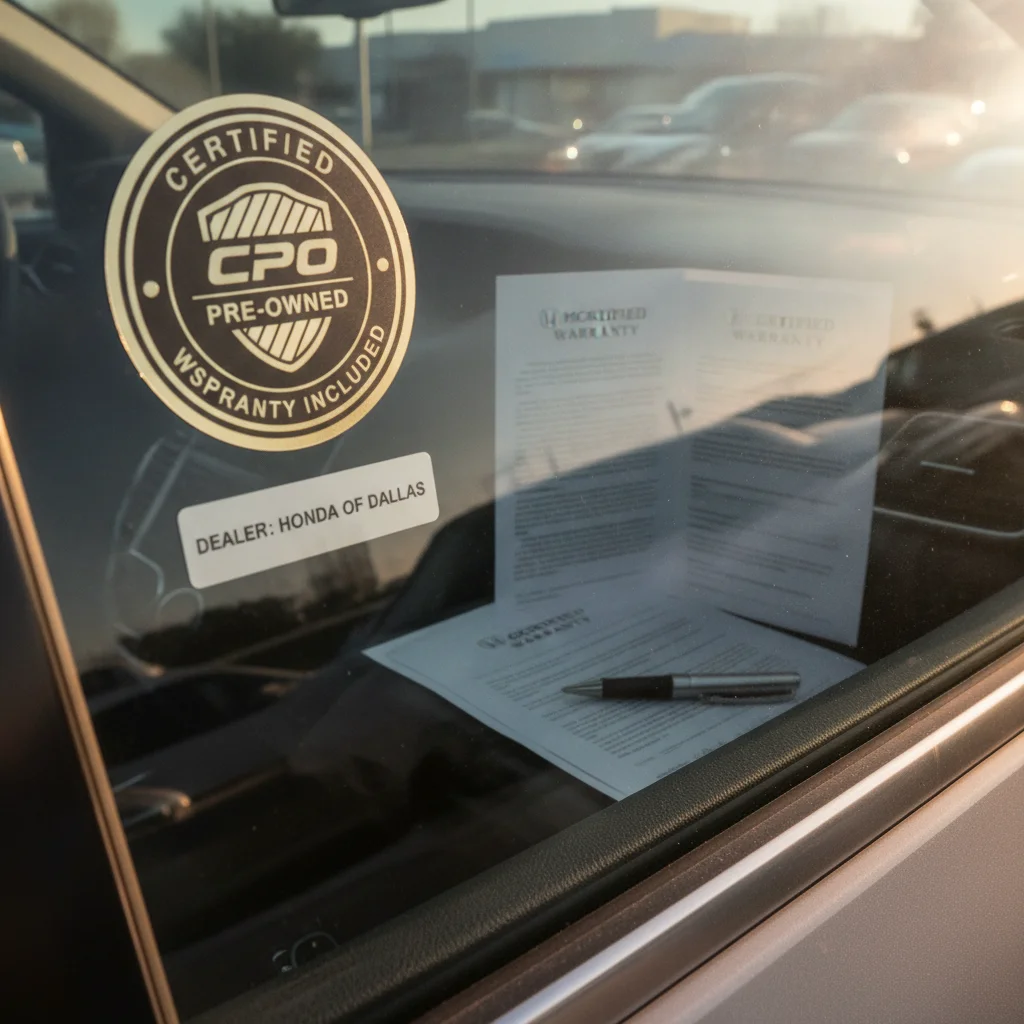
When most buyers compare certified pre-owned vehicles, they focus on two things: price and warranty length. That's understandable — those are the headline numbers. But buried inside the program agreement that comes with nearly every CPO purchase is a set of additional benefits that can be worth hundreds of dollars per year, and most buyers never use them because they don't know they exist.
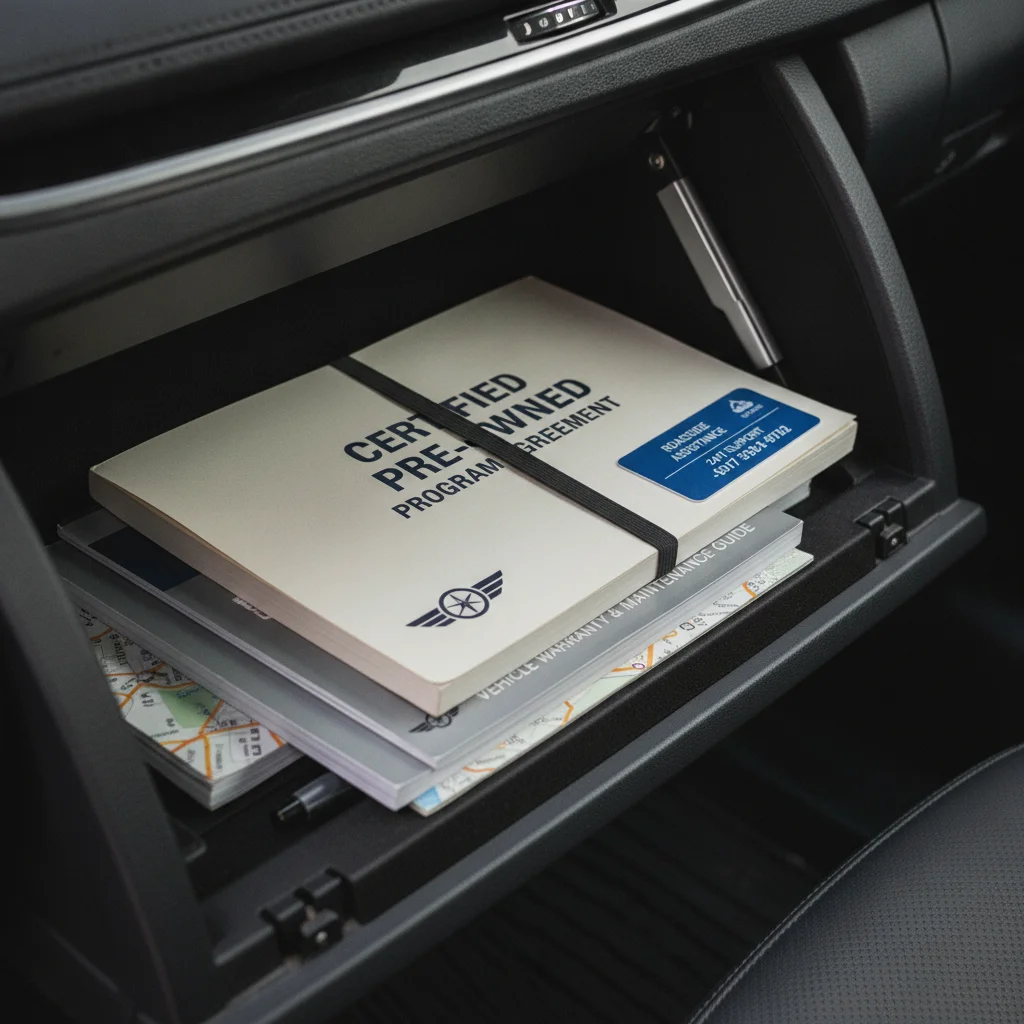
Roadside assistance, trip interruption reimbursement, concierge services, loaner vehicles, and satellite radio trials are just a few of the perks automakers routinely include. The problem is that these benefits aren't marketed aggressively. They're listed in the fine print of a document you probably skimmed in the finance office and filed away in your glove compartment.
This article walks through the most common CPO perks — not just what they are, but what the coverage limits actually look like in practice, how they compare across brands, and when they genuinely save you money versus when they overlap with coverage you already have. If you want a broader look at how CPO programs work from the ground up, our CPO guide for first-time buyers is a good starting point.
Below are the seven CPO perks that buyers most commonly overlook, ranked by the financial impact they can have on your ownership experience.
Roadside Assistance: Towing Limits Matter More Than You Think
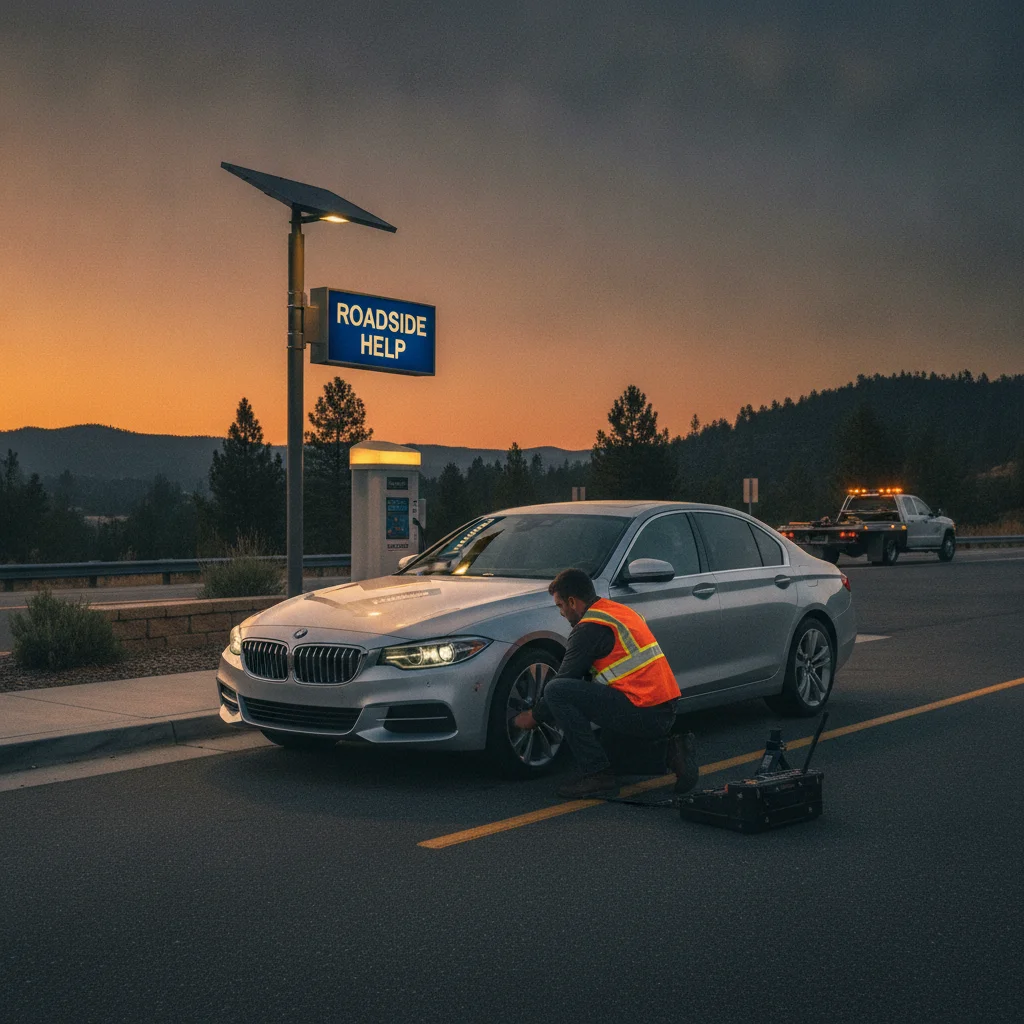
Most CPO programs include some form of roadside assistance, but the quality varies enormously once you look past the headline. The critical variable isn't whether towing is covered — it almost always is — it's how far they'll tow you and at whose expense.
Here's a concrete comparison of how this plays out across a few major brands:
- Toyota CPO: Includes roadside assistance for the duration of the CPO warranty (typically 7 years/100,000 miles total from the original sale date). Towing is covered to the nearest Toyota dealer, with no stated mileage cap in most markets.
- BMW CPO: Roadside assistance is included for 1 year from the CPO purchase date, with 24/7 coverage including flat tire changes, battery jump-starts, lockout service, and emergency fuel delivery.
- Honda CPO: Roadside assistance runs concurrently with the powertrain warranty period. Towing is covered but limited to the nearest Honda dealer, which can be a problem in rural areas.
- Ford CPO: Roadside assistance is included for 1 year/unlimited miles from the CPO sale date, covering towing, flat tire changes, battery service, and fuel delivery up to 2 gallons.
The phrase "nearest authorized dealer" is the one that trips people up most. If you break down in a remote area where the nearest dealer is 80 miles away, that tow is still covered. But if the nearest dealer is a competitor's brand, you may be on your own until you can get to a same-brand location.
Compare this to what you might already have: roadside assistance through your insurer, AAA, or your automaker covers the tradeoffs in depth, but the short version is that insurer add-ons are cheap (often $5–$15/year) while AAA runs $60–$130/year. If your CPO program covers roadside assistance for 2–3 years, you can safely skip the AAA membership during that window.
Towing to the 'nearest authorized dealer' can mean very different distances depending on where you break down.
Trip Interruption Coverage: A Surprisingly Generous Safety Net
This is the perk that surprises buyers the most — and that they most often fail to use. Trip interruption coverage kicks in when your CPO vehicle breaks down a specified distance from home (typically 100–150 miles) and requires an overnight stay while repairs are made.
In practical terms, it works like this: you're driving from Chicago to St. Louis on a Friday night. Your CPO vehicle develops a covered mechanical failure 180 miles from home. The dealer can't fix it until Monday. Trip interruption coverage pays for your hotel, meals, and sometimes ground transportation while you wait.
Here are typical reimbursement limits by brand:
| Brand | Hotel Per Night | Meals Per Day | Max Days |
|---|---|---|---|
| Toyota CPO | Up to $100 | Up to $50 | 5 days |
| Chevrolet CPO | Up to $150 | Up to $75 | 3 days |
| BMW CPO | Up to $200 | Not specified | Per occurrence |
| Honda CPO | Up to $100 | Up to $50 | 3 days |
The dollar limits are modest but real. A three-day hotel stay at $100/night plus meals at $50/day adds up to $450 in reimbursement — that's not nothing. The catch is that you typically have to pay upfront and submit receipts afterward. Keep every receipt, document the breakdown with a repair order from the dealer, and file promptly (most programs have a 30–60 day submission window).
[in_content_images:1]One underappreciated restriction: trip interruption usually requires the repair to be covered under the CPO warranty. If your car breaks down because of a non-covered component — say, a worn brake pad that wasn't part of the inspection — you may not qualify for reimbursement. Check your program terms carefully.
A single trip interruption claim can reimburse $300–$450 in hotel and meal costs — real money most buyers never collect.
Loaner Vehicles: Not Every CPO Program Guarantees One
Many buyers assume that a CPO vehicle automatically entitles them to a free loaner car whenever it goes in for a covered repair. That assumption can leave you stranded — or paying out of pocket for a rental.
The reality is that loaner availability depends on three factors: the brand's program terms, the individual dealer's loaner fleet size, and the type of repair being performed.
Luxury brands tend to be most generous here. Lexus and BMW CPO programs, for example, typically guarantee a loaner or rental reimbursement for any covered warranty repair that keeps your car at the dealer overnight. That's a meaningful commitment. Volume brands are more variable: some Ford and GM dealers have robust loaner fleets, while others will hand you a list of nearby rental companies and a partial reimbursement voucher.
Key questions to ask your dealer before you buy:
- Does this CPO program guarantee a loaner vehicle for any covered repair?
- Is the loaner limited to powertrain repairs only, or does it cover all warranty work?
- Is there a mileage or time limit on how long I can keep the loaner?
- If no loaner is available, does the program reimburse rental car costs, and up to what daily amount?
Some programs cap rental reimbursement at $30–$40 per day, which won't cover much at current rates. Others reimburse up to $75/day, which is actually useful. Get the specific dollar figure in writing before you leave the dealer.
[tip_callout]Loaner availability depends on the brand, the dealer, and the repair type — not just whether you bought CPO.
Concierge and Pickup/Delivery Services: Luxury Brands Lead the Way
A growing number of CPO programs — particularly from luxury automakers — include concierge services that go well beyond traditional roadside assistance. These can include valet pickup and delivery of your vehicle for service appointments, priority scheduling at the dealer, and dedicated customer service lines with shorter hold times.
Lexus CPO's "Lexus Encore" program, for instance, offers complimentary valet service (they come to your home or office to pick up the car for service and return it when done) for a set period after purchase. BMW's CPO program includes access to BMW Roadside Assistance Plus, which in some markets provides a BMW loaner delivered to your breakdown location so you can continue your trip while the car is towed.
These services have genuine monetary value. A single valet service appointment would cost $50–$100 if purchased independently from a concierge car service. If you have a Lexus or BMW CPO vehicle and have been dropping your car off at the dealer yourself, you may be leaving a real convenience — and real time — on the table.
For non-luxury brands, concierge-level perks are rarer but not unheard of. Some Hyundai and Kia CPO programs include perks like discounted oil change packages and priority service lanes. These aren't as flashy, but they do represent tangible value over the ownership period.
Luxury CPO concierge services — like valet pickup for service — can be worth $50–$100 per appointment if used consistently.
Trial Subscriptions and Connected Services: Read Before You Assume
Many CPO vehicles come with trial periods for connected services — satellite radio, in-car Wi-Fi hotspots, navigation updates, and telematics features. These trials are often listed in the CPO program marketing materials but are tied to the vehicle's original factory subscription, not to a new commitment from the automaker.
This distinction matters. A CPO vehicle that was originally sold with a 3-year SiriusXM trial may have consumed 2 of those years under the first owner. The CPO buyer gets the remaining 1 year — which is still a benefit, but not the "3-year trial" implied in the brochure. Always ask the dealer how much of any trial subscription remains on the specific vehicle you're buying, and confirm by checking the VIN on the service provider's website.
For connected services like GM's OnStar or Toyota's Safety Connect, the CPO program may include a complimentary period of 1–3 years from the CPO sale date (not the original sale date), which is actually a meaningful reset. These services typically cost $15–$30/month after the trial ends, so a 3-year inclusion is worth $540–$1,080 in real terms.
The CPO glossary breaks down terms like "powertrain coverage," "exclusionary warranty," and "roadside assistance add-on" if you want to get fluent in the language these program agreements use before you read your own.
A CPO vehicle's connected service trial may be partially used — always check the VIN to confirm how much remains.
Maintenance Inclusions: The Perk That Saves Real Money Immediately
Some CPO programs — particularly from German and Korean automakers — include complimentary scheduled maintenance for a defined period. This is different from warranty coverage: it's not about covered repairs, it's about routine upkeep like oil changes, tire rotations, and multi-point inspections, provided at no charge.
BMW's CPO program, for example, typically includes 1 year of BMW Ultimate Care (their prepaid maintenance program) from the CPO purchase date. That covers oil services, brake fluid checks, filters, and tire rotations. A single BMW oil service at a dealership runs $120–$180. Get two of those covered, and you've recouped meaningful cost.
Hyundai CPO has historically included a complimentary first scheduled service visit. Volkswagen's CPO program has included prepaid oil change packages at some dealerships, though this varies by region and model year.
The important caveat: maintenance inclusions often require you to bring the car to an authorized dealer. If you prefer a trusted independent mechanic for routine maintenance, you won't be able to redeem these perks — and you shouldn't skip the dealer visit just because it's more convenient, since unrecorded maintenance can affect resale value and sometimes warranty claim eligibility.
[in_content_images:2]Before finalizing a CPO purchase, ask the finance manager to itemize every included benefit — including maintenance — and confirm how many service visits are covered, what types of service qualify, and whether the benefit transfers if you move to a different metro area.
Complimentary oil changes and maintenance visits under a CPO program can save $250–$400 in the first year alone.
Overlap With Your Auto Insurance: Avoid Paying Twice
Here's the financial trap that catches even savvy buyers: many CPO perks duplicate coverage you may already be paying for through your auto insurance policy or an existing roadside assistance membership. Paying for both is common — and wasteful.
Roadside assistance is the most frequent overlap. If your auto insurer already includes roadside assistance as a policy endorsement (which many do for $5–$15/year), and your CPO program provides roadside assistance for the next three years, you're double-covered. The insurer add-on isn't hurting you, but it's not helping you either — remove it and save the money.
Rental reimbursement is the second common overlap. If your auto policy includes rental car coverage (typically $30–$50/day during a covered claim), and your CPO program offers loaner vehicles during warranty repairs, you have two sources of coverage for the same scenario. In practice, these apply to different situations — the insurer coverage kicks in during an accident claim, while the CPO loaner covers warranty repairs — so they're less likely to overlap perfectly. But it's worth understanding which situation each applies to so you're not confused at the moment you need help.
For a complete picture of what optional insurance add-ons exist and which ones are worth keeping alongside a CPO purchase, the optional add-ons hub lays out the full landscape. And if you're shopping CPO programs across brands to find which automaker offers the best overall package, this comparison of the strongest CPO programs is worth reading before you commit.
The bottom line: CPO perks and insurance coverage aren't mutually exclusive, but they shouldn't be redundant either. A few minutes reviewing both side by side can surface $50–$150 in unnecessary annual spending.
Roadside assistance from your CPO program and your insurer often overlap — you may be paying for the same protection twice.
How to Make the Most of What You're Already Paying For
The core lesson here is simple: you've already paid for these perks — they're baked into the CPO premium. That premium typically adds $1,000 to $3,500 to the purchase price compared to a non-certified used vehicle of the same year, make, and mileage. Getting full value out of your CPO program means knowing what's available before you need it, not after your car is already on the side of the road.
CPO Perks Are Tied to the Vehicle, Not the Buyer
Most CPO program benefits — including roadside assistance and trip interruption coverage — are attached to the vehicle's VIN, not to the named buyer. This means if you sell the car privately before the CPO period expires, the remaining benefits transfer to the new owner. It's a legitimate selling point worth mentioning in any private listing. However, some concierge services and owner-portal features may require re-registration by the new owner to activate.
Start by locating your CPO program agreement — either in your glove compartment, your email confirmation from the dealer, or the automaker's owner portal online. Read the sections on roadside assistance, trip interruption, and loaner eligibility. Note any mileage caps, dollar limits, or dealer restrictions. Then check whether your auto insurer's policy already includes roadside assistance as an add-on. If it does, you may be doubling up — and that's worth knowing so you can potentially remove the insurer add-on and save a few dollars per month.
Also worth noting: CPO perks are tied to the vehicle's VIN, not to you personally. If you sell the car before the CPO period expires, the remaining benefits transfer to the new owner. That's actually a selling point you can use if you ever list the vehicle privately.
Ask the Dealer to Print the Full Perk List
Before signing your CPO purchase agreement, ask the finance manager to print out every included benefit — not just the warranty terms. Verbal assurances aren't enforceable; a printed summary from the automaker's own program materials is. Many dealers have a one-page CPO benefits sheet they can pull up instantly. If they can't produce it, request the specific program agreement number and look it up on the automaker's website before you finalize the deal.
Confirm Loaner Terms Before You Need One
Don't wait until your car is already in the shop to discover that loaners require a 48-hour advance notice or are only available weekdays. Call the service department of the dealer where you purchased your CPO vehicle and ask specifically: 'If I bring my car in tomorrow for a covered warranty repair, what's the process for getting a loaner?' The answer will tell you everything about whether the perk is genuinely useful for your lifestyle.
Finally, don't assume all dealers in a brand's network honor CPO perks identically. Some automakers administer roadside assistance through a national call center, meaning any dealer can service you. Others route benefits through the original selling dealer. Confirm this before you drive three states away and assume any franchise location will cover your loaner car. For a detailed look at how warranty coverage — the foundation under all these perks — actually functions, see how CPO warranty coverage actually works.

All claims are backed by peer-reviewed research. Sources on request.