
| Standard bumper-to-bumper coverage | 3 years / 36,000 miles (most brands) (Manufacturer warranty documentation) |
| Best-in-class powertrain coverage | 10 years / 100,000 miles (Hyundai, Kia, Genesis, Mitsubishi) (Current manufacturer warranty terms) |
| Federal emissions defect warranty | 8 years / 80,000 miles (catalytic converter, ECM) (U.S. Clean Air Act requirement) |
| EV battery warranty minimum | 8 years / 100,000 miles (Federal and California ZEV regulations) |
| Law governing warranty rights | Magnuson-Moss Warranty Act (federal) (15 U.S.C. § 2301 et seq.) |
| Typical rust-through coverage | 5–12 years (varies by manufacturer) (Manufacturer warranty documentation) |
The Two Warranties That Come With Every New Car
When you buy a new car, you get at least two separate warranties by default — no negotiating, no add-on cost. Understanding the difference between them is the first thing you need to lock down before you step into a finance office.
| Standard bumper-to-bumper coverage | 3 years / 36,000 miles (most brands) (Manufacturer warranty documentation) |
| Best-in-class powertrain coverage | 10 years / 100,000 miles (Hyundai, Kia, Genesis, Mitsubishi) (Current manufacturer warranty terms) |
| Federal emissions defect warranty | 8 years / 80,000 miles (catalytic converter, ECM) (U.S. Clean Air Act requirement) |
| EV battery warranty minimum | 8 years / 100,000 miles (Federal and California ZEV regulations) |
| Law governing warranty rights | Magnuson-Moss Warranty Act (federal) (15 U.S.C. § 2301 et seq.) |
| Typical rust-through coverage | 5–12 years (varies by manufacturer) (Manufacturer warranty documentation) |
Bumper-to-Bumper (Comprehensive) Warranty
Despite the name, bumper-to-bumper coverage doesn't literally cover everything between the bumpers. It covers most factory-installed components but specifically excludes wear items and certain systems. Typical coverage runs 3 years or 36,000 miles, whichever comes first. A handful of brands — Genesis, Hyundai, Kia — stretch this to 5 years or 60,000 miles.
What it covers: electrical systems, air conditioning, infotainment hardware, suspension components, brake hardware (not pads or rotors), steering, fuel system, and most interior electronics.
What it doesn't cover: tires, brake pads, brake rotors, wiper blades, clutch linings, filters, belts (in most cases), and any damage from accidents, misuse, or neglect. More on those exclusions below.
Powertrain Warranty
This one focuses on the mechanical heart of the car — the engine, transmission, and drivetrain components that propel the vehicle. Coverage typically runs 5 years or 60,000 miles, though Hyundai, Kia, and Genesis offer 10 years or 100,000 miles on their powertrain warranties for the original owner.
Covered components generally include: engine block and internals, cylinder heads, transmission case and internal parts, transfer case, drive axles, driveshaft, and sometimes the torque converter and seals. The specific list varies by manufacturer — check your owner's manual, not the salesperson's description.
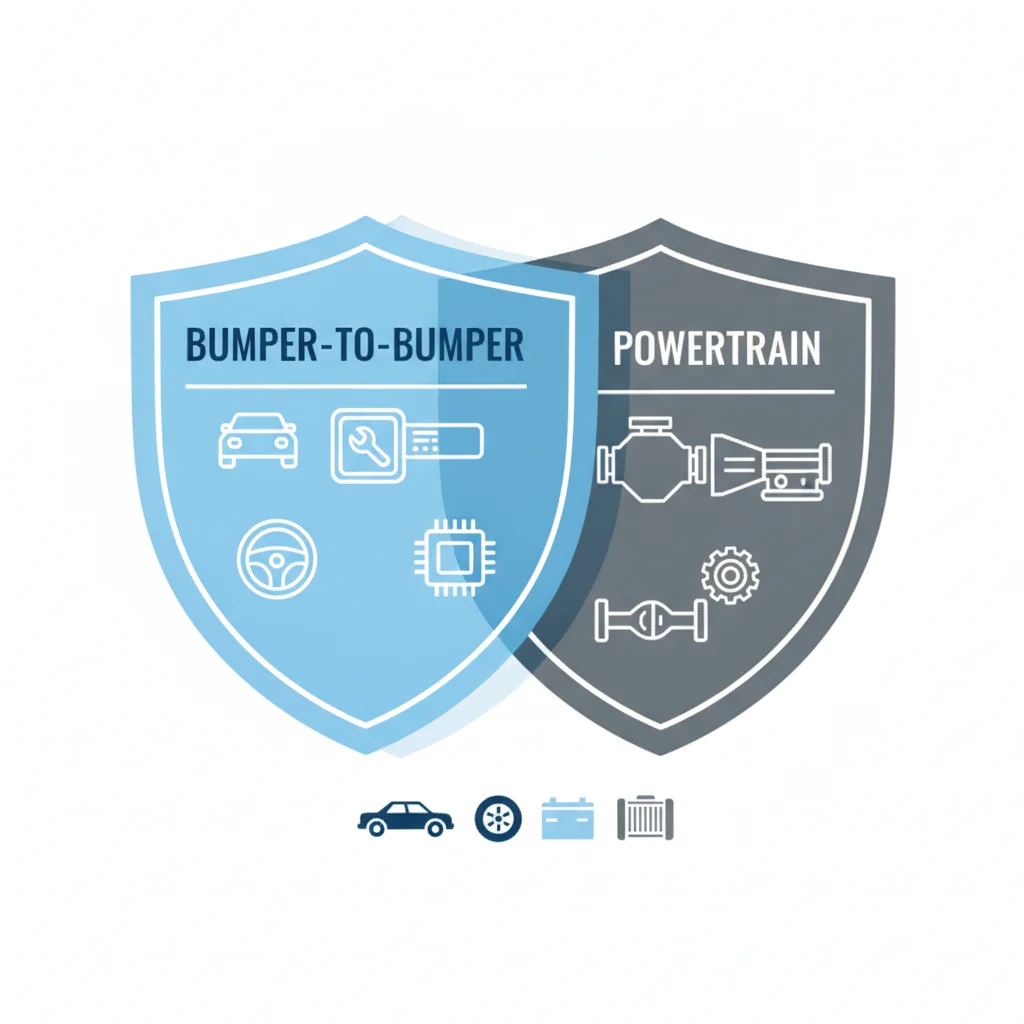
One important detail: powertrain warranties often transfer to subsequent owners, but coverage may shorten after the first sale. If you're buying a lightly used vehicle that's still within the original powertrain period, confirm transferability directly with the manufacturer — not with the seller.
The Other Warranties You Might Not Know About
Beyond bumper-to-bumper and powertrain, new vehicles often come with additional, more targeted warranties. These are separate coverage buckets — not extensions of the main two.
Bumper-to-Bumper Warranty
A factory warranty covering most vehicle components except wear items and specified exclusions. Despite the name, it does not cover literally every part. Typically lasts 3 years or 36,000 miles.
Powertrain Warranty
A factory warranty covering the engine, transmission, and drivetrain components. Usually longer than bumper-to-bumper coverage — commonly 5 years or 60,000 miles, with some brands offering 10 years or 100,000 miles.
Magnuson-Moss Warranty Act
A federal law governing written warranties on consumer products, including vehicles. It prohibits manufacturers from voiding a warranty simply because an owner used aftermarket parts or non-dealer service for routine maintenance.
Rust-Through Warranty
Coverage for perforation rust — rust that eats completely through a body panel from the inside out. Surface rust and cosmetic blemishes are not covered. These warranties typically run 5–12 years with no mileage cap.
Lemon Law
State laws that provide remedies — typically a replacement vehicle or refund — when a new car has a substantial defect that cannot be repaired after a reasonable number of attempts during the warranty period. Requirements vary by state.
Vehicle Service Contract
A paid agreement, commonly called an extended warranty, that covers repair costs after the factory warranty expires. Unlike a true warranty, it is a contract — not a legal guarantee — and its terms, exclusions, and administrator matter enormously.
Emissions Warranty
A federally mandated warranty covering emissions control components. Includes a shorter performance warranty (2 years/24,000 miles) and a longer design-and-defect warranty (8 years/80,000 miles) for high-cost parts like catalytic converters.
Wear Item
A component expected to degrade with normal vehicle use and excluded from factory warranty coverage. Common wear items include brake pads, tires, wiper blades, clutch linings, and cabin air filters.
Corrosion (Rust-Through) Warranty
Covers perforation from rust — meaning rust that eats completely through a body panel from the inside out. Surface rust or paint blistering typically isn't covered. These warranties run surprisingly long: 5 to 12 years depending on the brand, with most mainstream manufacturers sitting at 5 to 7 years. There's usually no mileage cap.
Catch: many manufacturers require that you maintain the vehicle properly — including washing it regularly and treating any paint chips promptly. Living in a high-salt environment (coastal or heavy-snow regions) doesn't automatically disqualify you, but neglect does.
Federal Emissions Warranty
Required by federal law under the Clean Air Act, this warranty covers emissions-related components. It has two tiers:
- Performance warranty: 2 years or 24,000 miles — covers repairs if the vehicle fails an emissions test
- Design and defect warranty: 8 years or 80,000 miles — covers specific high-cost components like catalytic converters and engine control modules
This warranty applies regardless of what the manufacturer's basic warranty says. The 8-year/80,000-mile protection on catalytic converters alone is valuable — those parts can cost $1,000–$3,000 to replace out of pocket.
Battery Warranty (Electric and Hybrid Vehicles)
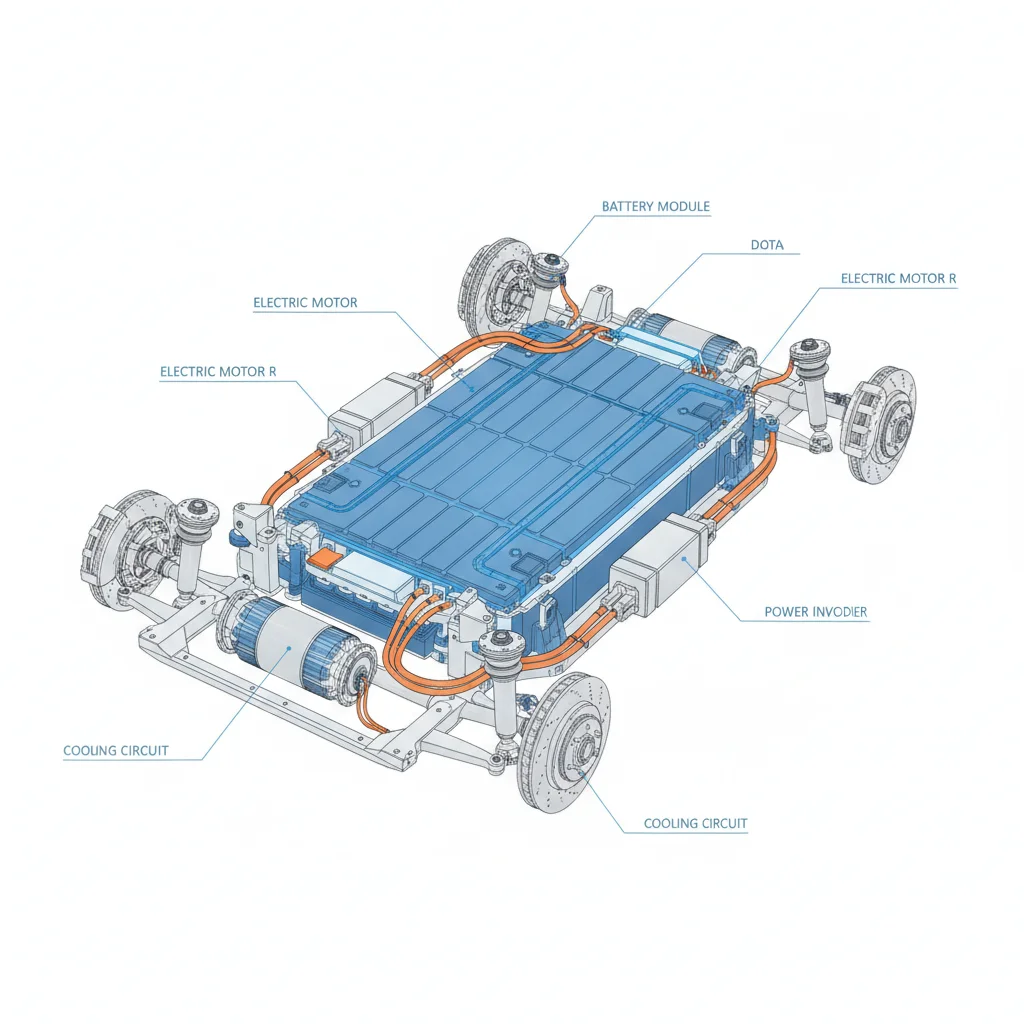
EVs and plug-in hybrids come with a separate high-voltage battery warranty, mandated in part by California's zero-emission vehicle standards (which many states follow). Federal law requires a minimum of 8 years or 100,000 miles for EV battery packs. Some manufacturers go further — Tesla covers battery degradation beyond a certain threshold, and Hyundai/Kia offer lifetime battery coverage in some configurations.
Read the capacity retention clause carefully. Most manufacturers cover battery failure outright, but they also cover degradation only if capacity drops below a specific threshold (usually 70%). A battery at 71% capacity that barely gets you through your commute may not qualify for replacement under warranty.
For a full picture of how these factory protections compare to what you'd get on a used vehicle, see how CPO warranty coverage actually works.
Common Warranty Exclusions That Catch Buyers Off Guard
The exclusions section of a warranty document is where the real story lives. Most buyers read the coverage highlights. Almost none read the exclusions. Here's what typically voids or limits coverage:
$1,000–$3,000
Typical catalytic converter replacement cost
Federal emissions warranty covers this component for 8 years or 80,000 miles, making it one of the most valuable mandated protections for new car buyers.
70%
EV battery capacity threshold for warranty replacement
Most manufacturers only cover battery degradation when capacity drops below 70% of original — a battery at 71% that barely meets daily needs typically won't qualify.
10 years
Maximum powertrain warranty offered by any mainstream brand
Hyundai, Kia, Genesis, and Mitsubishi all offer 10-year/100,000-mile powertrain coverage — more than twice the industry standard of 5 years.
3–4
Repair attempts typically required to trigger lemon law
Most states require 3–4 failed repair attempts for the same defect, or 30+ days out of service, before lemon law remedies apply — specifics vary by state.
Maintenance-Related Voids
If you can't document that you followed the manufacturer's maintenance schedule, a claim can be denied. This doesn't mean you have to use the dealership for oil changes — the Magnuson-Moss Warranty Act prohibits manufacturers from requiring you to use their service centers or branded parts as a condition of maintaining warranty coverage. But you do need records: receipts, mileage logs, or a service history report. Shoebox receipts count. A verbal "I kept up with it" does not.
Aftermarket Parts and Modifications
Installing aftermarket parts doesn't automatically void your entire warranty. Under Magnuson-Moss, the manufacturer must prove the aftermarket part caused the specific failure being claimed. However, certain modifications — ECU tuning, suspension lifts, oversized tires — are more likely to create problems. A modified suspension component breaks a CV axle? That claim is probably denied. An aftermarket stereo doesn't affect the engine warranty.
If you plan to upgrade your car, also look into custom parts and equipment coverage — your factory warranty won't protect the aftermarket parts themselves, and neither will your standard auto policy.
Environmental and Accident Damage
Hail damage, flood damage, road debris impact — none of that is covered by a factory warranty. Warranty coverage applies to defects in materials or workmanship. If a part fails because of external force or environmental conditions, that's a claim for your auto insurance, not the manufacturer.
Normal Wear and Tear
This exclusion catches more buyers than almost anything else. The following items are nearly universally excluded:
- Brake pads and rotors
- Tires (covered by separate tire manufacturer warranty)
- Wiper blades
- Cabin air filters and engine air filters
- Clutch friction materials
- Interior trim that shows wear from use
- Headlights and bulbs (unless a defect causes premature failure)
The line between "defect" and "normal wear" is where disputes happen. If your brake rotors warp at 8,000 miles, that's almost certainly a manufacturing defect — fight for warranty coverage. If they wear out at 35,000 miles, that's normal use.
Misuse and Neglect
Overloading the vehicle beyond its rated capacity, using the wrong fuel type, towing beyond rated limits, off-road use on a vehicle not rated for it — all of these can result in denied claims. Manufacturers document these exclusions specifically because they're common.
Warranty Coverage Doesn't Follow the Car Automatically
If you sell your vehicle before the factory warranty expires, the powertrain warranty may or may not transfer to the new owner at full value. Some manufacturers charge a transfer fee; others reduce coverage duration after the first owner. Bumper-to-bumper coverage often doesn't transfer at all. Check your owner's manual or manufacturer's website for the exact transfer policy before listing your car.
Dealer Verbal Promises Aren't Part of Your Warranty
If a salesperson tells you something is covered "don't worry about it" — get it in writing or assume it isn't true. Factory warranty terms are defined entirely by the written documentation from the manufacturer, not by anything said at the point of sale. The same applies to any service contract you add at closing: the written contract governs, not the pitch.
State Lemon Laws Can Supplement Federal Protections
California's lemon law is among the strongest in the country and applies to any vehicle with a recurring defect that substantially impairs use, value, or safety. Other states offer narrower protection. If you're filing a claim, look up your specific state's statute — or consult an attorney who specializes in lemon law, many of whom work on contingency and charge nothing upfront if your case qualifies.
How to Actually Use Your Warranty (Without Getting the Runaround)
Knowing your coverage exists and knowing how to enforce it are two different skills. Here's the practical framework.
Keep Records From Day One
Start a simple folder — physical or digital — with your warranty booklet, purchase agreement, and every service receipt. The moment you need to make a warranty claim, documentation is the difference between an approved repair and a drawn-out dispute. Mileage at service matters. Date of service matters. The specific work performed matters.
You're Not Tied to the Dealer for Service
This is the most underused protection under Magnuson-Moss. You can take your vehicle to any qualified independent mechanic for routine maintenance — oil changes, tire rotations, brake jobs — without affecting your factory warranty. You must use the proper specifications (correct oil grade, OEM-spec filters), but you don't have to pay dealer labor rates for oil changes.
For warranty repair work itself, however, you do need to go through an authorized dealer for that brand. An independent shop can't submit a warranty claim on your behalf.
What To Do When a Claim Is Denied
If a dealer denies your claim, that's not the final word. You have several escalation paths:
- Ask for the denial in writing — verbal denials are easier to ignore later. A written denial forces specificity about why the claim was refused.
- Contact the manufacturer's customer relations line directly — dealers have latitude in how they handle warranty claims, but the manufacturer's regional representative can override a dealer's decision.
- File a complaint with the CFPB or your state's Attorney General — if you believe the denial violates Magnuson-Moss, these agencies take complaints seriously.
- Consult a lemon law attorney — if the same defect has been repaired multiple times without resolution, lemon law protections may apply. Most states require 3–4 failed repair attempts for the same defect, or a vehicle out of service for 30+ days during the warranty period.
Lemon Law vs. Warranty Claim
These are different protections. A warranty claim covers a defect repair. Lemon law applies when a defect can't be successfully repaired after a reasonable number of attempts. Lemon law remedies typically include a vehicle replacement or a full refund, minus a use allowance. Each state sets its own thresholds — California's are the most consumer-friendly, while some states' protections are more limited.

If you're considering additional coverage beyond the factory period, read our honest take on extended warranties for new cars before the finance manager pitches you one at closing.
Comparing Warranty Coverage Across Major Brands
Not all factory warranties are created equal. The differences in coverage length between manufacturers are large enough to factor into a buying decision — especially on a vehicle you plan to keep 8–10 years.
| Brand | Bumper-to-Bumper | Powertrain | Rust-Through |
|---|---|---|---|
| Hyundai / Kia | 5 yr / 60,000 mi | 10 yr / 100,000 mi | 7 yr / unlimited |
| Genesis | 5 yr / 60,000 mi | 10 yr / 100,000 mi | 7 yr / unlimited |
| Mitsubishi | 5 yr / 60,000 mi | 10 yr / 100,000 mi | 7 yr / unlimited |
| Toyota / Lexus | 3 yr / 36,000 mi | 5 yr / 60,000 mi | 5 yr / unlimited |
| Honda / Acura | 3 yr / 36,000 mi | 5 yr / 60,000 mi | 5 yr / unlimited |
| Ford / Lincoln | 3 yr / 36,000 mi | 5 yr / 60,000 mi | 5 yr / unlimited |
| GM (Chevy, GMC, Buick, Cadillac) | 3 yr / 36,000 mi | 5 yr / 60,000 mi | 6 yr / unlimited |
| BMW / Mercedes-Benz | 4 yr / 50,000 mi | 4 yr / 50,000 mi | 12 yr / unlimited |
| Tesla | 4 yr / 50,000 mi | 8 yr / 100,000–150,000 mi | Not specified |
Coverage terms are approximate and subject to change. Verify current terms directly with each manufacturer before purchase.
A Hyundai or Kia powertrain warranty offers twice the coverage period of a Toyota at the same mileage point. That's not a reason by itself to choose one brand over another — reliability reputation matters too — but it's a real factor in total ownership risk.
Also worth noting: some luxury brands include complimentary scheduled maintenance (BMW's Ultimate Care, for example), which offsets the shorter warranty period by covering oil changes and routine services for a defined period. Factor that into your cost-of-ownership math.
For a deeper look at how warranty terms interact with contracts and paperwork at the time of purchase, see the Paperwork & Contracts hub.
When the Factory Warranty Ends: Your Next Steps
A factory warranty has a fixed expiration — either by time or by mileage. After it expires, you're paying out of pocket for every repair unless you have alternative coverage in place. Here's how to think about the transition.
Know Your Expiration Before It Arrives
Set a calendar reminder 6 months before your bumper-to-bumper warranty expires. Use that window to schedule a thorough inspection at an authorized dealer. Any defects identified before expiration can still be submitted as warranty claims — after the date, they're your bill. This is sometimes called a "pre-expiration inspection" and it's one of the most underused free services available to new car owners.
Extended Warranty vs. Mechanical Breakdown Insurance
Once the factory coverage lapses, two main options exist for protecting against large repair bills: dealer-sold extended warranties (also called vehicle service contracts) and mechanical breakdown insurance (MBI) sold through some auto insurers.
These products differ significantly in how claims are handled, what's covered, and what they cost. Mechanical breakdown insurance is worth understanding before you let a finance manager push a service contract at closing — and a direct comparison is available in mechanical breakdown insurance vs. extended warranty.
Read the Service Contract Before You Sign
If you do opt for an extended warranty at the time of purchase, the contract language is what governs — not what the finance manager says verbally. Extended warranty contract language is dense and full of exclusions that contradict the pitch you just heard. Read it. Ask for the actual service agreement document before signing — not a summary brochure.
If you're weighing a used car purchase against a new one and wondering how warranty protection differs, compare used car extended warranty coverage against what you'd get factory-fresh.
Warranty Coverage Doesn't Follow the Car Automatically
If you sell your vehicle before the factory warranty expires, the powertrain warranty may or may not transfer to the new owner at full value. Some manufacturers charge a transfer fee; others reduce coverage duration after the first owner. Bumper-to-bumper coverage often doesn't transfer at all. Check your owner's manual or manufacturer's website for the exact transfer policy before listing your car.
Dealer Verbal Promises Aren't Part of Your Warranty
If a salesperson tells you something is covered "don't worry about it" — get it in writing or assume it isn't true. Factory warranty terms are defined entirely by the written documentation from the manufacturer, not by anything said at the point of sale. The same applies to any service contract you add at closing: the written contract governs, not the pitch.
State Lemon Laws Can Supplement Federal Protections
California's lemon law is among the strongest in the country and applies to any vehicle with a recurring defect that substantially impairs use, value, or safety. Other states offer narrower protection. If you're filing a claim, look up your specific state's statute — or consult an attorney who specializes in lemon law, many of whom work on contingency and charge nothing upfront if your case qualifies.
Manufacturer Warranty Documentation
Each manufacturer publishes its full warranty booklet online. Look up your specific brand's terms before purchase — not after — so you know exactly what coverage period and exclusions apply to the model you're considering.
FTC: Understanding Vehicle Warranties
The Federal Trade Commission publishes plain-language guidance on how the Magnuson-Moss Warranty Act protects car buyers and what manufacturers can and cannot require as conditions of warranty coverage.
State Lemon Law Lookup Tool
Requirements for triggering lemon law protections vary significantly by state. Use a state-specific lookup to find the exact number of repair attempts and days-out-of-service thresholds that apply where you live.
Mechanical Breakdown Insurance Comparison
Compare MBI options from major insurers against dealer-offered service contracts to find the most cost-effective post-warranty repair coverage for your vehicle and driving profile.
All claims are backed by peer-reviewed research. Sources on request.