Key Takeaways
Sticker Price (MSRP)
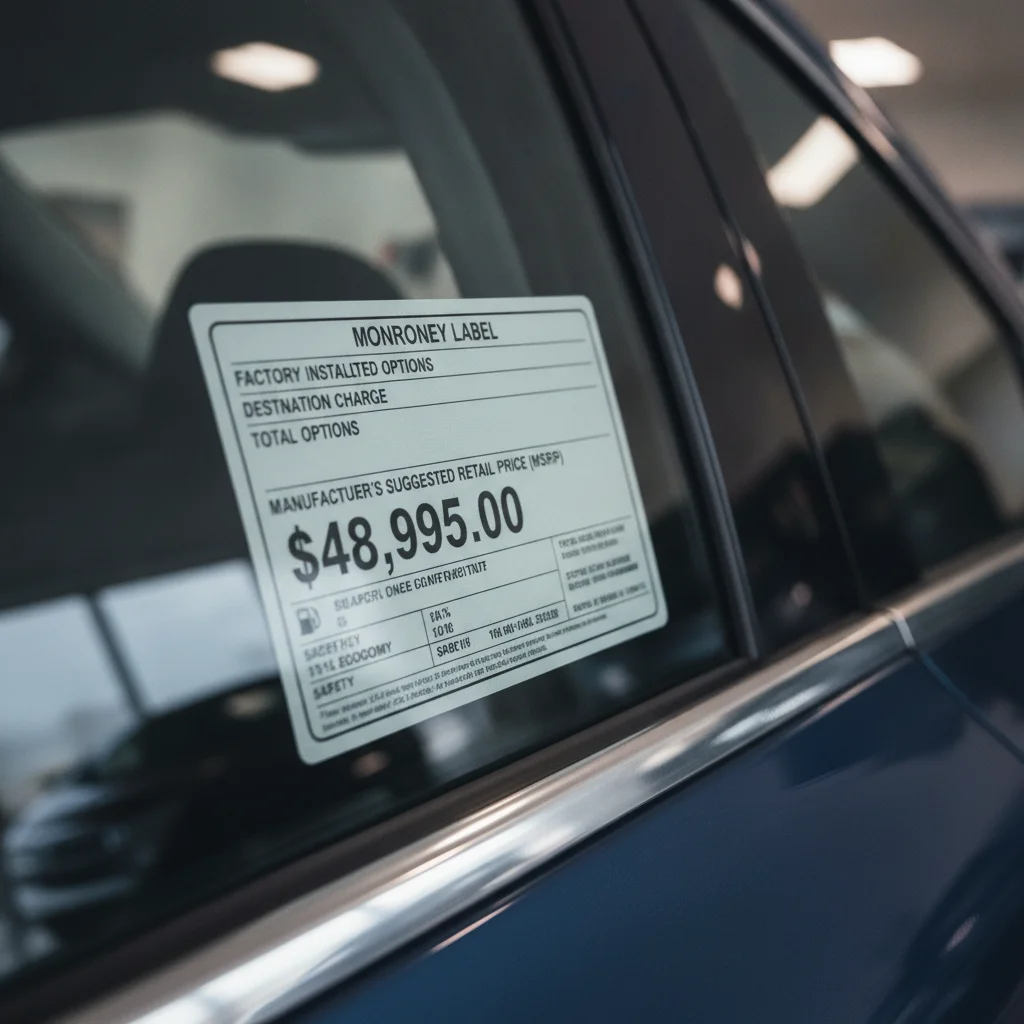
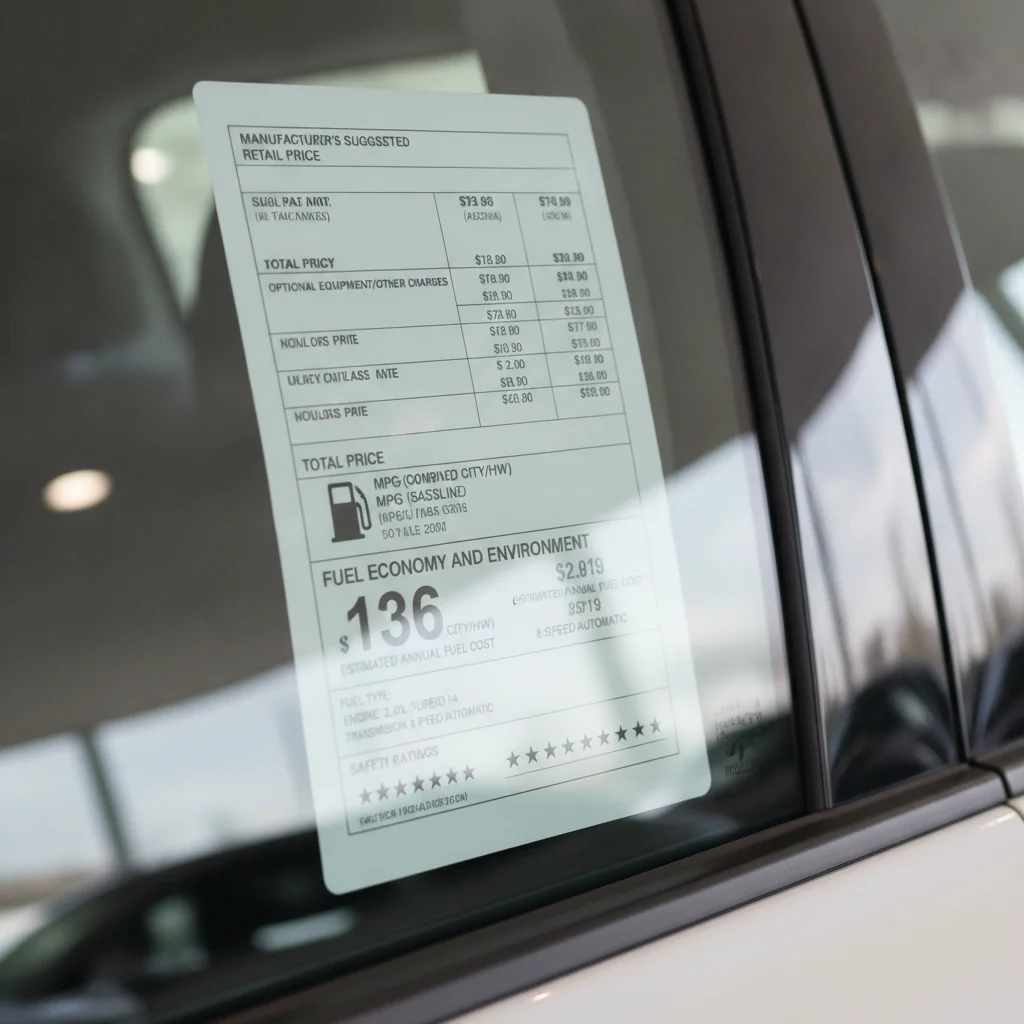
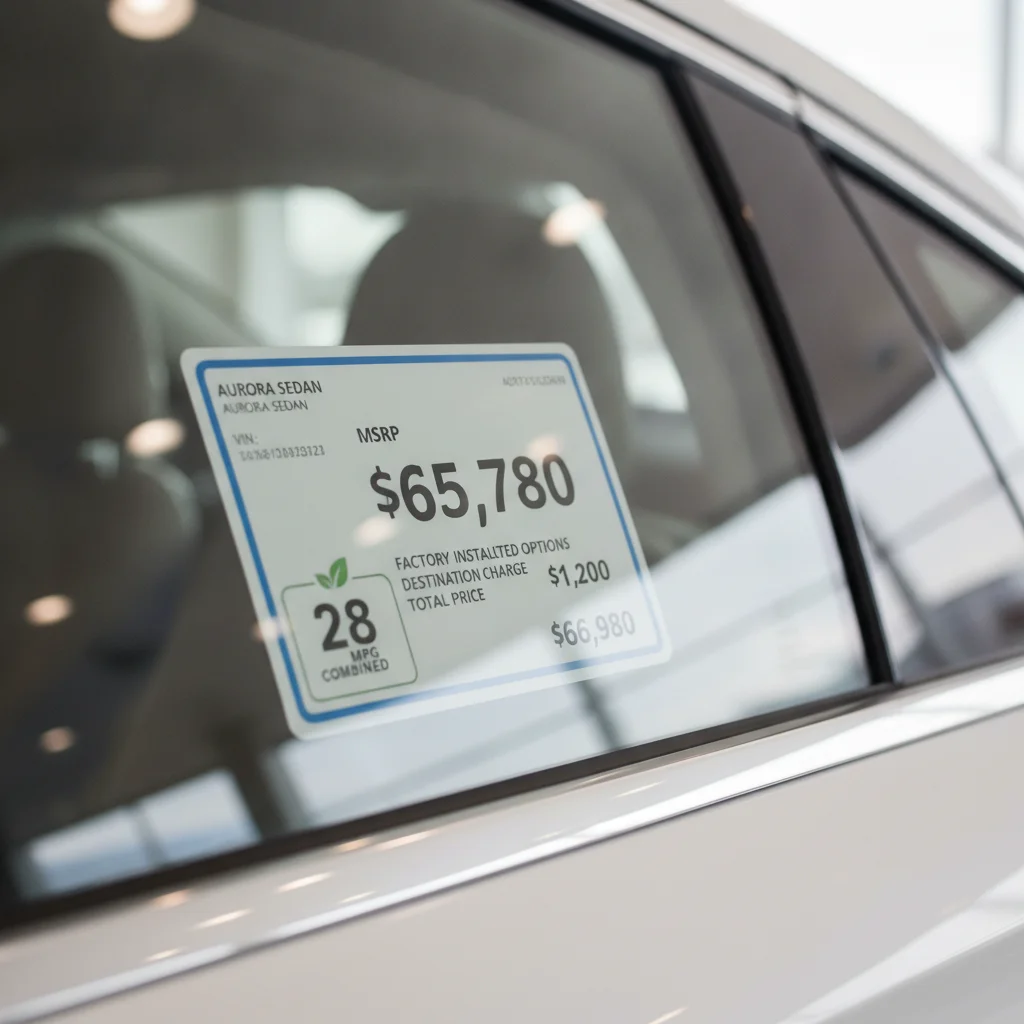
The sticker price, officially called the Manufacturer's Suggested Retail Price (MSRP), is the price a carmaker recommends dealers charge for a vehicle. It appears on the federally required window label and covers the base vehicle, factory-installed options, and destination charges. Critically, it is a suggestion — not a cap, not a contract, and not a guarantee of what you'll actually pay.
The Monroney Act of 1958 mandates that the window sticker be affixed to every new vehicle, but it sets no legal ceiling on the final transaction price. Dealers can charge above or below MSRP based on market conditions.
The Sticker Is a Starting Point, Not a Ceiling
Walk onto any new car lot and the first number that hits you is the MSRP — printed in bold on the window sticker, front and center. Most buyers treat that number as a fact. It isn't. It's a proposal from the manufacturer, dressed up to look authoritative.
MSRP is the sticker price — but the actual deal can land well above or below it depending on the vehicle, the dealer, and the market. That gap is where buyers get hurt when they don't know what's behind the number.
The window sticker itself is required by federal law. The Monroney label discloses price breakdowns and fuel economy, but it carries no legal weight as a sales contract. Dealers know this. Most buyers don't.

Here's what you need to understand before you sit down at that desk: there are at least four separate profit layers between the manufacturer's cost and your final price. MSRP only hints at one of them.
Layer 1: Invoice Price vs. MSRP — The Gap Dealers Live In
The invoice price is what the dealer theoretically pays the manufacturer for the car. In practice, it's not the dealer's true cost — but it's the closest public benchmark you have. MSRP typically runs 3% to 8% above invoice on mainstream vehicles, and higher on luxury or specialty models.
That spread is the dealer's advertised gross profit. What most buyers miss is that the invoice price itself is padded. Understanding the full picture means reading our breakdown of invoice price, MSRP, and true dealer cost — because invoice and dealer cost are not the same thing.
3–8%
Typical MSRP-to-invoice spread on new vehicles
Industry pricing data from Edmunds shows mainstream models typically carry a 3–8% markup from invoice to MSRP, with luxury models often exceeding that range.
1–3%
Holdback as a percentage of MSRP
Most domestic and import brands pay dealers a holdback of roughly 1–3% of MSRP after the sale, a profit layer that exists independent of any negotiated discount.
$1,700+
Extra interest cost from a 1.5% rate markup
On a $40,000, 60-month loan, a dealer markup from 5.5% to 7% APR costs the buyer approximately $1,700 more in total interest paid to the dealership as dealer reserve.
$200–$800
Typical dealer pack added to internal vehicle cost
Automotive consulting firm NCM Associates reports that dealer pack amounts — artificial cost additions protecting gross profit — commonly range from $200 to $800 per vehicle.
43%
Buyers who accept F&I products they didn't plan to purchase
A Cox Automotive dealership study found that nearly 43% of buyers leave the F&I office with at least one product they had not intended to buy when they arrived.
A deeper look at invoice price, MSRP, and market value shows that knowing all three numbers changes your negotiating position entirely. You're no longer anchored to the sticker — you're working from the dealer's actual floor.
Invoice Price Is Not Dealer Cost
The invoice price is often treated as the dealer's cost in negotiations, but it isn't. Holdback, dealer cash incentives, and volume bonuses all reduce what the dealer actually paid net of all payments. Invoice is your best public benchmark, but the true dealer cost is typically 3–6% lower on mainstream vehicles. Use invoice as a ceiling on what you'll pay, not as a floor you're being generous to meet.
Dealer Reserve Is Legal — But Worth Understanding
Federal law permits dealers to mark up the interest rate a lender offers, as long as it doesn't exceed the lender's maximum cap (typically 2–2.5% above the buy rate). This marked-up rate is called dealer reserve. The Equal Credit Opportunity Act has prompted some lenders to limit or eliminate dealer reserve after discrimination concerns, but the practice remains widespread. Secure your own pre-approval to neutralize this tactic.
Market Adjustments Vary by Region and Season
Market adjustment markups are most aggressive at launch for high-demand vehicles and in regions with low inventory. The same model might sell at MSRP or below at a dealer 50 miles away. Checking inventory at multiple dealerships and being willing to travel — or use a dealer's transport service — can eliminate an ADM entirely. Never accept a market adjustment as a fixed cost without first checking regional availability.
Layer 2: Holdback and Dealer Cash — Money Hidden in Plain Sight
Holdback is the portion of the invoice price that the manufacturer quietly refunds to the dealer after the sale. It typically runs 1% to 3% of MSRP, and it exists on nearly every new vehicle sold in America. On a $45,000 truck, that's $450 to $1,350 in profit the dealer collects regardless of how hard they negotiated with you.
Dealer cash is a separate, periodic incentive manufacturers push to move slow-selling inventory. It goes directly to the dealer, not to you — unless you negotiate it down into the price. These incentives are time-sensitive and often unpublicized. Sites like Edmunds and TrueCar track some of them, but not all are disclosed publicly.
“The invoice price is the dealer's floor in the negotiation, but holdback and factory cash are the trapdoors underneath it. A smart buyer needs to know both exist before they start talking numbers.”
— Paul Eisenstein, Automotive journalist and publisher at TheDetroitBureau.com
What this means practically: a dealer can claim they're selling you a car at invoice — technically losing money — while still collecting holdback and dealer cash on the back end. The word "invoice" in a sales pitch is not the protection buyers think it is.
Use Holdback as a Negotiation Anchor
Since holdback returns 1–3% of MSRP to the dealer after the sale, there's room to negotiate below invoice on slow-selling vehicles. If a model has been sitting on the lot for 60+ days, the dealer has already 'paid' for holdback time. Bring that up directly: ask how long the specific vehicle has been in inventory and use it as leverage to negotiate below invoice.
Always Ask for the Out-the-Door Price
Monthly payment quotes obscure the total cost. Before agreeing to anything, ask the dealer to provide the complete out-the-door price in writing — vehicle selling price, documentation fee, dealer add-ons, taxes, and registration. Then compare that single number across at least two or three competing dealers. This prevents the bundling tactics that cost buyers thousands.
Decline F&I Add-Ons and Shop Them Separately
Extended warranties, GAP insurance, and paint protection can all be purchased elsewhere — often for significantly less. GAP coverage from your own auto insurer typically costs $20–$40 per year versus $400–$900 at the dealership. Extended warranties from third-party providers can be compared by coverage and cost before you need them. Never feel obligated to decide on these products in the moment.
Layer 3: Pack Fees and Dealer Add-Ons
"Pack" is a term most buyers never hear. It refers to an artificial amount — typically $200 to $800 — that dealerships add to every vehicle's internal cost before salespeople even quote a price. It exists to protect the house's gross profit margin and ensure the dealer makes money even when a salesperson discounts aggressively.
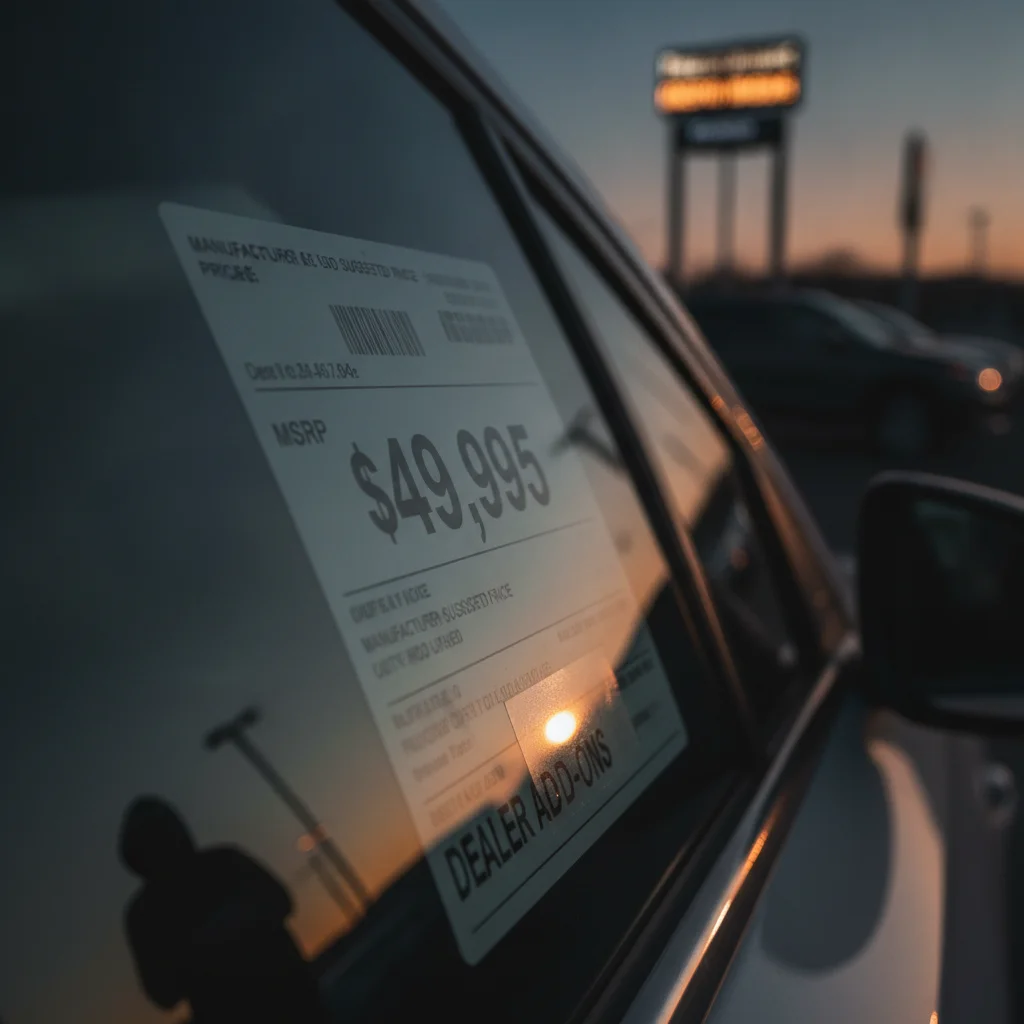
Separate from pack are the dealer-installed add-ons that appear on a supplemental sticker next to the Monroney label. Paint protection film, nitrogen in the tires, window tinting, all-weather mats, VIN etching — these items often carry 200% to 400% markups over actual cost. They're presented as pre-installed and therefore non-negotiable. They are almost always negotiable.
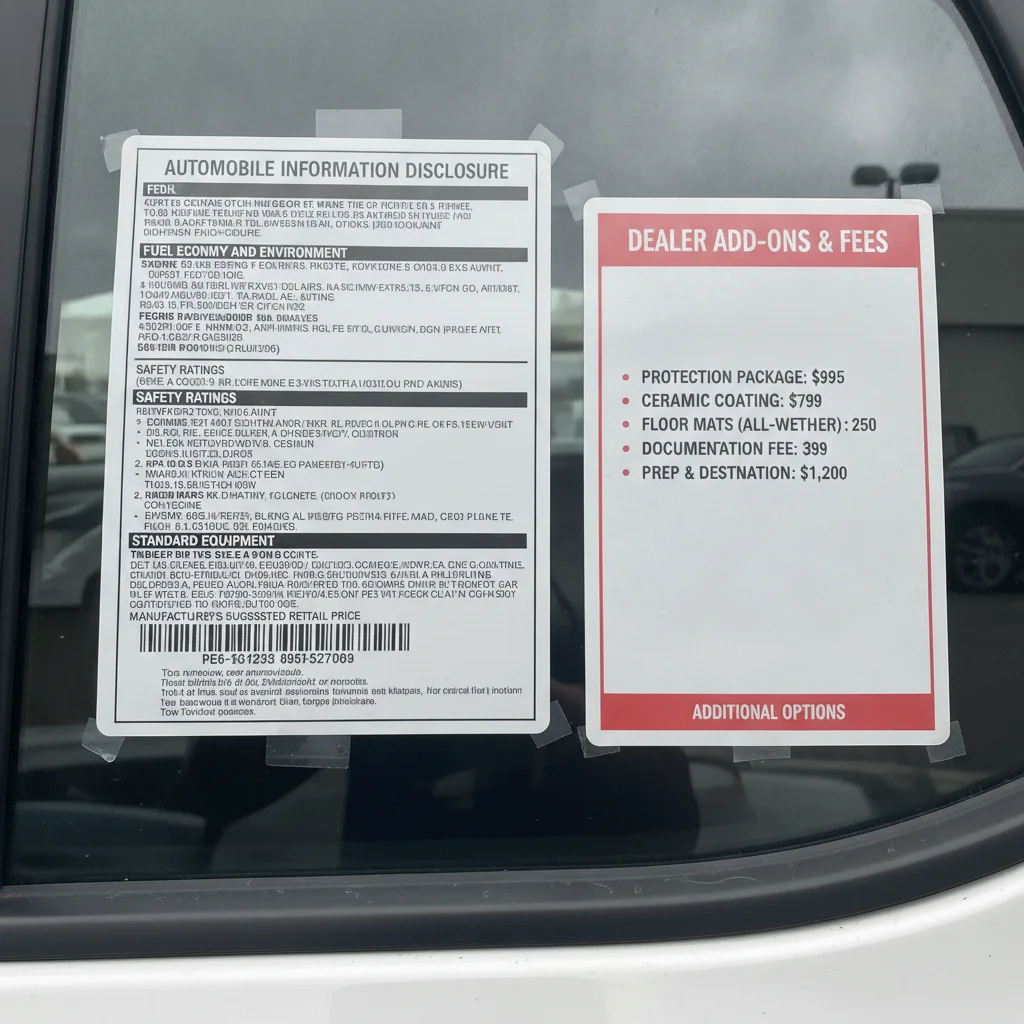
The supplemental sticker is not federally mandated. Everything on it is at the dealer's discretion. If you see a "market adjustment" line — sometimes labeled ADM or ADP — that's a dealer charging above MSRP on a hot vehicle. Our guide on market adjustment pricing and when to walk away explains how to respond when you see that tactic.
Layer 4: The Finance and Insurance Office
You negotiated a solid price on the car. You feel good. Then you get handed off to the finance and insurance (F&I) manager, and the real game begins. The F&I office is often where dealerships recover every dollar they gave up on the vehicle price — and then some.
Extended warranties, GAP insurance, credit life insurance, tire-and-wheel protection, key replacement packages — every one of these products carries a significant profit margin for the dealer. The F&I manager is a trained closer. Their entire job is to add products to your contract after your guard is down.
Beyond add-on products, the interest rate itself is a profit center. Dealers have the legal ability to mark up the rate the lender offers — called "dealer reserve" — and pocket the difference over the life of your loan. On a $40,000 loan at 7% versus 5.5%, you'll pay roughly $1,700 more in interest over 60 months. That premium goes to the dealership, not the lender. Understanding how interest rates and APR affect your total loan cost is essential before you ever discuss financing at the dealership.
Invoice Price Is Not Dealer Cost
The invoice price is often treated as the dealer's cost in negotiations, but it isn't. Holdback, dealer cash incentives, and volume bonuses all reduce what the dealer actually paid net of all payments. Invoice is your best public benchmark, but the true dealer cost is typically 3–6% lower on mainstream vehicles. Use invoice as a ceiling on what you'll pay, not as a floor you're being generous to meet.
Dealer Reserve Is Legal — But Worth Understanding
Federal law permits dealers to mark up the interest rate a lender offers, as long as it doesn't exceed the lender's maximum cap (typically 2–2.5% above the buy rate). This marked-up rate is called dealer reserve. The Equal Credit Opportunity Act has prompted some lenders to limit or eliminate dealer reserve after discrimination concerns, but the practice remains widespread. Secure your own pre-approval to neutralize this tactic.
Market Adjustments Vary by Region and Season
Market adjustment markups are most aggressive at launch for high-demand vehicles and in regions with low inventory. The same model might sell at MSRP or below at a dealer 50 miles away. Checking inventory at multiple dealerships and being willing to travel — or use a dealer's transport service — can eliminate an ADM entirely. Never accept a market adjustment as a fixed cost without first checking regional availability.
What Taxes and Government Fees Add to Your Final Number
Beyond dealer-controlled costs, the sticker price tells you nothing about state and local taxes, registration fees, title fees, or documentation charges. These vary significantly by state and can add $1,500 to $5,000 or more to the transaction on a typical vehicle.
Some of these costs are truly fixed — you can't negotiate state sales tax. Others, like dealer doc fees, vary by dealership and are sometimes inflated. Our companion piece on hidden taxes in your car's sticker price breaks down which charges are real government obligations and which ones dealers pad for margin.
For EV buyers, sticker price carries an additional dimension: the federal tax credit has vehicle price caps that vary by category. Exceeding those caps disqualifies you from the credit entirely. See the breakdown of MSRP caps and the EV tax credit if you're shopping electric.
Use Holdback as a Negotiation Anchor
Since holdback returns 1–3% of MSRP to the dealer after the sale, there's room to negotiate below invoice on slow-selling vehicles. If a model has been sitting on the lot for 60+ days, the dealer has already 'paid' for holdback time. Bring that up directly: ask how long the specific vehicle has been in inventory and use it as leverage to negotiate below invoice.
Always Ask for the Out-the-Door Price
Monthly payment quotes obscure the total cost. Before agreeing to anything, ask the dealer to provide the complete out-the-door price in writing — vehicle selling price, documentation fee, dealer add-ons, taxes, and registration. Then compare that single number across at least two or three competing dealers. This prevents the bundling tactics that cost buyers thousands.
Decline F&I Add-Ons and Shop Them Separately
Extended warranties, GAP insurance, and paint protection can all be purchased elsewhere — often for significantly less. GAP coverage from your own auto insurer typically costs $20–$40 per year versus $400–$900 at the dealership. Extended warranties from third-party providers can be compared by coverage and cost before you need them. Never feel obligated to decide on these products in the moment.
How to Use This Knowledge at the Table
None of this information is useful if you don't walk in prepared. Here's a practical sequence that works:
- Research before you visit. Pull the invoice price from Edmunds or TrueCar. Note the MSRP. Check for active manufacturer incentives and rebates on the make and model you want. Use valuation tools to understand market value in your region.
- Negotiate the selling price first — separately from trade-in and financing. Dealers profit from bundling these conversations. Keep them apart.
- Request the out-the-door price in writing. This is the only number that matters: total vehicle price plus all taxes, fees, and dealer charges. Compare it across at least three dealerships.
- Review every line on the finance contract before signing. If an F&I product wasn't part of your negotiation, ask for it to be removed. Most can be declined. GAP coverage, in particular, is often available cheaper through your own insurance company or lender.
- Secure your own financing first. Getting pre-approved from a bank or credit union before you visit the dealer gives you a rate ceiling. If the dealer beats it legitimately, great. If they try to mark it up, you'll know.
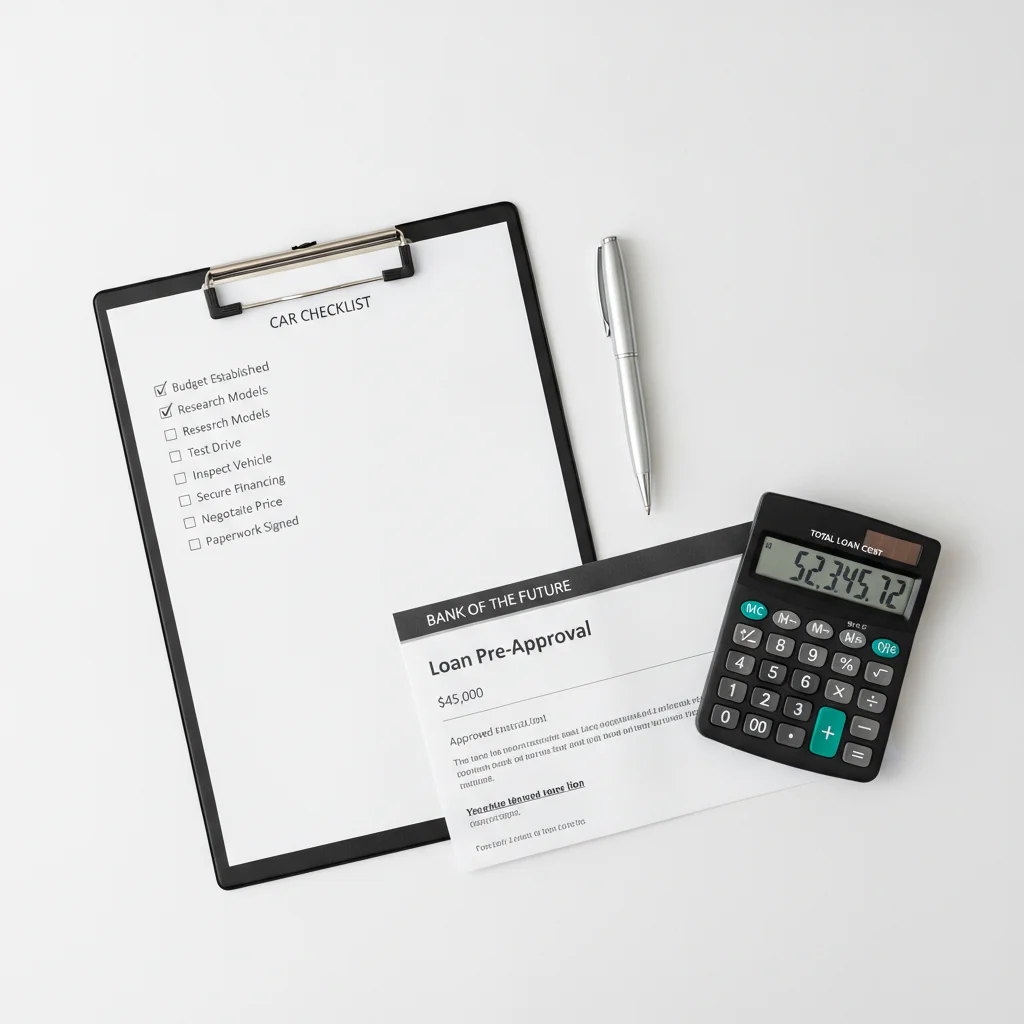
The buyers who get the best deals aren't the hardest negotiators. They're the most informed ones. When you know what holdback is, what pack does, and what the F&I office is designed to accomplish, the tactics stop working on you.
Invoice Price Is Not Dealer Cost
The invoice price is often treated as the dealer's cost in negotiations, but it isn't. Holdback, dealer cash incentives, and volume bonuses all reduce what the dealer actually paid net of all payments. Invoice is your best public benchmark, but the true dealer cost is typically 3–6% lower on mainstream vehicles. Use invoice as a ceiling on what you'll pay, not as a floor you're being generous to meet.
Dealer Reserve Is Legal — But Worth Understanding
Federal law permits dealers to mark up the interest rate a lender offers, as long as it doesn't exceed the lender's maximum cap (typically 2–2.5% above the buy rate). This marked-up rate is called dealer reserve. The Equal Credit Opportunity Act has prompted some lenders to limit or eliminate dealer reserve after discrimination concerns, but the practice remains widespread. Secure your own pre-approval to neutralize this tactic.
Market Adjustments Vary by Region and Season
Market adjustment markups are most aggressive at launch for high-demand vehicles and in regions with low inventory. The same model might sell at MSRP or below at a dealer 50 miles away. Checking inventory at multiple dealerships and being willing to travel — or use a dealer's transport service — can eliminate an ADM entirely. Never accept a market adjustment as a fixed cost without first checking regional availability.
All claims are backed by peer-reviewed research. Sources on request.