Key Takeaways
Market Adjustment
A market adjustment is a dollar amount a dealership adds to a vehicle's Manufacturer's Suggested Retail Price (MSRP) when demand for that model outstrips local supply. It appears as a separate line item on the window sticker or in the purchase contract. Unlike standard dealer fees, it has no fixed justification — it's whatever the market will bear, according to the dealer.
Market adjustments are distinct from dealer-installed accessories or documentation fees. They are an unilateral pricing decision with no regulatory cap in most U.S. states, meaning they are entirely negotiable or refusable.
What a Market Adjustment Actually Is
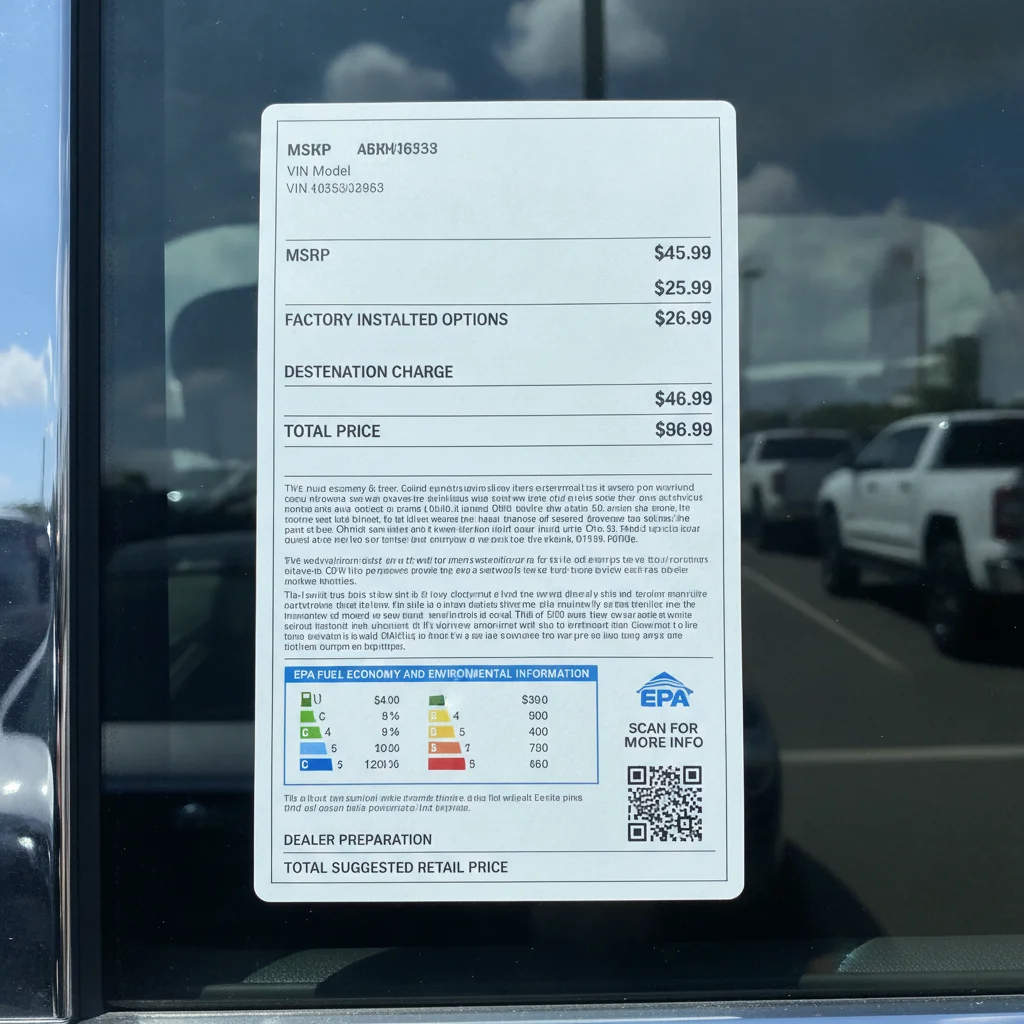
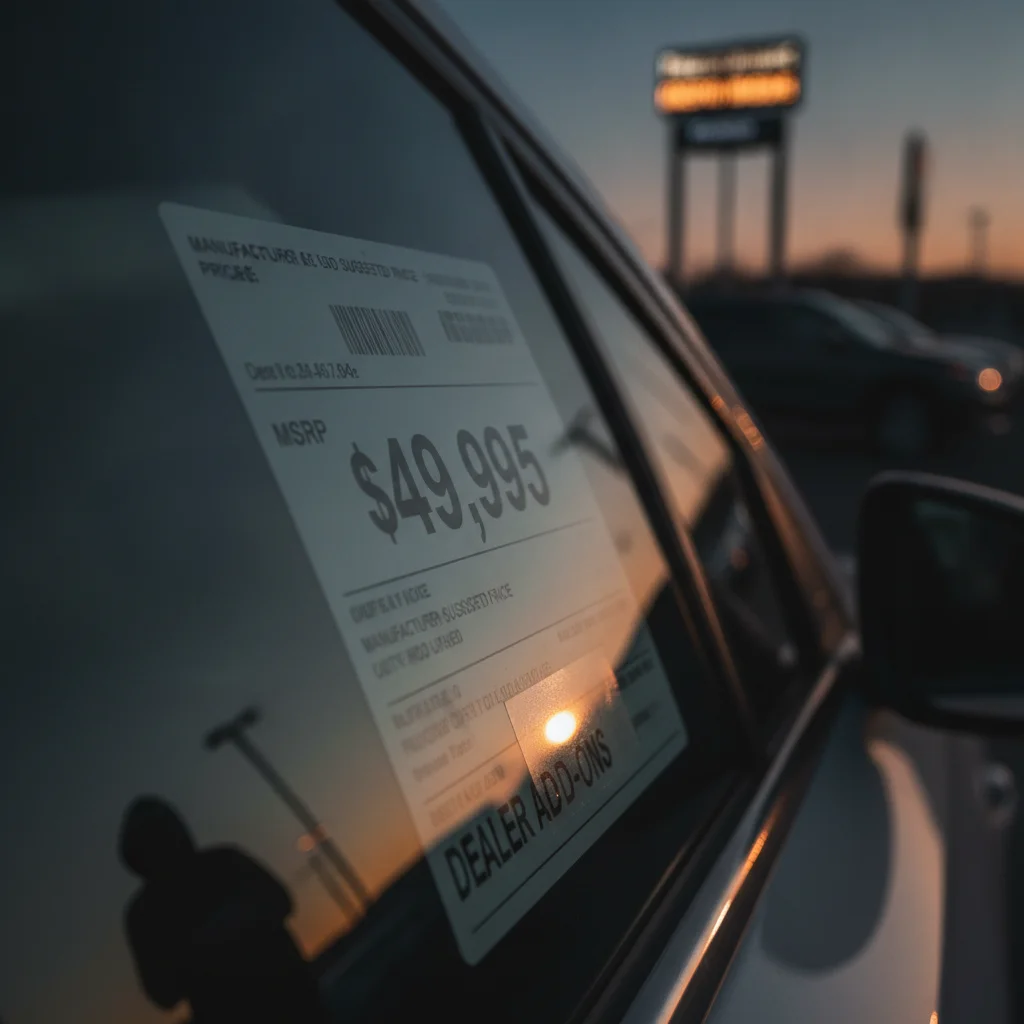
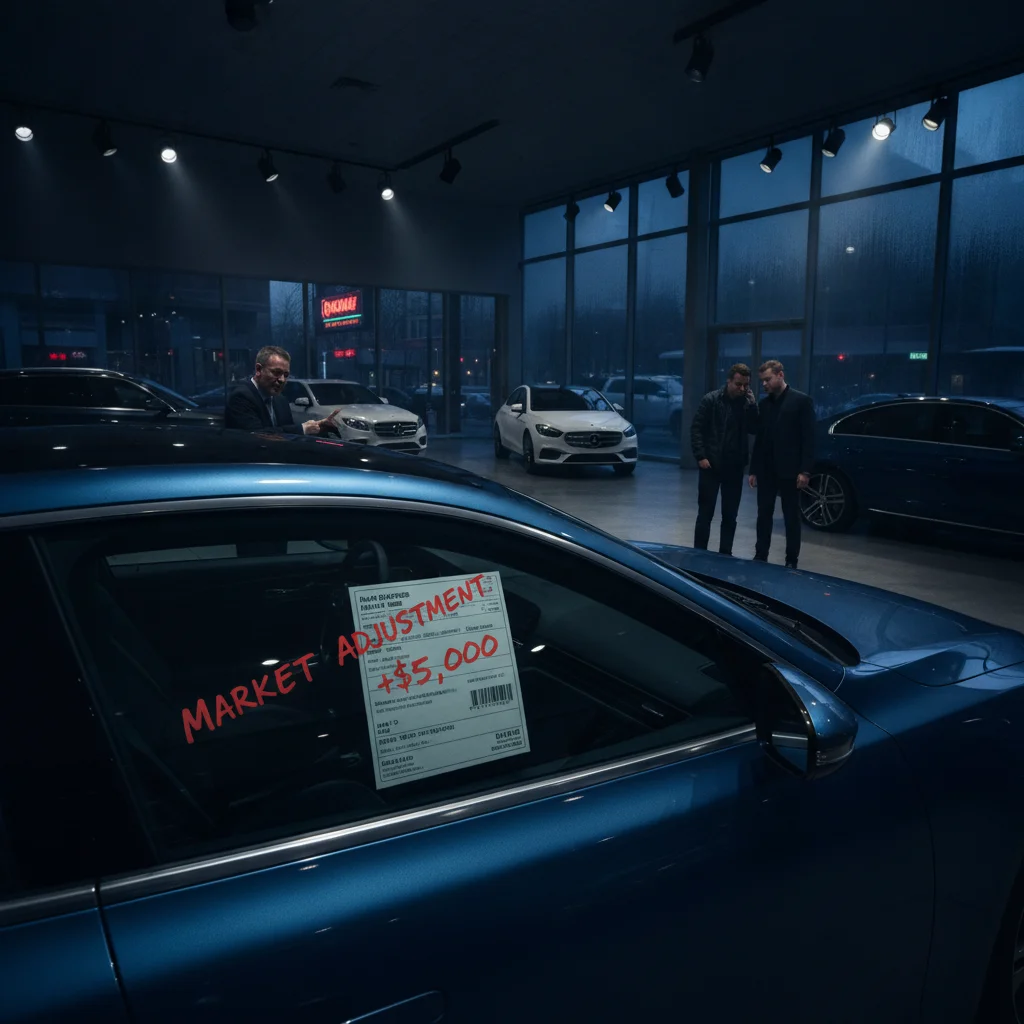
Walk into a dealership to buy a hot new model and you'll likely see a second sticker — usually placed over or below the federally required Monroney label — that lists something like "Market Adjustment: +$4,995." That number is not from the manufacturer. Ford, Toyota, Honda, and every other automaker set an MSRP and print it on the window sticker. The market adjustment is the dealer's own invention.
The rationale dealers give is straightforward: when more buyers want a vehicle than the dealer can get from the manufacturer, the price rises. Basic supply and demand. And in isolation, that argument isn't wrong — it's the same logic behind airline seat pricing or concert tickets. The problem is that the line between a legitimate supply-demand adjustment and a dealer using short-term hype to squeeze extra profit can be razor thin.
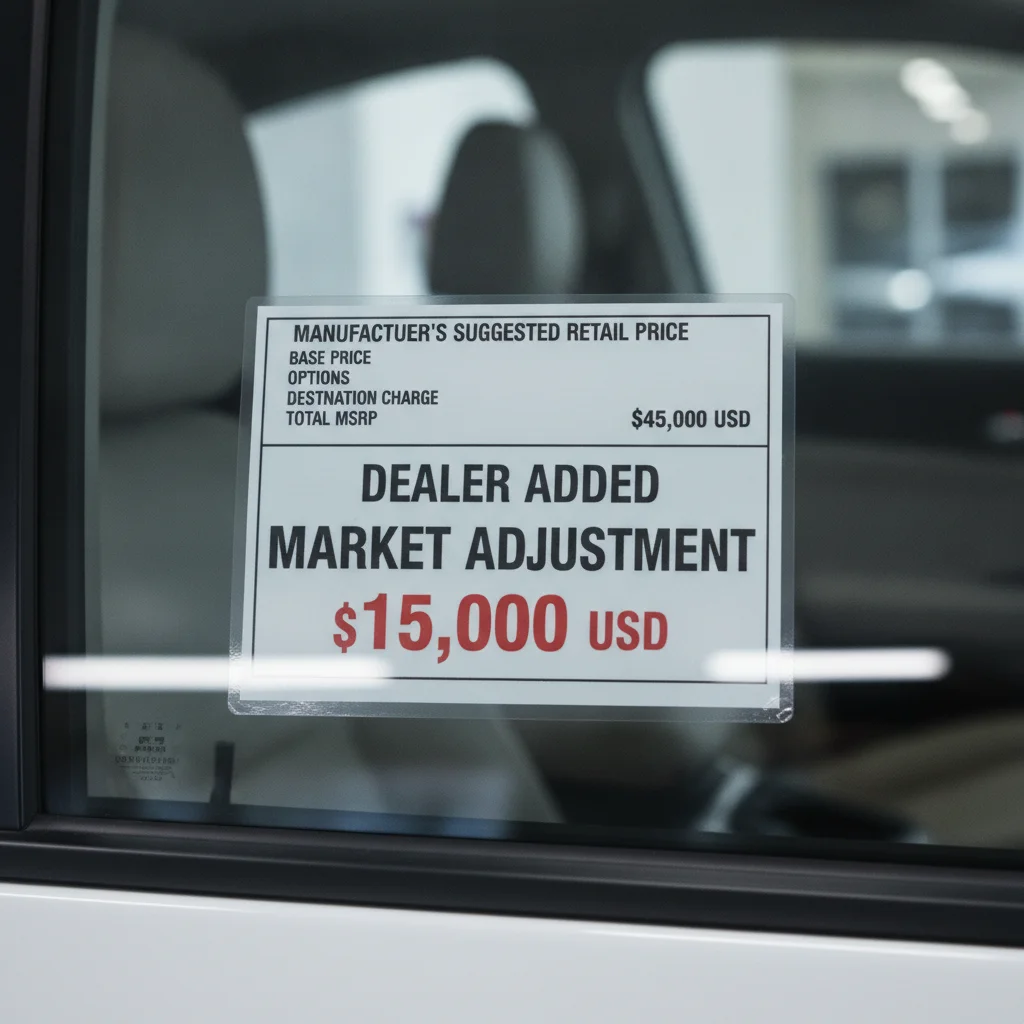
To understand the full picture, it helps to know where the market adjustment sits relative to other pricing concepts. Invoice price, MSRP, and market value are three distinct numbers, and knowing how they differ tells you whether a dealer's markup has any grounding in reality. A $2,000 adjustment on a truck where invoice is already close to MSRP is very different from the same adjustment on a vehicle where the dealer is already pocketing holdback and pack fees.
What buyers often miss: the adjustment isn't locked in. It's a negotiating position, not a cost of doing business. Dealers who tell you it's "non-negotiable" are counting on you not knowing that.
Market Adjustments vs. Dealer Add-Ons: Know the Difference
Some dealers bundle pre-installed accessories — paint sealant, window tint, cargo mats — into what they call a market adjustment. This is a different problem: you're being charged for items you may not want and can't easily remove. Ask for a complete itemization. If the 'adjustment' is actually a package of add-ons, you can often negotiate those separately or refuse them on uncustomized vehicles.
Factory Orders Can Bypass Market Adjustments
On many brands, you can place a factory order for a vehicle built to your exact specs, paid at MSRP with no dealer markup. The tradeoff is time — typically 8 to 16 weeks. For high-demand models without imminent production changes, this is often the cleanest path to MSRP pricing. Ask the dealer directly whether factory orders are available for the model you want.
Market Adjustments Are Part of Your Loan Principal
If you're financing, remember that a market adjustment increases the amount you borrow — and therefore the total interest you pay over the loan term. A $3,000 adjustment on a 72-month loan at 7% APR adds roughly $630 in interest charges. Factor this into whether the markup is worth accepting, especially on longer loan terms.
Why Dealers Use Them and When They're Justified
Dealers face real allocation constraints from manufacturers. If a regional distribution center only ships 12 units of a popular hybrid SUV to a dealership per quarter, and 40 people want one, the dealer is holding genuine leverage. In those cases, some markup above MSRP reflects honest market conditions.
But not all market adjustments are created equal. Here's a quick breakdown of the scenarios you'll actually encounter:
- Genuine shortage: A newly launched model, a production-limited vehicle, or a trim with a long factory order waitlist. The adjustment may be real, but it's still negotiable — especially if you're willing to wait.
- Manufactured urgency: The dealer has adequate stock but applies the label anyway because buyers aren't checking inventory data. This is the most common abuse.
- Dealer-installed packages bundled in: Sometimes what's labeled a "market adjustment" is actually a pre-installed add-ons package the dealer won't remove. This is a different problem — see our breakdown of dealer add-ons that quietly inflate your final bill for how to handle those.
- Regional demand spikes: A truck or off-road SUV that sells extremely well in one metro may carry adjustments that wouldn't exist 200 miles away.
$1,000–$10,000+
Typical market adjustment range on hot models
During the 2021–2023 inventory shortage, Edmunds data showed average markups on popular trucks and SUVs regularly exceeding $5,000 above MSRP.
~$840
Extra interest on a $4,000 markup at 7% APR
Calculated over a 72-month loan term — meaning a market adjustment costs you more than its face value when you're financing.
35%
New vehicles sold above MSRP at peak shortage
According to Edmunds, approximately 35% of all new vehicle transactions occurred above MSRP during the height of the 2022 supply chain disruption.
45+ days
Days on lot signaling dealer leverage has weakened
Industry analysts consider 45–60 days on lot a threshold after which dealers become significantly more willing to negotiate pricing, including adjustments.
$200–$400
Cost of driving to a lower-markup dealer (avg. 150 mi)
Fuel, tolls, and time considered, driving to a dealer 150 miles away typically costs well under $400 — often far less than the markup you avoid.
The honest truth is that a market adjustment is most justified during genuine production constraints — think supply chain crises, factory shutdowns, or first-model-year launches of genuinely revolutionary vehicles. Outside those situations, it's often opportunistic pricing that a well-prepared buyer can counter.
Time Your Purchase for Maximum Leverage
End of month, end of quarter (March, June, September, December), and late in the model year are historically the best times to buy. Dealers chasing manufacturer volume bonuses are far more likely to reduce or waive market adjustments to close units. A deal that falls through in mid-month may close easily on the 29th.
Get Competing Quotes in Writing
Email three to five dealers within driving distance asking for their out-the-door price on a specific VIN or trim. Having written quotes from competitors gives you something concrete to present — not just a vague claim that 'another dealer quoted me less.' Dealers respond to specific, documented alternatives.
How to Spot a Market Adjustment Before You're in the Chair
The best time to deal with a market adjustment is before you set foot in a dealership. Here's the process that works:
- Check the window sticker breakdown online. Many dealers post inventory with full sticker details. Look for any line above MSRP that isn't a factory option or destination charge.
- Call ahead and ask directly. "Does your asking price include any dealer markup above MSRP?" A dealer who can't give you a straight answer is already telling you something.
- Check regional inventory on third-party sites. CarGurus, Edmunds, and Cars.com all flag vehicles priced above or below market average. If multiple nearby dealers have the same model in stock, you have real leverage.
- Look at days on lot. A vehicle that's been sitting for 45+ days with a $5,000 markup is a dealer who overplayed their hand. That's your opening.

It's also worth understanding what the sticker price doesn't tell you — because the Monroney label has its own hidden layers before you even get to a market adjustment. Holdback, dealer cash, and advertising fees all affect the dealer's real cost basis, which in turn tells you how much room exists for negotiation.
One underused tactic: contact dealers in adjacent metro areas. A truck popular in Dallas may have lower adjustments — or none — in a smaller Texas market 90 minutes away. If you're willing to drive, that geographic arbitrage can save you real money.
Market Adjustments vs. Dealer Add-Ons: Know the Difference
Some dealers bundle pre-installed accessories — paint sealant, window tint, cargo mats — into what they call a market adjustment. This is a different problem: you're being charged for items you may not want and can't easily remove. Ask for a complete itemization. If the 'adjustment' is actually a package of add-ons, you can often negotiate those separately or refuse them on uncustomized vehicles.
Factory Orders Can Bypass Market Adjustments
On many brands, you can place a factory order for a vehicle built to your exact specs, paid at MSRP with no dealer markup. The tradeoff is time — typically 8 to 16 weeks. For high-demand models without imminent production changes, this is often the cleanest path to MSRP pricing. Ask the dealer directly whether factory orders are available for the model you want.
Market Adjustments Are Part of Your Loan Principal
If you're financing, remember that a market adjustment increases the amount you borrow — and therefore the total interest you pay over the loan term. A $3,000 adjustment on a 72-month loan at 7% APR adds roughly $630 in interest charges. Factor this into whether the markup is worth accepting, especially on longer loan terms.
Negotiating Tactics That Actually Work
Once you're in front of a salesperson and the market adjustment shows up in the deal sheet, here's how to respond without getting flustered:
Get it in writing first
Ask for a complete breakdown of the out-the-door price before discussing monthly payments. Market adjustments sometimes get buried or renamed when dealers shift the conversation to financing. Dealer fees in the contract can be layered — know which charges are fixed (taxes, registration) and which aren't (market adjustments, dealer prep).
Counter with data, not emotion
Show the salesperson a printout or phone screenshot of comparable inventory within 150 miles, ideally with lower or zero markups. Saying "dealer X has the same trim for MSRP and I can be there by Saturday" is more powerful than expressing frustration.
Make a specific counter-offer
Don't ask them to remove the adjustment — tell them what you'll pay. "I'll sign today at MSRP plus destination, or I'll go to the dealer I found in ." Specific, credible threats of alternatives are what move the needle.
Separate the trade-in conversation
Dealers sometimes soften a market adjustment while squeezing your trade-in value to compensate. Keep these as separate transactions. The hidden math behind your trade-in offer means you need to know your vehicle's real value before sitting down.
“The market adjustment is the most honest dishonest thing in the dealership. It's right there on the sticker — they're not hiding it. But most buyers don't realize it's the single most negotiable number in the entire deal.”
— Ivan Drury, Director of Insights at Edmunds
Use time as leverage
If you can wait, say so. End-of-month, end-of-quarter, and model-year changeover periods typically see dealers more willing to reduce or eliminate adjustments to move units and hit manufacturer incentive targets.
Time Your Purchase for Maximum Leverage
End of month, end of quarter (March, June, September, December), and late in the model year are historically the best times to buy. Dealers chasing manufacturer volume bonuses are far more likely to reduce or waive market adjustments to close units. A deal that falls through in mid-month may close easily on the 29th.
Get Competing Quotes in Writing
Email three to five dealers within driving distance asking for their out-the-door price on a specific VIN or trim. Having written quotes from competitors gives you something concrete to present — not just a vague claim that 'another dealer quoted me less.' Dealers respond to specific, documented alternatives.
When Walking Away Is the Right Call
There are situations where no amount of negotiating will move a dealer, and the correct answer is to leave. Here's how to recognize them:
- The adjustment is more than 10% of MSRP. On a $45,000 vehicle, that's $4,500 over sticker. Unless you're buying a limited-production Ferrari, that's not a market condition — it's a dealer maximizing a short-term opportunity at your expense.
- The dealer refuses to itemize charges. If they won't show you a line-by-line breakdown distinguishing the market adjustment from other fees, walk. That opacity is a red flag regardless of the vehicle.
- The same vehicle is available nearby at or near MSRP. If your research shows comparable inventory without the markup, you have no reason to pay the premium. The inconvenience of driving further costs less than the markup in most cases.
- You're being pushed into financing you didn't ask for. Some dealers apply high markups knowing they'll recoup buyer resistance through back-end financing profit. If the market adjustment drops suddenly when you mention dealer financing, be suspicious of the rate you're being offered.

Walking away is not a bluff to deploy once — it's a legitimate decision you should be genuinely prepared to make. Dealers know the difference between a buyer who's posturing and one who has done their homework and is ready to leave. The latter gets taken seriously.
For a broader look at how dealers approach dealer negotiation, understanding their incentive structure — monthly quotas, holdback schedules, manufacturer bonuses — explains why timing and preparation matter more than any single tactic.
What to Do If You Already Paid One
If you bought a vehicle with a market adjustment and are now second-guessing it, a few things are worth knowing:
You likely can't unwind the deal. Once signed, vehicle purchases are final in almost every state. There is no federal "cooling off" period for car purchases, and very few states require dealers to offer one.
Check your contract for what was disclosed. If the market adjustment was listed as a separate line item, it was disclosed and agreed to. If it was folded into a vague "dealer fee" without clear itemization, you may have grounds to file a complaint with your state attorney general's consumer protection division — though outcomes vary widely.
Use it as data for the future. Document what the adjustment was, the vehicle model, the date, and the dealer. If you're financing, understand that the market adjustment is part of your loan principal — you're paying interest on that markup for the life of the loan. On a 72-month loan at 7% APR, a $4,000 market adjustment costs you roughly $840 in additional interest. That's real money.
Market Adjustments vs. Dealer Add-Ons: Know the Difference
Some dealers bundle pre-installed accessories — paint sealant, window tint, cargo mats — into what they call a market adjustment. This is a different problem: you're being charged for items you may not want and can't easily remove. Ask for a complete itemization. If the 'adjustment' is actually a package of add-ons, you can often negotiate those separately or refuse them on uncustomized vehicles.
Factory Orders Can Bypass Market Adjustments
On many brands, you can place a factory order for a vehicle built to your exact specs, paid at MSRP with no dealer markup. The tradeoff is time — typically 8 to 16 weeks. For high-demand models without imminent production changes, this is often the cleanest path to MSRP pricing. Ask the dealer directly whether factory orders are available for the model you want.
Market Adjustments Are Part of Your Loan Principal
If you're financing, remember that a market adjustment increases the amount you borrow — and therefore the total interest you pay over the loan term. A $3,000 adjustment on a 72-month loan at 7% APR adds roughly $630 in interest charges. Factor this into whether the markup is worth accepting, especially on longer loan terms.
The broader lesson is that market adjustments don't exist in isolation. They interact with your financing terms, your trade-in value, and the dealer fees buried in the contract. Approaching any new car purchase as a system — not a series of isolated transactions — is what separates buyers who come out ahead from those who don't.
All claims are backed by peer-reviewed research. Sources on request.