| MSRP definition | Manufacturer's Suggested Retail Price — the automaker's recommended selling price |
| Invoice price definition | The amount printed on the manufacturer's bill to the dealer for each vehicle |
| Market value definition | What buyers in a specific region are actually paying, based on real transaction data |
| Typical dealer holdback | 1–3% of MSRP, refunded by the manufacturer after sale (Industry standard, varies by manufacturer) |
| MSRP vs. invoice gap | Usually 3–8% on most mainstream vehicles (Edmunds industry data) |
| Markups above MSRP | Common on high-demand models; ranged $5,000–$20,000+ during 2021–2023 shortage (Market reports, 2021–2023) |
| Best negotiation anchor | Market value (transaction price), not MSRP |
| Where to find invoice price | Edmunds, TrueCar, Consumer Reports new-car pricing tools |
Why These Three Numbers Exist (And Who Benefits From the Confusion)
Walk onto a new-car lot and you're immediately swimming in pricing language: sticker price, invoice, market value, dealer cost, transaction price. Dealers use these terms interchangeably when it suits them and precisely when it doesn't. That ambiguity isn't accidental — it's structural.
Here's the core reality: MSRP, invoice price, and market value are three distinct figures that rarely equal each other, and each one tells a different story about who profits from the deal. Once you understand what each number actually represents and where it comes from, you stop negotiating blind.
This article is a reference guide. Use it to look up definitions, understand the gaps between these figures, and walk into any dealership conversation knowing exactly which number to put on the table — and which ones to ignore.
| MSRP definition | Manufacturer's Suggested Retail Price — the automaker's recommended selling price |
| Invoice price definition | The amount printed on the manufacturer's bill to the dealer for each vehicle |
| Market value definition | What buyers in a specific region are actually paying, based on real transaction data |
| Typical dealer holdback | 1–3% of MSRP, refunded by the manufacturer after sale (Industry standard, varies by manufacturer) |
| MSRP vs. invoice gap | Usually 3–8% on most mainstream vehicles (Edmunds industry data) |
| Markups above MSRP | Common on high-demand models; ranged $5,000–$20,000+ during 2021–2023 shortage (Market reports, 2021–2023) |
| Best negotiation anchor | Market value (transaction price), not MSRP |
| Where to find invoice price | Edmunds, TrueCar, Consumer Reports new-car pricing tools |
MSRP: The Manufacturer's Opening Bid
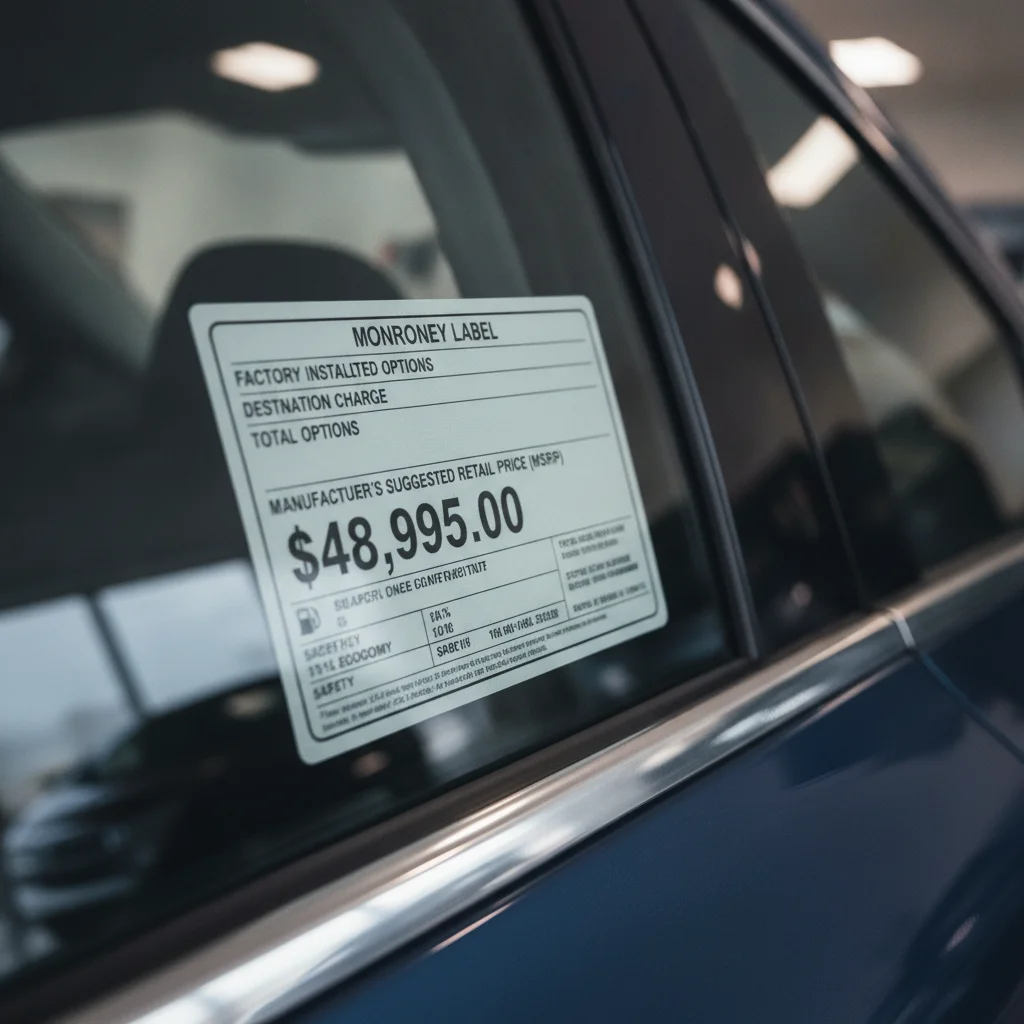
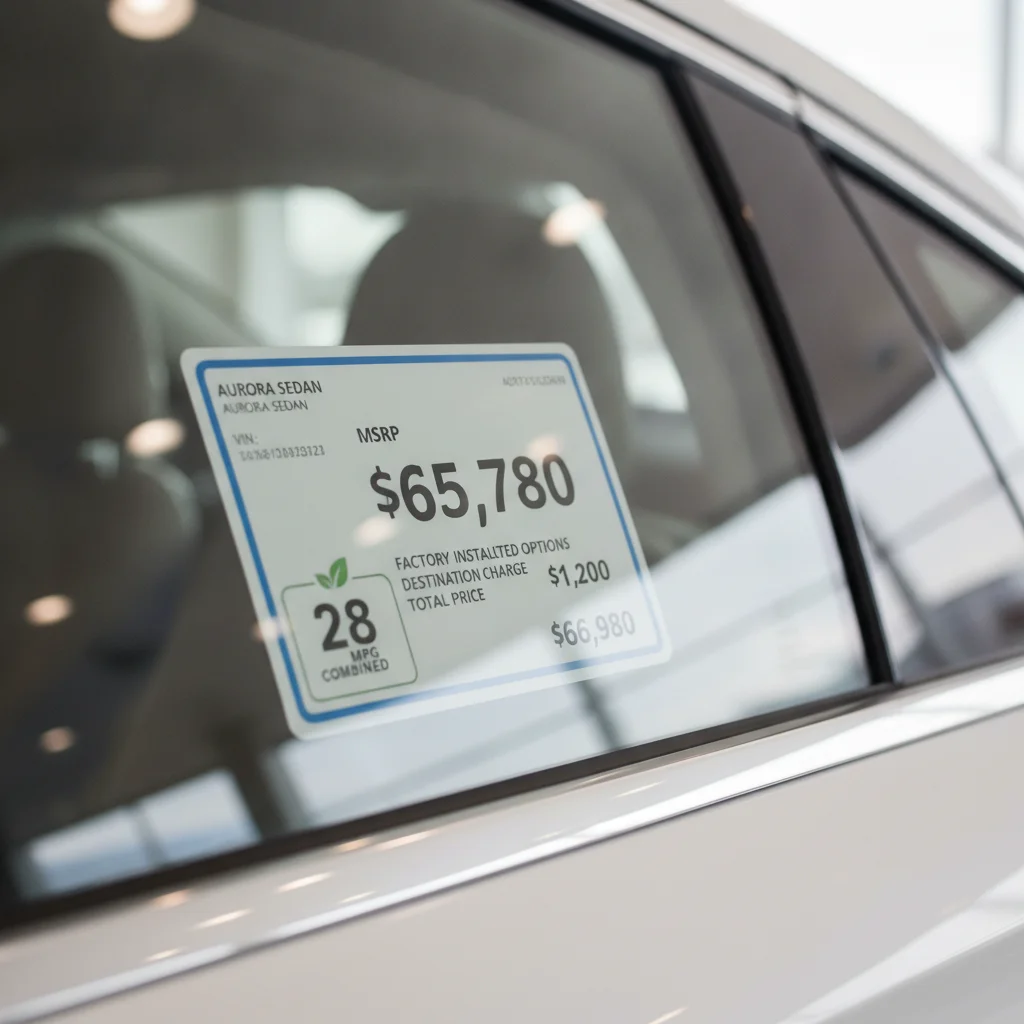
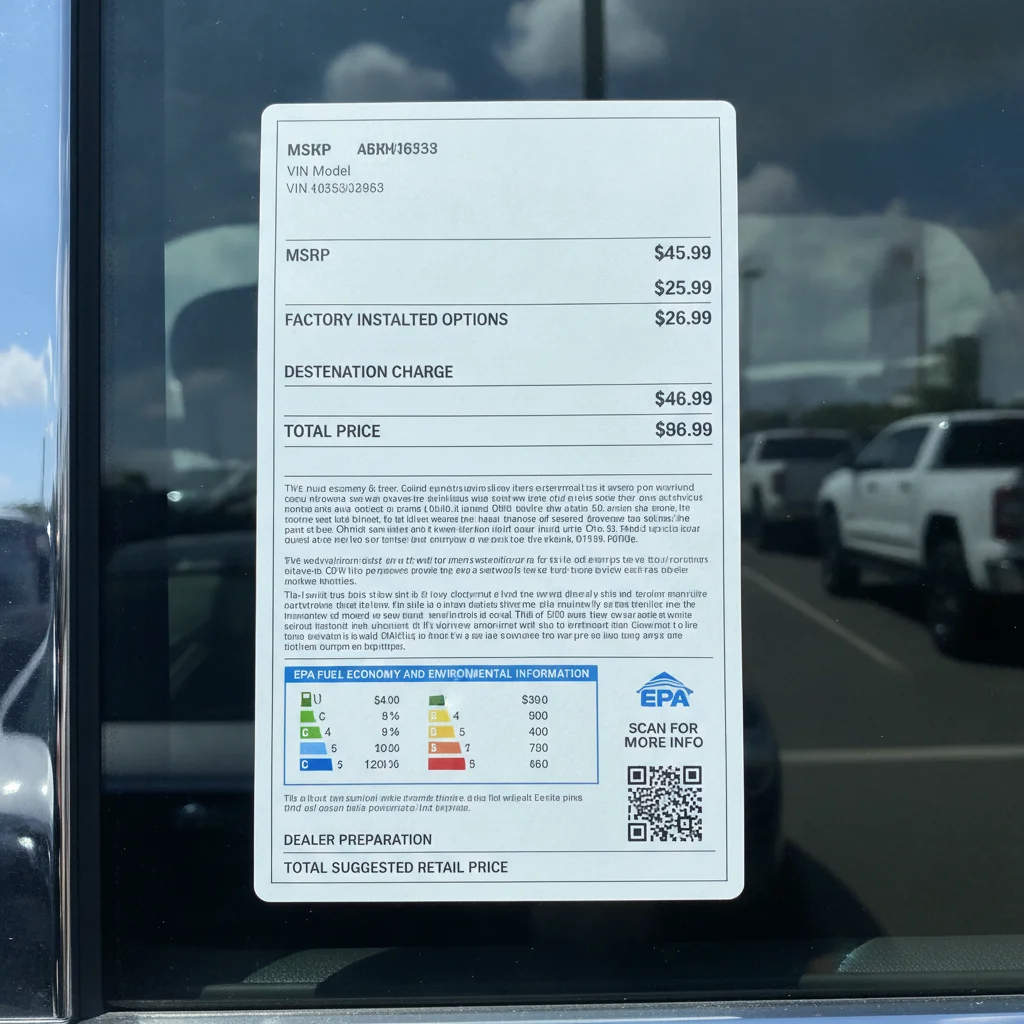
MSRP stands for Manufacturer's Suggested Retail Price. It's the number printed on the Monroney sticker — that legally required window label — and it represents what the automaker recommends the dealer charge you. The key word is suggested. The manufacturer sets it; the dealer can charge more or less.
MSRP is calculated by the automaker based on the base vehicle price plus options, destination charges, and any packages. It is not a reflection of what the dealer paid, what buyers are actually paying in your market, or what the car is worth six months from now.
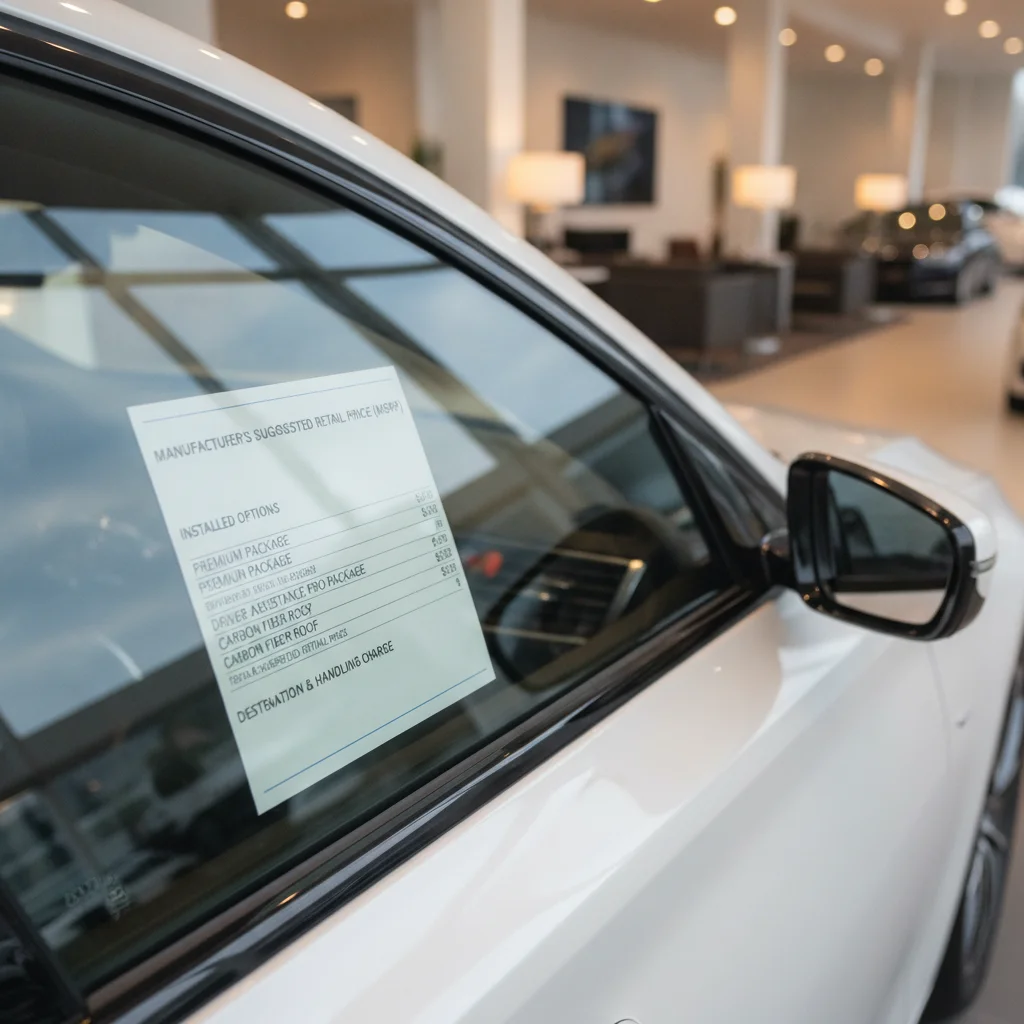
Dealers love negotiating from MSRP as the anchor because it's the highest defensible number in the conversation. When a salesperson says "I can get you $500 off sticker," they're giving you a discount off a number that was padded to begin with. That framing makes a mediocre deal feel like a win.
For more on how MSRP is built and why it rarely reflects what you'll actually pay, see what MSRP actually means and why it's just a starting point.
When MSRP Becomes Relevant Again
In high-demand markets — think limited-production vehicles, hot new model launches, or supply-constrained inventory — dealers charge above MSRP. These "market adjustments" or "dealer markups" are added to the sticker and are entirely legal. During the 2021–2023 inventory shortage, markups of $5,000 to $20,000 above MSRP became routine on popular trucks and SUVs. In those conditions, MSRP becomes a floor, not a ceiling.
Invoice Price: What the Dealer Paid (Sort Of)
Invoice price is the amount printed on the manufacturer's bill to the dealer — the document showing what the dealer officially paid for the vehicle. For decades, "buying at invoice" was held up as the holy grail of car negotiation. Get the dealer down to invoice and you've won, right?
Not quite. Invoice price is real, but it's not the whole story. Dealers routinely receive money back from manufacturers that doesn't appear on the invoice at all:
- Holdback: A percentage of MSRP (typically 1–3%) that the manufacturer refunds to the dealer quarterly. On a $45,000 vehicle, that's $450–$1,350 the dealer gets back after selling you the car.
- Dealer cash / incentives: Manufacturer-to-dealer payments tied to hitting volume targets, selling specific models, or moving aged inventory.
- Floor plan assistance: Manufacturers sometimes subsidize the interest dealers pay to finance their inventory. This lowers the dealer's effective carrying cost.
When you add holdback and backend incentives, a dealer selling at invoice price may still net $1,000–$3,000 or more per unit depending on the vehicle and manufacturer. Invoice is the floor they'll show you — true dealer cost is typically lower.
For a detailed breakdown of how invoice, MSRP, and true dealer cost interact, see invoice price, MSRP, and dealer cost explained.

How to Find Invoice Price
Invoice prices for new vehicles are publicly available through tools like Edmunds, TrueCar, and Consumer Reports. These sources publish invoice data for most domestic models. Look up the base invoice plus the invoice prices for any installed options — that sum is your real reference point going into negotiation. Note that destination charges are typically non-negotiable and are the same everywhere.
3–8%
Typical MSRP-to-invoice spread on new vehicles
According to Edmunds industry pricing data, the gap between MSRP and invoice varies by segment, with luxury vehicles often showing wider spreads.
$1,350
Holdback on a $45,000 vehicle at 3%
Dealers receive holdback payments — typically 1–3% of MSRP — from manufacturers quarterly, meaning invoice price understates their actual margin.
$20,000+
Peak dealer markups above MSRP during 2022 inventory shortage
Cox Automotive reported markups of $10,000–$20,000+ on popular trucks and SUVs during the peak of the 2021–2023 supply chain disruption.
~85%
New car buyers who research prices online before visiting a dealer
Cox Automotive's 2023 Car Buyer Journey study found the vast majority of buyers conduct online pricing research, yet many still pay above market value.
Market Value: What Buyers Are Actually Paying Right Now
Market value — sometimes called transaction price or fair market value — is what buyers in your specific region are actually paying for that vehicle at this moment. It's derived from real sales data, not manufacturer suggestions or invoices. Sources like Edmunds True Market Value (TMV), Kelley Blue Book Fair Purchase Price, and TrueCar pull from actual transactions to produce this number.
Market value is the most honest of the three figures because it reflects supply and demand in real time. If a car is selling at $2,000 below MSRP on average, market value captures that. If it's moving at $3,000 above invoice due to regional demand, that shows up too.
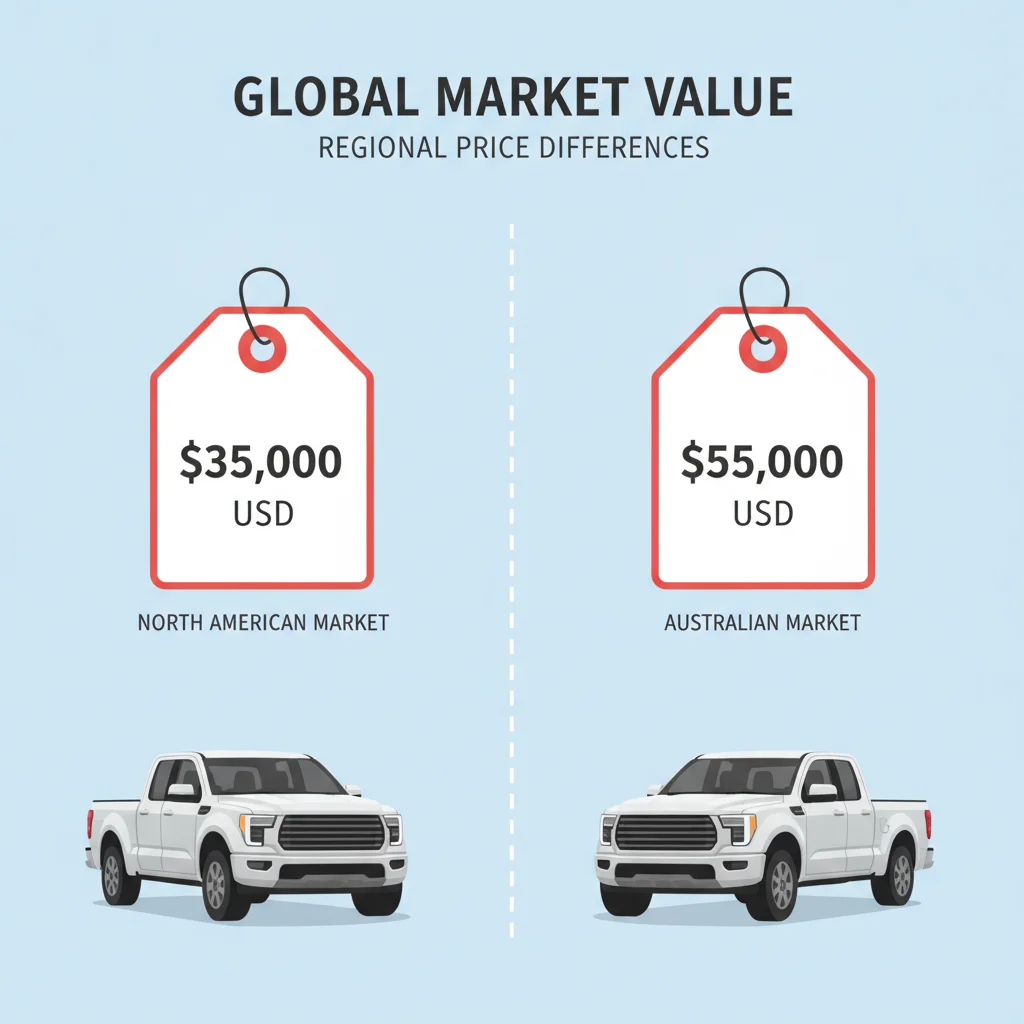
Why Market Value Varies by Location
A pickup truck priced at $36,000 MSRP might have a market value of $34,200 in one state and $37,500 in another. Geographic demand, local economy, seasonal patterns, and competition between dealers all move the needle. Regional price differences explain why the same car is worth more in some markets — understanding this dynamic helps you decide whether it's worth driving a few hours to a different market.
Market Value for Used Cars
On the used side, market value is even more dominant because there is no invoice. Every used car is priced on condition, mileage, trim level, regional demand, and what comparable units are selling for. If you're buying used and a dealer is quoting you MSRP for a two-year-old vehicle, that's a red flag — used cars don't carry manufacturer suggested prices.
When valuing a used car you own or plan to sell, remember that different tools produce different estimates for reasons that aren't always obvious. Why your car's valuation differs across every tool you check explains the methodology gaps behind those discrepancies.
How to Use All Three Numbers Together
Each of these figures plays a role in a smart negotiation. Here's the framework:
- Start with market value. Pull it from Edmunds, KBB, or TrueCar for your specific trim, color, and options in your ZIP code. This is what comparable buyers are paying. It becomes your target transaction price.
- Compare to invoice. If market value is above invoice, the car has strong demand and you'll likely pay over invoice. If market value is below invoice, something is off — check for manufacturer rebates that may have already dropped the effective price.
- Use MSRP only as a reference point. It tells you the dealer's opening anchor. Anything they offer "off MSRP" should be benchmarked against your market value data, not celebrated on its own.
- Account for incentives and rebates. Manufacturer cash-back rebates reduce the effective price the dealer can offer you. A $1,500 rebate on a vehicle priced $500 above invoice still leaves room to negotiate.

The Negotiation in Practice
When a dealer gives you a quote, ask: "Is that before or after manufacturer incentives?" Then compare the out-the-door number — after taxes, fees, and rebates — against your market value research. A deal that looks $800 over invoice might still be $400 below market value, which is actually fine. Conversely, a deal framed as "$1,200 below MSRP" might still be $900 above what comparable buyers paid last week.
For trade-in situations, the same logic applies. Dealers will often conflate your trade-in value with the new-car price to obscure where the money is moving. Separate the transactions: negotiate the new-car price first, then discuss your trade. See how dealer trade-in appraisals work to keep that number from being used against you.
MSRP
Manufacturer's Suggested Retail Price. The price an automaker recommends dealers charge for a vehicle. It is printed on the federally required Monroney window sticker but is not a fixed selling price — dealers may charge more or less.
Invoice price
The price listed on the manufacturer's bill to the dealer. It represents the dealer's official cost before holdback, incentives, and other backend payments from the manufacturer.
Market value
The price buyers in a specific region are currently paying for a given vehicle, based on aggregated real transaction data. Also called transaction price or fair purchase price depending on the tool.
Dealer holdback
A percentage of MSRP (typically 1–3%) that the manufacturer pays back to the dealer after a vehicle is sold. It is not shown on the invoice and lowers the dealer's true cost below the stated invoice price.
Monroney sticker
The federally mandated window label on every new vehicle that lists MSRP, installed options, fuel economy, and origin of parts. Named after Senator Mike Monroney whose 1958 legislation required it.
Dealer markup
An amount added above MSRP by a dealer, often labeled as a 'market adjustment.' Legal in all states and common during periods of high demand or low inventory.
True dealer cost
The actual amount a dealer nets after subtracting holdback and all manufacturer incentives from the invoice price. Generally lower than published invoice price by $500–$3,000 or more depending on the vehicle.
Manufacturer incentive
Cash payments or financing subsidies offered by the manufacturer either to buyers (customer cash) or dealers (dealer cash) to stimulate sales of specific models.
Final Takeaway
MSRP protects the dealer's margin. Invoice gives you a floor reference — but not the real floor. Market value tells you what the real world is actually paying. Use all three, weight market value most heavily, and you'll negotiate from facts instead of feelings.
Edmunds True Market Value (TMV)
Pulls real transaction data by ZIP code to show what buyers near you are actually paying for a specific trim and configuration. One of the most reliable market value references available for free.
TrueCar New Car Pricing
Displays invoice price, average paid, and dealer offers side by side. Useful for quickly benchmarking a quote against local market data without calling multiple dealers.
Consumer Reports New Car Pricing
Provides invoice and build-your-own pricing breakdowns with option-level detail. Subscription required, but the data is among the most accurate for invoice price research.
Invoice Price, MSRP, and Dealer Cost Explained
A deeper dive into the numbers behind a new car's price tag, including how holdback and incentives affect the dealer's real margin. <a href="/buying-a-car/new-vs-used-cars/buying-new-cars/invoice-price-msrp-and-dealer-cost-the-numbers-behind-a-new-cars-price-tag">Read the full breakdown</a>.
Dealer Trade-In Hub
Covers how dealers appraise trade-ins and how to prevent your trade-in from being used to obscure the new-car deal. Essential reading before any dealership visit. <a href="/selling-your-car/sale-channels/dealer-trade-ins">Explore dealer trade-ins</a>.
All claims are backed by peer-reviewed research. Sources on request.