Key Takeaways
The Inspection Gap
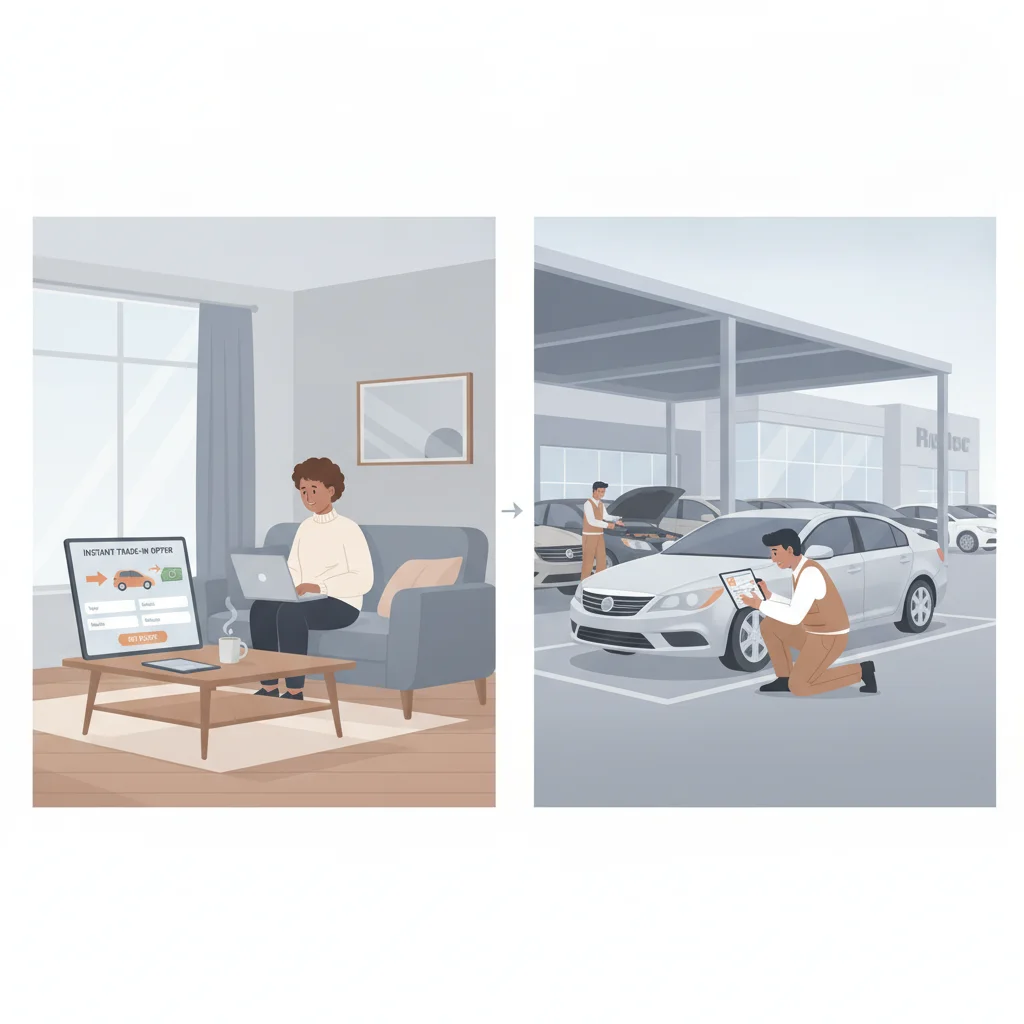
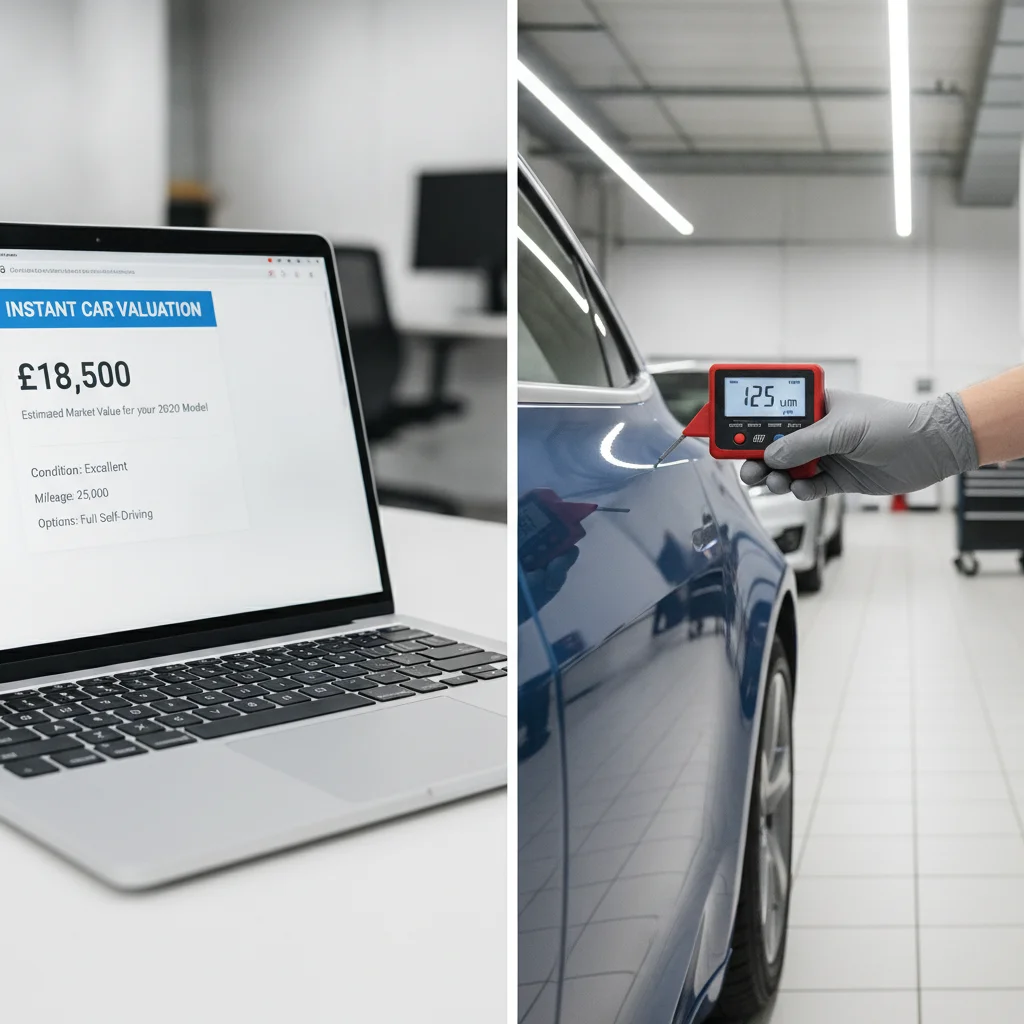
The inspection gap is the difference between the instant online offer a seller receives for their vehicle and the adjusted offer made after a physical appraisal. Most online instant-offer platforms generate a quote based on self-reported information — mileage, trim level, and condition — but reserve the right to revise that number once an appraiser lays eyes on the car in person. The gap can range from a few hundred dollars to several thousand, depending on how accurately the seller described the vehicle.
In the remarketing industry, this adjustment is sometimes called a 'condition-based deduction' and is calculated against a standardized condition grading scale — typically ranging from Rough to Clean — that determines regional wholesale auction value.
Why Instant Offers Are Never Truly Final
You've entered your VIN, answered a handful of questions about your car's condition, and within seconds a platform throws a number at you — $18,400. It feels official. It isn't.
Every major instant-offer service — CarMax, Carvana, KBB Instant Cash Offer, Vroom — operates on the same fundamental model: the algorithm generates a quote from the data you provide. That means the offer is only as accurate as your self-assessment. If you click 'Good' when the honest answer is 'Fair,' the gap between the online quote and the final adjusted offer is on you. Platforms know sellers tend to overestimate condition, which is exactly why the physical inspection step exists.
The inspection isn't a formality. It's the moment the platform converts a conditional marketing number into an actual purchase price. Understanding what happens in that step — and how much the offer can move — is the difference between a smooth transaction and a frustrating surprise at the drop-off appointment.
For a direct comparison of how digital quotes stack up against traditional dealer appraisals, see Online Trade-In Offers vs. In-Person Dealer Appraisals.
What Appraisers Actually Look For
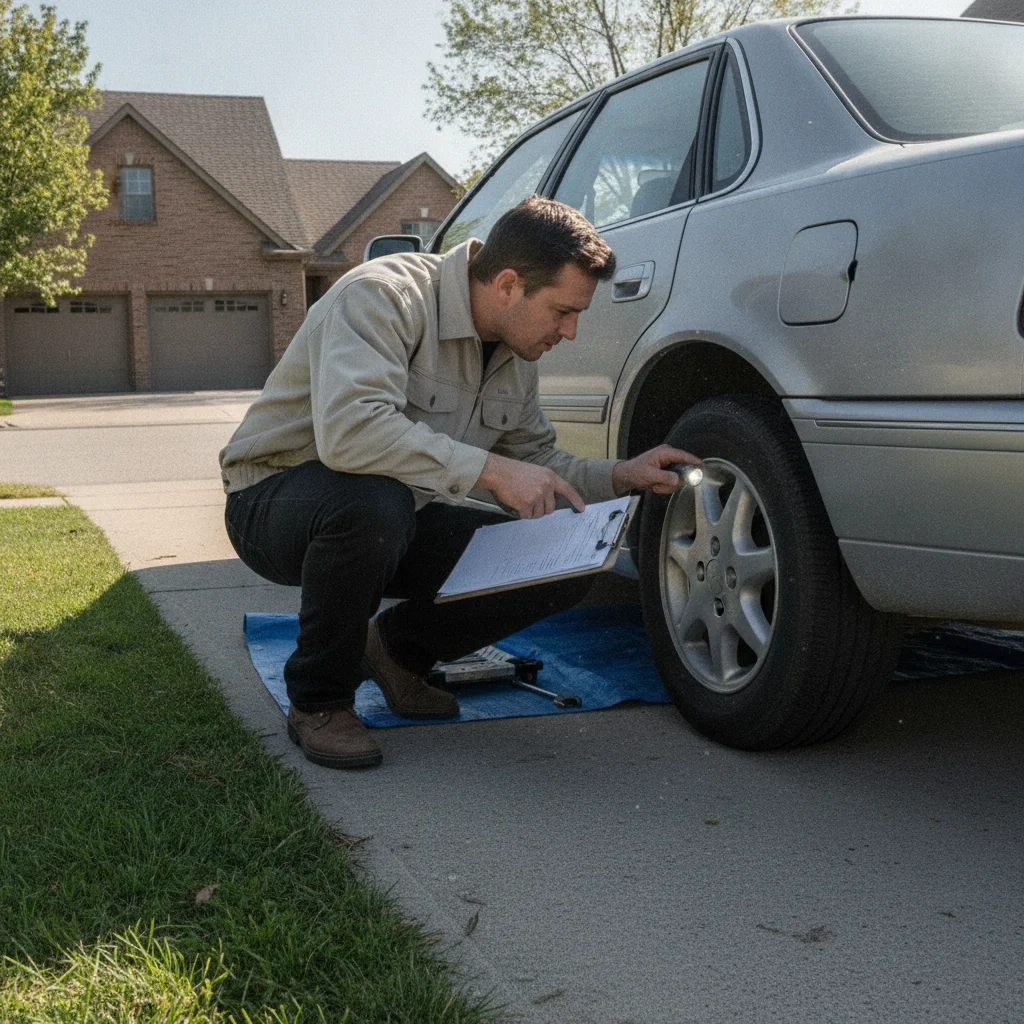
A trained appraiser can walk around a car in under 15 minutes and find things that took you years of ownership to stop noticing. They work from a mental checklist — and so should you before you show up. Here's what they're evaluating:
Exterior Paint and Body
Appraisers use a paint thickness gauge on every panel. It reads in microns and tells them immediately whether a panel has been repainted — a strong indicator of prior accident repair even if the accident doesn't appear on a Carfax report. Mismatched panel gaps, overspray on rubber trim, and color variation under dealership lighting are all red flags that trigger deductions.
Frame and Structural Integrity
Any evidence of frame straightening, weld marks in structural areas, or replacement structural components significantly impacts wholesale value. A unibody vehicle that has been straightened after a moderate collision is worth materially less at auction, and appraisers know it.
Tires and Brakes
Tread depth is measured physically. Tires at 3/32" or below are considered worn and will be deducted as a replacement cost — typically $600–$1,000 for a full set depending on size. Brake thickness is estimated through the wheels, and visible rotor scoring adds to deductions.
Mechanical Condition
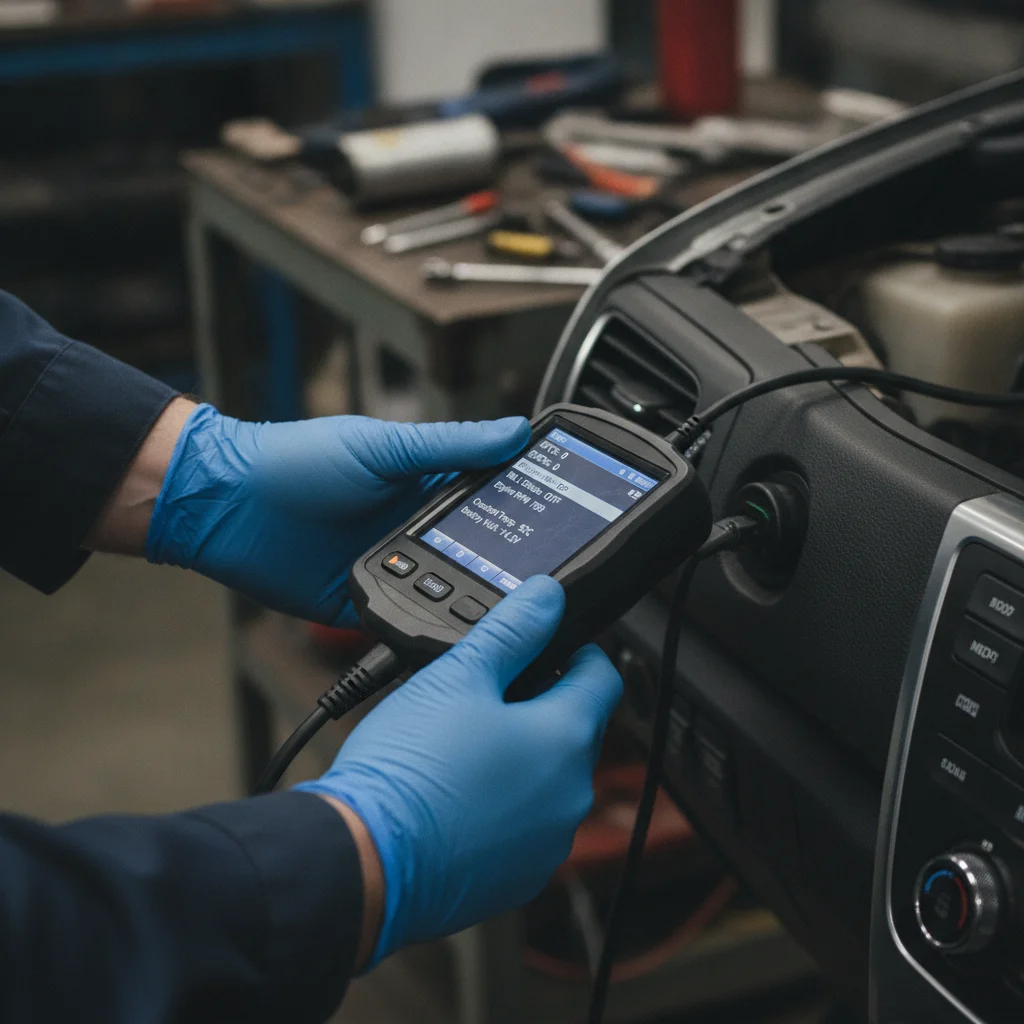
A road test, OBD-II scanner, and visual inspection of the engine bay cover a lot of ground quickly. Active warning lights, oil leaks, transmission hesitation, and HVAC faults are all documentable defects that translate directly into dollar deductions. Some platforms skip the road test but run a diagnostic scan — don't assume they won't find stored fault codes that haven't triggered the check engine light yet.
Interior Condition
Burns, tears, pet odor, and broken trim pieces all affect the car's wholesale grade. A vehicle that grades down from 'Clean' to 'Average' on the interior alone can lose $400–$800 in appraised value.
“The condition report is the single most honest document in a used car transaction. Everything else — the listing, the description, the online form — is filtered through someone's incentive to present the car favorably. The appraiser's job is to cut through all of that.”
— Tom Kontos, Chief Economist, KAR Global (vehicle remarketing industry)
If you want to see this process from the buyer's side, Test Drives & Inspections covers what savvy purchasers evaluate when they're the ones doing the looking.
Condition Grading Is Standardized — But Not Uniform
Most appraisal platforms reference NAAA (National Auto Auction Association) condition grading standards or a proprietary equivalent. However, individual appraisers have discretion in borderline cases, and the same car may grade differently at different locations or platforms. If you disagree with a condition call, it's worth asking how the specific deduction was calculated rather than just accepting the revised total.
Adjusted Offers Are Not Always Predatory
It can feel like bait-and-switch when the number drops at inspection, but the mechanism is disclosure-based, not arbitrary. Platforms that consistently made offers without inspection would either lose money or price so conservatively that no one would use them. The inspection exists because cars are physical assets and online self-reporting is imperfect — that's not a flaw in the model, it's the model working as intended.
How Much Can the Offer Actually Change?
Here's what the industry doesn't advertise: post-inspection adjustments are routine, not exceptional. Based on patterns across wholesale transactions, here's what typical deductions look like by category:
| Issue Found | Typical Deduction Range |
|---|---|
| Repainted panel (one or two panels) | $300–$800 |
| Prior structural/frame repair | $1,500–$4,000+ |
| Worn tires (full set needed) | $600–$1,000 |
| Active mechanical fault codes | $500–$2,500 |
| Interior damage (burns, tears, odor) | $300–$1,000 |
| Windshield crack or chip | $150–$400 |
| Missing second key/fob | $150–$350 |
These deductions stack. A car with a repainted quarter panel, worn rear tires, and a cracked windshield could see a $1,500–$2,200 reduction from the original online quote. That's not predatory — it's the platform adjusting to real market conditions. The problem is that sellers walk in expecting the quoted number and walk out feeling misled.
$1,500
Average post-inspection offer reduction
Industry estimates from wholesale remarketing analysts suggest the average gap between online instant quotes and post-inspection offers falls between $500 and $1,500 for vehicles in average condition.
63%
Sellers who receive a revised offer after inspection
According to automotive consumer research from iSeeCars, the majority of sellers who use instant-offer platforms receive at least some post-inspection adjustment to their initial quote.
$3,000+
Deduction for undisclosed frame damage
Vehicles with prior structural repair that wasn't disclosed in the online submission routinely see post-inspection reductions exceeding $3,000 at wholesale-linked appraisal platforms.
15 min
Time a trained appraiser needs to evaluate a car
Experienced vehicle appraisers at major remarketing platforms typically complete a full condition assessment — exterior, interior, mechanical scan, and road test — in 15 to 20 minutes.
The platforms that skip the physical inspection entirely — buying cars fully sight unseen — price that risk into their initial quote. Their upfront offers tend to run lower than inspection-based competitors. You can compare how these models differ in Platforms That Buy Cars Sight Unseen vs. Those That Require Inspection.
Get a Second Offer Before the Appointment
Never walk into a single inspection without at least one competing offer in hand. Submit your vehicle to two or three platforms simultaneously before committing to any appointment. The offers are typically valid for seven days, giving you comparison leverage. If one platform adjusts down significantly post-inspection, you have a real alternative — not just the threat of one.
Bring Documentation to the Appointment
Service records, a recent independent inspection report, and receipts for major repairs (new tires, brake jobs, battery replacement) can support your case if you want to push back on a deduction. An appraiser seeing a dated tire receipt for a full set is far less likely to flag tire wear as a significant cost item. Documentation shifts the conversation from the appraiser's assumptions to your actual vehicle history.
How to Minimize the Gap Before You Walk In
The best defense against a painful post-inspection reduction is to conduct your own honest pre-appraisal before you submit a single online form. Here's how to do it systematically:
- Pull your own vehicle history report. Know what's on it before the appraiser does. Accidents you forgot about, open recalls, or title brands will all surface — better to price in their impact than be caught off guard.
- Use a paint thickness gauge app or tool. They're inexpensive and available at auto parts stores. Check your panels and know which ones have been worked on. If you don't know, assume the appraiser will find out.
- Check your tires honestly. Insert a quarter into the tread — if you can see the top of Washington's head, you're at roughly 4/32". Anything at or below 3/32" will be called worn.
- Scan for fault codes. A $25 OBD-II Bluetooth scanner tells you everything the appraiser's diagnostic tool will. Resolve what you can; at minimum, know what's there.
- Select the accurate condition tier when submitting online. If your car has unreported accident history, selecting 'Fair' or 'Poor' instead of 'Good' narrows the inspection gap significantly — the online quote will be lower, but the post-inspection adjustment will be much smaller.
Sellers who disclose known issues in the online form tend to experience far less friction at the inspection appointment. The gap narrows because the algorithm already priced in the disclosed condition.
Get a Second Offer Before the Appointment
Never walk into a single inspection without at least one competing offer in hand. Submit your vehicle to two or three platforms simultaneously before committing to any appointment. The offers are typically valid for seven days, giving you comparison leverage. If one platform adjusts down significantly post-inspection, you have a real alternative — not just the threat of one.
Bring Documentation to the Appointment
Service records, a recent independent inspection report, and receipts for major repairs (new tires, brake jobs, battery replacement) can support your case if you want to push back on a deduction. An appraiser seeing a dated tire receipt for a full set is far less likely to flag tire wear as a significant cost item. Documentation shifts the conversation from the appraiser's assumptions to your actual vehicle history.
Understanding what private buyers scrutinize when evaluating listings helps too — What Buyers Will Check Before Making an Offer on Your Private Listing is worth reading before you go to market on any channel.
Your Options After a Revised Offer
The appraiser hands you a revised number that's $1,200 lower than what you expected. You have three choices — and only one of them is simply accepting it on the spot.
1. Walk Away and Get a Competing Offer
You are never obligated to accept a post-inspection adjustment. Most instant-offer platforms allow you to decline and walk out with no penalty. Having a second offer in your pocket before the appointment is the single most effective piece of leverage you have. If Dealer A just adjusted down $1,200 and Dealer B is holding a quote $800 above the revised offer, you have real alternatives to weigh.
2. Negotiate the Deductions
Ask the appraiser to itemize every deduction. This is your right, and some platforms will provide this documentation without asking. Once you have the list, you can challenge individual line items. A paint thickness reading that's borderline, a tire that's technically passable, a fault code you can demonstrate was cleared — all of these are negotiating points. Not every adjustment is set in stone. Negotiating After an Inspection: Using Findings Without Overplaying Them walks through how to frame repair costs strategically without overreaching.
3. Accept — If the Math Still Works
Sometimes the revised offer, even after adjustments, is still the best number available. A $300 reduction on a $16,000 car after a legitimate inspection finding isn't a scandal — it's market pricing. If the adjusted offer still beats what you'd net from a private sale after accounting for your time and title transfer risk, accepting may be the right call.
Condition Grading Is Standardized — But Not Uniform
Most appraisal platforms reference NAAA (National Auto Auction Association) condition grading standards or a proprietary equivalent. However, individual appraisers have discretion in borderline cases, and the same car may grade differently at different locations or platforms. If you disagree with a condition call, it's worth asking how the specific deduction was calculated rather than just accepting the revised total.
Adjusted Offers Are Not Always Predatory
It can feel like bait-and-switch when the number drops at inspection, but the mechanism is disclosure-based, not arbitrary. Platforms that consistently made offers without inspection would either lose money or price so conservatively that no one would use them. The inspection exists because cars are physical assets and online self-reporting is imperfect — that's not a flaw in the model, it's the model working as intended.
For a complete picture of what happens after you say yes, read What Happens After You Accept an Instant Offer — the payment timeline and title process have their own wrinkles worth knowing in advance.
And if you're weighing a trade-in at a dealer versus selling outright, Dealer Trade-Ins explains how the appraisal process differs and what negotiating room typically exists.

All claims are backed by peer-reviewed research. Sources on request.