Key Takeaways
Dealer Trade-In Appraisal
A dealer trade-in appraisal is the formal process a dealership uses to determine how much your current vehicle is worth as credit toward a new purchase. It involves a physical inspection, a market data lookup, and an internal calculation that accounts for what the dealer expects to resell the car for — minus their profit margin. The number they quote you is not a neutral assessment of your car's market value; it's a business offer designed to make the dealer money.
Dealers typically use proprietary desking software (e.g., vAuto, DealerSocket, or Kelley Blue Book Instant Cash Offer integrations) to cross-reference local auction data and retail comps in real time before generating an offer.
What Actually Happens When You Hand Over Your Keys
Most people hand their keys to a sales associate and then sit in a waiting room with no idea what's happening on the other side of that door. Here's what's actually going on.
Your car goes to an appraiser — sometimes called the used car manager, the trade desk, or simply the "desk." This person is not the salesperson who greeted you. They're a specialist whose job is to buy used inventory at prices that let the dealership resell for profit. Their incentive runs directly opposite to yours.
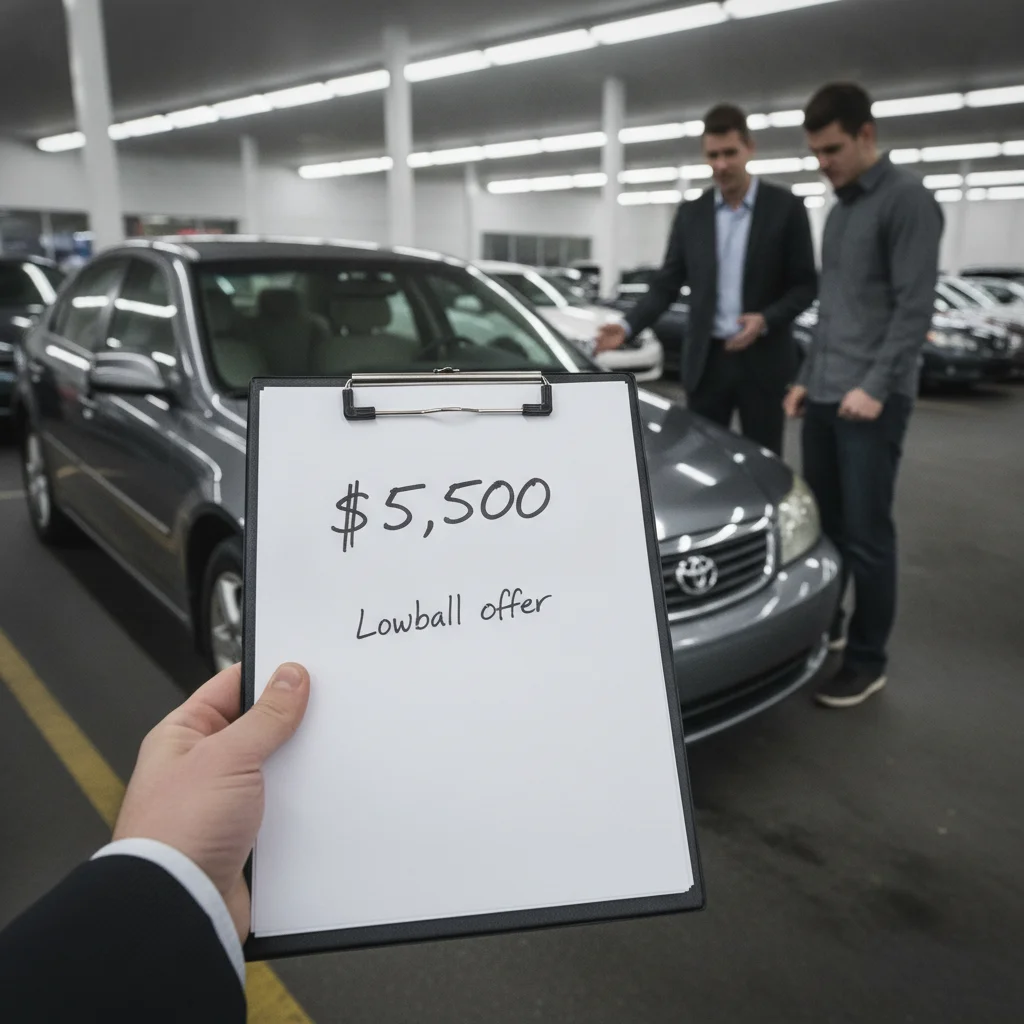
The appraiser runs through a structured checklist, pulls your car up on software tools linked to live market data, and arrives at a number before they ever talk to you. That number already has a margin baked in. When the salesperson comes back with a figure on a sticky note or an appraisal form, that number has been deliberated — it's not casual.

Understanding this dynamic is the first step to not getting caught flat-footed. See why dealers lowball trade-ins for the specific mechanics behind this pressure and how to counter it.
The Physical Inspection: What They're Actually Looking For
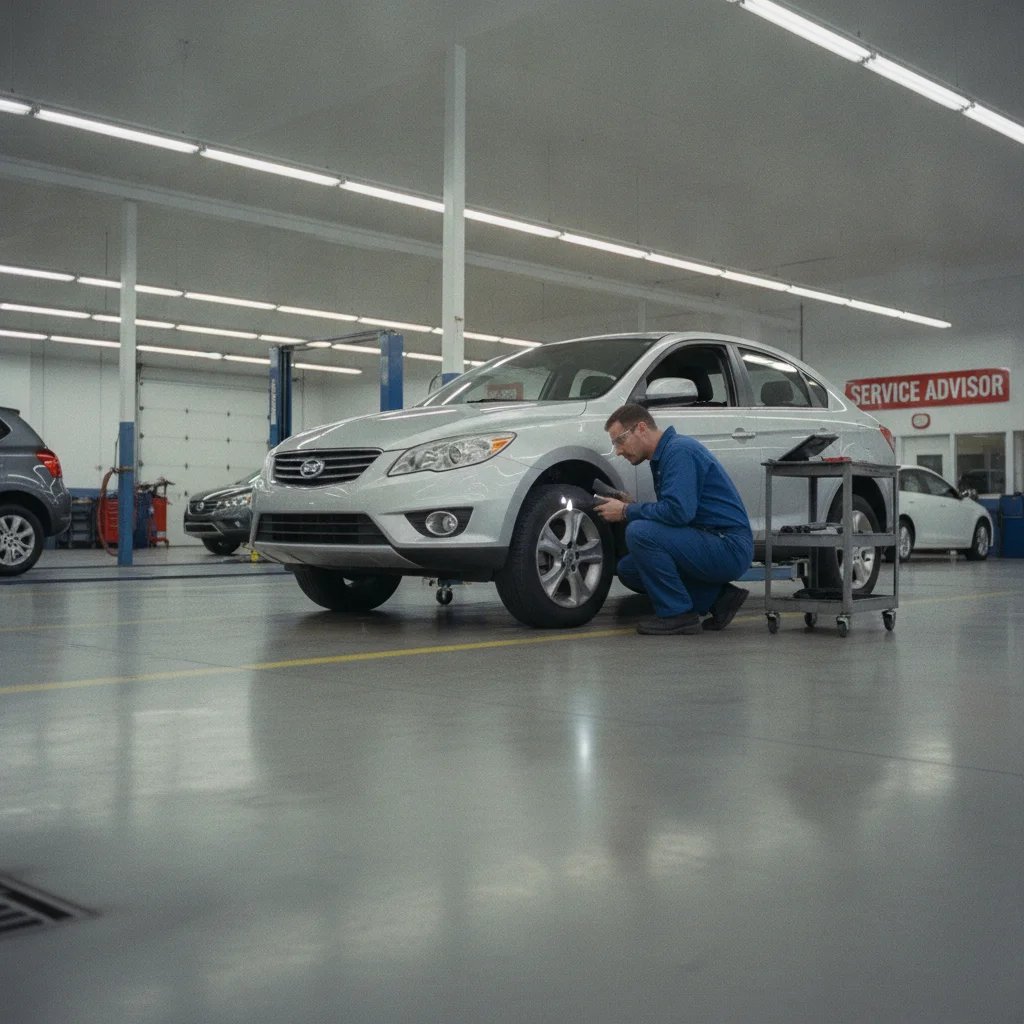
The appraisal starts with eyes and hands on the car. An experienced appraiser can walk around a vehicle in under five minutes and already have a rough number in their head. Here's what they're clocking:
Exterior Condition
- Panel gaps and paint overspray — signs of prior bodywork, which flags accident history even if the Carfax is clean
- Dents, scratches, and curb-rashed wheels — each one gets mentally priced as a reconditioning cost
- Glass chips or cracks — windshield replacements run $200–$600 and come right off your offer
- Tire tread depth — four tires below 4/32" can mean $600–$1,000 in replacements deducted
Interior Condition
- Seat wear, stains, and odors — smoke smell alone can cost you $500–$1,500 in detailing deductions
- Dash warning lights — any illuminated warning light gets flagged; they'll assume the worst until proven otherwise
- Technology function — infotainment, backup cameras, heated seats, and ADAS features are checked
Mechanical Check
- Cold start — they listen for unusual noises before the engine warms up
- Lift inspection — underneath the car for rust, leaks, frame damage, and exhaust condition
- Test drive — transmission shifts, brake feel, suspension noise, and alignment pull
Carfax Isn't the Whole Story
Dealers pull a vehicle history report, but they also look for physical evidence of prior repairs that didn't get reported — mismatched paint, inconsistent panel gaps, or aftermarket parts. A clean Carfax won't override what an experienced appraiser sees with their own eyes. Conversely, a reported fender-bender that was professionally repaired doesn't have to crater your offer if the work is quality.
The Condition Grade Is the Biggest Lever
Whether the appraiser grades your car 'Rough,' 'Average,' or 'Clean' can shift the valuation by $800–$2,000 or more. This is the most negotiable single variable in the process. If you believe your car was graded too low, ask specifically which items drove that grade and whether addressing them would move the grade — and the offer.
Tax Benefits Vary Significantly by State
In states like Texas, Ohio, and Florida, you only pay sales tax on the difference between the new car price and the trade-in value. On a $30,000 car with a $15,000 trade, you save roughly $900–$1,200 in sales tax depending on local rates. In some states, this benefit partially or fully closes the gap between a dealer trade and a private sale.
The thoroughness of this inspection varies significantly by dealership. A high-volume used car operation will catch everything. A smaller dealer doing a quick appraisal to close a deal that day may miss items — which can actually work against you if they discover problems later and try to renegotiate.
The Market Data Lookup: Where the Numbers Come From
After the physical inspection, the appraiser runs your VIN through one or more software platforms. This is where your offer gets anchored to actual market data — but also where the dealer's profit motive shapes the interpretation.
$1,000–$3,000
Typical trade-in gap below private party value
According to Edmunds and industry analysis, dealers routinely offer $1,000–$3,000 less than what a private buyer would pay for the same vehicle.
3–5%
Dealer gross margin target on used car resale
NADA data indicates franchised dealers typically target a 3–5% gross margin on used vehicle retail sales, which is baked into every trade-in calculation.
$500–$1,500
Average reconditioning cost deducted per vehicle
Industry reconditioning benchmarks from vAuto and NADA suggest dealers budget $500–$1,500 per trade-in for detailing, mechanical repairs, and cosmetic fixes.
20–45 min
Typical appraisal duration at a dealership
Most trade-in appraisals from key handoff to offer delivery take 20–45 minutes, depending on dealership staffing and inspection thoroughness.
64%
Car buyers who trade in without a competing offer
A 2023 Cox Automotive study found nearly two-thirds of trade-in sellers did not obtain a competing offer before accepting a dealership's appraisal.
The primary tools most dealers use include:
- vAuto / Provision
- Aggregates live auction data, dealer retail listings, and days-on-lot metrics for vehicles matching your car's year, make, model, trim, mileage, and color in your region. It tells the appraiser what your car would cost them at auction and what comparable retail units are selling for nearby.
- Kelley Blue Book (KBB)
- Used as a reference ceiling, not a payment target. The "trade-in range" on KBB represents what dealers theoretically pay — dealers typically aim below the midpoint of that range.
- Edmunds TMV (True Market Value)
- Another reference point appraiser use for sanity-checking retail values and confirming demand trends.
- Manheim / Black Book Auction Data
- Wholesale auction prices are the most important number dealers track. If your car sold at Manheim last week for $14,500, no dealer will pay you $16,000 — they'd just buy it at auction themselves.
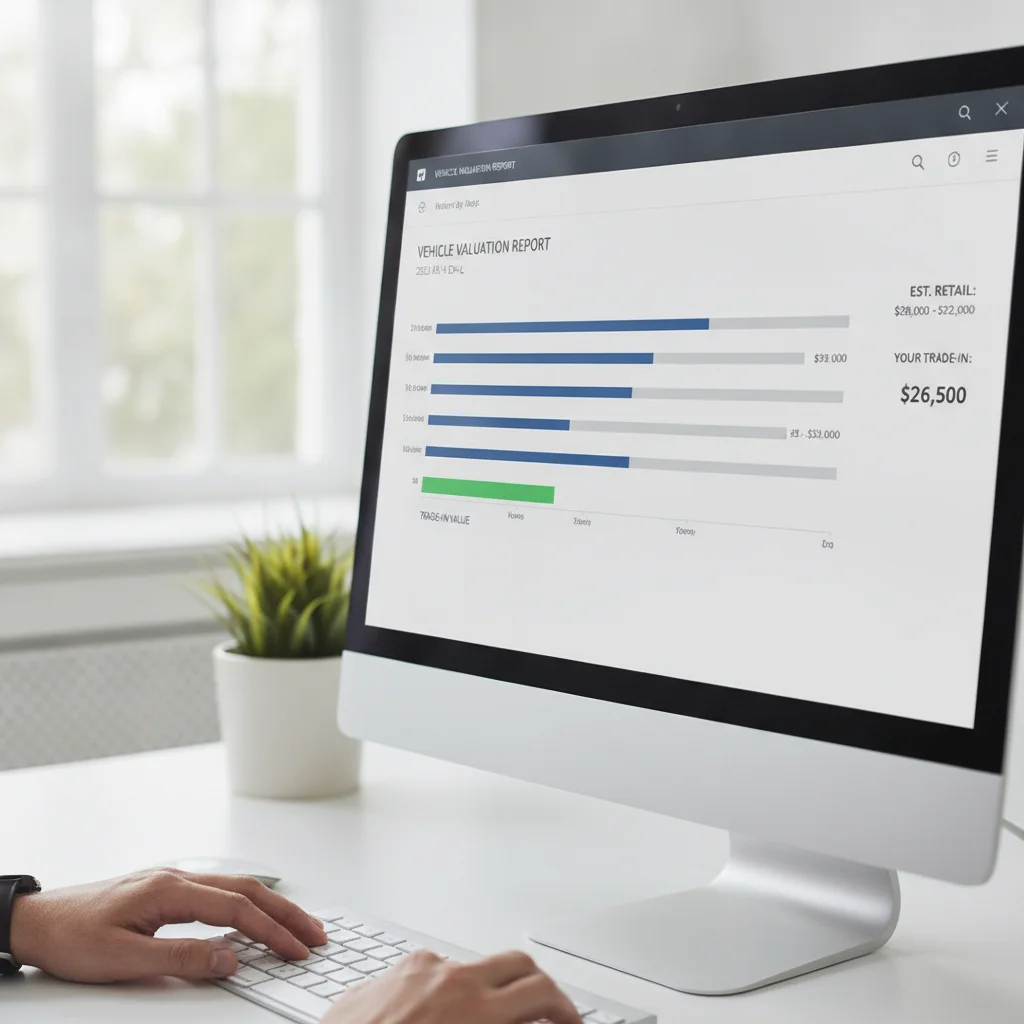
Before you walk in, run your own numbers using the valuation tools that dealers reference. Knowing both the trade-in range and the private party value gives you a realistic band to negotiate within.
How the Final Offer Number Gets Built
Once the appraiser has a market value anchor, they build the offer by working backward from what they expect to net on the resale. Here's the math they're running, even if they never show it to you:
- Target retail price — what they believe the car will sell for on their lot or at auction
- Minus reconditioning costs — every defect found during inspection is estimated here: tires, brakes, paint, detailing, mechanical repairs
- Minus their profit margin — typically $1,500–$3,000 for retail-ready vehicles; more for cars they plan to wholesale
- Minus carrying costs — interest on floorplan financing, lot time, and the cost of any certification program
- Equals: your trade-in offer
If the car isn't a fit for their used car lot — wrong brand, too high mileage, or condition problems — they'll price it to wholesale immediately. That means they're calculating what they'd get at auction, then cutting further. Wholesale offers can run $2,000–$5,000 below what a private buyer would pay.
“The single biggest mistake trade-in sellers make is treating the dealer's first offer as a market value opinion. It isn't. It's a purchase bid designed to maximize the dealer's resale margin. Treat it like any other negotiation — counter with data, not emotion.”
— Brian Benstock, General Manager, high-volume franchised dealership group; frequent automotive industry commentator
You can get a rough sense of where you stand by checking what your car is actually worth before you negotiate. That article walks through the same market data sources dealers use and how to interpret them from the seller's side.
Negotiate Trade-In and Purchase Separately
Tell the salesperson you want to agree on the trade-in value before discussing the new car price. Get the trade-in offer confirmed in writing. Only then move to negotiating the purchase. This prevents the dealer from offsetting a better trade offer with a higher purchase price — a tactic called "payment packing."
Bring Documentation That Supports Your Value
Printed KBB and Edmunds trade-in estimates, your maintenance records, and a competing written offer are the three most effective documents you can bring. Dealers are trained to anchor you to their number — having a counter-anchor in hand fundamentally changes the dynamic.
Don't Mention Your Trade-In Until You've Tested the Waters
Some seasoned negotiators recommend not disclosing you have a trade until after you've started discussing the new car price. Once the dealer knows you're trading in, they may factor it into their overall deal structure from the start. Establishing the purchase price first gives you a cleaner baseline to measure against.
The Appraisal Sheet: What You Should Ask to See
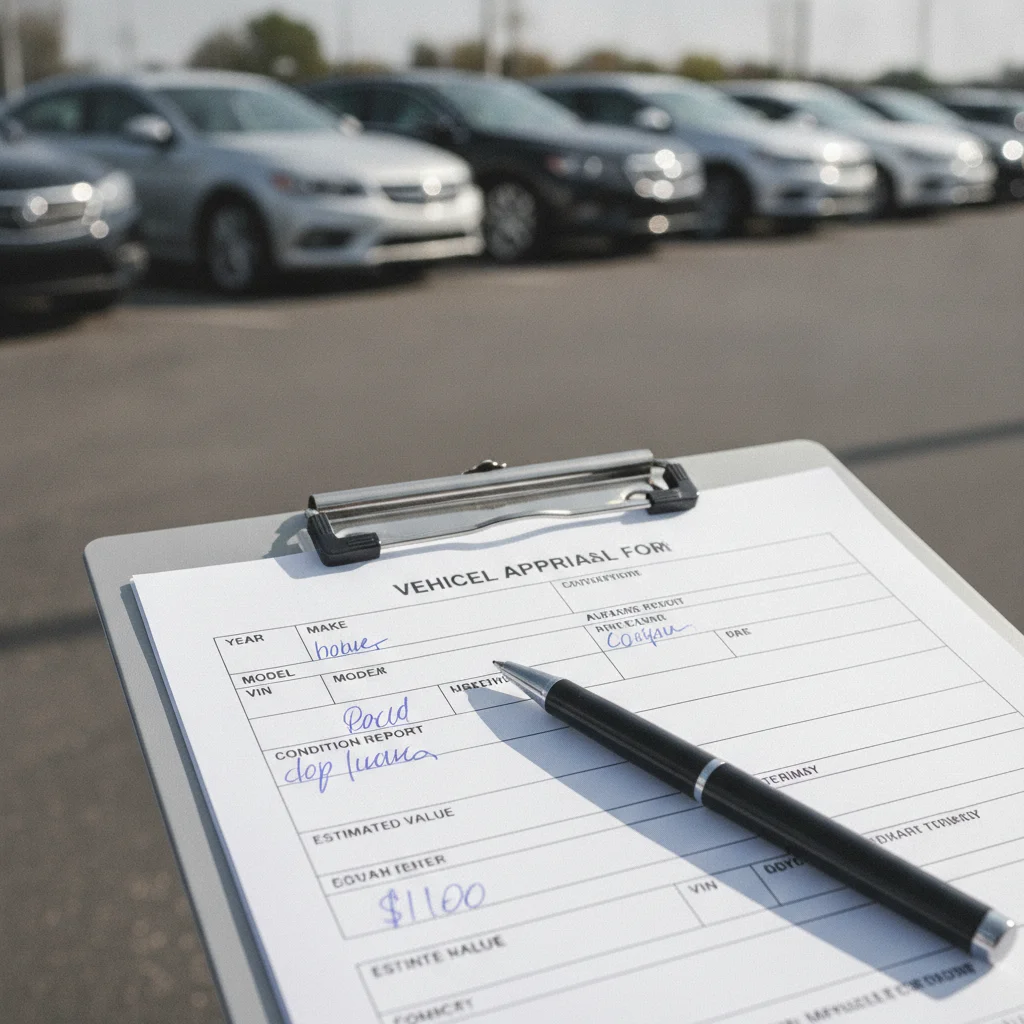
Most dealers don't voluntarily show you the appraisal worksheet — they hand you a single number. That number is the end of a calculation, and seeing the inputs gives you leverage.
Ask directly: "Can I see the appraisal sheet?" Some dealers will show it; others won't. If they do, you're looking for:
- The market value anchor — what they're using as a starting point before deductions
- Line-item reconditioning deductions — each one is potentially negotiable if you can show the cost is overstated
- Condition grade assigned — "Rough," "Average," "Clean," or equivalent; this single variable dramatically shifts the outcome
How to read a trade-in appraisal sheet breaks down each line item in detail and shows you exactly where the numbers have room to move. If the dealer won't produce a sheet, that alone tells you something about their negotiating posture.
Carfax Isn't the Whole Story
Dealers pull a vehicle history report, but they also look for physical evidence of prior repairs that didn't get reported — mismatched paint, inconsistent panel gaps, or aftermarket parts. A clean Carfax won't override what an experienced appraiser sees with their own eyes. Conversely, a reported fender-bender that was professionally repaired doesn't have to crater your offer if the work is quality.
The Condition Grade Is the Biggest Lever
Whether the appraiser grades your car 'Rough,' 'Average,' or 'Clean' can shift the valuation by $800–$2,000 or more. This is the most negotiable single variable in the process. If you believe your car was graded too low, ask specifically which items drove that grade and whether addressing them would move the grade — and the offer.
Tax Benefits Vary Significantly by State
In states like Texas, Ohio, and Florida, you only pay sales tax on the difference between the new car price and the trade-in value. On a $30,000 car with a $15,000 trade, you save roughly $900–$1,200 in sales tax depending on local rates. In some states, this benefit partially or fully closes the gap between a dealer trade and a private sale.
Tactics That Actually Move the Number
Knowing how the process works translates directly into actionable leverage. Here's what moves trade-in offers in practice:
Get Competing Offers First
Walk in with a written offer from CarMax, Carvana, or another dealer. This converts your negotiation from "trust me, this car is worth more" to "I have a check in hand for $X — can you match it?" Dealers respond to concrete competition differently than to abstract complaints about the offer being too low.
See online trade-in offers vs. in-person dealer appraisals to understand how digital quotes work and when they hold up versus fall apart at the physical inspection.
Separate the Trade from the New Car Deal
Negotiate the trade-in value first, get it in writing, then start talking about the purchase price of the new car. If you negotiate both simultaneously, dealers can give with one hand and take with the other — lower car price, lower trade-in offer, same total deal for them.
Prepare the Car Before You Go
Reconditioning costs subtract dollar-for-dollar from your offer. Addressing cheap, visible items before the appraisal can remove entire line items from the deduction list. A $25 detail job, fixed wiper blades, and a cleared check engine light (if legitimate) change the condition grade and remove easy deductions. Prepping your car before the appraisal gives you a specific checklist of what's worth doing.
Know Your Walk-Away Number
Go in knowing the minimum you'll accept — based on real market data, not emotion. If the dealer won't reach that number, be prepared to sell privately or take the competing offer. Dealers move for buyers who credibly signal they'll walk.

Negotiate Trade-In and Purchase Separately
Tell the salesperson you want to agree on the trade-in value before discussing the new car price. Get the trade-in offer confirmed in writing. Only then move to negotiating the purchase. This prevents the dealer from offsetting a better trade offer with a higher purchase price — a tactic called "payment packing."
Bring Documentation That Supports Your Value
Printed KBB and Edmunds trade-in estimates, your maintenance records, and a competing written offer are the three most effective documents you can bring. Dealers are trained to anchor you to their number — having a counter-anchor in hand fundamentally changes the dynamic.
Don't Mention Your Trade-In Until You've Tested the Waters
Some seasoned negotiators recommend not disclosing you have a trade until after you've started discussing the new car price. Once the dealer knows you're trading in, they may factor it into their overall deal structure from the start. Establishing the purchase price first gives you a cleaner baseline to measure against.
When to Trade In vs. When to Sell Privately
The trade-in process is convenient, but that convenience has a price. Here's how to think about the trade-off honestly:
| Factor | Trade-In | Private Sale |
|---|---|---|
| Typical net proceeds | $1,000–$3,000 less than private party | Closer to retail value |
| Time required | Same day | Days to weeks |
| Tax savings (sales tax offset) | Yes, in most states | No |
| Buyer interaction | None | Required |
| Risk of deal falling through | Very low | Moderate |
| Negotiation complexity | Moderate (dealer tactics) | Low (direct buyer) |
For most sellers, trading in makes sense when the gap between dealer offer and private party value is under $1,500, when the car has known mechanical issues that would complicate a private sale, or when time pressure is real. Above that gap, the extra work of a private sale almost always pays off.
The trade-in strategies hub covers the full range of options for maximizing your vehicle's value in the context of buying your next car.
Carfax Isn't the Whole Story
Dealers pull a vehicle history report, but they also look for physical evidence of prior repairs that didn't get reported — mismatched paint, inconsistent panel gaps, or aftermarket parts. A clean Carfax won't override what an experienced appraiser sees with their own eyes. Conversely, a reported fender-bender that was professionally repaired doesn't have to crater your offer if the work is quality.
The Condition Grade Is the Biggest Lever
Whether the appraiser grades your car 'Rough,' 'Average,' or 'Clean' can shift the valuation by $800–$2,000 or more. This is the most negotiable single variable in the process. If you believe your car was graded too low, ask specifically which items drove that grade and whether addressing them would move the grade — and the offer.
Tax Benefits Vary Significantly by State
In states like Texas, Ohio, and Florida, you only pay sales tax on the difference between the new car price and the trade-in value. On a $30,000 car with a $15,000 trade, you save roughly $900–$1,200 in sales tax depending on local rates. In some states, this benefit partially or fully closes the gap between a dealer trade and a private sale.

All claims are backed by peer-reviewed research. Sources on request.