
Key Takeaways
Risk-Based Auto Loan Pricing
Risk-based pricing is how lenders set your interest rate based on the likelihood you'll repay the loan on time. Borrowers who look less risky on paper — stronger credit history, lower debt load, stable income — get lower rates. Borrowers who look riskier get higher ones. This is why two people can sit in the same F&I office on the same day and leave with completely different APRs on identical vehicles.
Lenders use proprietary scoring models layered on top of standard credit bureau data, which means two lenders can reach different risk conclusions about the same borrower — contributing to rate variation even across financing sources.
The Rate Is Not the Same for Everyone — Here's Why
Walk into any dealership and you'll see one sticker price on the window. But the financing behind that sticker is a completely different story. Two buyers can purchase the identical trim, on the same day, at the same store, and leave with APRs that differ by 5, 7, or even 10 percentage points. That's not a mistake or a negotiating failure — it's the system working exactly as lenders designed it.
Auto lenders practice risk-based pricing. In plain terms: the more likely they think you are to miss a payment or default, the more they charge you to borrow. They make that judgment call almost instantly, using your credit report and score as the primary input. Everything else — the car, the dealer, the loan amount — is secondary.
Understanding why this happens is the first step toward doing something about it. The buyers who get the best rates aren't necessarily the wealthiest. They're the ones who showed up knowing what lenders are actually measuring.
Credit Score Tiers: How Lenders Bucket Borrowers
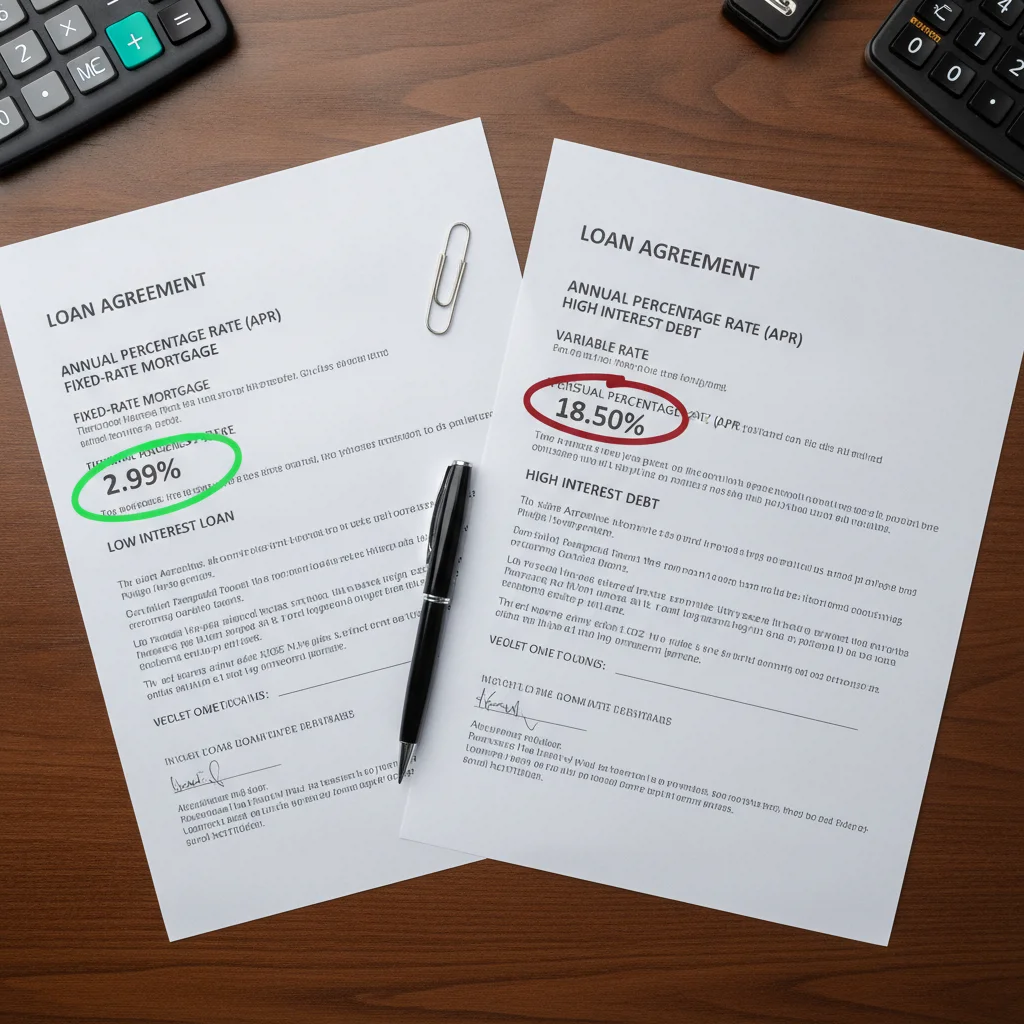
Lenders don't look at your 714 score and say, "well, that's pretty good." They drop you into a tier, and that tier determines which rate sheet applies to you. Here's a rough map of how most auto lenders categorize credit scores, though exact cutoffs vary by lender:
| Tier | Score Range (FICO) | Typical New Car APR* | What It Means |
|---|---|---|---|
| Super Prime | 781–850 | 4.5%–6.5% | Best available rates, minimal conditions |
| Prime | 661–780 | 6.5%–9% | Competitive rates, straightforward approval |
| Near-Prime | 601–660 | 9%–13% | Higher rates, may require larger down payment |
| Subprime | 501–600 | 13%–18% | Significant rate penalty, stricter terms |
| Deep Subprime | 300–500 | 18%–25%+ | Very limited lender options, high cost |
Notice the jump between near-prime and subprime: it can be 4–5 percentage points. On a $32,000 loan over 60 months, that's the difference between paying about $3,500 in interest versus $7,500. Same car. Dramatically different cost.
This is also why being near a tier boundary matters so much. A buyer at 659 and a buyer at 661 are separated by two points on a scale of 850 — but they may land in completely different pricing buckets. If you're near a boundary, even modest credit improvement before applying is worth the wait.
~$14,000
Interest gap between super prime and deep subprime borrowers
On a $30,000, 60-month loan, the spread between top-tier and deep subprime rates can cost the riskier borrower over $14,000 more in interest charges.
1–3%
Typical dealer APR markup above lender buy rate
Dealers are commonly permitted to mark up the lender's approved rate by 1–3 percentage points as finance reserve, per standard dealer-lender agreements.
5+ points
APR difference between adjacent credit tiers
Moving from near-prime (601–660) to subprime (500–600) can shift the offered rate by 4–6 percentage points with many mainstream auto lenders.
14 days
Rate-shopping window for minimal credit impact
FICO scoring models treat multiple auto loan inquiries within a 14-day window as a single inquiry, allowing borrowers to shop lenders without compounding score damage.
30%
Credit utilization threshold for score optimization
Keeping revolving credit card balances below 30% of available limits — and ideally below 10% — is one of the fastest levers for improving a FICO score before applying for a loan.
What Else Goes Into the Rate Equation
Credit score is the dominant variable, but it's not the only one. Lenders run a full calculation that factors in several additional data points. Knowing what they are helps you understand why two people with similar scores might still see different offers.
Loan-to-Value Ratio (LTV)
If you're borrowing $35,000 on a car worth $32,000, your LTV is over 100% — and lenders don't like that. It means if you default and they repossess the car, they take a loss. Expect a higher rate when you're financing extras like gap insurance, extended warranties, or negative equity rolled in from a trade. A larger down payment directly reduces LTV and can improve your rate tier.
Loan Term
The longer the term, the higher the risk the lender is carrying — and the higher the rate they'll typically charge. An 84-month loan on a vehicle that may depreciate significantly before it's paid off represents real collateral risk. Shorter terms not only cost less in interest rate, they cost less in total interest paid.
Debt-to-Income Ratio (DTI)
Lenders want to know you can actually afford the payment. If your existing monthly obligations — rent, student loans, credit card minimums — already consume most of your income, a high DTI signals strain. Most lenders prefer a DTI under 45–50% including the new car payment.
New vs. Used Vehicle
Used car loans carry more collateral risk because the vehicle is older, depreciates faster, and is harder to value precisely. Lenders price that risk into the rate. Two buyers with identical scores might see rates 1.5–3 points higher on a used car than a new one from the same lender. The difference in how new and used car rates respond to credit scores is significant enough that it should factor into your vehicle choice.
How Lenders Define 'Same Score' Differently
FICO 8 is the most widely used general credit score, but many auto lenders use FICO Auto Score 8 or FICO Auto Score 9 — models that weight auto loan payment history more heavily. Your FICO 8 score and your FICO Auto Score may differ by 10–30 points. The score you see on a consumer app like Credit Karma (which shows VantageScore) may differ even more. Know that the number the lender pulls might not match what you're looking at on your phone.
Rate Shopping Won't Hurt Your Score the Way You Think
A common misconception is that every loan application tanks your credit score. In practice, FICO models are designed to recognize rate-shopping behavior. Multiple auto loan inquiries within a 14-day window are grouped and treated as a single inquiry. That makes aggressive comparison shopping essentially free from a credit score standpoint — so use it.
Manufacturer Promotions Change the Calculus
Captive finance arms — Toyota Financial Services, Ford Motor Credit, GM Financial — sometimes offer promotional rates (0.9%, 1.9%) on specific models to move inventory. These rates are often only available to buyers with super prime or prime scores, and they may require foregoing a cash rebate. Run the math on both options before choosing: sometimes the rebate plus a market-rate loan beats the promotional financing.
Lender Type
Banks, credit unions, and captive finance arms (manufacturer-backed lenders) all use different risk models and have different cost structures. A 700-score borrower might get 7.9% at a regional bank, 6.4% at a credit union, and a promotional 0% from a manufacturer for a qualifying new model. Same score, same month, three different rates. See how rate-setting differs across credit unions, banks, and dealerships before you commit to any single source.
The Dealer Markup Most Buyers Never See
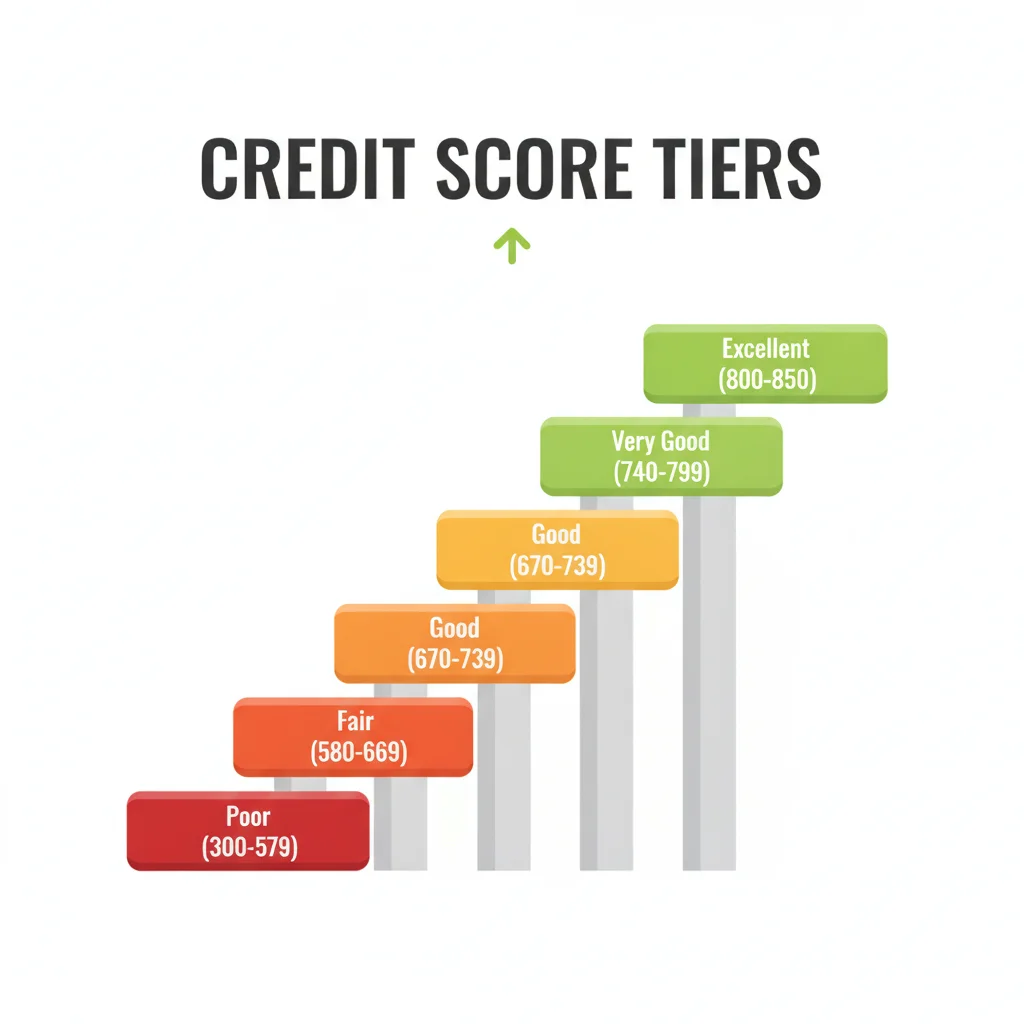
Here's a piece of information that doesn't get enough daylight: when a dealer arranges financing through a third-party lender, the lender sends the dealer a buy rate — the actual rate the lender approved the loan at. The dealer is then typically allowed to mark that rate up by 1–3 percentage points and pocket the difference as dealer reserve, or "finance reserve."
So if your credit qualified you for a 6.5% buy rate, the dealer might present you with 8.5% and you'd have no reason to question it — because you don't know what the real approved rate was.
“The buy rate is the lender's number. The contract rate is the dealer's number. Most consumers have no idea those are two different things — and that gap is where dealer profit lives.”
— John Van Alst, Staff Attorney, National Consumer Law Center, auto financing policy expert
This is entirely legal and extremely common. It's also entirely preventable. The buyer who arrives with a preapproval from a bank or credit union at 6.8% creates a rate ceiling the dealer has to beat or match. That single step eliminates the leverage dealers have to inflate the rate.
The CFPB has scrutinized dealer markup practices over the years, particularly when markups correlate with borrower characteristics rather than pure credit risk. That scrutiny hasn't eliminated the practice, but it's a reason to never assume the rate you're quoted is the rate you qualified for. Understanding how your credit score plays differently in dealer financing versus bank financing gives you a significant information advantage.
Always Negotiate the Rate, Not Just the Price
Most buyers focus all their energy on the vehicle price and treat financing as an afterthought. In reality, a 2-point rate improvement on a 60-month, $32,000 loan saves you more money than negotiating $1,500 off the sticker price. Bring a preapproval, confirm the dealer's rate is competitive, and ask the F&I manager to beat your outside offer — even if only by a few basis points.
Time Your Application to Your Credit's Peak
Before you apply, make sure your most recent credit card statement shows low balances — the statement balance is what gets reported to bureaus, not your real-time balance. If you paid your cards down this week but your statement doesn't close for 20 days, wait to apply. Your score will reflect the lower utilization once the new statement is reported.
Real Numbers: What the Rate Gap Actually Costs
Abstract percentages don't land the same way as dollar figures. Let's put the tier differences in concrete terms using a $30,000 vehicle financed over 60 months:
| Credit Tier | APR | Monthly Payment | Total Interest Paid |
|---|---|---|---|
| Super Prime (800) | 5.5% | $575 | $4,500 |
| Prime (720) | 7.5% | $601 | $6,060 |
| Near-Prime (640) | 11.5% | $657 | $9,420 |
| Subprime (580) | 16.5% | $736 | $14,160 |
| Deep Subprime (520) | 21.0% | $811 | $18,660 |
The spread between super prime and deep subprime: over $14,000 in interest on the same $30,000 loan. The subprime buyer isn't paying for a worse car — they're paying a penalty for credit risk, real or perceived.
Also worth noting: the near-prime buyer pays $9,420 in interest versus $6,060 for the prime buyer — a $3,360 difference that could have been reduced or eliminated by spending a few months paying down credit card balances before applying.
How to Move Your Rate Before You Sign
The rate you're offered is not necessarily the rate you're stuck with. There are concrete steps that influence where you land — some immediate, some requiring a few months of preparation.
Pull Your Credit Report First
You're entitled to free reports from all three bureaus at annualcreditreport.com. Look for errors — wrong account statuses, payments marked late that weren't, duplicate accounts. Disputing legitimate errors can move your score by meaningful amounts within 30–60 days.
Pay Down Revolving Balances
Credit utilization — the percentage of available revolving credit you're using — is the second most influential factor in your FICO score after payment history. Getting card balances below 30% of their limits (and ideally below 10%) can boost your score significantly in a single billing cycle.
Get Preapproved Before the Dealer Visit
Apply to at least two or three lenders — your bank, a credit union, and an online lender like LightStream or PenFed. Rate-shopping within a 14-day window counts as a single hard inquiry on your credit, so the score impact is minimal. Walk into the dealer with your best offer in hand. To understand why those offers can look so different from each other, see why preapproval offers vary across lenders.
Optimize Your Down Payment
A larger down payment reduces LTV and can move you into a better rate tier even if your score doesn't change. It also reduces the loan balance, which compounds your savings — less principal means less total interest even at the same rate. The mechanics of how down payments shape your loan structure are worth reviewing before you decide how much to put down.
Consider a Shorter Term
If you can afford a higher monthly payment, a 48-month term will typically carry a lower rate than 72 months and will cost substantially less in total interest. Run both scenarios before you decide the term based solely on monthly payment comfort.

For a more complete breakdown of every variable lenders actually weigh, how lenders determine your auto loan interest rate covers the full picture beyond credit score alone.
Always Negotiate the Rate, Not Just the Price
Most buyers focus all their energy on the vehicle price and treat financing as an afterthought. In reality, a 2-point rate improvement on a 60-month, $32,000 loan saves you more money than negotiating $1,500 off the sticker price. Bring a preapproval, confirm the dealer's rate is competitive, and ask the F&I manager to beat your outside offer — even if only by a few basis points.
Time Your Application to Your Credit's Peak
Before you apply, make sure your most recent credit card statement shows low balances — the statement balance is what gets reported to bureaus, not your real-time balance. If you paid your cards down this week but your statement doesn't close for 20 days, wait to apply. Your score will reflect the lower utilization once the new statement is reported.
The Bigger Picture: Same Information, Different Conclusion
One detail that surprises most buyers: two lenders looking at the exact same credit file can offer substantially different rates. That happens because each lender uses a proprietary risk model layered on top of bureau data. One lender might weight recent inquiries heavily. Another might focus more on average account age. A third might give extra credit for long-standing relationships or stable employment in specific industries.
This is structurally similar to how insurers price the same driver differently — the inputs overlap but the models diverge. Why discount rates vary so much between insurers for the same driver explains the same dynamic on the insurance side, and the parallel is instructive: shopping around is the only way to find out which lender's model works in your favor.
The practical takeaway is simple: never let a single lender define your rate. You don't know whose model scores your file most favorably until you apply to multiple sources. The buyer who assumes the dealer's rate is the best available rate is almost always wrong — and paying for that assumption every month for five years.
How Lenders Define 'Same Score' Differently
FICO 8 is the most widely used general credit score, but many auto lenders use FICO Auto Score 8 or FICO Auto Score 9 — models that weight auto loan payment history more heavily. Your FICO 8 score and your FICO Auto Score may differ by 10–30 points. The score you see on a consumer app like Credit Karma (which shows VantageScore) may differ even more. Know that the number the lender pulls might not match what you're looking at on your phone.
Rate Shopping Won't Hurt Your Score the Way You Think
A common misconception is that every loan application tanks your credit score. In practice, FICO models are designed to recognize rate-shopping behavior. Multiple auto loan inquiries within a 14-day window are grouped and treated as a single inquiry. That makes aggressive comparison shopping essentially free from a credit score standpoint — so use it.
Manufacturer Promotions Change the Calculus
Captive finance arms — Toyota Financial Services, Ford Motor Credit, GM Financial — sometimes offer promotional rates (0.9%, 1.9%) on specific models to move inventory. These rates are often only available to buyers with super prime or prime scores, and they may require foregoing a cash rebate. Run the math on both options before choosing: sometimes the rebate plus a market-rate loan beats the promotional financing.
Rate differences between lenders are also influenced by broader market conditions. When the Fed raises benchmark rates, every lender's floor moves up — but they don't all move by the same amount or at the same pace. Understanding how interest rate environments affect auto markets broadly adds useful context to timing a purchase decision.
All claims are backed by peer-reviewed research. Sources on request.