Key Takeaways
Our Verdict
New car loans are structurally cheaper to finance at every credit tier, partly because manufacturers subsidize rates and partly because lenders treat new vehicles as lower-risk collateral. Used car loans, however, reward credit improvement more dramatically — a 100-point score increase can cut your used-car rate by twice as many percentage points as the same jump would on a new loan. Know which type of vehicle you're buying before you walk in, and shop lenders accordingly.
| Best for | Recommended |
|---|---|
| Buyers with excellent credit (720+) seeking the lowest possible rate | New car loan with manufacturer incentive financing |
| Buyers with fair credit (620–679) who want the most rate improvement per credit-score point | Used car loan after targeted credit repair |
| Budget-conscious buyers prioritizing total cost of ownership | New car loan (lower rate offsets depreciation on shorter terms) |
| Buyers with subprime credit (below 580) who must finance now | Used car loan from a credit union with a larger down payment |
Why Lenders Price New and Used Loans Differently From the Start
Before your credit score enters the conversation, lenders have already assigned two different base-rate floors to new and used vehicles. That gap — typically 1.5 to 3 percentage points — exists for reasons that have nothing to do with you personally.
The core issue is collateral risk. A new car has a known, published price. If you stop paying, the lender can repossess and sell that car with reasonable confidence in what they'll recover. A 2018 sedan with 90,000 miles? The lender doesn't know what shape it's really in, how fast it's depreciating, or whether there's a mechanical issue that tanks its resale value the week after they repossess it.
Here's what that risk premium looks like in practice: According to Experian's State of the Automotive Finance Market data, the average new car loan rate across all credit tiers runs roughly 1.5 to 2.5 percentage points below the average used car loan rate. That spread tightens slightly for super-prime borrowers and widens considerably in subprime territory.
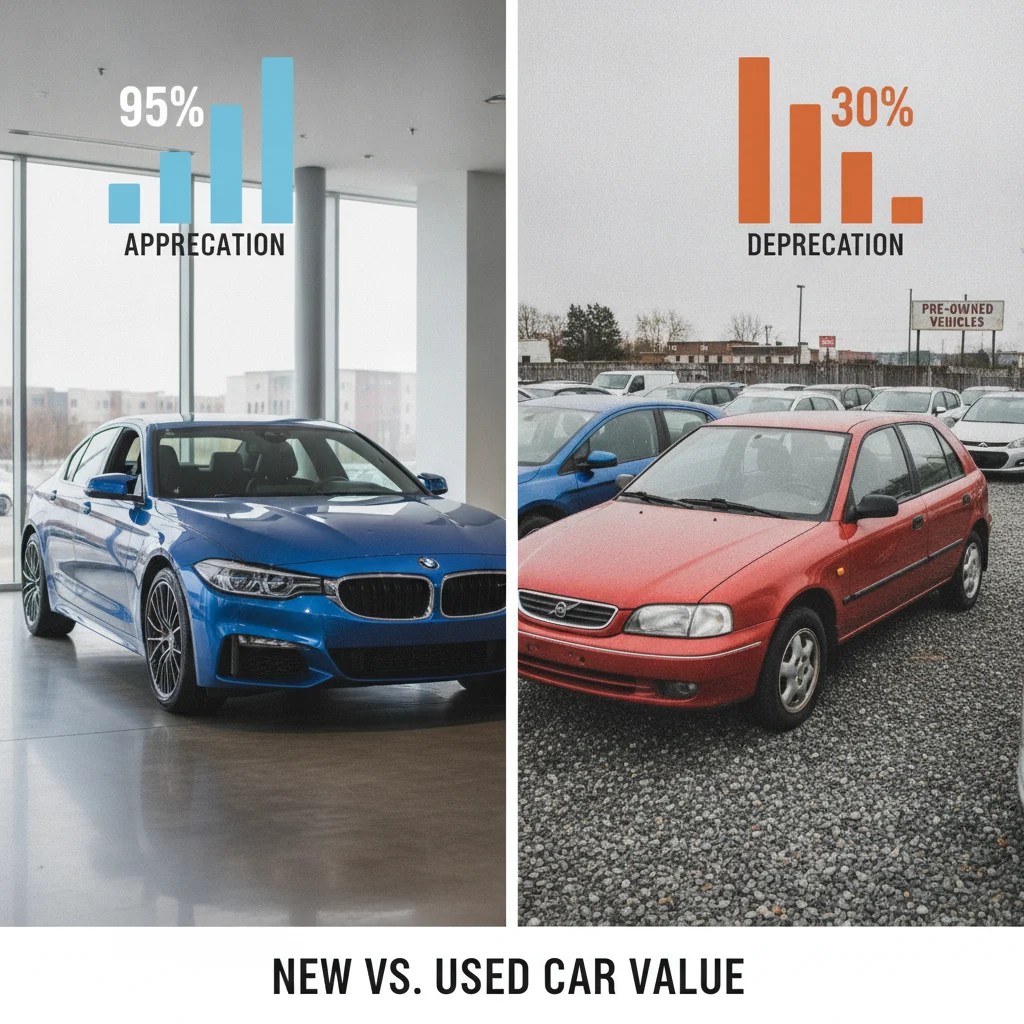
There's a second structural factor: manufacturer subvention. Automakers routinely buy down interest rates through their captive finance arms — think Ford Motor Credit or Toyota Financial Services. They pay lenders to offer below-market rates in order to move inventory. Used car buyers never get that benefit. No manufacturer is subsidizing your rate on a three-year-old trade-in.
This is why comparing a 2.9% new car offer to a 6.5% used car quote and assuming the lender is penalizing you is a mistake. The two products start from different baselines entirely. See our guide to how APR works to understand how that rate gap compounds across a 60-month loan term.
How Your Credit Score Moves the Needle — And by How Much
Credit score tiers don't translate to rate changes in equal increments. The relationship is nonlinear, and it's sharper on used car loans than on new ones. Here's a realistic picture of rate ranges by credit tier, based on aggregate lender data:
| Credit Tier | Score Range | Avg New Car APR | Avg Used Car APR | Rate Gap | |
|---|---|---|---|---|---|
| Super-prime | 720–850 | 4.9%–6.0% | 6.5%–8.0% | ~1.5–2.0 pts | |
| Prime | 680–719 | 6.5%–8.5% | 9.0%–11.5% | ~2.5–3.0 pts | |
| Near-prime | 620–679 | 9.0%–12.0% | 12.0%–15.5% | ~3.0–3.5 pts | |
| Subprime | 580–619 | 12.0%–15.0% | 16.0%–19.5% | ~4.0–4.5 pts | |
| Deep subprime | Below 580 | 15.0%–20.0% | 20.0%–26.0% | ~5.0–6.0 pts |
Notice the spread. At the super-prime tier (720+), the gap between new and used rates is manageable — roughly 1.5 to 2 points. At the subprime tier (below 580), that gap can balloon to 4 or 5 points, because lenders layer their risk premium on top of an already-elevated base rate.
The more actionable number is what I call the rate elasticity per credit tier — how much your rate drops when you move from one tier to the next. On a new car loan, moving from the 620–659 tier to the 660–719 tier might shave 1.5 percentage points off your rate. The same credit improvement on a used car loan might save you 2.5 to 3 points. The collateral risk that lenders attach to used vehicles magnifies the credit-score effect.
2.4%
Average new vs. used rate gap nationally
Experian's State of the Automotive Finance Market report shows a persistent 2–3 point spread between average new and used car loan rates across all credit tiers.
40%
More interest saved improving credit on used vs. new loans
Moving from near-prime to prime credit saves approximately 40% more total interest on a used car loan than the same score improvement achieves on a new car loan.
1 in 3
Used car buyers who accept the first rate offered
Consumer Financial Protection Bureau data suggests a significant share of auto loan borrowers do not compare rates before accepting dealer-arranged financing.
$3,540
Extra interest paid by subprime borrowers on used vs. new
On a $28,000 60-month loan, a subprime borrower pays roughly $3,540 more in total interest on a used car loan compared to an equivalent new car loan at market rates.
This has a direct implication for used car buyers with fair or near-prime credit: spending three to six months improving your score before financing can yield disproportionately large savings on a used vehicle. It may not be worth delaying a new car purchase for 60 points, but on a used car it almost always is. To understand exactly how lenders interpret your score before making an offer, read what your credit score actually means to a car lender.
Time Your Credit Improvement Strategically
If your score sits between 655 and 690, you may be just a few points from the next lender tier. Pay down your highest-utilization credit card to below 30% of its limit — that single action can move your score 15–25 points within one billing cycle. On a used car loan, that jump can translate to 1–2 percentage points off your rate, saving hundreds or thousands in interest over the loan term.
Get Pre-Approved Before the Dealership
Walking into a dealership with a pre-approval from your credit union gives you a concrete rate ceiling. If the dealer's finance office can't beat it — on either a new or used vehicle — you take your credit union's offer. This shifts negotiating power entirely in your favor and prevents the common tactic of burying a rate markup inside a 'payment-focused' negotiation.
One more wrinkle: auto lenders don't all use the same credit score. Many pull a FICO Auto Score, which weights your historical auto payment behavior more heavily than your general FICO score. If you've had a repossession in the past, your FICO Auto Score could be significantly lower than your general score — and that's the number the lender sees. Learn how FICO Auto Scores differ from your standard credit score before you apply.
The Collateral Problem: Vehicle Age, Mileage, and Loan-to-Value
Your credit score only explains part of why used car rates are higher. The other part is the vehicle itself. Lenders underwrite auto loans against two things simultaneously: your creditworthiness and the collateral value of the car. On a new vehicle, those two inputs are relatively clean. On a used vehicle, collateral assessment gets complicated fast.
Lenders use Loan-to-Value (LTV) ratio as a primary risk metric. LTV compares what you're borrowing against what the vehicle is actually worth. If you finance $18,000 on a car the lender values at $20,000, your LTV is 90% — manageable. If you're rolling in negative equity from a trade-in and financing $22,000 on that same $20,000 car, your LTV is 110%. That's where rates spike because the lender is immediately underwater if you default.
New cars, despite depreciating the moment you drive off the lot, at least start with transparent pricing. The MSRP is publicly documented, and dealer invoice prices are well-tracked. Lenders know what they're lending against. Used cars — especially private-party purchases or older inventory — can have uncertain valuations, title issues, or hidden mechanical problems that affect resale. Lenders price that uncertainty into the rate.
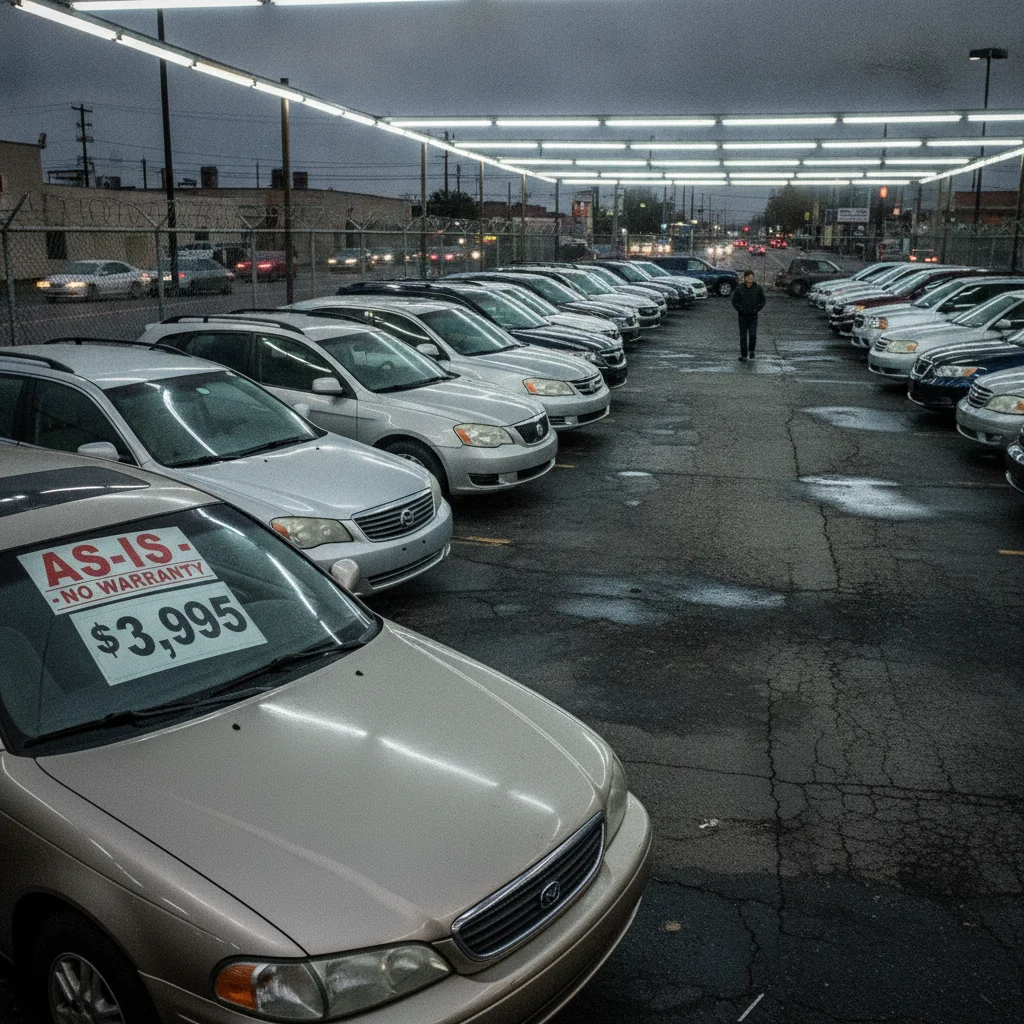
Vehicle age also triggers hard cutoffs at many lenders. A car more than 10 years old or over 100,000 miles may be ineligible for standard financing programs entirely, forcing buyers toward specialty lenders who charge premium rates. Some lenders cap loan terms at 48 months on older vehicles regardless of your credit score, which raises monthly payments even if the rate were equal. For a deeper look at how these mechanics differ, see how used car loan terms differ from new car deals.
Avoid Financing High-Mileage Vehicles Through Dealers
Vehicles with over 100,000 miles often fall into specialty financing tiers with rates 4–6 points above standard used car rates. Dealer finance departments may not disclose that the vehicle's mileage is the reason for the elevated rate — they'll attribute it to your credit. Always ask the lender directly whether the vehicle's age or mileage affected the rate you were quoted.
CPO Premium Price Can Erase Rate Savings
A CPO vehicle's lower financing rate is only an advantage if the purchase price premium doesn't exceed the interest savings. If a CPO vehicle is priced $3,000 above a comparable non-CPO unit, and the rate difference only saves you $1,400 in interest over the loan term, you're still $1,600 worse off than buying the non-CPO car from a credit union. Run the full numbers, not just the monthly payment.
Down payments interact with this differently depending on vehicle type. On a new car, a 10–15% down payment is generally enough to maintain a reasonable LTV since the vehicle's value is known. On a used car — especially one that's already depreciated significantly — lenders may want 15–20% down to feel comfortable with the collateral risk, independent of your credit score. Read about how down payment expectations differ between new and used vehicles before you budget.
Where You Shop Matters: Dealers, Banks, and Credit Unions Treat Used Cars Differently
The lender channel you use amplifies the new-vs-used rate gap in ways most buyers don't anticipate. At a franchise dealership buying a new car, you have access to captive manufacturer financing, plus the dealer's relationships with multiple banks competing for your business. On a used car — especially one purchased from a private seller or an independent lot — your options narrow significantly.
Here's the breakdown by channel:
- Manufacturer captive lenders (Ford Motor Credit, Toyota Financial, etc.): Only available on new and certified pre-owned vehicles. These offer the lowest promotional rates and 0% APR deals. Used car buyers are completely excluded.
- Bank auto loans: Available for both new and used, but banks typically have stricter age and mileage cutoffs on used vehicles and apply larger rate premiums for older inventory.
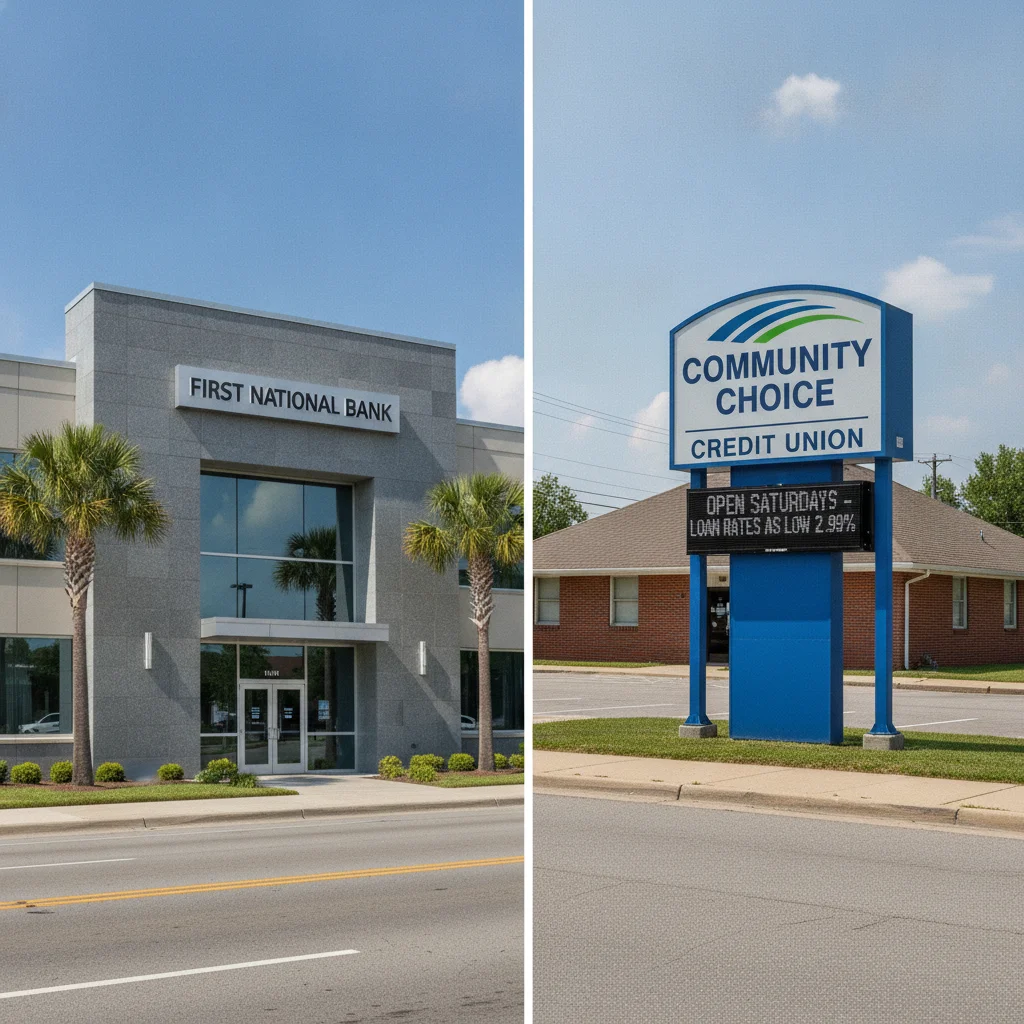
- Credit unions: Often the best source for used car loans. Credit unions are member-owned and tend to have lower margins, which means their used car rates are often 1–2 points below what banks offer at equivalent credit tiers. If you're not a member of one, it's worth joining before you shop.
- Dealer-arranged financing on used cars: The dealer marks up the rate they receive from the bank — called the dealer reserve — and pockets the spread. This markup can be larger on used cars because there are fewer competing offers and buyers have less transparency.
The practical implication: rate shopping matters more on used cars. On a new car with a manufacturer rate promotion, the dealer's captive finance arm may genuinely be the best deal. On a used car, the first offer you see is almost certainly not the best one. Get pre-approved at a credit union before you set foot in any lot. See how dealer vs. bank financing treats your credit score differently — the dynamics are not identical.
Also worth knowing: two buyers can get different rates on the exact same car even at the same dealership. Negotiating the rate is just as valid as negotiating the purchase price — and less buyers do it, which means there's more room to move.
Running the Real Numbers: What the Rate Difference Costs You
Abstract rate comparisons are easy to dismiss. Concrete dollar amounts are harder to ignore. Let's run the same scenario through both a new and used car loan at three credit tiers using representative rate data.
Scenario: $28,000 financed over 60 months
| Credit Tier | New Car Rate | New Car Monthly | New Car Total Interest | Used Car Rate | Used Car Monthly | Used Car Total Interest |
|---|---|---|---|---|---|---|
| Super-prime (720+) | 5.2% | $531 | $3,860 | 7.0% | $554 | $5,240 |
| Near-prime (660–719) | 7.5% | $561 | $5,660 | 10.5% | $601 | $8,060 |
| Subprime (580–619) | 12.5% | $633 | $9,980 | 16.5% | $692 | $13,520 |
The interest-cost gap between new and used widens dramatically as credit scores fall. A super-prime borrower pays roughly $1,380 more in interest on a used car over 60 months. A subprime borrower pays $3,540 more — on the same loan amount. That's money that doesn't go toward the vehicle; it's pure financing cost.
Now look at what happens when a near-prime borrower improves their score to super-prime tier:
- On a new car: rate drops from 7.5% to 5.2%, saving approximately $2,000 in interest over 60 months.
- On a used car: rate drops from 10.5% to 7.0%, saving approximately $2,820 in interest over 60 months.
The used car loan rewards the same credit improvement by 40% more in absolute dollar savings. That's the rate elasticity effect in real terms. If you're in near-prime territory and seriously considering a used car purchase, six months of disciplined credit work — paying down revolving balances, clearing any collections under $500, making every payment on time — can be worth thousands of dollars before you ever sit down to negotiate.
Time Your Credit Improvement Strategically
If your score sits between 655 and 690, you may be just a few points from the next lender tier. Pay down your highest-utilization credit card to below 30% of its limit — that single action can move your score 15–25 points within one billing cycle. On a used car loan, that jump can translate to 1–2 percentage points off your rate, saving hundreds or thousands in interest over the loan term.
Get Pre-Approved Before the Dealership
Walking into a dealership with a pre-approval from your credit union gives you a concrete rate ceiling. If the dealer's finance office can't beat it — on either a new or used vehicle — you take your credit union's offer. This shifts negotiating power entirely in your favor and prevents the common tactic of burying a rate markup inside a 'payment-focused' negotiation.
Certified Pre-Owned: The Hybrid Case
Certified pre-owned (CPO) vehicles occupy a middle ground that's worth understanding separately. CPO programs are run by manufacturers on late-model, lower-mileage used vehicles that have passed a multi-point inspection. What makes CPO financially relevant is that many manufacturers extend their captive financing to CPO vehicles, which means you can access rates closer to new-car territory on a technically used vehicle.
A CPO Toyota Camry with 22,000 miles might qualify for Toyota Financial Services' CPO financing at 5.9%, while a non-CPO 2020 Camry with 45,000 miles from an independent lot might carry a market rate of 9.5% for the same borrower. Same make, same model, drastically different rate — because of the lender program, not the vehicle's underlying quality.
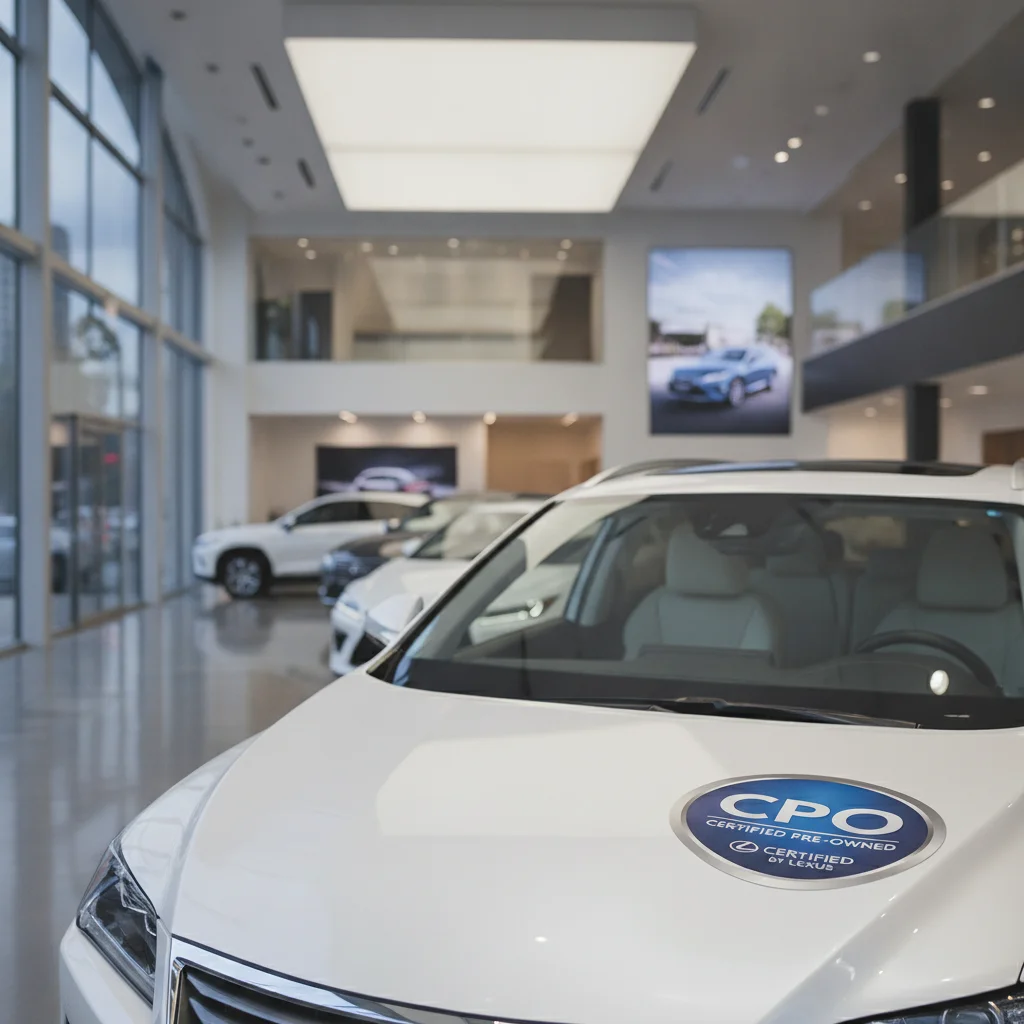
The trade-off: CPO vehicles command a premium purchase price, typically $1,500–$3,000 above a comparable non-CPO used car. Whether the lower rate and warranty coverage justify that price depends on your specific numbers. Run both scenarios against the total cost — purchase price plus total interest over the loan term — before assuming CPO is the better deal.
For guidance on evaluating pre-owned vehicles more broadly, including how to assess a vehicle's condition before committing to a purchase price, see our complete guide to buying used cars.
Avoid Financing High-Mileage Vehicles Through Dealers
Vehicles with over 100,000 miles often fall into specialty financing tiers with rates 4–6 points above standard used car rates. Dealer finance departments may not disclose that the vehicle's mileage is the reason for the elevated rate — they'll attribute it to your credit. Always ask the lender directly whether the vehicle's age or mileage affected the rate you were quoted.
CPO Premium Price Can Erase Rate Savings
A CPO vehicle's lower financing rate is only an advantage if the purchase price premium doesn't exceed the interest savings. If a CPO vehicle is priced $3,000 above a comparable non-CPO unit, and the rate difference only saves you $1,400 in interest over the loan term, you're still $1,600 worse off than buying the non-CPO car from a credit union. Run the full numbers, not just the monthly payment.
What to Do With This Information Before You Apply
The framework above leads to a clear set of actions depending on where you sit today.
If your score is above 720:
You're in the best position to access manufacturer-subsidized new car rates. Before committing to a used car, calculate whether the lower purchase price actually saves you money after accounting for the higher rate you'll pay. Often the math favors new — especially during promotional periods with 0% or sub-3% manufacturer financing.
If your score is between 620 and 719:
This is the tier where vehicle choice has the largest impact on your total cost. Get pre-approved through a credit union before visiting any dealer. On a used car, negotiate hard on price to compensate for the higher rate. And seriously consider whether 90 days of credit score work — paying down one or two credit cards to below 30% utilization — would move you to the next tier before you apply.
If your score is below 620:
Expect elevated rates on both loan types, but especially on used vehicles. A larger down payment (20%+ if possible) reduces LTV and may unlock slightly better rate tiers at some lenders. Avoid very old or high-mileage vehicles, as they may be ineligible for standard financing or trigger rate surcharges. Focus on credit unions and community banks rather than dealer-arranged financing, where the markup risk is highest.
Regardless of tier, treat the rate as negotiable. Dealers can often access multiple lender tiers, and a rate you're quoted is frequently not the lowest one they can offer. Knowing the mechanics — that used car loans carry structurally higher rates, that your score moves used car rates more steeply, and that lender channel matters — puts you in a position to push back with specific, grounded requests rather than vague objections.
All claims are backed by peer-reviewed research. Sources on request.