
Key Takeaways
Our Verdict
Credit unions consistently offer the lowest APRs for borrowers who qualify, making them the best starting point for most buyers. Banks are a solid fallback when credit union membership isn't practical. Dealership financing is most useful as a negotiating lever or a last resort — never the default. Whatever lender you use, always compare the full APR, not just the monthly payment or the stated interest rate.
| Best for | Recommended |
|---|---|
| Buyers who want the lowest total loan cost | Credit Union |
| Buyers who need fast approval with minimal friction | Bank |
| Buyers with subprime credit who need captive lender access | Dealership |
| Buyers purchasing a manufacturer-incentivized model | Dealership (Captive Finance Arm) |
Why the Same Borrower Gets Three Different Rates
Walk into a credit union, a national bank, and a dealership with identical credit scores, identical income, and identical down payments, and you will almost certainly leave with three different APR offers. That's not a glitch — it's how the system is designed. Each lender type has different cost structures, different profit motives, and different relationships with risk, and all of those variables feed directly into the rate you're quoted.
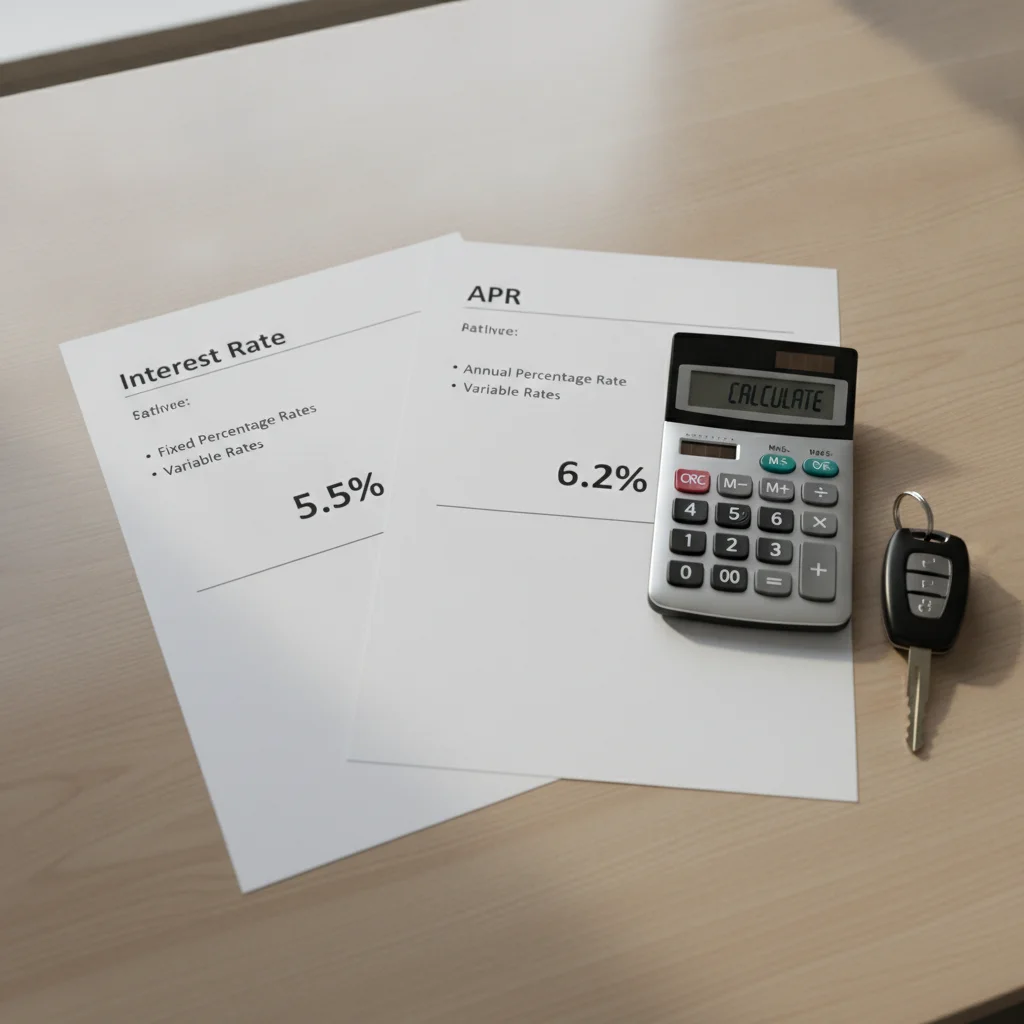
The interest rate is the annual cost of borrowing the principal. APR wraps in fees — loan origination charges, prepaid finance charges, and sometimes dealer-added costs — so it gives you a more complete picture of what the loan actually costs per year. APR vs. interest rate on a car loan is a distinction worth understanding before you compare any offers, because lenders can quote low interest rates while burying costs in fees that inflate the real APR.
This article breaks down how each lender type actually sets its rates, where the markup comes from, and what you can do to control the number before it controls you.

How Credit Unions Price Auto Loans
Credit unions are member-owned, not-for-profit cooperatives. They don't answer to shareholders demanding quarterly earnings growth, which removes a large chunk of the pricing pressure that inflates rates at banks and dealerships. Profits — after covering operational costs — cycle back to members in the form of lower loan rates, higher savings yields, and reduced fees.
In practice, that structure translates to measurable savings. The National Credit Union Administration (NCUA) reports that credit union new-car loan rates consistently run 1 to 2 percentage points below average bank rates. On a $35,000 loan over 60 months, a 2-point difference in APR is roughly $1,900 in total interest paid.
1–2%
Average rate advantage at credit unions vs. banks
According to NCUA quarterly data, credit union new-car loan rates have consistently run 1 to 2 percentage points below average bank rates.
$1,900+
Interest saved on a $35K loan at 2% lower APR
A 2 percentage point difference on a $35,000, 60-month loan translates to roughly $1,900 in total interest savings over the loan term.
1–2.5%
Maximum dealer reserve markup allowed by many lenders
Most captive and bank lenders that work with dealerships allow the dealer to mark up the buy rate by 1 to 2.5 percentage points, per standard dealer agreements.
The catch is membership eligibility. Every credit union has a field of membership — you might qualify through your employer, your geographic community, a professional association, or a family member who's already a member. Most people qualify for at least one credit union without knowing it. The application process typically requires a small deposit (often $5 to $25) to open a share account, and then you can apply for loans.
Credit unions also tend to underwrite differently. They look at the full picture — income stability, relationship history, debt-to-income ratio — rather than running a purely automated score-based decision. That can work in your favor if your credit file has some blemishes but your broader financial situation is solid.
Find a Credit Union Before You Need a Loan
Don't wait until you're at the dealership to discover you're eligible for credit union membership. Sites like MyCreditUnion.gov let you search by employer, location, or affiliation in minutes. Open a share account now — even with a $25 deposit — so you're ready to apply the moment you start car shopping. Pre-approval from a credit union is one of the strongest negotiating tools you can bring to a dealership.
Cluster Your Loan Applications in One Week
FICO and VantageScore both have rate-shopping windows — typically 14 to 45 days — during which multiple auto loan inquiries are counted as a single hard pull. Apply to your credit union, at least one bank or online lender, and any captive lender you're considering within the same 14-day window. You'll get multiple real offers with only one inquiry's worth of score impact.
One limitation: credit union pre-approval letters don't always carry the same real-time status as a bank pre-approval. Some dealers are less familiar with the process, and occasionally the dealer's system won't accept a credit union check as readily as one from a major bank. Call the dealership's finance office beforehand if you're concerned about this.
How Banks Price Auto Loans
National banks, regional banks, and online lenders all operate on a cost-plus-margin model. They fund loans from deposits and wholesale capital markets, add an operational cost layer, tack on a profit margin, and the result is your offered rate. Unlike credit unions, banks do have shareholders, and maintaining net interest margin is a core performance metric.
What banks offer in return is speed, infrastructure, and reach. A pre-approval from a large bank can often be completed in under an hour online, and many banks offer rate locks or pre-approval letters that are valid for 30 to 45 days. That's a powerful negotiating tool at the dealer — you already have financing in hand, so the F&I office has to beat your number or lose the deal.
Bank rates vary significantly by institution. Online lenders — technically banks or bank-affiliated — sometimes undercut traditional branch banks because they carry lower overhead. The range for a borrower with a 700 credit score might span from 6.5% APR at an aggressive online lender to 9%+ at a regional bank with more conservative pricing.
One thing to watch: banks sometimes charge origination fees or documentation fees that add to the effective APR without being prominently advertised. Always request the full APR, not just the interest rate. How lenders determine your auto loan interest rate covers the full list of factors banks weigh, including loan-to-value ratio and loan term — both of which affect pricing more than most buyers realize.

How Dealerships Price Auto Loans — and Where the Markup Lives
Here's where it gets complicated. Dealerships almost never actually lend you money. Instead, they act as brokers between you and a network of lending partners — banks, captive finance arms (like Ford Motor Credit or Toyota Financial Services), and sometimes specialty auto lenders. The dealer submits your application to multiple lenders, receives approval offers with buy rates, and then presents you a rate.
The buy rate is the actual rate the lender is willing to fund the loan at. What the dealer quotes you is typically higher. The spread between the buy rate and your quoted rate is called dealer reserve — and it goes to the dealership as a flat fee or as a percentage of the loan amount. Federal regulations cap how much dealers can mark up loans from certain lenders, but the cap still allows markups of 1 to 2.5 percentage points above the buy rate in most cases.
Never Negotiate on Monthly Payment Alone
Dealers are trained to shift your attention from total cost to monthly payment — because stretching a loan from 48 to 72 months can make a high-APR deal look affordable on paper. A $601 monthly payment at 10.5% APR for 72 months costs dramatically more in total interest than a $569 payment at 6.5% for 60 months, even though the monthly difference is only $32. Always ask for the total interest paid over the full term before agreeing to anything.
Don't Refinance Too Early — Watch Prepayment Penalties
Some auto loans — especially those arranged through dealerships and funded by subprime lenders — include prepayment penalties that apply during the first 12 to 24 months of the loan. Refinancing within that window could trigger a fee that wipes out the savings you're chasing. Read the original loan contract before initiating a refinance application, and check specifically for any early payoff or prepayment penalty clauses.
There are two scenarios where dealership financing can legitimately beat outside offers:
- Manufacturer incentive rates: Captive finance arms like Honda Financial Services or GM Financial sometimes run promotional rates — 0%, 1.9%, 2.9% APR — on specific models to move inventory. These subvented rates are subsidized by the manufacturer, not the lender, and no outside bank or credit union can match them. The tradeoff is that taking the incentive rate often means giving up a cash rebate, so you need to calculate which saves more.
- Subprime borrowers: If your credit score is below 580, many credit unions and banks will decline you outright. Dealerships maintain relationships with subprime and near-prime specialty lenders that most consumers can't access directly. The rate will be high — possibly 15% to 22% APR — but it may be the only path to financing available.
For everyone in between — fair to excellent credit — dealership financing is almost always the most expensive option unless you're capturing an incentive rate. The dealer has no structural reason to pass savings to you; their incentive runs the other way. Why two buyers get different rates on the same car digs into how credit tiers determine which lender pool you fall into.
| Credit Union | Bank / Online Lender | Dealership | |
|---|---|---|---|
| Typical APR (720 credit score, new car) | 5.5% – 6.5% | 6.5% – 8.5% | 8.0% – 10.5% |
| Profit motive | Not-for-profit, member-owned | Shareholder-driven margin | Dealer reserve markup on buy rate |
| Speed of approval | 1–3 business days | Same day to 24 hours | Same day (often same hour) |
| Membership / eligibility required | Yes — field of membership | No | No, but limited to lender network |
| Access to incentive / subvented rates | No | No | Yes (manufacturer-backed promos) |
| Subprime borrower options | Limited | Very limited | Yes, via specialty lenders |
| Pre-approval available | Yes | Yes | Limited / spot delivery |
| Rate transparency | High — disclosed directly | High — disclosed directly | Low — buy rate hidden from buyer |
The Pre-Approval Playbook: How to Use Multiple Lenders
The most practical thing you can do before stepping onto a lot is arrive with at least one pre-approval in hand. Here's the sequence that works:
- Check your credit first. Pull your free report from AnnualCreditReport.com and check for errors. A misreported late payment can drop your score enough to bump you into a higher rate tier. Dispute errors before applying.
- Apply to a credit union and a bank simultaneously. Multiple auto loan inquiries within a 14-day window are typically treated as a single hard inquiry by FICO and VantageScore models. Apply to both in the same week to minimize credit score impact.
- Use the better offer as your baseline. Walk into the dealership with that pre-approval letter. Tell the F&I manager what your rate is. Ask if they can beat it — not match it, beat it. If they can't, you hand them a check.
- If the dealer offers an incentive rate, run the numbers. Compare total interest paid at the incentive rate vs. your pre-approved rate, factoring in any cash rebate you'd forfeit by taking dealer financing. Sometimes the math favors the rebate.
The factors that shape your car loan APR before you step into a dealership walks through all the variables you should know before any lender pulls your file — including how loan-to-value ratio and loan term affect the rate you'll qualify for.
Find a Credit Union Before You Need a Loan
Don't wait until you're at the dealership to discover you're eligible for credit union membership. Sites like MyCreditUnion.gov let you search by employer, location, or affiliation in minutes. Open a share account now — even with a $25 deposit — so you're ready to apply the moment you start car shopping. Pre-approval from a credit union is one of the strongest negotiating tools you can bring to a dealership.
Cluster Your Loan Applications in One Week
FICO and VantageScore both have rate-shopping windows — typically 14 to 45 days — during which multiple auto loan inquiries are counted as a single hard pull. Apply to your credit union, at least one bank or online lender, and any captive lender you're considering within the same 14-day window. You'll get multiple real offers with only one inquiry's worth of score impact.
What the Numbers Look Like Across Lender Types
Let's ground this in a concrete example. Assume a borrower with a 720 FICO score buying a $32,000 new vehicle with $4,000 down, financing $28,000 over 60 months.
| Lender Type | Estimated APR Range | Total Interest (60 mo.) | Monthly Payment |
|---|---|---|---|
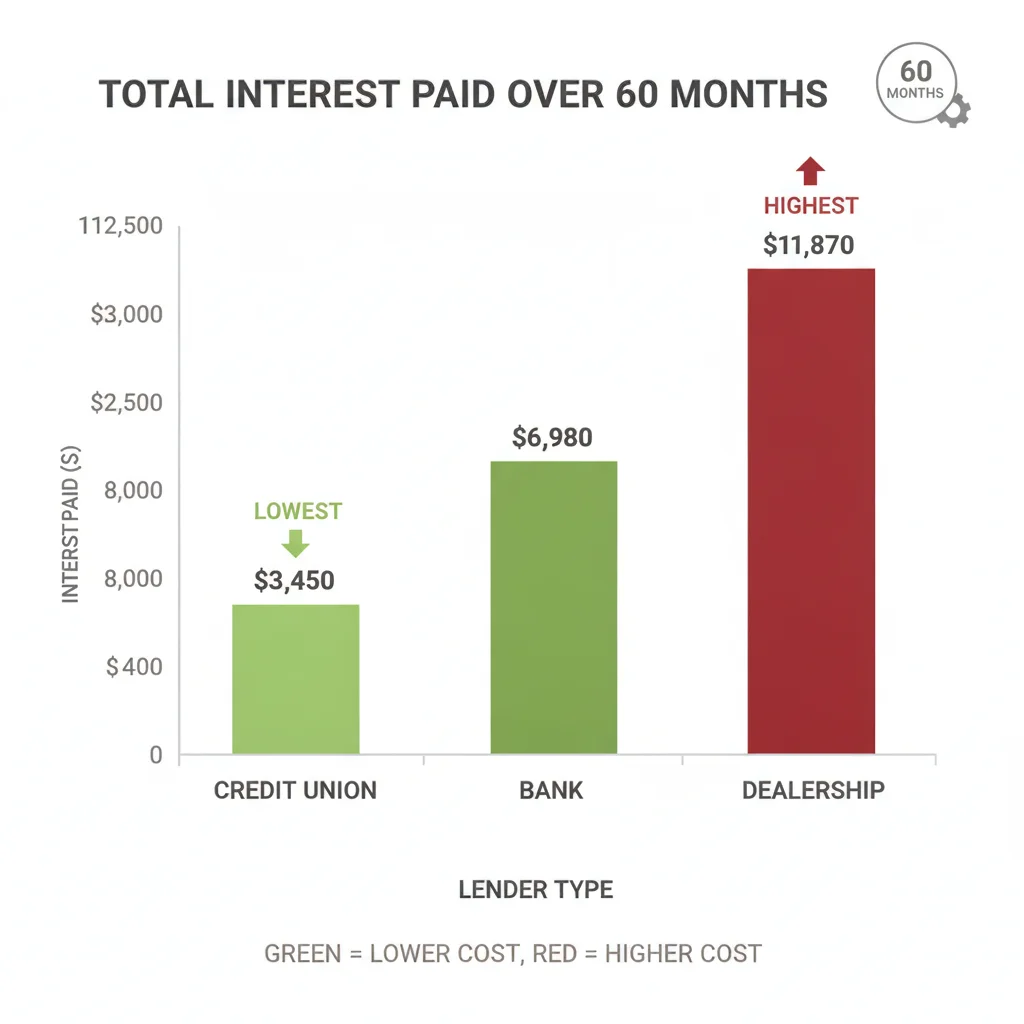
| Credit Union | 5.5% – 6.5% | $4,080 – $4,870 | $535 – $547 |
| Bank / Online Lender | 6.5% – 8.5% | $4,870 – $6,460 | $547 – $573 |
| Dealership (Buy Rate + Reserve) | 8.0% – 10.5% | $6,130 – $8,130 | $569 – $601 |
The difference between the best credit union rate and a typical dealer-financed rate in this scenario is roughly $4,000 in total interest over the life of the loan. That's real money — it's a vacation, six months of insurance payments, or a solid emergency fund contribution.
Monthly payment differences look small ($535 vs. $601), which is exactly why dealers anchor the conversation to monthly payments rather than APR or total cost. Don't let them. Always ask for the total interest paid over the full term, and always compare APRs, not payments. Understanding loan terms covers how extending the term can make a high-APR loan look affordable while dramatically increasing total cost.
Credit Score Tiers and How They Interact With Lender Type
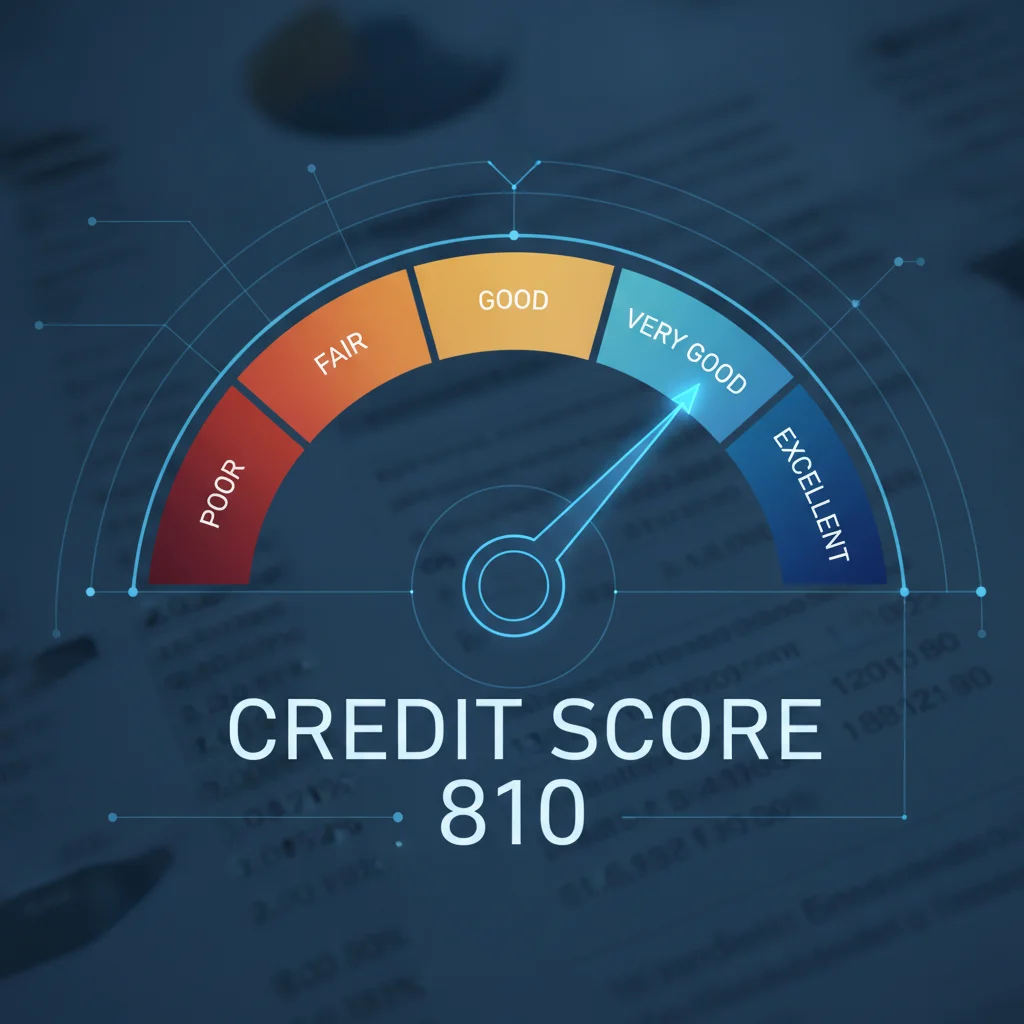
Your credit score determines not just the rate within a lender's menu — it also determines which lender types are realistically available to you. Lenders use internal tier systems, but broadly:
- 720+: All three lender types available. Credit unions likely offer the best deal. Banks competitive. Dealership financing will be the most expensive unless incentive rates apply.
- 660–719: Credit unions and banks both available. Rates will be meaningfully higher than the 720+ tier. Dealer reserve markups hurt more here because the base rate is already elevated.
- 600–659: Some credit unions will still lend, but with higher rates and possibly shorter terms or lower LTV limits. Banks get more selective. Dealer-arranged financing starts to become more competitive because captive and near-prime lenders fill gaps the mainstream market won't touch.
- Below 600: Credit union approvals become rare. Banks will generally decline. Dealership-arranged financing through subprime lenders is often the only option — but at rates ranging from 15% to over 20% APR. In this range, improving your credit score before financing is almost always worth the wait if you can manage it.
Why two buyers get different rates on the exact same car explains in detail how lenders translate your score into a specific rate tier — and what documentation can sometimes push you into a better bucket even without a higher score.
Refinancing: A Second Chance to Fix a Bad Rate
If you already drove off the lot with dealer-arranged financing — or accepted a bank offer under time pressure — you're not locked in forever. Refinancing replaces your existing loan with a new one, ideally at a lower APR. Credit unions are particularly aggressive in the refinance market and often offer streamlined processes for new members specifically to capture this business.
The math on refinancing works in your favor when:
- Your credit score has improved since the original loan (even 20 to 30 points can move you into a lower tier).
- Market rates have dropped since you financed.
- You originally financed through a dealer at a marked-up rate and now qualify for a direct-to-consumer rate.
Refinancing an auto loan through a credit union covers what the process looks like in practice, including membership requirements, how quickly you can refinance after purchase, and how to calculate whether the savings justify the effort.
Never Negotiate on Monthly Payment Alone
Dealers are trained to shift your attention from total cost to monthly payment — because stretching a loan from 48 to 72 months can make a high-APR deal look affordable on paper. A $601 monthly payment at 10.5% APR for 72 months costs dramatically more in total interest than a $569 payment at 6.5% for 60 months, even though the monthly difference is only $32. Always ask for the total interest paid over the full term before agreeing to anything.
Don't Refinance Too Early — Watch Prepayment Penalties
Some auto loans — especially those arranged through dealerships and funded by subprime lenders — include prepayment penalties that apply during the first 12 to 24 months of the loan. Refinancing within that window could trigger a fee that wipes out the savings you're chasing. Read the original loan contract before initiating a refinance application, and check specifically for any early payoff or prepayment penalty clauses.
The bottom line: which lender type you use has a direct, quantifiable effect on what your car actually costs. The rate isn't assigned to you — it's negotiated, whether you realize it or not. Knowing how each lender builds its rate is the first step toward making sure that negotiation ends in your favor.
All claims are backed by peer-reviewed research. Sources on request.