Key Takeaways
Why It Pays to Think Like a Buyer Before You List
Most private sellers focus entirely on the car — what it's worth, how to photograph it, where to post it. That's the right instinct, but it only covers half the equation. The other half is understanding what happens on the buyer's side of the screen the moment your listing appears.
Serious buyers — the ones with real money and genuine intent — don't impulse-buy $15,000 vehicles. They do research. They check prices, pull history reports, read your listing language for red flags, and show up to a test drive with a mental checklist they've assembled from YouTube videos, Reddit threads, and hard-won personal experience. If you haven't prepared for that scrutiny, you're handing them ammunition to negotiate you down.
This article walks through everything a diligent buyer will check before making an offer on your private listing. For each checkpoint, I'll tell you what they're looking for, why it matters, and what you can do now to come out ahead. If you've already got your listing live, diagnose what's working against you before you read further.
The 10 Things Buyers Check Before Making an Offer
Your asking price vs. market comparables
Before a buyer types a single message, they've already pulled comparable listings on Autotrader, CarGurus, Cars.com, or Facebook Marketplace. They know what similar year, trim, mileage, and condition vehicles are selling for in your ZIP code. If your price is more than 5–8% above the realistic market range, many buyers won't even click — and those who do will open negotiations with a lowball.
Pull your own comps before you set your price. Filter for the same trim level, within 25,000 miles of your odometer, within roughly 150 miles of your location. If you're priced above the cluster, you need a specific reason — recent tires, new brakes, one owner, full service records — and that reason needs to be visible in your listing, not mentioned only after someone asks.
Writing a listing that justifies your price is a skill worth developing before you publish.
Buyers check comps before contacting you — price above the cluster without justification and they won't bother.
Vehicle history report
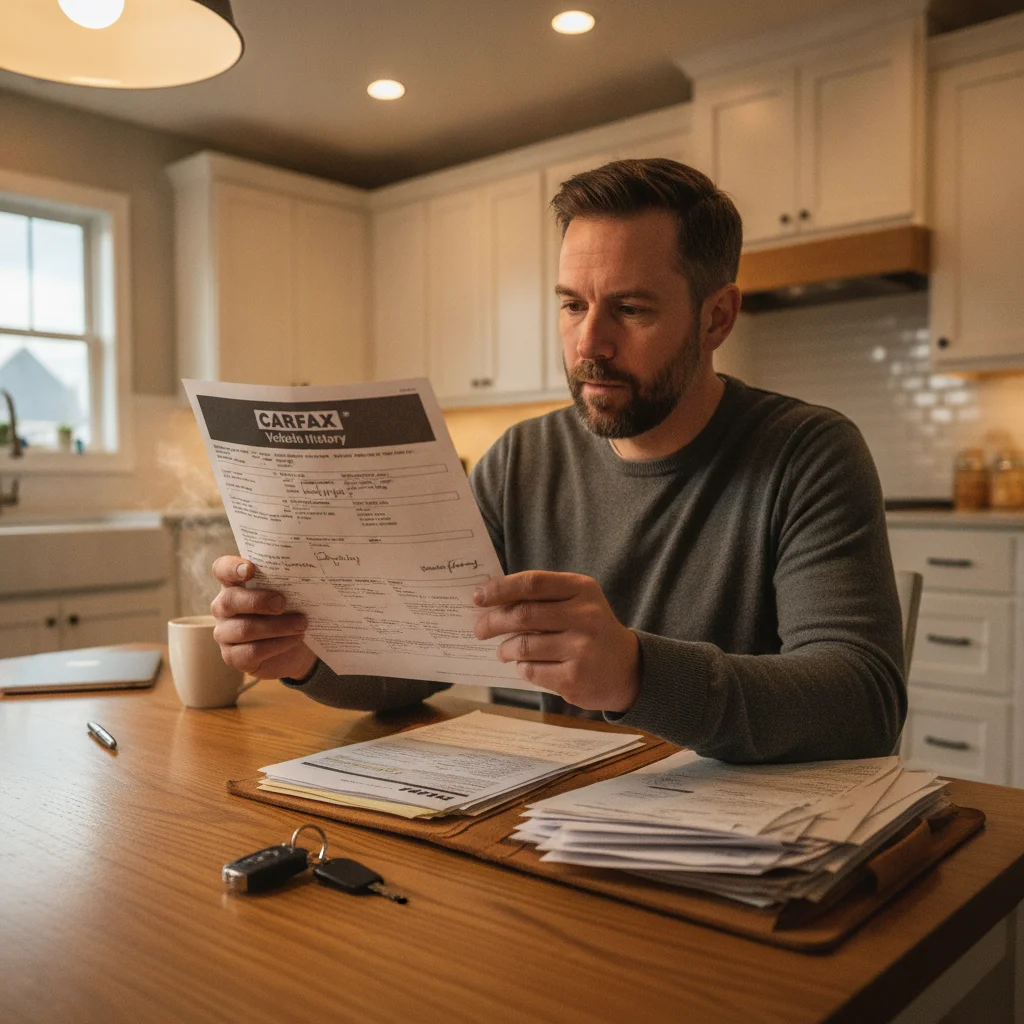
Assume every serious buyer will pull a Carfax or AutoCheck report on your VIN before agreeing to a showing. They're looking for four things: accident history, title status (clean vs. salvage/rebuilt), odometer discrepancies, and number of previous owners.
Here's the smart seller move: pull your own report before you list. It costs $40–$50 and tells you exactly what buyers will see. If there's an accident on record, decide now whether to disclose it proactively in your listing (recommended) or wait for the buyer to discover it and wonder what else you're hiding. Proactive disclosure with context — "minor rear-end impact at 22k miles, professionally repaired, no structural damage" — builds trust. Silence about it destroys it.
A salvage or rebuilt title is a significant price reducer — typically 20–40% below clean-title market value. If that's your situation, price accordingly and lead with it. Trying to obscure it will cost you the deal entirely once the buyer finds out, and they will find out.
[in_content_images:1]Pull your own history report before listing — you need to know what buyers will see.
Listing photos and what they reveal
Buyers treat photos as evidence. They zoom in on wheel wells looking for rust. They examine door gaps for signs of panel replacement. They look at the driver's seat bolster wear relative to the claimed mileage. They count the photos — too few suggests the seller is hiding something.
A well-shot listing with 20–30 photos covering every angle, all four tires, the engine bay, the interior, the trunk, and any known imperfections builds buyer confidence before they've spoken a single word to you. A listing with five blurry shots taken in a dim garage does the opposite.
Great photos are the top driver of private sale inquiries — treat them as your first impression and your first line of credibility.
Buyers treat your photos as evidence — too few shots, and they assume something is being hidden.
Listing language and seller tone
Experienced buyers read listing copy the way a lawyer reads a contract — looking for hedging language and omissions. Phrases like "runs great," "minor issues," "sold as-is," or "no lowballers" are all red flags that something is being underplayed or the seller is defensive. Vague mileage descriptions, missing trim information, or a one-sentence listing with no detail send buyers elsewhere.
Specific language signals an honest seller. "Oil changed every 5,000 miles at Jiffy Lube, records available" is worth more than a paragraph of generic praise. Disclosing a known scratch or a worn driver's seat actually increases buyer trust — it tells them you're not hiding anything bigger.
If your listing is getting views but no inquiries, the writing is likely the problem. Here's how to write listing copy that gets qualified buyers to respond.
Vague or defensive listing language is a red flag — specificity signals honesty.
Seller response time and communication quality
This one surprises sellers, but it matters: how fast you respond and how you communicate tells buyers a lot about what the transaction will be like. A seller who takes three days to reply to an initial inquiry, or who gives one-word answers, signals either disorganization or disinterest — and buyers wondering if this sale is going to be a headache will move on to the next listing.
Aim to respond to inquiries within a few hours during daytime. Be direct and informative — answer the question asked, then offer the next logical piece of information without making them drag it out of you. If someone asks about mileage, tell them the mileage and mention the recent service history. That kind of proactive communication builds confidence and keeps the deal moving.
Slow, vague replies signal trouble — buyers want to know the transaction won't be a headache.
Maintenance records and service history
A buyer who asks "do you have records?" is testing you. They want oil change receipts, timing belt documentation, brake jobs, any recall completions. A thick folder of service records is worth real money — it's proof the car was maintained and that you're an organized seller. In my experience, sellers with complete records face significantly less price negotiation than those who say "I maintained it well, just don't have the paperwork."
Before listing, gather everything: dealer service records, independent shop receipts, any invoices for repairs or maintenance in the last five years. If you have a gap — say, you went a few years without documented oil changes — be ready to explain it honestly rather than pretend it didn't happen.
Buyers who find a timing belt on a high-mileage interference engine with no replacement documentation will price in the risk of that unknown. Give them the documentation and eliminate that discount from their mental math.
Complete service records are worth real money — organized sellers face less negotiation pressure.
Tire condition and brake wear
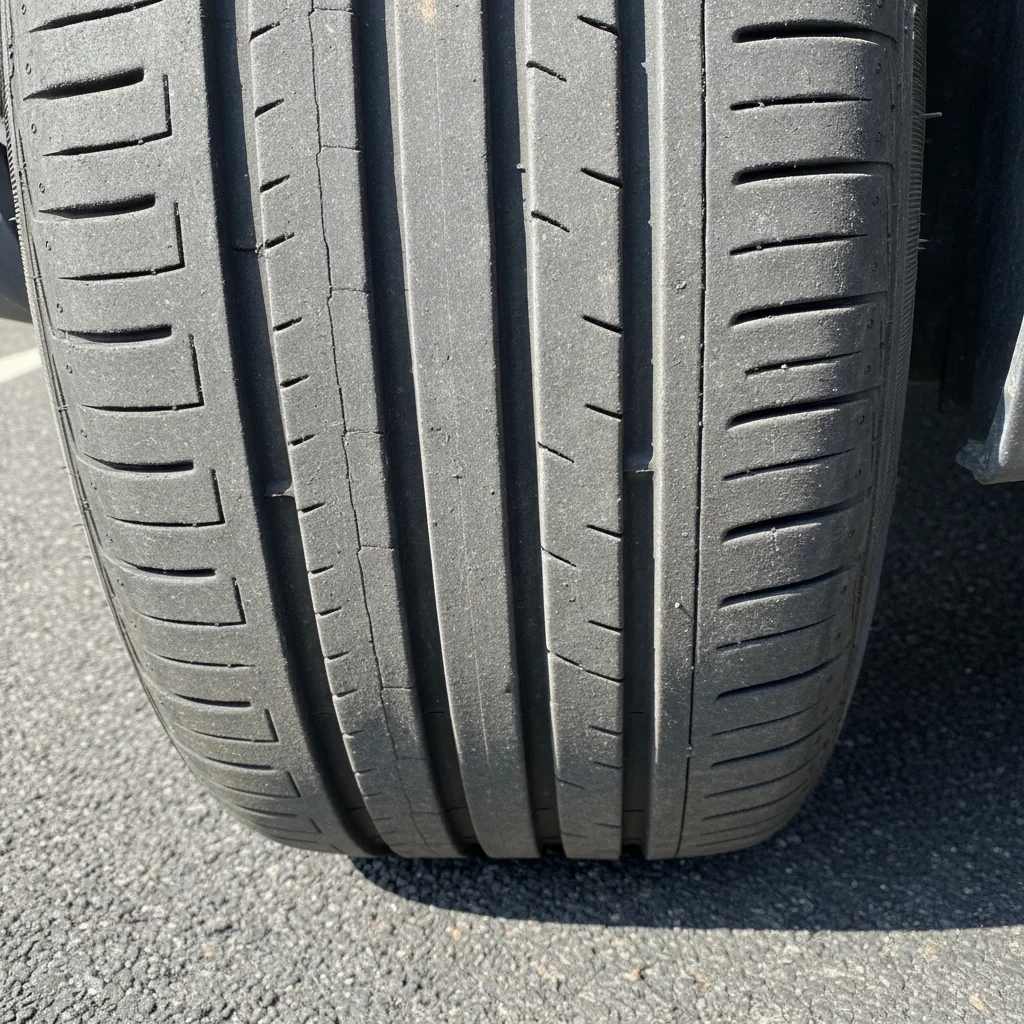
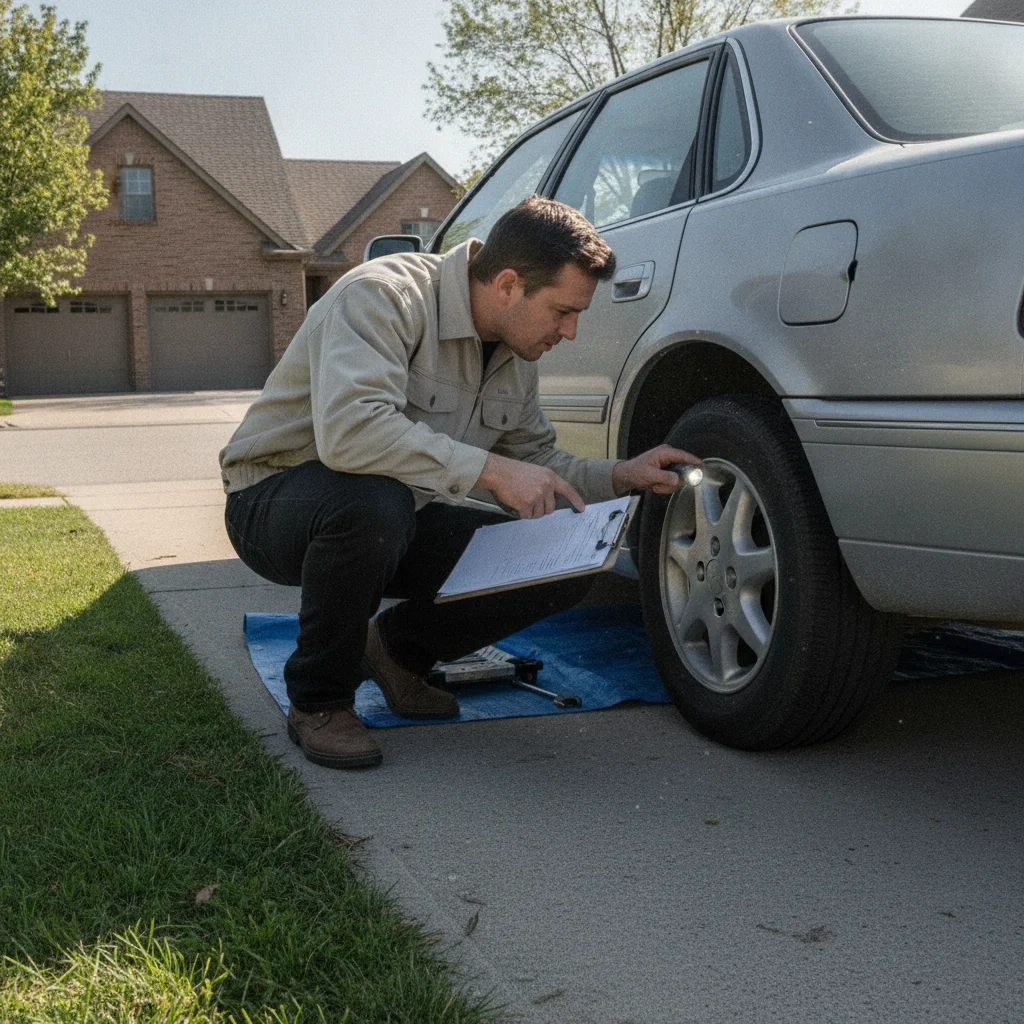
Tires and brakes are the first things a mechanically savvy buyer checks in person — and they're among the most common negotiating levers used to push prices down. Low tread, uneven wear patterns, or mismatched brands all give a buyer grounds to estimate replacement cost and deduct it from your asking price on the spot.
Check your tread depth with a quarter: if the top of Washington's head is visible, you're at roughly 4/32" — marginal. Below that, a buyer will budget $600–$1,200 for a new set and come in that much lower. Mismatched tires (different brands or sizes on the same axle) signal neglect, which opens the door to broader skepticism about the car's care.
Understanding tire condition before you list helps you decide whether replacing them before the sale pencils out — sometimes it does, sometimes it doesn't.
[in_content_images:2]Worn or mismatched tires are one of the most common tools buyers use to justify a lower offer.
The test drive experience
The test drive is where a buyer shifts from intellectual evaluation to physical verification. They're listening for rattles, feeling for brake pulsation, checking whether the transmission shifts cleanly, watching the temperature gauge, and paying attention to any warning lights. A buyer who knows their stuff will also test the AC at full blast, the heat, every powered window, and any tech features like the navigation or backup camera.
Your job as a seller is to make the test drive environment fair — not manipulative. Don't top off the coolant to mask an overheating issue. Don't park on a slope to hide a transmission leak. These things get discovered, and getting caught hiding something ends the deal and your credibility.
Do make sure the car is warm if you live somewhere cold (cold starts can mask transmission hesitation), allow a reasonable route that includes both low-speed turns and highway speed, and be present but quiet — let the buyer drive and focus.
The test drive is physical verification — a buyer who knows cars will notice anything you've tried to mask.
Pre-purchase inspection by an independent mechanic
A buyer who makes it through your listing, the vehicle history report, and the test drive and is still seriously interested may ask for a pre-purchase inspection (PPI) at an independent shop of their choosing. This is a completely reasonable request, and your answer to it tells them everything.
Sellers who say yes immediately — without hesitation — signal confidence in the car's condition. Sellers who hem and haw, offer conditions, or flatly refuse are waving a red flag the size of a barn door. Even if your car has a minor issue, refusing an inspection will cost you far more than the issue itself, because the buyer will assume the worst.
A typical PPI costs the buyer $80–$150 and takes about an hour at a shop. The inspector will put the car on a lift and check for leaks, frame damage, rust, suspension wear, and anything the test drive might have missed. If something comes up, you'll need to decide whether to fix it, adjust your price, or walk away from that buyer. Here's how inspection findings typically affect offers.
Refusing a pre-purchase inspection is a red flag — confident sellers say yes without hesitation.
Title clarity and paperwork readiness
A buyer ready to hand over a significant sum of money wants to know the title is clean, in your name, free of liens, and that you can complete the transfer the same day they hand you cash. Any ambiguity here kills deals fast.
Common issues: a lien that hasn't been satisfied, a title in a deceased family member's name, a title that's in your ex's name, or — worst case — a lost title. All of these create delays that give buyers cold feet. Sort them out before you list, not after you've shaken hands.
Have your title physically in your possession before showing the car. If there's a lien, contact your lender and understand the payoff and transfer process before a buyer asks. Some states allow a lender to release the title directly at closing — know your state's rules. Understanding the documents involved in a car sale is useful context for both sides of the transaction.
Title ambiguity kills deals — have it clean, in your name, and in your hand before the first showing.
Run Through Your Own Pre-Sale Checklist
Before publishing any listing, work through a structured pre-sale review just as a buyer would. Check your own comps, pull your history report, gather your records, and walk around the car looking for anything a stranger would notice. <a href="/selling-your-car/sale-channels/private-party-sales/car-photography-tips-that-make-your-listing-stand-out">Photograph every angle</a> in good daylight and review the shots critically. Sellers who do this arrive at negotiations from a position of knowledge and confidence, not scrambling to answer basic questions.
Timing Your Listing Matters Too
Even a well-prepared listing lands differently depending on when you publish it. Seasonal demand, local market conditions, and the specific type of vehicle you're selling all influence how quickly serious buyers find you. Before you go live, run through <a href="/selling-your-car/pricing-your-car/market-timing/a-sellers-pre-listing-timing-checklist">a seller's pre-listing timing checklist</a> to make sure you're entering the market at the right moment.
Private Sales vs. Instant Offer Platforms
Everything covered in this article applies specifically to private party sales, where individual buyers do their own due diligence. If you sell to an instant offer platform like CarMax, Carvana, or a similar service, the evaluation process is done by professional appraisers using standardized criteria — not individual buyer research. <a href="/selling-your-car/sale-channels/instant-offer-platforms">See how instant offer platforms compare</a> on speed, convenience, and payout if you're weighing your channel options.
Get Ahead of the Objections Before They Arrive
None of these buyer checkpoints should catch you by surprise — and that's exactly the point. When you understand what a prepared buyer will scrutinize, you can decide in advance what to fix, what to disclose proactively, and how to price for the condition of the car you actually have.
Sellers who anticipate questions close faster. Sellers who get defensive or evasive when a buyer finds something lose deals or get hammered on price. The good news: most of what buyers check is completely within your control before the first inquiry hits your inbox.
Once you've sorted your listing presentation, the next challenge is the negotiation itself. Learn how to hold your ground with private buyers and counter effectively when they come in low. And if you're weighing whether a private sale is even the right channel for your situation, compare instant offer platforms to see what speed and convenience trade-offs look like on the other side.

All claims are backed by peer-reviewed research. Sources on request.