Key Takeaways
Why Most Private Listings Fail Before a Buyer Even Reads Them
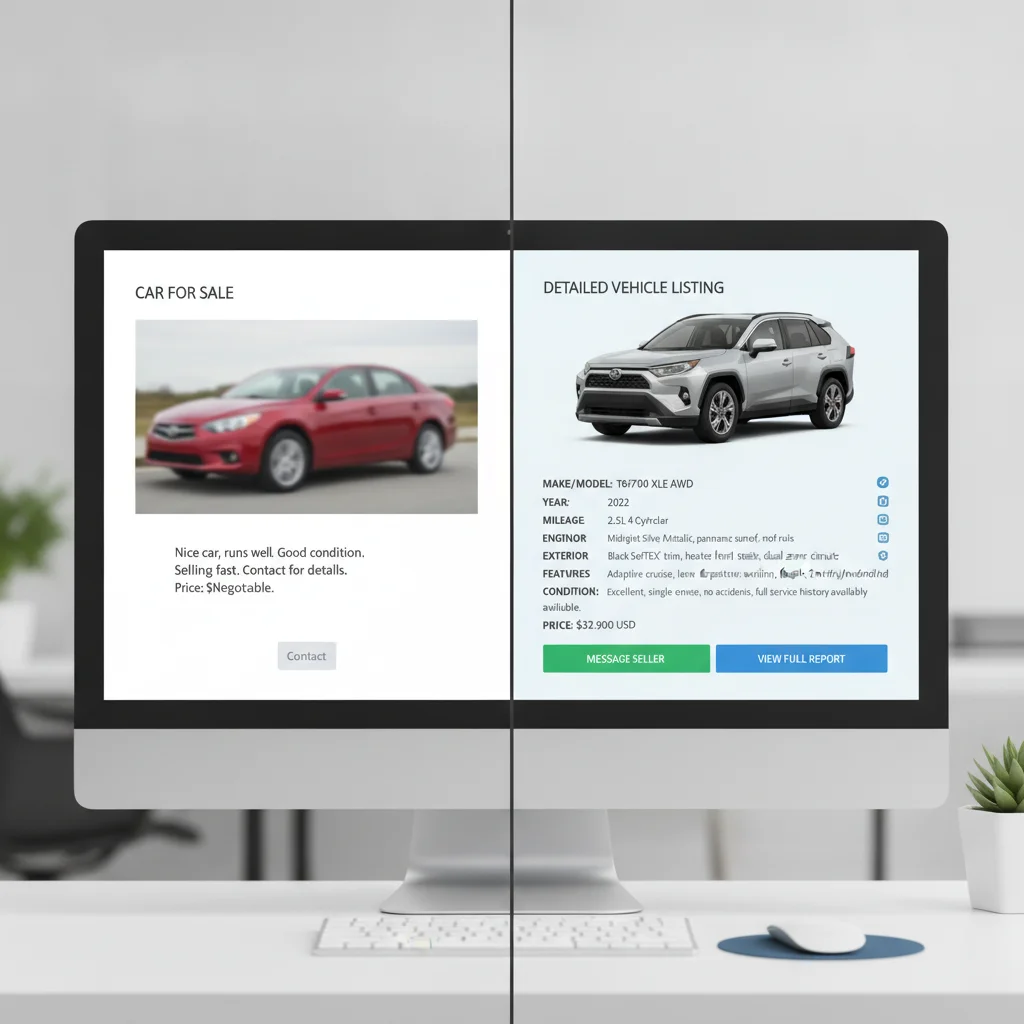
On any given day, a buyer searching for, say, a 2018 Honda Accord EX-L might scroll past 40 listings. Most get less than three seconds of attention before the buyer moves on. The listings that stop the scroll share a common trait: they answer the buyer's first five questions in the first two lines.
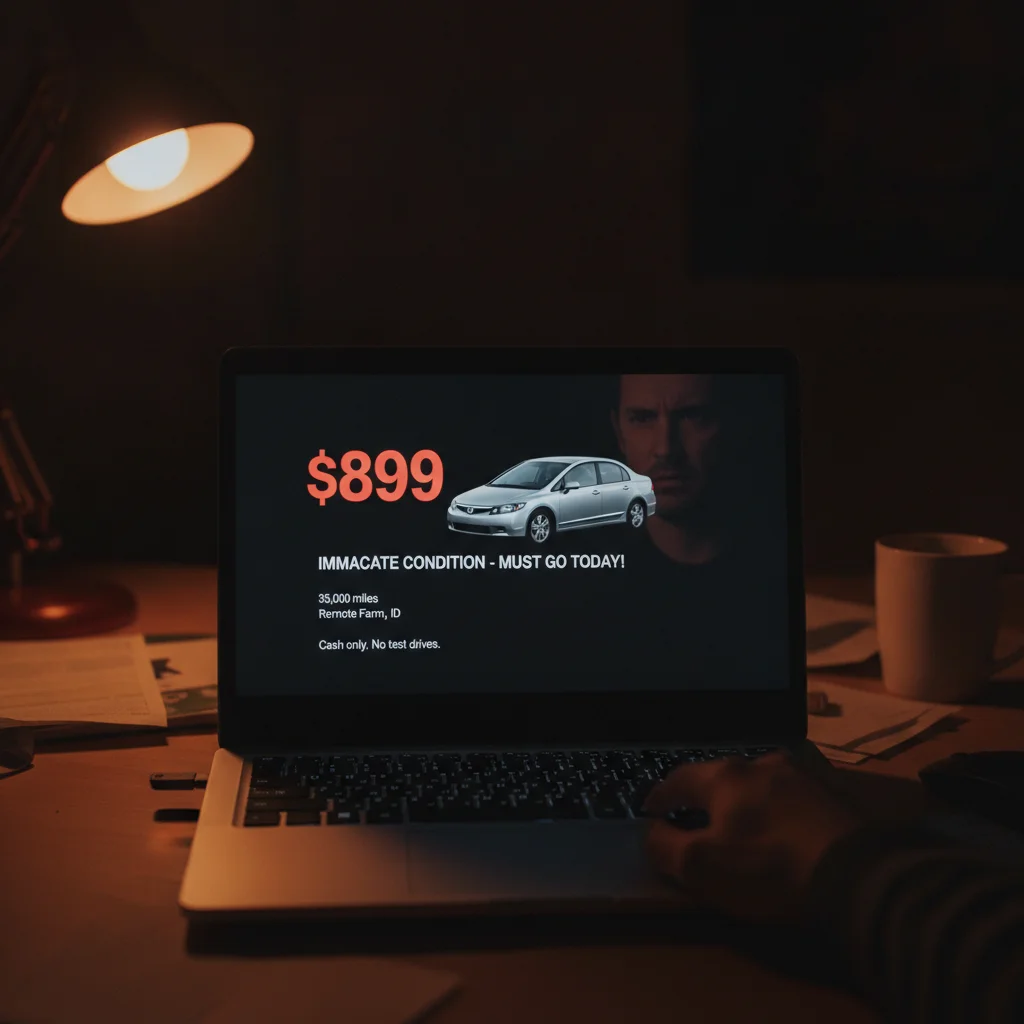
The listings that get ignored share a different trait: they're vague. "Clean car, runs great, must see" is the private-sale equivalent of a job posting that says "competitive salary, great culture." It signals nothing, so buyers assume the worst and keep scrolling.
Vagueness also attracts the wrong audience. Low-information listings draw bargain hunters and scammers, not qualified buyers who are ready to pay a fair price and close quickly. If you want responses from people who show up with cash and actually buy the car, you need to give them enough to get excited — and enough to self-qualify before they contact you.
It's also worth understanding what serious buyers are trained to look for. Knowing what a sharp buyer notices — both green flags and red flags — sharpens your listing copy considerably. See how buyers evaluate listings from the other side in our guide on what buyers check before making an offer.
What You Need to Gather Before You Write a Single Word
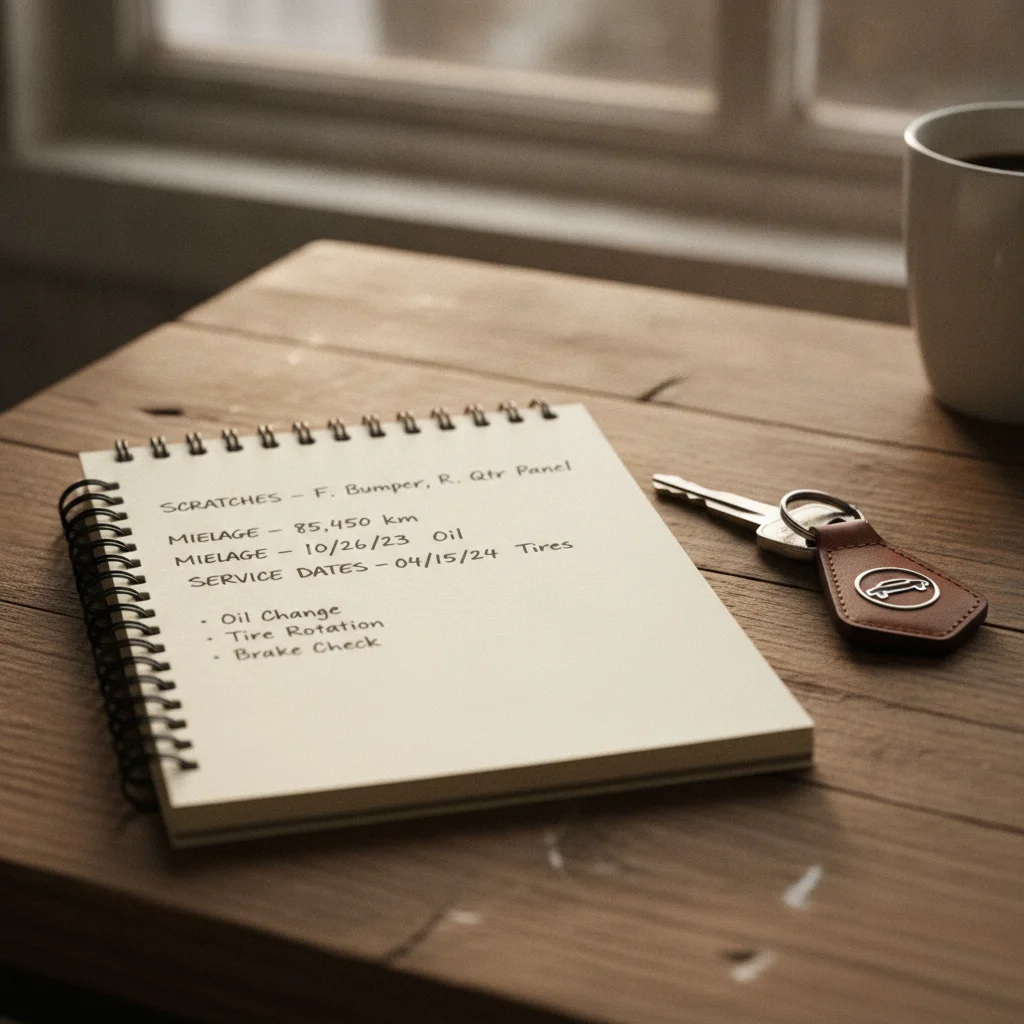
Good listing copy is pulled from facts, not improvised. Before you open a text editor, collect the following from your glove box, the driver's door jamb sticker, and your records:
What you will need
If you're missing maintenance records, that's still worth noting — but be honest about the gap. "No service records available, but oil changes were done regularly at " is far better than silence. And if your car has known issues — a rattle, a warning light, a cosmetic scratch — write them down now. You'll use them in your disclosure section.
Don't skip the VIN. Experienced buyers immediately distrust listings without one. It also allows serious buyers to run a history report themselves, which actually increases confidence rather than raising suspicion.
How to Write the Listing Step by Step
Follow these steps in order. Each one builds on the last. Rushing through the early steps produces copy that sounds generic — and generic listings get ignored.
Write a headline that answers the buyer's first question
Most platforms give you a title field. Treat it like search metadata, not a marketing headline. Include: year, make, model, trim level, mileage (rounded), and price. That's it.
Example: 2018 Honda Accord EX-L — 67K Miles — $19,400
Avoid: Beautiful Honda!! Loaded!! Great Deal!!
The first version tells a buyer immediately whether the car fits their budget and mileage threshold. The second one tells them nothing and looks amateurish.
Open with the three facts buyers care about most
Your opening two to three sentences should lock in: price, condition summary, and the reason you're selling. These are the three things every serious buyer wants to know before they read further.
Example: Asking $19,400 — firm for now but open to reasonable offers. Car is in clean, well-maintained condition with no accident history. Selling because I bought a truck and this just sits in the driveway.
That opener does a lot of work. It sets price expectations, signals honesty about condition, and answers the "why are you selling?" question before the buyer has to ask.
State mileage, drivetrain, and powertrain clearly
Don't make buyers hunt for basics. In the next paragraph, confirm: exact odometer reading, engine size or type, transmission, and drivetrain (FWD, AWD, 4WD, RWD).
Example: 67,412 miles on a 1.5L turbocharged four-cylinder paired with a CVT. Front-wheel drive.
If your car has a towing package, note the rated capacity. If it's a hybrid or plug-in, note the EV range. These details matter to the buyers who need them, and they'll pass right over your listing if you don't include them.
List the features that actually add value
Not every checkbox feature deserves equal billing. Lead with the ones buyers pay a premium for, then group the rest in a simple list.
High-value callouts (put these in prose): leather or heated seats, sunroof/moonroof, navigation, tow package, blind-spot monitoring, adaptive cruise, ventilated seats, third-row seating.
Standard features (list format is fine): Bluetooth, backup camera, Apple CarPlay, keyless entry, push-button start, dual-zone climate.
Example structure:
The EX-L trim adds leather heated front seats, a power moonroof, and Honda Sensing safety suite — which includes lane-keep assist and adaptive cruise. Also equipped with: Apple CarPlay/Android Auto, wireless charging pad, 8-inch touchscreen, power liftgate, and LED headlights.
Describe the condition honestly — inside and out
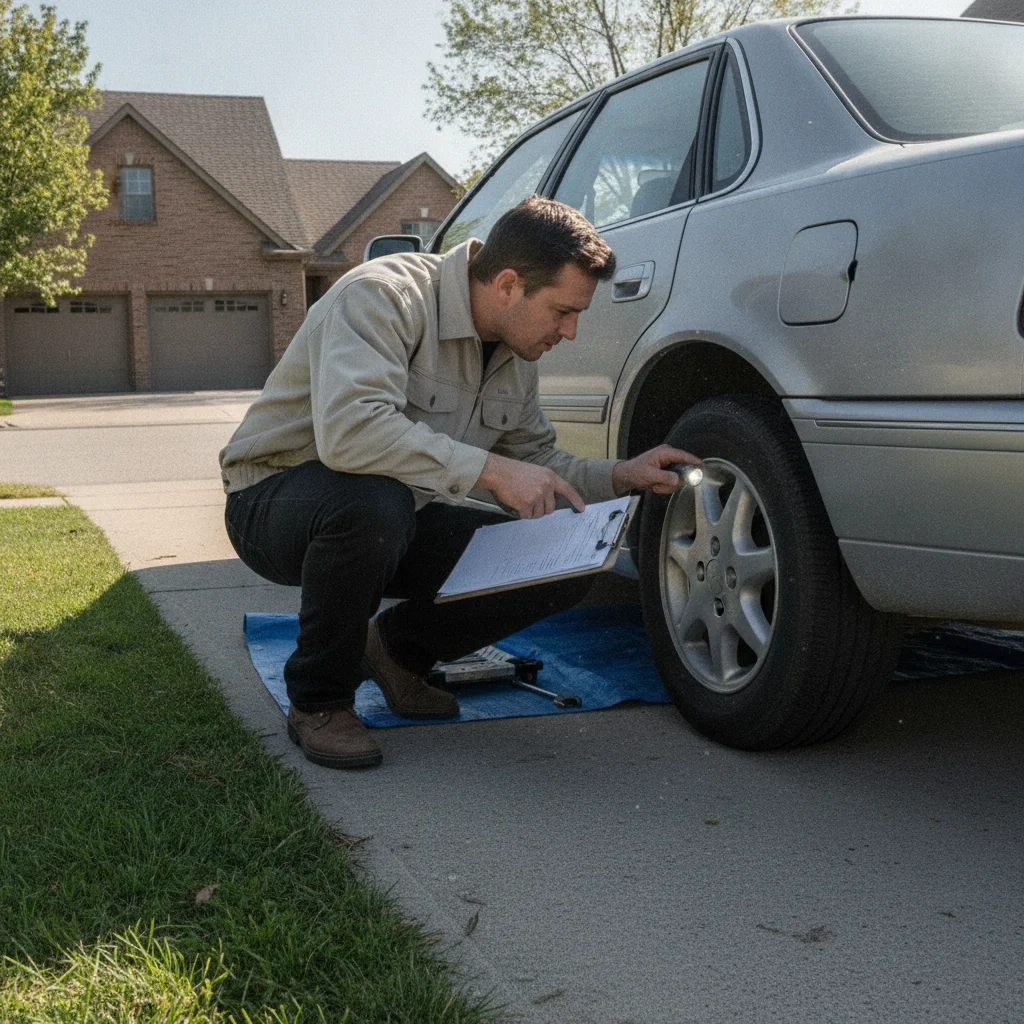
This is where most listings fall apart. "Good condition" means nothing. Give buyers a real picture:
- Exterior: Note paint condition, any scratches or dents, and their location. "Minor door ding on rear passenger door, about the size of a golf ball" is specific and honest.
- Interior: Note seat condition, any stains, worn areas, or damage. "Driver's seat shows normal wear, no tears or stains. Rear seats are clean."
- Mechanical: State whether the car runs and drives without issues. Note any warning lights, odd noises, or deferred maintenance you're aware of.
If the car is genuinely clean, say so with specifics: "No dents, no rust, paint is original and glossy, interior is smoke-free and pet-free." Those details matter to the buyers they're intended for.
Include maintenance history and the VIN
Even a partial maintenance history is better than nothing. Mention:
- When the last oil change was done
- Whether the timing belt or chain has been replaced (if applicable)
- Any major services completed: brakes, tires, transmission service
- Where service was done — dealer vs. independent shop both carry weight
Then include your VIN or indicate it's available on request. The VIN allows buyers to pull a Carfax or AutoCheck report before they ever contact you. That's a good thing — buyers who've already run the report and liked what they saw come to the showing ready to buy, not ready to negotiate based on unknown history.
Example: VIN: 1HGCV1F34JA000000. Full service records available. Oil changes every 5,000–6,000 miles, new rear brakes at 58K, tires replaced at 62K miles (Michelin Primacy).
State your price and briefly justify it
You already stated your price in the headline and opening paragraph. Here, give buyers a one-line anchor: why your price is what it is.
Example: Priced at $19,400 based on current Kelley Blue Book private-party value for this mileage and condition. I'm not in a rush, so I'm holding close to market.
Or: Priced slightly below KBB to sell quickly — I need the garage space by end of month.
This accomplishes two things: it signals you've done your homework (deterring low-ball offers), and it sets a realistic tone for negotiation. A buyer who knows you've checked the numbers is less likely to open with an insulting offer.
If you're unsure how to price it, use at least two of the following: Kelley Blue Book, Edmunds Private Party Value, and comparable active listings on the platform you're using. Comparing active listings in your area gives you the most current real-market benchmark.
Close with clear contact and showing instructions
End your listing with simple logistics. Buyers shouldn't have to guess how to reach you or what happens next.
Include:
- Preferred contact method (text, call, or both)
- General availability for showings
- Location (city and neighborhood — not your full address)
- Any conditions: "Serious buyers only," "No test drives without a deposit," "Cash or bank transfer only"
Example: Located in Austin, TX (78704). Text preferred — I respond quickly and can arrange showings on weekday evenings or weekends. Asking for a small refundable deposit to hold the car for a scheduled showing. Cash or Zelle at time of sale.
Keep this section short. Three to five sentences is enough. A long list of rules at the bottom of a listing feels defensive and puts buyers off.
Once you've written a first draft, read it out loud. If any sentence sounds like it came from a template, rewrite it in your own words. Buyers can feel the difference between a listing written by someone who knows the car and one that was filled in like a form.
If you've done everything here and responses are still slow after a week or two, the problem is usually price, photos, or both. Our guide on why your car isn't selling walks through the most common fixable issues.
Tools and Resources That Make This Easier
You don't need special software to write a good listing, but a few free resources save time and strengthen your copy.
Kelley Blue Book (kbb.com)
Calculates private-party value based on year, make, model, trim, mileage, condition, and ZIP code.
Edmunds Private Party Value (edmunds.com)
Provides an independent pricing benchmark to cross-check against KBB and confirm your asking price is defensible.
Carfax or AutoCheck
Pull your own vehicle history report before listing so you know exactly what buyers will see and can address any surprises proactively.
Facebook Marketplace or Craigslist (search function)
Search your own car's year, make, model, and trim in your ZIP code to see what comparable vehicles are actively asking — the most current real-market pricing signal.
Google Docs or Notes App
Draft your listing copy in a plain text environment before pasting into the platform — avoids formatting issues and lets you edit freely.
Spell-checker or Grammarly
Catches typos and grammar errors that erode listing credibility — buyers notice sloppy writing.
One note on pricing tools: use at least two sources and average them. Prices vary across platforms, and anchoring to a single number — especially if it's an outlier — can lead you to price yourself out of the market or leave money behind.
If you'd rather skip the writing entirely and get an instant offer instead, it's worth knowing what you're trading off. Instant offer platforms like Carvana and CarMax typically offer convenience at the cost of 10–20% below private-party value. That tradeoff makes sense for some sellers and not others.
Common Mistakes That Kill Listing Response Rates
Even sellers who follow most of the steps above often undermine themselves with a handful of avoidable errors. Here are the ones I see most frequently:
- Burying the price. If your asking price isn't in the first two lines, many buyers won't look for it. Put it in the headline or the opening sentence.
- Using dealership language. Phrases like "priced to sell" and "won't last long" are so overused they've become invisible. They also feel dishonest in a private-sale context. Drop them.
- Overselling condition. Calling a car with 140,000 miles "like new" is an instant credibility killer. Buyers will see the car in person. Overclaiming condition early means they arrive skeptical of everything else you said.
- No mention of why you're selling. Buyers always wonder. "Upgrading to a truck" or "moved to a city and don't need it" takes one line and dramatically reduces suspicion.
- Listing every option without prioritizing. A wall of features is hard to read. Lead with the two or three options that actually add value — heated seats, sunroof, tow package — and group the rest.
- Asking buyers to "text only" without explanation. Fine to have a preference, but state it plainly: "Text preferred — I work days and can respond quickly." It humanizes the listing.
For a buyer's-eye view of exactly what makes a listing look sketchy, see our companion article: red flags in used car listings. Reading it as a seller is one of the fastest ways to audit your own copy.
Never Omit Known Mechanical Issues
Selling a car with a known defect you didn't disclose — even in a private sale — can expose you to legal action in many states under fraud or misrepresentation statutes. If you know the transmission slips, the AC doesn't work, or the check engine light is on, write it in the listing. Adjust your price accordingly and let the buyer decide. Full disclosure protects you far more than it hurts the sale.
Don't Post Your Full Address in a Public Listing
Sharing your home address publicly on Craigslist or Facebook Marketplace creates unnecessary security risk. List your city and neighborhood. Provide your exact address only after you've had a text or phone exchange with a verified buyer and confirmed a specific appointment time.
Final Checks Before You Post
Before you hit publish, run through this quick checklist:
- Does the headline include year, make, model, trim, and price?
- Is mileage stated clearly and accurately?
- Have you listed all known defects, even minor ones?
- Is the VIN included (or noted as available on request)?
- Have you mentioned maintenance history or explained any gaps?
- Is your asking price anchored to at least one market reference?
- Have you explained — in one sentence — why you're selling?
- Have you read the listing out loud to catch awkward phrasing?
On photos: this guide focuses on copy, but photos are equally important. A strong description with weak images will still underperform. If you haven't nailed your photography yet, our guide on car photography tips that make your listing stand out covers angles, lighting, and composition in detail.
Finally, consider whether your car needs any prep work before you post. Minor cosmetic fixes — a detail job, a cracked trim piece, a burned-out light — can add hundreds to your final sale price. The Detailing & Repairs hub has a practical breakdown of which fixes pay off and which ones don't.
Refresh Your Listing Every 5–7 Days
Most platforms sort by recency, so listings buried under newer posts get fewer views over time. If you haven't sold within a week, delete and repost (or use the platform's 'renew' feature) to reset your position. A small price reduction — even $200 — also triggers algorithm boosts on some platforms.
Let the Buyer Do the Math on Extras
If you've added aftermarket wheels, a new stereo, or a bed liner, mention the item and what you paid — but don't inflate your asking price to recover the full cost. Buyers don't pay retail for previous owner upgrades. Mentioning them as value-adds works better than building them into a hard number.
Save Your Listing Copy for Future Reference
Keep a copy of your final listing text somewhere outside the platform. If the listing gets flagged, taken down, or expires, you'll want to repost quickly without starting over. A simple document in your email drafts or notes app is enough.
Post your listing and check back within 24 hours. If you're not getting any views, the platform's algorithm may need a small tweak — repost with a slightly revised headline, or adjust your price by a small amount to trigger a "recently updated" flag. If you're getting views but no messages, the problem is in the copy or the photos. That's fixable.

All claims are backed by peer-reviewed research. Sources on request.