Key Takeaways
Why Private Sales Are Negotiable — and How to Stay in Control
Every private car sale involves negotiation. Buyers expect it. If you list at your absolute floor, the buyer will still try to go lower — and you'll have nowhere to go without losing money. The sellers who come out ahead aren't the ones who get lucky. They're the ones who treat the transaction like a business deal: prepared, unemotional, and clear about what they'll accept.
The biggest mistake private sellers make is treating negotiation as something that happens to them. In reality, you control more variables than you think: your asking price, what information you share, how you respond to lowball offers, and whether you create any sense of competition among buyers. Understanding these levers — and using them deliberately — is the difference between leaving $500 on the table and walking away with the price you wanted.
This guide is written for sellers, not buyers. For the buyer's perspective on these same dynamics, used car negotiating tactics that actually hold up covers the other side of the table in detail.
Set Your Numbers Before Anyone Calls
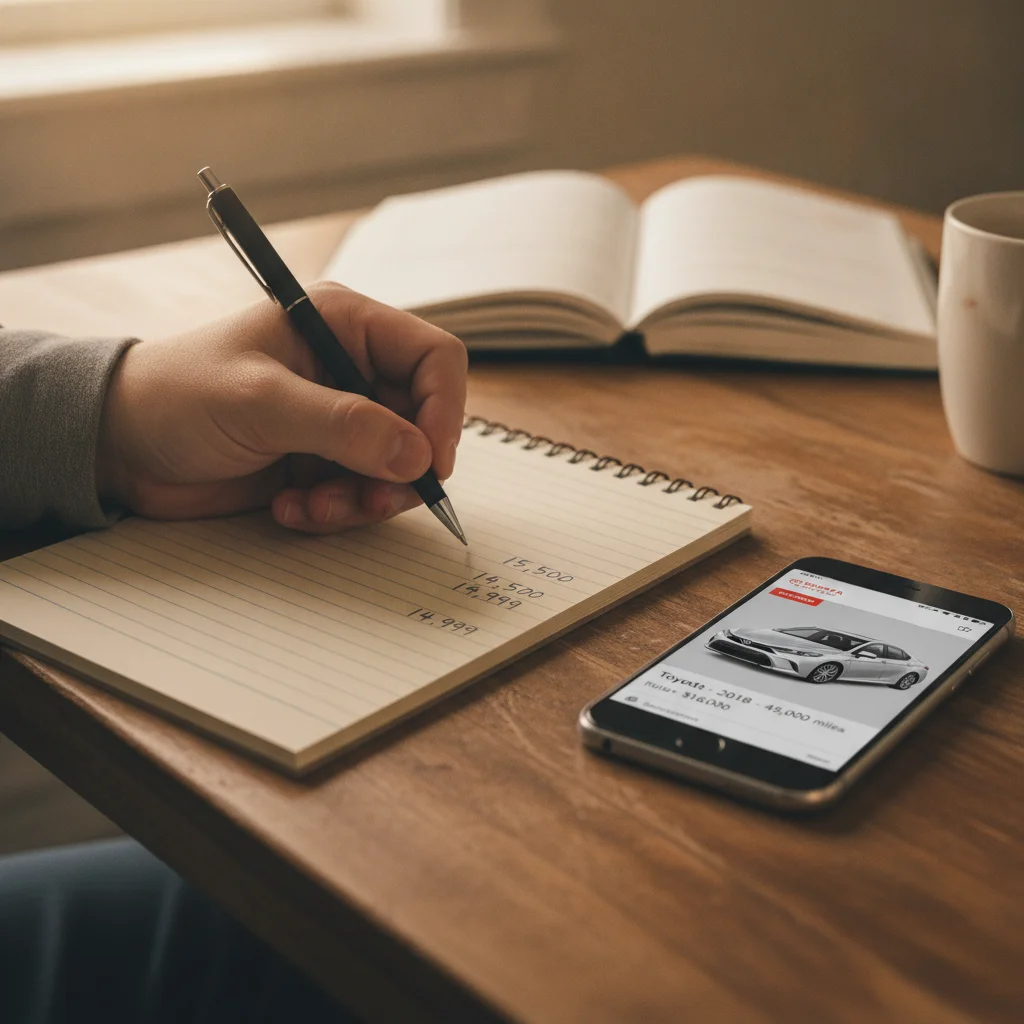
Before you write a single word of your listing, you need three numbers in your head:
- Your target price — what you actually want to walk away with.
- Your asking price — typically 8–12% above your target, depending on the vehicle's desirability and local market conditions.
- Your walk-away price — the absolute floor below which you won't sell. Write it down. Do not share it with anyone.
The gap between your asking price and your target is your negotiating room. It's not deception — it's how every market transaction works. Buyers know this. The goal is to set an asking price that looks reasonable enough to attract inquiries but leaves real room to move without hitting your floor.
To find your target price, check actual sold listings on Craigslist, Facebook Marketplace, and AutoTrader for comparable vehicles in your region — same trim, mileage within 10,000 miles, similar condition. Retail book values (Kelley Blue Book, Edmunds) are useful benchmarks, but private party comps are what the market will actually bear. If your car has low miles, recent service records, or desirable options, price toward the top of the comparable range. If it has high miles, cosmetic issues, or known mechanical items, price in the middle.
~$2,000
Average premium of private sale over trade-in value
According to Edmunds data, private party sale prices typically run $1,500–$2,500 more than dealer trade-in offers for the same vehicle.
8–12%
Recommended asking price buffer above target
Industry practitioners recommend pricing 8–12% above your floor to create room for negotiation without deterring serious buyers.
3–4 weeks
Median days to sell a correctly priced private listing
Most well-priced private party vehicles in average markets attract a serious offer within 3–4 weeks, per marketplace seller data from Facebook and Craigslist.
Understanding how market conditions affect your position is also worth a quick read. Market inventory and demand shifts your leverage as a seller — a tight used car market is your friend; a flooded one is not.
Proven Practices for Holding Your Ground and Countering Effectively
The following practices are drawn from real private party transactions. Each one addresses a specific moment in the negotiation where sellers typically lose ground unnecessarily.
Price your listing 8–12% above your true target to create genuine negotiating room.
Buyers always negotiate in private sales. If your asking price is your floor, you'll end up selling below it or getting stuck. Building in real margin lets you make concessions that feel meaningful to the buyer while still landing where you need to be.
Disclose known issues upfront in your listing rather than waiting for buyers to find them.
Buyers who discover problems during a test drive or inspection will use them as negotiating ammunition, often inflating their value. Disclosing issues proactively signals honesty, attracts buyers who have already priced the problem in, and removes that leverage from the buyer's hands.
Never reveal your walk-away price or your timeline pressure to the buyer.
Any information you share about how urgently you need to sell or how low you'll go becomes a ceiling on your price, not a floor. Buyers will negotiate to that number the moment they sense it. Keep your constraints private.
Respond to lowball offers calmly and without rejection, then stop moving until they do.
Emotional reactions to low offers make you look desperate or defensive, and often kick off a back-and-forth where you end up giving more ground than you intended. A neutral, non-committal response keeps you in control and filters out buyers who aren't serious.
Require a refundable deposit of $200–$500 to hold the car for any buyer who asks for more than 24 hours.
Buyers who aren't serious won't pay a deposit. Buyers who are serious will. Without a deposit, you risk turning away other buyers while someone strings you along with vague interest. A small deposit creates real commitment and filters out time-wasters.
Make only one meaningful price concession, not a series of small drops.
Every time you lower your price in response to pressure, you signal that more pressure will produce more drops. A single deliberate move from your ask to your near-target — with a clear explanation — is more effective than five small capitulations that leave the buyer still pushing.
Track Every Inquiry, Even Ones You Dismiss
Keep a simple log of every person who contacts you — name, date, offer if any, and why the conversation went cold. Buyers who ghost you sometimes return, and knowing your inquiry history tells you how much genuine demand exists. If you've had eight contacts and zero serious offers after two weeks, that's a pricing signal, not bad luck.
Know When a Low Offer Is Actually a Starting Point
A buyer who opens at $12,000 on your $16,500 listing hasn't necessarily insulted you — they may have opened low expecting to meet somewhere around $15,000. The tell is what they do after you hold firm. A buyer who moves up significantly on their second attempt is serious. One who restates the same lowball is not. Patience after a firm counter is one of the most underrated negotiating tools a seller has.
One area where sellers consistently get caught flat-footed: inspection findings. Buyers who bring a mechanic will use any discovery to push for a concession. Knowing how to respond to that pressure — and when to give ground — is covered in detail in our guide to negotiating after an inspection.
Reading the Buyer: Serious Offers vs. Fishing Expeditions
Not every inquiry deserves the same response. Calibrate your effort — and your flexibility — based on how serious the buyer actually is.
Signs of a serious buyer
- Asks specific questions about service history, ownership count, or accident history
- Proposes a specific time to see the car within the next 48 hours
- Mentions financing is already arranged or they're paying cash
- Makes an offer after a test drive, not before seeing the car
Signs of a tire-kicker or lowballer
- Opens with a number 20%+ below asking before even seeing the car
- Asks if you'll "hold it" without a deposit
- Is vague about timing or says they'll "circle back next week"
- Makes an offer contingent on selling their own car first
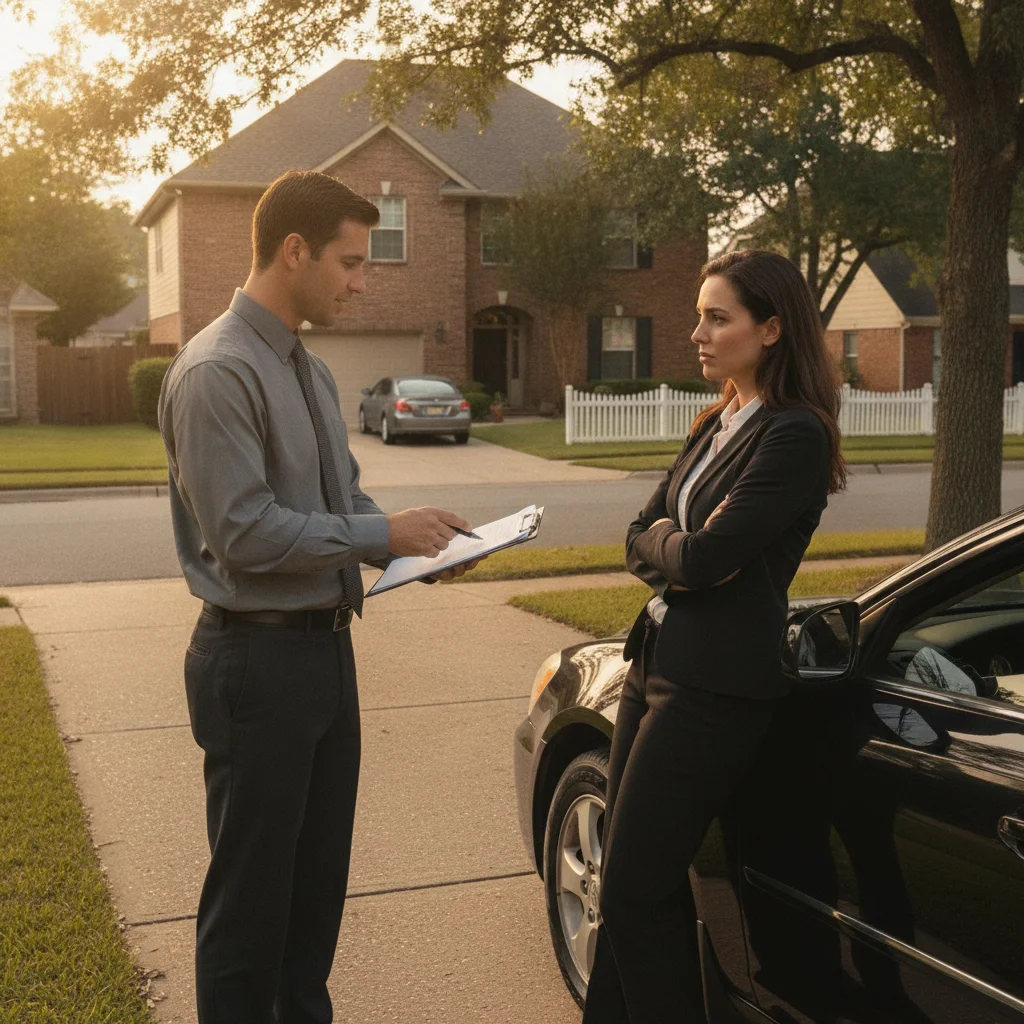
When a buyer opens with an insulting lowball — say, $12,000 on a car you've listed at $17,500 — don't get offended and don't reject them outright. A simple, calm response works: "I appreciate the interest, but I'm firm at $17,500. If your budget gets closer, let me know." You haven't negotiated, but you've left the door open. Buyers who come back at a higher number are often the most motivated.
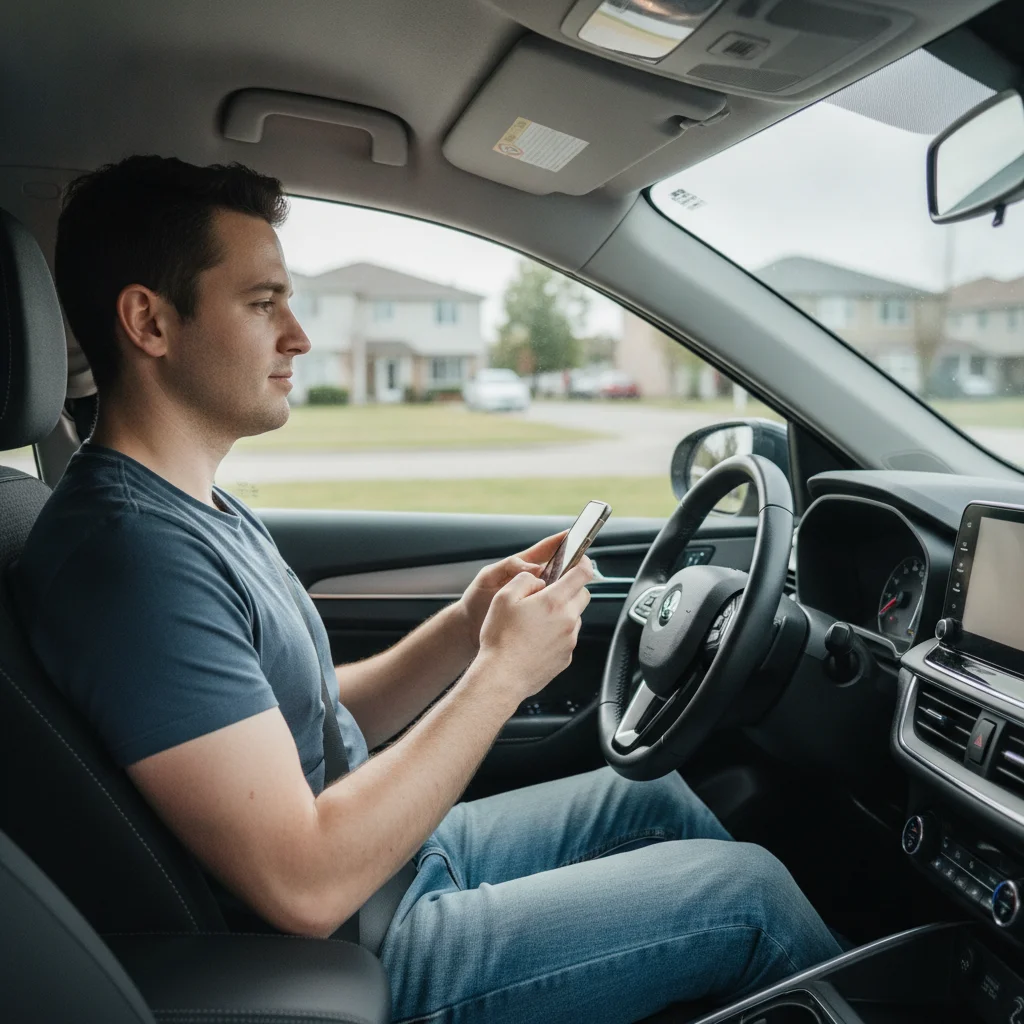
If you genuinely have multiple inquiries active at the same time, that's your strongest card. Managing multiple buyers at once without creating bad will is a skill — and knowing how to use that competition ethically is covered in that guide.
What Counts as a 'Cash' Offer
In private car sales, 'cash' typically means physical currency, a cashier's check, or a verified bank wire — not a personal check or digital payment apps for large amounts. For transactions over $5,000, a cashier's check is standard, but verify it in person at the issuing bank before you hand over the title. Never release a vehicle based on a check you haven't confirmed is real.
Private Sales Are 'As-Is' — State It Clearly
Unlike dealer sales in many states, private party transactions carry no implied warranty of merchantability. Your bill of sale should explicitly state the vehicle is sold 'as-is, where-is' with no representations or warranties. This protects you if the buyer discovers a problem after the sale. Consult your state's DMV website for any required disclosures specific to your jurisdiction.
Handling Common Negotiating Tactics Buyers Use on You
Buyers have playbooks too. Knowing what to expect means their moves won't catch you off guard.
The anchor lowball
A buyer opens with $10,500 on your $15,000 listing. This is designed to reset the midpoint of the negotiation downward. Counter at or very close to your asking price — not halfway between. Don't let their anchor become your starting point.
"I found the same car for less"
Sometimes true, often exaggerated. Ask them to send you the link. If it's a genuine comparable, acknowledge it and explain what differentiates your car (lower miles, better maintenance, cleaner title). If the link never comes, the comp probably didn't exist.
The inspection findings pile-on
After a pre-purchase inspection, a buyer lists $3,000 in "needed repairs" as justification for a major price cut. Some findings are legitimate; others are inflated. Counter by addressing each item specifically — which ones you already knew about (and priced in), which ones are maintenance items the buyer would need to do on any used car, and which ones represent a genuine negotiating point. A single fair concession is more credible than arguing every finding.
The fake cash urgency
"I have cash right now and can close today" is a classic tactic to extract a discount in exchange for certainty. Cash is genuinely valuable — it eliminates the risk of a financing fallthrough. A 2–3% discount for a real cash-in-hand, same-day transaction is reasonable. More than that, and you're just being pressured.
The slow walk
A buyer goes quiet after an initial inquiry, then resurfaces a week later at a lower price, hoping you've gotten anxious. Don't drop your price for time alone. If your car is priced correctly, the market will produce another buyer.
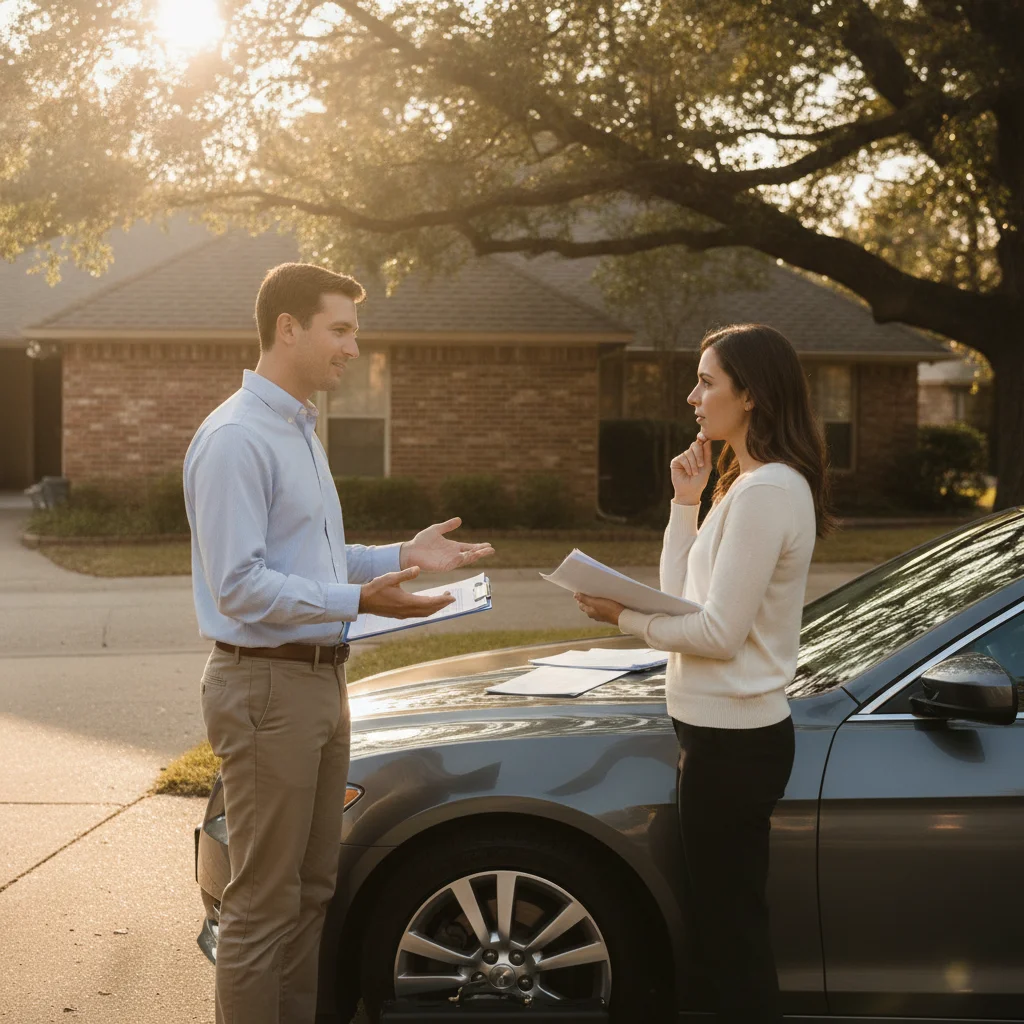
For context on how these dynamics differ in a dealership setting, dealership negotiation vs. online car buying shows why private party sellers actually hold more cards than they realize compared to dealers who negotiate every day.
“In negotiation, the person who needs the deal less has all the power. Price your car correctly, have other options, and never let a buyer feel like you're cornered — because the moment they do, your margin disappears.”
— Chris Voss, Former FBI hostage negotiator and author of 'Never Split the Difference'
Structuring the Counteroffer the Right Way
How you counter matters as much as what you counter at. A few principles:
Never split the difference automatically
If you ask $16,000 and a buyer offers $14,000, splitting at $15,000 isn't negotiation — it's a formula. If $15,500 is your target, counter at $15,800. You've moved, you've shown good faith, but you've left room for one more step.
Give reasons, not apologies
When you hold your price or counter high, explain why briefly and factually. "I've had three inquiries this week and I'm comfortable at this price based on the recent service records and clean Carfax." This isn't bragging — it's anchoring your number to something concrete.
Use written communication when possible
Text or email creates a record and removes the heat-of-the-moment pressure that phone and in-person conversations create. You have time to think before you respond, and you're less likely to cave to social pressure from an aggressive buyer.
State your final offer clearly — and mean it
When you reach your floor, say so once, clearly: "$14,800 is where I need to be. I won't go lower than that." Then stop. If they walk, let them. A buyer who returns after walking almost always comes back at your number.
Knowing When to Give Ground — and When to Walk
Some concessions are worth making. Others just reward the buyer for being difficult.
Reasonable reasons to come down from your ask:
- The buyer produces a genuine comparable sale at a lower price
- A pre-purchase inspection uncovers a real mechanical issue you didn't know about
- The buyer is paying cash and can close within 24 hours
- Your car has been listed for 3+ weeks with no serious offers — that's market feedback
Not good reasons to drop your price:
- The buyer is pushy or impatient
- You feel guilty asking for what the car is worth
- The buyer says they "really need" a deal
- You've had one lowball offer and panicked
If your car sits longer than 3–4 weeks with consistent inquiry but no offers near your ask, that's a signal your price is too high for the market — not that you need to cave to a single aggressive buyer. Revisit your comps and adjust accordingly, but do it proactively based on data, not in the moment based on pressure.
It's also worth understanding what buyers are checking before they even make an offer. What serious buyers check before making an offer explains how buyers evaluate your listing — and how anticipating their concerns puts you in a stronger negotiating position from the start.
Track Every Inquiry, Even Ones You Dismiss
Keep a simple log of every person who contacts you — name, date, offer if any, and why the conversation went cold. Buyers who ghost you sometimes return, and knowing your inquiry history tells you how much genuine demand exists. If you've had eight contacts and zero serious offers after two weeks, that's a pricing signal, not bad luck.
Know When a Low Offer Is Actually a Starting Point
A buyer who opens at $12,000 on your $16,500 listing hasn't necessarily insulted you — they may have opened low expecting to meet somewhere around $15,000. The tell is what they do after you hold firm. A buyer who moves up significantly on their second attempt is serious. One who restates the same lowball is not. Patience after a firm counter is one of the most underrated negotiating tools a seller has.
Closing the Deal: Getting to Yes Without Second-Guessing Yourself
Once a buyer commits at a price you've agreed on, move quickly to close. Deals that drag on fall apart — buyers get cold feet, find another car, or use the delay to renegotiate.
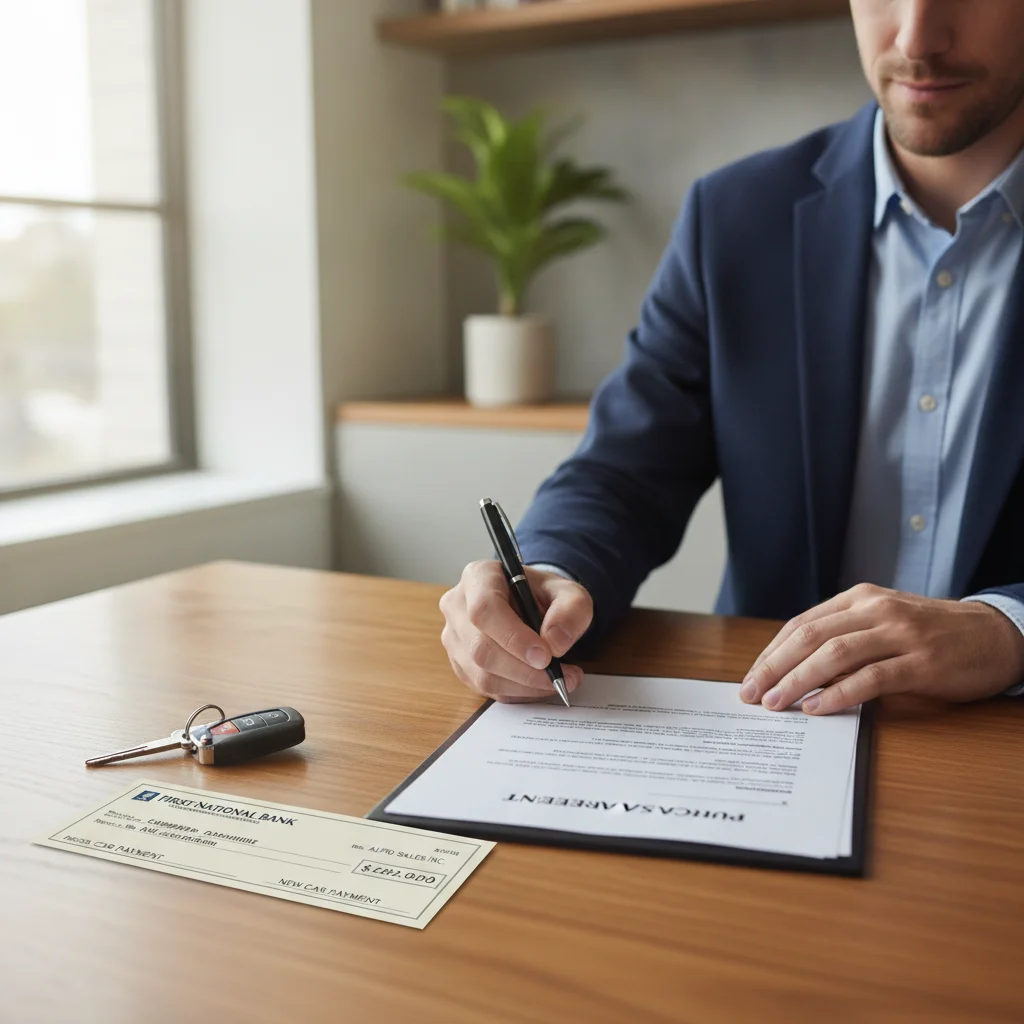
Agree on payment method before they show up with a cashier's check from a bank you've never heard of. For private sales, the safest options are cash (for amounts under $5,000), a cashier's check from a major bank (verify it in person at the bank before handing over the title), or a wire transfer confirmed before signing anything.
Have the title clean and ready. A car with a lien still on it requires you to pay off the loan and get a clear title before or at the sale — not something to figure out on the day of closing. A notarized bill of sale protects both parties and should document the agreed price, VIN, odometer reading, and "as-is" condition.
Once you sign the title and hand over the keys, you're done. Don't second-guess the price you agreed to. You came in prepared, you held your position, and you closed at a number you chose. That's how the deal was supposed to go.
What Counts as a 'Cash' Offer
In private car sales, 'cash' typically means physical currency, a cashier's check, or a verified bank wire — not a personal check or digital payment apps for large amounts. For transactions over $5,000, a cashier's check is standard, but verify it in person at the issuing bank before you hand over the title. Never release a vehicle based on a check you haven't confirmed is real.
Private Sales Are 'As-Is' — State It Clearly
Unlike dealer sales in many states, private party transactions carry no implied warranty of merchantability. Your bill of sale should explicitly state the vehicle is sold 'as-is, where-is' with no representations or warranties. This protects you if the buyer discovers a problem after the sale. Consult your state's DMV website for any required disclosures specific to your jurisdiction.

All claims are backed by peer-reviewed research. Sources on request.