Key Takeaways
Run an instant offer from CarMax or Carvana before you list privately — that number is your guaranteed floor. If a private buyer doesn't beat it, you know exactly where to send them.
Having a real, documented offer in hand gives you confidence during negotiation and ensures you never accidentally accept less than you could get by just driving to a lot.
List on a Thursday evening so your ad is fresh when the highest-volume browsing happens Friday night through Sunday afternoon.
Marketplace data consistently shows weekend browser activity is 2–3x higher than weekday traffic; a listing that's 5 days old by Friday gets deprioritized in feeds.
When a buyer makes a lowball offer, don't counter immediately — pause and say 'let me think about that.' Silence creates pressure that works in your favor.
Experienced negotiators know that the first person to fill silence often concedes. A brief pause signals that you're not desperate to close.
Verify a cashier's check by calling the bank's main customer service number — not any number printed on the check — before you release the vehicle.
Cashier's check fraud is one of the most common private sale scams; counterfeit checks can look completely authentic but won't clear for days, by which time the buyer is gone.
Why Sell Privately? The Financial Case
When you sell a car privately, you cut out the middleman — and the middleman's margin. Dealers survive by buying low and selling high. When they appraise your trade-in, they factor in reconditioning costs, their own profit target, and wholesale auction prices. That's how a car worth $14,000 on the open market becomes a $10,500 trade-in offer.
$1,000–$3,000
Extra proceeds vs. dealer trade-in
According to Kelley Blue Book data, private party values consistently exceed dealer trade-in offers by this range on most mainstream vehicles.
30+ days
Typical private sale timeline
Industry data suggests the average private party transaction takes 2–6 weeks from listing to completed sale, depending on vehicle type and local demand.
20–30
Recommended listing photos
Listings with comprehensive photo galleries — including damage shots — receive significantly more serious inquiries than sparse listings, per marketplace platform data.
$100–$200
Cost of a professional detail
A professional interior and exterior detail typically returns multiples of its cost in buyer perception and willingness to pay closer to asking price.
5–10%
Negotiating buffer to build into ask price
Experienced private sellers consistently recommend listing 5–10% above your true walk-away number to preserve room for expected buyer negotiation.
Private party sales return that spread to you. The gap varies by vehicle age, condition, and local demand, but $1,000–$3,000 more than a dealer trade-in is a realistic expectation for most common vehicles. On higher-demand trucks and SUVs, the difference can exceed $5,000.
The tradeoff is time and effort. You'll write an ad, field calls, arrange test drives, and handle paperwork yourself. If your time is extremely limited, or you owe more than the car is worth, a private sale may be more work than it's worth. But if your vehicle is in decent shape and you can invest a few weekends, private sale is almost always the better financial outcome.
For a broader comparison of your options — including instant offer platforms that promise speed over price — see how online car-buying services compare on speed and payout.
Getting Your Price Right Before You List
Nothing kills a private sale faster than the wrong asking price. Too high and serious buyers scroll past. Too low and you signal desperation — buyers smell it and push even harder on price.
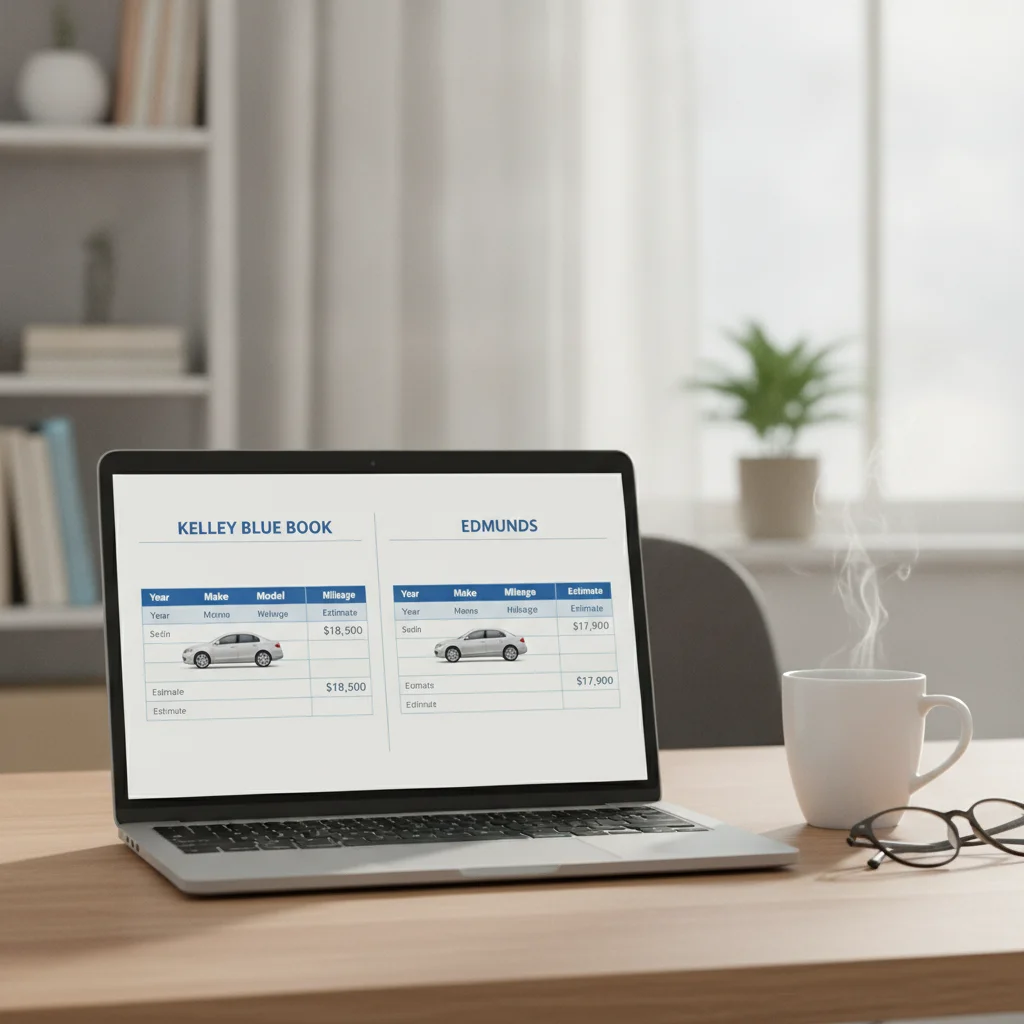
Use at least three valuation sources
Don't rely on a single number. Pull values from all three of these:
- Kelley Blue Book (KBB) Private Party Value — the most widely cited benchmark; buyers will reference it during negotiation
- Edmunds True Market Value — often slightly lower than KBB, useful for setting a realistic floor
- Local listings on Facebook Marketplace and Craigslist — search for identical make, model, year, trim, and mileage in your ZIP code; what comparable cars are actually asking tells you what the market will bear right now
Set your ask 5–10% above your walk-away number
Build in negotiating room. If you need $13,000 and won't go below it, list at $13,900 or $14,200. This leaves space for buyers to feel like they "won" something in negotiation without you actually giving much away.
Condition adjustments matter
Valuation tools use generic condition ratings. Be honest with yourself:
- Excellent: One-owner, no accidents, full dealer service history, essentially flawless. Most cars don't qualify.
- Good: Minor cosmetic wear, all mechanical systems functioning, complete maintenance records. This is the realistic rating for most well-kept cars.
- Fair: Visible wear, deferred maintenance, or a known mechanical issue. Price accordingly — buyers will find out.
Run an instant offer from CarMax or Carvana before you list privately — that number is your guaranteed floor. If a private buyer doesn't beat it, you know exactly where to send them.
Having a real, documented offer in hand gives you confidence during negotiation and ensures you never accidentally accept less than you could get by just driving to a lot.
List on a Thursday evening so your ad is fresh when the highest-volume browsing happens Friday night through Sunday afternoon.
Marketplace data consistently shows weekend browser activity is 2–3x higher than weekday traffic; a listing that's 5 days old by Friday gets deprioritized in feeds.
When a buyer makes a lowball offer, don't counter immediately — pause and say 'let me think about that.' Silence creates pressure that works in your favor.
Experienced negotiators know that the first person to fill silence often concedes. A brief pause signals that you're not desperate to close.
Verify a cashier's check by calling the bank's main customer service number — not any number printed on the check — before you release the vehicle.
Cashier's check fraud is one of the most common private sale scams; counterfeit checks can look completely authentic but won't clear for days, by which time the buyer is gone.
If your car has aftermarket upgrades — a lift kit, premium audio, custom wheels — don't assume you'll recoup that cost. Most buyers won't pay a dollar-for-dollar premium for mods they didn't choose. Budget-priced upgrades can actually hurt your sale price if buyers worry about how the work was done.
Prepping the Car: What Actually Moves the Needle
You don't need to spend $2,000 on reconditioning to sell a $12,000 car. You need to remove every easy excuse a buyer has to either walk away or negotiate you down.
Cleaning: do it properly or not at all
A half-hearted wash is worse than nothing — it shows effort while leaving obvious grime. Pay for a professional full detail if the car needs it. For most vehicles, a detail runs $100–$200 and returns multiples in buyer perception. At minimum:
- Full exterior wash, clay bar if needed, spray wax
- Interior vacuum including under seats, door jambs, and trunk
- Clean windows inside and out — streaks show in photos
- Dress trim and tires with a non-glossy protectant
- Remove all personal items, air fresheners, and clutter
Small repairs with big returns
Fix things that are cheap relative to what they signal. A burned-out headlight or tail light costs $15 and communicates neglect. Chipped windshields should be repaired (usually free through insurance). Oil change if you're within 1,000 miles — buyers check the dipstick.
Don't Invest in Big Repairs Before Listing
It's tempting to fix everything before selling, but major repairs — tires, brakes, transmission work — rarely return their cost in a higher sale price. Buyers can negotiate around known issues, but you can't recoup a $1,200 transmission service on a $7,000 car. Price the condition honestly instead.
Watch for Common Private Sale Scams
Overpayment scams (buyer sends a check for more than asking and requests a refund of the difference), out-of-state 'shipper' stories, and requests to move the conversation off-platform to email or WhatsApp are all red flags. Legitimate local buyers don't need elaborate workarounds. If something feels off, trust that instinct and move on to the next inquiry.
What not to fix
Don't replace tires, brakes, or a transmission on a car you're selling. The math almost never works out. Instead, disclose the condition and price accordingly. A buyer can negotiate knowing they'll spend $600 on tires — that's fine. What kills deals is discovering hidden issues during the pre-purchase inspection.
Pull your service records
A complete service history is a genuine selling advantage. Dig up receipts from dealers and shops, and pull your oil change history from a quick-lube chain's app if you used one. Buyers pay a premium for provenance. If you've been meticulous, show it.
Writing a Listing That Attracts Serious Buyers
Most private-party listings are terrible. They have three blurry photos, a price, and "runs good." Yours can stand out with very little additional effort.
Photos: volume and quality
Shoot 20–30 photos on a bright, overcast day (avoids harsh shadows). Cover every panel from all four corners, both sides straight-on, the interior from all four doors, the dashboard with the engine running, the engine bay, trunk, tires, and any existing damage. Damage photos are not optional — hiding flaws wastes everyone's time and erodes trust immediately.

Write a complete, honest description
Include: year, make, model, trim, mileage, transmission, drivetrain, color, accident history, one-owner status (if applicable), service history summary, recent work done, and a straightforward description of any known flaws. Buyers who read all of that and still contact you are genuinely interested.
Example opening that works: "2018 Honda Accord Sport, 67,400 miles, one owner, no accidents (clean Carfax), 5-speed automatic. Just had brakes done at Honda dealer at 65k. Minor scuff on rear bumper from parking — shown in photos. All service records available."
Where to list
- Facebook Marketplace — highest volume of local buyers for most vehicles; free
- Craigslist — still effective for trucks, project cars, and lower-price vehicles
- AutoTrader / Cars.com — paid listings, better for higher-value vehicles ($15,000+) where buyers expect a vetted platform
- CarGurus — algorithmic pricing display can work for or against you depending on where your price sits relative to market
Cross-Post to Multiple Platforms Simultaneously
There's no reason to list on only one platform. Post the same listing to Facebook Marketplace, Craigslist, and at least one paid platform at the same time. Just update all listings immediately once you have an accepted offer — leaving stale listings up wastes your time and annoys buyers who reach out after the car is sold.
Include Your Walk-Away Price in Your Own Notes
Write your target price and walk-away price on a sticky note before your first buyer call and keep it visible during negotiations. In the moment, it's easy to let a persistent buyer pressure you below your actual floor. Having the number physically in front of you keeps you anchored.
If you're new to the process, what to expect as a first-time private seller covers the full timeline so you know what's coming at each stage.
Screening Buyers and Managing Test Drives Safely
Most inquiries you receive will be low-quality: lowball offers, out-of-state "buyers" running wire fraud, and people who want your phone number for spam. A short phone call eliminates most of them.
Phone screening before you meet
Before agreeing to any in-person meeting, call or text back and ask: where are they located, have they seen the listing carefully, are they pre-approved for financing or paying cash? Anyone who refuses a 2-minute conversation or can't answer basic questions about the car isn't a serious buyer.
Never Accept a Personal Check or 'Pending' Transfer
Personal checks can bounce days after you've handed over the keys — and you'll have almost no legal recourse once the buyer is gone. Wire transfer screenshots can be fabricated. Only consider a transaction complete when cash is in your hand, a cashier's check has been verified at the issuing bank branch in person, or a wire transfer shows as fully settled in your actual bank account.
Sign the Title Correctly — Errors Can Void the Transfer
A title with a correction, erasure, or missing field can be rejected by the DMV and leave both parties in legal limbo. Fill out the title in a single pass with a pen. If you make a mistake, contact your state DMV for a corrected title before proceeding — don't try to white-out or cross out any field. Also file your release of liability the same day as the sale, not after the fact.
Test drive logistics
- Meet in public first. A bank parking lot or busy shopping center is ideal for the first meeting. Only bring them to your home once you've met in person and feel comfortable.
- Verify their driver's license before handing over keys. Photograph it. This is standard and any legitimate buyer will understand.
- Ride along during the test drive. Don't hand over keys to a stranger and watch them drive away.
- Set a route. Have a planned 10–15 minute loop that hits a highway on-ramp, some stop-and-go, and ideally a parking maneuver. You're giving them a complete picture of the car while keeping the drive efficient.
- Tell someone where you're going. Share your location with a trusted contact during any meeting with an unknown buyer.
Pre-purchase inspections
A serious buyer will often ask to take the car to a mechanic for a pre-purchase inspection (PPI). Say yes. A buyer who wants an inspection is a buyer who intends to buy. The cost is $100–$150 on their end and it typically accelerates the deal rather than killing it. If an inspection reveals something you didn't know about, you'll need to decide: fix it, adjust the price, or disclose and hold firm. A car with a known issue priced accordingly sells — a car with a hidden issue discovered post-sale is a legal problem.
Negotiating Without Leaving Money on the Table
Negotiation in private car sales is expected. Buyers almost always make an opening offer below asking. Your job is to hold value without killing the deal.
Know your numbers before the conversation
Decide on three figures before you list:
- Ask price: What you list publicly
- Target price: What you'd happily accept
- Walk-away price: The absolute floor — below this you'd rather relist
When a buyer low-balls you, you don't need to justify your price at length. A simple "I've priced it based on comparable listings in the area — I can come down to and that's where I'm comfortable" is sufficient.
“The best negotiators in private car sales are the ones who know their number and aren't afraid to walk away from a deal that doesn't meet it. Desperation is the most expensive thing you can bring to a negotiation.”
— Ron Montoya, Senior Consumer Advice Editor, Edmunds
Leverage works both ways
If you have other interested buyers (or can credibly imply you do), mention it. "I have another test drive scheduled this weekend" is factually true if you do and creates appropriate urgency. Don't fabricate it if it's not real — experienced buyers can tell.
Handling the inspection counteroffer
If a pre-purchase inspection surfaces a repair need, expect the buyer to request a price reduction equal to the repair estimate. You can counter: split the difference, provide a receipt showing the work was already considered in pricing, or decline and relist. Inspection-based reductions are legitimate — but make sure the quoted repair cost is from a real shop, not a number the buyer invented.
Run an instant offer from CarMax or Carvana before you list privately — that number is your guaranteed floor. If a private buyer doesn't beat it, you know exactly where to send them.
Having a real, documented offer in hand gives you confidence during negotiation and ensures you never accidentally accept less than you could get by just driving to a lot.
List on a Thursday evening so your ad is fresh when the highest-volume browsing happens Friday night through Sunday afternoon.
Marketplace data consistently shows weekend browser activity is 2–3x higher than weekday traffic; a listing that's 5 days old by Friday gets deprioritized in feeds.
When a buyer makes a lowball offer, don't counter immediately — pause and say 'let me think about that.' Silence creates pressure that works in your favor.
Experienced negotiators know that the first person to fill silence often concedes. A brief pause signals that you're not desperate to close.
Verify a cashier's check by calling the bank's main customer service number — not any number printed on the check — before you release the vehicle.
Cashier's check fraud is one of the most common private sale scams; counterfeit checks can look completely authentic but won't clear for days, by which time the buyer is gone.
Payment, Paperwork, and Handing Over the Keys
This is where private sales go wrong if you're not careful. Getting payment and paperwork right is non-negotiable.
Acceptable payment methods
- Cash — for amounts under $5,000, cash is fine. For larger amounts, it becomes a safety and verification issue. Count it in person.
- Cashier's check — acceptable only if you verify it at the issuing bank before signing anything. Cashier's check fraud is common. Drive to the branch together.
- Wire transfer — confirm the funds are in your account before handing over keys. Don't accept screenshots of a "pending" transfer.
Never Accept a Personal Check or 'Pending' Transfer
Personal checks can bounce days after you've handed over the keys — and you'll have almost no legal recourse once the buyer is gone. Wire transfer screenshots can be fabricated. Only consider a transaction complete when cash is in your hand, a cashier's check has been verified at the issuing bank branch in person, or a wire transfer shows as fully settled in your actual bank account.
Sign the Title Correctly — Errors Can Void the Transfer
A title with a correction, erasure, or missing field can be rejected by the DMV and leave both parties in legal limbo. Fill out the title in a single pass with a pen. If you make a mistake, contact your state DMV for a corrected title before proceeding — don't try to white-out or cross out any field. Also file your release of liability the same day as the sale, not after the fact.
Paperwork you must complete
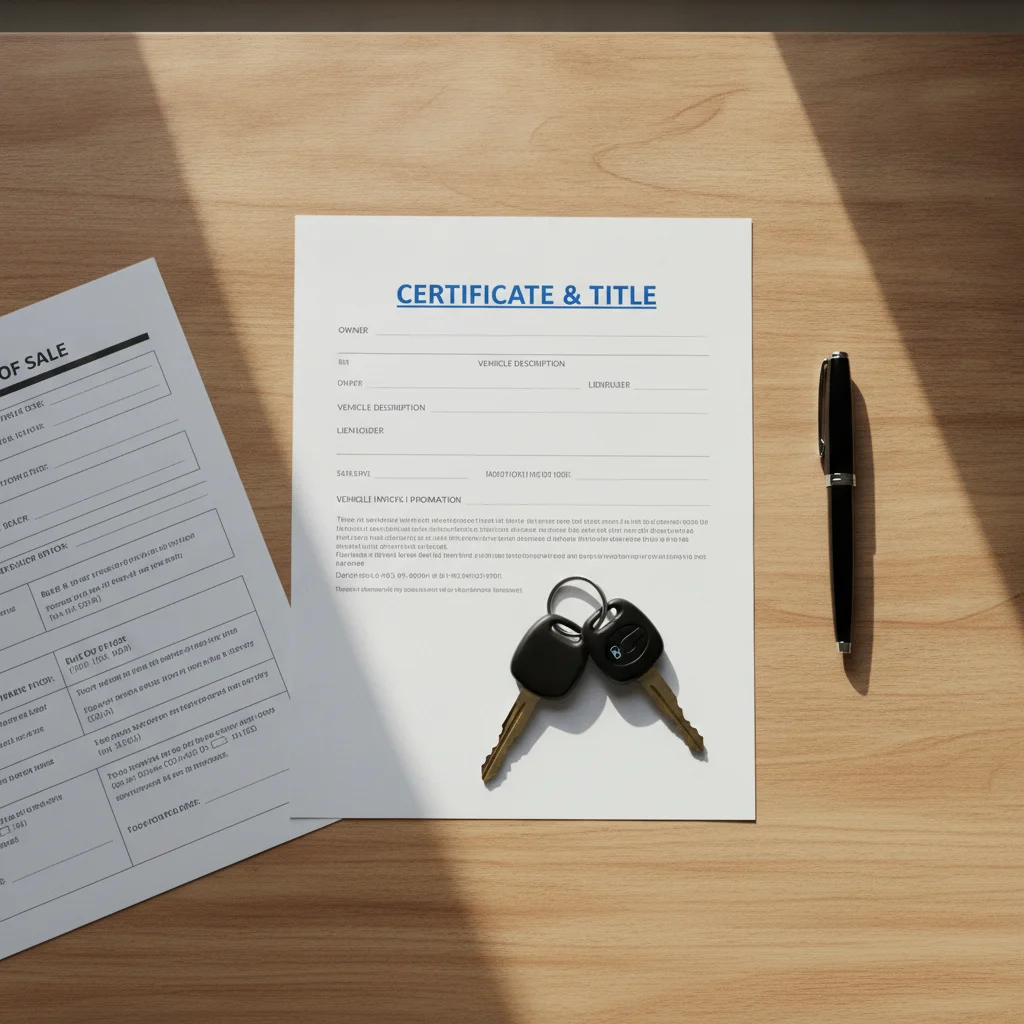
- Title transfer: Sign the back of the title over to the buyer in ink. Include the sale price (which will be used for sales tax calculation) and odometer reading. Don't sign a blank title.
- Bill of sale: Even if your state doesn't require one, write up a simple bill of sale with date, price, vehicle VIN, and both parties' names and signatures. It protects you.
- Odometer disclosure: Required federally for vehicles under 10 years old. Usually done on the title itself.
- Release of liability: File this with your DMV the day of sale. It formally records that the vehicle is no longer yours. In most states, this is a simple online form.
Requirements vary by state. For a complete state-by-state breakdown of every document and filing involved, see the full legal private car sale guide.
Cancel your insurance after — not before
Keep your insurance active until the sale is fully complete and the buyer has driven off. The moment the sale is done, call your insurer to remove the vehicle. You may be owed a prorated refund if you've prepaid.
For a step-by-step checklist of everything that needs to happen from handshake to key handover, closing the deal: the final steps of a private car transaction walks you through it in order.
Is Private Sale Right for Your Situation?
Private sale delivers the best financial outcome for most sellers — but it's not always the right call. Here's a quick framework:
Private sale is a strong choice when:
- Your vehicle is in good to excellent condition with documentation
- The market is competitive (your make and model has active demand locally)
- You can invest 2–4 weeks and several weekends in the process
- You own the car outright or the payoff balance is well below market value
Consider an instant offer platform instead when:
- You need to sell within days, not weeks
- The car has significant mechanical issues that would scare off private buyers
- You're upside-down on the loan and the transaction complexity is high
- You simply don't want to deal with strangers, negotiations, and DMV paperwork
Instant offer platforms sacrifice price for speed and convenience. For a detailed comparison of what you'd actually net through those services, see the complete guide to selling to an instant offer platform. If you prefer an entirely online process, selling your car online: a walkthrough for first-timers covers that path step by step.
If you've read this far and feel ready to proceed, you have what you need to run a private sale that's safe, organized, and priced to actually close. The sellers who get top dollar aren't lucky — they show up prepared.
Kelley Blue Book Private Party Value
Enter your vehicle's details to get a private party value estimate — the benchmark most buyers will cite during negotiation. Use it to anchor your pricing strategy.
Edmunds True Market Value
Edmunds TMV provides a slightly different take on market pricing and often skews closer to what vehicles are actually transacting for in local markets.
NHTSA Vehicle Recall Lookup
Check your VIN for any open safety recalls before listing. Disclosing open recalls proactively builds trust with buyers and protects you legally.
DMV.org State Title Transfer Guide
Step-by-step title transfer instructions organized by state — useful for confirming exactly what forms and fees apply to your specific transaction.
Private Party Bill of Sale Template
A simple, legally sound bill of sale template that covers all required fields: buyer and seller info, VIN, sale price, date, and signatures.
Facebook Marketplace — Vehicles
The highest-volume free listing platform for local private car sales in the U.S. Effective for most vehicle types priced under $30,000.

All claims are backed by peer-reviewed research. Sources on request.