Key Takeaways
Start here
What Instant Offer Platforms Actually Are
Next
Getting Your First Quote: Step by Step
Then
How to Evaluate the Offer You Receive
Almost done
What Happens After You Accept
Weigh the trade-off
What Convenience Actually Costs You
Make your call
Is an Instant Offer Platform Right for You?
What Instant Offer Platforms Actually Are
Instant offer platforms are companies that buy used cars directly from private owners — no listing, no tire-kickers, no weekend test drives. You enter your vehicle's details online, receive a price quote (often called an "instant offer"), and if you accept, the company handles pickup or drop-off and cuts you a check. The biggest names in this space include CarMax Instant Offer, Carvana, Vroom, Peddle, and dealer-network tools like Kelley Blue Book Instant Cash Offer.
What they are not is a neutral marketplace. These companies are dealers — or they work with dealer networks — and they profit by reselling your car for more than they paid. That business reality is built into every offer you receive, and understanding it helps you evaluate those offers clearly.
Instant offer
A price quote generated by an online car-buying platform based on the vehicle details you submit. It is algorithm-driven and subject to adjustment after a physical inspection.
VIN
Vehicle Identification Number — a unique 17-character code that identifies your specific car. Platforms use it to auto-fill year, make, model, and trim details.
Loan payoff amount
The exact dollar amount needed to pay off your auto loan in full on a given date. This differs from your remaining balance because it includes any accrued interest.
Private-party value
The price a private buyer would realistically pay for your car in the open market, as estimated by sources like Kelley Blue Book. This is typically higher than what a dealer or platform will offer.
Title transfer
The legal process of signing ownership of the vehicle from you to the buyer. A clean title with no lien makes this straightforward; an outstanding loan requires the lender to be paid off first.
OBD scan
A diagnostic check of your car's onboard computer system. Inspectors run this to identify any stored fault codes — including ones you may have cleared before the appointment.
The mechanics behind the curtain are worth understanding before you enter your VIN. For a deeper look at how the algorithms and funding work, see how instant offer platforms actually work. This guide focuses specifically on the seller experience: what to click, what to watch for, and where you have real leverage.
Getting Your First Quote: Step by Step
The quote process is faster than most sellers expect — typically 5 to 10 minutes per platform. Here is exactly what you will go through.
Step 1: Gather your vehicle information
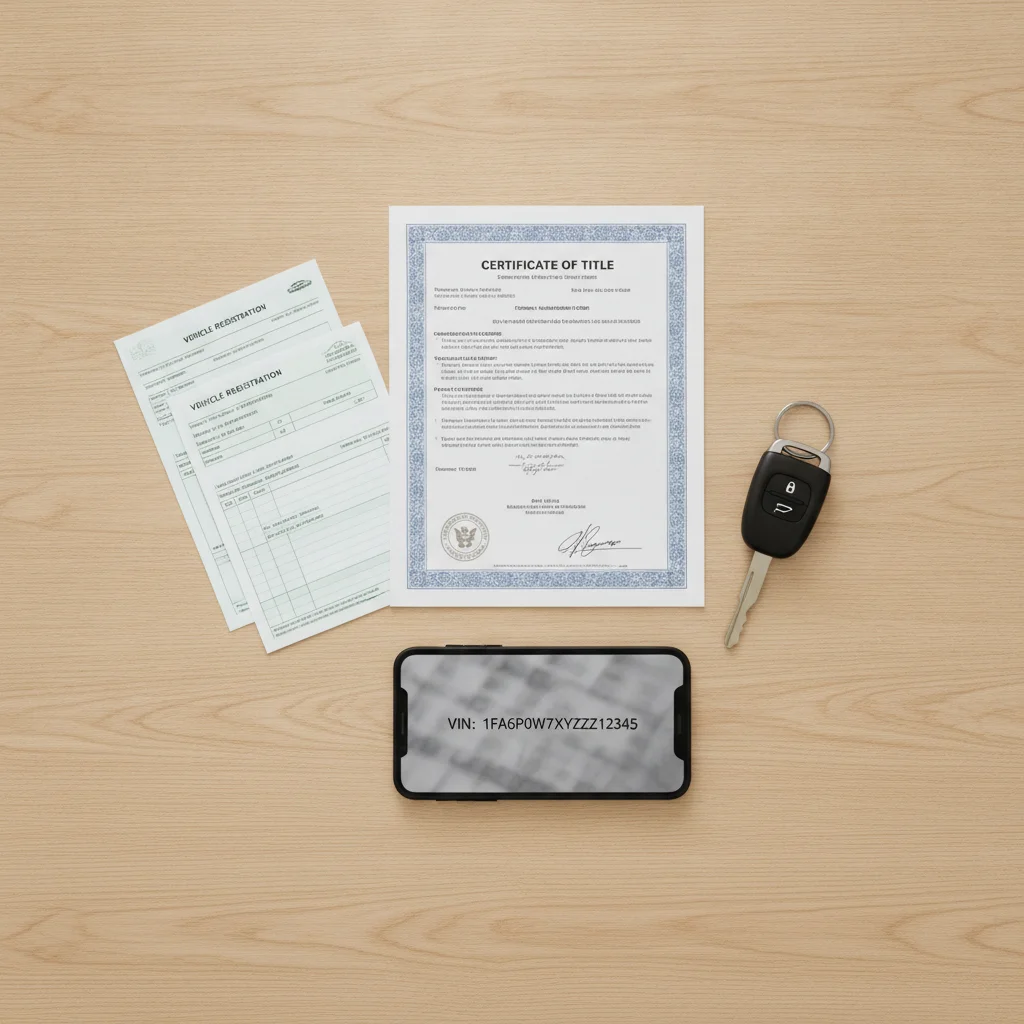
Before you open any platform, collect the following:
- VIN (Vehicle Identification Number) — found on the driver's side dashboard, visible through the windshield, or on your registration and insurance documents.
- Current odometer reading — take it fresh the day you apply, not from memory.
- Trim level and factory options — heated seats, sunroof, navigation, all-wheel drive. These affect your quote.
- Honest condition assessment — note any dents, scratches, cracked glass, warning lights, or mechanical issues.
- Loan payoff amount — call your lender or check your online account for a 10-day payoff quote if you still owe money on the car.
Step 2: Enter your details on the platform
Most platforms start with your ZIP code and VIN. The VIN auto-populates the year, make, model, and trim, which you will confirm or correct. Then comes the condition questionnaire — this is where sellers routinely undersell themselves by being vague. Be specific. If the car has a small parking-lot ding on the rear bumper, say so. Platforms penalize surprises at inspection far more than honest disclosures up front.
Step 3: Receive and review the initial offer
After submitting, you will typically see a dollar figure within seconds. That number has an expiration date — usually seven days. Do not treat it as the final number you will be paid. It is a starting point subject to an in-person or virtual inspection. The platform is making a calculated bet based on your self-reported data.
Never Submit to Just One Platform
Treat the first quote you get as a benchmark, not a decision. Spend 20 minutes running your VIN through two or three competing platforms before you accept anything. The difference in offers for the same vehicle can easily exceed $1,000 depending on regional resale demand and each platform's current inventory needs.
Disclose Everything Up Front
Platform inspectors are trained to find exactly the issues you hoped they would not notice. If you disclose a flaw in your submission, the quote already reflects it and the inspection confirms what you said. If the inspector discovers something you hid, the offer is revised downward — often more aggressively than if you had disclosed it at the start.
Step 4: Run the same exercise on at least two other platforms
This is the single highest-return action you can take. The same car can receive quotes that differ by $500 to $2,000+ across platforms because each uses its own pricing algorithm and is exposed to different regional resale demand. Getting three quotes takes about 20 minutes and gives you real negotiating information. See strategies for maximizing your payout for a deeper breakdown of timing and disclosure tactics.
How to Evaluate the Offer You Receive
A number on a screen means nothing without context. Before deciding whether to accept, you need two reference points: what your car is worth on the open market, and what a private sale would realistically net you after your time and effort.
Check independent valuation sources
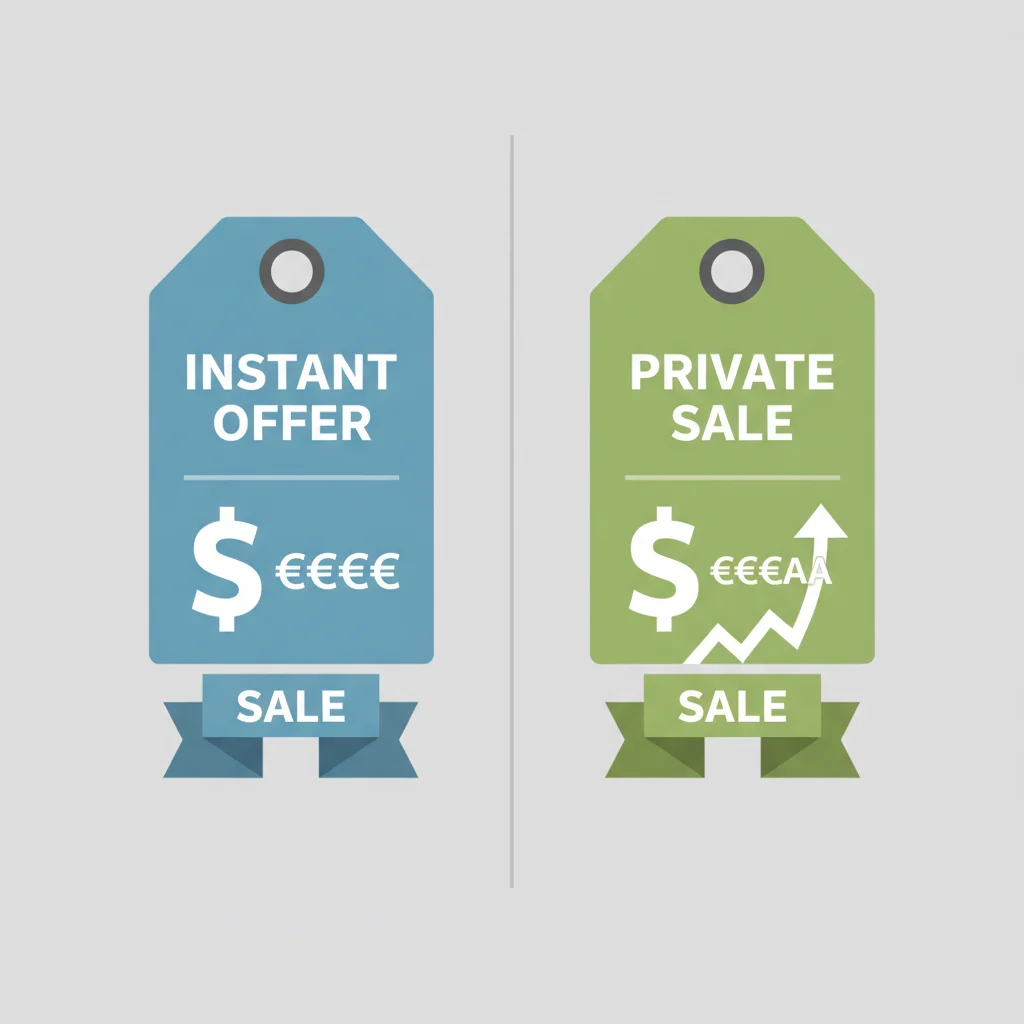
Pull your car's value from Kelley Blue Book and Edmunds True Market Value using the same condition rating you reported to the platform. Look at two figures: trade-in value (what a dealer would give you) and private-party value (what a motivated buyer would pay). Instant offer prices almost always fall between those two numbers — closer to trade-in than private-party.
| Benchmark | Typical Range Relative to Instant Offer |
|---|---|
| Dealer trade-in value | Roughly equal to or slightly above instant offer |
| Instant offer (platform) | Your baseline — use this as the floor |
| Private-party sale | Typically 10–20% higher than the instant offer |
Factor in your actual net proceeds
If you have a loan, subtract the payoff balance from the offer. That is your real cash-in-hand figure. If the offer is $14,500 and you owe $12,000, you walk away with approximately $2,500 — not $14,500. Also confirm whether the platform charges any fees: some deduct a document or processing fee from the final payment.
Fees Vary Widely by Platform
Some platforms advertise a clean offer with no seller fees. Others deduct a document preparation or title processing fee from the final payment. Always read the offer details page carefully and confirm the net amount you will receive — not just the headline offer figure — before you compare platforms against each other.
Instant Offers Are a Useful Floor, Regardless of What You Decide
Even if you plan to sell privately, collecting instant offers takes minutes and gives you a documented floor price. If a private buyer tries to lowball you, you can reference a real competing offer — and mean it. This creates genuine leverage without any additional effort on your part.
Does the highest offer always win?
Not necessarily. Factor in what each platform requires: Does the highest bidder require you to drive 90 minutes to a hub? Does the runner-up offer free home pickup? The best net outcome accounts for your time, fuel, and logistical friction — not just the dollar amount on the offer page.
What Happens After You Accept
Accepting an offer is not the finish line — it is the start of a process that most first-time sellers are unprepared for. Here is the sequence you should expect.
The inspection
Every major platform will inspect the vehicle before finalizing payment. This happens either at a physical hub location (CarMax, Carvana) or through a mobile inspector who comes to your home or office. The inspector checks the body for undisclosed damage, verifies mileage, runs an OBD scan for fault codes, and assesses tire and brake wear.
If the physical condition matches your online submission, the offer holds. If the inspector finds issues you did not disclose — a cracked windshield, unreported fender damage, a check-engine light you cleared before the appointment — the offer will be revised downward, sometimes significantly. You then have the option to accept the adjusted offer or walk away.
Never Sign the Title Before Payment Clears
Once you sign over the title, the car is legally no longer yours. Do not hand over a signed title until you have confirmed that the payment — whether ACH, check, or lender payoff — is officially in process. Reputable platforms have structured processes for this, but you should verify the sequence explicitly before you sign.
Post-Inspection Price Cuts Are Real
The online quote is conditional. Platforms reserve the right to lower the offer after the in-person inspection, and some use this step strategically knowing many sellers will accept a lower number rather than start over. You always have the right to decline an adjusted offer and walk away — use it if the revised number is not reasonable.
Title transfer and loan payoff
You will need to sign over the title. If your name is the only one on the title and there is no lien, this is straightforward. If there is an outstanding loan, the platform contacts your lender directly, confirms the payoff amount, and structures payment accordingly. This coordination step can add two to five business days to the timeline.
For a detailed breakdown of what the timeline looks like day by day — including where delays typically occur — see the full timeline of an instant car sale. And once you have accepted, what happens after you accept an instant offer walks through the inspection and payment mechanics in granular detail.
Getting paid
Payment methods vary by platform. Options typically include direct ACH bank deposit, a mailed check, or a payment drafted directly to your lender for the payoff with any equity sent separately. Confirm the payment method and timeline before you hand over the keys — and do not sign the title until you have confirmed payment is in process.
What Convenience Actually Costs You
Let's put a real number on it. Say your car has a private-party value of $18,000. A competitive instant offer might come in at $15,500 to $16,000. The gap — roughly $2,000 to $2,500 — is what you are paying for the following: no listings to write, no strangers coming to your home, no test drives to supervise, no payment risk, and no paperwork headaches.
Whether that trade-off is worth it depends entirely on your situation. For someone selling a car that has been sitting for months, a seller who lives in an apartment without a dedicated parking spot to show the car from, or anyone uncomfortable with the safety considerations of meeting unknown buyers — the convenience premium is often money well spent.

For someone with time, a clean title, a desirable car in strong local demand, and comfort navigating the private-sale process, that same $2,000 gap represents real money left on the table. If that sounds like you, compare your instant offer against what a private listing might yield. The private party sales channel option covers what that process actually looks like, and private car sales for first-time sellers is specifically built for people who have never done it before.
Kelley Blue Book Instant Cash Offer
Enter your VIN and condition details to get an offer redeemable at participating dealers. Useful as a benchmark because KBB's pricing data is widely trusted and the offer network is large.
CarMax Instant Offer
One of the most established instant offer programs with physical hub locations nationwide. Good for sellers who want in-person confirmation and same-day transactions.
Carvana
Fully online process with home pickup available in many markets. Particularly competitive for newer, lower-mileage vehicles in strong demand.
Edmunds True Market Value
Free valuation tool that provides both private-party and trade-in estimates for your specific vehicle. Use it alongside instant offer quotes to understand how much convenience is costing you.
The honest answer is that no channel is universally best. Instant offer platforms have improved dramatically in the last few years — their offers are more competitive than they used to be, their processes are faster, and their paperwork handling is genuinely good. But the structural reality has not changed: they need to make a margin on your car, and that margin comes from the gap between what they pay you and what they sell the car for.
Is an Instant Offer Platform Right for You?
Use this framework to decide quickly.
Instant offer platforms are a strong fit if:
- You want the car gone within one to two weeks with minimal back-and-forth.
- Your car has high mileage, cosmetic issues, or a complicated title situation — private buyers are picky; platforms are not.
- You have an outstanding loan and do not want to handle lender coordination yourself.
- You are selling from a location or living situation that makes private showings inconvenient or unsafe.
- The best instant offer comes within $500–$800 of your realistic private-party net (after listing time, fees, and friction).
Reconsider if:
- Your car is a high-demand model in short supply — motivated private buyers will pay above book value.
- You have a clean title, strong service history, and a desirable trim that private buyers will specifically seek out.
- The gap between your best instant offer and private-party comps in your area exceeds $2,000.
- You have two to four weeks available and are comfortable handling a transaction safely.
Fees Vary Widely by Platform
Some platforms advertise a clean offer with no seller fees. Others deduct a document preparation or title processing fee from the final payment. Always read the offer details page carefully and confirm the net amount you will receive — not just the headline offer figure — before you compare platforms against each other.
Instant Offers Are a Useful Floor, Regardless of What You Decide
Even if you plan to sell privately, collecting instant offers takes minutes and gives you a documented floor price. If a private buyer tries to lowball you, you can reference a real competing offer — and mean it. This creates genuine leverage without any additional effort on your part.
Whatever you decide, get the instant offers first. They cost nothing, take minutes, and give you a legitimate floor price. Even if you ultimately sell privately, knowing your floor prevents you from accepting a lowball offer from a private buyer out of impatience. For a complete picture of how to approach the instant offer channel from end to end, see the complete end-to-end guide to selling to an instant offer platform.
First-time sellers often assume the process is riskier or more complicated than it actually is. The platforms have invested heavily in removing friction. The main risk is not a scam — it is simply accepting the first offer you see without context, and leaving money on the table that took you five minutes to recover.

All claims are backed by peer-reviewed research. Sources on request.