Key Takeaways
Always sign the title exactly as your name appears on the front — not your nickname, not an abbreviation. A mismatch between the printed name and signature is one of the most common reasons titles are rejected at the DMV.
DMV clerks are required to verify that the seller's signature matches the registered owner's name. Even a minor discrepancy (e.g., 'Robert' vs. 'Rob') can result in a rejected transfer.
Before closing, do a final VIN check against the title and the VIN plate visible on the dashboard — fraudulent vehicles sometimes have mismatched VINs that sellers don't notice until a problem arises months later.
VIN fraud, though not common in private sales between individuals, does occur. Catching a mismatch before signing protects both you and the buyer from potential title fraud liability.
Request payment via cashier's check drawn on a local bank, and call the issuing bank directly to verify the check before releasing the title and keys — not just before the buyer leaves.
Counterfeit cashier's checks are one of the most common scams targeting private vehicle sellers. Verifying directly with the issuing bank (not a number on the check itself) confirms authenticity.
Why Private Sales Require More Paperwork Than You Think
Selling a car privately feels simple on the surface: you find a buyer, agree on a price, and hand over the keys. But without the right paperwork, you could remain legally liable for a vehicle you no longer own — facing unpaid tolls, parking tickets, or worse, accident liability claims filed months after the transaction.
Dealerships handle most of the legal complexity behind the scenes. In a private sale, that burden falls entirely on you and the buyer. Every document, disclosure, and filing that a dealer's F&I department manages automatically becomes your personal responsibility.
This guide covers every step from the moment a buyer expresses serious interest to the final confirmation that your name is off the title. Whether you're selling for the first time or just want to make sure you're doing it right, consider this your complete legal roadmap. For a broader look at the selling process itself — including pricing and listing — see our complete seller's roadmap.

The Title: Your Most Critical Document
The certificate of title — sometimes called the "pink slip" — is the legal document that proves ownership of a vehicle. Without a clean, transferable title, no private sale is legally complete, regardless of what a bill of sale says.
What "Clean Title" Actually Means
A clean title means the vehicle has no liens (outstanding loans) recorded against it and hasn't been declared a total loss, flood-damaged, or rebuilt by an insurance company. If your title shows a lien holder — typically a bank or credit union — that lien must be paid off and formally released before you can transfer ownership.
Never Sign a Blank Title
Signing a title before all fields are filled in — sometimes called "signing in blank" — is illegal in most states and exposes you to serious fraud risk. A dishonest buyer could fill in a different buyer name, price, or mileage after your signature. Always complete every required field before signing, and never release a signed title without receiving payment in full.
Lien Holders Must Release Before You Can Transfer
If your lender still holds the title, you cannot legally complete a private sale without their involvement. Attempting to transfer a vehicle with an undischarged lien is considered fraud in most jurisdictions. Contact your lender weeks before your target sale date to understand their payoff and title release process — some mail the released title within 10 days, others take four to six weeks.
How to Sign Over a Title Correctly
Every state has specific fields on the back of the title that must be completed by the seller. These typically include:
- Seller's printed name and signature (must match exactly as shown on the front of the title)
- Buyer's printed name and address
- Sale date
- Sale price (some states use this to calculate transfer taxes)
- Odometer reading at time of sale
Do not sign a title in the wrong field, leave any required field blank, or use correction fluid. A single error on a title can make it invalid, forcing you to apply for a duplicate — a process that can take weeks and delay the entire transaction.
Always sign the title exactly as your name appears on the front — not your nickname, not an abbreviation. A mismatch between the printed name and signature is one of the most common reasons titles are rejected at the DMV.
DMV clerks are required to verify that the seller's signature matches the registered owner's name. Even a minor discrepancy (e.g., 'Robert' vs. 'Rob') can result in a rejected transfer.
Before closing, do a final VIN check against the title and the VIN plate visible on the dashboard — fraudulent vehicles sometimes have mismatched VINs that sellers don't notice until a problem arises months later.
VIN fraud, though not common in private sales between individuals, does occur. Catching a mismatch before signing protects both you and the buyer from potential title fraud liability.
Request payment via cashier's check drawn on a local bank, and call the issuing bank directly to verify the check before releasing the title and keys — not just before the buyer leaves.
Counterfeit cashier's checks are one of the most common scams targeting private vehicle sellers. Verifying directly with the issuing bank (not a number on the check itself) confirms authenticity.
If You Have a Lien
If your car isn't paid off, you don't physically hold the title — your lender does. You'll need to either pay off the loan before the sale or coordinate a simultaneous payoff at the time of sale. Some lenders will work with buyers directly. Others require the seller to bring a cashier's check for the payoff amount at closing. Confirm your lender's exact process before you accept any offer.
Bill of Sale: What It Must Include to Be Legally Valid
A bill of sale is the written record of the transaction. Some states require it by law; others treat it as optional but strongly recommended. Even where not mandated, a detailed bill of sale protects both parties if a dispute arises later.
See our full document checklist for a quick-reference list of everything you'll need alongside the bill of sale.
Required Elements in Most States
| Field | Details |
|---|---|
| Vehicle Identification Number (VIN) | 17-character code, confirmed against title |
| Year, Make, Model, Color | As shown on the title |
| Odometer reading | At time of sale |
| Sale price | In numerals and written words |
| Seller full name, address, signature | Matching ID |
| Buyer full name, address, signature | Matching ID |
| Date of sale | Day, month, and year |
| "As-is" or warranty notation | Explicitly state the condition of sale |
"As-Is" Language Matters
Most private sales occur "as-is," meaning the seller makes no warranty about the vehicle's condition and the buyer accepts all future repair costs. Including a clear as-is statement in your bill of sale is one of the most effective ways to prevent a buyer from coming back to you weeks later claiming the vehicle was misrepresented.
Use a DMV Bill of Sale Template
Many state DMV websites offer free downloadable bill of sale forms that are pre-formatted to meet local legal requirements. Using your state's official template — rather than a generic form from the internet — ensures you include every field required for a valid transfer in your jurisdiction.
Photograph Everything at Closing
Before handing over the keys, take dated photos of the odometer reading, the signed title, and both parties holding the bill of sale. This documentation creates a timestamped record of the vehicle's condition and the completion of transfer that can be invaluable if any dispute arises later.
Keep Insurance Until Keys Are Gone
Don't cancel your auto insurance policy the moment you accept payment. Maintain coverage through the moment the buyer physically takes possession of the vehicle. If anything happens during a test drive or while the car is still parked at your address, you want your insurance to be active.
Notarization Requirements
States including Louisiana, Maryland, Montana, Nebraska, New Hampshire, West Virginia, and Wyoming require the bill of sale to be notarized. Others require only a DMV-specific transfer form. Check your state's DMV website before drafting any documents.
Disclosure Requirements: What Sellers Must Legally Reveal
Beyond the basic paperwork, sellers in most states have affirmative legal obligations to disclose certain facts about a vehicle — regardless of whether the buyer asks. Failing to disclose a known material defect can expose you to fraud liability even after a sale marked "as-is."
~40%
Private sales involving post-sale buyer disputes
Industry estimates from consumer protection attorneys suggest roughly 40% of private car sale disputes involve seller non-disclosure claims.
$1,000+
Average cost of odometer fraud to buyers
The NHTSA estimates odometer fraud costs American car buyers more than $1 billion annually, making federal disclosure law critical protection.
5 days
California seller notification deadline post-sale
California law requires sellers to file a Notice of Transfer and Release of Liability within five business days of completing a private sale.
30 days
Typical buyer title transfer deadline in most states
Most U.S. states require buyers to present a signed title and register the vehicle within 30 days of purchase to avoid penalties.
What Counts as a Material Defect
A material defect is any known condition that would significantly affect a buyer's decision to purchase or the price they'd accept. Courts have ruled that "as-is" clauses do not protect sellers who actively conceal or fail to disclose:
- Known salvage or rebuilt title history
- Flood or water damage
- Frame or structural damage not reflected in the title
- Known airbag or seatbelt malfunctions
- Prior use as a taxi, rental, or police vehicle (in some states)
- Active open safety recalls affecting the vehicle
State-Specific Disclosure Laws
California, for example, requires sellers to provide a smog inspection certificate for most vehicles. Florida requires disclosure of any known material defect that substantially impairs the vehicle's value. Texas mandates specific written disclosures if a vehicle has been flood-damaged. Before listing your car, search " private vehicle sale disclosure requirements" or check directly with your DMV.
"As-Is" Doesn't Cover Active Concealment
An as-is clause in a bill of sale protects you from claims about unknown defects — but it does not protect you from fraud liability if you actively hid a known problem. Courts have consistently ruled that sellers who knew about a material defect and failed to disclose it can be held liable even when the sale was marked as-is. When in doubt, disclose it in writing.
Accepting Personal Checks Carries Serious Risk
Personal checks can bounce days or even weeks after a sale, by which time the buyer and vehicle are long gone. For any private sale, require a cashier's check from a reputable bank or a verified bank wire transfer. If a buyer pushes back on this requirement, treat it as a significant red flag.
Out-of-State Sales Add Complexity
If the buyer lives in a different state than where the vehicle is titled, both states' transfer requirements may apply. The seller typically follows their home state's rules for signing the title, while the buyer must register the vehicle under their state's rules. Confirm with both DMVs before closing to avoid a paperwork tangle.
Odometer Disclosure: Federal Law, Not Optional
The federal Truth in Mileage Act (TIMA) requires sellers to provide a written odometer disclosure statement for any vehicle under ten model years old at the time of sale. This requirement exists regardless of what state you're in — it applies nationwide.
What the Disclosure Must State
The odometer disclosure must include:
- The exact mileage reading at the time of transfer
- A certification that the reading reflects actual mileage, OR
- A statement that the odometer reading does not reflect actual mileage (if known to be inaccurate)
- Seller's signature and date
- Buyer's signature acknowledging receipt
In most states, the odometer disclosure is incorporated directly into the back of the title, so completing the title properly satisfies this requirement. However, some states use a separate federally-compliant form. If your state's title doesn't include an odometer field, you must use a standalone disclosure form.
Odometer Disclosure on Older Vehicles
For vehicles ten model years old or older, federal odometer disclosure is not legally required. However, including a mileage notation in your bill of sale is still best practice — it prevents any future claim that you misrepresented the vehicle's condition, and many buyers expect it regardless of the vehicle's age.
DMV Requirements Change — Always Verify
State DMV requirements for private vehicle transfers are updated regularly. Forms that were valid last year may have been revised, and fee schedules change. Always verify current requirements directly on your state's official DMV website — not from third-party summaries — before preparing your closing documents.
Emissions Waivers May Be Available
If your vehicle fails a required emissions test before sale, most states offer a waiver process after documented repair attempts and expenditures above a specified threshold. Check your state's emissions program website for current waiver eligibility rules before assuming the sale must be canceled.
Vehicles Exempt from Federal Odometer Disclosure
Exemptions apply to vehicles that are ten model years old or older, vehicles with a Gross Vehicle Weight Rating (GVWR) over 16,000 pounds, and vehicles sold directly to a dealer. Even exempt vehicles benefit from a mileage notation in the bill of sale to prevent disputes.

Service Records, Vehicle History, and What to Share
No state law in the U.S. requires a private seller to provide service records or a vehicle history report. But in practice, sharing this information protects you and makes your car easier to sell at full asking price.
“The biggest mistake private sellers make is treating service records as optional. Those records aren't just maintenance history — they're your defense against every 'you knew about this problem' claim a buyer might make six months after the sale.”
— Dara Flemming, Former consumer finance journalist and auto transaction specialist
Why Service Records Benefit Sellers
A documented maintenance history — oil changes, brake jobs, timing belt replacements — demonstrates that you cared for the vehicle properly. It also preemptively answers buyer concerns about reliability. Buyers who can verify service history are less likely to negotiate aggressively on price and less likely to claim post-sale that you hid a problem.
Vehicle History Reports
Reports from services like Carfax or AutoCheck pull from insurance records, state DMV databases, auction records, and other sources to flag title issues, accident history, odometer rollbacks, and service events. As a seller, pulling your own report before listing lets you see what buyers will see — and address any surprises proactively.
If the report shows an accident you forgot about or a title discrepancy, you're far better off knowing before a buyer confronts you about it mid-negotiation.
Always sign the title exactly as your name appears on the front — not your nickname, not an abbreviation. A mismatch between the printed name and signature is one of the most common reasons titles are rejected at the DMV.
DMV clerks are required to verify that the seller's signature matches the registered owner's name. Even a minor discrepancy (e.g., 'Robert' vs. 'Rob') can result in a rejected transfer.
Before closing, do a final VIN check against the title and the VIN plate visible on the dashboard — fraudulent vehicles sometimes have mismatched VINs that sellers don't notice until a problem arises months later.
VIN fraud, though not common in private sales between individuals, does occur. Catching a mismatch before signing protects both you and the buyer from potential title fraud liability.
Request payment via cashier's check drawn on a local bank, and call the issuing bank directly to verify the check before releasing the title and keys — not just before the buyer leaves.
Counterfeit cashier's checks are one of the most common scams targeting private vehicle sellers. Verifying directly with the issuing bank (not a number on the check itself) confirms authenticity.
What to Physically Hand Over
At closing, consider providing the buyer with a packet that includes:
- Any paper service records you've kept
- The vehicle's owner's manual and any supplemental guides
- The second set of keys and any remotes
- Warranty documentation (if any remaining factory or extended warranty exists)
- A copy of your vehicle history report (optional but builds trust)
State-by-State Filing Differences That Can Trip You Up
No two states handle private vehicle transfers exactly alike. The core documents are consistent — title, bill of sale, odometer disclosure — but the exact forms, fees, notarization requirements, and timing deadlines vary significantly.
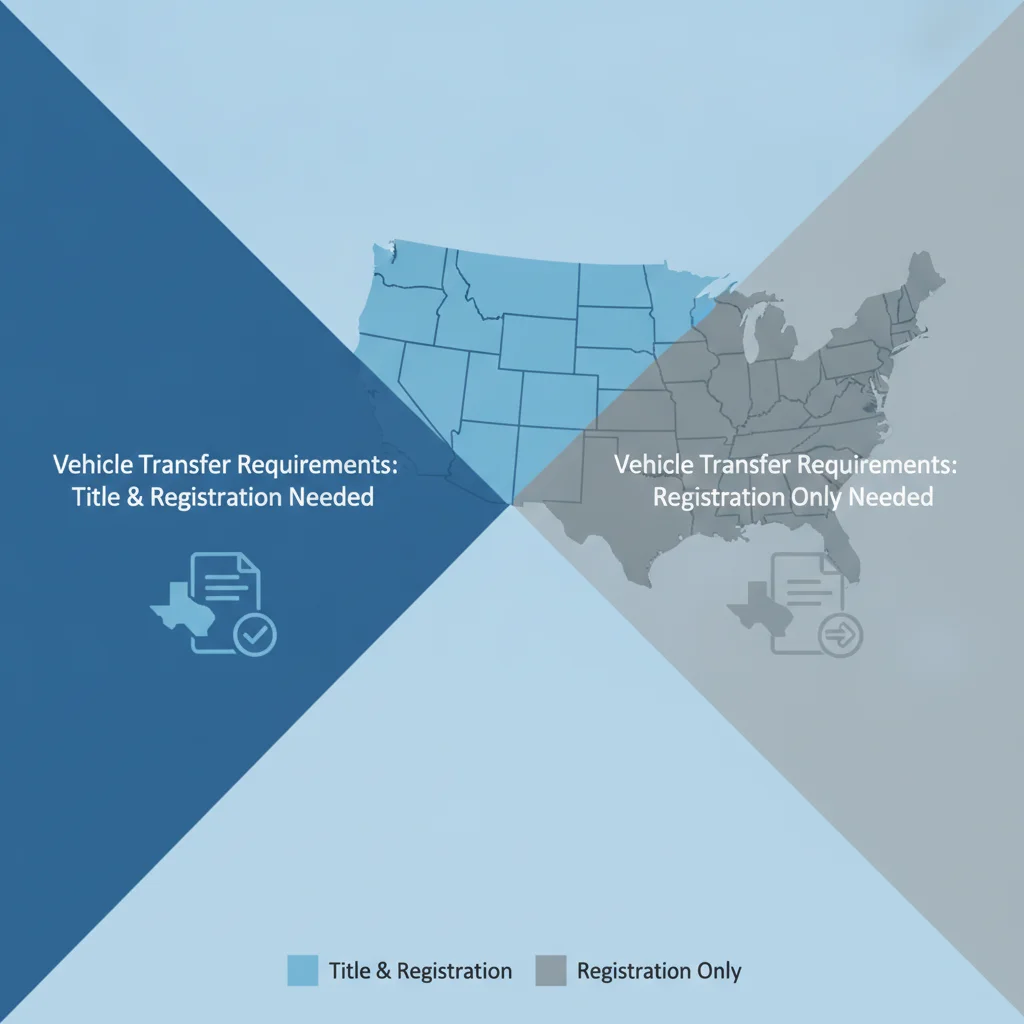
Common State-Level Variations
- Title transfer deadline
- Most states require the buyer to file the title transfer within 10–30 days. Some states (like California) require the seller to notify the DMV within 5 days of the sale using a Notice of Transfer and Release of Liability form.
- Smog or emissions certificates
- California, Colorado, and several other states require a passing smog or emissions inspection before a vehicle can be transferred. In some states, this obligation falls on the seller; in others, the buyer has a grace period.
- Sales tax collection
- Most states collect sales tax from the buyer when they register the vehicle, not at the point of sale. However, a few states (like Virginia) require specific documentation of the sale price to calculate the proper transfer tax.
- Notarization of title
- States including Louisiana and Montana require the seller's signature on the title to be notarized by a public notary. This adds a step but is non-negotiable in those jurisdictions.
- Salvage title re-branding
- If the vehicle carries a salvage or rebuilt title, many states require the seller to present a DMV-issued inspection certificate confirming the rebuild before transfer is allowed.
How to Confirm Your State's Requirements
Your state's official DMV website is always the authoritative source. Search for your state's DMV plus "private party vehicle transfer" or "title transfer checklist." The paperwork and contracts hub also offers a consolidated overview of transfer documentation across common scenarios.
Odometer Disclosure on Older Vehicles
For vehicles ten model years old or older, federal odometer disclosure is not legally required. However, including a mileage notation in your bill of sale is still best practice — it prevents any future claim that you misrepresented the vehicle's condition, and many buyers expect it regardless of the vehicle's age.
DMV Requirements Change — Always Verify
State DMV requirements for private vehicle transfers are updated regularly. Forms that were valid last year may have been revised, and fee schedules change. Always verify current requirements directly on your state's official DMV website — not from third-party summaries — before preparing your closing documents.
Emissions Waivers May Be Available
If your vehicle fails a required emissions test before sale, most states offer a waiver process after documented repair attempts and expenditures above a specified threshold. Check your state's emissions program website for current waiver eligibility rules before assuming the sale must be canceled.
What Happens After the Sale: Filings and Notifications
Handing over the keys isn't the end of your legal involvement. Sellers have post-sale obligations that, if ignored, can leave them holding the bag for the buyer's future actions with the vehicle.
Notice of Transfer (Seller's Release of Liability)
Most states allow — and some require — sellers to file a Notice of Transfer or Release of Liability with the DMV after the sale. This filing officially records the date and time you transferred ownership. If the new owner gets a speeding ticket or is involved in an accident before they register the vehicle, this document is your evidence that the car was no longer yours.
California's Notice of Transfer and Release of Liability can be filed online at the DMV website within five business days of the sale. Most other states have equivalent forms, though some must be mailed or submitted in person.
Cancel Your Insurance — But Not Too Soon
Keep your insurance active until the sale is fully closed, keys are handed over, and the buyer has taken physical possession of the vehicle. Canceling insurance before the transaction is complete leaves you exposed if anything happens during a test drive or in transit to their home.
After confirmed delivery, notify your insurer the same day. If you're buying another vehicle immediately, your insurer can transfer coverage. If not, request cancellation and a pro-rated refund for the unused premium days.
Use a DMV Bill of Sale Template
Many state DMV websites offer free downloadable bill of sale forms that are pre-formatted to meet local legal requirements. Using your state's official template — rather than a generic form from the internet — ensures you include every field required for a valid transfer in your jurisdiction.
Photograph Everything at Closing
Before handing over the keys, take dated photos of the odometer reading, the signed title, and both parties holding the bill of sale. This documentation creates a timestamped record of the vehicle's condition and the completion of transfer that can be invaluable if any dispute arises later.
Keep Insurance Until Keys Are Gone
Don't cancel your auto insurance policy the moment you accept payment. Maintain coverage through the moment the buyer physically takes possession of the vehicle. If anything happens during a test drive or while the car is still parked at your address, you want your insurance to be active.
License Plates
In most states, license plates stay with the seller — not the vehicle. Remove your plates at the time of sale. If the state requires the vehicle to be driven away, the buyer is responsible for obtaining a temporary transit permit. Some states (like California) permanently attach plates to a vehicle; in those cases, the plates transfer with the car. Verify your state's rule before the closing day.
For a step-by-step closing day checklist, including key exchange, payment verification, and immediate post-sale tasks, see closing the deal: the final steps of a private car transaction.
The Complete Pre-Sale Checklist
Use this checklist to confirm you've covered every legal and practical requirement before, during, and after your private sale. Check your state's specific requirements against each item.
Before You List
- Locate the physical title and confirm it's in your name
- Verify no liens are recorded (or plan your lien payoff process)
- Pull a vehicle history report to know what buyers will see
- Check for any open safety recalls (search your VIN at nhtsa.gov/recalls)
- Confirm your state's disclosure and smog/emissions requirements
- Gather all service records and organize them chronologically
When You Have a Buyer
- Verify the buyer's identity before handing over any documents
- Agree on payment method — cashier's check or bank wire for amounts over $2,000
- Complete all fields on the back of the title accurately
- Complete a bill of sale (two signed originals — one for each party)
- Complete the odometer disclosure statement if not included on the title
- Provide any required state-specific forms (smog cert, lien release, etc.)
- Hand over all keys, remotes, and owner's manual
- Remove your license plates (unless your state requires plates to transfer)
Within 24–72 Hours After the Sale
- File your Notice of Transfer / Release of Liability with your state DMV
- Notify your auto insurer and cancel or transfer coverage
- Keep copies of all signed documents in a secure location for at least five years
The private party sales hub has additional resources on pricing, negotiation, and connecting with serious buyers when you're ready to list.

All claims are backed by peer-reviewed research. Sources on request.