Key Takeaways
Summary
22 items · 45–90 minutes
Why the Close Is the Riskiest Part of a Private Sale
You've priced the car, fielded the lowball offers, and finally found a serious buyer. The hard part is over — except it isn't. The closing phase of a private sale is where most transactions go wrong. Payment fraud, title disputes, last-minute renegotiations, and skipped paperwork can turn a handshake deal into a legal headache that drags on for months.
Unlike a dealership transaction — where the entire process is managed by staff with legal training — a private sale puts every responsibility squarely on you and the buyer. There's no finance office to catch a missing signature. No title clerk to flag an incomplete odometer statement. Just two people, a car, and a stack of documents that all need to be right.
This checklist walks through every task from the moment a buyer commits to the moment you hand over the keys. Work through it in order. Don't skip steps because the buyer seems trustworthy — the steps exist precisely because you can't always tell.
What You'll Need Before You Meet
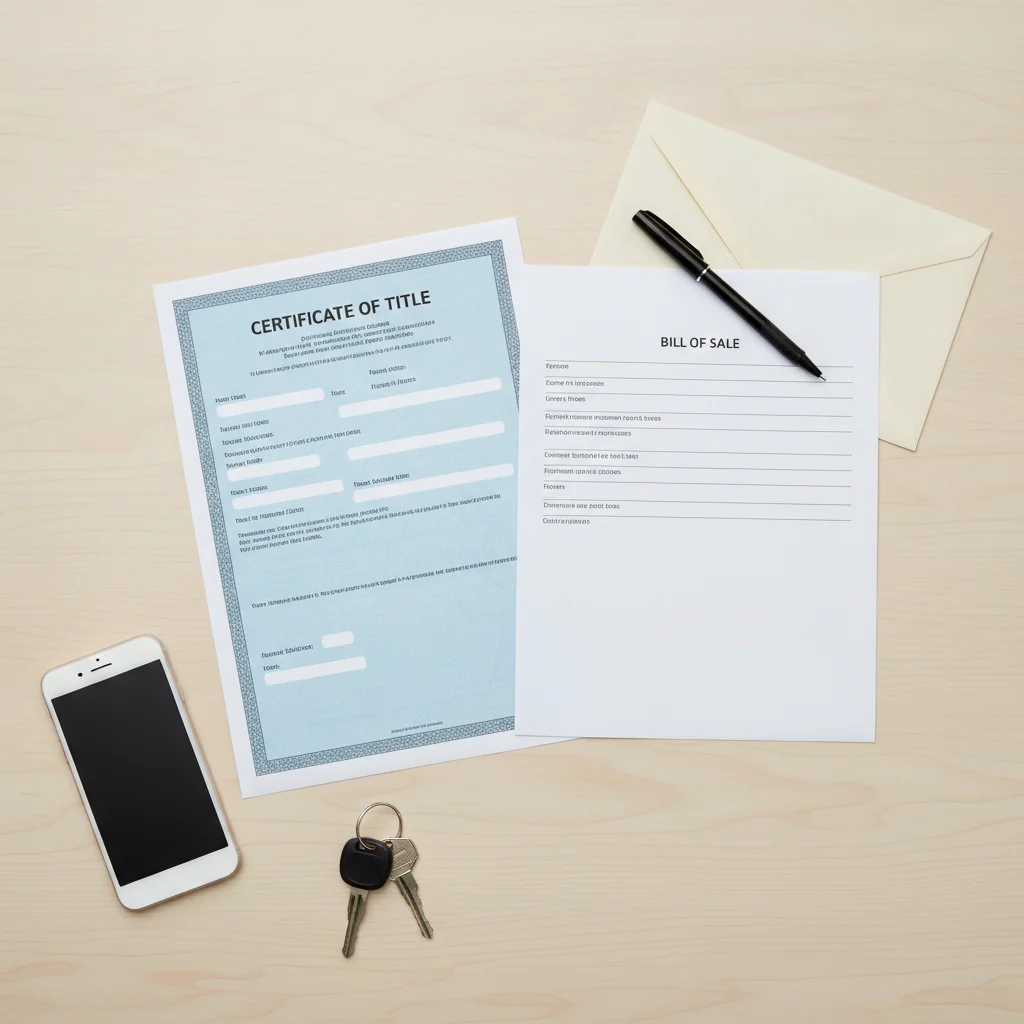
Gather everything below before the meeting. Showing up unprepared gives a nervous buyer an excuse to walk, and missing documents can delay a legitimate DMV transfer by days or weeks. If your state requires notarization on the title transfer, confirm that in advance — you may need to schedule the signing at a bank or UPS Store rather than a parking lot.
For a deeper dive into exactly which forms your state requires, see the Paperwork & Title hub — it breaks down title transfer rules by state.
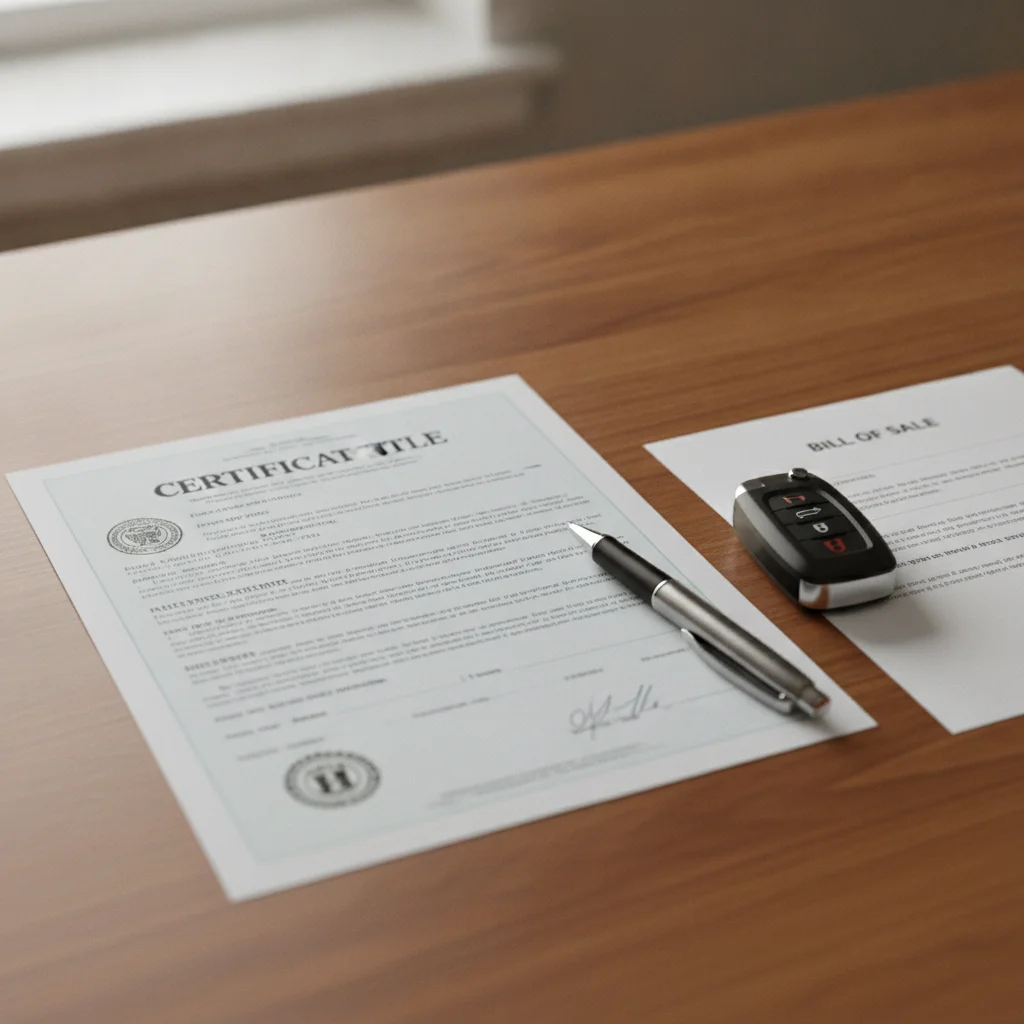
Vehicle Title
The legal document proving ownership — must be signed over to the buyer at the time of sale.
Bill of Sale
A written record of the transaction terms protecting both parties if disputes arise later.
Odometer Disclosure Statement
Federal law requires this for vehicles under 10 years old; many states incorporate it into the title itself.
State Release of Liability Form
Filed with your DMV to formally record that the vehicle left your possession on a specific date.
Counterfeit Detection Pen
Used to verify cash bills on the spot — available at office supply stores for under $10.
Notary Public
Required in some states to witness and authenticate title signatures — available at banks, UPS Stores, and courthouses.
Service Records and Manuals
Handed to the buyer at closing to document vehicle history and support resale value.
The Closing Checklist
Work through these groups in sequence. Payment verification comes before title signing. Title signing comes before key handover. That order is not negotiable.
Pre-Meeting Preparation
Payment Verification
Paperwork Signing
Post-Sale Wrap-Up
Never Sign the Title Before Payment Clears
Once you sign the back of the title and hand it over, you have legally transferred ownership — regardless of whether you've been paid. If a check later bounces or a wire transfer is reversed, recovering the vehicle or the money becomes an expensive civil matter. Sign only after payment is verified and in your hands.
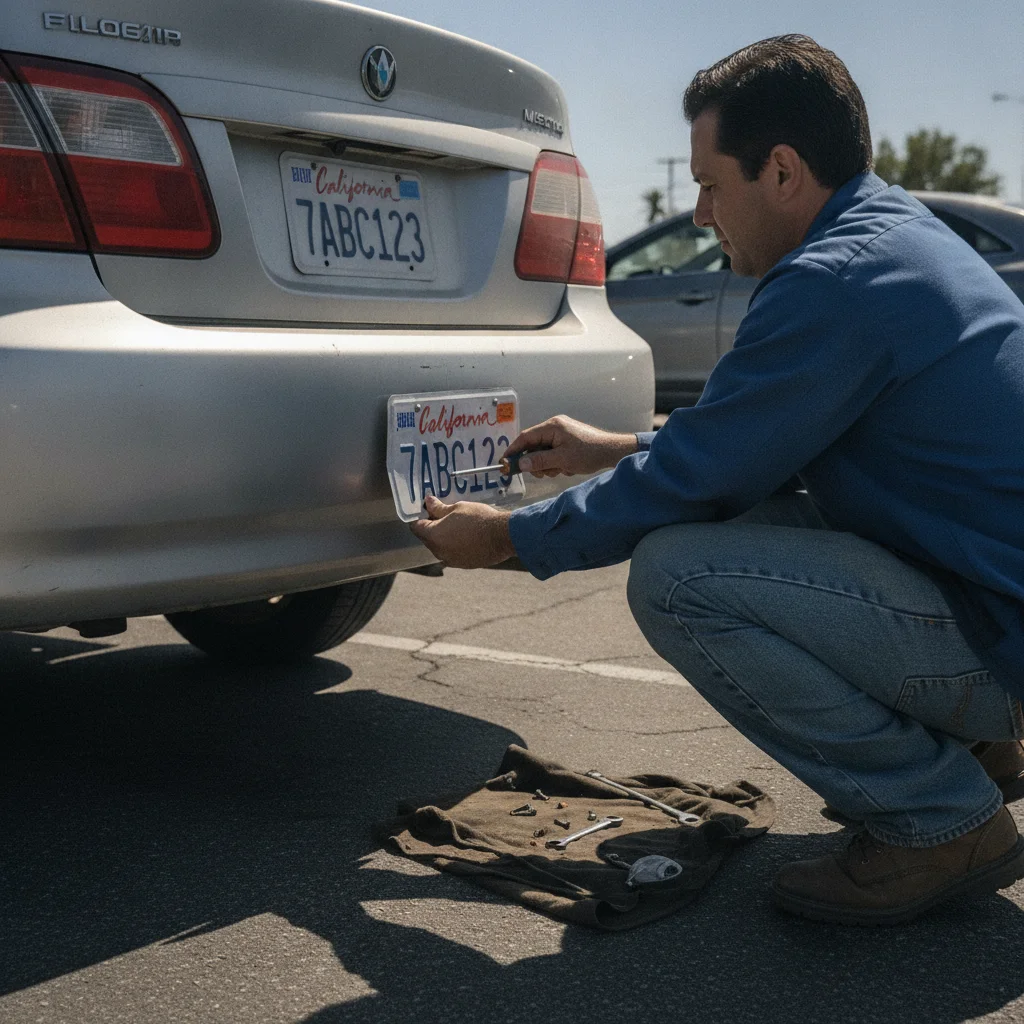
Plates Stay With the Seller in Most States
Leaving your plates on the car is a common and costly mistake. If the buyer drives away with your plates and gets in an accident, a camera catches them speeding, or they rack up tolls, those violations can initially come back to your registration. Remove the plates before the buyer pulls out of the parking lot.
Watch Out for Overpayment Scams
A classic fraud: the buyer sends a cashier's check for more than the agreed price and asks you to wire back the difference. The original check is fake. You're out the car and the wired funds. If any buyer tries to overpay or asks you to return money, treat it as an immediate red flag and end the transaction.
Handling Payment: What to Accept and How to Verify It
Payment is the single highest-risk moment in a private sale. Here's what you need to know about each option:
Cash
Cash is the cleanest form of payment — no bounce risk, no chargeback. The downside is counterfeit risk. For any transaction over $1,000, use a counterfeit detection pen (available at office supply stores for under $10) or take the cash to a bank branch and ask a teller to run it through their scanner before you sign anything. Count it in front of the buyer. Recount it. Don't feel awkward — any honest buyer expects this.
Cashier's Check
A cashier's check from a reputable bank looks official but is one of the most common fraud vectors in private car sales. The scam: a buyer presents a fake cashier's check, you hand over the title, and the check bounces days later after the bank initially appears to accept it. Never release the title based on a cashier's check alone. Instead, accompany the buyer to their bank branch and watch a teller verify the check is legitimate before you sign anything. Alternatively, ask the buyer to wire funds directly to your account — slower but safer.
Wire Transfer / Zelle / Venmo
Peer-to-peer apps like Zelle are generally irreversible once sent, which makes them relatively safe for sellers. Confirm the funds appear in your account before signing. Wire transfers from banks are also solid, though they can take 24–48 hours to fully settle. Don't confuse a transfer initiated with a transfer received.
Personal Checks
Don't accept personal checks for a vehicle sale. Period. There's no reliable way to verify funds without waiting several business days, by which point you may have already handed over the title.
Cashier's Check Fraud Is the #1 Scam in Private Car Sales
Banks are legally required to make funds provisionally available within 1–5 business days even for fraudulent checks — meaning your balance may show the funds before the check actually clears. Do not rely on your balance as proof of payment. The only safe way to accept a cashier's check is to physically visit the issuing bank with the buyer and have a teller authenticate it in real time before signing any transfer documents.
Federal Odometer Fraud Carries Criminal Penalties
Knowingly misrepresenting a vehicle's mileage on the odometer disclosure statement is a federal crime under the Motor Vehicle Information and Cost Savings Act, carrying fines up to $10,000 per violation and potential imprisonment. Even an innocent error can create civil liability. Record the exact reading from the instrument cluster at the time of sale and do not estimate.

After the Handover: Protect Yourself the Same Day
Handing over the keys doesn't end your obligations — or your risk exposure. A buyer who gets in an accident on the way home could potentially generate a liability claim against you if the transfer isn't properly documented with your state's DMV. Take the following steps before the sun goes down.
The title transfer walkthrough goes deeper on state-specific DMV filing requirements, including which states require both parties to appear in person.
You should also cancel or transfer your insurance as soon as the vehicle is off your hands. Keeping a policy active on a car you no longer own wastes money and can create coverage confusion if a claim surfaces. If you're keeping the same insurer, a quick phone call or app update usually handles it in minutes.
Finally, keep your copies of every document — the signed bill of sale, your copy of the title (if your state issues one), any release of liability form, and the payment receipt — for at least three years. If a buyer files a dispute, gets a parking ticket in your name, or has a title issue at the DMV, you'll need a paper trail to clear it up.
Common Last-Minute Problems and How to Handle Them
Even well-organized closings hit snags. Here's how to handle the most common ones without losing the deal or getting burned.
The Buyer Tries to Renegotiate at the Meeting
This is a pressure tactic. The buyer waited until you've invested time in the meeting to ask for another $500 off. Your best response: stay calm, point to the agreed price, and give them one opportunity to honor it. If they won't, be willing to walk. A buyer who low-balls you at the closing table will likely cause problems with the title transfer too.
Missing or Lienholder Title
If you still owe money on the car, the title is held by your lender. You'll need to pay off the loan before — or simultaneously with — the sale. Some lenders will work with you on a simultaneous payoff at a title company. Do not try to sell a car with a lien and promise to "send the title later" — this is a breach of contract in most states and a red flag that will spook any informed buyer.
Buyer Wants to Register the Car in a Different State
This is usually fine, but it may change which forms you need to complete. Some states require a specific out-of-state buyer affidavit. Check with your DMV before the meeting if the buyer tells you they're from out of state.
Buyer Asks to Take the Car "to Think About It"
This is not how private sales work. A car is not loaned out for consideration. If the buyer isn't ready to pay, they aren't ready to take possession. Full stop.
For sellers who are also buying a replacement vehicle through a dealer and considering whether to trade in versus sell privately, the trade-in negotiation checklist is worth a read before you commit to either path.

All claims are backed by peer-reviewed research. Sources on request.