Key Takeaways
Instant Buyer Convenience Cost
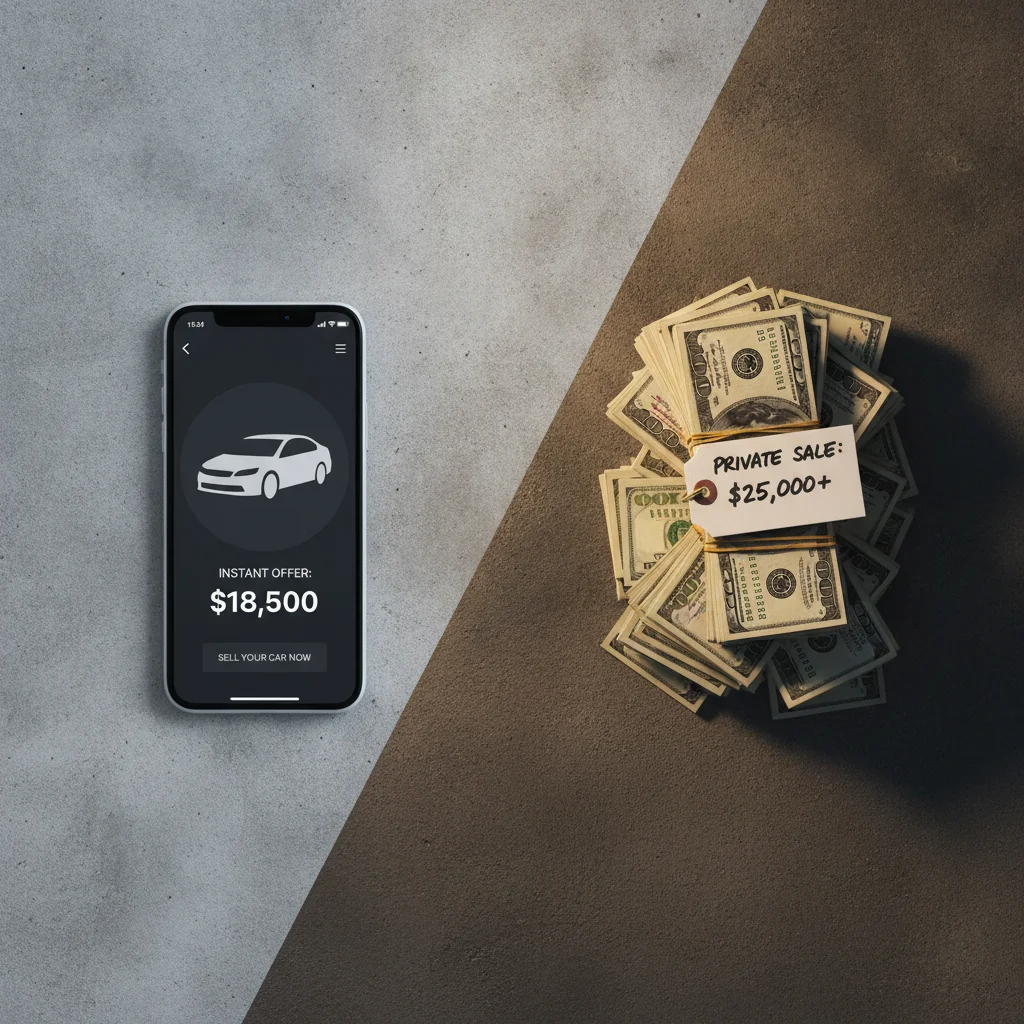
The 'convenience cost' of selling to an instant buyer is the dollar difference between what an iBuyer or instant-offer platform pays you and what you would realistically net through a private-party sale. It's not a fee listed in the contract — it's an implicit discount baked into the offer itself. Instant buyers profit by reselling your car at retail; the spread between their offer and the resale price is largely what you're paying for the speed and certainty they provide.
This gap is sometimes called the 'liquidity discount.' In finance, any asset that can be sold faster than market clearing price typically fetches less — used cars are no exception. Instant platforms operationalize this discount at scale using algorithmic pricing models trained on wholesale auction data.
What 'Instant Offer' Actually Means — and How Platforms Make Money
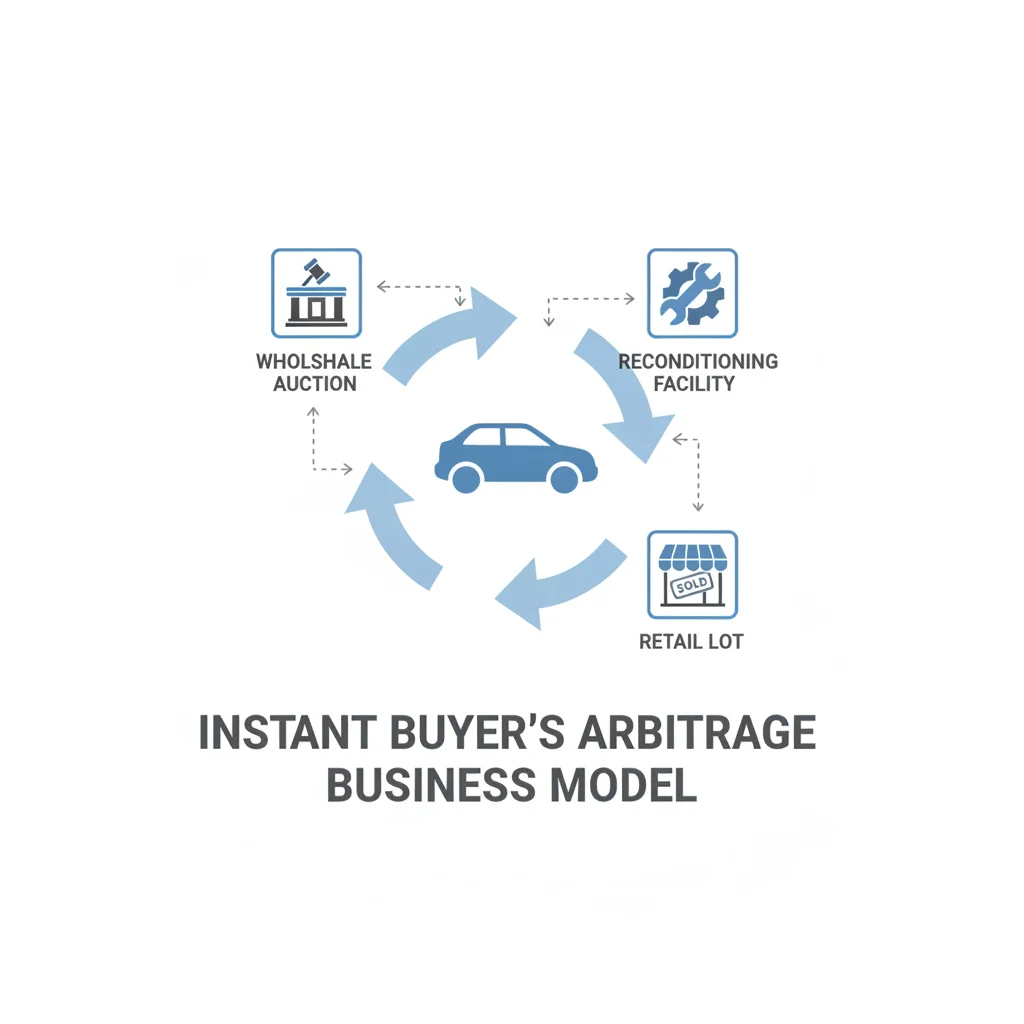
Before you can evaluate what convenience costs you, you need to understand the business model on the other side of the transaction. Instant offer platforms — Carvana, CarMax, Vroom, and their competitors — are not charities. They are wholesale-to-retail arbitrage businesses. They buy your car below retail, recondition it, list it on their own lots or platforms, and sell it at or above retail. The margin between what they pay you and what they sell your car for funds their operations, marketing, and profit.
That's not a criticism — it's simply the structure. The useful question is: how wide is that margin, and is it worth it to you?
Instant platforms generate their offers algorithmically, pulling from wholesale auction data (primarily Manheim and ADESA), local retail listings, days-on-market metrics, and proprietary reconditioning cost estimates. Their models are calibrated to offer enough to win your business while preserving enough margin to remain profitable. You are not the customer in this model — the eventual retail buyer of your car is the customer. You are the supplier.
Understanding this flips the framing. The 'convenience' you're purchasing isn't just speed — it's certainty of sale, elimination of private-sale risk (scammers, no-shows, lowballers), and the ability to close on your timeline. Those are real benefits. But you should price them consciously, not absorb them passively.
Mapping the Real Cost: It's More Than the Offer Price
The convenience cost is not one number. It's a stack of variables that compound. Here's how to map the full gap:
1. The Initial Offer Discount
The online quote you receive is the most visible gap. Most platforms target 10–25% below what a clean private-party sale would yield in your local market. For a vehicle with a realistic private-party value of $20,000, that's an $2,000–$5,000 haircut before anything else happens.
10–25%
Typical instant offer discount vs. private-party value
Based on aggregated seller data and industry analyst estimates comparing instant offer payouts to local private-sale comps for comparable vehicles.
$1,500
Median gap recovered by collecting 3+ instant offers
Sellers who collect three or more competing quotes before accepting routinely recover $500–$2,000 compared to those who accept the first offer received.
21 days
Average private-sale time on market
According to iSeeCars analysis of private-party listings, the median time from listing to a completed sale ranges 14–30 days depending on vehicle type and region.
~$300–$2,000
Typical post-inspection adjustment range
Seller reports and industry data indicate inspection deductions from the initial online quote most commonly fall in this range, with outliers for significant mechanical or structural issues.
Feb–Apr
Peak months for instant offer payouts
Tax refund-driven retail demand pulls wholesale auction prices upward in late winter and early spring, benefiting sellers using instant offer platforms during this window.
2. Post-Inspection Adjustments
The online quote is conditional. When you bring the car in (or a representative inspects it), the platform's appraiser reviews actual condition against what you self-reported. Common adjustment triggers include: undisclosed accident history, tire wear below a threshold, paint defects, mechanical issues, interior damage, and mileage that came in higher than estimated. These deductions can range from a few hundred dollars on a minor issue to several thousand on structural or powertrain concerns.
This is the part most sellers don't expect. The headline offer gets them in the door; the inspection adjustment closes the real deal — often on worse terms.
3. Lien Payoff Timing
If you owe money on the car, the platform pays your lender directly and sends you the difference. The problem: there's often a 2–10 business day lag between when they cut your check and when the lender posts the payoff. During this window, interest continues to accrue. On a $15,000 balance at 7% APR, that's roughly $2.88 per day — not catastrophic, but worth knowing.
4. Title and Fee Variables
Most platforms cover title transfer fees, but some pass documentation or administrative fees back to sellers in their net payout calculation. Always ask for an itemized settlement sheet before signing anything.
Online Quotes Are Always Conditional
Every instant offer generated online is subject to physical or virtual inspection. The platform's appraiser has final say on condition adjustments, and these deductions are applied to the final payout — not the quoted amount. Treat the online number as an estimate and build in a 3–8% buffer when doing your comparison math.
Market Conditions Affect Instant Offers Too
Instant offer algorithms reprice frequently — sometimes daily — based on wholesale auction market movements. An offer you receive today may not be available in two weeks if wholesale values shift. This is especially relevant in declining markets, where platforms reduce offers faster than private buyers adjust their expectations. See our coverage of <a href="/selling-your-car/sale-channels/instant-offer-platforms/selling-during-a-soft-market-how-instant-offers-hold-up-when-prices-drop">how instant offers behave in soft markets</a> for more detail.
Add these layers together and the true convenience cost often exceeds what the initial offer gap suggests. A seller who sees a $1,500 offer gap versus private sale might find the all-in gap is $2,800 once adjustments and timing costs are factored in.
What You'd Actually Net in a Private Sale (Honest Math)
Private sale advocates often cite the top-end Kelley Blue Book or Edmunds private-party value as what sellers 'could get.' That's aspirational math. Here's a more grounded calculation:
- Starting point: Edmunds or KBB private-party value for your car in 'Good' condition (not 'Excellent' — be realistic)
- Minus: Any reconditioning you'd invest to make the car presentable (detail, minor repairs, new tires if needed)
- Minus: Listing platform fees (eBay Motors, Autotrader, and similar charge $25–$100 for featured listings)
- Minus: The negotiation haircut — private buyers almost always negotiate, typically 3–8% below asking price
- Minus: Your time, at whatever hourly value you assign it — responding to inquiries, scheduling test drives, handling paperwork
- Minus: Risk discount — the probability of a deal falling through (no-shows, financing failures, payment disputes)
When you run this math honestly, the net private-party advantage narrows — sometimes to $1,000–$2,000 on a $20,000 vehicle. That's still meaningful money, but it changes the decision calculus compared to the raw offer gap.
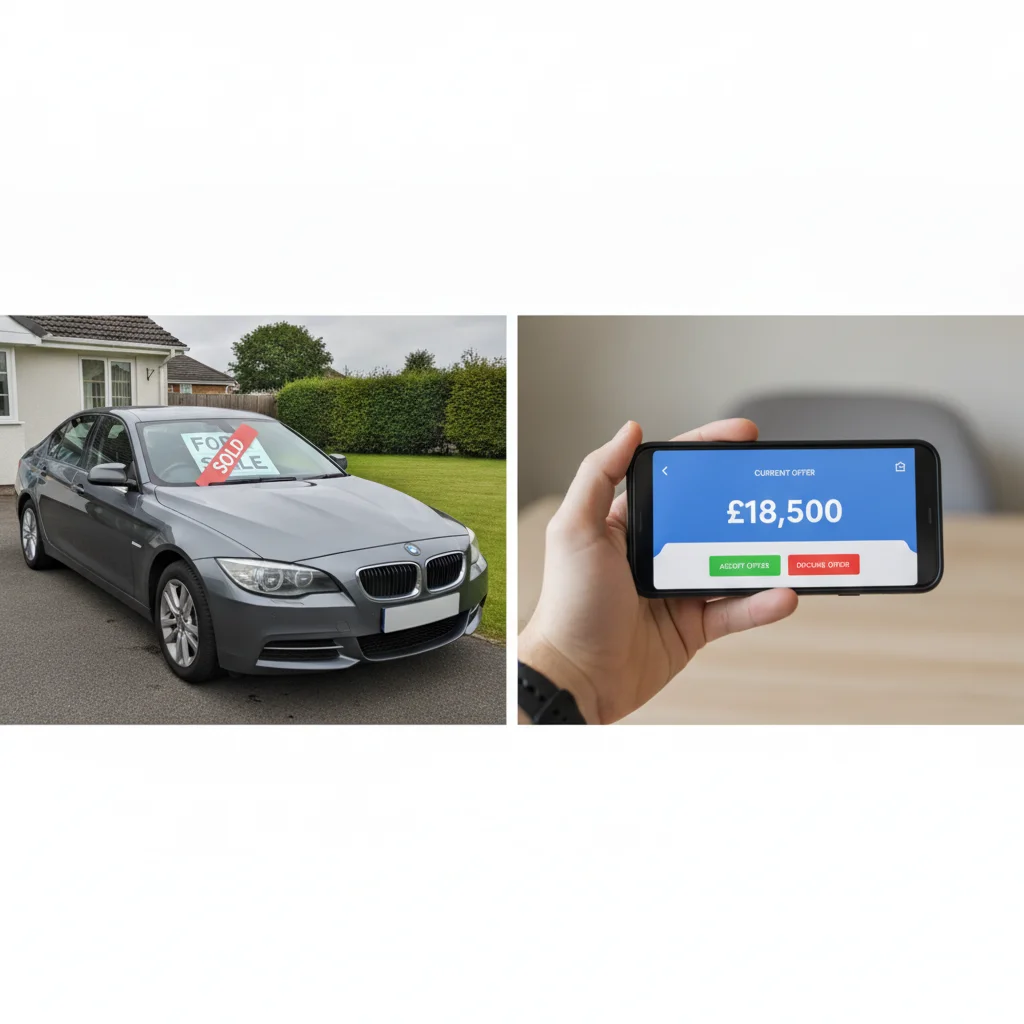
The gap is largest for vehicles that attract motivated, competition-driven private buyers: low-mileage examples of popular models, trucks, performance cars, and anything with a waiting list at dealerships. On a 2022 Toyota Tacoma with 28,000 miles, the private-sale premium can realistically exceed $3,000–$5,000 over an instant offer. On a 2014 sedan with 110,000 miles and a check engine light, the private-sale premium may be essentially zero — or even negative once reconditioning and risk are priced in.
See the full framework in our comparison of when each selling channel makes financial sense.
When the Convenience Cost Is Worth Paying
I've watched sellers leave thousands on the table by defaulting to an instant offer without thinking it through — and I've watched others spend six weeks chasing private buyers and net only a few hundred dollars more than they'd have gotten on day one. Context determines the right call.
“Convenience is the most expensive feature in any transaction. The moment a buyer knows you need speed, they price that need into their offer. The seller who can walk away — and demonstrate it — always does better.”
— Desmond Kimathi, Former dealership finance manager and auto financing analyst
Pay the convenience cost when:
- You're in a time crunch — relocation, job change, new car delivery date looming
- The car has a significant mechanical issue, salvage title, or high mileage that makes private-sale disclosure legally or practically complicated
- The vehicle is a segment where private buyers are scarce (obscure European sedans, base-model economy cars, older luxury vehicles with high repair costs)
- You've run the math and the net gap is under $800–$1,000 — at that point, your time is likely worth more
- The local private market is soft — rural areas with limited buyer pools compress private-sale premiums significantly
Collect Quotes Before You Need To
The best time to get instant offers is before you're under time pressure. If you know you'll be selling in 90 days, get baseline quotes now. This gives you a reference point, reveals your vehicle's market position, and means you won't accept a low offer simply because you're in a rush. Offers expire, but the intelligence they give you doesn't.
Run the Full Math Before Accepting
Don't compare the instant offer to the top Kelley Blue Book value — compare it to your honest net private-sale estimate after negotiation, reconditioning, time, and risk. Most sellers find the real gap is meaningfully narrower than the headline difference suggests. That honest gap is the number that should drive your decision.
Resist the convenience pitch when:
- Your vehicle is high-demand, low-mileage, or a segment where private buyers are aggressive (trucks, SUVs, sports cars, clean late-model sedans)
- You have 4–6 weeks and a support system to handle test drives and paperwork
- The gap between your best instant offer and local comps exceeds $2,500 after your honest private-sale cost calculation
- You're in a metro area with deep private-buyer pools (more competition = closer to full value)
For premium and exotic vehicles, the dynamic is even more pronounced. Mainstream instant buyers frequently use mainstream wholesale models that systematically undervalue low-volume, high-end vehicles. Our analysis of selling luxury cars through instant offer services covers where that gap appears and which channels serve high-end sellers better.
How to Shrink the Convenience Cost Without Going Private
If you decide instant sale is right for you, the gap isn't fixed — it's negotiable through competition. Here's the approach I recommend:
Get at Least Three Offers in One Session
Carvana, CarMax, and at least one additional platform (Vroom, Shift, or a local dealer appraisal tool) should all see your car on the same day. Use the same VIN, mileage, and condition description across all three. This takes about 45 minutes online. The spread between offers on the same vehicle routinely runs $500–$2,000 — simply choosing the highest payer recovers a meaningful portion of the convenience cost without any negotiation.
Time Your Sale Strategically
Wholesale market values (which feed instant offer algorithms) peak in late winter and early spring — tax refund season drives retail demand, which pulls wholesale prices up. If your car can wait, listing in February or March often yields noticeably better instant offers than December or January. Market timing matters even in the instant-sale channel.
Be aware that the inverse is also true: in soft markets, instant offer platforms often reprice downward faster than private buyers react. Our coverage of how instant offers hold up during soft markets explains the mechanics.
Disclose Strategically, Not Selectively
Proactively noting genuine positives — recent service records, new tires, accident-free Carfax — can influence the algorithmic pricing favorably. Withholding known problems to get a higher quote only delays the pain to the inspection stage, where adjustments are made on the platform's terms, not yours.
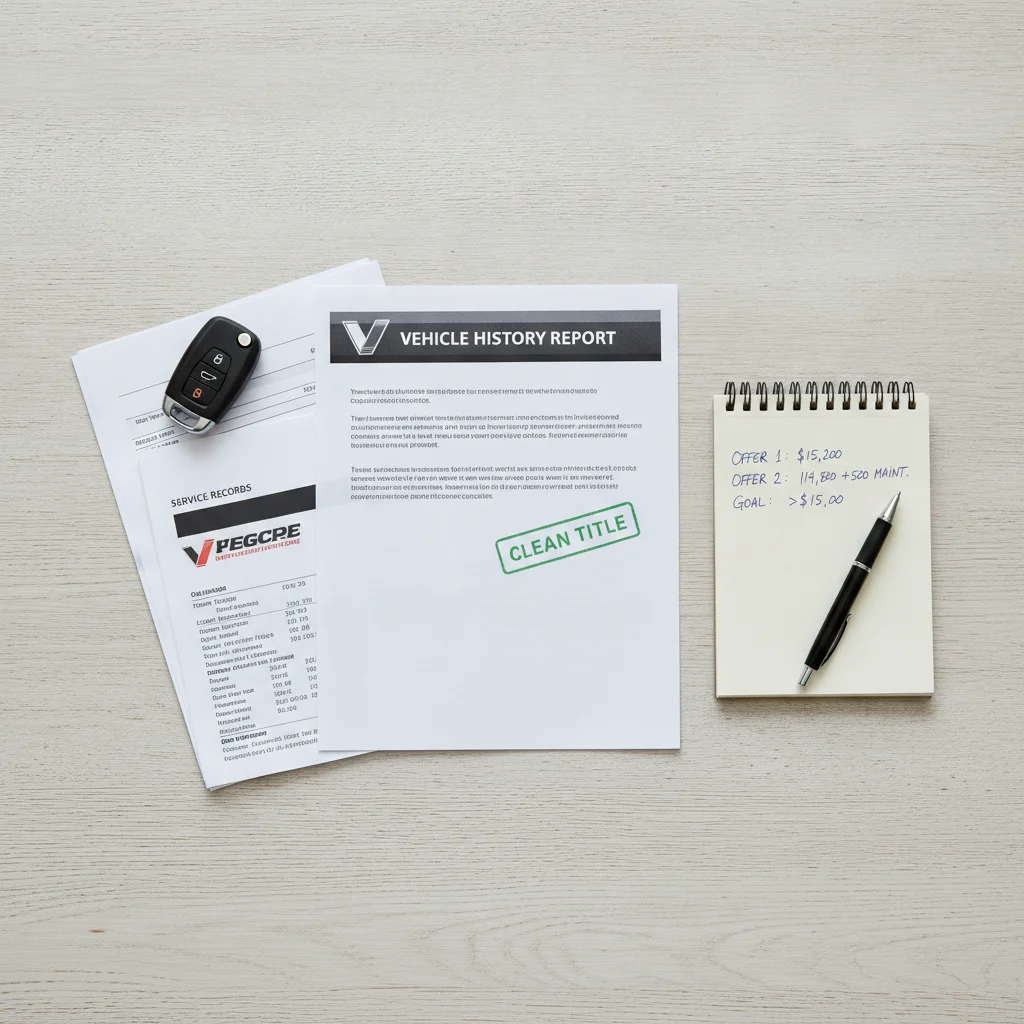
For a deeper playbook on squeezing more out of the instant offer process, the strategies in maximizing your payout when selling through an online car buyer are worth reviewing before you accept any offer.
Comparing Platforms: Not All Instant Buyers Discount Equally
The convenience cost isn't uniform across platforms. Different services have different acquisition strategies, reconditioning capabilities, and retail outlet structures — all of which affect how aggressively they need to discount your offer to remain profitable.
Large National Platforms
Carvana and CarMax have massive retail networks and high reconditioning throughput. Their offers tend to be competitive because they can move volume efficiently. CarMax has the added advantage of an in-person appraisal that some sellers find more transparent than online-only quotes.
Dealer Trade-In vs. Instant Offer Tools
Many franchised dealers use the same Kelley Blue Book Instant Cash Offer or similar tools as a lead-generation mechanism. These offers are often lower than dedicated instant-sale platforms because the dealer's primary interest is getting you onto the lot to upsell a new vehicle, not maximizing your trade-in value. If you're not buying a replacement car from that dealer, their instant offer is rarely the best option.
Niche and Regional Buyers
For certain vehicle types — classic cars, trucks, enthusiast vehicles — specialty buyers or auction platforms (Bring a Trailer, Cars & Bids) often outperform mainstream instant buyers significantly, though they require more time and carry more transaction uncertainty than a direct instant offer.
Our ranked comparison of instant offer platforms evaluates the major players on payout, speed, and seller experience if you want a side-by-side breakdown.
The Decision Framework: Quantify Before You Commit
Here's the framework I give anyone about to sell their car. Run these numbers before you accept any offer:
- Pull your private-party value from Edmunds and KBB, using 'Good' condition. Average the two figures.
- Apply a 5% negotiation discount to simulate realistic private-sale outcome.
- Subtract realistic reconditioning costs — what would you spend to make this car presentable to a private buyer?
- Subtract your time cost — estimate 8–15 hours of total effort for a private sale (photos, listing, inquiries, test drives, paperwork). Apply your real or imputed hourly rate.
- Get your best instant offer from at least three platforms.
- Calculate the gap between your adjusted private-sale estimate and your best instant offer.
If the gap is under $500, take the instant offer without hesitation. If it's $500–$1,500, weigh your time constraints and risk tolerance. If it's over $1,500, the private sale deserves serious consideration — provided your vehicle is the kind that attracts motivated buyers.
For the full end-to-end process of working with an instant offer platform once you've decided to proceed, our complete seller's guide to instant offer platforms walks through every step. And if private sale still interests you, the private party sales hub covers listing, negotiation, and closing a deal directly with buyers.
Collect Quotes Before You Need To
The best time to get instant offers is before you're under time pressure. If you know you'll be selling in 90 days, get baseline quotes now. This gives you a reference point, reveals your vehicle's market position, and means you won't accept a low offer simply because you're in a rush. Offers expire, but the intelligence they give you doesn't.
Run the Full Math Before Accepting
Don't compare the instant offer to the top Kelley Blue Book value — compare it to your honest net private-sale estimate after negotiation, reconditioning, time, and risk. Most sellers find the real gap is meaningfully narrower than the headline difference suggests. That honest gap is the number that should drive your decision.
Convenience is a legitimate reason to sell faster for less. The only mistake is not knowing how much you're paying for it.

All claims are backed by peer-reviewed research. Sources on request.