Key Takeaways
Guaranteed offer removes price uncertainty entirely
Unlike auctions or private listings, an instant offer is a firm number you can act on immediately. For sellers who need liquidity or a clean transaction timeline, this certainty has real financial value.
No need to manage buyers, test drives, or negotiations
Luxury vehicle owners often have demanding schedules. Avoiding the weeks of inquiries, tire-kickers, and back-and-forth negotiations that accompany a private sale is a concrete benefit, not just a convenience.
Establishes a defensible floor price for negotiations
A firm instant offer in hand gives you leverage when approaching specialty dealers or consignment brokers. They must beat a documented number, which shifts the negotiation dynamic in your favor.
Fast transaction suits time-sensitive situations
Relocation, estate sales, divorce proceedings, or lease-end timing can all create hard deadlines. Instant offer platforms can close in as little as 24–48 hours when needed.
Free pickup available for most luxury vehicles
Most major instant offer platforms include complimentary vehicle pickup, eliminating the logistics of transport — relevant for exotics that aren't daily drivers and may not be easily moved.
Algorithms systematically undervalue rare option packages
Instant offer pricing engines cannot fully account for the value of rare factory options on low-production vehicles. A heavily optioned Porsche or AMG-spec Mercedes can be undervalued by $10,000–$25,000 compared to what an informed private buyer would pay.
Limited resale network for true exotics
Platforms optimized for mainstream inventory don't have the buyer pipeline to resell a McLaren or Ferrari at retail speed. Their offers on exotics are heavily discounted to compensate for longer holding times and geographic limitations.
Final inspection adjustments can reduce the initial offer
The number you receive online is conditional. Platforms routinely reduce offers by $1,500–$5,000 or more during the in-person inspection phase, citing paint issues, wear items, or minor reconditioning costs — often at a markup over actual repair cost.
Provenance and history carry no weight in algorithmic pricing
For collector-grade vehicles, a documented ownership history, matching numbers, or unrestored original condition can add substantial value that no instant offer platform will credit. These are purely human-value factors.
Consignment and specialist dealers often net more after fees
Even after paying a 5–8% consignment commission to a specialty dealer, sellers of exotics and ultra-luxury vehicles frequently net more than an instant offer would have provided — sometimes by a significant margin.
Seven-day offer window creates artificial urgency
Short expiration windows can pressure sellers into accepting an offer before they've had time to properly assess alternatives. This time pressure almost always benefits the platform, not the seller.
Our Verdict
Instant offer platforms work best for mainstream-brand luxury vehicles — think BMW 3 Series, Lexus RX, or Mercedes C-Class — where resale data is abundant and demand is broad. For true exotics, limited-production models, or any car where options and provenance meaningfully inflate value, these platforms will almost always leave significant money on the table. The convenience is real, but so is the cost.
Best for luxury sellers who prioritize speed and simplicity over maximizing return, particularly those with popular, well-documented vehicles that fall squarely within a platform's pricing database.
Why Instant Offer Platforms Struggle With Premium Vehicles
Instant offer platforms built their pricing engines on volume. Carvana, CarMax, Vroom, and their competitors process hundreds of thousands of mainstream vehicles annually. Their algorithms are trained on Camrys, F-150s, and CR-Vs — not Porsche 911 Turbos or Bentley Continentals. When you submit a high-end vehicle, you're asking a mass-market machine to price something it rarely sees.
The result is predictable: the algorithm defaults to conservatism. When comparable sales data is thin, the model widens its margin to account for uncertainty. That uncertainty gets passed directly to you as a lower offer. It's not malice — it's math. The platform doesn't want to be stuck holding a $180,000 vehicle it can't move quickly.
To understand the mechanics behind how these offers are actually generated, see how instant offer platforms actually work. The short version: offers are funded by wholesale expectations, not retail optimism. For a $45,000 Accord, that spread is manageable. For a $250,000 Lamborghini Urus, the spread can be catastrophic to your net proceeds.
There's also a logistical reality. Platforms like Carvana have geographic distribution networks designed for broadly sellable inventory. An exotic car sitting on their lot in Cincinnati isn't drawing the same buyer pool as it would on a specialty platform or at a consignment auction in a major metro market. Their holding costs and resale risk are higher, and they price accordingly.
Where Instant Offers Actually Work for Luxury Sellers
Not every premium vehicle is a poor candidate for an instant offer. The platforms perform significantly better — and the offers get more competitive — when your vehicle hits a specific profile:
- High production volume: BMW 5 Series, Mercedes E-Class, Audi Q5, Lexus RX — these have enough resale comps that algorithms price them accurately.
- Standard configuration: Lightly optioned vehicles in common colors (black, white, silver) move faster on platform lots, so offers reflect that demand.
- Under 50,000 miles, clean history: Platforms heavily discount vehicles with service gaps or accident history. A clean luxury car in this range often gets a fair offer.
- Manufacturer CPO eligibility: If the platform can recertify it for resale, they'll pay more for it.
If your vehicle fits this profile, running an instant offer is a legitimate strategy — especially as a floor price before exploring private channels. Platforms ranked by payout and seller experience can help you identify which services have historically been more competitive for premium inventory.

The key move: never treat a single instant offer as market value. Get offers from at least three platforms before making any decision. The spread between the lowest and highest offer on a $75,000 luxury SUV can easily exceed $8,000 — and that's before you've contacted a specialty dealer.
12–18%
Typical gap: instant offer vs. private party on exotics
Industry resale data and specialty dealer estimates consistently show instant offer platforms pricing exotic and ultra-luxury vehicles 12–18% below achievable private party value.
~$8,000
Average offer spread across platforms on luxury SUVs
Sellers who gather multiple instant offers on popular luxury SUVs routinely find $6,000–$10,000 spreads between the lowest and highest platform bids on the same vehicle.
4–8%
Specialty consignment fee range for exotic vehicles
High-end consignment dealers typically charge 4–8% of the final sale price — often still yielding more than an instant offer after accounting for the premium buyer pool they access.
The Pros of Using Instant Offer Services for Luxury and Exotic Cars
Speed and simplicity are the core value proposition, and they're genuine advantages even for high-end sellers in the right circumstances.
Guaranteed offer removes price uncertainty entirely
Unlike auctions or private listings, an instant offer is a firm number you can act on immediately. For sellers who need liquidity or a clean transaction timeline, this certainty has real financial value.
No need to manage buyers, test drives, or negotiations
Luxury vehicle owners often have demanding schedules. Avoiding the weeks of inquiries, tire-kickers, and back-and-forth negotiations that accompany a private sale is a concrete benefit, not just a convenience.
Establishes a defensible floor price for negotiations
A firm instant offer in hand gives you leverage when approaching specialty dealers or consignment brokers. They must beat a documented number, which shifts the negotiation dynamic in your favor.
Fast transaction suits time-sensitive situations
Relocation, estate sales, divorce proceedings, or lease-end timing can all create hard deadlines. Instant offer platforms can close in as little as 24–48 hours when needed.
Free pickup available for most luxury vehicles
Most major instant offer platforms include complimentary vehicle pickup, eliminating the logistics of transport — relevant for exotics that aren't daily drivers and may not be easily moved.
One underappreciated benefit: instant offers give you a defensible floor price before entering any negotiation. If a specialty dealer knows you have a firm $95,000 offer from Carvana in hand, they have to beat it or explain why their consignment deal is worth a lower guarantee. That's leverage you wouldn't otherwise have.
There's also a tax angle worth noting. In most states, trading a vehicle into a dealership reduces the taxable base on your new purchase. While instant offer platforms aren't traditional trade-ins, some sellers use the offer to negotiate a structured transaction that captures this benefit — particularly relevant when moving into another luxury purchase.
The Cons That Hit Luxury and Exotic Sellers Hardest
The disadvantages for premium vehicle sellers are not abstract — they translate directly into dollars left behind, sometimes tens of thousands of them.
Algorithms systematically undervalue rare option packages
Instant offer pricing engines cannot fully account for the value of rare factory options on low-production vehicles. A heavily optioned Porsche or AMG-spec Mercedes can be undervalued by $10,000–$25,000 compared to what an informed private buyer would pay.
Limited resale network for true exotics
Platforms optimized for mainstream inventory don't have the buyer pipeline to resell a McLaren or Ferrari at retail speed. Their offers on exotics are heavily discounted to compensate for longer holding times and geographic limitations.
Final inspection adjustments can reduce the initial offer
The number you receive online is conditional. Platforms routinely reduce offers by $1,500–$5,000 or more during the in-person inspection phase, citing paint issues, wear items, or minor reconditioning costs — often at a markup over actual repair cost.
Provenance and history carry no weight in algorithmic pricing
For collector-grade vehicles, a documented ownership history, matching numbers, or unrestored original condition can add substantial value that no instant offer platform will credit. These are purely human-value factors.
Consignment and specialist dealers often net more after fees
Even after paying a 5–8% consignment commission to a specialty dealer, sellers of exotics and ultra-luxury vehicles frequently net more than an instant offer would have provided — sometimes by a significant margin.
Seven-day offer window creates artificial urgency
Short expiration windows can pressure sellers into accepting an offer before they've had time to properly assess alternatives. This time pressure almost always benefits the platform, not the seller.
The single most damaging issue is what I call the options blindspot. A 2021 Porsche 911 with the Sport Chrono Package, PASM Sport Suspension, and Burmester audio might have $28,000 in factory options. An instant offer platform sees a 911 Carrera. Their algorithm applies a generic adjustment for trim level, but it cannot fully account for the precise option combination. On a $130,000 car, that can mean a $15,000–$22,000 offer gap versus a specialist who knows exactly what those options mean to a Porsche buyer.
The real cost of convenience when selling to an instant buyer lays out a framework for quantifying exactly this kind of gap. Run the math before you accept anything.
CPO Eligibility Can Boost Instant Offers
If your luxury vehicle is still within the age and mileage window for manufacturer Certified Pre-Owned eligibility, mention this during any platform interaction. CPO-eligible vehicles are easier for platforms to resell at retail premium, and some — particularly CarMax — factor this into their bids. Check your manufacturer's CPO criteria before submitting.
Offer Expirations Are Negotiable More Often Than You Think
Most instant offer platforms will extend or refresh an expired offer if you contact them proactively. The platform's interest in acquiring your vehicle doesn't disappear at the 7-day mark. If you need more time to compare alternatives, ask — the worst outcome is a resubmission that generates an identical or slightly updated offer.
Auction Results as a Real-Time Market Check
Manheim and ADESA auction results for your vehicle's make, model, trim, and approximate mileage are the most accurate wholesale baseline available. Some auction data is accessible through dealer contacts or via subscription tools like Manheim Market Report. Knowing the current wholesale number tells you immediately whether an instant offer is reasonable or exploitative.
Better Alternatives for Exotics and Ultra-Premium Vehicles
If you're selling a true exotic — Ferrari, Lamborghini, McLaren, Aston Martin, Rolls-Royce, Bentley — the instant offer channel should be a last resort, not a first call. The buyer pool for these vehicles is small, geographically dispersed, and extremely sensitive to provenance, documentation, and condition specifics that no algorithm can adequately price.
Specialty Consignment Dealers
Dupontregistry, RMSotheby's, Barrett-Jackson, and brand-specific dealers (Ferrari of Beverly Hills, Lamborghini Palm Beach) have direct access to the buyers who pay retail-adjacent prices for rare vehicles. Consignment fees typically run 4–8%, but on a $300,000 car, netting $276,000 versus an instant offer of $240,000 is a straightforward calculation.
Enthusiast Marketplace Platforms
Platforms like Cars & Bids, Bring a Trailer, and PCarMarket attract informed buyers who understand option packages, matching-numbers significance, and service history. These are auction-format platforms, so there's price risk — but for correctly documented exotics, they routinely achieve results that dwarf instant offer benchmarks.
Private Party with a Pre-Sale Inspection
For luxury vehicles in the $60,000–$150,000 range, a well-documented private party sale remains the highest-return channel. The friction is real — you'll deal with tire-kickers, financing contingencies, and negotiation — but private party sale strategies can help you manage that process efficiently. A pre-sale inspection from an independent shop removes the buyer's biggest objection and often justifies a higher asking price.
Compare this approach with what sellers of non-premium vehicles face: selling a high-mileage or older vehicle through instant offer platforms — where the dynamics are almost the inverse of the luxury market.
How to Prepare a Luxury Vehicle to Maximize Any Offer
Whether you pursue an instant offer as a floor or as your primary sale channel, documentation is the single highest-leverage investment you can make before submission. Here's the pre-submission checklist I'd run on any vehicle above $60,000:
- Locate the original window sticker (Monroney): This documents every factory option and the original MSRP. Instant offer platforms rarely ask for it, but specialty buyers and private parties will pay more when it's present. Several manufacturers allow you to reprint it via VIN lookup on their owner portals.
- Compile the complete service history: Dealer-stamped service records are gold. A Porsche or Ferrari with every service performed at a marque dealer commands a premium that a car with independent-shop records does not — at any channel.
- Get a pre-sale inspection from a brand specialist: A clean inspection report from a Ferrari-certified technician or Porsche specialist is a negotiating document. It preempts lowball adjustments during the final physical inspection that platforms conduct before confirming their offer.
- Detail the vehicle professionally: Platforms do conduct in-person inspections. Paint condition, interior wear, and wheel condition affect their final adjusted offer. A $400 detail on a $120,000 car is a trivially good investment.
- Document any aftermarket modifications — or remove them: Tasteful factory-authorized accessories can add value. Aftermarket modifications — even expensive ones — typically reduce offers on luxury vehicles because they narrow the resale buyer pool.
For a comprehensive walkthrough of the entire process, the complete end-to-end guide to selling to an instant offer platform covers each stage from submission through payout.
Reading the Offer: What the Numbers Actually Tell You
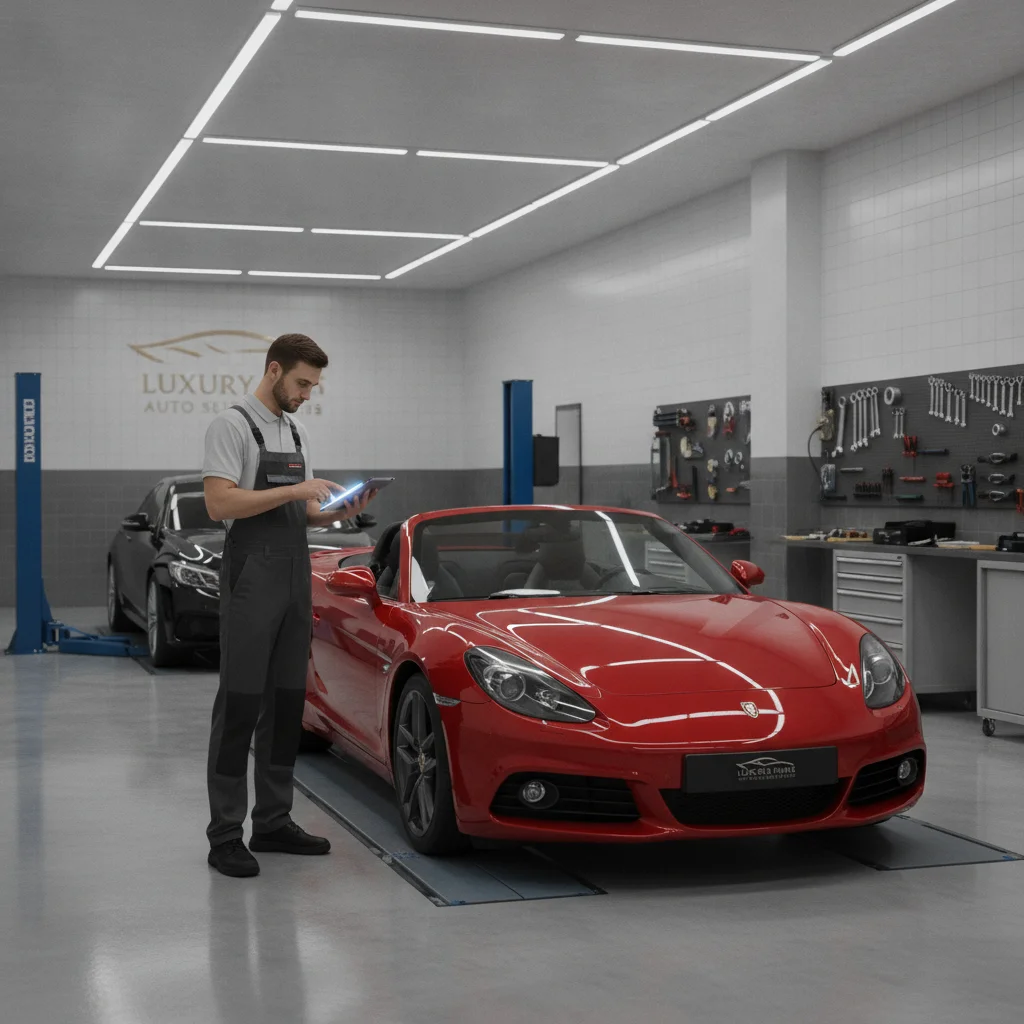
When an instant offer comes back, most sellers evaluate it against one number: what they think the car is worth. That's the wrong comparison. Evaluate the offer against three benchmarks:
| Benchmark | Source | What It Tells You |
|---|---|---|
| Wholesale (auction) value | Manheim Market Report, Black Book | The floor — what a dealer would pay at auction |
| Private party retail | Autotrader, Cars.com, PCarMarket comparable listings | The ceiling — what a motivated retail buyer will pay |
| Instant offer | Carvana, CarMax, Vroom, etc. | The convenience price — usually between wholesale and private party |
A fair instant offer on a luxury vehicle lands 85–92% of private party retail value. An offer below 80% of private party retail is a signal that the platform's algorithm has limited confidence in the vehicle — and that you have significant upside if you're willing to invest time in a different channel.
One more thing: instant offers expire, typically within 7 days. Don't let urgency override analysis. If you need more time to evaluate alternatives, you can often resubmit and receive a refreshed offer — the platform wants your car just as much after the expiry as before it.
CPO Eligibility Can Boost Instant Offers
If your luxury vehicle is still within the age and mileage window for manufacturer Certified Pre-Owned eligibility, mention this during any platform interaction. CPO-eligible vehicles are easier for platforms to resell at retail premium, and some — particularly CarMax — factor this into their bids. Check your manufacturer's CPO criteria before submitting.
Offer Expirations Are Negotiable More Often Than You Think
Most instant offer platforms will extend or refresh an expired offer if you contact them proactively. The platform's interest in acquiring your vehicle doesn't disappear at the 7-day mark. If you need more time to compare alternatives, ask — the worst outcome is a resubmission that generates an identical or slightly updated offer.
Auction Results as a Real-Time Market Check
Manheim and ADESA auction results for your vehicle's make, model, trim, and approximate mileage are the most accurate wholesale baseline available. Some auction data is accessible through dealer contacts or via subscription tools like Manheim Market Report. Knowing the current wholesale number tells you immediately whether an instant offer is reasonable or exploitative.

All claims are backed by peer-reviewed research. Sources on request.