Key Takeaways
Soft Used Car Market
A soft used car market is a period when used vehicle prices are declining — demand has cooled, inventory has risen, or both. Sellers receive less for their cars than they would have during a peak period. Understanding whether you're in a soft market is the first step to making a smarter exit decision.
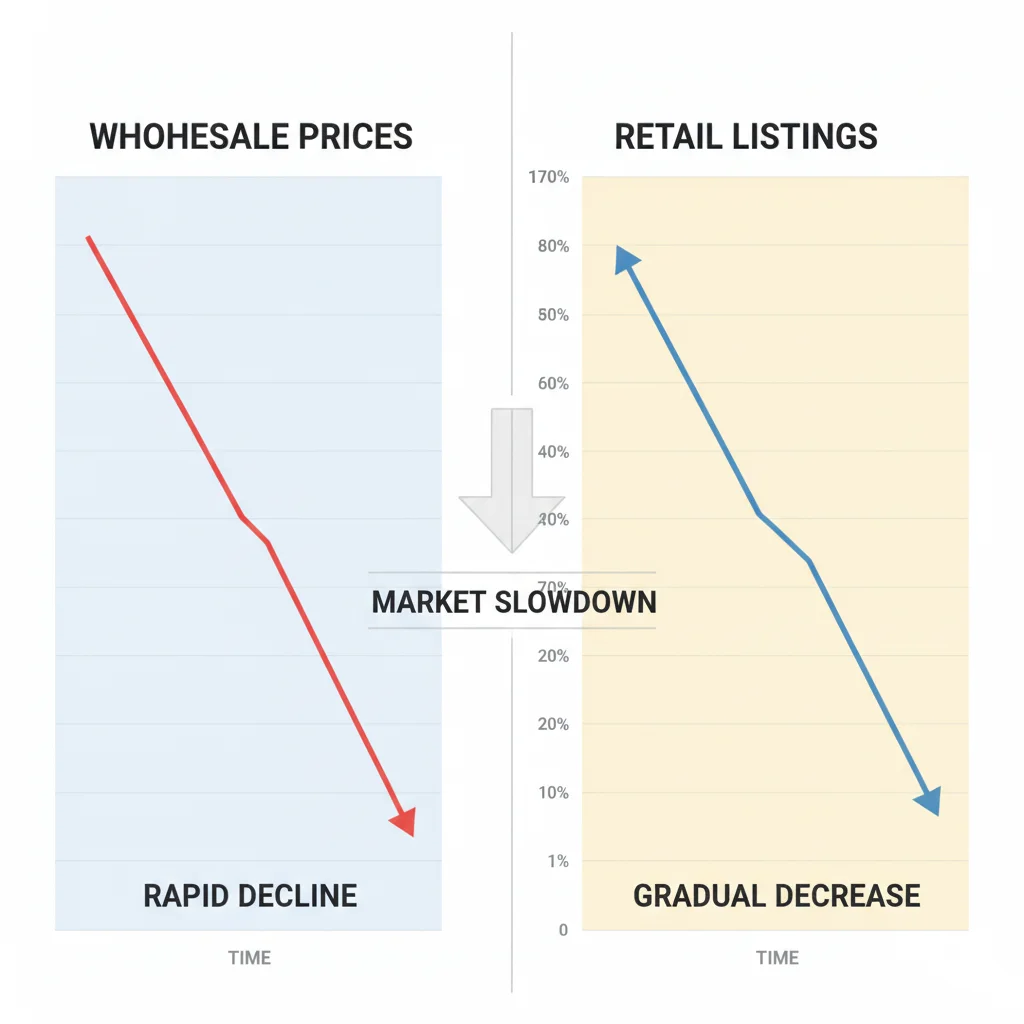
Wholesale auction prices — tracked by indices like Manheim Used Vehicle Value Index — often lead retail softness by 4–8 weeks, making them an early indicator of where instant offer algorithms will price your car next.
What 'Soft Market' Actually Means for Your Car's Value
When used car values are climbing, selling feels easy — nearly any channel will get you close to what you want. A soft market changes that math entirely. Prices fall, buyers get choosy, and every week you delay costs you money. What most sellers don't realize is that instant offer platforms don't wait for retail trends to catch up. They're priced off wholesale data that moves ahead of the retail market.
The market timing context matters here: a soft market isn't necessarily a crash. It can be a gradual 5–15% decline over several months, driven by rising new-car inventory, higher interest rates suppressing buyer demand, or seasonal slowdowns. But even a modest decline compresses what you'll net — whether you're selling privately or to an instant buyer.
There's one more wrinkle that catches sellers off guard: the soft market doesn't hit all vehicles equally. Full-size trucks and three-row SUVs tend to hold value longer than compact sedans or luxury vehicles with high carrying costs. If you're selling a segment that's already oversupplied at auction, instant offer platforms will reflect that faster than any private listing will.
How to Check if You're in a Soft Market
The Manheim Used Vehicle Value Index is the most widely cited wholesale price tracker and publishes monthly reports with mid-month updates. Cox Automotive also releases quarterly market updates that are publicly accessible. If the index has declined for two or more consecutive months, treat that as a soft market signal. Regional conditions can diverge from national trends — a market oversupplied with compact sedans in the Midwest may not reflect what's happening with trucks in the Southeast.
Instant Offer Algorithms Are Not Static
Platforms like Carvana and CarMax update their pricing models continuously based on auction results, regional inventory levels, and days-to-turn data from their own lots. The offer you received this morning may reflect data that's already a few days old. This is not a flaw in the system — it's by design. Understanding this helps you time your submissions and know when to act versus when to wait.
How Instant Offer Platforms Reprice in Real Time
To understand what happens to your quote in a falling market, you need to understand how these platforms generate offers in the first place. As explained in detail in how instant offer platforms actually work, these services use algorithmic pricing tied to real-time wholesale auction data, regional supply-demand signals, and their own inventory needs.
That last point is critical. When wholesale auction prices drop — and indices like the Manheim Used Vehicle Value Index are publicly available — the algorithms don't wait. Offers adjust within days, sometimes within 24 hours. A quote you received on Monday may already be stale by Wednesday if a major auction report dropped in between.
4–8 weeks
Wholesale leads retail price movements
Industry analysis of Manheim auction data shows wholesale prices typically move ahead of retail by one to two months, giving platforms early repricing signals.
7 days
Typical instant offer expiration window
Most major instant offer platforms — including Carvana and CarMax — expire quotes within seven calendar days of generation, after which a lower re-quote is common in a falling market.
Up to 15%
Used car price declines in soft cycles
During the 2023 market correction, Manheim's Used Vehicle Value Index recorded peak-to-trough declines in excess of 10–15% across multiple vehicle segments.
$1,500–$3,000
Typical convenience gap vs. private sale
Research and seller reporting consistently show instant offer payouts trail optimized private sale outcomes by this range in stable market conditions — a gap that narrows when the market softens.
This is fundamentally different from how a private buyer behaves. Someone shopping Facebook Marketplace or Craigslist is anchored to their own sense of value — often based on what they saw listed three months ago. They haven't read the Manheim report. They're not running regression models. That lag creates a brief window where private buyers are still willing to pay closer to peak prices, even as the wholesale market has already softened. But that window closes as listings pile up and buyers start comparing.
“The used car market moves in wholesale first, retail second. By the time a private seller adjusts their Craigslist price, the auction floor has already moved twice.”
— Tom Kontos, Former Chief Economist, ADESA Auctions
The implication is clear: instant offer platforms are almost always ahead of the retail market in a downturn. If you're going to use one, move fast once you have a quote in hand. For details on how expiration policies work across major platforms, see the offer expiration clock.
The Convenience Gap in a Falling Market
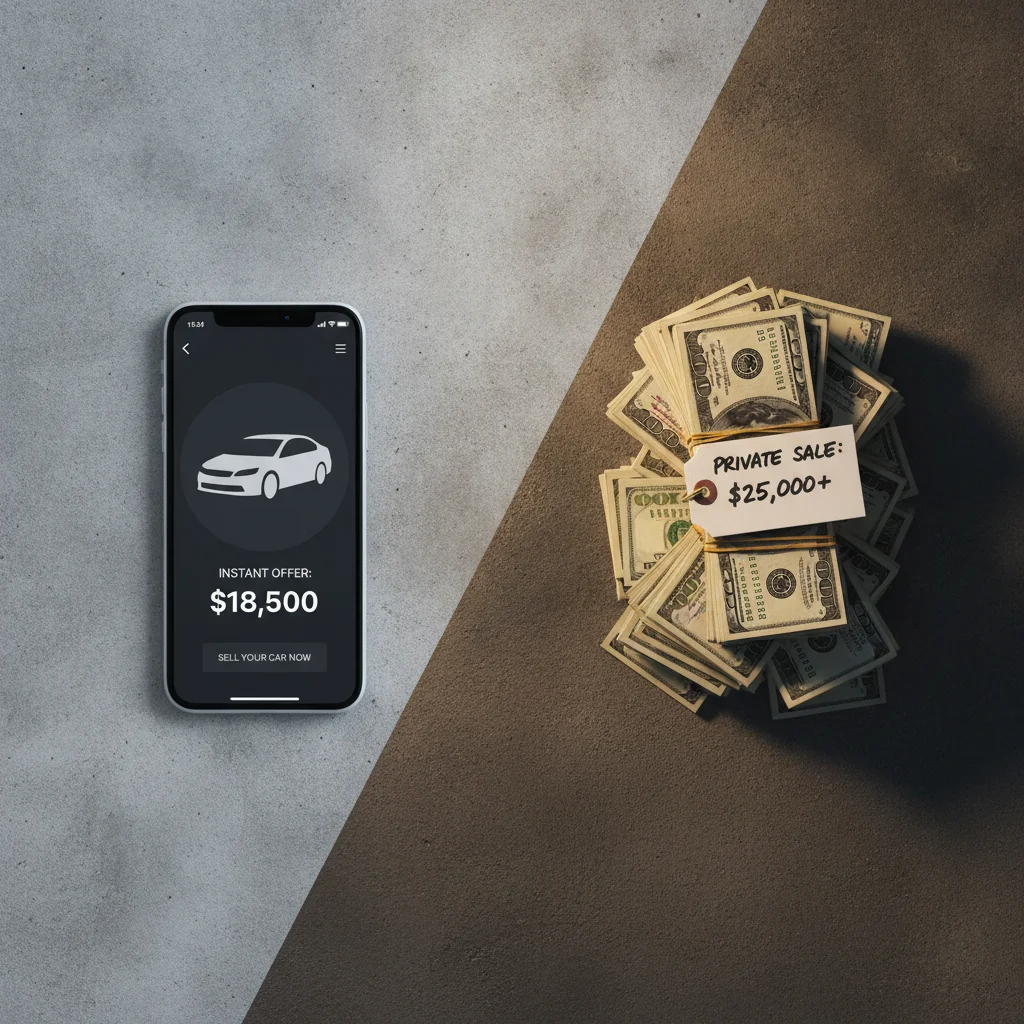
There's always a cost to selling instantly — you're trading away some equity for speed and certainty. In a strong market, that gap can be $1,500–$3,000 or more compared to a well-executed private sale. In a soft market, the gap actually narrows — but not because instant offers improve. It narrows because private sale results deteriorate too.
Here's the sequence that plays out when prices fall:
- Instant offer platforms cut their prices immediately, tracking wholesale data in near-real-time.
- Private buyers take longer to adjust, but as inventory builds and listings sit, they start making lowball offers.
- Time on market increases for private sellers, which means carrying costs — insurance, registration, loan payments if applicable — start eating into the net proceeds.
- The seller who listed at last month's price eventually drops their ask to match reality, often ending up below what the instant offer would have paid weeks earlier.
That last point is worth sitting with. I've seen sellers refuse a $22,000 instant offer thinking they could get $24,500 privately. Six weeks and two price cuts later, they closed at $21,000 — after paying another month of insurance and losing the time value of the cash. The real cost of convenience article walks through how to model this gap for your specific situation.
Anchor Your Expectations to Auction Trends
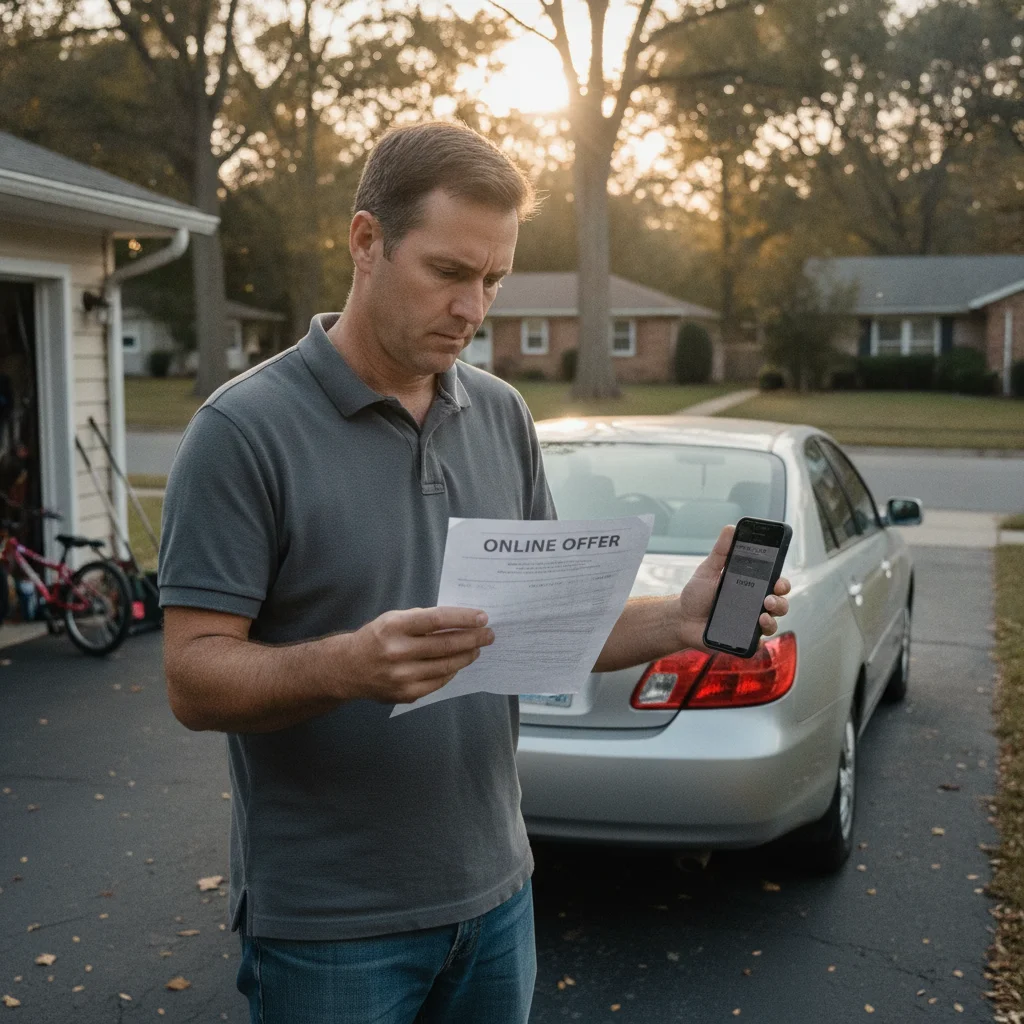
Before requesting any instant offer, spend five minutes checking the Manheim Used Vehicle Value Index trend for the past 60 days. If it's been declining, mentally subtract another 3–5% from whatever you were hoping to get — platforms are probably already there. This prevents the emotional anchoring to peak-market numbers that causes sellers to sit on listings too long in a downturn.
Bundle Your Quotes, Accept Fast
In a falling market, treating the quoting process as a leisurely comparison exercise is expensive. Get all your quotes within the same 24-hour window, identify the best number, and accept within 48 hours if it meets your floor. Every day you wait risks the algorithm pulling back the offer as new auction data refreshes — and platforms have no obligation to honor expired quotes.
Which Vehicles Hold Up Best on Instant Offer Platforms in a Downturn
Not all cars are treated equally when the market softens. Instant offer platforms are essentially operating as pre-retail wholesalers — they need to resell everything they buy. That means they're heavily influenced by what's moving at auction and on their own lots.
In a soft market, the vehicles that tend to receive the most competitive instant offers are those with:
- Strong, consistent retail demand — trucks, crossovers, and family SUVs in popular configurations
- Low days-to-turn — vehicles that sell quickly on their lots, reducing carrying costs
- Broad regional appeal — models that sell well nationwide, not just in specific markets
- Clean title and good condition — in a downturn, platforms tighten their standards because margins compress
Conversely, segments that tend to see the sharpest instant offer cuts in a soft market include luxury vehicles with high depreciation, electric vehicles when federal incentive structures shift, and high-mileage or older vehicles where reconditioning costs eat into already-thin margins. If your car falls into these categories, read selling a high-mileage or older vehicle through instant offer platforms before deciding on a channel.
Tactics to Maximize Your Outcome When the Market Is Falling
The worst thing you can do in a declining market is treat instant offers as interchangeable with last quarter's pricing reality. Here's how to approach this with eyes open:
Run quotes from multiple platforms simultaneously
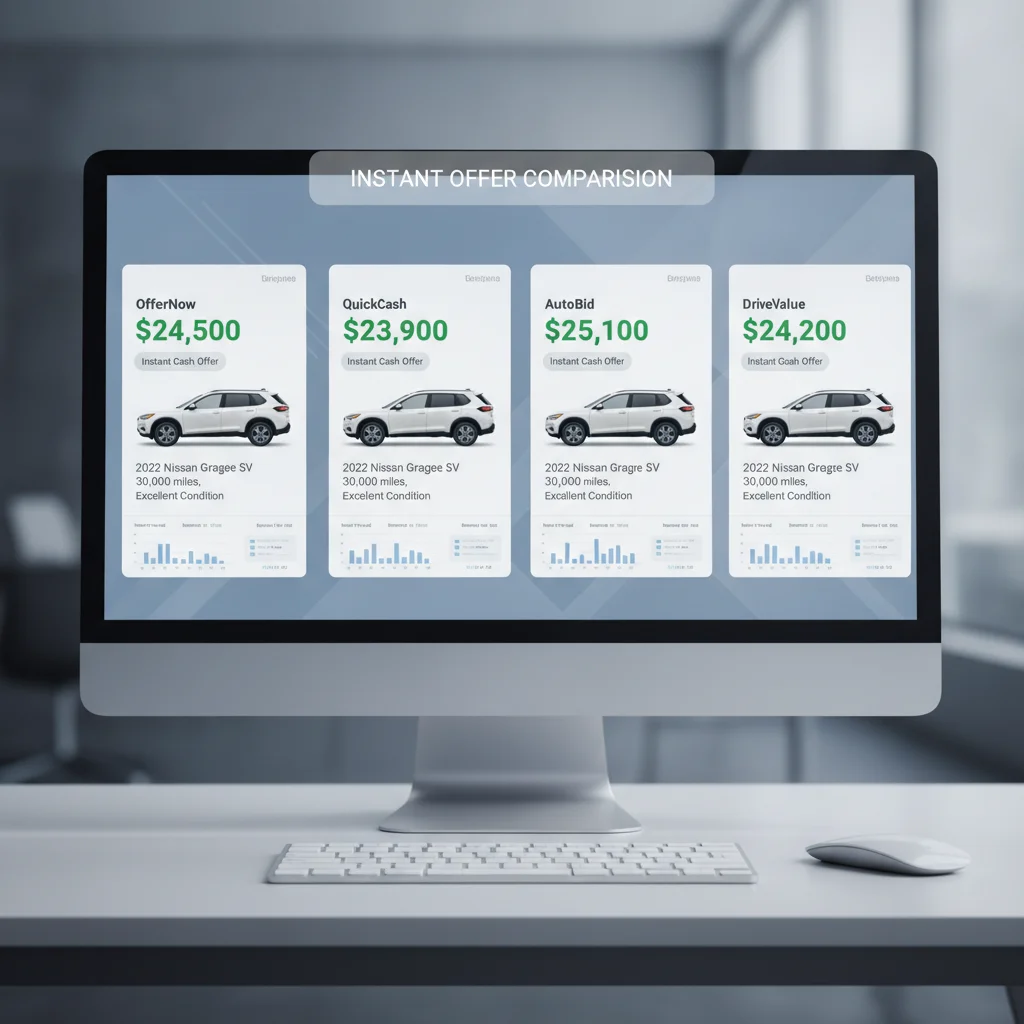
Carvana, CarMax, Vroom, and dealership-based programs like AutoNation's instant offer tool all use different pricing algorithms and have different inventory needs at any given moment. A platform that's long on compact SUVs right now will price yours lower than one that's running short. Getting quotes from three to four sources in the same 24-hour window is the most reliable way to find the current ceiling.
Track the Manheim Index before you list
The Manheim Used Vehicle Value Index is published monthly with weekly updates. If it's been declining for two or three consecutive months, you're in a soft market — and the trend hasn't bottomed yet. Selling now beats selling after another month of data-driven algorithm cuts.
Know your floor before you negotiate
Most sellers don't realize there's any room to negotiate on these platforms. There is — especially if your car has been recently serviced, has documentation of maintenance, or has features the algorithm didn't fully account for. The negotiating with an instant offer platform guide breaks down exactly where leverage exists.
Time your submission to mid-week
Auction data is processed heavily on Mondays and Tuesdays after weekend sale events. Submitting your car for a quote on Wednesday or Thursday — before the next batch of auction results — can sometimes catch algorithms before a downward adjustment cycles through.
Anchor Your Expectations to Auction Trends
Before requesting any instant offer, spend five minutes checking the Manheim Used Vehicle Value Index trend for the past 60 days. If it's been declining, mentally subtract another 3–5% from whatever you were hoping to get — platforms are probably already there. This prevents the emotional anchoring to peak-market numbers that causes sellers to sit on listings too long in a downturn.
Bundle Your Quotes, Accept Fast
In a falling market, treating the quoting process as a leisurely comparison exercise is expensive. Get all your quotes within the same 24-hour window, identify the best number, and accept within 48 hours if it meets your floor. Every day you wait risks the algorithm pulling back the offer as new auction data refreshes — and platforms have no obligation to honor expired quotes.
Don't let an offer expire while you're shopping
Most instant offers expire in 7 days. In a falling market, letting one expire and requesting a new quote almost always results in a lower number. If you're serious about selling, move within the offer window — or at minimum, get a re-quote at the same time as your original offer so you can track the trajectory.
When Private Sale Still Makes Sense in a Soft Market
I'm not here to tell you instant offers are always the right move. There are scenarios where grinding through a private sale is worth the effort, even when prices are falling.
If your vehicle is in a segment that has durable retail demand — a clean, one-owner pickup truck with moderate mileage in a region where trucks are currency — you may still find private buyers willing to pay above what any platform will offer. The key is moving quickly: list at a realistic price, price slightly below comparable listings to generate immediate interest, and be ready to transact within days.
The private sale math also shifts in your favor if you have flexibility on timing that doesn't cost you carrying costs. If the car is paid off, insured cheaply, and sitting in a driveway, you can afford to wait for the right buyer. If it's still financed and you're paying interest, every month of delay adds to your effective cost of holding.
For the full picture on how to decide between channels across different market conditions, the complete end-to-end guide gives you a decision framework that accounts for your vehicle type, urgency, and market conditions.

The bottom line: in a soft market, instant offers are pricing accurately and quickly. Private buyers are pricing slowly and emotionally. Which works in your favor depends entirely on how fast the market is moving and how much time you have to extract the difference.

All claims are backed by peer-reviewed research. Sources on request.