Key Takeaways
Option A
Instant Offer (Carvana, CarMax, Vroom, etc.)
The fast, frictionless cash-out.
Best for: Sellers who need speed, certainty, and zero negotiation — and are willing to leave money on the table for it.
Option B
Private Sale (Craigslist, Facebook Marketplace, AutoTrader)
The maximum-return, maximum-effort approach.
Best for: Sellers with time, a clean vehicle, and the willingness to screen buyers and handle paperwork themselves.
If you need cash fast and have an outstanding loan balance close to market value
Instant Offer
Instant buyers handle payoff logistics directly with your lender, eliminating the escrow risk that trips up many private sales with liens.
If your vehicle is high-demand, low-mileage, and you can wait 3–6 weeks
Private Sale
You can realistically pocket $2,000–$5,000 more on a well-maintained vehicle by cutting out the platform's resale margin entirely.
If your car has mechanical issues, high mileage, or a salvage title
Instant Offer
Problem vehicles are harder to sell privately at a fair price — instant buyers price these vehicles algorithmically and still make competitive offers.
If you're selling simultaneously while buying from a private seller (not a dealer)
Private Sale
Without a dealer trade-in to bundle, a private sale maximizes your net equity, giving you more purchasing power for your next vehicle.
If you're relocating, divorcing, or dealing with an estate and need a clean, documented exit
Instant Offer
Instant platforms provide clear paper trails, consistent pricing, and no-negotiation closings — critical when speed and simplicity outweigh yield.
The Financial Gap Is Real — Here's What It Actually Costs You
Let's start with the number that matters most: how much money you actually walk away with. Instant offer platforms — Carvana, CarMax, Vroom, Peddle, and their competitors — built businesses on buying cars below retail and reselling them at a profit. That margin comes directly out of your pocket. It's not a flaw in the system; it's the system working exactly as designed.
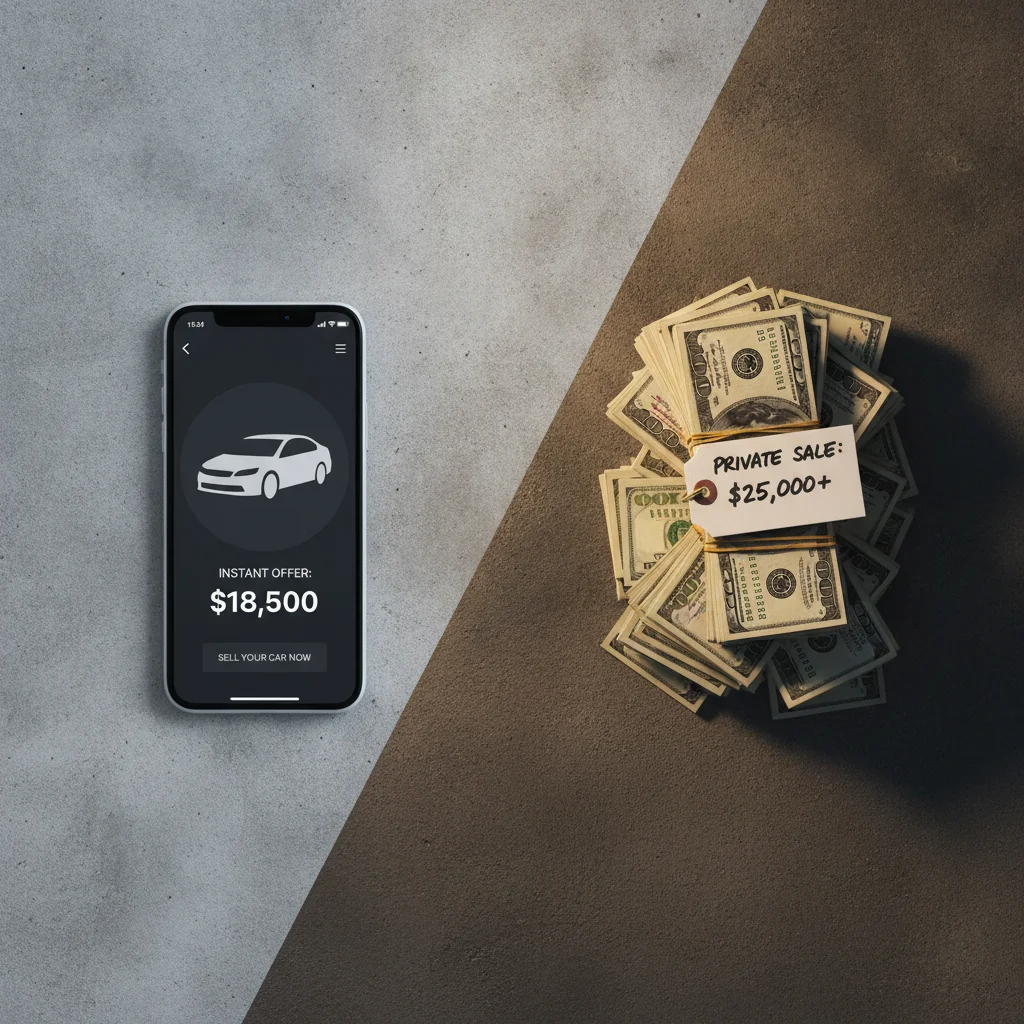
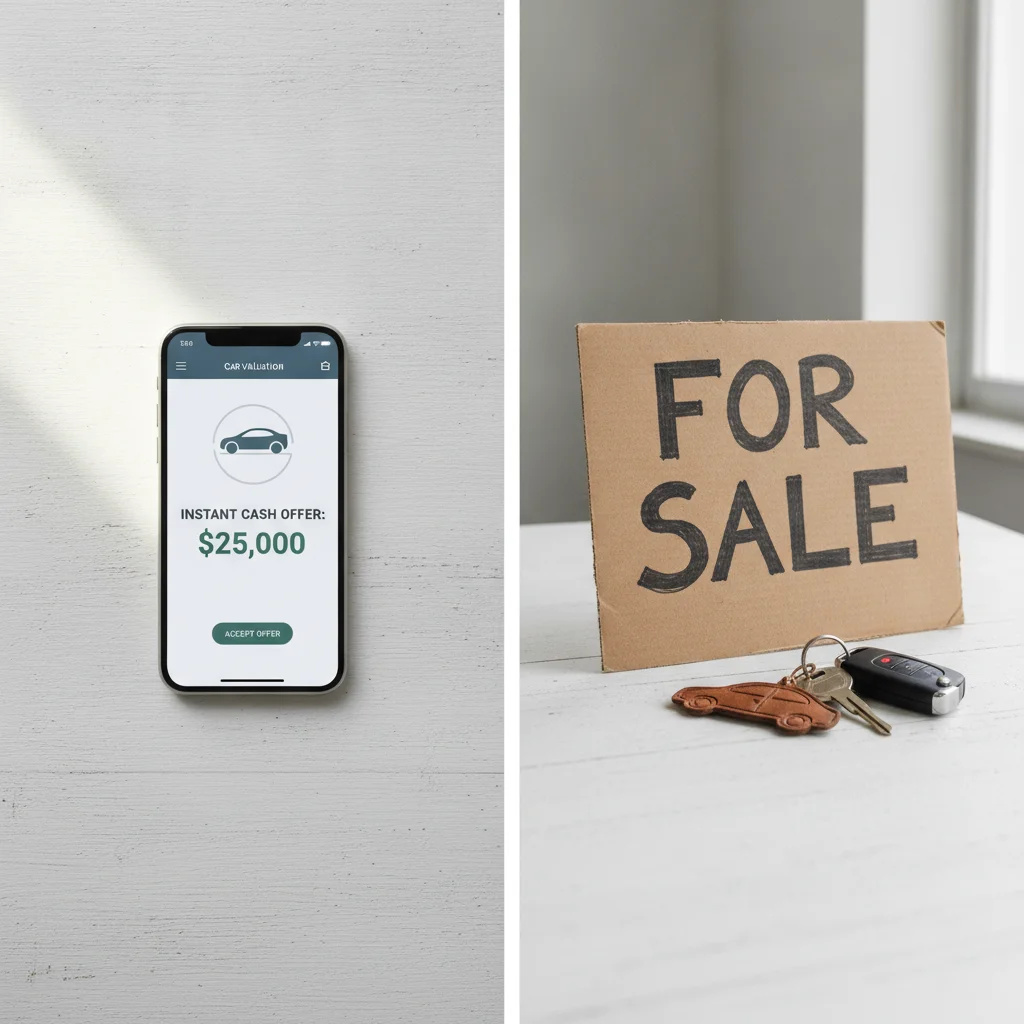
Here's a concrete example. A 2020 Toyota Camry SE with 45,000 miles in good condition might fetch $21,500–$23,000 in a private sale depending on your market. The same vehicle submitted to Carvana or CarMax will likely return an offer in the $18,500–$20,000 range — sometimes lower if the algorithm flags high regional supply. That's a $2,000–$4,500 spread before you've done a thing.
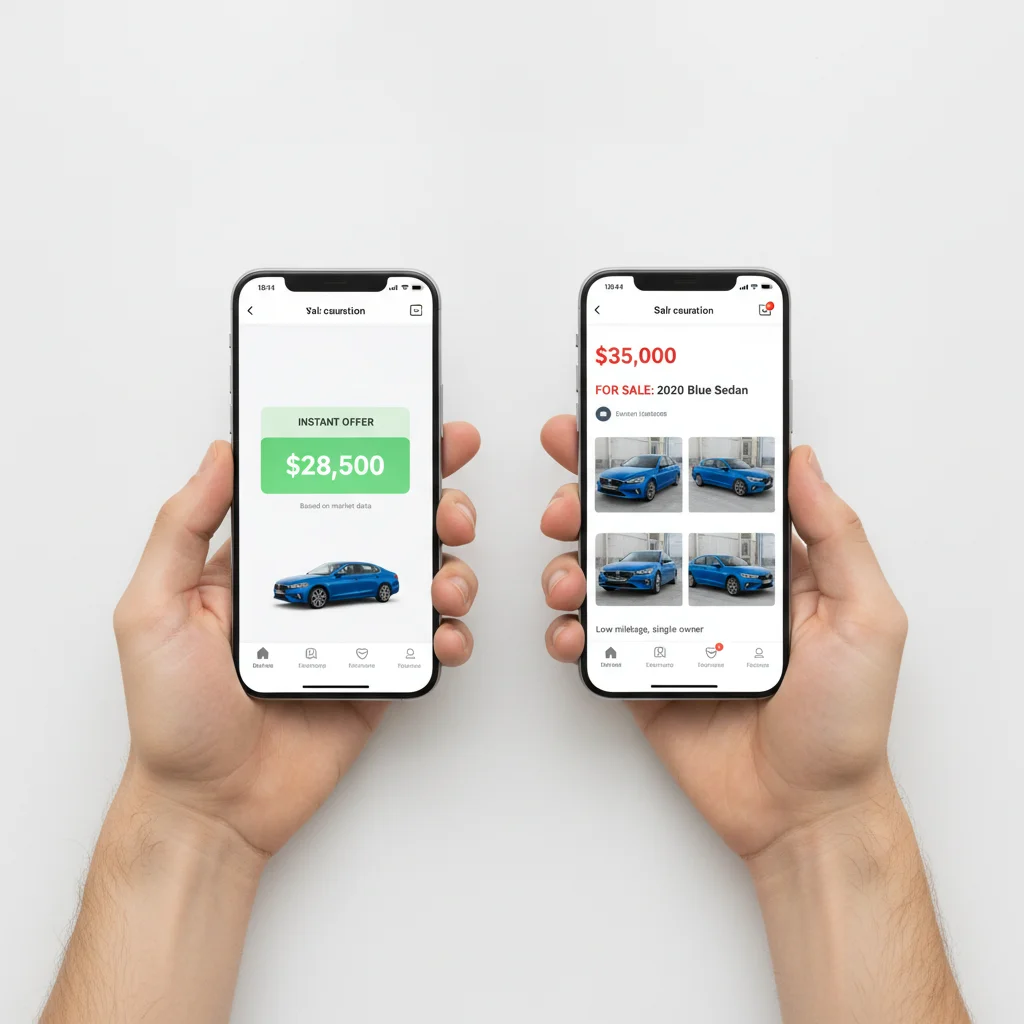
That gap doesn't mean instant offers are a scam. It means you're paying for a real service: no strangers, no test drives, no title paperwork headaches, no waiting. The question you have to answer honestly is whether those conveniences are worth what you're giving up.
For context on how this math plays out specifically in trade-in scenarios, see Trading In vs. Selling Privately: Which Gets You More Money?. The dynamics are similar — a middleman extracts margin. Only the middleman changes.
~15%
Average instant offer discount vs. private sale
Industry analysis from iSeeCars (2023) found instant buyer offers averaged 10–20% below private-party retail across most vehicle segments.
32 days
Average days to sell privately (U.S.)
AutoTrader marketplace data suggests the median private sale takes approximately 30–35 days from listing to completed transaction in a balanced market.
$2,800
Median equity left on table with instant offers
A 2023 Consumer Reports analysis of midsize sedan transactions found sellers received roughly $2,800 less from instant buyers versus comparable private sales.
7 days
Standard instant offer validity window
Most major platforms (Carvana, CarMax, Vroom) guarantee their quoted price for 7 days, giving sellers a usable baseline while testing the private market.
How Instant Offer Platforms Actually Price Your Car
Most sellers treat an instant offer like a neutral appraisal. It isn't. It's a purchase bid optimized around the platform's resale margin, reconditioning budget, and regional inventory needs. Understanding this changes how you use these tools.
When you submit a vehicle to an instant buyer, their algorithm pulls from wholesale auction data (Manheim, ADESA), regional retail comps, and their own aged-inventory patterns. They then subtract an estimated reconditioning cost (typically $800–$2,500 depending on condition) and a target profit margin (usually 8–15% of resale price). What's left is your offer.
Instant Offers Are Bids, Not Appraisals
A common misconception: instant offer platforms present their quotes in clean, authoritative interfaces that feel like objective appraisals. They aren't. Each figure is a purchase bid calibrated to the platform's margin requirements and current inventory needs. A quote from Carvana tells you what Carvana will pay, not what your car is worth. Always benchmark against at least two competing offers and active private-party listings in your market before drawing any conclusions about your vehicle's value.
Sales Tax Implications Vary by State
In many states, trading a vehicle in at a dealer reduces the taxable purchase price of your next car — a tax benefit that private sales and instant offer transactions do not replicate unless the instant buyer is a licensed dealer in your state. This can meaningfully change the true financial comparison on high-value vehicle purchases. Confirm your state's rules with your DMV or a tax professional before deciding, especially on transactions above $25,000.
This means two things work in your favor if you know how to use them. First, get multiple instant offers before accepting any single one. CarMax, Carvana, and local dealer appraisal tools (many dealers now offer online quotes) compete against each other. A $600 difference between CarMax and a regional dealer group's online offer is not unusual. Second, use the highest instant offer as a floor when entering private sale negotiations — it tells you exactly what a motivated commercial buyer will pay, so you know any private buyer offering less is leaving money on the table for you.
For a full breakdown of what convenience fees cost sellers in dollar terms, The Real Cost of Convenience When Selling to an Instant Buyer quantifies the gap systematically across vehicle types and price ranges.
| Criterion | Instant Offer | Private Sale |
|---|---|---|
| Typical net proceeds | 10–20% below private retail | Closest to retail market value |
| Time to close | 24–72 hours | 2–6 weeks (avg.) |
| Effort required | Minimal — submit info, accept offer | High — photos, listings, negotiations |
| Lien/loan handling | Platform manages payoff directly | Seller must coordinate with lender |
| Payment security | High — institutional transaction | Moderate — fraud risk if not careful |
| Vehicles with title issues | Accepted, priced accordingly | Buyers often walk away |
| Price negotiation | Limited — fixed algorithmic offer | Full flexibility — you set the floor |
| Leased vehicles | Most platforms can purchase | Generally not permitted |
| Market timing sensitivity | Low — algorithm adjusts constantly | High — season affects price significantly |
| Best for | Speed, certainty, complex situations | Maximum equity, clean title vehicles |
The Time and Effort Equation in Private Sales
Private sale advocates often gloss over what the process actually demands. Let's be honest about it so you can make a realistic comparison.
A successful private sale requires: professional-quality photos (at minimum a thorough wash and interior clean), a competitive listing price based on actual comps not Kelley Blue Book alone, managing inquiries from flippers and lowballers before reaching a genuine buyer, coordinating test drives safely, accepting a vehicle history check request, and navigating the title transfer and payment logistics — all while continuing to store and insure the vehicle.
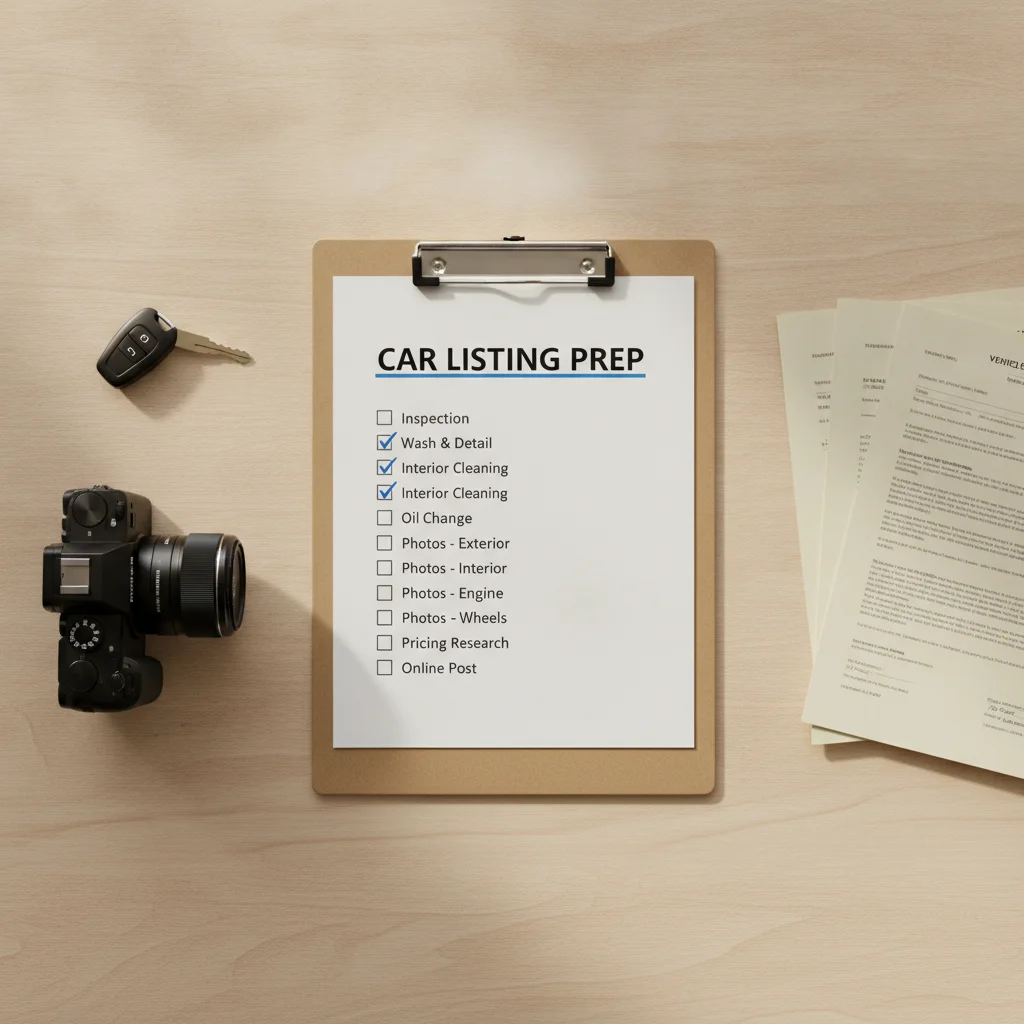
Realistically, from listing to cash-in-hand, plan for 2–6 weeks on a well-priced vehicle in a normal market. High-demand trucks and SUVs in seller-favorable seasons can move in days. Older sedans in oversupplied markets can sit for months. Market timing matters more than most sellers account for — listing a convertible in November or a pickup in February changes your realistic private sale price meaningfully.
The other risk that doesn't get talked about enough: payment fraud. Cashier's check scams are still rampant in private car sales. The only truly safe payment methods are cash (for lower-value vehicles), a wire transfer you verify has cleared, or an in-person bank transaction. If a buyer insists on any other method, walk away.
For a thorough look at all the tradeoffs — not just financial — see The Pros and Cons of Selling Your Car Without a Middleman. It covers liability exposure, safety considerations, and title complications that catch first-time private sellers off guard.
When a Lien, Lease, or Title Problem Changes Everything
Your vehicle's financial and legal status can override any pure price comparison. This is where instant offers earn their fee most legitimately.
If you still owe money on the car, a private sale gets complicated fast. The buyer can't receive a clean title until the lien is released, which means either you need enough cash to pay off the loan before or at closing, or you need to coordinate a three-way transaction with your lender — which most private buyers are unwilling to navigate. Instant offer platforms handle this routinely. They contact your lender directly, pay off the balance, and cut you a check for the equity. Clean, fast, documented.
Leased vehicles are an even clearer case. Most leases prohibit private-party transfers, and even where allowed, the process involves buyout costs and lender approval steps that make it impractical. The cleanest options are returning the lease to the dealer or selling to a third-party buyer like CarMax (call your lender first — not all permits this). Private sale is effectively off the table for most leased vehicles.
Title problems — branded titles (salvage, rebuilt, lemon law buyback) — also tip the scales toward instant offers. Private buyers are far more likely to walk away from a branded title once it surfaces on the vehicle history report. Instant buyers price the risk into their offer algorithmically and still make a bid. You'll get less, but you'll get something without wasting weeks on negotiations that fall apart at the last minute.
If you're simultaneously buying a new vehicle from a dealer and wondering whether to bundle the trade or sell first, Trading In vs. Selling Privately When Buying a New Car walks through the strategic sequencing in detail.
Maximizing Your Position Regardless of Which Path You Choose
The smartest sellers don't choose a channel in isolation — they create competition between channels and use information asymmetry to their advantage.
Step 1: Get three instant offers first. Submit to CarMax (in-person appraisal gives the most reliable number), Carvana, and one local dealer group's online appraisal tool. Record all three. This takes about 90 minutes and gives you a credible floor price — the worst-case cash you can walk away with at any moment.
Step 2: List privately above your instant offer floor. Price your vehicle at private-party retail based on actual active listings in your ZIP code — not national averages. Build in 5–8% negotiation room. Your lowest acceptable price should be at least $500 above your best instant offer to make the private sale time worth your effort.
Step 3: Use the instant offer deadline as a closing tool. Carvana and most instant offer platforms hold their quotes for 7 days. When a serious private buyer appears, you can honestly say you have a written offer expiring in X days. That creates urgency without fabrication.
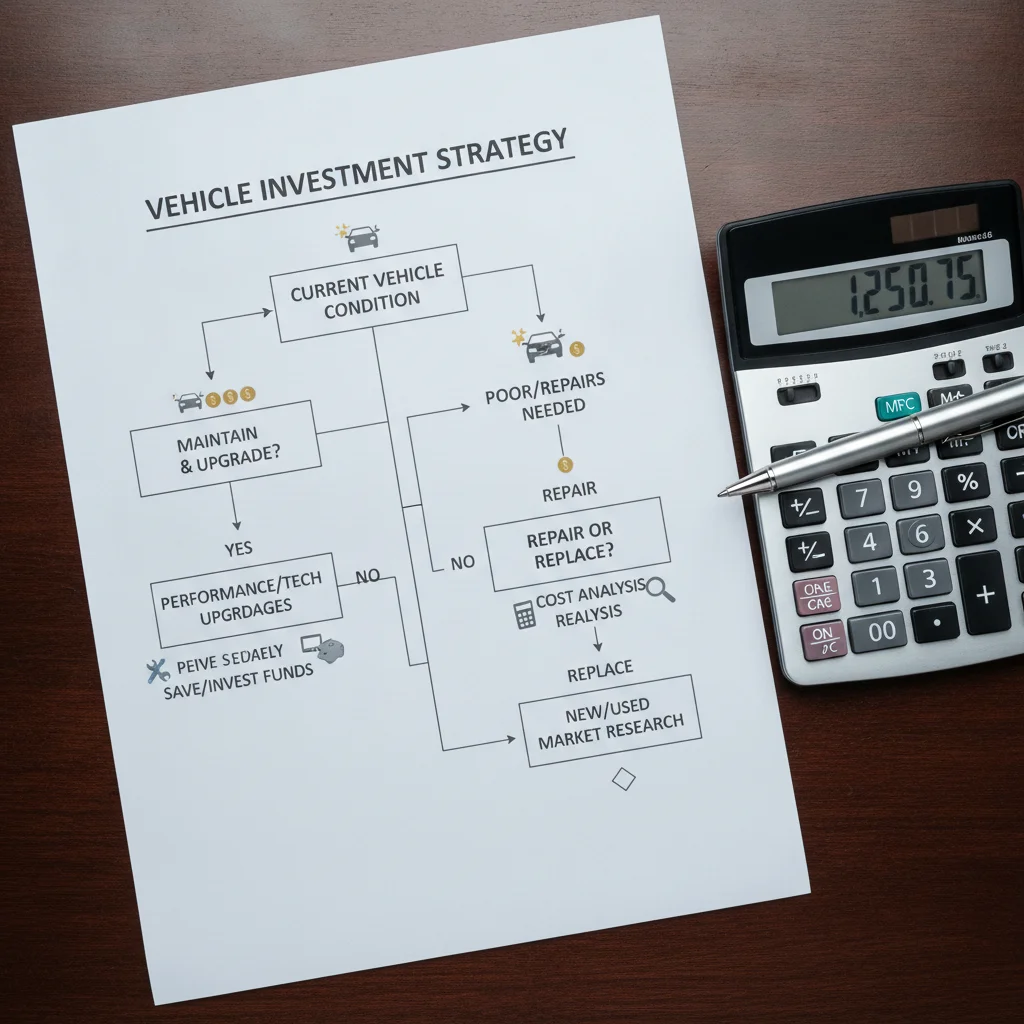
Step 4: Know your walk-away number before negotiations start. Emotion drives bad decisions in private car sales. Decide in advance: if a private buyer won't pay at least $Y, you're taking the instant offer and moving on. Stick to it.
For the full picture on running a private sale effectively — from listing strategy to closing safely — Private Party Sales covers the process end-to-end. And if you're comparing online car-buying services more broadly, Selling Privately vs. Using an Online Car-Buying Service gives a head-to-head breakdown of Carvana, CarMax, and similar platforms against the DIY approach.
The Bottom Line: Matching the Method to Your Situation
There's no universally correct answer here — but there are correct answers for specific situations. The decision framework is straightforward once you strip away the marketing noise from both sides.
Choose instant offer when: you have an active lien or lease, you need funds within a week, your vehicle has title issues or condition problems that will spook private buyers, or the time value of the money gap doesn't justify weeks of effort. A $2,000 spread sounds significant until you calculate that you spent 20 hours managing a private sale — that's $100/hour of your time, which may or may not be worth it depending on your situation.
Choose private sale when: your vehicle is clean, in-demand, and correctly priced; you own it outright (or have equity well above the loan balance); you can afford to wait 3–6 weeks; and you're willing to do the work of screening buyers and managing the close safely. On a $25,000 vehicle, recovering an extra $3,000–$4,000 is meaningful enough to justify that investment for most people.
The one mistake I see sellers make repeatedly: accepting the first instant offer without checking any alternatives, and accepting any private buyer offer without having an instant offer in hand as a baseline. Both mistakes leave money on the table unnecessarily. You don't have to choose one method to the exclusion of the other — run them in parallel and let the market tell you what your car is actually worth.

All claims are backed by peer-reviewed research. Sources on request.