Key Takeaways
Guaranteed sale with no buyer fallthrough risk
Unlike private sales, an accepted instant offer closes — you don't lose the deal because a buyer got cold feet, failed to secure financing, or found a cheaper option. For older vehicles that can be harder to sell privately, this certainty has real value.
No need to disclose or negotiate around mechanical issues
Platforms price in unknown mechanical risk algorithmically. You're not hiding anything from a private buyer who may later pursue recourse, and you don't have to fund repairs just to make the car saleable.
Fast liquidity — often within 24 to 72 hours
From VIN submission to payment can take as little as one business day on some platforms. For sellers in a time-sensitive situation — relocation, estate settlement, financial need — this timeline is hard to replicate privately.
Avoids the friction of private-party negotiations
Older vehicles attract bargain hunters and flippers in the private market. Instant offer platforms eliminate the lowball offers, no-show test drives, and lengthy haggling that commonly drag out private sales of older inventory.
Free pickup available on many platforms
Several services, including Carvana and Vroom, offer free vehicle pickup — eliminating the hassle of driving an unreliable older car to a physical drop-off location.
Algorithmic pricing penalizes age and mileage heavily
Instant offer algorithms discount aggressively for older model years and high odometer readings, often applying blanket risk adjustments that ignore the actual mechanical condition of a well-maintained vehicle.
Offer can be 10%–25% below private-party market value
On a $8,000 vehicle, that gap translates to $800–$2,000 left on the table. The spread widens further on vehicles with strong private-market appeal, such as popular truck or SUV models.
Many platforms set hard eligibility cutoffs
Some services decline vehicles over 150,000 miles or older than a specific model year, leaving sellers with no offer at all after investing time in the submission process.
Older vehicles often routed directly to wholesale auction
When a platform can't retail your vehicle on its own lot, it sells at auction — and the offer you receive reflects that wholesale destination, not any retail premium your car might otherwise command.
Condition documentation rarely fully rewarded
Even sellers with detailed service records and recent repair receipts rarely recover the full value gap through condition adjustments. Platforms' reconditioning budgets are estimated conservatively regardless of actual vehicle state.
Market downturns hit instant offers faster than private sales
Platforms react to live auction data, meaning their bids drop faster than private-buyer expectations when the used car market softens — making timing a real risk for sellers who wait.
Our Verdict
Instant offer platforms deliver genuine value for sellers who prioritize speed and certainty over maximum return. For high-mileage or older vehicles, that trade-off is steeper — platforms price in their resale risk aggressively, and the gap between what they offer and what a private buyer would pay tends to widen as condition deteriorates. That said, if your vehicle has documented maintenance, passes a clean title check, and you simply cannot spare the time for a private sale, an instant offer is a legitimate exit — especially if you stack quotes from three or more platforms.
Sellers of older or high-mileage vehicles who need a guaranteed, fast sale and are willing to accept $500–$2,000 less than private-party value in exchange for zero buyer friction.
Why High-Mileage Vehicles Get Treated Differently by Instant Offer Algorithms
Instant offer platforms are fundamentally a logistics and resale business. When a service like CarMax Instant Offer, Carvana, or Vroom buys your car, they need to move it — either through their own retail lots or at wholesale auction — within a predictable window. That business model works smoothly on late-model, low-mileage vehicles with broad retail appeal. It gets strained the moment your odometer climbs past 100,000 miles.
The algorithm these platforms run is built on retail comps: what similar vehicles are actually selling for on their lots or auction lanes right now. For a 2017 Honda Accord with 110,000 miles, the retail market is thin, the reconditioning costs are less predictable, and the holding-period risk is higher. The platform's offer automatically bakes in a larger margin to protect against all three. You're not being punished for your car — the math just gets worse.
To understand the full mechanics behind how platforms price vehicles before they even see yours, see how instant offer platforms actually work. The short version: mileage and age are the two most punishing variables in their pricing models, and they compound each other.
There's also a hard-cutoff problem. Several platforms quietly cap the vehicles they'll purchase. Carvana, for instance, has historically declined vehicles older than a certain model year or beyond 150,000 miles entirely — they won't even generate a number. Others will produce an offer but route those vehicles straight to auction, meaning the offer reflects wholesale pricing rather than any retail value at all.
What You Can Realistically Expect: Offer Ranges and Market Reality
Let's get specific about the money. Across platforms, sellers of high-mileage vehicles typically see instant offers come in 10% to 25% below private-party value. On a $6,000 car, that's a $600–$1,500 gap. On a $10,000 vehicle, you're potentially leaving $1,000–$2,500 on the table for the privilege of closing the sale in 24 hours.
10%–25%
Typical instant offer discount vs. private-party value
Industry analysis of used car resale data consistently shows instant offer platforms price 10–25% below comparable private-party transactions on vehicles over 100,000 miles.
150,000
Common mileage ceiling on major platforms
Several leading instant offer services, including Carvana, have historically declined to purchase vehicles exceeding 150,000 miles, routing sellers with no offer.
$800+
Spread between competing platform quotes
Sellers who submit identical high-mileage vehicles to multiple platforms simultaneously regularly report quote spreads of $800 or more within the same market week.
24–72 hrs
Typical time from offer to payment
Most major instant offer platforms complete the transaction — from accepted offer to funds deposited — within one to three business days, a timeline private sales rarely match.
The gap doesn't just reflect platform profit margin. A meaningful chunk of it covers the platform's reconditioning budget. An older vehicle with 130,000 miles might need tires, brakes, or a detail job before going to retail. Platforms estimate those costs conservatively — meaning they assume the worst. If your car is in better shape than average for its age, the algorithm doesn't know that yet.
This is where condition documentation earns its keep. Sellers who arrive with a clean service history — oil changes, timing belt or chain replacement, recent brake work — can sometimes push back on the initial number. Some platforms allow a condition review adjustment, either in person or through photo submissions, that partially closes this gap. It rarely eliminates it, but recovering $200–$400 on a well-documented vehicle is realistic.
For a direct comparison of which platforms tend to pay more generously on older inventory, see how instant offer platforms rank by payout and seller experience. Some platforms specialize in fleet and older vehicle liquidation and consistently outperform the mainstream services on this segment.
The Real Pros: Where Instant Offers Still Make Sense for Older Vehicles
The convenience argument doesn't disappear just because your car is old. In fact, it can get stronger. Selling a 12-year-old vehicle privately comes with its own specific headaches: buyers who want pre-purchase inspections, negotiations over every scratch, lowball offers from flippers, and the quiet dread of selling a car that might need work to someone who then calls you two weeks later blaming you for a transmission issue.
Guaranteed sale with no buyer fallthrough risk
Unlike private sales, an accepted instant offer closes — you don't lose the deal because a buyer got cold feet, failed to secure financing, or found a cheaper option. For older vehicles that can be harder to sell privately, this certainty has real value.
No need to disclose or negotiate around mechanical issues
Platforms price in unknown mechanical risk algorithmically. You're not hiding anything from a private buyer who may later pursue recourse, and you don't have to fund repairs just to make the car saleable.
Fast liquidity — often within 24 to 72 hours
From VIN submission to payment can take as little as one business day on some platforms. For sellers in a time-sensitive situation — relocation, estate settlement, financial need — this timeline is hard to replicate privately.
Avoids the friction of private-party negotiations
Older vehicles attract bargain hunters and flippers in the private market. Instant offer platforms eliminate the lowball offers, no-show test drives, and lengthy haggling that commonly drag out private sales of older inventory.
Free pickup available on many platforms
Several services, including Carvana and Vroom, offer free vehicle pickup — eliminating the hassle of driving an unreliable older car to a physical drop-off location.
There's also a legitimate timing case. If your vehicle is approaching a major service milestone — a timing belt, a water pump replacement — you're looking at a repair bill that may cost more than the value it adds at resale. An instant offer platform doesn't negotiate around pending maintenance the way a private buyer will. They've already priced it in. That means you're not hiding anything, not negotiating around it, and not eating the repair cost to make the car saleable.
Title issues are another scenario where instant offer platforms win by default. If your car has a clean title and you need to move quickly — estate settlement, relocation, divorce proceeding — an instant offer eliminates the variability of the private market entirely. You know your number within the day and can close within the week.
The Real Cons: Where the Math Stops Working in Your Favor
The pricing penalty is real, and on older vehicles, it's not always rational. Platforms apply algorithmic discounts that don't fully account for mechanical condition. A 2012 Toyota Tacoma with 145,000 miles and a clean service history is a fundamentally different asset than a 2012 Chrysler 200 with 145,000 miles and no records — but the algorithm may not distinguish them meaningfully at the initial offer stage.
Algorithmic pricing penalizes age and mileage heavily
Instant offer algorithms discount aggressively for older model years and high odometer readings, often applying blanket risk adjustments that ignore the actual mechanical condition of a well-maintained vehicle.
Offer can be 10%–25% below private-party market value
On a $8,000 vehicle, that gap translates to $800–$2,000 left on the table. The spread widens further on vehicles with strong private-market appeal, such as popular truck or SUV models.
Many platforms set hard eligibility cutoffs
Some services decline vehicles over 150,000 miles or older than a specific model year, leaving sellers with no offer at all after investing time in the submission process.
Older vehicles often routed directly to wholesale auction
When a platform can't retail your vehicle on its own lot, it sells at auction — and the offer you receive reflects that wholesale destination, not any retail premium your car might otherwise command.
Condition documentation rarely fully rewarded
Even sellers with detailed service records and recent repair receipts rarely recover the full value gap through condition adjustments. Platforms' reconditioning budgets are estimated conservatively regardless of actual vehicle state.
Market downturns hit instant offers faster than private sales
Platforms react to live auction data, meaning their bids drop faster than private-buyer expectations when the used car market softens — making timing a real risk for sellers who wait.
Beyond pricing, there's the platform-eligibility problem. If your car gets declined — because it's too old, too high-mileage, has a salvage title, or has been in a major accident — you've spent time getting a number you can't use. This is wasted effort, and it happens more frequently than the platforms advertise. Always check platform eligibility criteria before submitting your VIN.
There's also a structural issue: instant offer platforms have less incentive to compete aggressively for your vehicle when they know wholesale is the destination. If your 2010 sedan is headed straight to an auction lane anyway, the platform isn't competing with its own retail lot — it's just buying low and selling to dealers. That dynamic removes any retail premium from your offer entirely.
If you have more time and flexibility, a private party sale almost always yields more money on older vehicles — particularly if the car has mechanical merit that a private buyer can verify through an inspection.
How to Maximize What You Get From an Instant Offer on an Older Vehicle
The single most effective tactic is stacking quotes. Submit your VIN to at least three platforms simultaneously — Carvana, CarMax, Peddle, Wheelzy, or Copart Direct depending on your vehicle's profile. Offers come back within minutes to 24 hours, and the spread can be surprisingly wide. I've seen identical vehicles quoted $800 apart across platforms in the same week. That spread is your negotiating baseline.
Check Platform Eligibility Before Submitting
Before spending time on the instant offer process, verify that each platform will actually purchase your vehicle. Age limits, mileage caps, title type restrictions, and geographic availability vary significantly by service. Most platforms list their purchase criteria in their FAQ or help center — checking takes two minutes and avoids wasted effort if your vehicle falls outside their buying range.
Service Records Can Shift the Number
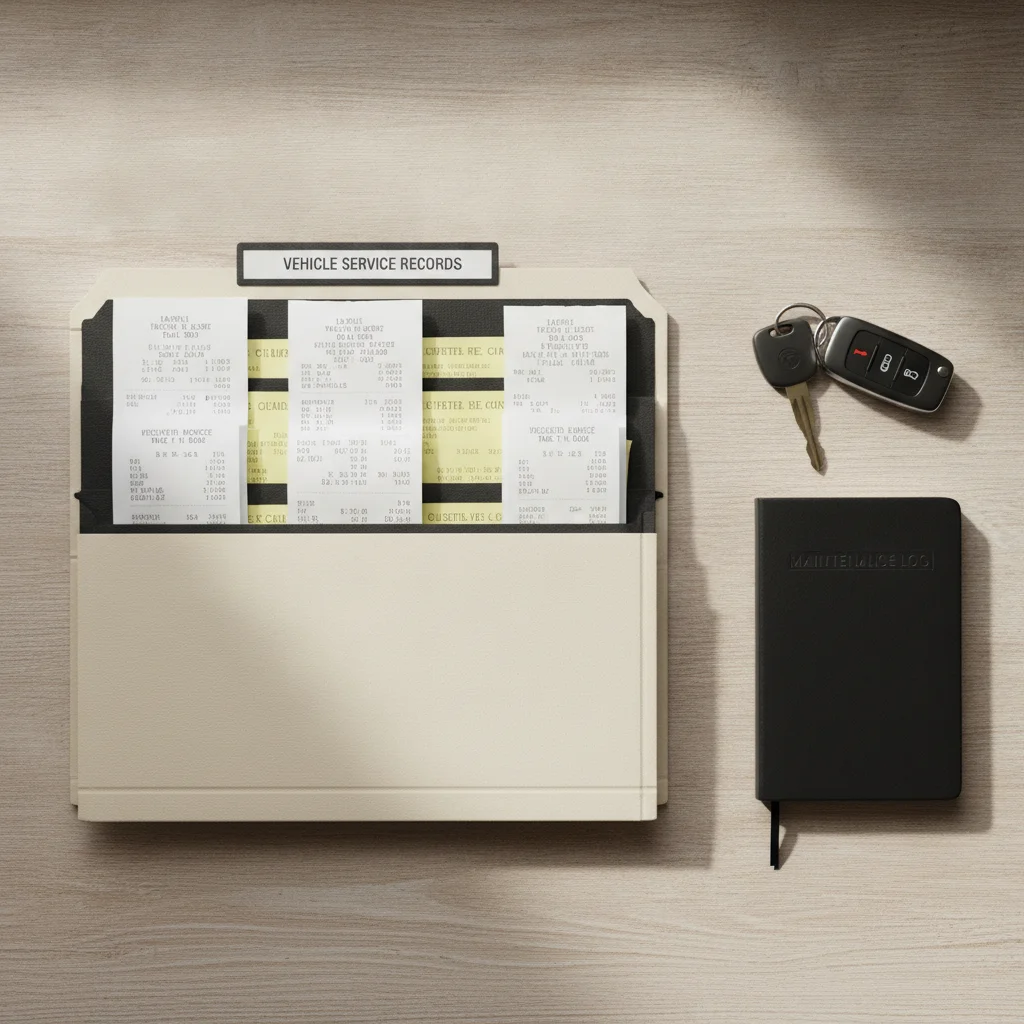
Platforms that offer in-person or photo-based condition reviews — CarMax in particular — can adjust their initial algorithmic offer upward when presented with documented maintenance. Bring organized service records, receipts for recent work, and clear photos of tires and brake components. The adjustment won't close the entire gap with private-party value, but recovering $200–$500 on a well-documented vehicle is achievable and takes minimal effort.
How Soft Markets Affect Instant Offers on Older Vehicles
Instant offer platforms update their pricing models frequently using live auction data. When wholesale used car prices drop — as they did in late 2022 and again in 2024 — platform offers on older, high-mileage vehicles fall first and fastest. If you're watching the market soften, consider moving sooner rather than later; the private market tends to lag auction price declines by several weeks, giving you a brief window where private buyers still pay more than the platforms will.
Once you have quotes in hand, you have leverage — even on instant offer platforms. What's actually negotiable with instant offer platforms covers this in depth, but the short version is this: showing a platform a competing offer from a rival service has resulted in counter-offers from customer service teams. It doesn't always work, but it costs nothing to try.
Prepare your documentation before you submit. Pull together: a complete service history if available, photos of any recent work (tires, brakes, battery), a current odometer photo, and any receipts for parts or labor from the past 24 months. Platforms that do in-person or photo-based condition adjustments will use this material to revise their initial algorithmic estimate upward.
Finally, run your vehicle's value through KBB and Edmunds before you start. Know your private-party range, your trade-in range, and your instant offer range. The delta between private-party and instant offer is the price of convenience. On an older vehicle, decide in advance what that convenience is worth to you — because once you see the offer, it's harder to be objective.
If you're considering a trade-in instead, strategies for high-mileage trade-ins can help you position a well-maintained older vehicle more effectively at the dealership — sometimes yielding a better number than any instant offer platform will produce.
When to Walk Away From Instant Offers Entirely
There are scenarios where instant offer platforms are simply the wrong tool. If your vehicle is a desirable older model — a low-rust pickup truck, a reliable Japanese import with full records, a collectible compact — the private market will consistently outperform any algorithmic offer. Platforms price for the median. If your vehicle is above median for its age and mileage, the private market is where that premium gets captured.
Vehicles with known mechanical issues deserve special mention. Instant offer platforms that still buy distressed vehicles — Peddle, Wheelzy, and similar services — pay wholesale-auction prices, sometimes below book value. If your car needs $1,500 in repairs, the platform has already discounted for that and then some. In that case, a private party sale listed as-is to a mechanically-inclined buyer who wants a project often produces a better outcome.
Market timing matters too. When the used car market softens, instant offer platforms tend to drop their bids faster than private buyers do — because they're reacting to live auction data. In a declining market, you may actually do better moving quickly through a private listing before retail values erode further.
For the complete picture on the entire instant offer process from start to finish, the end-to-end guide to selling to an instant offer platform walks through every step — from VIN submission to final payment — so you know exactly what you're agreeing to before you sign.

All claims are backed by peer-reviewed research. Sources on request.