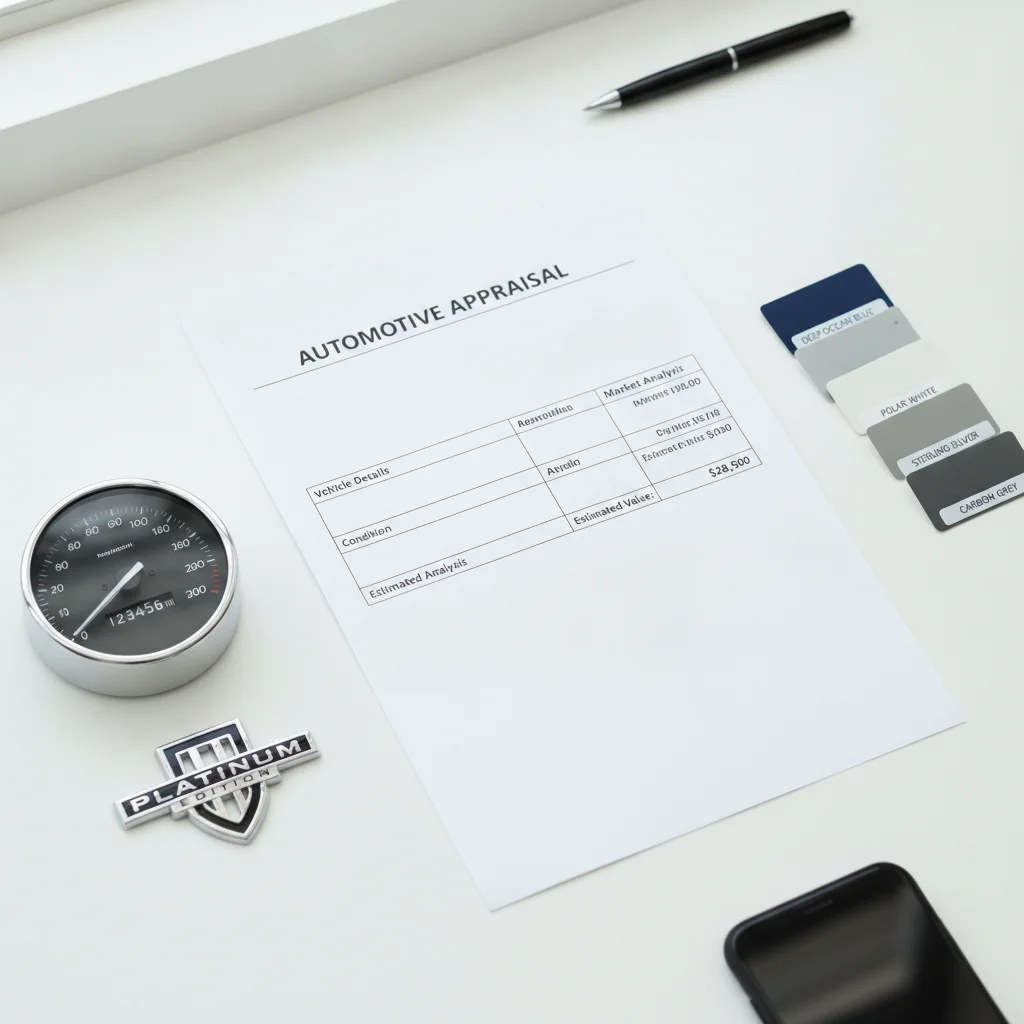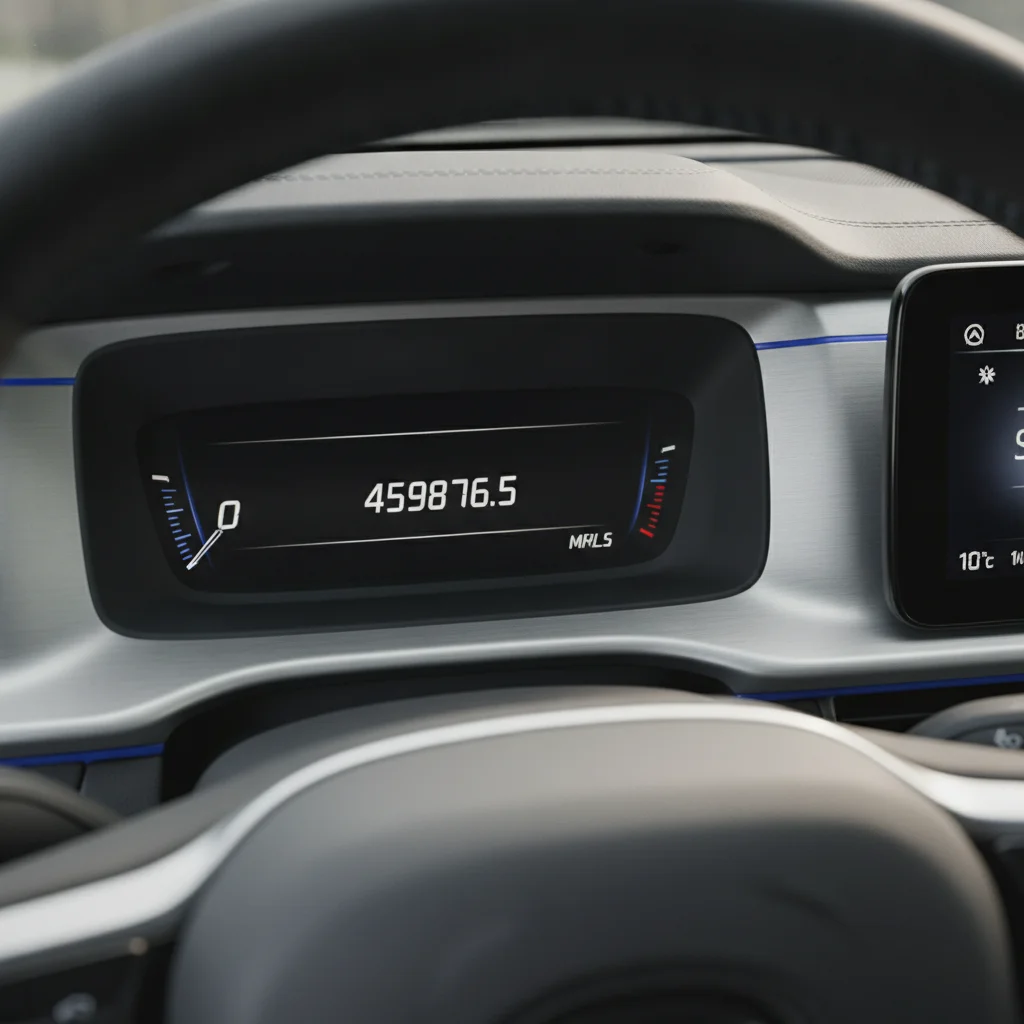
| Primary payout variables | Mileage, condition grade, trim level |
| Highest-impact single variable | Odometer reading |
| Mileage band where discounting accelerates | 100,000+ miles |
| Typical payout loss: Fair vs. Good condition | 8% to 15% (Based on published platform condition adjustment guides, 2023–2024) |
| Spread between highest and lowest instant offer | $500–$2,000 on same vehicle (Consumer Reports, iSeeCars platform comparison studies) |
| Best tool to confirm trim level | NHTSA VIN decoder (vin.nhtsa.dot.gov) |
| Offer validity window (typical) | 3–7 days depending on platform |
| Reconditioning penalty avoided by fixing cosmetic issues | Often 2–4x the cost of the fix |
How Instant Offer Algorithms Actually Work
When you enter your vehicle's details into CarMax, Carvana, Vroom, or any similar platform, you're not talking to a human appraiser. You're feeding a pricing algorithm that cross-references your inputs against a live database of auction results, regional retail demand, days-to-sell averages, and reconditioning cost estimates. The output — your instant offer — looks precise, but it's built on weighted variables, and some of those variables carry far more weight than others.
Understanding the weighting is what separates a seller who accepts the first number from one who uses the process strategically. Platforms build in a margin for unknowns — they don't know exactly what your car looks like, so they price defensively. Every piece of data you can provide accurately (and every factor you can influence before submission) is an opportunity to close that gap.
The three variables that consistently move instant offer numbers the most are mileage, condition grade, and trim level. Color, accident history, and optional add-ons matter, but they're secondary levers. Master the three primary ones first.
| Primary payout variables | Mileage, condition grade, trim level |
| Highest-impact single variable | Odometer reading |
| Mileage band where discounting accelerates | 100,000+ miles |
| Typical payout loss: Fair vs. Good condition | 8% to 15% (Based on published platform condition adjustment guides, 2023–2024) |
| Spread between highest and lowest instant offer | $500–$2,000 on same vehicle (Consumer Reports, iSeeCars platform comparison studies) |
| Best tool to confirm trim level | NHTSA VIN decoder (vin.nhtsa.dot.gov) |
| Offer validity window (typical) | 3–7 days depending on platform |
| Reconditioning penalty avoided by fixing cosmetic issues | Often 2–4x the cost of the fix |
Mileage: The Single Biggest Payout Driver
No single input shifts an instant offer faster or more predictably than odometer reading. Algorithms treat mileage as a direct proxy for remaining vehicle life and reconditioning exposure — the higher the number, the larger the discount applied.
The Mileage Bands That Matter
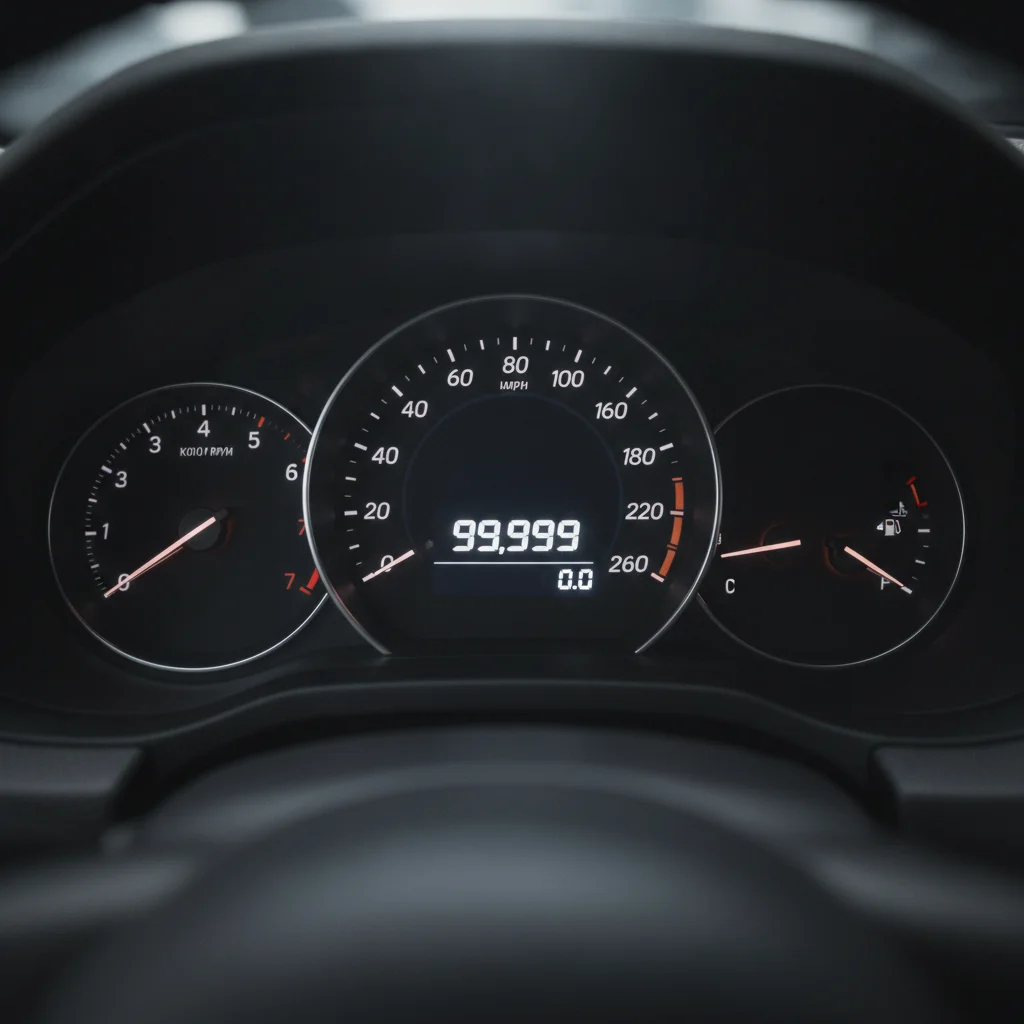
Instant offer platforms don't depreciate linearly by the mile. They apply tiered discounts at specific thresholds, and crossing one of these bands can cost you significantly more than the few hundred miles that pushed you over:
- Under 30,000 miles: Premium tier. Platforms treat these as near-new inventory. Offers reflect strong resale demand and minimal reconditioning assumptions.
- 30,000–60,000 miles: The sweet spot for most platforms. Depreciation has stabilized, and resale volume is high. Offers remain competitive.
- 60,000–100,000 miles: Moderate discount tier. Platforms begin factoring in likely brake, tire, and fluid service needs. Expect offers 8–15% below comparable lower-mileage examples.
- 100,000–125,000 miles: The first hard ceiling for many buyers. Platforms know a large segment of their retail audience won't touch six-figure odometers, shrinking the buyer pool. Discounts accelerate here.
- Over 125,000 miles: Some platforms will still quote — but offers often reflect wholesale auction pricing rather than retail. The platform's exit strategy changes, and your payout drops accordingly.
What You Can Actually Do About It
If you're 800 miles away from a threshold band and have a trip planned, that math is worth thinking about. Conversely, if you know a major service interval is due — timing belt, transmission service — getting the offer before that mileage hits the algorithm's attention is a legitimate move. Instant offer platforms don't require you to complete service before accepting.
For context on how mileage interacts differently with dealer appraisers vs. algorithms, see our comparison article on how dealers weight mileage during trade-in appraisals.
15–22%
Offer reduction when crossing 100K mileage threshold
Based on aggregated platform data and auction analysis published by Black Book, 2023.
$1,847
Average spread between highest and lowest instant offer on identical vehicles
According to iSeeCars analysis comparing Carvana, Carmax, and Vroom quotes on the same VINs, 2023.
78%
Sellers who receive a revised (lower) offer at vehicle pickup
Per consumer survey data compiled by Consumer Reports, 2022, due to condition discrepancies at inspection.
Up to 30%
Value gap between base and top trim on popular SUVs and trucks
Calculated from Manheim auction pricing data across top-selling segments, 2024.
Condition: Where the Money Leaks Out
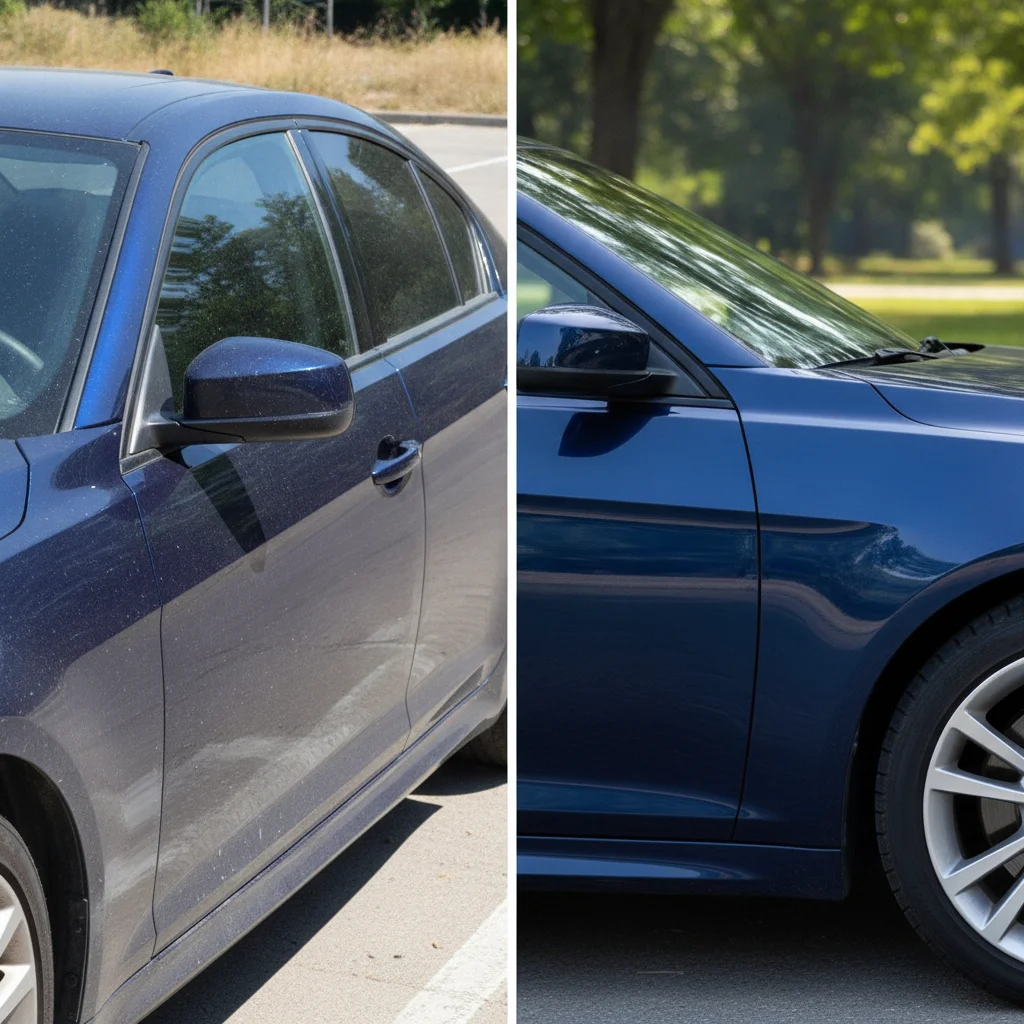
Condition is the most subjective variable on the list — and the one where sellers most frequently lose money. The platforms know this. When you self-report condition as "Good" and the physical inspection reveals deferred maintenance, curb rash on three wheels, and a cracked windshield, they adjust your offer downward at the point of handoff. That's the moment most sellers feel blindsided.
How Platforms Define Condition Grades
Most instant offer services use a four-tier system. The definitions vary slightly, but the framework is consistent:
| Grade | What It Means | Typical Payout Impact vs. "Good" |
|---|---|---|
| Excellent / Clean | No visible damage, recent service, minimal wear. Rare in practice. | +3% to +8% |
| Good | Normal wear, minor cosmetic issues only. This is the baseline most algorithms price to. | Baseline |
| Fair | Noticeable cosmetic damage, some mechanical deferred maintenance, or one significant issue (e.g., cracked bumper, worn interior). | -8% to -15% |
| Poor / Rough | Multiple issues, possible mechanical problems, or damage that requires significant reconditioning spend. | -20% to -35% |
The Reconditioning Math Behind Condition Grades
Platforms don't randomly assign condition penalties. Each grade maps to an estimated reconditioning cost bucket. A Fair-condition vehicle isn't penalized $500 because it looks bad — it's penalized because the algorithm estimates $800–$1,500 in cosmetic and mechanical work before it's retail-ready, plus the platform's margin on that work. You're paying their labor rates, not your mechanic's.
This is why spending $400 detailing your car, fixing minor dents via paintless dent repair (PDR), and replacing a cracked tail light before submission can return $600–$1,000 in offer improvement. It's not about aesthetics. It's about pulling your vehicle out of a more expensive reconditioning tier.
Accident History and Its Condition Interaction
Reported accident history (via Carfax or AutoCheck) is factored in separately from self-reported condition, but the two interact. A single minor fender-bender on a vehicle in excellent condition will be discounted less aggressively than the same accident history on a vehicle you've graded "Fair." The platform interprets combined signals — multiple negative data points stack up.
Self-Reported vs. Inspected Condition: The Gap
Most instant offer platforms generate their initial quote entirely from your self-reported inputs — they haven't seen your car yet. When you report "Good" but the vehicle has two cracked wheel covers and a door ding, the platform adjusts at physical inspection, typically at the point of title transfer. This revision is legal and standard practice. The only way to avoid it is to be accurate — or conservative — in your initial condition selection.
When Platforms Flag Your Submission for Review
Certain input combinations trigger manual review rather than an instant algorithmic quote — typically high-mileage luxury vehicles, commercial-use vehicles, or configurations that don't match the platform's historical resale data. If you don't receive an instant quote, it doesn't mean your car is unsellable through that channel. It means a human appraiser will reach out, and that conversation is negotiable in ways an algorithm is not.
Trim Level: The Variable Sellers Consistently Underestimate
Mileage and condition are obvious to most sellers. Trim level is the one that quietly costs people hundreds — sometimes thousands — when they get it wrong on the submission form. And it's easy to get wrong, because trim names are not standardized across manufacturers and the differences between adjacent trims can be nearly invisible from the driver's seat while representing a $2,000–$5,000 spread at resale.

Why Trim Level Moves the Number So Much
Algorithms price to specific trim configurations because auction data and retail comps are indexed by trim. A Honda CR-V EX-L and a Honda CR-V Sport are not interchangeable data points — they sell at different prices in different volumes to different buyer segments. When you submit "EX" when you actually have an "EX-L," the platform either prices to the lower trim or flags the vehicle for re-evaluation at pickup, often resulting in a revised (lower) offer.
The spread can be significant. On a well-equipped truck or SUV, the difference between base and top trim can represent 20–30% of vehicle value. On mid-cycle sedans, a two-trim gap might only be 8–12%. The key is knowing your exact trim before you type anything.
How to Find Your Actual Trim
- Window sticker (Monroney): If you have it, it's definitive. Lists every option and the MSRP breakdown.
- Driver's door jamb: The VIN sticker often includes trim designation.
- VIN decoder: NHTSA's free VIN decoder (vin.nhtsa.dot.gov) or a manufacturer's VIN lookup tool will return the trim level directly from the production record.
- Original purchase paperwork: The retail installment contract lists trim level and options explicitly.
Factory Options Within a Trim
Many platforms now allow you to select factory-installed packages beyond base trim — technology packages, towing packages, premium audio, panoramic roof. These matter. A base trim with a $2,500 factory technology package is worth more than base trim without it, and algorithms account for this. Don't skip that selection screen.
For the broader picture of how trim interacts with other valuation factors across different tool types, see how trim level shifts your valuation estimate across KBB, Edmunds, and similar platforms.
Instant offer
An algorithmically generated cash price a platform agrees to pay for your vehicle, typically valid for 3–7 days. The offer is conditional on the vehicle matching the details submitted online, and is subject to revision at physical inspection.
Condition grade
A standardized rating (typically Excellent, Good, Fair, or Poor) that reflects a vehicle's cosmetic and mechanical state. Platforms use this grade to estimate reconditioning costs, which are deducted from the offer price.
Trim level
A manufacturer-defined configuration of a model that specifies included features, technology, and materials. Higher trims carry more standard equipment and command higher auction and retail prices, directly affecting platform offer calculations.
Reconditioning cost
The estimated expense a platform incurs to bring a purchased vehicle to retail-ready condition — including dent repair, detailing, mechanical service, and cosmetic restoration. This cost is built into the discount applied to your offer.
Mileage band
A specific odometer range at which instant offer algorithms apply a step-change discount, rather than a smooth per-mile depreciation. Common thresholds include 30K, 60K, 100K, and 125K miles.
VIN decoder
A lookup tool that uses a vehicle's 17-character Vehicle Identification Number to return factory-recorded details including trim, engine, transmission, and installed packages. The NHTSA decoder is free and authoritative.
Paintless dent repair (PDR)
A technique for removing minor dents and dings from vehicle body panels without repainting. Typically costs $75–$150 per dent and can shift a vehicle from Fair to Good condition grade, often returning multiples of the investment in offer improvement.
Using These Levers Together: A Practical Checklist
Each variable operates independently in the algorithm, but their combined effect is multiplicative — not additive. A vehicle at a mileage threshold, in Fair condition, with an underreported trim doesn't receive three separate small deductions. It lands in a significantly lower pricing bucket, because platforms also discount for the compounding risk of multiple unknowns.
Before you submit any instant offer request, work through this sequence:
- Pull your VIN and confirm your exact trim level using the manufacturer's VIN decoder. Write it down.
- Check your current mileage against threshold bands (30K, 60K, 100K, 125K). If you're within 500 miles of a band, decide whether waiting or accelerating your timeline affects the math.
- Do a hard condition assessment — not a hopeful one. Walk the exterior in direct sunlight. Check every panel for dents, scratches, and fading. Check the windshield for chips. Check tires for uneven wear. Open every door and look at the jamb seals. Sit in the back seat. Smell the interior. Grade yourself one level harsher than you feel comfortable with — you'll likely land at accurate.
- Address fixable cosmetic items before submission, not after. PDR for dents: $75–$150 per dent. Windshield chip repair: $50–$100. Full professional detail: $150–$300. These costs routinely return 2–4x in offer improvement.
- List every factory package you have. Don't guess. Check the window sticker or VIN decoder output.
- Get multiple offers on the same day with the same inputs. Platforms use different algorithms weighted to their own inventory needs and regional demand. The spread between the highest and lowest offer for an identical vehicle submission can be $500–$2,000.
Once you have your offers in hand, the question becomes whether those numbers are truly your ceiling. For that, see our breakdown of what's actually negotiable on an instant offer and where sellers have found real leverage.
If you're still deciding whether an instant offer platform is the right channel at all, compare the full payout dynamics against dealer trade-ins in our analysis of instant offer platforms vs. dealership trade-in payouts.

NHTSA VIN Decoder
The federal government's free VIN lookup tool returns factory-recorded trim, engine, and equipment data directly from production records. Use it to confirm your exact trim before any platform submission.
Instant Offer Platforms Ranked by Payout, Speed, and Seller Experience
A curated breakdown of the leading instant car-buying services evaluated across payout competitiveness, offer speed, and seller experience — useful for choosing where to submit first.
Why Your Instant Offer Came In Lower Than You Expected
Explains the specific algorithmic and market-driven reasons platforms issue aggressively discounted quotes, with actionable steps to address each one before resubmitting.
Manheim Market Report
Wholesale auction data used by dealers and platforms to price vehicles. Understanding where your car sits at auction gives you a baseline for evaluating whether an instant offer is fair or heavily discounted.
Valuation Tools Hub
A guide to using KBB, Edmunds, and other consumer-facing valuation tools to establish a realistic price range before submitting to any instant offer platform.

All claims are backed by peer-reviewed research. Sources on request.