| Inspection duration | 20–45 minutes at most franchise dealers |
| OBD-II scan | Standard at virtually all franchise dealerships |
| Typical reconditioning budget | $1,500–$4,000 per used vehicle (NADA Used Car Guide industry estimates) |
| Frame/structural damage impact | Often routes car to wholesale auction only |
| Missing key fob deduction | $200–$500 at dealer cost |
| Smoke odor outcome | Usually flagged for auction, not retail lot |
| Tire tread threshold | 4/32" or less triggers replacement deduction |
| Vehicle history report used | Carfax and/or AutoCheck — run immediately |
Why the Trade-In Inspection Is a Financial Event, Not a Formality
Most sellers treat the trade-in appraisal like a casual hand-off. Hand over the keys, wait in the showroom, get a number. That's a mistake. The appraiser — usually a used-car manager or a dedicated lot inspector — is running a structured evaluation designed to find every reason to lower the offer. Their job is to protect the dealership's reconditioning budget and resale margin, not to pay you top dollar.
Understanding what they're assessing gives you two advantages: you can fix the issues that are cheap to address before you show up, and you can push back intelligently on deductions that are inflated or inaccurate. This guide breaks down each inspection area, what the appraiser is actually looking for, and what kind of dollar impact each item typically carries.
For a broader view of how to use this knowledge at the bargaining table, see the trade-in negotiation checklist before your appointment. And if you want to know what documentation can move the needle in your favor before the inspector even touches the car, check out documentation that strengthens your trade-in position.
| Inspection duration | 20–45 minutes at most franchise dealers |
| OBD-II scan | Standard at virtually all franchise dealerships |
| Typical reconditioning budget | $1,500–$4,000 per used vehicle (NADA Used Car Guide industry estimates) |
| Frame/structural damage impact | Often routes car to wholesale auction only |
| Missing key fob deduction | $200–$500 at dealer cost |
| Smoke odor outcome | Usually flagged for auction, not retail lot |
| Tire tread threshold | 4/32" or less triggers replacement deduction |
| Vehicle history report used | Carfax and/or AutoCheck — run immediately |
Exterior Condition: The First 60 Seconds
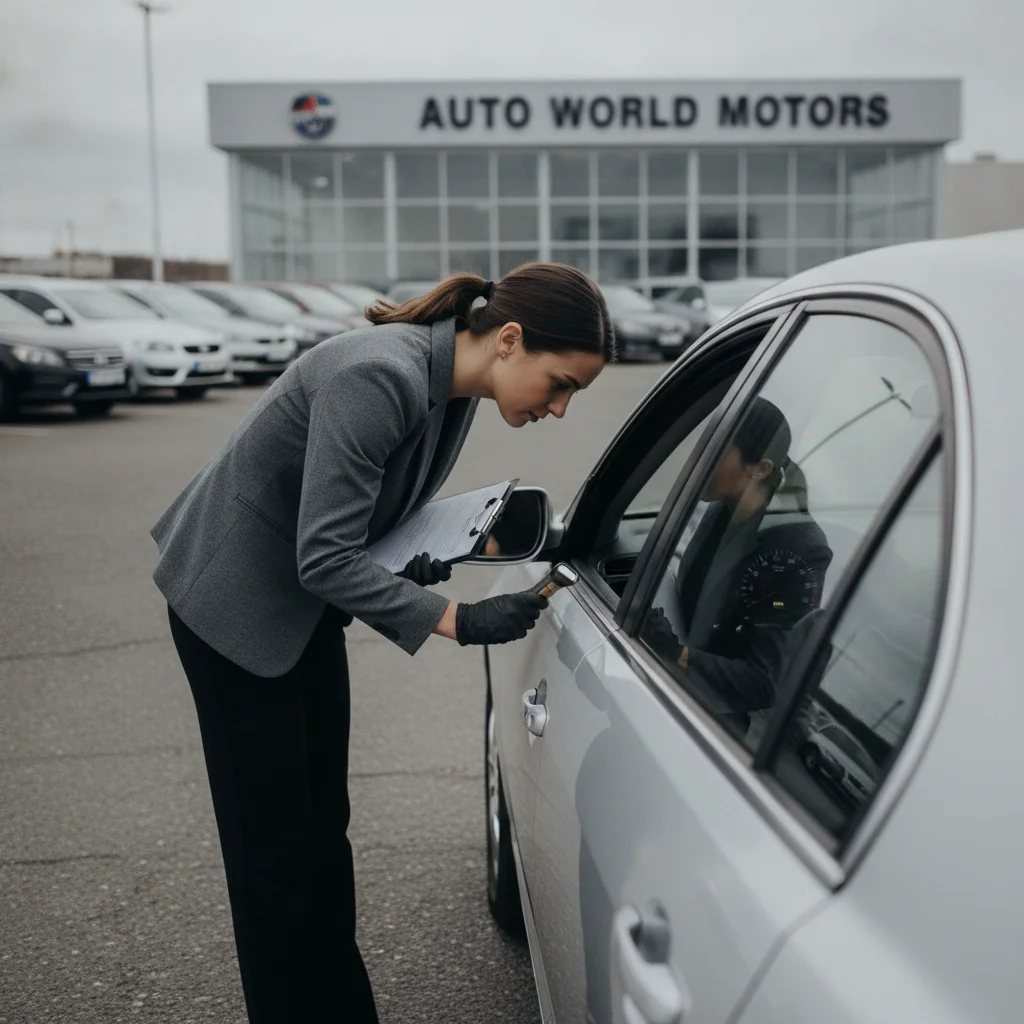
An experienced appraiser does a walk-around in roughly one minute and mentally categorizes your car before they open a door. Here's what they're clocking:
Paint and Body Panels
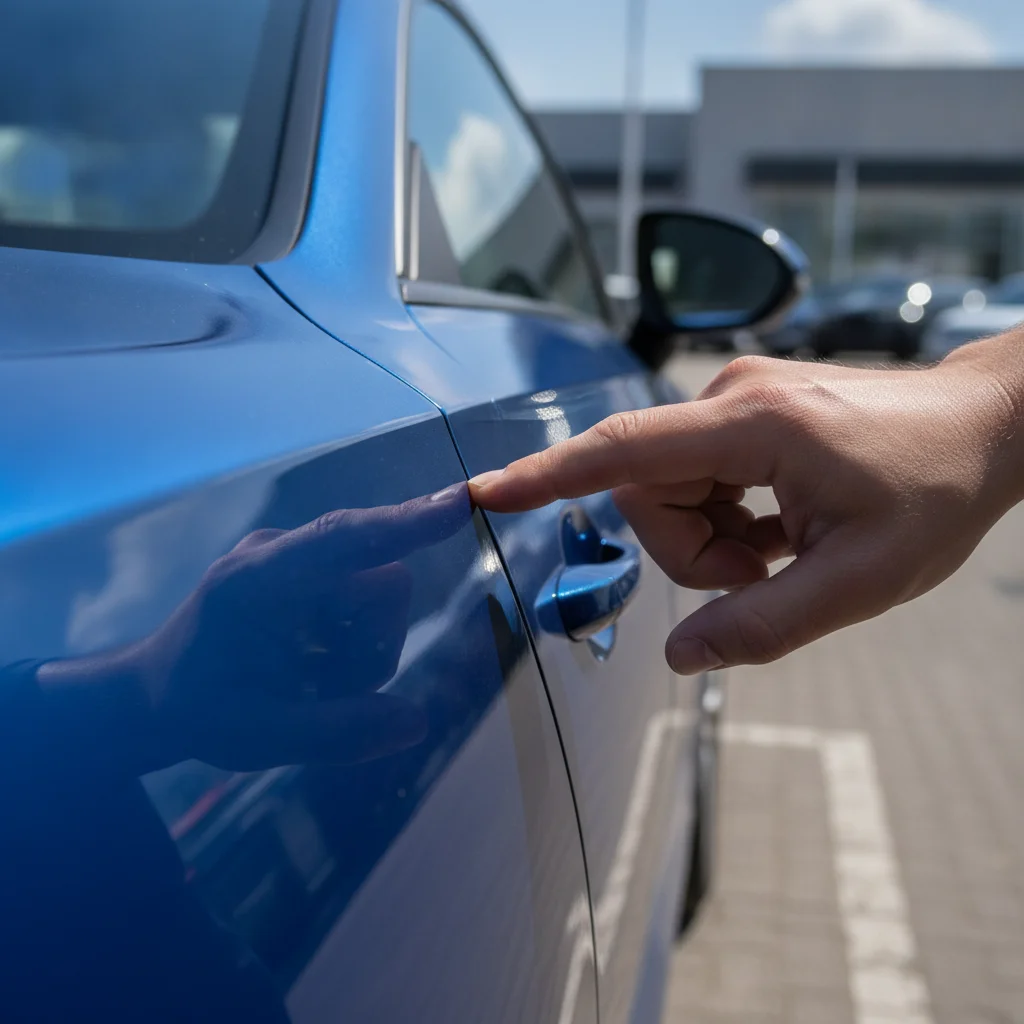
They're looking for panel misalignment (gaps that are uneven, which signals a repair or replacement), overspray at door jambs or rubber seals, paint fade, deep scratches, hail damage, and rust. A single poorly repaired panel can knock $500–$1,500 off an offer because it signals prior accident damage and creates reconditioning uncertainty.
Color also matters — mileage, condition, and color all affect what a dealer will pay. Low-demand colors in your market can soften the offer even if the car is pristine.
Glass
Chips and cracks in the windshield are flagged immediately. A chip costs a dealer roughly $50–$100 to repair; a crack requiring replacement runs $200–$500. Expect a 1.5x–2x markup applied to whatever their actual cost is when they calculate the deduction.
Lights and Lenses
Yellowed or cloudy headlights, cracked taillights, or any non-functioning bulbs are noted. These are cheap to fix yourself — a $20 headlight restoration kit or a $15 bulb goes a long way before the appraisal.
Tires and Wheels
Appraisers check tread depth visually and often with a gauge. Less than 4/32" of tread remaining typically triggers a deduction for a new set. They also look at wheel condition — curb rash on alloys is cosmetic but flagged. A full set of replacement tires is a $600–$1,200 reconditioning line item at dealer cost, so they'll use it.
OBD-II diagnostic scan
A readout from a vehicle's onboard computer accessed via the OBD-II port, typically under the dash. It reveals stored fault codes, cleared codes, and emissions monitor readiness status. Dealers run this on every trade-in.
Reconditioning cost
The total expense a dealer estimates to bring a used vehicle up to retail-ready condition — repairs, detailing, safety items, and cosmetic fixes. This figure is subtracted from your trade-in value.
Unibody
A vehicle construction method where the body and frame are integrated as a single structure. Damage to the unibody is structural damage, even if it doesn't involve a traditional separate frame rail.
Title brand
A permanent designation on a vehicle's title that indicates significant prior damage or status — such as salvage, rebuilt, flood, or lemon law buyback. A branded title severely limits resale channels and trade-in value.
Readiness monitors
Self-test routines the vehicle's engine management system runs to verify emissions components are working. If monitors show "not ready," it often means the OBD-II system was recently reset — a red flag during appraisal.
Wholesale auction value
The price a vehicle would fetch at a dealer-only auction. This is typically $1,000–$3,000 below retail market value and is the fallback pricing dealers use for cars they can't sell on their retail lot.
Overspray
Paint that has been applied beyond the intended panel edge and has settled on adjacent surfaces like rubber trim, glass edges, or door jambs. It's a telltale sign of a body repair or repaint.
Pinch weld
The flanged seam along the bottom edge of a vehicle's rocker panel where body panels are welded together. Damage or distortion here indicates structural impact and is inspected carefully during appraisals.
Structural Integrity: The Non-Negotiables
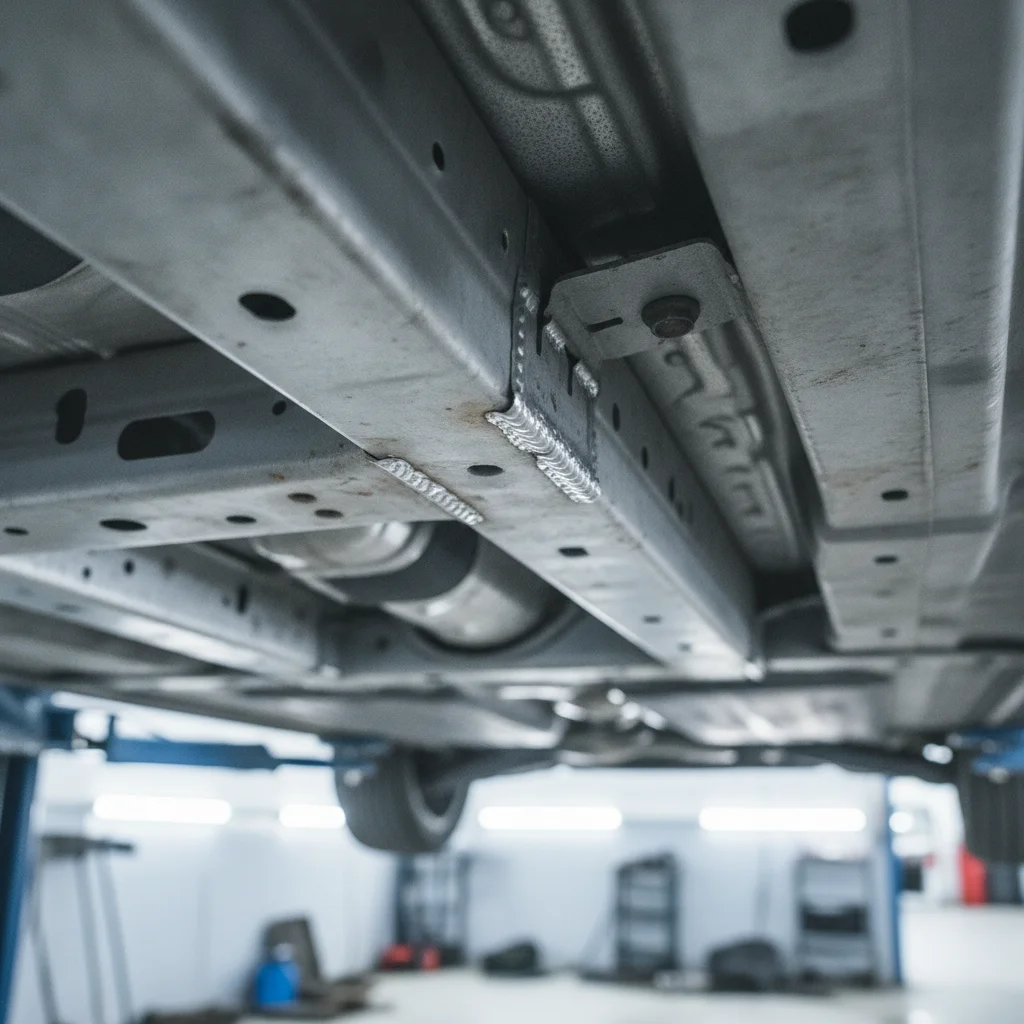
This is where the inspection gets serious. Frame or unibody damage — even repaired damage — is the single biggest value killer in a trade-in evaluation. Appraisers are specifically trained to detect it because a car with structural damage has limited resale channels: they can't retail it on the lot without disclosure, which drops it to wholesale auction pricing.
Frame and Unibody Inspection
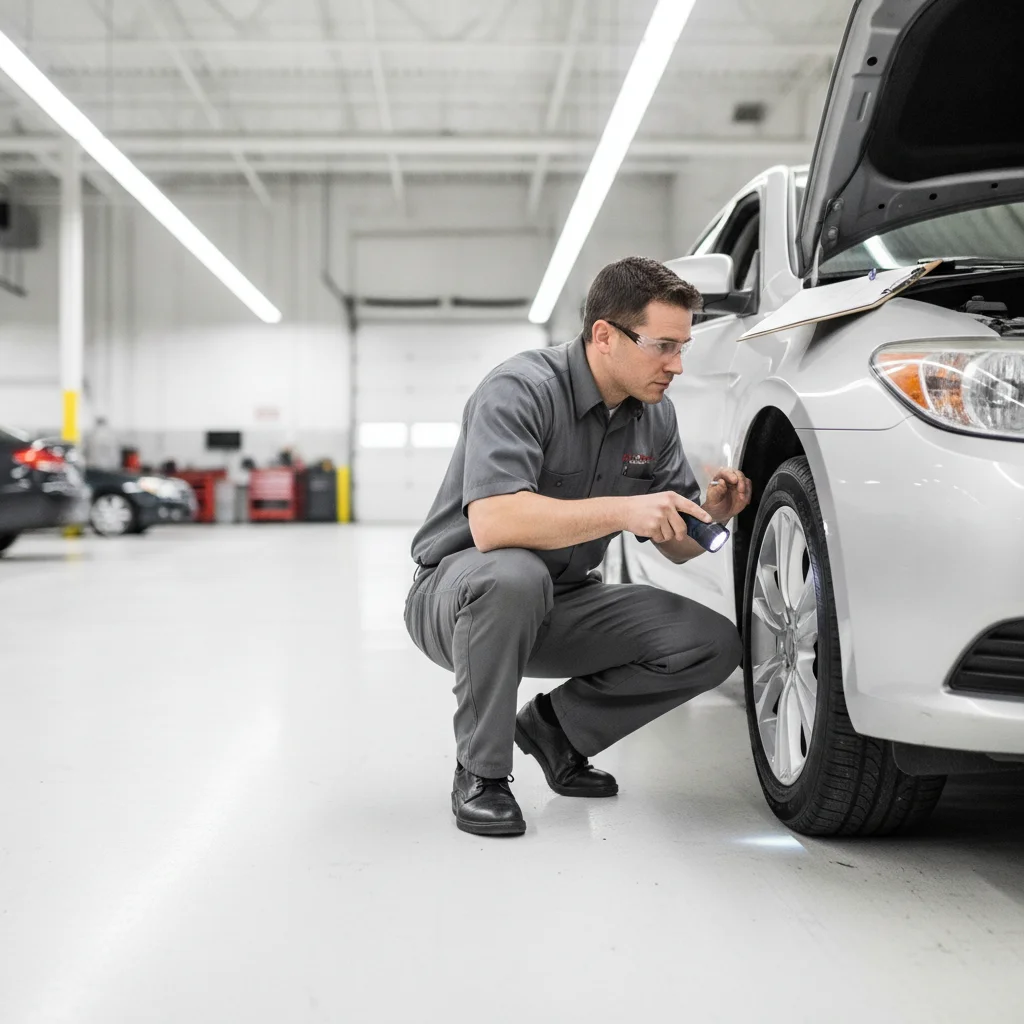
The appraiser will get under the vehicle (or use a mirror/flashlight) to look at the frame rails, pinch welds, and rocker panels. Signs of straightening (kinks, grind marks, weld distortion) or corrosion in structural areas are major red flags. They'll also check the radiator support and strut towers under the hood for deformation or fresh welds.
Panel Gaps and Alignment
Standing back and sighting down the door and fender gaps reveals prior repair work that paint can hide. If the gap between a door and fender is noticeably tighter on one side than the other, that's a structural concern, not just cosmetic.
Accident History Cross-Check
The dealer will run a vehicle history report — Carfax or AutoCheck — immediately. Any accident record, title brand (salvage, rebuilt, flood), or odometer discrepancy is a hard deduction or outright refusal to appraise for retail. If your car has a clean report but visible repair evidence, that discrepancy itself raises questions about unreported incidents.
Cleared Codes Are Still Visible to Inspectors
Resetting your check engine light before the appraisal doesn't hide the underlying problem — it can actually make things worse. Modern OBD-II systems track when monitors were last run and whether codes were cleared without repairs. A technician who sees "not ready" status on multiple monitors knows the system was recently reset and will price the car conservatively to account for the unknown. Disclose known issues upfront; it builds more trust than a reset does.
Flood and Fire Indicators
Appraisers check the trunk, under floor mats, and inside door sills for water lines or rust patterns inconsistent with normal wear. They'll also smell the interior. Flood-damaged vehicles are essentially unsellable at retail — most dealers will decline to offer or price at auction-only value.
Under the Hood and Mechanical Systems
A dealer's used-car manager isn't going to do a compression test on your car during a trade-in appraisal. But they will do a targeted mechanical review that covers the highest-cost failure points.
OBD-II Diagnostic Scan
This is standard practice at virtually every franchise dealership. A technician plugs into the OBD-II port and reads any stored fault codes — including codes that have been cleared recently. Cleared codes with no readiness data (a "not ready" status on emissions monitors) is a red flag that tells an experienced tech the check engine light was recently reset. Active fault codes result in direct deductions, often $300–$2,000 depending on the likely repair.
Common high-impact codes: catalytic converter faults (P0420/P0430), transmission solenoid codes, EVAP system failures, and misfires. Know what's in your car before you walk in.
Engine Bay Visual
They're looking for oil leaks (residue on valve covers, oil pan, or around sensors), coolant residue around the reservoir or radiator cap (head gasket concern), and signs of DIY repairs. Mismatched bolts, zip-tied hoses, or aftermarket components without documentation raise questions about maintenance quality.
Transmission and Drivetrain
A quick test drive is usually part of the appraisal — typically 5–10 minutes in the dealer's lot or a short loop. The appraiser is listening for transmission hesitation, hard shifts, clunking from the driveshaft or CV joints, and differential noise on AWD/4WD vehicles. Any of these flags a reconditioning cost estimate.
Brakes
Brake feel is assessed during the test drive. A pulsating pedal means warped rotors. Squealing or grinding means pad/rotor replacement is flagged. Expect a deduction of $200–$600 per axle for a full brake job.
$1,500–$4,000
Average dealer reconditioning cost per used vehicle
Industry estimates from NADA and dealer operations data; this budget directly determines how aggressively an appraiser deducts.
~80%
Trade-in vehicles scanned with OBD-II at franchise dealers
Based on standard franchise dealer appraisal procedures; independent dealers vary widely.
$500–$2,000
Interior reconditioning deduction range
Varies by severity of damage, odor, and upholstery type; smoke damage typically lands at the top of this range.
3–5%
Trade-in value reduction for each prior accident on record
According to vehicle valuation data from Black Book; severity and repair quality affect the actual impact.
$200–$600
Brake system deduction per axle
Reflects dealer reconditioning labor and parts at retail shop rates applied to the appraisal calculation.
Interior Condition: Every Detail Has a Cost
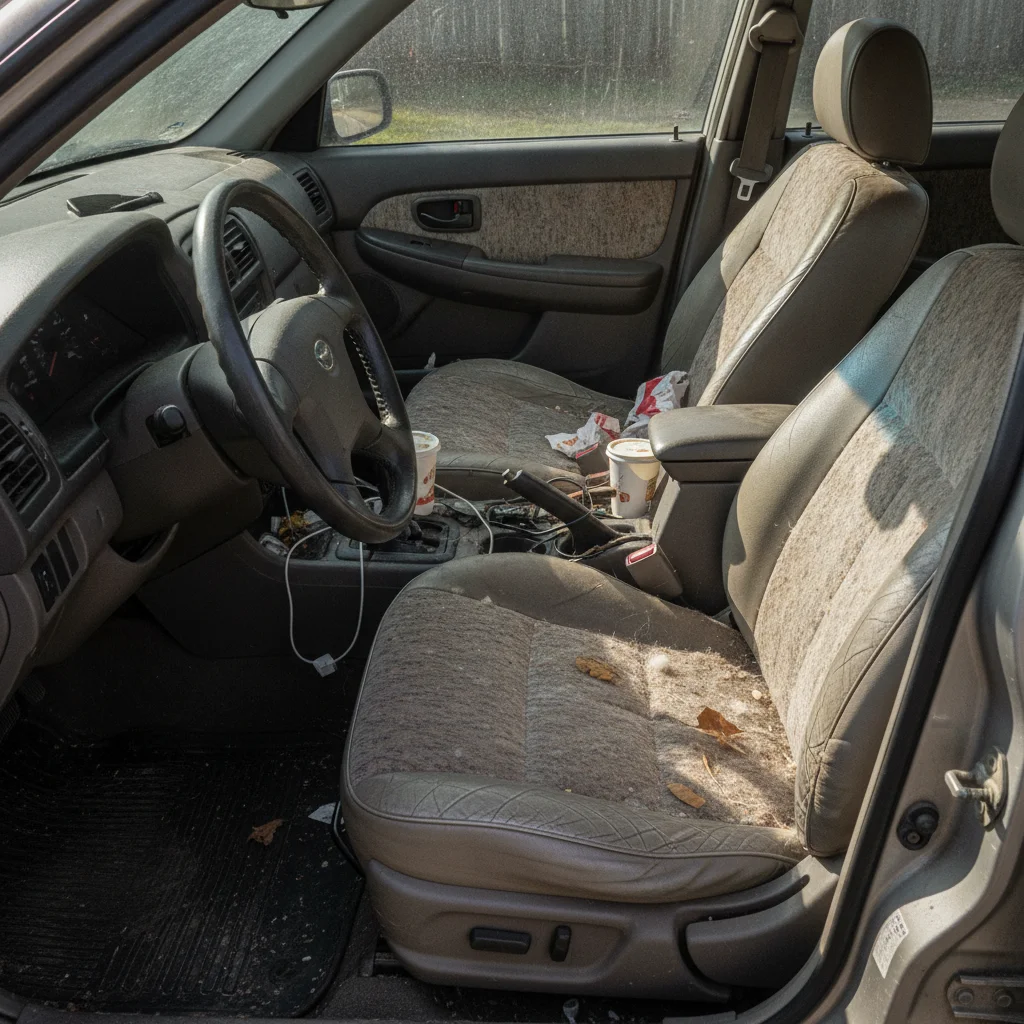
Interior reconditioning is one of the most variable cost categories for a dealer. A car that looks rough inside — even with a mechanically sound drivetrain — can see $500–$2,000 in deductions simply because detailing and upholstery work is expensive and time-consuming.
Upholstery and Surfaces
Tears, stains, burns, or cracked leather are noted. Pet hair is a detailing nightmare — dealers know it, and they'll charge accordingly. Worn pedal rubber is also a mileage-consistency check: if the car shows 40,000 miles but the pedals look like 100,000 miles, that's a discrepancy worth noting. See how a cabin tells a story to an inspector for a buyer's-eye view of the same signals.
Odors
Smoke damage is nearly impossible to fully remediate and dealers know it. A car with a detectable smoke smell typically gets flagged as "smoker's vehicle" on the internal appraisal form, which routes it to auction rather than retail. Pet odors are next in severity. Even strong air freshener scent during the appraisal raises suspicion that something is being masked.
Electronics and Features
The appraiser will check: power windows and locks, infotainment screen responsiveness, backup camera, navigation (if equipped), HVAC function across all zones, heated/cooled seats, and sunroof operation. A non-functional touchscreen on a 3-year-old vehicle is a $400–$800 deduction. A stuck sunroof can be $800–$1,500 to repair. These aren't small numbers.
Keys and Accessories
Missing a key fob? That's a $200–$500 deduction at dealer prices. Missing floor mats? $50–$150. Original window sticker and owner's manual: not required, but their presence signals a well-kept car and gives you a talking point. The right paperwork strengthens your position even before the physical inspection begins.
How to Use Inspection Knowledge Before and After the Appraisal
Knowing what the appraiser is checking lets you take targeted action — not a full detailing spend, but smart triage. Here's how to apply this:
Before You Go: Fix the Cheap Stuff
- Replace burned-out bulbs — $10–$30, eliminates a flag
- Restore headlights — $20 kit, removes a $150–$300 deduction
- Address the check engine light — at minimum, get it scanned so you know what's stored; disclose it rather than let them find it cold
- Clean the interior thoroughly — professional detail is $150–$250 and can recover $400–$800 in offer value
- Bring both key fobs — obvious, but often forgotten
During the Appraisal: Stay Present
You're allowed to be present while the appraiser walks the car. Stay quiet and observant. Note what they flag. If they note something inaccurate — say, existing hail damage they're calling "prior collision" — that's a conversation to have before the number is written.
After the Offer: Interrogate the Deductions
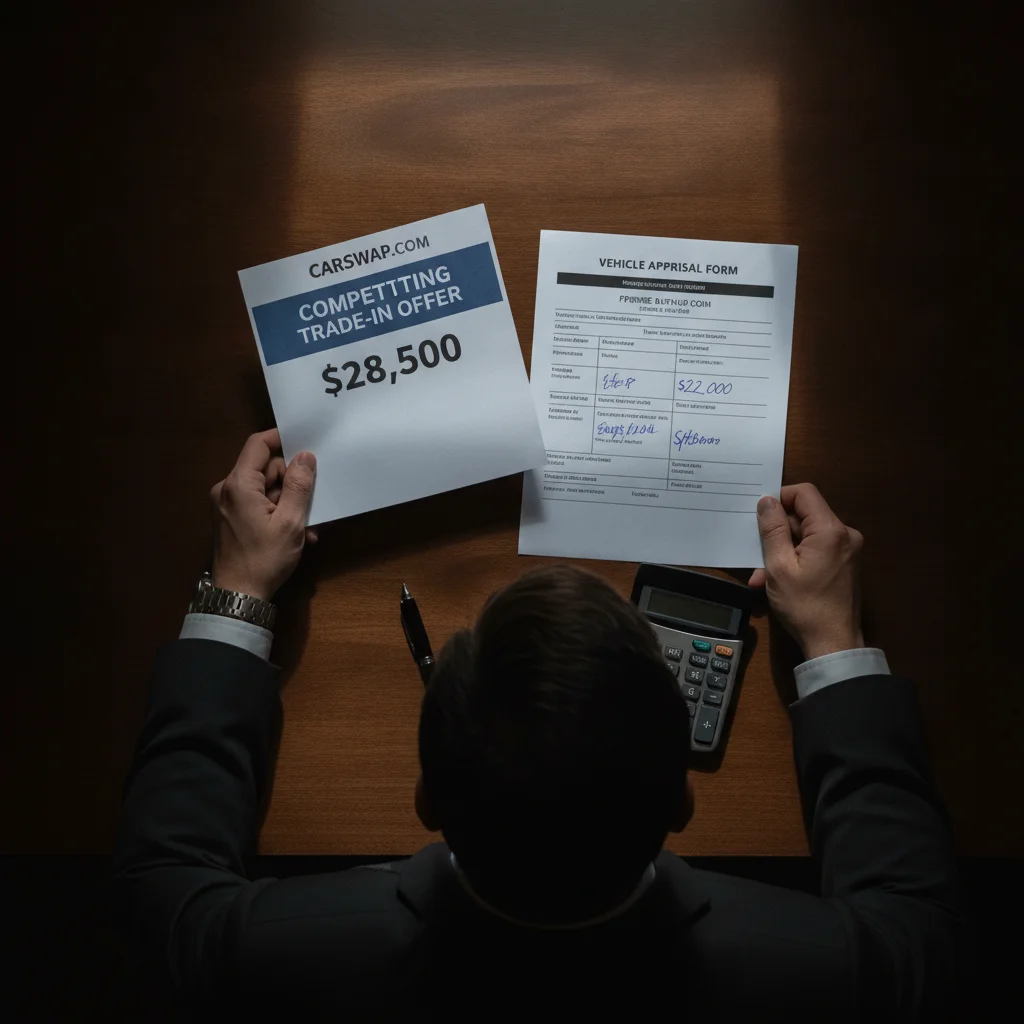
Ask for the appraisal breakdown. Most dealers will share a version of it. Compare their deduction line items against what you know about realistic repair costs. A dealer might quote $1,200 for a tire set when your cost at Costco would be $650 — that gap is negotiable. Learn how to read a trade-in appraisal sheet so the line items don't catch you off guard.
Also get at least one competing appraisal — CarMax, Carvana, or a competing dealer. Offers from multiple sources give you leverage and tell you whether a single dealer's number is fair or aggressive. Before you finalize anything, run through the full trade-in negotiation checklist to make sure you haven't left money on the table. And if you still have time before your appointment, the pre-appraisal prep guide covers exactly what's worth doing — and what isn't.
CarMax Instant Offer
Get a firm, no-obligation written offer from CarMax online or in-store. Use it as a baseline to benchmark your dealer's appraisal against a known retail buyer.
Carvana Vehicle Offer Tool
Enter your VIN and answer a short condition questionnaire to receive an online offer. Useful for establishing a competing bid before your dealership appointment.
NADA Guides Vehicle Valuation
NADA's used car value tool provides trade-in, private party, and retail values by condition grade. Cross-reference this against your dealer's offer to spot aggressive deductions.
OBD-II Code Lookup (AutoZone)
Free OBD-II scanning at AutoZone lets you know exactly what fault codes are stored before the dealer runs their diagnostic. Knowing your codes in advance puts you in a stronger position.
Trade-In Strategies Hub
<a href="/buying-a-car/negotiating-and-deals/trade-in-strategies">Explore the full trade-in strategies hub</a> for articles covering appraisal prep, negotiation tactics, and timing your trade for maximum value.

All claims are backed by peer-reviewed research. Sources on request.