Key Takeaways
Summary
22 items · 30–90 minutes to gather and organize
Why Documentation Changes the Appraisal Math
When a dealer's appraiser walks around your car, they're not just looking at the paint and tires. They're building a risk profile. Every unknown about your vehicle is a variable they'll price against you. A cracked windshield they can see and quote. A mystery transmission with no service history? They'll assume the worst and deduct accordingly.
Documentation eliminates unknowns. When you hand an appraiser a complete service folder, a clean title, and a printed competing cash offer, you've changed the dynamic. You're no longer a seller hoping for a fair number — you're a prepared negotiator with documented evidence of your vehicle's value.
Dealers also use documentation gaps strategically. "We can't verify the maintenance history" is often code for "we're going to subtract $800 from our offer." The impact of service records on perceived value is real and measurable — it's not unusual for a fully documented vehicle to appraise $500 to $1,500 higher than an identical model with no paper trail.
This checklist covers every document worth bringing, organized by category so you can work through it systematically before your appointment. Don't show up with a car and a hope — show up with a folder.
What to Gather and Why Each Document Matters
Not every piece of paperwork carries equal weight. Some documents are non-negotiable — without them, the transaction stalls. Others are supporting evidence that nudges an appraisal in the right direction. Here's how to think about each category.
Title and Ownership Paperwork
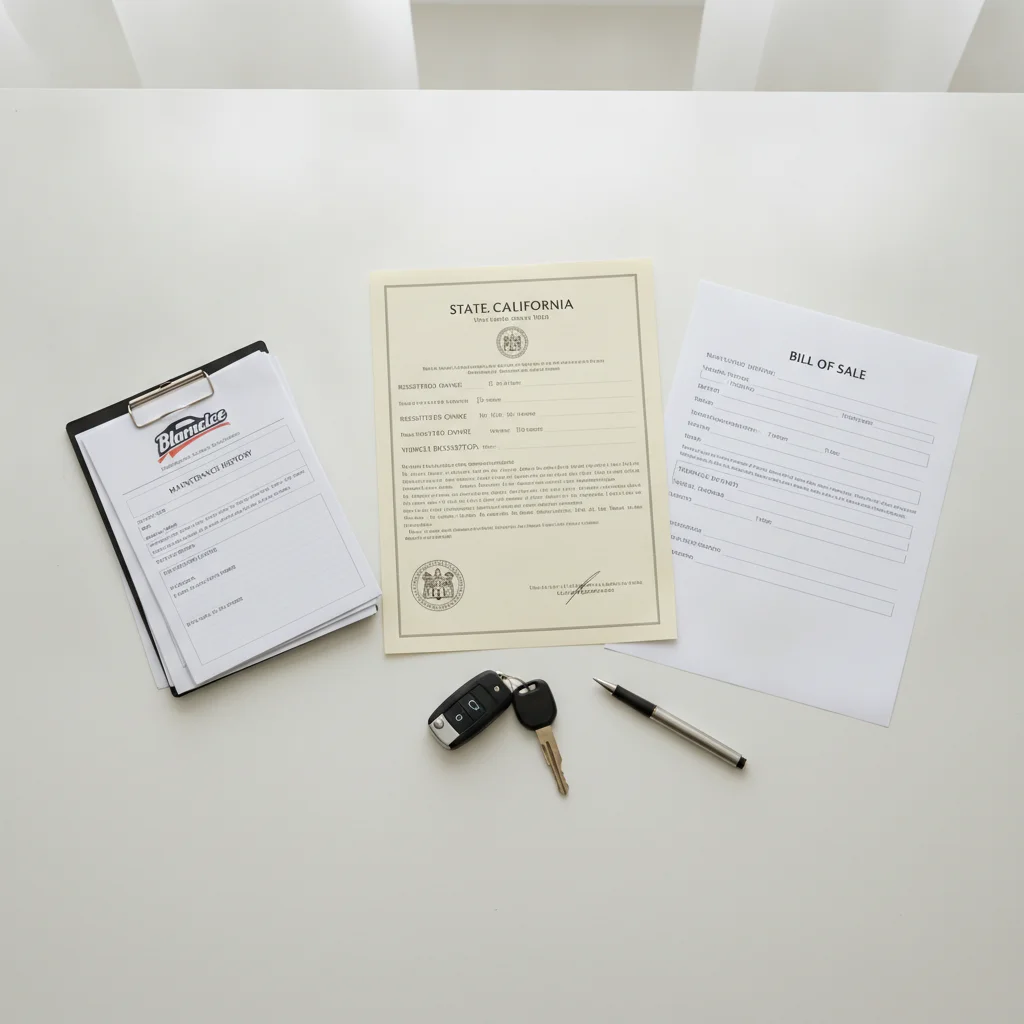
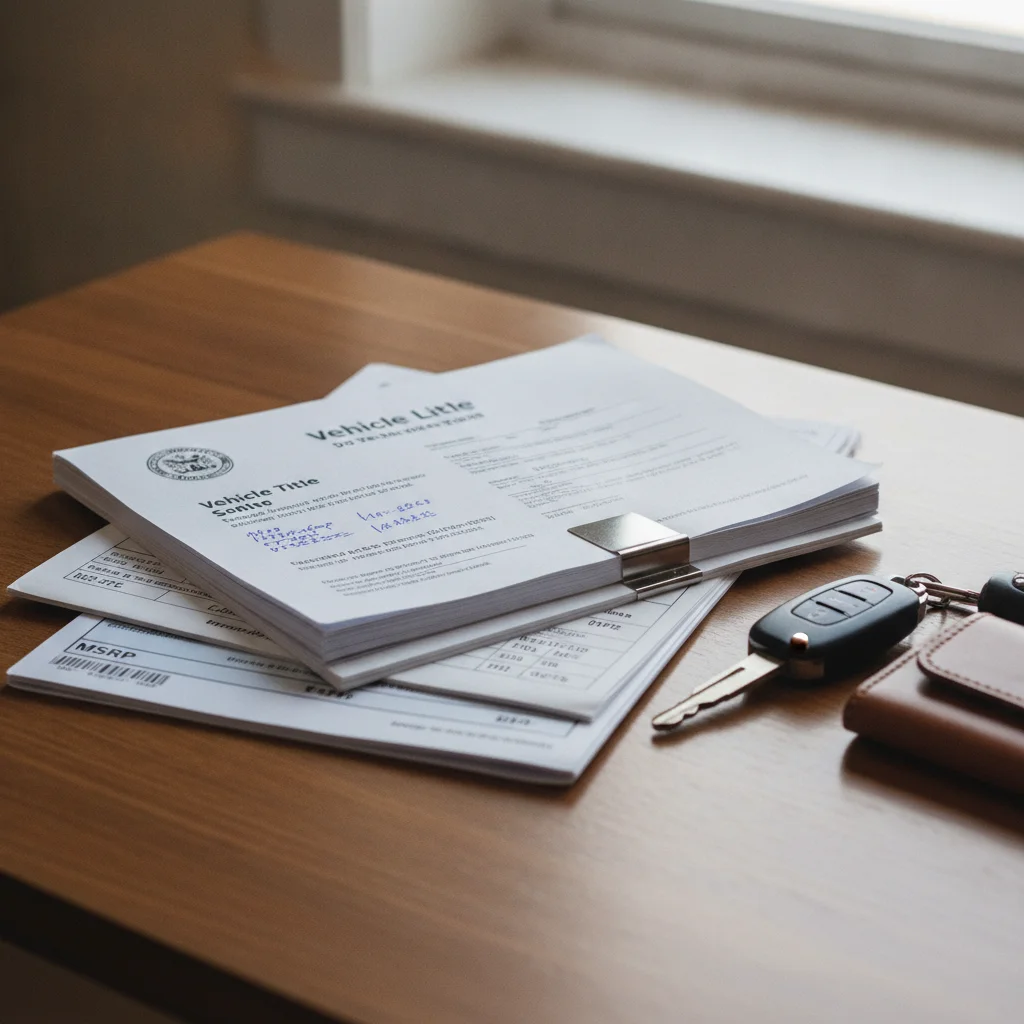
The title is the foundation. A clean, lien-free title in your name with no branding (salvage, rebuilt, flood) is the cleanest possible starting position. If you have a loan, your lender technically holds the title — get a written payoff quote before you walk in so you're not surprised. Dealers will request it anyway, and having it ready signals you're serious and organized.
For a deeper comparison of how document requirements differ depending on where you sell, see this breakdown of trade-in vs. private party paperwork.
Service and Maintenance Records
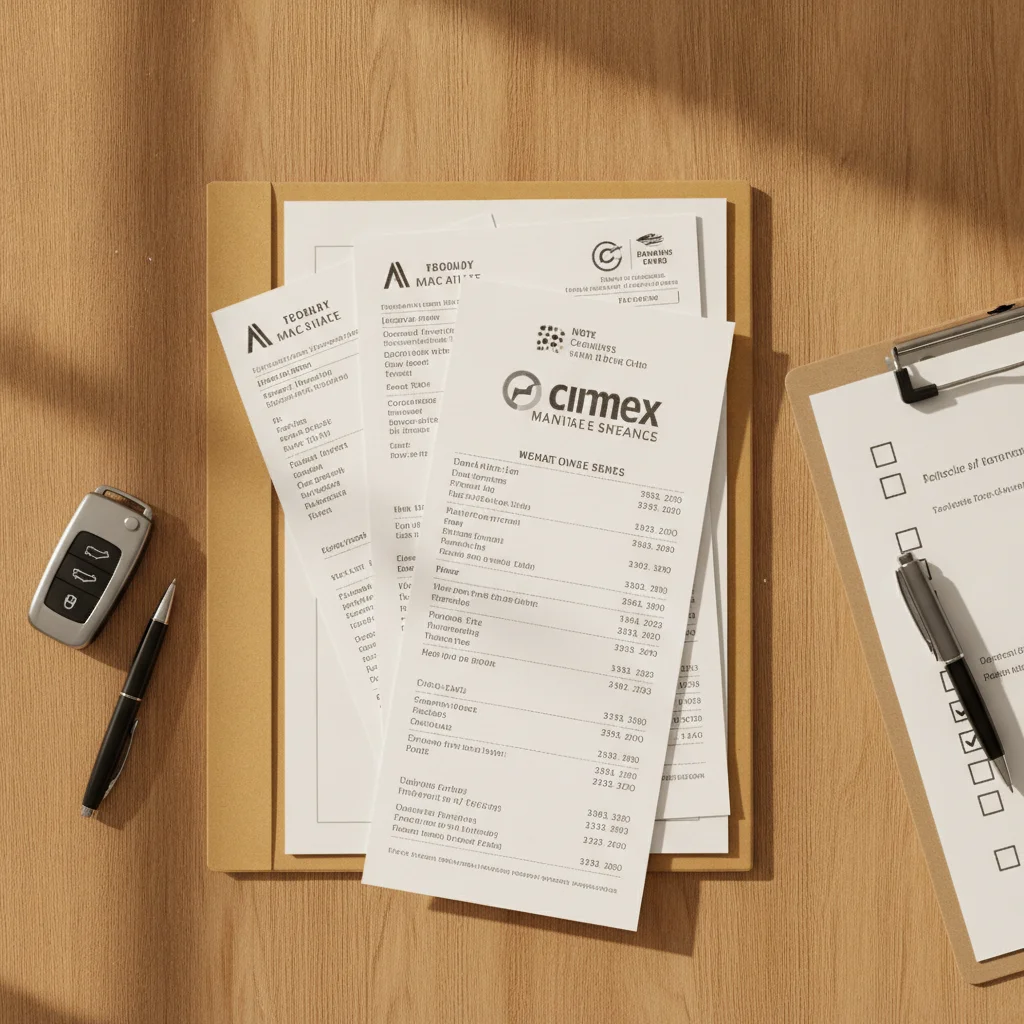
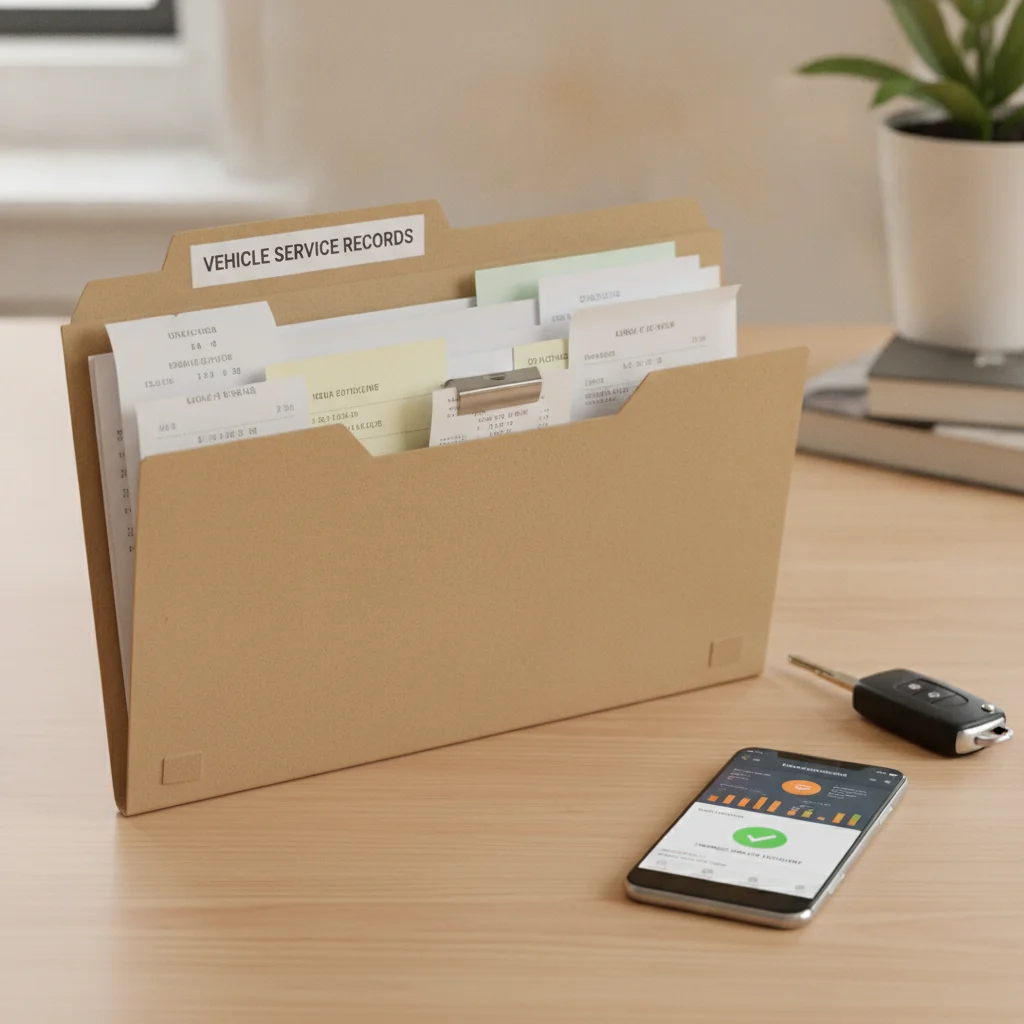
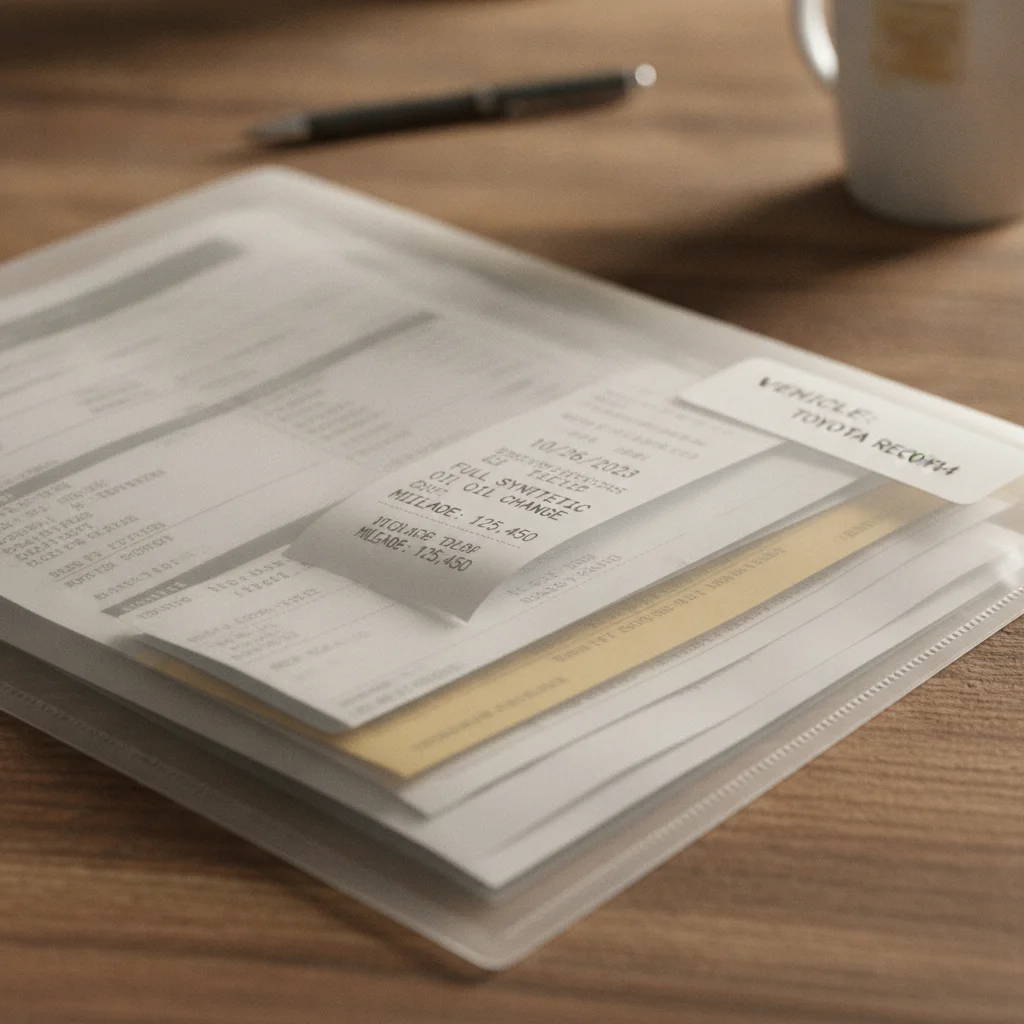
This is your single most powerful document category. A complete, chronological maintenance file — oil changes, brake jobs, fluid services, timing belt replacements — tells the appraiser the vehicle was cared for on schedule. It also reduces the likelihood they'll flag mechanical unknowns as deductions.
If your records are patchy, recovering lost service history is possible. Contact every shop or dealer that touched the car by name and VIN — most national chains have digital records going back years. Even partial documentation is better than none. For the long-term habit, keeping service records as a selling asset is a practice worth starting today for your next vehicle.
Original Window Sticker and Factory Options
If you bought the car new and kept the Monroney sticker, bring it. Dealers use trim level and installed options to determine comparable sales data, and appraisers sometimes default to the base trim when options aren't documented. A window sticker that shows a premium package, panoramic sunroof, or advanced safety suite is documentation that your vehicle is worth comparing to higher-spec used listings, not stripped base models.
If you don't have the physical sticker, your original purchase agreement will list the options package. Check the manufacturer's online VIN decoder as a backup — many will confirm factory-installed features.
Carfax or AutoCheck
Pull the vehicle history report the dealer will run anyway, so you're not caught off guard by any flagged events.
Kelley Blue Book (KBB)
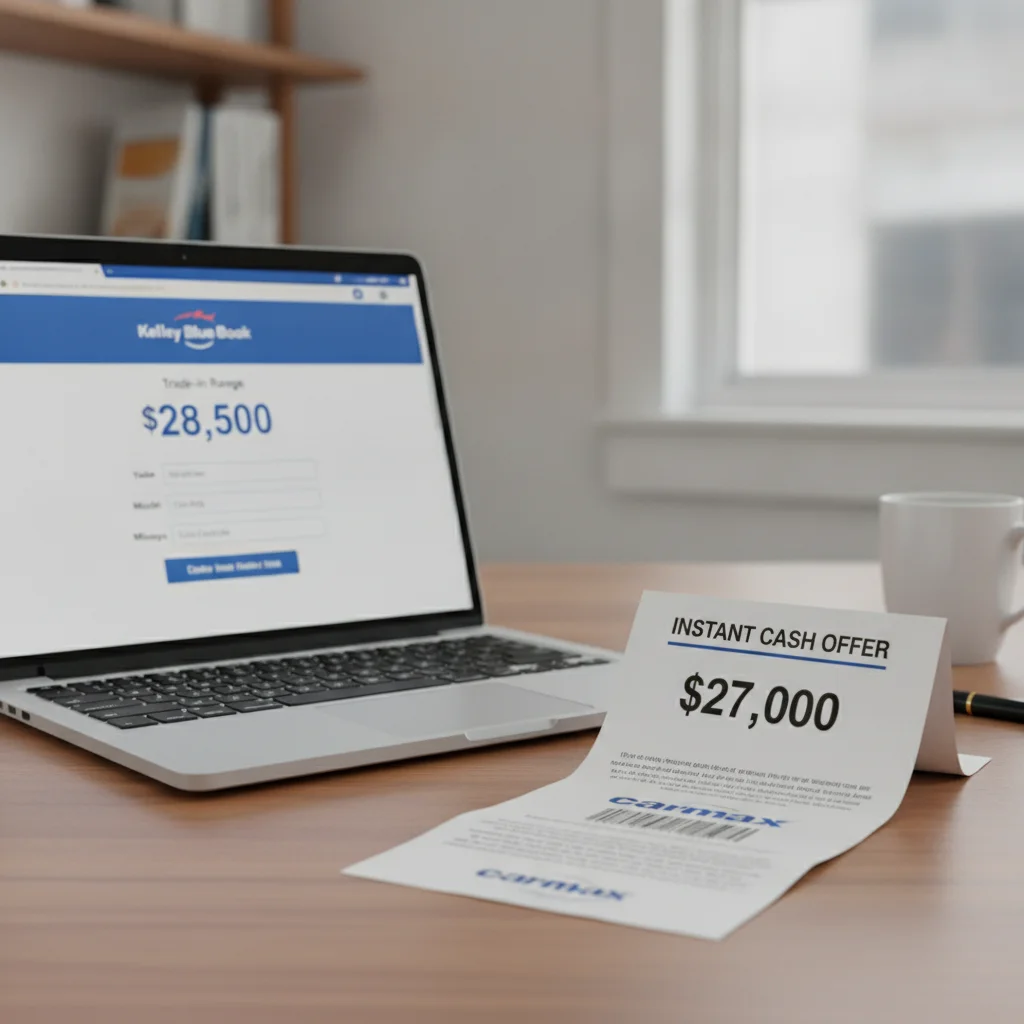
Generate a printed trade-in value estimate using accurate mileage, condition, and ZIP code as your negotiation anchor.
Edmunds Instant Offer
Get a competing cash offer from Edmunds' dealer network to use as documented leverage during trade-in negotiation.
NHTSA Recalls Database
Check and print recall completion status by VIN to demonstrate all safety issues have been resolved.
CarMax / Carvana Instant Offer
Obtain a written competing cash offer that gives you a real, dated floor price the dealer must beat or match.
Dealer or Shop Digital Service Portals
Recover digital service records from franchise dealers or national chains that stored maintenance history in their system.
Smartphone Camera
Document your car's current condition with timestamped photos before the dealer inspection begins.
Building Your Competing Offer Stack
The most effective negotiating tool you can bring to a trade-in isn't a document about your car — it's written proof of what someone else will pay for it right now.
Before your appointment, get written instant cash offers from at least two of the following: CarMax, Carvana, a competing franchise dealer, or an online buyer like Vroom. These offers are typically valid for 7 days. Print them. Bring them in a folder. When the dealer's appraisal comes back lower than your floor, you don't argue — you slide a competing offer across the desk.
This approach is well documented in the paper trail strategies that support higher trade-in offers. Dealers know that losing a trade-in to CarMax costs them a deal, so competing offers have real pull — not just psychological leverage.
Back those offers with printed valuations from KBB and Edmunds, using accurate mileage and an honest condition grade. Be precise about condition — dealers appraise conservatively, and if your "good" condition estimate is actually closer to "fair," the gap between your printout and their offer will feel like a lowball when it isn't. See how to honestly assess your vehicle before running any valuation tool in this guide on documenting condition before valuation.
Don't Let the Dealer Run Your Credit First
Some dealers ask for your driver's license and Social Security number early in the trade-in process, claiming it's for appraisal purposes. Unless you're simultaneously applying for financing, decline. A credit inquiry isn't required to appraise your trade-in and an unnecessary hard pull can ding your score before you need it for loan approval.
Verbal Appraisal Numbers Don't Count
A sales manager mentioning a number in conversation is not an offer. Any trade-in value that matters must appear in writing on the dealership's appraisal sheet or in the purchase contract. Dealers sometimes quote higher numbers verbally and let the figure quietly shrink by the time paperwork is signed — especially when it's bundled with a new car deal.
Aftermarket Mods Rarely Add Dollar-for-Dollar Value
Custom wheels, performance tunes, and lifted suspensions often hurt rather than help your trade-in number. Dealers need to resell the vehicle to the widest possible audience and non-stock modifications shrink that pool. Bring receipts if you have them, but calibrate expectations — you'll likely recover pennies on the dollar for most add-ons.
Negotiate the Trade-In Separately From the New Car Price
Dealers profit most when these two numbers are blended into a single monthly payment discussion. Always agree on the price of the new vehicle first — in writing — before introducing your trade-in into the conversation. Keeping the transactions separate makes it nearly impossible for the dealer to offset a higher trade-in value with a quietly inflated purchase price.
A Lien on Your Title Changes Everything
If you still owe money on your vehicle, the dealer will contact your lender directly and factor the payoff into the deal. If your payoff exceeds your trade-in value — a condition called being upside down or underwater — that negative equity will almost certainly be rolled into your new loan. Know your exact payoff amount and your trade-in range before you walk in, so you understand the true financial impact.
The Full Trade-In Documentation Checklist
Work through each group below before your appointment. Items marked "must" are non-negotiable — missing them will slow the process or hurt your offer. "Should" items provide meaningful supporting evidence. "Nice to have" items are worth including if accessible without significant effort.
Ownership & Title Documents
Service & Maintenance Records
Original Vehicle Documentation
Condition & Upgrade Evidence
Market Valuation & Competing Offers
Personal ID & Transaction Readiness
For a full rundown of every document relevant to selling a vehicle — whether through a dealer or privately — the companion guide on every document needed before listing your car covers all the bases. And if you want to understand what a dealer's inspector is actually evaluating during the appraisal walk-around, what dealers look for during a trade-in inspection will help you anticipate their concerns before they become deductions.
After the Appraisal: Reading the Paperwork
Once the dealer presents a written trade-in offer, your job shifts from presenting documents to reading them carefully. The appraisal sheet will show a figure — but that's only part of what you need to verify before agreeing to anything.
If you're trading into a new vehicle purchase, the trade-in value will eventually appear in the purchase contract. Dealers have multiple levers they can adjust — trade-in value, new car price, interest rate, fees — and it's common for a generous-seeming trade-in number to be quietly offset elsewhere in the deal. This is exactly the dynamic described in what dealerships put in writing vs. leave out of trade-in documentation.
Verify these specific numbers before signing anything:
- Trade-in allowance: The gross credit applied to your deal. This is the number you negotiated.
- Payoff amount: If you have a loan, confirm it matches your lender's written payoff quote — not an estimate.
- Net trade equity: Trade-in allowance minus payoff. If negative, confirm exactly where that balance is being applied in the new loan.
- New vehicle price: Verify this matches what you agreed on before the trade-in entered the conversation.
For broader context on all the paperwork involved in a car purchase — including where trade-in figures appear in the contract — the Paperwork & Contracts hub is a useful reference. And for strategic trade-in tactics beyond documentation, the Trade-In Strategies hub covers negotiation approaches worth reviewing before you walk into the dealership.
Documentation got you to the table with leverage. Reading the contract carefully is what gets you out with the deal you actually negotiated.

All claims are backed by peer-reviewed research. Sources on request.